To travel Europe with back pain, knee pain, or limited mobility, choose accessible accommodations with ground-floor rooms and elevators. Use adaptive transportation like wheelchair-friendly buses or ride-shares, and plan routes carefully to avoid difficult transfers. Check attraction accessibility and hire local guides or join small tours to ease exploration. Pack lightweight mobility aids and supportive shoes to stay comfortable. Staying organized and aware of local infrastructure will make your journey smoother—if you keep exploring, you’ll find more helpful tips to make your trip easier.

Get travel and outdoor gear delivered free with Prime
- Fast, free delivery on millions of items
- Prime Video, Amazon Music and more included
- Member-only deals all year
Key Takeaways
- Choose accessible accommodations with ground-floor rooms, elevators, and grab bars to reduce mobility challenges and increase comfort.
- Plan and confirm accessible transportation options like wheelchair-friendly buses, taxis, and train services before traveling.
- Research attraction accessibility features, including ramps and lifts, and consider accessible tours for easier exploration.
- Pack lightweight mobility aids, supportive footwear, and essentials like pain relief to manage discomfort during outings.
- Incorporate accessible routes and infrastructure information into your itinerary to minimize navigation difficulties and enhance comfort.
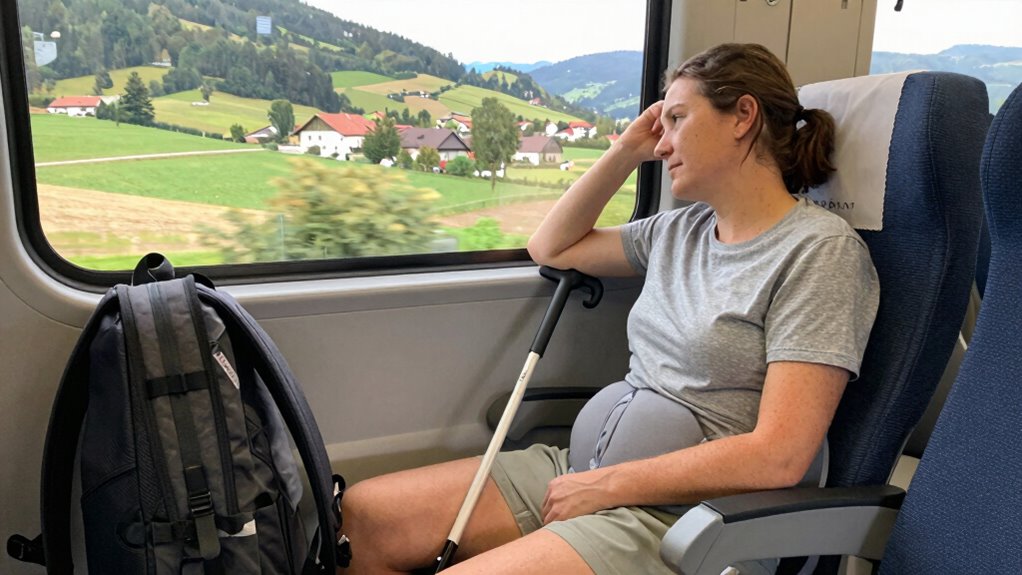
Traveling through Europe with back pain, knee pain, or limited mobility can seem intimidating, but with careful planning, you can enjoy your trip without unnecessary stress. One of the most important steps is to prioritize accessible accommodations. When booking hotels or rentals, look for places that explicitly mention features like ground-floor rooms, elevators, grab bars, or roll-in showers. Many hotels now list their accessibility options online, so take the time to read reviews or contact hosts directly. Choosing accommodations with accessible features helps reduce discomfort and makes navigation easier, giving you peace of mind during your stay.
Prioritize accessible accommodations with features like ground-floor rooms, elevators, and grab bars for a comfortable, stress-free stay.
Equally crucial is considering adaptive transportation options. Europe’s cities offer various accessible transportation services, from wheelchair-friendly buses to metro systems with low or no steps. Many cities have accessible taxis or ride-sharing services that cater to travelers with limited mobility. Before your trip, research transportation providers in each city to confirm availability and booking procedures. Some train companies, like Eurostar and regional rail services, also provide accessible options, including priority seating and assistance. Planning your routes in advance ensures you won’t get caught unprepared, especially when transferring between airports, train stations, and hotels.
When exploring popular sites, look for those with accessibility features. Many museums, historical landmarks, and attractions now include ramps, lifts, or alternative routes for visitors with mobility challenges. Check their websites beforehand and reach out if you need specific accommodations. This prevents surprises and allows you to plan your day efficiently. Consider hiring a local guide or joining small, accessible tours that specialize in accommodating travelers with limited mobility. These tours often include transportation and access to sites that might be difficult to navigate independently. Additionally, familiarizing yourself with accessible transportation options can help you plan smoother transfers between locations. Incorporating accessible routes into your planning can further streamline your journey and reduce potential difficulties. Being aware of accessible infrastructure can also help you better understand the facilities available in each area.
Packing smart also makes a difference. Bring supportive shoes with cushioned soles and orthotic inserts if needed. Carry lightweight mobility aids, like foldable scooters or collapsible walking frames, to ease fatigue. Keeping essentials like pain relievers, heat packs, or ergonomic supports readily accessible helps manage discomfort throughout the day.
wheelchair accessible hotel rooms Europe
As an affiliate, we earn on qualifying purchases.
As an affiliate, we earn on qualifying purchases.
Frequently Asked Questions
What Travel Insurance Options Are Best for Travelers With Mobility Issues?
You should look for travel insurance that offers thorough mobility coverage. The best options include policies that specifically mention coverage for mobility aids, medical assistance, and evacuation services. Carefully review the policy details to ensure they cover pre-existing conditions and mobility-related concerns. Choose insurers with good customer support and clear claims processes, so you feel confident your needs, including mobility issues, are well protected during your trip across Europe.
How Can I Find Accessible Accommodations Across Europe?
You can find accessible accommodations across Europe by researching hotels with accessible options and reading reviews from travelers with similar mobility needs. Use platforms that specify wheelchair-friendly features, such as elevators or roll-in showers. Look for hotels close to wheelchair-friendly attractions to minimize travel hassle. Additionally, consult local tourism boards and accessibility guides to discover accessible hotel options and wheelchair-friendly attractions, ensuring a comfortable and enjoyable trip.
Are There Specific Transportation Methods Recommended for Limited Mobility?
You should prioritize accessible transportation options like accessible vehicles and wheelchair rentals. Many European cities offer specially equipped taxis or public transport with ramps and lifts, making travel smoother. Consider booking accessible shuttles or private cars ahead of time to guarantee availability. Using wheelchair-friendly transportation helps you navigate comfortably and independently, reducing stress and making your trip more enjoyable. Always check with local providers for specific accessibility services at your destinations.
What Should I Pack to Manage Pain During Long Journeys?
To manage pain during long journeys, pack your pain management essentials like prescribed medications, pain relievers, and any supportive devices such as cushions or braces. Include items that promote comfort, like a portable massager or heat patches, and don’t forget your mobility aids if needed. These packing essentials help you stay comfortable, minimize discomfort, and enjoy your trip across Europe with greater ease and confidence.
How Can I Plan an Itinerary That Minimizes Physical Strain?
Like a seasoned explorer charting new waters, you can plan an itinerary that minimizes strain by prioritizing accessible sightseeing and mobility-friendly activities. Opt for guided tours with wheelchair access, use public transport or taxis to reduce walking, and schedule downtime between sightseeing. Focus on destinations with benches and easy paths. This way, you enjoy the wonders of Europe without overexerting, making your journey truly memorable and comfortable.
lightweight mobility aids for travel
As an affiliate, we earn on qualifying purchases.
As an affiliate, we earn on qualifying purchases.
Conclusion
Traveling Europe with back pain, knee pain, or limited mobility is definitely doable with the right planning. Remember, over 20% of adults in Europe experience some form of mobility challenge, so you’re not alone. By choosing accessible destinations, packing smart, and taking frequent breaks, you can enjoy your trip comfortably. Don’t let pain hold you back—adventure awaits! With a little preparation, you’ll create unforgettable memories across the continent.
accessible transportation Europe
As an affiliate, we earn on qualifying purchases.
As an affiliate, we earn on qualifying purchases.
supportive travel shoes for mobility issues
As an affiliate, we earn on qualifying purchases.
As an affiliate, we earn on qualifying purchases.
Fall Picks
fall essentials
As an affiliate, we earn on qualifying purchases.