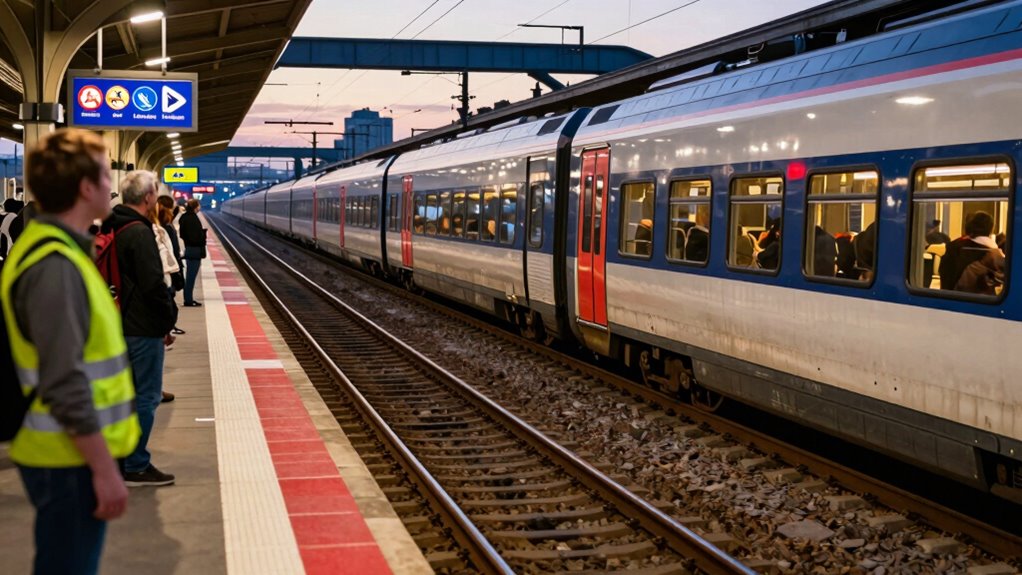
In Europe, station safety depends on infrastructure quality, effective train protection systems like ETCS, and strong security measures such as CCTV, baggage checks, and patrols. Watch for disparities in level crossing protections, security threats like violence or terrorism, and the adoption of new technologies like AI surveillance. Understanding how these factors evolve helps you stay informed about safety standards. Keep exploring, and you’ll discover more about the latest improvements and challenges shaping station safety across Europe.

Get travel and outdoor gear delivered free with Prime
- Fast, free delivery on millions of items
- Prime Video, Amazon Music and more included
- Member-only deals all year
Key Takeaways
- Variations in security measures, such as CCTV, baggage checks, and patrols, influence station safety across European countries.
- Level crossing protections differ widely, affecting accident risk at railway intersections and busy stations.
- Integration of advanced train protection systems like ETCS improves safety but remains uneven across Europe.
- External threats, including terrorism and violence, require enhanced security protocols and international cooperation.
- Technological innovations like AI surveillance and data sharing boost security effectiveness and incident response.
Products Worth Considering

GoPro LIT Hero – Lightweight, Compact, Waterproof Action Camera with Built-in Light, 4K60 Ultra HD Video, 12MP Photo, Touch Screen, HyperSmo

GoPro MAX2 Waterproof 360 and Traditional Action Camera with Touch Screen

DJI Mini 4K Fly More Combo – Drone with 4K UHD Camera, 3‑Axis Gimbal, 10 km Transmission, 93‑min Flight Time (3 Batteries)
As an affiliate, we earn on qualifying purchases.
Overview of Railway Safety Performance in Europe

Railway safety in Europe remains relatively high compared to global standards, but it faces ongoing challenges. Each year, around 1,500 significant railway accidents occur across the EU, resulting in hundreds of deaths and injuries. While the passenger fatality rate has stagnated since 2017, it saw a brief decline in 2021 due to COVID-19. The EU’s railway system is among the safest worldwide in multimodal comparisons, yet safety performance varies between countries. Differences in infrastructure, train protection systems, and level crossing safety contribute to these disparities. Despite these issues, the overall safety level remains acceptable, thanks to continuous efforts, safety assessments, and technological advancements. Additionally, ongoing philosophical exploration encourages deeper self-reflection on ethical responsibilities within safety protocols. The integration of safety management systems further supports proactive safety measures across the network, emphasizing the importance of safety culture in maintaining high safety standards. Notably, advancements in train protection systems have played a significant role in reducing risks and improving overall safety. Moreover, technological innovations such as automated monitoring and data analytics are increasingly used to identify safety gaps and prevent accidents before they happen.
Variations in Infrastructure and Train Protection Systems

You’ll notice that the deployment of train protection systems varies widely across Europe, affecting overall safety levels. The progress of implementing the European Train Control System (ETCS) is uneven, with some countries advancing faster than others. These differences in infrastructure and protection systems contribute considerably to safety disparities among member states. For example, the integration of electric power generation technologies in some regions enhances operational safety and efficiency. Additionally, ongoing technological advancements are expected to further harmonize safety standards across the continent. Developing a methodical approach to safety testing can help identify and address vulnerabilities more effectively, especially when considering standardized safety protocols across borders. Ensuring thorough regulatory compliance is also crucial for maintaining safety consistency across borders.
Disparities in TPS Deployment
Although the deployment of train protection systems (TPS) varies markedly across EU member states, this disparity directly impacts safety levels on different parts of the network. Some countries have fully integrated advanced systems like ETCS, while others lag behind, leaving gaps in safety coverage. These differences influence accident prevention, especially at level crossings and high-risk areas. You should be aware of how these disparities affect overall safety, such as:
- Varying percentages of ETCS implementation across countries
- Inconsistent protection at level crossings
- Differences in infrastructure upgrades and modernization efforts
- Variability in advanced TPS deployment driving safety gaps
- Limited network coverage for ERTMS, with only 22% planned for future upgrades
- European cloud infrastructure can support better data sharing and coordination to address these disparities and promote harmonized safety standards. Additionally, ongoing investments in railway technology modernization are crucial to closing these safety gaps and ensuring consistent protection across the continent. Recognizing the importance of technological integration can further enhance safety measures and operational efficiency.
Furthermore, adopting comprehensive data management systems can facilitate real-time monitoring and rapid response to safety issues, improving overall network resilience.
ETCS Implementation Progress
Implementation of the European Train Control System (ETCS) varies considerably across member states, reflecting differing levels of infrastructure modernization and safety priorities. Some countries have made significant progress, installing ETCS on major lines and level crossings, while others lag behind, with only partial deployment. This uneven rollout creates safety gaps, especially at critical points like level crossings and busy stations. Despite the EU’s push for full ETCS adoption, only about 22% of the network is planned for advanced European Rail Traffic Management System (ERTMS) installation. You’ll notice disparities in infrastructure investments, which influence safety performance across the continent. Rapid advancements in some nations contrast with slower progress elsewhere, emphasizing the ongoing challenge to harmonize train protection systems throughout Europe. The integration of train protection systems remains a key factor in enhancing overall rail safety.
Level Crossing Safety Challenges and Disparities
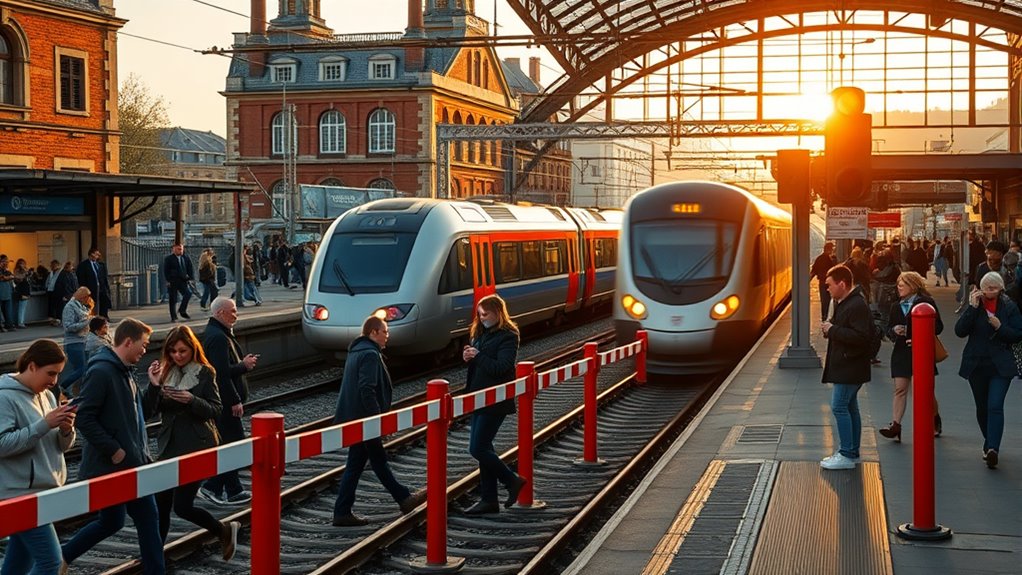
Level crossing safety remains a significant challenge across Europe due to wide disparities in protection measures and accident rates among member states. Some countries have advanced barriers, warning signals, and safety technology, while others lag behind, increasing risks for users. These differences contribute to uneven safety records and prevent a cohesive approach to accident prevention. To understand these issues better, consider:
Level crossing safety varies across Europe, with disparities in protection measures and accident rates.
- Variability in barrier installation and maintenance
- Differences in warning signal reliability
- Inconsistent use of automated detection systems
- Gaps in public awareness campaigns
- Divergent enforcement of safety regulations
These disparities mean that while some crossings are highly protected, others remain vulnerable, risking accidents. Addressing these gaps requires harmonized standards and targeted investments to improve overall safety and reduce preventable tragedies across Europe. One key factor is the quality of safety equipment, which varies widely and impacts overall protection. Additionally, the standardization of safety protocols could significantly enhance cross-border safety cooperation. Improving the consistency of safety measures across countries is essential for creating a safer and more reliable level crossing network. Promoting international collaboration is crucial for sharing best practices and ensuring uniform safety standards throughout the continent, especially considering the variability in safety investments among member states.
Addressing Security Threats and Violence at Stations
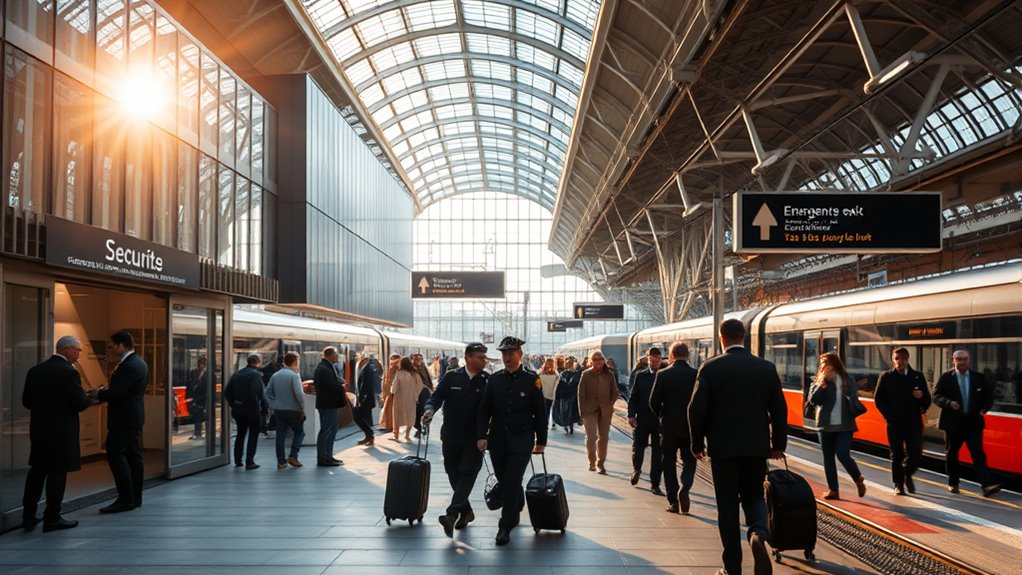
Security threats and violence at train stations have become pressing concerns that demand immediate action. You need to understand the rising risks faced by staff and passengers, from physical assaults to terrorism. Attacks on rail workers, especially in busy hubs like the UK, highlight vulnerabilities that require stronger protective measures. External areas of stations must incorporate natural barriers at least 50 cm high to deter unauthorized access. Station security should include targeted patrols, CCTV surveillance, and random baggage checks to prevent malicious activities. Advanced technologies, such as explosive detection systems and intelligent data analysis, help identify suspicious behavior early. Incorporating security best practices in station design and operations can also inspire innovative security solutions through storytelling and visual engagement. Additionally, proper ventilation considerations are essential to ensure a safe environment for both staff and passengers, especially when implementing new security measures. Regular staff training on security protocols enhances overall preparedness and response capabilities. By proactively addressing these threats, you can create safer environments, reduce incidents, and maintain public confidence in rail travel’s safety and security.
Implementing Common Security Measures Across Stations
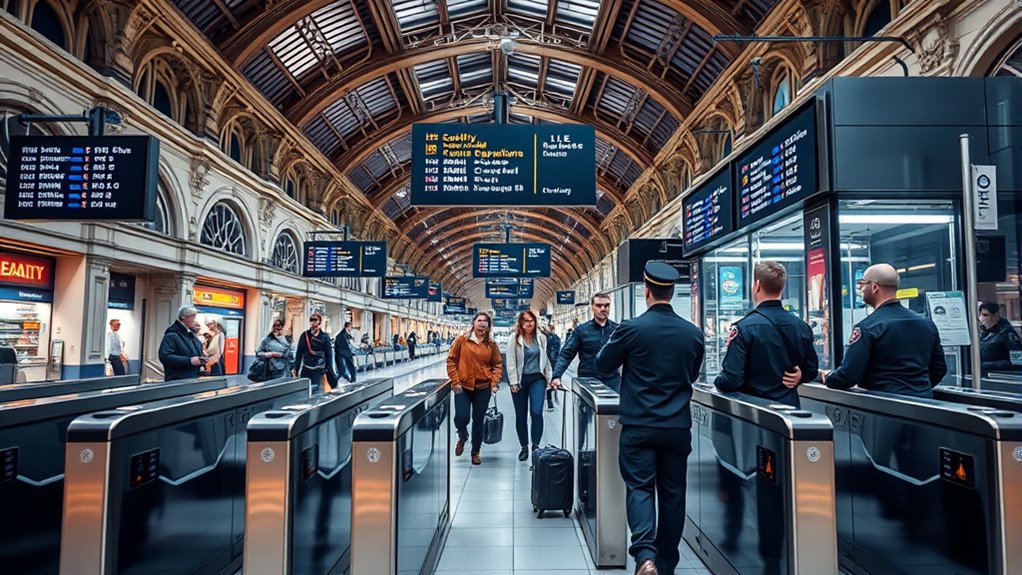
To effectively enhance safety at train stations, adopting common security measures across all facilities is essential. Standardized protocols help create a unified defense against threats and streamline responses. Implementing these measures involves several key actions:
- Installing ticket barriers, CCTV, and X-ray baggage scanners at all stations
- Deploying e-gates and explosive detection systems at international hubs
- Conducting random baggage searches for high-speed trains like TGV and Thalys
- Utilizing police, security officers, and canine units for random checks
- Leveraging intelligent data technology to identify security trends
These consistent measures not only improve threat detection but also build passenger confidence. A coordinated approach ensures that security efforts are thorough, efficient, and adaptable across Europe’s diverse station network.
Passenger Data Sharing and Border Security Concerns
Passenger data sharing plays a vital role in strengthening border security and preventing threats at European train stations. You may be impacted by regulations like the Passenger Name Record (PNR), which shares travel data with authorities. Countries like Belgium are piloting PNR for international trains and buses, extending beyond flights. This data helps identify irregular migration, document fraud, and organized crime. However, it also raises privacy concerns.
| Benefit | Concern |
|---|---|
| Faster border checks | Privacy infringement |
| Better threat detection | Data misuse |
| Prevents illegal crossings | Overreach in surveillance |
| Enhanced security cooperation | Potential for discrimination |
Lessons Learned From Railway Accident Investigations

Analyzing accident investigation reports reveals valuable lessons that can considerably improve railway safety across Europe. These investigations uncover root causes and reveal gaps in procedures, infrastructure, or communication that, if addressed, can prevent future incidents. By studying these reports, you learn to identify critical safety flaws and implement targeted improvements. Key lessons include:
- The importance of exhaustive safety audits after minor incidents to identify systemic issues.
- Enhancing communication protocols between train crews and control centers.
- Upgrading level crossing protections based on accident patterns.
- Regular training and simulation exercises to prepare staff for emergencies.
- Integrating accident data into a centralized EU database for cross-border learning.
Applying these lessons fosters a proactive safety culture, reducing risks and saving lives. Continuous learning from past accidents is essential for safer European railways.
Adoption of Single Safety Certificates and Crew Operations
The adoption of single safety certificates across Europe marks a significant step toward harmonizing railway safety regulations and streamlining cross-border operations. This move simplifies compliance for operators, reducing bureaucratic hurdles and ensuring consistent safety standards. By adopting a unified safety certification system, you’ll benefit from faster onboarding of international trains and more efficient crew management. The shift also supports the widespread use of one-person crews, which has been gradually increasing over the past four years without compromising safety. This approach allows crews to operate across borders with minimal paperwork, enhancing flexibility and efficiency. As safety protocols become more standardized, your risk of miscommunication or regulatory gaps decreases, leading to safer, more reliable train operations across the continent.
Enhancing Safety in High-Density Rail Networks

To improve safety in busy rail networks, implementing advanced protection technologies is essential. You need to focus on managing passenger flow effectively to prevent overcrowding and reduce risks. Combining these strategies helps create a safer environment for both travelers and staff.
Advanced Protection Technologies
Advanced protection technologies are transforming safety measures in Europe’s high-density rail networks by leveraging cutting-edge systems to prevent accidents and respond swiftly to incidents. These innovations include automated train control, real-time monitoring, and intelligent signaling that enhance safety and operational efficiency. You benefit from:
- European Train Control System (ETCS) implementation reducing human error
- Advanced level crossing protection devices minimizing collision risks
- Automatic incident detection systems enabling quick response
- Data analytics identifying safety trends proactively
- Integrated communication platforms ensuring seamless coordination
These technologies work together to create a safer environment for passengers and staff. By adopting such systems, rail operators can better manage high traffic volumes, reduce accidents, and improve overall safety performance, making Europe’s rail networks among the safest worldwide.
Managing Passenger Flow
Efficient management of passenger flow is vital for maintaining safety in Europe’s busy high-density rail networks. You should monitor passenger numbers closely, especially during peak hours, and use real-time data to prevent overcrowding. Implement clear signage and floor markings to guide passengers smoothly through stations, reducing congestion and confusion. Use automated crowd control measures, like dynamic platform announcements and controlled entry points, to distribute passenger loads evenly. Staff should be trained to manage large crowds effectively, responding quickly to any signs of panic or disorder. Technology, such as sensors and video analytics, can identify bottlenecks early, allowing for proactive adjustments. By controlling passenger flow effectively, you minimize risks like stampedes, accidental falls, and security breaches, ensuring a safer environment for everyone.
Future Trends and Innovations in Railway Safety
As technology continues to evolve, railway safety is poised for significant advancements driven by innovations like artificial intelligence, big data analytics, and automation. These technologies will enable you to monitor stations in real-time, predict risks, and respond faster to incidents. You can expect smarter track and train protection systems that adapt dynamically, reducing human error. Enhanced security measures will incorporate facial recognition, AI-powered surveillance, and automated threat detection, making stations safer. Data sharing across borders will streamline border security and prevent organized crime. Additionally, automation may lead to more one-person crews without compromising safety.
Railway safety will advance with AI, automation, and real-time monitoring, enhancing security and reducing human error across stations.
- AI-driven incident prediction
- Real-time risk monitoring
- Automated threat detection
- Cross-border data integration
- Smarter train control systems
Frequently Asked Questions
How Effective Are Current Train Protection Systems in Preventing Accidents?
Current train protection systems are quite effective in preventing accidents, but they aren’t foolproof. You benefit from advanced systems like ETCS, which improves control and safety, especially on busy lines. However, gaps remain, especially at level crossings where safety measures vary across countries. Continuous deployment and upgrading of train protection systems, along with consistent safety standards, are essential to further reduce risks and enhance overall safety for passengers and staff.
What Measures Are in Place to Protect Rail Staff From Violence and Threats?
You’re protected through multiple measures that keep rail staff safe from violence and threats. CCTV cameras monitor stations constantly, while security officers and police conduct random checks, including baggage scans. Some stations use explosive detection systems and E-gates for added security. Natural barriers are installed around station entrances, and data technology helps identify emerging threats. These proactive steps create a layered defense, but stay alert—threats evolve, and so must your safety measures.
How Is Passenger Data Used to Improve Railway Security and Safety?
You can see that passenger data helps improve railway security and safety by identifying risk patterns and potential threats. Authorities analyze data from Passenger Name Records (PNR) and digital incident reports to spot trends, detect suspicious activities, and optimize security measures. This real-time information allows for targeted screening, better resource allocation, and proactive responses to emerging threats, ultimately making your journeys safer and more secure across Europe.
What Are the Main Challenges in Standardizing Safety Protocols Across Europe?
Think of Europe’s railway system as a vast symphony, where every instrument must play in harmony. The main challenge in standardizing safety protocols is aligning diverse practices, technologies, and regulations across nations. Different levels of train protection systems and varying infrastructure investments create dissonance. You need consistent rules, shared knowledge, and cooperation to turn this complex orchestra into a seamless performance that keeps everyone safe and secure.
How Will Future Technological Innovations Enhance Overall Railway Safety?
Future technological innovations will considerably boost railway safety by deploying advanced train protection systems like ERTMS, which improve train control and reduce accidents. You’ll see more automation, smart surveillance, and real-time data sharing to identify risks early. Enhanced security measures, such as biometric checks and AI-powered threat detection, will make stations safer for passengers and staff. These innovations help prevent accidents, security breaches, and ensure smoother, more secure journeys across Europe.
Conclusion
While European train station safety varies, staying alert and informed can help you navigate risks. Some might think safety measures slow down travel or limit access, but these protocols actually protect you and others. Embracing new technologies and security practices means safer journeys without sacrificing convenience. By understanding these efforts, you can confidently enjoy Europe’s rail network, knowing that continuous improvements prioritize your safety and security at every station.