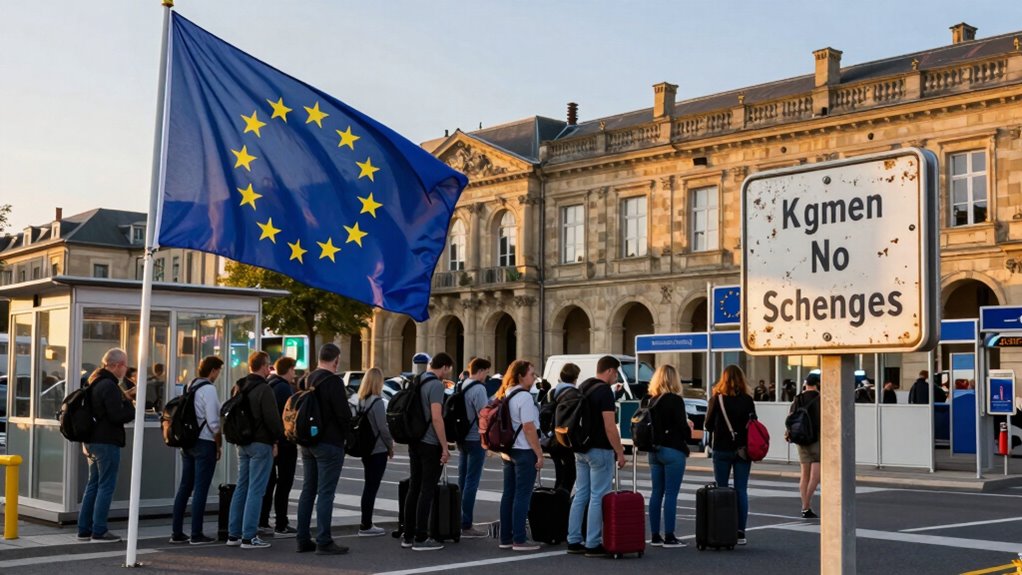

Knowing the difference between Schengen and non-Schengen areas is essential for planning your trip. In Schengen countries, you can move freely without border checks, simplifying multi-country travels. Non-Schengen countries like Ireland and Cyprus require separate visas and border procedures, meaning you need to plan accordingly. Microstates and territories also have specific entry rules, which can impact your itinerary. Understanding these distinctions helps avoid delays and legal issues—if you want to learn more, keep exploring the details.

Get travel and outdoor gear delivered free — and shop member deals
- Fast, free delivery on millions of items
- Access to Prime Big Deal Days deals on October 6–7
- Prime Video, Amazon Music and more included
Key Takeaways
- Schengen countries have abolished internal border controls, enabling passport-free travel, which simplifies multi-country itineraries.
- Non-Schengen countries like Ireland and Cyprus require separate visas and border checks, affecting travel planning.
- Travelers must understand visa validity and stay limits, as Schengen visas do not automatically cover non-Schengen regions.
- Crossing borders within Schengen is quick, but external borders still require valid documentation and compliance with entry rules.
- Water-related regulations and specific entry requirements for microstates or overseas territories impact itinerary flexibility and planning.
As an affiliate, we earn on qualifying purchases.
Understanding the Schengen Area and Its Composition

The Schengen Area is a group of European countries that have abolished internal border controls, allowing for passport-free travel among members. Currently, it includes 29 countries, with 25 EU members and four non-EU states—Iceland, Liechtenstein, Norway, and Switzerland. Especially, two EU countries, Cyprus and Ireland, are outside the Schengen zone. The area also covers overseas territories like the Canary Islands, Madeira, and the Azores. As a traveler, this means you can move freely across many countries without passing through border checks, simplifying multi-country trips. However, external borders are still monitored, so travelers must adhere to visa and entry regulations. Understanding which countries are part of Schengen helps you plan your itinerary and avoid surprises at borders. The Schengen Agreement aims to facilitate seamless travel and cooperation among member states, making it a key aspect of European travel planning. Additionally, border control policies vary between Schengen and non-Schengen countries, influencing travel documentation requirements and procedures.
passport holder for Europe travel
As an affiliate, we earn on qualifying purchases.
As an affiliate, we earn on qualifying purchases.
The Role of Non-Schengen European Countries and Microstates
While the Schengen Area covers most of Western and Central Europe, numerous countries outside its borders play pivotal roles in regional travel. Non-Schengen countries like Ireland and Cyprus require separate visas, impacting your planning if you visit multiple regions. Balkan states such as Albania, Bosnia, and North Macedonia are outside Schengen but are popular destinations, often needing individual visas. Microstates like Andorra, Monaco, San Marino, and Vatican City have open borders and often accept Schengen visas, simplifying access. Russia maintains independent border controls, so traveling there involves separate procedures. Understanding border policies helps you plan seamless travel, especially when combining Schengen and non-Schengen destinations in one trip. Additionally, awareness of visa requirements for each country ensures smoother entry and avoids unexpected delays. These non-Schengen countries and microstates diversify your itinerary options, offering unique cultural experiences and scenic routes. Moreover, considering border crossing procedures can prevent potential delays during your journey.
As an affiliate, we earn on qualifying purchases.
Visa Regulations: Schengen vs. National Visas
Visa regulations differ markedly when traveling within the Schengen Area compared to non-Schengen countries, which can impact your planning and documentation requirements. With a Schengen visa, you gain access to 29 countries, allowing seamless travel without border checks. However, for non-Schengen nations, you need separate visas, even if you’ve already obtained a Schengen visa. Free Floating considerations can influence whether you opt for a single visa or multiple permits based on your itinerary.
Key points include:
- Schengen visas cover multiple countries with one permit, but non-Schengen nations require individual visas.
- Microstates often accept Schengen visas due to open borders.
- Non-Schengen countries like Ireland or Cyprus demand different documentation and visa types.
Understanding these differences helps you avoid travel disruptions and ensures your itinerary aligns with visa rules. Planning ahead prevents overstays and visa rejections, making your trip smoother.
As an affiliate, we earn on qualifying purchases.
How Travel Freedom Is Shaped Within the Schengen Zone

Travel within the Schengen Zone is shaped by the agreement’s seamless border arrangements, allowing you to move freely across 29 countries without routine border checks. This means you can hop between member states without stopping for passport controls, making your journey smoother and faster. Your Schengen visa grants access to all participating countries, so long as you respect the 90/180-day stay rule. External border controls still exist, so you’ll need to carry valid travel documents. This open-border system encourages multi-country itineraries, giving you the flexibility to explore multiple destinations effortlessly. However, be mindful of the visa validity and stay limits, especially if planning to visit non-Schengen countries nearby. Overall, the zone creates a travel environment that emphasizes convenience and fluidity.
The Impact of Schengen Expansion on Travelers

Have you noticed how the expansion of the Schengen Area simplifies your journeys across Europe? As more countries join, your ability to travel seamlessly increases. You’ll benefit from:
- Fewer border checks, making crossing borders quicker and easier.
- More countries covered under a single visa, reducing the need for multiple visas.
- Greater flexibility for multi-country itineraries, especially in recent expansions like Croatia.
However, expansion also brings new considerations. You’ll need to stay aware of border rules at the Schengen perimeter and whether your visas cover non-Schengen countries. The evolving landscape means your travel plans can become more streamlined, but it’s essential to stay informed about which countries are included and the specific visa requirements for each.
Planning Your Trip: Managing Days in Schengen and Non-Schengen Countries
As your understanding of the expanded Schengen Area grows, it’s important to plan how you’ll manage your days across both Schengen and non-Schengen countries. Keep track of your stay limits, especially since Schengen visas allow 90 days within 180 days, while non-Schengen countries often require separate visas. To visualize your itinerary, consider this table:
| Country Type | Visa Requirements | Travel Flexibility |
|---|---|---|
| Schengen Countries | Single visa covers all | Seamless travel, no internal border checks |
| Non-Schengen EU | Separate visas needed | Border controls apply |
| Microstates | Often accept Schengen visas | Easy entry due to open borders |
| Balkan States | Individual visas required | Variable border controls |
| Russia & Others | Independent border controls | Limited travel freedom |
Plan carefully to avoid overstays or missing entry rules, especially when switching between zones.
New Entry and Exit Rules: The 2025 System Changes
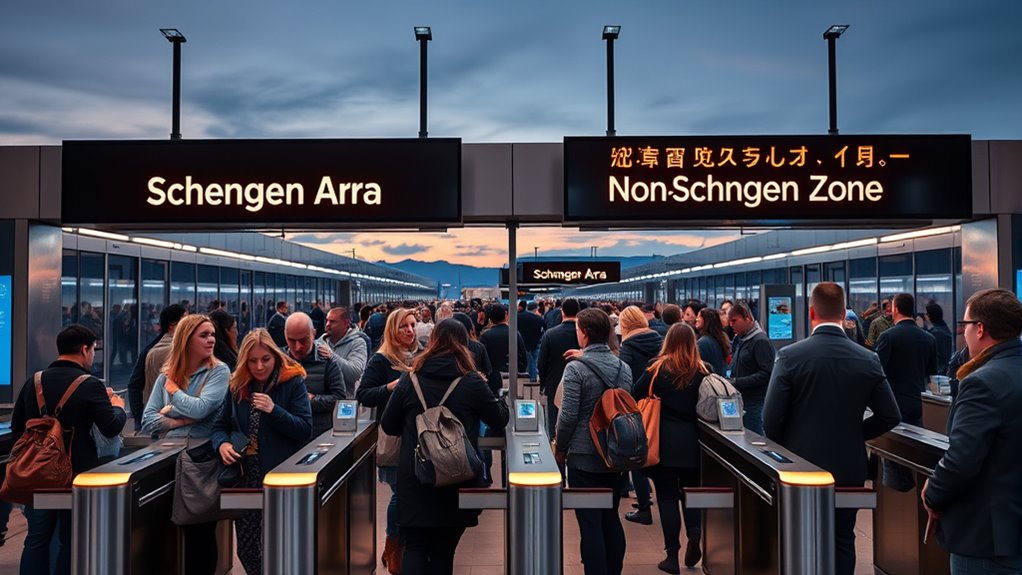
Starting October 12, 2025, the European Union will implement a new Entry and Exit System (EES) that considerably changes how you cross borders within and outside the Schengen Area. This digital system automatically registers your entry and exit, reducing paperwork and wait times. You’ll need to:
- Register your biometric data upon entry, ensuring smoother border checks.
- Be aware that short stays are limited to 90 days within a 180-day period.
- Understand that separate entries and exits will be recorded electronically, impacting your visa requirements and travel plans.
- Remember that border control procedures will become more efficient but also more reliant on electronic data, so accurate record-keeping is essential.
These changes aim to enhance security and streamline border crossings, but they also mean you must plan your itinerary carefully to stay within legal limits and avoid delays or rejection.
Common Mistakes When Arranging Multi-Region Itineraries

Many travelers overlook the specific visa requirements for different countries, risking denied entry or delays. Ignoring border regulations can cause unexpected hold-ups, especially when crossing between Schengen and non-Schengen zones. To avoid these mistakes, plan your itinerary carefully and verify all visa and border rules beforehand. Additionally, understanding water-related regulations can be crucial when visiting countries with unique water safety or environmental policies. Being aware of border crossing procedures can further streamline your journey and prevent unforeseen complications. Proper preparation, including awareness of body jewelry regulations, can also help avoid issues at border crossings related to personal adornments.
Overlooking Visa Requirements
When planning a multi-region itinerary, overlooking visa requirements can lead to unexpected delays or denied entry. You might assume a single visa covers all destinations, but that’s often false. For example, a Schengen visa isn’t valid for non-Schengen EU countries like Ireland or Cyprus, requiring separate visas. You also need to think about the duration limits—90 days within 180—for visas within the zone. Missing these details can halt your trip or create legal issues.
Be sure to check:
- Whether your visa covers all planned countries
- The visa validity period and stay limits
- If additional visas are needed for non-Schengen regions
Failing to verify visa requirements beforehand can disrupt your plans and cause costly surprises at borders.
Ignoring Border Regulations
Overlooking border regulations can cause significant issues during your trip, especially when traveling through multiple regions with different rules. If you neglect the specific entry and exit requirements for Schengen and non-Schengen countries, you risk delays, fines, or even denied entry. Each area has distinct rules—such as visa validity, border checks, and permitted stay durations—that must be followed carefully. Failing to adhere to these can disrupt your itinerary and create legal complications. For example, entering a non-Schengen country without the proper visa or overstaying your allowed days in a Schengen zone can lead to penalties. Always research border regulations for each destination and ensure your documentation aligns with the specific entry requirements for every country on your route.
Special Considerations for Microstates and Overseas Territories

Microstates and overseas territories often add complexity to travel planning within the Schengen and non-Schengen zones. These areas may have unique visa requirements, border controls, or open borders that can impact your itinerary. For example:
- Microstates like Andorra, Monaco, San Marino, and Vatican City often accept Schengen visas, simplifying entry.
- Overseas territories, such as the Canary Islands or Madeira, are part of their parent countries but may have different border rules.
- Russia and Belarus maintain strict border controls, requiring separate visas even if traveling within the Schengen zone.
Understanding these nuances guarantees you don’t encounter surprises at borders. Always verify visa validity, entry requirements, and border policies for microstates and territories before planning your route. This awareness helps prevent delays or denied entry, keeping your trip seamless.
Strategies for Seamless Travel Across Schengen and Non-Schengen Borders
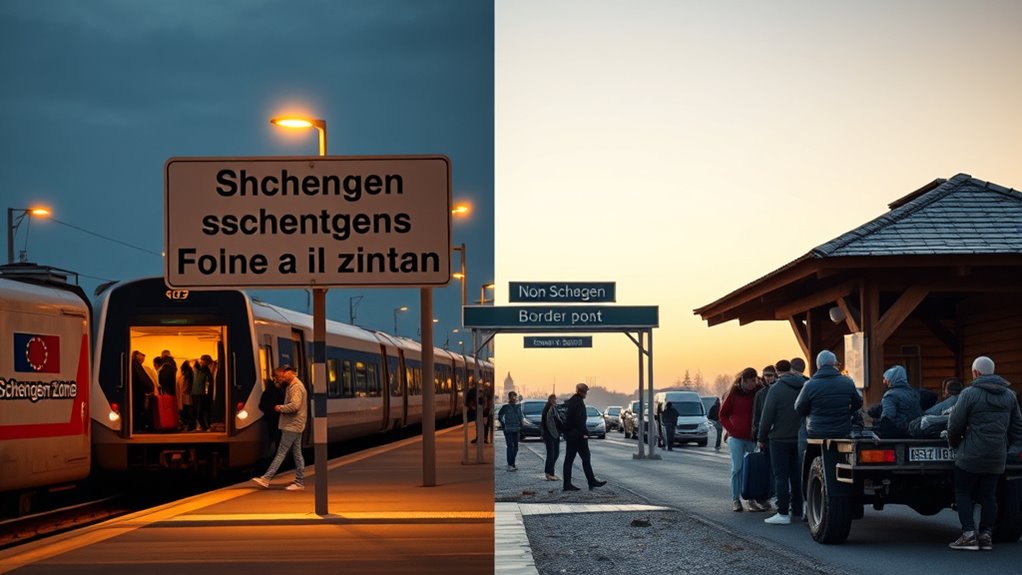
Traversing borders between Schengen and non-Schengen countries can seem complicated, but with careful planning, you can guarantee a smooth journey. First, track your days to stay within visa limits, counting Schengen and non-Schengen days separately. Always verify if your visa covers both areas or if you need separate visas. Research border procedures in advance, especially for non-Schengen countries with stricter entry requirements. Using a detailed itinerary helps avoid surprises at borders. Consider carrying supporting documents, such as hotel bookings and travel insurance, to streamline checks.
| Strategy | Implementation |
|---|---|
| Track travel days | Use a calendar or app to monitor stay duration |
| Check visa requirements | Confirm if a single visa covers all destinations |
| Prepare documentation | Keep hotel, insurance, and travel info handy |
| Research border rules | Know border control procedures for each country |
| Plan for contingencies | Have alternative routes in case of delays |
Frequently Asked Questions
Can I Switch Between Schengen and Non-Schengen Countries During My Trip?
Yes, you can switch between Schengen and non-Schengen countries during your trip, but you need to plan carefully. You’ll require separate visas if traveling on a single trip, especially if you stay beyond the 90/180-day limit within the Schengen zone. Remember, non-Schengen countries like Ireland or Cyprus need their own visas, and you should keep track of your entry and exit dates to avoid issues.
How Do Visa Requirements Differ for Separate Schengen and Non-Schengen Destinations?
Visa requirements differ for Schengen and non-Schengen destinations by demanding separate visas for each zone, requiring you to plan ahead. For Schengen countries, a single visa grants you access to 29 nations, simplifying travel within the zone. Non-Schengen countries like Ireland and Cyprus need their own visas, meaning you must apply separately. Remember, your itinerary’s structure influences visa choices, ensuring smooth entry and exit across all destinations.
What Happens if I Overstay the 90/180-Day Limit in Schengen Zones?
If you overstay the 90/180-day limit in Schengen zones, you risk serious consequences. You could face hefty fines, deportation, or bans from re-entering Schengen countries for several years. Your overstaying might also cause issues with visa applications or travel plans in the future. To avoid these problems, always track your days carefully and leave before your permitted time expires. If needed, seek legal advice or apply for an extension.
Are There Specific Travel Restrictions for Microstates Within Schengen?
Microstates within Schengen, like Andorra, Monaco, San Marino, and Vatican City, generally don’t have strict travel restrictions, thanks to their open borders with neighboring countries. You can usually visit them without extra visas if you already hold a valid Schengen visa. However, always verify specific entry requirements, as some microstates may have unique rules or special entry procedures. Planning ahead ensures smooth visits and avoids surprises.
How Will the New Entry/Exit System Affect My Travel Itinerary Planning?
The new entry/exit system will require you to register your travel details when crossing Schengen borders from October 12, 2025. It means you’ll need to plan your itinerary carefully, ensuring you don’t exceed your visa limits and keep track of entry and exit dates. This system helps streamline border checks but also means you must be more organized, especially if your trip includes both Schengen and non-Schengen countries.
Conclusion
So, enjoy the thrill of planning your trip across borders that sometimes blur and sometimes stand firm. After all, orienteering the Schengen maze is just part of the adventure—who needs smooth travel anyway? Just remember, whether you breeze through or get caught up in the rules, it’s all part of the charming chaos of European travel. Happy wandering—brace yourself for the surprises, and maybe, just maybe, a little irony along the way.
Fall Picks
fall essentials
As an affiliate, we earn on qualifying purchases.