This checklist is for weekend hikers who want to get organized before heading out, whether they are building a kit from scratch or checking what they already own. The focus is on practical choices that help a day outdoors go more smoothly, with room to match each item to the trail and your plans. Start with the basics and choose for your outing.

Get travel and outdoor gear delivered free with Prime
- Fast, free delivery on millions of items
- Prime Video, Amazon Music and more included
- Member-only deals all year
The sections follow the gear list: a daypack, trekking poles, trail shoes, hydration, water filtration, and a headlamp. Some sections include a named product pick; others offer general buying guidance. The water filter pick is a countertop system, so consider where and how you expect to use it before treating it as trail gear.
Use each section as a quick decision guide. Check fit, compatibility, and the details that matter for your route, then confirm the item works with the rest of your kit. A sensible checklist is one you can adapt to your hike, rather than a reason to carry gear you do not need.
Hiking Daypack
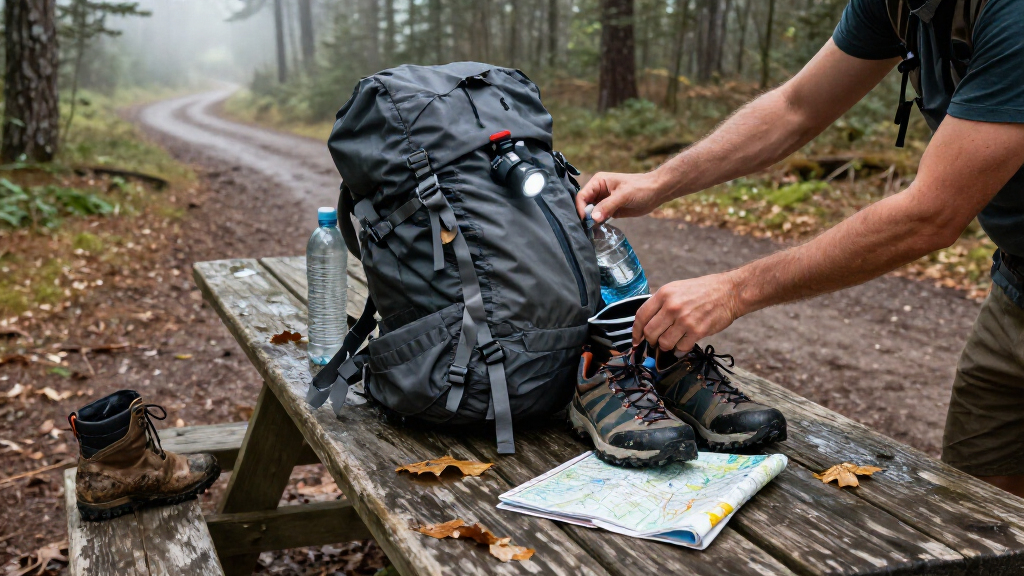
A daypack is the place to organize the items you want to bring along, so choose a size and layout that suit the length and style of your outing. The named pick is the Osprey Hikelite 18L Hiking Backpack, Tan, One Size. Its listed 18L capacity gives you a clear starting point for judging whether it matches your intended load. Consider the essentials you plan to carry and leave room for items you may add for the day.
A common mistake is choosing by appearance or capacity alone without checking how the pack sits on your body. Try it on with the layers you expect to wear and, if possible, with a representative load. Check the shoulder straps, back contact, adjustment range, and whether the pack stays comfortable as you move. “One Size” does not guarantee the same fit for every hiker, so review the fit details and return options before committing.
Also check the pack’s listed features against your needs, such as how you prefer to organize and access your belongings. Confirm that any accessories you plan to use are compatible rather than assuming they will fit. The right choice is the one that carries your planned kit comfortably, with capacity and fit working together.
What to look for:
- Capacity suited to the items you plan to carry
- Adjustable straps that sit comfortably on your body
- Fit checked with your usual hiking layers
- Storage layout that matches how you organize gear
- Compatibility confirmed for any planned accessories
Osprey Hikelite 18L Hiking Backpack, Tan, One Size

The Osprey Hikelite 18 is a lightweight trail-focused daypack featuring AirSpeed suspension with a mesh trampoline backpanel for ventilation and a LightWire frame that transfers weight off the shoulders. It includes a hydration reservoir sleeve, front zip pocket, stretch side pockets, trekking pole loops, and a 100% recycled waterproof raincover stored in its own bottom compartment.
Pros:
- AirSpeed suspension with ventilated mesh backpanel keeps back cool
- Included waterproof raincover in dedicated bottom compartment
- Well-organized storage including hydration sleeve and trekking pole loops
- Adjustable harness and padded hipwings for a stable, comfortable carry
Cons:
- Compact 18L capacity may be too small for longer hikes
- Hipbelt is minimal compared to larger packs
Best for: Hikers whose planned day kit fits an 18L pack
Not ideal for: Anyone who needs more capacity or a different fit
Bottom line: Choose the Hikelite 18L if its capacity and one-size fit work for your planned load.
Trekking Poles
Trekking poles can be useful to consider when you want extra points of contact while walking, but the right choice depends on your route, preferences, and ability to carry them. First decide whether you want poles for the whole outing or only for particular sections. That decision can help you weigh packability, adjustability, and grip comfort without choosing features you will not use. Keep your route and comfort at the center of the decision.
A common buying mistake is selecting poles without checking their adjustment range or how they feel in your hands. If you can, handle a pair and test the grip with the gloves or bare hands you expect to use. Check that the adjustment system is understandable and can be secured as intended. For collapsible designs, confirm the packed length fits your storage plan and that the pole sections lock and fold in the way you expect.
Fit is personal, so consult the manufacturer’s sizing guidance and check that the poles can be set to a usable length for your height and walking style. Also consider whether the tips and baskets suit the surfaces you expect to encounter, and confirm replacement parts are available if those matter to you. Avoid assuming a single pole style suits every trail; choose around adjustment and intended terrain.
What to look for:
- Adjustment range that suits your height and walking style
- Grips that feel comfortable in your hands
- Locking mechanism you can secure and operate
- Packed length that fits your storage plan
- Tips and baskets appropriate for expected surfaces
Trail Shoes
Trail shoes are a personal fit decision: the pair should feel comfortable with the socks you plan to wear and suit the kind of walking you expect to do. Start by checking the shoe’s intended use and the sizing guidance from its maker. If possible, try shoes on later in the day and walk around in them to notice pressure or slipping. A comfortable fit is the priority, so give toe room and heel hold careful attention.
A common mistake is relying on your usual shoe size without checking the specific model’s fit. Sizing can vary, so compare the maker’s chart and try both shoes with your hiking socks. Check that your toes have room when you move and that your heel feels secure without uncomfortable pressure. Do not assume a shoe will loosen into a good fit; persistent rubbing or pinching is a reason to reconsider the size or shape.
Think about the terrain and conditions you expect, then review the shoe’s stated use and sole details rather than inferring performance from appearance. Consider whether the shoe works with any insole you already use, and confirm that it stays comfortable during a longer walk before relying on it for a full outing. Choose the pair that fits your foot and plans, with comfort tested in advance.
What to look for:
- Sizing guidance for the specific shoe model
- Toe room and secure heel feel when walking
- Comfort tested with your hiking socks
- Sole and stated use that suit your planned terrain
- Compatibility with any insole you use
Hydration Bladder
A hydration bladder is worth considering if its drinking setup fits the way you plan to carry and access water. Before choosing one, check whether your pack is designed to accommodate a bladder and where it will sit when filled. Capacity should match your intended outing and how you plan to manage drinking along the way. Keep pack compatibility and capacity in view from the start.
A common mistake is assuming a bladder will fit any daypack or that its drinking tube will route comfortably. Review the pack’s storage dimensions and the bladder’s measurements, then check how the hose can be positioned and secured. Consider whether you can reach the drinking valve easily while wearing the pack. If you expect to refill during the outing, think through how the opening works and whether you can handle it conveniently.
Check the maker’s instructions for cleaning, drying, and care before purchasing, since a setup you can maintain is more likely to fit your routine. Confirm that the valve and other parts are replaceable if that matters to you, and review compatibility before pairing components from different products. Test the filled bladder in your pack at home to check balance, access, and leaks. Choose for easy use and care, as well as fit.
What to look for:
- Capacity suited to your planned outing
- Dimensions that fit your pack’s bladder compartment
- Tube routing and valve access that feel convenient
- Opening that suits your refill routine
- Cleaning instructions and compatible replacement parts
Water Filter
Water treatment choices need to match the way you plan to use them. The named pick is the Bluevua RO100ROPOT Countertop Reverse Osmosis Water Filter System. Its product name identifies it as a countertop system, so it is important to assess the intended setting before including it in a hiking checklist. Do not assume that a countertop unit is portable or suitable for treating water during a trail outing; check the manufacturer’s specifications and instructions.
A common mistake is choosing a filter based on its name without confirming what water sources and use cases the maker supports. Read the product details for setup requirements, treatment guidance, maintenance, and any limits stated by the manufacturer. If your goal is to treat water while hiking, compare options designed for that context and verify their instructions for the sources you expect to encounter. Match the product to the task, not just to the word “filter.”
Also check how the system is installed and maintained, and whether its required parts and replacement components fit your plans. For any hiking water treatment option, follow the maker’s directions and consider how you will carry, use, and care for it on your route. The countertop pick may suit a home use case; confirm that role before choosing it for your hiking water plan.
What to look for:
- Manufacturer’s stated use and setup requirements
- Confirmation that the system suits your intended setting
- Treatment guidance for the water sources you expect
- Maintenance steps and replacement component details
- Portability and carrying requirements for a trail option
Bluevua RO100ROPOT Countertop Reverse Osmosis Water Filter System

This portable countertop reverse osmosis system features a 6-stage filtration process with UV light and remineralization to reduce contaminants like lead, chlorine, and PFOS while adding essential minerals. It requires no plumbing installation, utilizing a high-borosilicate glass carafe to prevent secondary pollution and a 2:1 pure-to-drain ratio for water efficiency.
Pros:
- No installation or plumbing required; simply plug in and use.
- Uses a high-quality borosilicate glass carafe instead of plastic.
- Efficient water usage with a 2:1 pure-to-drain ratio and power-saving standby mode.
- Includes UV light and remineralization for healthier, better-tasting water.
Cons:
- Relatively heavy at 17.8 pounds.
- Slower flow rate of 0.26 liters per minute compared to some alternatives.
- Requires periodic filter replacements every 12-24 months.
Best for: Readers considering a countertop system for an appropriate setting
Not ideal for: Hikers seeking a trail-ready water treatment option
Bottom line: The Bluevua pick is identified as a countertop system; verify its intended use before adding it to hiking gear.
Headlamp
A headlamp can help keep light directed where you look, so choose one that matches your intended use and feels comfortable to wear. The named pick is a Rechargeable LED Headlamp with 230° Wide Beam, 1500 Lumens, and Red Ta. Because the product name ends with “Red Ta,” check the complete listing to confirm the full feature description before relying on it. Treat listed specifications as details to verify against the maker’s information.
A common mistake is focusing on a headline beam description without checking how the light operates in practice. Review the available modes, controls, beam settings, and any stated runtime information. Check how it charges and whether the charging method works with what you plan to bring. The fit matters too: adjust the band and wear it for a while to see whether it stays secure and comfortable over your usual layers.
Confirm the product’s weight, water resistance, and care instructions from its full listing rather than inferring them from the name. Consider whether the controls are easy to use and whether the light can be adjusted to the directions you need. If you depend on it for an outing, understand the charging and operating instructions before leaving. A good choice balances comfortable fit and usable controls with verified product details.
What to look for:
- Complete product listing and confirmed feature description
- Beam modes and controls explained by the maker
- Charging method that suits your plans
- Band that adjusts comfortably over expected layers
- Verified runtime, weight, and water resistance details
Rechargeable LED Headlamp with 230° Wide Beam, 1500 Lumens, and Red Taillight

This rechargeable headlamp provides a 230° wide beam with up to 1500 lumens, three lighting modes, and front and red rear lights. It has an adjustable headband and beam, an IPX6 waterproof rating, and a USB-C charging cable; the description lists runtimes of up to 12 hours on low and 6 hours on high.
Pros:
- Wide 230° beam with up to 1500 lumens
- Front light and red taillight with three modes
- Adjustable, elastic headband
- IPX6 waterproof rating
Cons:
- Battery specifications are inconsistent: the description lists a 5000 mAh battery, while the specs say two AA batteries are required
- Runtime claims vary between sections
Best for: Hikers who confirm fit, controls, and charging details
Not ideal for: Anyone relying on the truncated product name alone
Bottom line: Check the complete headlamp listing and its operating details before choosing this pick.
Build your checklist in a practical order: first make sure your daypack and footwear suit your outing, then decide whether poles fit your route and whether a bladder works with your pack. Next, choose water treatment for the setting where you will use it, and check that your headlamp’s full details, fit, and charging method meet your needs. Keep fit and intended use ahead of feature lists.
You do not need to make every choice at once. Review the details, test fit where possible, and adjust the checklist to the hike you actually plan to take. With a little preparation, you can head out with gear that makes sense for your route and feels right to use.
Halloween Picks

12.2 ft Halloween Inflatable Outdoor Decoration – Giant Pumpkin

Vexalify 11-Inch Halloween Pumpkin Fog Machine with 12-Color Lights

DomKom 6 ft Halloween Inflatable Ghosts Roasting Marshmallows
As an affiliate, we earn on qualifying purchases.