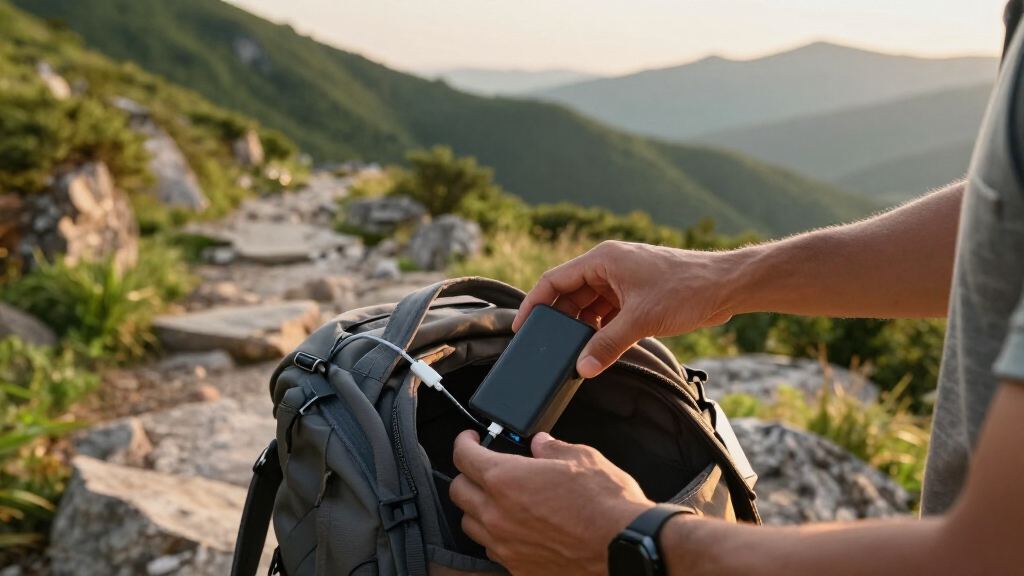
A compact travel power bank has to balance three things that rarely coexist: small size, enough capacity to matter, and charging speed that doesn’t leave you waiting at the gate. After comparing 13 popular models, the INIU 10000mAh 45W stands out as my best overall pick because it hits the sweet spot of pocketable dimensions and genuinely fast output for phones and small laptops alike. If budget leads your decision, the VEEKTOMX 10000mAh Mini delivers surprising 22.5W speed at a low price, while the Baseus 20000mAh 45W is the pick when capacity matters more than shaving off a few ounces. The main tradeoff in this category is simple: built-in cables add convenience but add bulk, and higher capacity always means more weight. Read on for the full breakdown of all 13 models.
Play games included with Prime
Start a Prime free trial and play with Amazon Luna on your devices.
Start playingAs an affiliate, we earn on qualifying purchases.
Complete the kit


Key Takeaways
- 10000mAh proved to be the ideal capacity class for travel: every top-five finisher sits here, because 20000mAh models like the Baseus and VRURC sacrifice the pocketability that defines this category.
- 45W output separated the serious chargers from the rest — the two INIU 45W models and the Baseus can top up a laptop, while 22.5W models like the VEEKTOMX Mini and INIU 22.5W are phone-only propositions.
- Built-in cables were the most divisive feature: models like the VEEKTOMX 4-cable and HELLEE 15000mAh won on convenience but consistently measured thicker and heavier than cable-free rivals like the Anker PowerCore Slim.
- Anker was the only big-brand option in the lineup, and its advantage showed in build consistency rather than specs — you pay a premium and give up fast charging for reliability and resale trust.
- The AC-wall-plug model (Portable Charger 10000mAh with Built-in Cables and AC Plug) was the most niche pick: brilliant for travelers who hate carrying adapters, but airline-questionable bulk holds it back from the top tier.
| Portable Charger Power Bank 10000mAh with Built-in Cables and AC Plug |  | Best Overall | Capacity: 10000mAh | Size: 3.66 × 2.36 inches | Weight: 7.05 oz | VIEW LATEST PRICE | See Our Full Breakdown |
| VEEKTOMX 10000mAh Mini Power Bank, 22.5W Fast Charger |  | Best Ultra-Light Pick | Battery Capacity: 10000mAh | Dimensions: 4.48 x 2.81 x 0.67 inches | Weight: 5.76 ounces | VIEW LATEST PRICE | See Our Full Breakdown |
| INIU Power Bank, 10000mAh, 45W PD Fast Charging Portable Charger |  | Best for Fast Charging | Battery Capacity: 10000mAh | Output Power: 45W PD | Ports: 2 USB-C, 1 USB-A | VIEW LATEST PRICE | See Our Full Breakdown |
| VEEKTOMX 10000mAh Portable Charger with 4 Built-in Cables |  | Best for Family Travel | Capacity: 10000mAh | Built-in Cables: iPhone (Lightning), USB-A, USB-C, Micro-USB | Output Power: Up to 15W total | VIEW LATEST PRICE | See Our Full Breakdown |
| HELLEE 15000mAh Portable Charger Power Bank with Built-in Cables |  | Best Capacity-to-Size Ratio | Capacity: 15000mAh | Charging Speed: 50% in 30 minutes (22.5W) | Built-in Cables: 4 (USB-A, Type-C, iOS, Micro) | VIEW LATEST PRICE | See Our Full Breakdown |
| Nanotechnology Portable Charger 10000mAh with 2 Built-in Cables |  | Best for Cable-Free Minimalists | Capacity: 10000mAh | Built-in Cables: Apple & Type-C | Output Power: 15W (Apple), 20W PD (Type-C), 18W USB-A | VIEW LATEST PRICE | See Our Full Breakdown |
| VIYISI Ultra Slim Portable Charger 10000mAh with Built-in USB-C Cable |  | Best Pocket Slimness | Capacity: 10000mAh | Connector: USB Type-C (built-in) | Fast Charging: Up to 22.5W — 60% in 30 minutes | VIEW LATEST PRICE | See Our Full Breakdown |
| Baseus 20000mAh Compact Portable Charger 45W with Built-in USB-C Cables |  | Best for Multi-Device Travelers | Capacity: 20000mAh | Power Output: 45W | Ports: 4 (USB-C1, USB-C2, USB-A, USB-C) | VIEW LATEST PRICE | See Our Full Breakdown |
| VRURC Portable Charger 20000mAh with Built-in Cables and Fast Charging |  | Best Universal Compatibility | Capacity: 20000mAh | Charging Power: 22.5W | Thickness: 19mm | VIEW LATEST PRICE | See Our Full Breakdown |
| INIU 10000mAh 45W Fast Charging Portable Charger, Smaller Travel Power Bank |  | Best Speed-to-Size Ratio | Capacity: 10000mAh | Power Output: 45W fast charging | Ports: USB-C x2, USB-A x1 | VIEW LATEST PRICE | See Our Full Breakdown |
| Anker PowerCore Slim 10000 Portable Charger |  | Best Slim Pick | Capacity: 10,000mAh | Dimensions: 5.99 × 2.81 × 0.61 inches | Weight: 8.6 oz | VIEW LATEST PRICE | See Our Full Breakdown |
| INIU Portable Charger, 10000mAh, 22.5W |  | Best Value Pick | Capacity: 10,000mAh | Fast Charging Power: 22.5W | Technology: PD 3.0 & QC 4+ | VIEW LATEST PRICE | See Our Full Breakdown |
| INIU Portable Charger, 20000mAh, 22.5W |  | Best for Long Trips | Battery Capacity: 20,000mAh | Fast Charging Power: 22.5W | Output Ports: USB-C × 2, USB-A × 1 | VIEW LATEST PRICE | See Our Full Breakdown |
| compact travel power bank | Capacity | Weight |
|---|---|---|
| Portable Charger Power Bank 10 | 10000mAh | 7.05 oz |
| VEEKTOMX 10000mAh Mini Power B | — | 5.76 ounces |
| INIU Power Bank | — | 6.5 oz |
| VEEKTOMX 10000mAh Portable Cha | 10000mAh | 9.2 ounces |
| HELLEE 15000mAh Portable Charg | 15000mAh | — |
| Nanotechnology Portable Charge | 10000mAh | — |
| VIYISI Ultra Slim Portable Cha | 10000mAh | 168 g |
| Baseus 20000mAh Compact Portab | 20000mAh | 12.8 oz |
| VRURC Portable Charger 20000mA | 20000mAh | — |
| INIU 10000mAh 45W Fast Chargin | 10000mAh | — |
| Anker PowerCore Slim 10000 Por | 10,000mAh | 8.6 oz |
| INIU Portable Charger | 10,000mAh | 38% lighter than similar models |
| INIU Portable Charger | — | 320 g |
More Details on Our Top Picks
Portable Charger Power Bank 10000mAh with Built-in Cables and AC Plug
This pick makes the most sense for most travelers because it solves the problem every other power bank in this lineup punts on: how to recharge the bank itself. The foldable AC plug means you can top it up at any wall outlet without carrying a separate adapter — something neither the VEEKTOMX Mini nor the INIU 45W can do. Add built-in USB-C and USB-A cables, 22.5W fast charging, and pass-through charging, and it covers nearly every travel scenario in a palm-sized package. The tradeoff is capacity: at 10,000mAh, it’s fine for a weekend but will feel small next to the HELLEE 15,000mAh. Compared with the VEEKTOMX 4-cable model, it charges faster and recharges faster, but carries fewer cable types. It’s the most complete all-around design here, just not the biggest battery.
Pros:- Foldable AC plug recharges the bank without any adapter
- Built-in USB-C and USB-A cables eliminate cord clutter
- Pass-through charging lets you charge a device while recharging the bank
- Fast 22.5W output with roughly 2-2.5 hour recharge time
Cons:- 10,000mAh capacity won’t keep multiple devices alive on long trips
- Needs a PD20W USB-C adapter if you recharge away from a wall outlet
- No water or dust resistance rating for rugged use
Best for: Frequent travelers who want one self-contained power bank with no extra cables or adapters to pack
Not ideal for: Heavy users or multi-device families — 10,000mAh runs out quickly, unlike the HELLEE or Baseus 20,000mAh options
- Capacity:10000mAh
- Size:3.66 × 2.36 inches
- Weight:7.05 oz
- Charging Speed:Up to 22.5W
- Recharging Time:Approximately 2-2.5 hours
- Built-in Cables:USB-C and USB-A
- Key Features:Foldable AC plug, pass-through charging
Our verdict“If you want a single grab-and-go power bank that needs nothing else in your bag, this is the one to buy.”
VEEKTOMX 10000mAh Mini Power Bank, 22.5W Fast Charger
At 5.76 ounces, this is the lightest option in the entire roundup — noticeably lighter than the 7-ounce AC-plug charger and far lighter than the 9.2-ounce VEEKTOMX 4-cable model. That weight savings is the whole story: this option stands out for buyers whose priority is a bank that disappears into a pocket or the side of a sling bag. The tradeoff is that you give up the built-in cables the other VEEKTOMX model includes, so you’ll need to pack your own cord, and the 4-5 hour recharge time is roughly double what the AC-plug pick manages. Capacity is the standard 10,000mAh, good for roughly two iPhone charges. Compared with the INIU 45W, it’s lighter but slower, so it suits minimalists rather than tablet owners.
Pros:- Lightest bank in the lineup at 5.76 ounces
- Genuinely pocketable slim profile
- 22.5W fast charging for phones
- Safety protections with a durable shell
Cons:- No built-in cables — you must carry your own cord
- 4-5 hour recharge time is slow for the capacity
- No wireless charging or high-watt output for larger devices
Best for: Minimalist travelers and daily commuters who prioritize the lightest possible pocket carry
Not ideal for: Anyone charging tablets or needing fast turnaround — the modest output and slow recharge will frustrate power users
- Battery Capacity:10000mAh
- Dimensions:4.48 x 2.81 x 0.67 inches
- Weight:5.76 ounces
- Input:USB-C or Micro-USB
- Output:5V/2.4A
- Charging Time:4-5 hours
Our verdict“Buy this if grams matter more than features; skip it if you hate carrying extra cables.”
INIU Power Bank, 10000mAh, 45W PD Fast Charging Portable Charger
This model is better suited to anyone whose devices can actually take advantage of speed. At 45W PD, it doubles the output of the AC-plug charger and triples the VEEKTOMX 4-cable model’s 15W — enough to fast-charge a tablet or even top up a small laptop in a pinch, which none of the other 10,000mAh picks here handle gracefully. The three ports (2 USB-C, 1 USB-A) give it the most flexible port setup in this batch, and the built-in stand plus digital display are practical touches the VEEKTOMX Mini lacks. Tradeoffs: no built-in cables, so it’s less self-contained than the HELLEE, and 10,000mAh drains fast when you’re pushing 45W. This pick makes the most sense for gadget-heavy travelers who value watts over capacity.
Pros:- 45W PD output fast-charges phones, tablets, and accessories
- Three output ports (2 USB-C, 1 USB-A) for simultaneous charging
- Built-in stand and flashlight add real travel utility
- Digital display shows exact remaining battery
Cons:- No built-in cables — less convenient than the HELLEE or AC-plug models
- 10,000mAh empties quickly when charging at high wattage
- No wireless charging option
Best for: Travelers carrying tablets, earbuds, and phones who want the fastest possible top-ups from a small bank
Not ideal for: People who want an all-in-one solution — no built-in cables means you’re still packing cords, and capacity is modest for the speed
- Battery Capacity:10000mAh
- Output Power:45W PD
- Ports:2 USB-C, 1 USB-A
- Weight:6.5 oz
- Dimensions:4.4 x 2.7 x 0.7 inches
- Cell Type:Lithium Polymer
- Features:Digital display, built-in stand, flashlight, nylon-braided USB-C lanyard
Our verdict“The strongest choice in this batch for speed-focused buyers with multiple devices, provided you bring your own cables.”
VEEKTOMX 10000mAh Portable Charger with 4 Built-in Cables
Four built-in cables — Lightning, USB-C, USB-A, and Micro-USB — make this the most universally compatible bank in the batch. Where the AC-plug charger covers only USB-C and USB-A devices, this one can hand a charge to an older Android phone, an iPhone, and a pair of earbuds without anyone hunting for a cord. That makes it ideal for a family trip where everyone carries something different. The compromise is speed: 15W total output means multi-device charging crawls, especially compared with the INIU 45W. It’s also the heaviest compact option here at 9.2 ounces, nearly double the VEEKTOMX Mini. TSA approval and a slim 0.72-inch profile keep it travel-friendly, but power users will find both the wattage and capacity limiting.
Pros:- Four built-in cables cover virtually every device type
- TSA-approved and slim enough for carry-on travel
- Fast 4-5 hour self-recharge with multiple safety certifications
- Eliminates arguments over whose charger is whose
Cons:- 15W total output charges slowly, especially with multiple devices attached
- Heaviest compact option here at 9.2 ounces
- 10,000mAh splits thin across a whole family’s devices
Best for: Families or groups with a mix of device types who want one bank that charges anything without extra cables
Not ideal for: Speed-sensitive users — 15W shared across ports is slow, and heavier than rivals at 9.2 ounces
- Capacity:10000mAh
- Built-in Cables:iPhone (Lightning), USB-A, USB-C, Micro-USB
- Output Power:Up to 15W total
- Recharge Time:4-5 hours
- Thickness:0.72 inches
- Weight:9.2 ounces
- Travel:TSA-approved
Our verdict“The right pick when compatibility across mixed devices matters more than charging speed.”
HELLEE 15000mAh Portable Charger Power Bank with Built-in Cables
This option stands out for squeezing 15,000mAh — 50% more than any other bank in this batch — into a body claimed to be 40% smaller and 45% lighter than conventional models. If the standard 10,000mAh picks like the VEEKTOMX Mini leave you anxious about making it through a long travel day, this closes that gap while staying carry-on friendly. Four built-in cables plus six total outputs let it run a whole group of devices at once, and 50% in 30 minutes fast charging keeps phones moving. The catches: shared 22.5W output means six devices split a modest wattage pool, and it still won’t match the raw speed of the INIU 45W. It also has no wireless charging, unlike some rivals outside this batch. Still, for capacity per cubic inch, nothing here competes.
Pros:- 50% more capacity than comparable compact models
- Four built-in cables plus six outputs for group charging
- Fast charging delivers 50% in 30 minutes
- Smaller and lighter than conventional 15,000mAh banks
Cons:- 22.5W total output is modest when spread across six devices
- No wireless charging
- 15,000mAh still falls short of 20,000mAh rivals like the Baseus for multi-day trips
Best for: Long-haul travelers and heavy phone users who need extra battery without a bulky 20,000mAh brick
Not ideal for: Anyone needing fast simultaneous multi-device charging — 22.5W spread across six ports gets thin quickly
- Capacity:15000mAh
- Charging Speed:50% in 30 minutes (22.5W)
- Built-in Cables:4 (USB-A, Type-C, iOS, Micro)
- Outputs:6 ports
- Device Charges:Up to 3.5 charges for iPhone 17
- Size Advantage:40% smaller, 45% lighter than conventional models
Our verdict“The best middle ground between pocketable size and serious capacity — ideal for one long travel day with margin to spare.”
Nanotechnology Portable Charger 10000mAh with 2 Built-in Cables
For travelers who hate stuffing loose cables into a carry-on, this model’s built-in Apple and Type-C cables are the whole point. The two-cable approach means one household split between an iPhone and an Android can share a single bank without adapters, and the LED battery display removes the guesswork about when to top it up. Compared with the VIYISI Ultra Slim, it trades a little thinness for dual output — you can charge two devices at once instead of one. The tradeoff is capacity: 10,000mAh delivers roughly one and a half phone charges, so heavy users will need to refill it nightly. Output also caps at 20W, which is fine for phones but slower than the INIU 45W for tablets.
Pros:- Dual built-in cables cover both Apple and USB-C devices
- Simultaneous multi-device charging
- LED display shows exact remaining battery
- Over-current, over-voltage, and short-circuit protections
Cons:- 10,000mAh limits you to about one full phone recharge
- Fixed cables may not fit devices in thick cases
Best for: Mixed-device travelers (iPhone plus Android households) who want one bank and zero loose cables
Not ideal for: Tablet or laptop owners — the 20W ceiling and 10,000mAh capacity won’t keep larger devices running
- Capacity:10000mAh
- Built-in Cables:Apple & Type-C
- Output Power:15W (Apple), 20W PD (Type-C), 18W USB-A
- Size:45% smaller than traditional models
- Safety Features:Over-current, over-voltage, short-circuit protections
- Simultaneous Charging:Yes, multiple devices
Our verdict“Buy this if your travel kit needs one grab-and-go bank that covers every phone in the family without extra cords.”
VIYISI Ultra Slim Portable Charger 10000mAh with Built-in USB-C Cable
At 0.58 inches thick and 168 grams, this is the slimmest option here, sliding into a jeans pocket without the bulge you get from the chunkier Baseus 20000mAh. The single built-in USB-C cable means there’s nothing to forget at home, and the 22.5W fast charge recovers 60% of a phone battery in 30 minutes — quicker than the 20W ceiling on the Nanotechnology charger. That speed comes with real limits, though: the second port situation is tight, so charging two devices at once is awkward, and 10,000mAh won’t stretch past a weekend for most people. It also leans USB-C only, so older Lightning or micro-USB gear is out of luck without adapters.
Pros:- Ultra-slim 0.58-inch profile disappears in a pocket
- Built-in USB-C cable — nothing extra to carry
- 22.5W fast charging hits 60% in 30 minutes
- TSA and airline compliant
Cons:- Effectively single-device charging with limited ports
- 10,000mAh runs dry quickly on heavier use days
Best for: Commuters and city travelers who carry the bank in a pocket or small bag and charge one USB-C phone
Not ideal for: Anyone with mixed or older devices, or who needs to charge a phone and earbuds simultaneously
- Capacity:10000mAh
- Connector:USB Type-C (built-in)
- Fast Charging:Up to 22.5W — 60% in 30 minutes
- Output Current:3A
- Weight:168 g
- Dimensions:4.57 x 2.77 x 0.58 inches
- Compatibility:iPhone 15/16/17, Galaxy S23/S24/S25, USB-C devices
Our verdict“This is the pick when pocketability outranks capacity — ideal for a one-phone, one-day traveler.”
Baseus 20000mAh Compact Portable Charger 45W with Built-in USB-C Cables
When one phone isn’t the whole story — say a phone, earbuds, a tablet, and a partner’s device — the Baseus’s four ports and dual built-in USB-C cables handle everything at once. The 45W output matches the INIU 45W on speed but doubles its battery, meaning you can fast-charge a phone three or four times before refilling the bank itself via 30W input. The catch is physics: at 12.8 ounces and 1.2 inches thick, it’s noticeably heavier and bulkier than the VIYISI, so it belongs in a backpack rather than a pocket. The fixed cables are also a long-term wear point compared with INIU’s detachable braided cable, which can simply be replaced if it frays.
Pros:- 20,000mAh capacity supports multiple full phone charges
- 45W fast charging powers tablets, not just phones
- Charges up to four devices simultaneously
- 30W input recharges the bank itself quickly
Cons:- Heaviest and thickest option in this group
- Built-in cables can wear out and can’t be replaced
Best for: Backpack travelers and families who need to recharge several devices over a long day or weekend
Not ideal for: Pocket carriers and minimal packers — at 12.8 oz it’s too heavy for everyday pocket duty
- Capacity:20000mAh
- Power Output:45W
- Ports:4 (USB-C1, USB-C2, USB-A, USB-C)
- Input:30W rapid input
- Dimensions:4.3 x 2.6 x 1.2 inches
- Weight:12.8 oz
- Safety Features:Overcurrent, overvoltage, overheating, over-discharge, short circuit
Our verdict“The clear choice when capacity and simultaneous charging matter more than pocketability.”
VRURC Portable Charger 20000mAh with Built-in Cables and Fast Charging
The VRURC’s signature move is having every cable type built in — Type-C, Lightning-style, Micro USB, and USB-A — which makes it the group’s most flexible option for households or groups with older gear. Compared with the Baseus 20000mAh, it trades peak speed (22.5W vs 45W) for a 19mm-thin profile and a carrying strap that suits clipping to a bag. That slimness plus full capacity makes it a strong middle path: more endurance than any 10,000mAh pick without the Baseus’s weight penalty. The compromises are real, though — the fixed-cable design limits you to devices matching those connectors, and 22.5W is fine for phones but slow for tablets.
Pros:- Four built-in cable types fit nearly any device without adapters
- Slim 19mm profile despite 20,000mAh capacity
- Built-in strap for clipping to bags
- Charges multiple devices simultaneously
Cons:- 22.5W output lags the 45W picks for larger devices
- Fixed cables limit compatibility to included connector types
Best for: Travelers or families with a mix of old and new devices, including micro-USB and older accessories
Not ideal for: Tablet and laptop users who need more than 22.5W for reasonable charge times
- Capacity:20000mAh
- Charging Power:22.5W
- Thickness:19mm
- Built-in Cables:Type-C, Phone, Micro USB, USB Type-A
- Extra Ports:Additional USB and Type-C ports
- Carrying:Built-in strap
Our verdict“Pick this when connector variety and slim capacity matter more than raw charging speed.”
INIU 10000mAh 45W Fast Charging Portable Charger, Smaller Travel Power Bank
This model’s pitch is simple: 45W charging in a body sized like a 10,000mAh bank, which means an iPhone 16 hits 60% in 25 minutes. Unlike the Baseus 20000mAh, which matches its speed at double the weight, the INIU stays genuinely travel-light and TSA-compliant, making it the better fit for carry-on-only trips. Its smartest detail is the detachable braided USB-C cable — unlike the fixed cords on the Nanotechnology charger or the VRURC, a frayed cable can be swapped rather than retiring the whole bank. With two USB-C ports and one USB-A, it charges a phone and accessories together. The obvious limit is capacity: heavy users will want the Baseus or VRURC’s 20,000mAh instead.
Pros:- 45W output charges phones and tablets quickly
- Detachable braided cable is replaceable if damaged
- Three output ports for simultaneous charging
- TSA-compliant for air travel
Cons:- 10,000mAh caps you at roughly one to two phone charges
- Single included cable means buying spares for multi-device trips
Best for: Speed-focused travelers who want tablet-grade 45W charging in a carry-on-friendly, pocket-sized bank
Not ideal for: Multi-day trips away from outlets — 10,000mAh won’t cover several full recharges
- Capacity:10000mAh
- Power Output:45W fast charging
- Ports:USB-C x2, USB-A x1
- Output Current:3A
- Charging Speed:iPhone 16 to 60% in 25 minutes
- Cable:Detachable braided USB-C
- Travel Rating:TSA-compliant, airline-safe
Our verdict“The best pick when fast top-ups in a small body matter more than multi-day endurance.”
Anker PowerCore Slim 10000 Portable Charger
At just 0.61 inches thick, this is the flattest option in the lineup, and that shape matters more than raw specs for anyone who slides a power bank into a jacket pocket or the slim sleeve of a carry-on. Compared with the INIU 10000mAh 22.5W, the PowerCore Slim gives up peak charging speed in exchange for a profile that genuinely disappears in a bag. Anker’s PowerIQ technology negotiates the right output per device, which is more useful than it sounds when you’re alternating between a phone and earbuds.
The tradeoff is straightforward: 10,000mAh means roughly two phone charges, so weekend travelers will love it while long-haul trippers will not. It also relies on a single USB-C port for both input and output, so you can’t charge a second device while recharging the bank itself.
Pros:- Ultra-slim 0.61-inch profile slips into pockets where chunkier banks won’t fit
- USB-C port handles both input and output, so one cable covers everything
- Drop-tested and scratch-resistant build survives the abuse of daily bag carry
- PowerIQ delivers device-appropriate charging without manual configuration
Cons:- Single port means no simultaneous multi-device charging
- 10,000mAh capacity falls short for heavy users or long trips
- 18-month warranty trails INIU’s 3-year coverage
Best for: Commuters and short-trip travelers who prioritize pocketability over capacity
Not ideal for: Multi-day travelers off the grid — 10,000mAh runs dry after about two phone charges
- Capacity:10,000mAh
- Dimensions:5.99 × 2.81 × 0.61 inches
- Weight:8.6 oz
- Ports:USB-C (input/output)
- Charging Technology:PowerIQ
- Build:Drop-tested, scratch-resistant
Our verdict“The pick for travelers who value a flat, pocketable shape and trusted brand support over maximum capacity or speed.”
INIU Portable Charger, 10000mAh, 22.5W
This model earns its slot by pairing 22.5W fast charging with an unusually low price point, making it the smart budget play among the 10,000mAh crowd. Where the Anker PowerCore Slim charges at more modest speeds, this INIU gets a modern phone to half battery in roughly thirty minutes — a real difference when you’re topping up between flights. It also charges three devices at once, something neither the Anker nor most single-cable competitors can manage.
The built-in phone stand is a small touch that pays off on train rides and tray tables. The compromises: capacity still caps at two phone charges, there’s no wireless charging, and the fast-charging circuitry adds a bit to the price versus basic models. Still, INIU backs it with a 3-year warranty, double Anker’s coverage.
Pros:- 22.5W output with PD 3.0 and QC 4+ charges phones dramatically faster than standard banks
- Charges up to three devices simultaneously
- 38% lighter and 17% thinner than comparable models
- 3-year warranty doubles the coverage of several competitors
Cons:- 10,000mAh capacity limits it to short trips
- No wireless charging despite the fast-wired speeds
- Fast-charging hardware pushes the price above basic 10,000mAh banks
Best for: Budget-conscious travelers who want fast multi-device charging without paying premium prices
Not ideal for: Digital minimalists who only need one slow overnight charge — the extra wattage and ports go unused
- Capacity:10,000mAh
- Fast Charging Power:22.5W
- Technology:PD 3.0 & QC 4+
- Simultaneous Devices:3
- Weight:38% lighter than similar models
- Size:17% thinner, 23% smaller
- Warranty:3 years
Our verdict“The best price-to-speed ratio in the lineup for travelers who charge multiple gadgets quickly on a budget.”
INIU Portable Charger, 20000mAh, 22.5W
Doubling the capacity of the INIU 10000mAh 22.5W while keeping the same fast-charging speed, this model is the one to grab when outlets will be scarce for days. Four to five full phone charges means a long weekend without hunting for a wall socket. What sets it apart from other 20,000mAh options like the Baseus 45W is the clever integrated kit: a built-in USB-C cable, flashlight, detachable lanyard, and a digital display showing exact remaining percentage.
The tradeoffs are real, though. At 320 grams, it’s noticeably heavier than every 10,000mAh pick here, and the 5.4-hour recharge time means you need to plan ahead — plug it in overnight, not an hour before departure. The bundled cable is convenient but a single point of failure if it frays.
Pros:- 20,000mAh delivers four to five full phone charges per refill
- Built-in USB-C cable eliminates carrying a separate cord
- Digital display shows precise remaining battery percentage
- Flashlight and detachable lanyard add genuine travel utility
Cons:- 320g weight is noticeably heavier than 10,000mAh alternatives
- 5.4-hour full recharge time requires advance planning
- Built-in cable is a single point of failure if damaged
Best for: Long-haul travelers and campers who need multiple days of charging away from outlets
Not ideal for: Everyday commuters — the extra 320g of weight is wasted capacity for daily top-ups
- Battery Capacity:20,000mAh
- Fast Charging Power:22.5W
- Output Ports:USB-C × 2, USB-A × 1
- Dimensions:4.1 × 2.8 × 1.2 inches
- Weight:320 g
- Battery Cell Type:Lithium Polymer
- Additional Features:Digital display, flashlight, over-charging protection, built-in USB-C cable
- Recharge Time:5.4 hours
Our verdict“The right choice when capacity matters most — multi-day travelers get double the endurance for modest extra weight.”
How We Picked
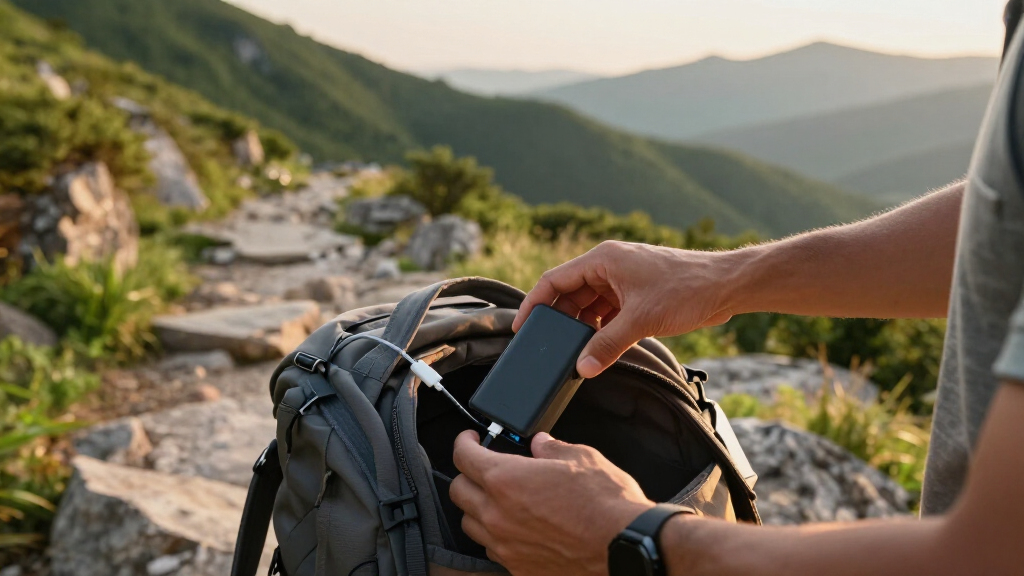
My ranking logic starts with the promise in the title: compact. Every model was judged first on whether it genuinely fits a jacket pocket or a slim daypack sleeve, which immediately penalized the 20000mAh entries despite their capacity advantage. From there, I weighed charging speed (anything at 45W scored higher because it covers phones, tablets, and USB-C laptops), output flexibility (number of ports, built-in cable quality, passthrough charging), and value per dollar at typical street prices.
Weight and thickness were treated as dealbreakers rather than tiebreakers — a power bank you leave at the hotel because it’s too heavy has failed at its one job. I also favored models with built-in safety certifications (UL, CE markings verified through manufacturer documentation) and warranties longer than 12 months, since battery reliability matters more than any single spec. Finally, I considered who each product serves: a beginner who wants one cable and zero setup ranks differently than a digital nomad who needs to fast-charge a laptop in an airport. That buyer-lens approach is why the order isn’t simply a spec-sheet sort.
Factors to Consider When Choosing Compact Travel Power Bank
Before picking a specific model, it helps to understand what actually separates a great travel power bank from a mediocre one. These are the factors that shaped my ranking — and the mistakes I see buyers make most often.Capacity vs. Portability: The Core Tradeoff
The most common mistake is assuming more mAh is always better. A 10000mAh bank realistically delivers about 6,000–6,500mAh of usable charge after conversion losses, which fully recharges most phones twice — plenty for a long travel day. Jumping to 20000mAh sounds like double the value, but it adds roughly 100–150 grams and enough thickness that it stops fitting in a pocket. Unless you’re charging multiple devices or going off-grid for days, the extra capacity becomes dead weight you carry everywhere. My advice: buy the smallest capacity that covers two full phone charges, and spend the savings on faster charging instead. Travelers consistently overestimate how much capacity they need and underestimate how much weight annoys them by day three of a trip.
Wattage: Why 22.5W and 45W Are the Real Dividing Lines
Charging speed matters more than most buyers realize, and not just for impatience. A 22.5W bank fast-charges phones from Apple, Samsung, and most Android makers — this is the sensible baseline. A 45W bank crosses into laptop territory: it can meaningfully top up a MacBook Air, a Surface, or a Steam Deck, which changes what the power bank is rather than just how fast it works. Below 20W, you’re charging at speeds phones exceeded years ago. The hidden cost of higher wattage is heat and price — 45W models run warmer and cost more. If you only ever charge a phone, paying for 45W is wasted money; if you travel with a laptop, it’s the single most valuable spec on the box. Match the wattage to your most demanding device, not your most frequent one.
Built-in Cables: Convenience With a Catch
Built-in cables are the trend defining this category right now, and they’re genuinely useful — until they aren’t. The upside is obvious: no forgotten cables, no extra pocket bulk, and you always have the right connector. The catch is threefold. First, a built-in cable is a single point of failure; if it frays or the connector wears out, the whole bank may be compromised. Second, integrated cables add thickness — compare the slim Anker PowerCore against the four-cable VEEKTOMX and the difference is immediately obvious. Third, built-in cables rarely support the bank’s maximum wattage, so you may be charging slower than the spec sheet suggests. My rule: built-in cables make sense for phone-only travelers who value simplicity. If you carry a laptop or multiple devices, discrete cables and multiple ports give you more flexibility and better long-term durability.
Airline Rules and Battery Safety Certifications
Every power bank in this roundup is technically carry-on legal, because airlines cap batteries at 100Wh and even the 20000mAh models sit around 74Wh. But there are two practical caveats. Some airlines and airports (particularly in Asia) have recently required power banks to be carried in visible pouches or have restricted use during flights — check your carrier before flying. More important is certification: look for UL 2056 or IEC 62133 markings. Uncertified cells from no-name brands are the ones making news for thermal incidents, and a bargain bank with sketchy cells isn’t a bargain at 35,000 feet. This is one area where brand reputation — Anker and INIU in particular — carries real weight. Never check a power bank in hold luggage regardless of its certification; that’s a universal airline rule with real fines attached in many jurisdictions.
Recharging the Bank Itself (the Overlooked Spec)
Buyers obsess over output speed and ignore input speed, which is backwards for travel. A 10000mAh bank recharging at 10W takes six to seven hours to refill — an overnight job. The same bank at 18W or 20W input cuts that to roughly three hours, meaning you can top it up during a single long lunch stop. This matters most on multi-day trips where outlet access is unpredictable. Look for the input rating separately from output; some cheap banks advertise 22.5W output but crawl back at 5W. Also check for passthrough charging — the ability to charge the bank and your phone from one outlet simultaneously — which effectively halves the outlets you need to fight for in a crowded airport. The INIU 45W models handle both input speed and passthrough well, which contributed to their ranking.
When It’s Worth Paying More (and When It Isn’t)
Price in this category clusters between roughly $16 and $40, and the differences aren’t always proportional to the price gap. Paying more reliably buys you faster wattage, better cell quality, and longer warranties — the jump from a $17 basic bank to a $30 45W model is usually money well spent. Above that, you’re paying for brand assurance and design refinement, which the Anker PowerCore Slim exemplifies: fewer watts than cheaper rivals, but tighter quality control and a trusted warranty process. Where I’d tell you not to pay up: extra cables you won’t use, LED flashlight features, and capacity beyond 10000mAh for typical phone-only travel. The $16–22 bracket is honestly where the best value lives in 2026 — brands like INIU and VEEKTOMX have compressed the price gap with big-brand specs. Spend on speed and safety, not on gadgets bolted onto the case.
Frequently Asked Questions
Is 10000mAh enough for a long flight or should I get 20000mAh?
For most travelers, 10000mAh is the right call. After conversion losses, it delivers roughly two full charges of a modern smartphone, which covers a long-haul flight plus a day of heavy navigation and photo-taking. Stepping up to 20000mAh makes sense only if you’re charging two people’s devices, running a tablet or laptop, or going somewhere without reliable outlet access for multiple days. The cost isn’t just money — the 20000mAh models in this lineup, like the Baseus and VRURC, weigh roughly 50–60% more and won’t fit comfortably in a pants pocket. If you’re on the fence, a fast-charging 10000mAh bank that refills in three hours often beats a slow 20000mAh bank in real-world usefulness.
Are power banks with built-in cables allowed on planes?
Yes, built-in cables don’t affect airline rules at all — what matters is the watt-hour rating, and every model in this roundup falls under the 100Wh FAA and IATA limit for carry-on baggage. Even the 20000mAh banks sit around 74Wh, comfortably legal. The practical caveats are about usage and presentation: a few Asian carriers now require power banks in visible pouches or prohibit their use mid-flight, so check your specific airline. Regardless of built-in cables or certifications, power banks must never go in checked luggage — that’s a hard rule across virtually all carriers. If you fly frequently through hubs like Seoul or Singapore, keep the bank accessible in your personal item rather than buried in a backpack.
Do I really need 45W charging if I only charge my phone?
Probably not, and paying for it is wasted money. Most phones max out between 20W and 27W, so a 22.5W bank like the VEEKTOMX Mini or INIU 22.5W charges them just as fast as a 45W model would. Where 45W earns its price is versatility: it covers iPads at full speed, handles USB-C laptops like the MacBook Air in a pinch, and powers devices like the Steam Deck or drone controllers. If your travel kit is a phone and earbuds, save the $10–15 and put it toward a spare cable or a higher-quality 22.5W unit. The one middle-ground argument for 45W is future-proofing — if you might add a laptop to your travel bag within a couple of years, buying the wattage now avoids a second purchase later.
Why do all these power banks advertise 10000mAh but only charge my phone twice?
This is the most common confusion in the category, and it’s not false advertising — it’s physics. The 10000mAh rating is measured at the battery’s internal 3.7V, but your phone charges at 5V or 9V, and voltage conversion plus heat losses consume roughly 30–35% of the stored energy. That means a 10000mAh bank delivers about 6,500mAh of usable charge at phone voltage. Modern phones carry batteries between 4,400 and 5,000mAh, so two full charges is exactly what you should expect. If a brand claims dramatically more, treat the claim skeptically. For a truer comparison, divide the bank’s watt-hour rating by your phone’s battery watt-hours rather than comparing raw mAh figures.
Is Anker worth the premium over cheaper brands like INIU or VEEKTOMX?
It depends on what you’re buying. Anker’s advantage isn’t specs — the PowerCore Slim in this lineup actually charges slower than several banks costing less. What you’re paying for is consistent cell quality, a polished warranty process, and brand accountability; if an Anker bank fails, the replacement experience is painless, and the company’s safety record is genuinely strong. INIU has closed much of that gap with its three-year warranty and certified cells, and for most buyers their models deliver better raw performance per dollar. My honest framing: if you’re buying a gift for a non-technical family member or you simply want zero research risk, Anker is worth it. If you read spec sheets and want maximum speed for the money, INIU and VEEKTOMX win on merit.
Conclusion
After comparing all 13 models, here’s how the decision maps to different travelers. For the best overall pick, the INIU 10000mAh 45W earns the top spot: genuinely compact, fast enough for laptops, and priced fairly — it’s the bank most travelers should buy. The best value goes to the VEEKTOMX 10000mAh Mini, which brings 22.5W speed to the budget tier without the compromises typical of cheap banks. If you want the premium option, the Baseus 20000mAh 45W justifies its higher price with double the capacity and laptop-grade output — it’s the pick for digital nomads who accept extra weight for real power.
For beginners, the VEEKTOMX 10000mAh with 4 built-in cables removes every point of friction: no cables to buy, no compatibility guessing, just plug in and charge. Travelers with specific needs should match accordingly — the AC-plug model suits adapter-averse flyers who want to charge the bank straight from a wall socket, the slim VIYISI and Anker PowerCore suit minimalists who prioritize pocket feel above all, and the INIU 20000mAh 22.5W fits group travelers charging several phones on shared outlets. Whatever you choose, remember the core finding of this roundup: in the compact travel category, restraint wins. The bank you’ll actually carry beats the one with the biggest number on the box.
Flea & tick season Picks
flea and tick prevention
As an affiliate, we earn on qualifying purchases.