The London Underground uses a smart fare system with Oyster cards and contactless payments that make travel quick and easy. You tap your card or device on yellow readers at stations to enter and exit, with fares based on zones crossed. The system automatically calculates the cheapest fare, with daily and weekly caps to prevent overspending. To learn more about how all these options work together, keep exploring the details below.
Key Takeaways
- The London Underground uses Oyster cards and contactless payments for fare collection, requiring taps at entry and exit points.
- Fares depend on the zones traveled, with costs increasing as you cross more zones from Zone 1 outward.
- Contactless methods automatically calculate the lowest fare based on zones crossed, with daily and weekly caps to limit spending.
- Oyster cards and contactless devices must be registered for refunds, journey history, and security purposes.
- Buses and trams only require a tap-in, with no need to tap out, simplifying fare management for these modes.
Understanding Oyster Cards and How to Use Them
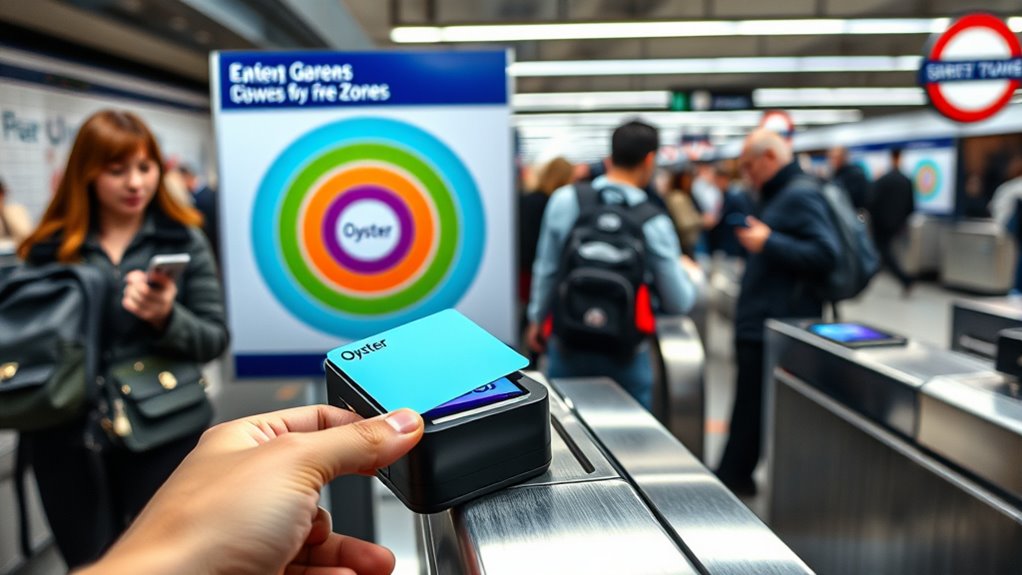
Have you ever wondered how to pay for your journeys on the London Underground efficiently? An Oyster Card is your best option. It’s a smartcard you preload with credit, either at stations, online, or via the TfL Go app. When you travel, just tap your yellow reader to enter and exit stations; no need to press anything. On buses and trams, you only tap in, with no touch-out required. A Visitor Oyster Card costs £7 upfront and also serves as a souvenir. Registering your card guarantees support if it gets lost or stolen, and you can get refunds. Keep your card topped up and always tap in and out correctly to avoid extra charges. It’s a simple, reliable way to navigate London’s public transport system.
The Contactless Payment System and Compatible Devices
Using contactless payment methods simplifies your journeys across London’s public transport. You can pay using your debit or credit card, smartphone, or smartwatch with the contactless symbol on yellow readers. Just tap in at the start of your trip and tap out at the end to guarantee the correct fare is charged. Mobile payments via Apple Pay or Google Pay make it even easier, avoiding card clash issues with Oyster cards. Keep in mind:
- Compatible devices include smartphones and smartwatches with NFC capability
- Overseas cards may incur extra transaction fees, so check with your bank
- Contactless payments are accepted on Tube, Overground, DLR, buses, trams, Elizabeth Line, and cable cars
- No need to preload or top-up; fares are calculated automatically for each journey
- Utilizing Indigenous wellness practices can promote mental clarity and overall well-being during your travels. Incorporating secure cloud solutions can enhance the safety and reliability of your payment data. Additionally, understanding the contactless technology behind these systems can improve your overall experience and security. Being aware of vetted privacy policies can help you make informed decisions about data sharing during transactions. Moreover, understanding the payment security measures can further protect your financial information during contactless transactions.
How to Enter and Exit the Tube Using Different Payment Methods

To enter and exit the Tube, you need to tap your payment method on the yellow reader at the station’s entrance and exit points. If you’re using an Oyster card, simply hold it against the reader until it beeps. When exiting, tap again to end your journey, and the system will calculate your fare automatically. For contactless payments, tap your card or device in the same way—no need to pre-top-up. Make sure to use the same card or device for the entire trip to avoid extra charges. Buses and trams only require a tap-in when boarding; there’s no tap-out. Always ensure your device has enough battery, or you risk being charged the maximum fare. Register your card if you want refunds and journey history tracking. Using contactless methods can significantly streamline your travel experience by reducing queuing times and simplifying fare payments. Additionally, understanding fare zones helps you plan your journey more cost-effectively and avoid unexpected charges. Being aware of thermal behavior and how the Oyster system calculates fares based on zones can help you optimize your travel costs.
The Zones and Fare Structure Across London’s Transport Network
Ever wondered how London’s fare system varies across its extensive transport network? Your fares depend on the zones you travel through, from Zone 1 in central London to outer zones. The cost increases with more zones crossed. The fare structure includes daily and weekly caps, preventing you from overspending. Here are key points:
- Fares depend on zones traveled, not distance.
- Daily and weekly caps limit your total spend.
- Traveling within one zone is cheaper than multiple zones.
- The Elizabeth Line and other services have zone-specific sections.
- The contactless payment system automatically calculates the lowest fare based on zones crossed, making travel more affordable and convenient.
Your pay-as-you-go fare automatically adjusts based on zones crossed, ensuring you pay the lowest possible amount. Using Oyster or contactless makes managing costs simple, with no need for fixed tickets.
The Pay As You Go System and Daily/Weekly Cap Limits
The Pay As You Go system charges you only for the journeys you make, eliminating the need for fixed tickets or passes. You’re billed based on the zones you travel through, with fares automatically calculated when you touch in and out. To prevent you from spending too much, daily and weekly caps limit your total fare. These caps match the cost of a day or week’s Travelcard, so once you hit the cap, additional journeys are free. The system tracks your spending through your Oyster card or contactless device, ensuring you pay the lowest fare possible. Whether you travel once or multiple times, the caps help keep your costs predictable. Just remember to use the same card or device for all journeys to avoid unnecessary charges.
Tips for Managing Your Journey and Payment Security

To keep your journey smooth and secure, choose trusted payment methods like contactless cards or Oyster cards. Make sure your balance is sufficient before traveling to avoid maximum fare charges. Always register your card or device to protect your payment information and easily manage your account. Additionally, privacy policies ensure your personal data is handled responsibly and transparently. Be aware that affiliate relationships can influence recommendations, so verify information when necessary. Being aware of contactless payment security measures can help prevent fraud and unauthorized use of your cards. Regularly updating your device’s software can also enhance your payment security and reduce vulnerabilities. Incorporating smart technology into your payment methods can further improve security and convenience.
Secure Payment Methods
Securing your payment methods while traveling on the London Underground is essential to prevent unauthorized charges and guarantee smooth journeys. Always keep your cards and devices safe, and be cautious when using contactless payments in busy areas. Register your Oyster card or contactless device with TfL to enable refunds and manage your account easily. Use strong, unique PINs for your cards, and avoid sharing your details. When paying, ensure your device is charged, and always tap in and out correctly. Be aware of potential transaction fees with overseas cards, and monitor your bank statements regularly. To stay protected:
- Keep your contactless cards and devices secure and nearby
- Register your Oyster or contactless account
- Use secure, private Wi-Fi networks when managing your account online
- Be vigilant during busy and crowded moments
- Be aware of crypto scams that may target unsuspecting travelers or online account holders.
Additionally, staying informed about payment security practices can help you avoid common pitfalls and safeguard your funds effectively.
Managing Card Balance
Wondering how to keep your Oyster or contactless card ready for seamless travel? To manage your balance effectively, regularly check your journey history and spending via the TfL app or online account. This helps you avoid unexpected charges or reaching your daily cap too early. Keep your device or card charged to prevent max fare penalties, especially with contactless payments. Register your card for refunds and balance management, ensuring security and control. Use the table below to understand key aspects:
| Tip | Benefit |
|---|---|
| Check balance regularly | Prevents surprises and overspending |
| Register your card | Enables refunds and security |
| Keep device charged | Avoid max fare penalties |
Comparing Oyster and Contactless: Which Is Better for You?

Are you trying to decide whether Oyster or contactless payment suits your travel needs in London? Both options offer convenient pay-as-you-go fares, but each has pros and cons. Oyster cards are easy to preload, helping you track spending and manage your budget. They also support refunds and account management, making them suitable for regular travelers. Contactless payments eliminate the need to top-up—just use your debit card or phone. They automatically apply fare caps, saving you money without extra steps.
Choose Oyster for regular travel and refunds; go contactless for convenience and automatic fare caps.
Consider these points:
- Oyster is better for frequent travelers who prefer prepaid cards.
- Contactless offers more convenience with no preloading.
- Both options avoid cash, but Oyster may have better support for refunds.
- Contactless works with most mobile devices and cards, offering flexibility.
Special Considerations for Visitors and Group Travel

Traveling as a visitor or in a group in London requires some extra planning to make your journey smooth and cost-effective. For visitors, a Visitor Oyster Card is a great option—it’s easy to buy online or at stations, offers discounted fares, and serves as a souvenir. Remember to register your card for refunds and journey tracking. When traveling with a group, each person needs their own card or device; you can’t share one card for multiple travelers. If you’re using contactless payments, everyone should use their own card or device to avoid fare issues. Keep in mind that buses and trams don’t require touching out, so plan accordingly. Also, confirm all devices are charged to prevent max fare penalties. Planning ahead saves you money and hassle during your London adventures. Understanding fare policies can help you avoid unexpected costs and make the most of your travel budget. Additionally, being aware of zones and fare boundaries ensures you select the most economical routes for your trips. Being familiar with the Oyster card system can further streamline your travel experience, especially when combined with contactless payment options for added convenience. Using smart ticketing technology can also enhance your journey by providing real-time updates and seamless fare payments.
Additional Transit Options and How They Integrate With the Underground
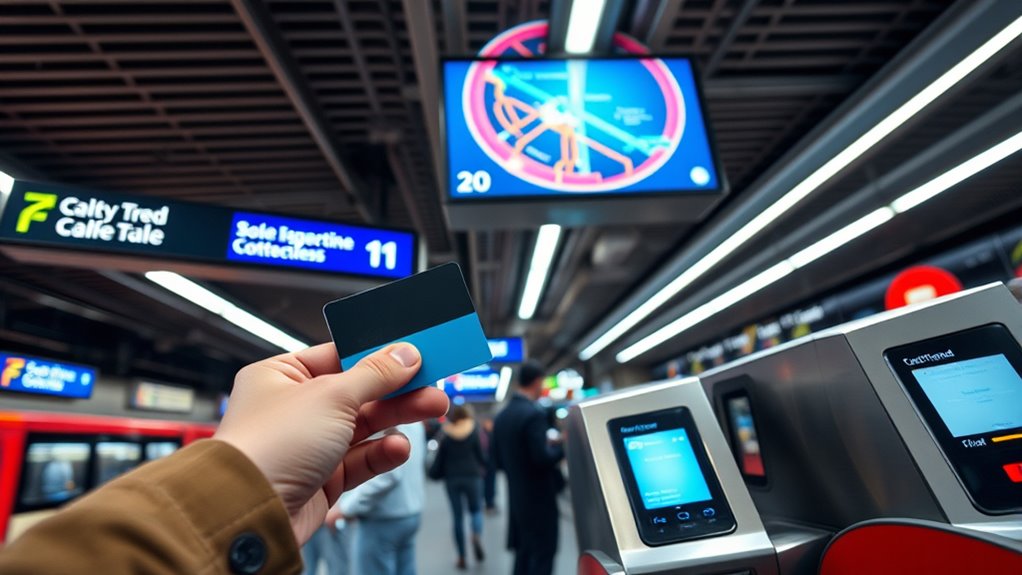
London’s public transportation network extends beyond the Underground, offering options like the Overground, DLR, Elizabeth Line, buses, trams, and the cable car, all of which integrate seamlessly with the Tube system. You can use the same Oyster or contactless card to travel across these modes, simplifying your journey. These options connect at key interchange stations, making transfers quick and easy. The Overground and Elizabeth Line provide faster routes around and through central London, while buses and trams cover areas outside Zone 1. The cable car offers scenic crossings over the Thames.
Explore London’s seamless transit options beyond the Underground with Oyster, contactless cards, and scenic cable car crossings.
- Use the same card for all modes
- Transfer at designated interchange stations
- Pay as you go with capped fares across modes
- Travel seamlessly between surface and underground transit
- Compact transportation options are continually expanding to improve accessibility and efficiency. Additionally, the integrated ticketing system ensures smooth fare payments across all transit modes. To enhance your understanding, it’s helpful to learn about fare capping, which can save you money during your travels. Incorporating real-time updates can further optimize your journey by providing live service information. Furthermore, understanding ear wax odor can be relevant in maintaining overall health, especially when using crowded transit environments.
Frequently Asked Questions
Can I Use Multiple Contactless Cards for Different Family Members Simultaneously?
Yes, you can use multiple contactless cards for different family members at the same time. Each person needs their own card or device with contactless enabled. Just remember to tap in and out with each card separately to guarantee accurate fares. Keep track of everyone’s journeys, and make sure each device has enough battery. Using different cards helps avoid mixing up payments and keeps each family member’s travel expenses separate.
What Should I Do if My Oyster or Contactless Card Gets Lost or Stolen?
If your Oyster or contactless card gets lost or stolen, you should immediately report it to TfL. You can do this online, via the TfL Go app, or by calling their support line. Once reported, TfL can block the card to prevent unauthorized use and issue a replacement or refund if your account is registered. Remember to keep your account details secure and update your information if needed.
Are There Discounts or Special Fares for Seniors, Students, or Disabled Travelers?
You can get discounts or special fares if you’re a senior, student, or disabled traveler. Seniors and some disabled travelers may qualify for free or discounted travel with valid identification or concessionary passes. Students should apply for a Student Oyster or concessionary card, which offers reduced fares. Check with Transport for London (TfL) for specific eligibility requirements and to apply for these discounts, ensuring you carry the necessary ID during travel.
How Does the System Handle Fare Disputes or Incorrect Charges?
Imagine your fare dispute as a tangled web—easy to get caught in without proper steps. You should contact TfL support through your registered account, either online or via the app. Provide journey details and proof if needed. They’ll review your case, and if an error is found, they’ll issue a refund or correction. Always keep receipts or confirmation emails to streamline the process and avoid getting trapped in confusion.
Can I Upgrade or Change My Oyster Card to a Different Type Later?
You can’t directly upgrade or change your Oyster card to a different type later. Instead, you need to register your existing card and apply for a new card if you want a different one, like switching from a Visitor Oyster to a standard Oyster. Once registered, you can transfer your remaining credit, but the process involves requesting a new card and possibly contacting TfL support for assistance.
Conclusion
With over 1.3 billion journeys made annually, London’s underground system is incredibly busy. Using an Oyster card or contactless payment makes traveling seamless and affordable across 11 zones. Whether you’re a daily commuter or a visitor, understanding these options helps you save time and money. So, choose the best method for your needs and enjoy smooth journeys through one of the world’s most iconic transport networks.