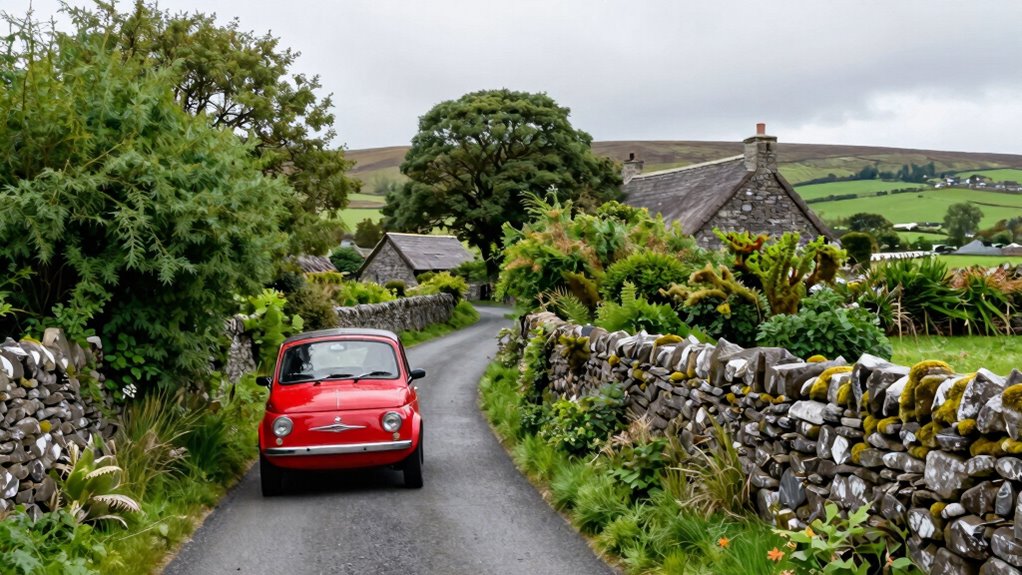

When driving in Ireland, you’ll need to switch to left-side driving, a tradition rooted in medieval customs and reinforced by laws dating back to the 18th century. You’ll sit on the right side of the vehicle, and all road signs, roundabouts, and priority rules are designed for left-side travel. This change can feel challenging at first, but with some practice, you’ll gain confidence. Keep exploring to discover key tips and strategies for a safe Irish driving experience.
Key Takeaways
- Drive on the left side of the road; the steering wheel is on the right side of the vehicle.
- Yield to traffic coming from the right at intersections and roundabouts.
- Be cautious on narrow roads; smaller vehicles improve maneuverability and safety.
- Practice slow, deliberate driving initially to adapt to driving on the opposite side.
- Follow posted speed limits in km/h and stay alert for rural hazards like animals and road conditions.
Top picks for "driv ireland left"
Open Amazon search results for this keyword.
As an affiliate, we earn on qualifying purchases.
Historical Roots of Left-Side Driving in Ireland

Ireland’s tradition of driving on the left side has deep historical roots that date back centuries. Back in medieval times, horseback riders mounted from the left to keep swords on their left side, away from passing traffic. This practice naturally extended to carriage and wagon travel, establishing a left-side preference. When Britain formalized its left-sided driving regulations in 1835, Ireland, then part of the UK, adopted the same rule. Even after gaining independence in 1922, Ireland retained this tradition, partly due to longstanding customs and infrastructure. Historically, laws like the 1793 Dublin ordinance reinforced left-side driving, and the practice became ingrained in Irish road culture. The legacy of these customs continues to influence Irish road safety and driving practices today. Additionally, the continued adherence to left-side driving is supported by road infrastructure that remains optimized for this tradition, which is also reinforced by cultural continuity passed through generations. The persistent practice exemplifies how historical influences shape modern driving habits in Ireland.
Legal Foundations and Regulations
The legal foundations for driving on the left in Ireland date back to the late 18th century, reflecting the country’s long-standing commitment to this tradition. Laws from 1793 and 1798 mandated driving on the left, with penalties for violations. Although Ireland gained independence in 1922, the tradition persisted. Today, driving laws emphasize safety and consistency. You must adhere to speed limits, which are in kilometers per hour, and follow rules at roundabouts and unmarked crossings, where vehicles from the right have right of way. Seat belts are compulsory, with fines for non-compliance. The table below summarizes key regulations:
| Rule | Penalty | Notes |
|---|---|---|
| Speed limit violations | 80 Euros ($90) | Enforced strictly |
| Seat belt non-use | 60 Euros ($70) | Mandatory for all occupants |
| Roundabout rules | 60 Euros ($70) | Yield to traffic on the right |
| Traffic signals | Fines vary | Obey all signals and signs |
Furthermore, understanding Free Floating concepts can help new drivers adapt more effectively to Ireland’s unique traffic environment.
Vehicle Setup and Road Design Considerations
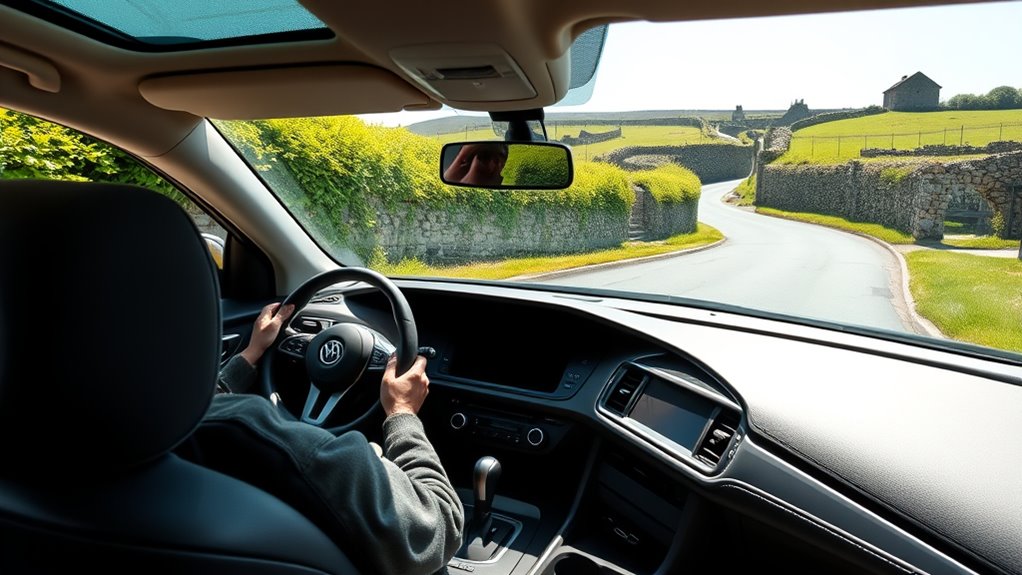
Your vehicle’s right-hand seat placement is essential for safe Irish driving, as it affects your visibility and control on narrow roads. Keep in mind that Irish roads are often tighter than those in the US, so choosing a smaller vehicle can make navigation easier. Adjusting your setup and selecting the right vehicle size are key to handling Ireland’s unique road design considerations effectively. Incorporating essential oils for focus and clarity in your driving environment can also help maintain alertness on unfamiliar routes. Additionally, understanding sticking wall decor techniques can help you create a comfortable space to relax after long drives. Being aware of European cloud server innovations can also inspire you to adopt more sustainable and secure driving technologies, which align with the importance of reliable backup power in modern vehicles.
Driver Seat Positioning
When driving in Ireland, the driver’s seat is positioned on the right side of the vehicle to align with the country’s left-side road system. This setup guarantees you have a clear view of the road’s edge and upcoming traffic, making lane positioning and turns easier. Adjust your seat so you can comfortably reach the pedals and steering wheel without overstretching. Keep your mirrors properly aligned to minimize blind spots. Irish vehicles often have the gear shift on the left, so familiarizing yourself with shifting with your left hand is essential. Additionally, understanding how modern vehicle features like automated adjustments and connected systems enhance driving safety can be beneficial. Proper driver seat positioning ensures comfort and safety, especially during longer drives, and being aware of luggage and storage options can help keep your driving environment organized and distraction-free. Being mindful of vehicle setup can also improve your overall driving experience and safety on unfamiliar roads.
Road Width and Vehicle Size
Irish roads are especially narrower than those in many other countries, which means selecting the right vehicle size is vital for safe and comfortable driving. Smaller cars are easier to maneuver through tight, winding roads and tight corners common in rural areas. Larger vehicles, like trucks or SUVs, can be challenging to navigate and may risk scraping roadside vegetation or hitting obstacles. When renting, opt for compact or mid-sized vehicles to improve handling and reduce stress. Pay attention to lane markings and roadside features; narrow lanes demand precise steering. Being aware of road width helps you avoid accidents and keeps your driving smooth. Recognizing the importance of road design considerations can further enhance your driving experience and safety. Considering vehicle dimensions when planning your trip ensures you select a suitable vehicle for Ireland’s unique roadways, as understanding road width is crucial for navigating Ireland’s often tight and winding routes. Additionally, being mindful of traffic flow patterns can help you anticipate and adapt to local driving conditions, making your journey safer and more enjoyable. Moreover, understanding local driving customs can aid in smoother navigation and reduce confusion on unfamiliar roads.
Adjustment Period for American Drivers
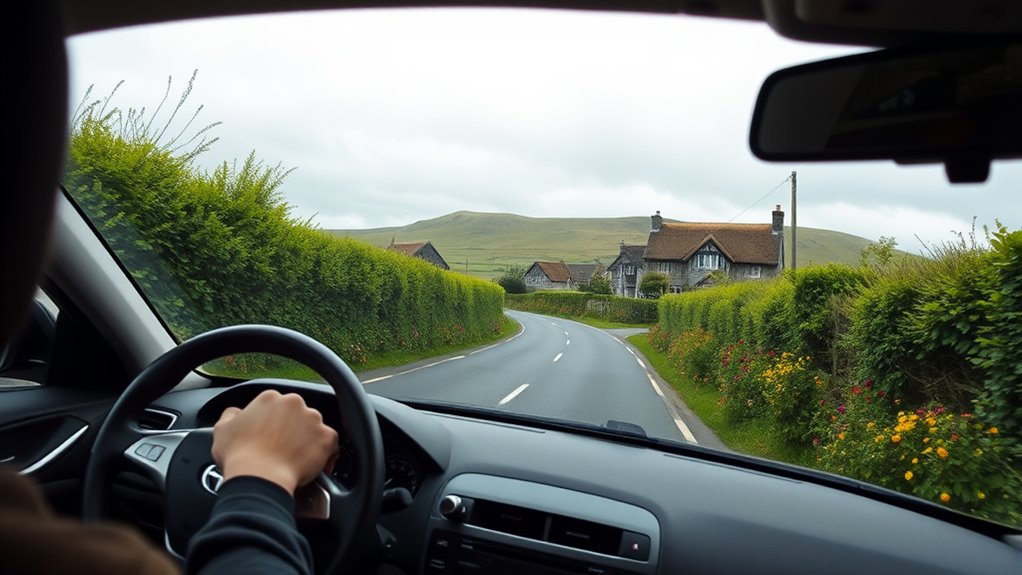
When you start driving in Ireland, you’ll notice initial handling challenges, especially at intersections and turns. To navigate smoothly, focus on slow, deliberate movements and pay close attention to your surroundings. Building confidence takes time, but with practice, you’ll become comfortable driving on the opposite side of the road. Remember to stay alert and consider practicing in less busy areas to improve your skills gradually gradually build up a tan. Additionally, familiarizing yourself with driving safety essentials can help ease the adjustment process and ensure a safer experience on unfamiliar roads. Being aware of road signage and understanding local traffic laws will further support a smoother transition, especially since road signs can differ significantly from those in the United States. Recognizing traffic law differences can significantly reduce confusion and help you adhere to local regulations more confidently.
Initial Handling Challenges
Adjusting to driving on the left side of the road can be challenging for American drivers, especially during the initial days. You might find yourself instinctively turning into the wrong lane or misjudging distances at intersections. It’s common to feel uneasy when pulling out of driveways or making right turns, as your habits are ingrained for right-side driving. Staying alert and patient helps ease this changeover.
You’ll notice:
- Your initial hesitation at intersections as you adapt to new traffic flow patterns
- Difficulty judging gap sizes in traffic or making precise turns
- The need to consciously remind yourself to keep left and stay in your lane
With practice, these challenges lessen, and confidence grows as you get more comfortable navigating Irish roads.
Intersection Navigation Tips
Navigating intersections can be particularly tricky during your initial days in Ireland because traffic flows from the left, and your instincts may still be aligned with right-hand driving. To stay safe, slow down as you approach intersections, and always check both sides carefully. Remember, vehicles on your right have the right-of-way unless otherwise indicated. At roundabouts, yield to traffic already inside, and stay in the left lane unless you plan to exit soon. When turning left, look out for oncoming traffic from your right, which might be unfamiliar if you’re used to right-side driving. Use your mirrors frequently to monitor traffic around you, and take your time to make smooth, deliberate movements. With patience and focus, you’ll adapt to Irish intersection rules more quickly.
Building Driving Confidence
Building confidence behind the wheel in Ireland takes time, especially for American drivers unfamiliar with left-side driving. You might feel uneasy at first, but with patience, you’ll improve quickly. Focus on staying alert at intersections, where instinct can lead you into the wrong lane. Remember, right turns are different, so take extra care to check for oncoming traffic. Practice will help you relax and develop muscle memory. Keep these tips in mind:
- Start with shorter drives to build familiarity
- Use landmarks to navigate and confirm your position
- Drive slowly in the beginning to react smoothly to new road conditions
As you gain experience, you’ll notice your confidence grow. Consistent driving and awareness are key to feeling comfortable on Irish roads.
Navigating Speed Limits and Traffic Laws
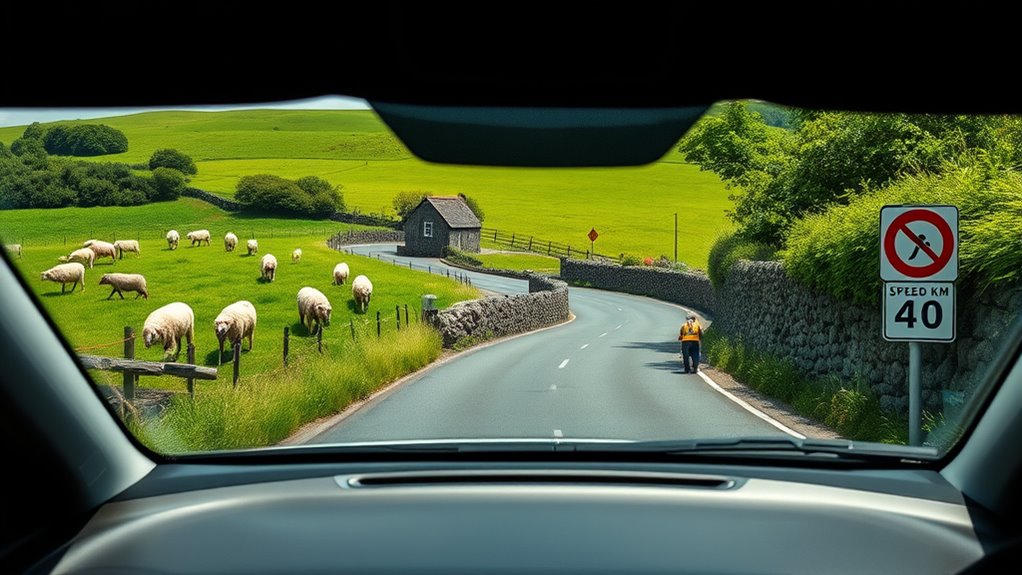
Understanding and obeying Ireland’s speed limits and traffic laws is essential for safe driving. Speed limits are posted in kilometers per hour, so pay close attention to signs to avoid fines of 80 Euros for speeding. Ireland’s road rules prioritize safety; vehicles on roundabouts, beltways, and approaching from the right at unmarked crossings have the right-of-way. Always stay within posted limits, especially on narrow rural roads where speed cameras are common. Seat belts are mandatory for all passengers, with fines of 60 Euros for non-compliance. Remember, speed limits vary depending on the area—urban, rural, or motorway—so stay alert. Following these laws helps prevent accidents and costly penalties, ensuring a smooth driving experience in Ireland.
Handling Roundabouts and Priority Rules
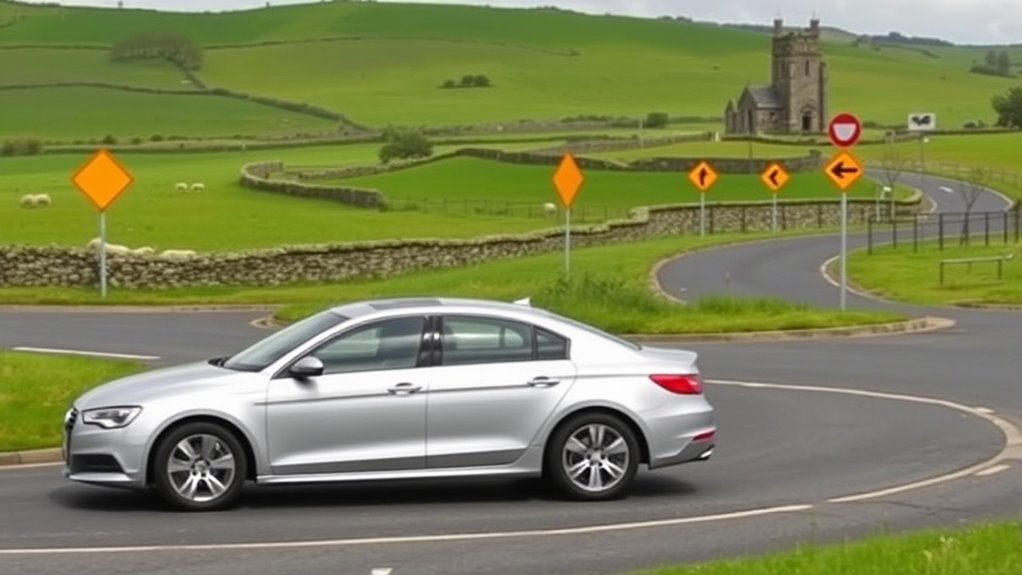
How do you determine who has the right of way at roundabouts in Ireland?
In Ireland, vehicles already circulating have priority, so you yield to those approaching from your right. When you see a roundabout, slow down and give way to traffic inside. Once clear, you can enter the roundabout safely and proceed in your intended direction.
Remember these key points:
- Vehicles inside the roundabout have priority.
- Always yield to traffic on your right.
- Use indicators to signal before exiting.
Stay alert for pedestrians and cyclists near roundabouts. Properly yielding and signaling helps keep traffic flowing smoothly and prevents accidents. The rules are straightforward but require attention, especially if you’re unfamiliar with driving on the left.
Recognizing and Avoiding Common Road Hazards
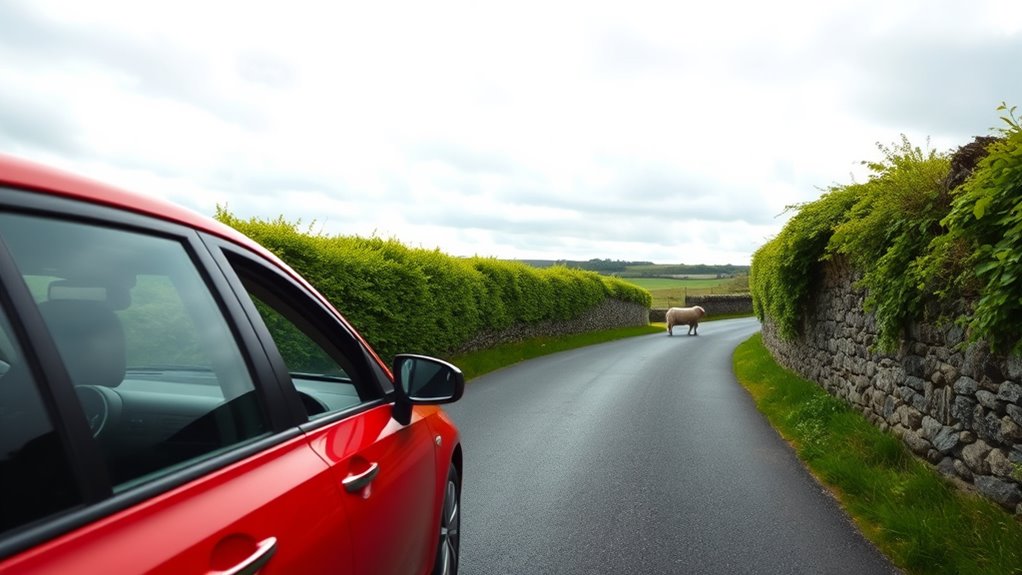
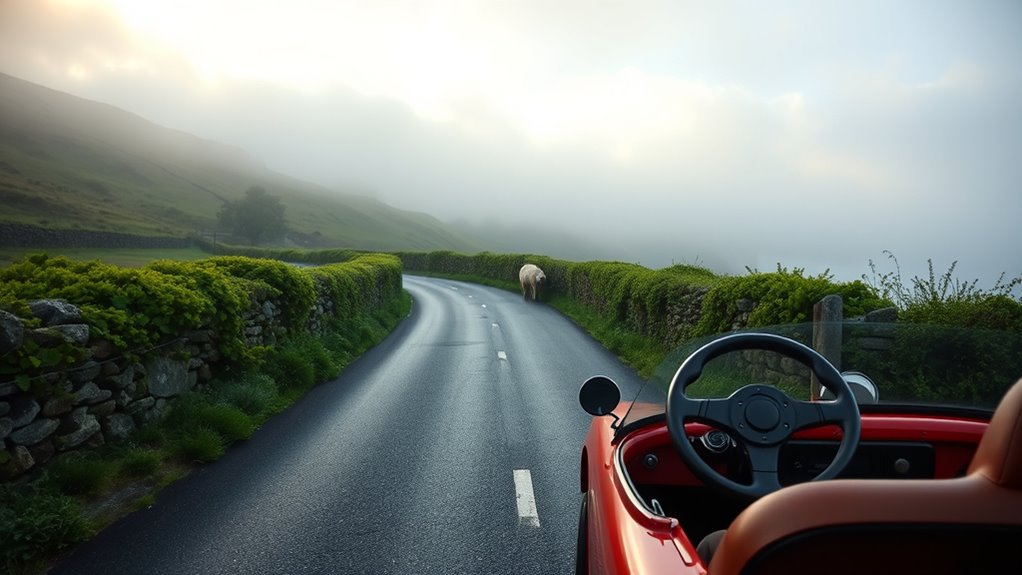
Recognizing and avoiding common road hazards in Ireland is essential for safe driving, especially for those unfamiliar with the local environment. Narrow, two-lane roads can hide obstacles like sheep, jutting rocks, and overgrown vegetation that brushes your vehicle. Speed cameras and unpredictable rural features add to the challenge. It’s vital to stay alert at intersections, especially when pulling out of driveways, and to watch for unexpected obstacles.
| Hazard Type | How to Avoid |
|---|---|
| Sheep and wildlife | Reduce speed, stay attentive, and look for movement |
| Narrow roads | Use smaller vehicles, stay in your lane, and drive cautiously |
| Vegetation | Keep windows closed, avoid brushing roadside plants |
| Speed cameras | Follow speed limits and stay aware of camera locations |
| Intersections | Slow down, check both directions, and use mirrors |
Practical Tips for Safe Driving in Ireland
Driving safely in Ireland requires more than just adapting to the left side of the road; it involves adopting smart habits to navigate narrow streets, unpredictable rural hazards, and unique traffic rules. To stay safe, stay alert at all times, especially at intersections and roundabouts. Keep your speed in check, as fines are steep for violations. Use your headlights regardless of the time of day, and always wear your seatbelt. Be cautious when pulling out of driveways or crossing unmarked intersections, giving way to vehicles on your right. Familiarize yourself with Irish speed limits in kilometers per hour, and remember that rural roads can be tight and obstacle-filled. Staying attentive helps you avoid hazards and ensures a smooth, safe journey through Ireland.
- Stay alert at intersections and roundabouts
- Obey speed limits and traffic signs
- Use headlights and wear your seatbelt
Adapting to Irish Road Signage and Navigation Cues
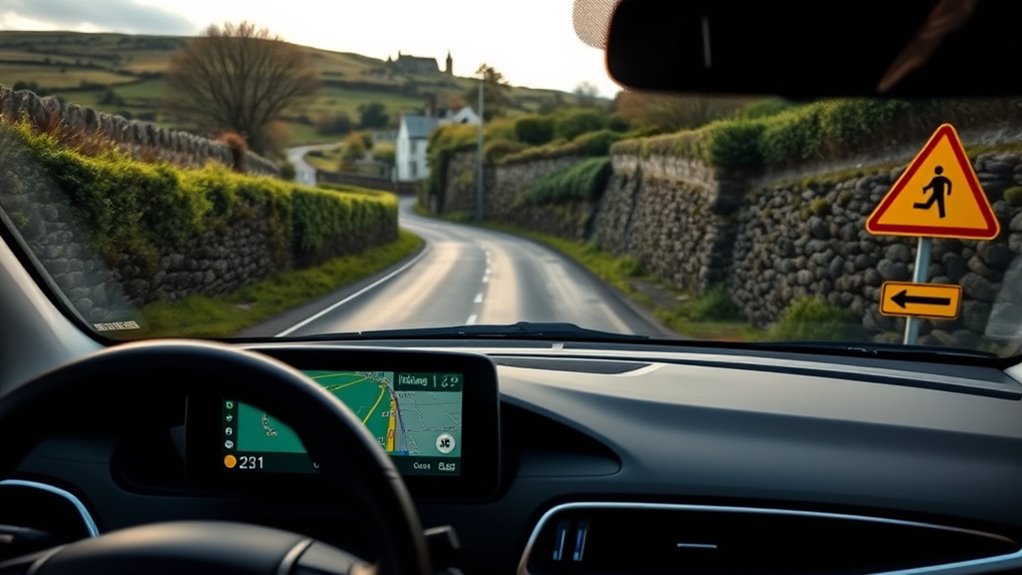
Adapting to Irish road signage and navigation cues is essential for a smooth driving experience, especially since they often differ from those in your home country. Irish signs use European standards, featuring symbols and colors that may be unfamiliar. Pay attention to warning signs with triangular shapes and red borders, and priority signs indicating right-of-way. Directional signs often include place names instead of road numbers and are written in both English and Irish. Roundabouts are common, with signs guiding you on the correct lane and exit. Keep an eye out for small village signs, which may be in a different format than what you’re used to. Using GPS, combined with local signage, helps assure you stay on course without confusion or missed turns.
Frequently Asked Questions
What Are the Best Methods to Adapt Quickly to Irish Driving Customs?
You can adapt quickly to Irish driving customs by staying alert and practicing patience. Spend your first day focusing on familiarizing yourself with the roads, especially intersections and roundabouts. Keep your speed in check and follow local signs diligently. Use GPS or maps to navigate unfamiliar routes. Take short trips initially to build confidence, and always stay relaxed—your comfort level improves after a few days of consistent driving.
How Do I Handle Unexpected Obstacles Like Sheep or Rocks on Narrow Roads?
A stitch in time saves nine, so stay alert for unexpected obstacles like sheep or rocks on narrow roads. Slow down and scan ahead, especially around bends or in rural areas. If you spot animals or debris, ease off the accelerator, sound the horn if needed, and give yourself time to react safely. Staying attentive and cautious helps you navigate surprises smoothly and keeps everyone safe on Ireland’s unpredictable roads.
Are There Specific Times When Irish Roads Are More Dangerous for Tourists?
You should be extra cautious during dawn, dusk, and nighttime when visibility is reduced. Irish roads are more dangerous during these times because obstacles like sheep, rocks, or vegetation are harder to see, increasing the risk of accidents. Narrow, rural roads become more hazardous, especially if you’re unfamiliar with the area or driving in low light. Always slow down, stay alert, and use headlights to improve your safety during these higher-risk periods.
What Should I Do if I Accidentally Drive on the Wrong Side?
If you realize you’re on the wrong side, stay calm and gently steer to the side of the road, signaling your intentions. Avoid sudden moves, as they can cause accidents. Find a safe spot to pull over, take a deep breath, and reorient yourself. Carefully check traffic, then proceed slowly, always mindful of the correct side. Remember, staying composed helps you regain control and continue your journey safely.
How Can I Stay Calm and Focused During My First Few Days of Driving?
To stay calm and focused during your first days of driving, take deep breaths and remind yourself that feeling nervous is normal. Keep your attention on the road, especially at intersections and turns. Drive slowly and give yourself extra time to react. Use your mirror frequently and stay aware of your surroundings. Practicing patience and staying alert will build your confidence, making the experience safer and more enjoyable.
Conclusion
Driving in Ireland might feel like a twist of fate, but once you get the hang of left-side driving, it becomes second nature. With a little practice, you’ll find that steering Irish roads is just like discovering a new rhythm—sometimes challenging, but ultimately rewarding. Plus, it’s funny how a simple switch in perspective can turn an unfamiliar road into an adventure. So, embrace the journey—you might just find it’s where the best stories begin.