
TL;DR

Get travel and outdoor gear delivered free — and shop member deals
- Fast, free delivery on millions of items
- Access to Prime Big Deal Days deals on October 6–7
- Prime Video, Amazon Music and more included
Portable travel hammocks are lightweight fabric beds that hang between two secure anchor points, but the hammock alone is not a complete camping sleep system. Compare the packed weight of the hammock, suspension, insulation, bug net, and rain cover, then check site rules and anchor safety before you go.
Compare the complete packed system with a tent and sleeping pad; the hammock alone is not the full weight.
Use wide straps on permitted trees, sturdy anchors, and undamaged suspension, following the product instructions.
Pack an underquilt or insulated pad for cool conditions; a sleeping bag alone may leave you cold underneath.
Check campsite rules and weather before you go, and test your setup close to home.
Dry the hammock fully and inspect seams and straps before storage.
What portable travel hammocks include—and what they don’t
Portable travel hammocks are lightweight fabric beds that hang between two secure anchor points, usually trees or a stand. Most fold into a small pouch, so they can slip into a daypack beside a water bottle and a rain jacket. A hammock gives you a place to rest; by itself, it does not provide shelter from rain, bugs, or cold.
A gathered-end hammock has a simple curved shape and suits lounging or camping. A bridge hammock uses spreader bars to hold a flatter bed, which can feel roomier but takes more space. Some hammock systems bundle suspension straps, a bug net, rain tarp, or underquilt.
Think of a hammock as one part of a bed-and-shelter kit, like a sleeping bag is only one part of a tent setup. For example, a beach afternoon may call for just a hammock and straps; an overnight in a chilly forest may call for insulation and a tarp too. The key facts and what they are help you spot the difference when a product page calls a bare hammock a “complete” setup.
Compare the full packed weight before you buy
Compare the packed weight and size of every component, because the hammock alone can make a camping setup look lighter than it is. Suspension, a bug net, rain tarp, and insulation all add ounces and bulk. A full hammock setup can weigh as much as or more than a lightweight tent system.
| Setup | What you carry | Best fit |
|---|---|---|
| Day hammock | Fabric bed and suspension straps | Short rests where bugs and weather are not a concern |
| Warm-weather overnight | Hammock, straps, bug net, rain tarp | Summer trips with mild nights |
| Cool-weather overnight | Hammock, straps, tarp, bug net, underquilt or pad | Trips where cold air can reach you from below |
For example, if you are counting every gram on a weekend hike, weigh the complete packed kit beside your tent, stakes, and sleeping pad. The fabric bed might be tiny, while a separate tarp and insulation change the total. These are lightweight fabric beds, but a lightweight label on one component says little about the whole load.
Choose a style and fabric that suit your trip
Choose a gathered-end hammock for a simple, compact setup, and consider a bridge style if you value a flatter feel and can carry spreader bars. Nylon is popular for its strength and packability, while polyester generally stretches less and may handle prolonged sunlight better. Neither material removes the need to check dimensions, care instructions, and the maker’s stated capacity.
Your comfort also depends on length, width, hang angle, and how you lie. Many people find a diagonal position in a gathered-end hammock less curved than lying straight down the center. Imagine settling in after a long trail day: a few inches of extra width might feel more useful than the smallest possible pouch.
Try the hammock before relying on it for a long trip, if you can. A friend’s backyard setup or a short local outing gives you a chance to find a comfortable position and see whether you like the gentle sway. A weight rating describes a product under stated conditions; it does not guarantee that every anchor, strap, or improvised setup is safe.
Set up safely and check the campsite rules
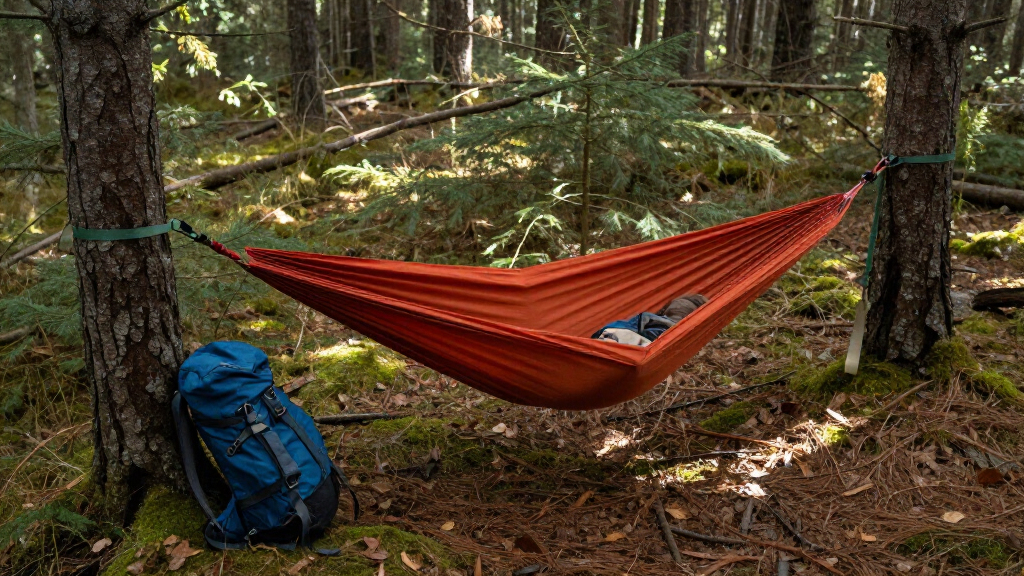
Hang your hammock only from sturdy, suitable anchors, use suspension approved for the product, and follow its instructions. When trees are allowed, wide tree straps spread pressure across more bark; thin cord can bite into a trunk and harm it. Rules differ between parks and campsites, and some ban tree attachment entirely.
- Check the site rules before you travel, including limits on tree straps, stands, and hanging locations.
- Inspect every part: fabric, stitching, straps, and hardware should show no cuts, fraying, or damage.
- Choose sound anchors and attach the suspension as directed. Avoid weak branches, railings, and vehicles.
- Keep the hammock low enough to limit injury if you fall, and set the suspension angle according to the maker’s guidance.
At a busy campground, the closest trees may sit beside a trail or have brittle-looking branches. Move to a permitted site with appropriate anchors rather than improvising. A stand can work where trees are unavailable, but its extra weight and bulk make it less practical for backpacking.
Stay warm, dry, and comfortable overnight
Plan insulation beneath you for cool nights, because the hammock fabric compresses the insulation under your body. A sleeping bag alone may not stop cold air from drawing heat away underneath. Campers often use an underquilt, an insulated pad, or both, depending on expected temperatures and their gear.
An underquilt hangs below the hammock and can preserve its loft; a pad is versatile but may shift as you move. A rain tarp helps block precipitation, and a bug net keeps insects away from your face. Wind and condensation still matter, so check the forecast and test the arrangement before a remote trip.
For instance, a mild evening at a sheltered lakeside may only call for a light pad, while a breezy night in the mountains can demand warmer insulation and better coverage. Hammocks are not inherently warmer than tents: open air beneath the bed can make you feel cold. Test your setup on a nearby overnight before counting on it far from help.
Keep your hammock ready for the next trip
Dry and inspect your hammock before storage to help prevent avoidable wear. Abrasion, sharp objects, overloading, prolonged sun exposure, and damp storage can shorten its life. Follow the manufacturer’s cleaning guidance, and keep the packed kit away from grit and sharp tools.
After a rainy weekend, spread the hammock and straps out until they are fully dry, then look closely at the seams and suspension. A small frayed area is easier to notice at home than at dusk between two trees. Category trends include lighter fabrics and hardware, compact integrated bug nets, modular systems, and more focus on repairability; check current manufacturer specifications before comparing particular products.
Decide whether a hammock fits your travel style
A hammock suits a trip when you can find legal anchors and carry the protection your weather requires. It can be an easy choice for a forest camp with suitable trees, but a wide-open campsite or a park with strict rules may favor a tent. Think about campsite availability as seriously as weight and comfort.
Take two travelers on the same weekend: one chooses a wooded route with known hammock-friendly sites, while the other expects exposed ground and uncertain weather. The first may enjoy a compact, flexible bed; the second may prefer a tent that needs no trees. Before booking, check official park and campsite rules, since local restrictions can change.
Key takeaways for your next hammock trip
Choose for your actual trip, not the product photo. A hammock hanging between sunlit trees looks simple; a reliable overnight setup also has to deal with cold, rain, insects, and site rules.
- Weigh the complete sleep system, including straps, tarp, bug net, and insulation.
- Check the hammock’s dimensions and stated capacity, then inspect all hardware and fabric.
- Use sturdy approved anchors and wide tree straps where allowed; never rely on weak branches or railings.
- Pack suitable under-body insulation for cool weather and test your setup before a remote trip.
- Confirm campsite rules, then dry the gear fully before storing it.
Frequently Asked Questions
Are portable travel hammocks good for camping?
They can be a good camping choice where suitable anchors are available and local rules allow them. Plan for rain, insects, wind, and insulation beneath you, and compare the weight of the complete system with a tent and pad.
Can you sleep overnight in a travel hammock?
Yes, many people camp overnight in hammocks. Comfort and safety depend on the hammock, how you set it up, the weather cover, and your insulation. Try the full arrangement on a short trip before relying on it in a remote spot.
Do I need an underquilt or sleeping pad?
In cool conditions, you usually need insulation beneath you because the hammock compresses insulation under your body. An underquilt hangs below the bed; a pad is versatile but can shift. Choose for the expected temperature and test your setup.
How do you hang a hammock safely without damaging trees?
Use sturdy approved anchors and broad tree straps where hanging is allowed, and follow the product instructions. Inspect the fabric, stitching, straps, and hardware, and keep the hammock low enough to limit fall injuries. Thin cord can damage bark, and some sites prohibit tree hanging altogether.
Can you use a portable hammock without trees?
Yes, if you have another pair of safe, compatible anchors or a hammock stand. A stand adds bulk and weight, which can make it a poor fit for backpacking. Check the site rules before attaching a hammock to any structure.
Conclusion
Choose your hammock as part of a complete sleep system: match its weight, warmth, anchors, and weather cover to the trip you actually plan to take. Then test it close to home; the best campsite bed is the one you already know how to hang.Halloween Picks
halloween
As an affiliate, we earn on qualifying purchases.