
TL;DR

Get travel and outdoor gear delivered free — and shop member deals
- Fast, free delivery on millions of items
- Access to Prime Big Deal Days deals on October 6–7
- Prime Video, Amazon Music and more included
As Lake Mead’s water levels decline, a historic ghost town has re-emerged near Hoover Dam. This development highlights ongoing drought issues and water scarcity concerns in the region.
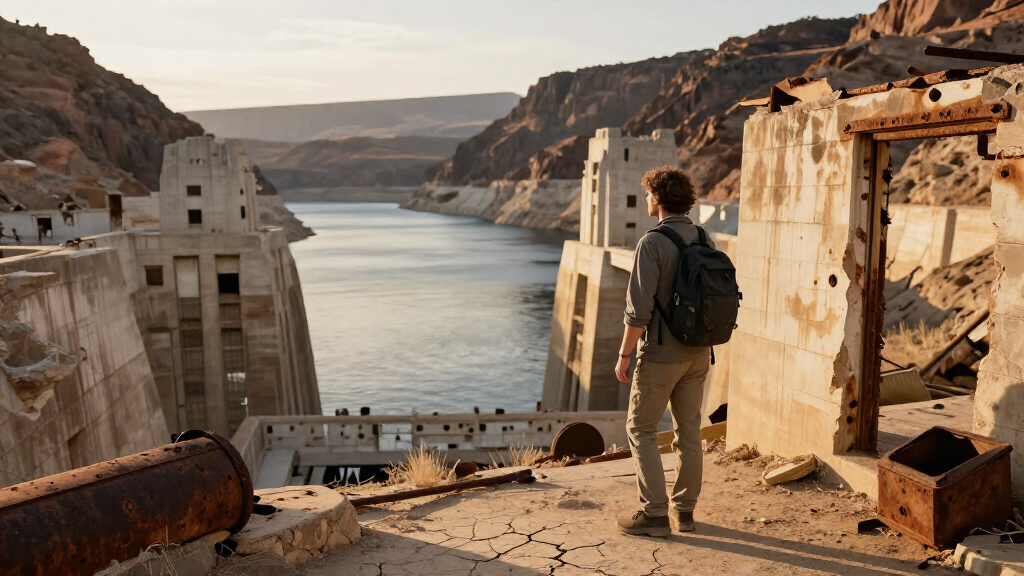
Water levels at Lake Mead, the largest reservoir in the United States, have fallen to historic lows, revealing the remains of a ghost town that was previously submerged. The discovery has garnered widespread attention due to its implications for regional water management and ongoing drought conditions.
The ghost town, known as St. Thomas, was abandoned in the 1930s during the construction of Hoover Dam and was submerged under Lake Mead’s rising waters. Recent measurements indicate that Lake Mead’s water level has dropped below 1,050 feet (320 meters) above sea level, exposing parts of the town’s structures for the first time in nearly a century. Officials from the U.S. Bureau of Reclamation confirmed that the low water levels are a direct result of prolonged drought and reduced inflows to the reservoir, driven by climate change and increased water demand in the Southwest.
Photographs and videos circulating on social media show remnants of buildings, roads, and other infrastructure that once served the town. Experts warn that continued water level declines threaten further exposure of historic sites and could impact water supply for millions of residents and industries relying on Lake Mead’s resources.
Implications of the Receding Water Levels at Lake Mead
The emergence of the ghost town underscores the severity of ongoing drought conditions in the Southwest and the critical state of Lake Mead’s water reserves. This development highlights the tangible impacts of climate change and water management policies, as a once-thriving community now lies exposed due to declining water levels. The situation raises concerns about future water security for states like Nevada, Arizona, and California, which depend heavily on Lake Mead for municipal, agricultural, and industrial use. It also serves as a stark reminder of the environmental and cultural losses associated with prolonged drought.
waterproof travel backpack for hiking
As an affiliate, we earn on qualifying purchases.
As an affiliate, we earn on qualifying purchases.
Historical and Current Water Levels at Lake Mead
Lake Mead was formed in the 1930s following the construction of Hoover Dam, creating a reservoir that supplied water to several southwestern states. Over the decades, water levels have fluctuated, but recent decades have seen unprecedented declines due to a combination of prolonged drought, climate change, and increased water consumption. In 2022, Lake Mead’s water level fell below 1,055 feet (321 meters), triggering water shortage declarations. The current levels are now approaching the historic low points recorded in the 1930s, with some estimates suggesting the reservoir could reach critically low levels if drought persists.
The submerged ghost town of St. Thomas was evacuated and flooded in the early 20th century, but its remnants have remained underwater until now. Its re-emergence is a stark visual indicator of the reservoir’s shrinking capacity and ongoing environmental challenges.
“The declining water levels at Lake Mead are a direct result of ongoing drought conditions and increased water demand across the Southwest.”
— U.S. Bureau of Reclamation spokesperson
As an affiliate, we earn on qualifying purchases.
Unresolved Questions About Future Water Levels and Preservation
It is not yet clear how long the exposed remnants will remain visible, as water levels could fluctuate with seasonal changes and future rainfall. There is also uncertainty about the extent of cultural and environmental damage caused by the exposure of the site. Additionally, experts are still assessing the long-term implications for water supply and infrastructure in the region, with projections varying based on climate models and water management policies.
compact binoculars for sightseeing
As an affiliate, we earn on qualifying purchases.
As an affiliate, we earn on qualifying purchases.
Monitoring Water Levels and Protecting Historic Sites
Authorities plan to continue monitoring Lake Mead’s water levels closely, with projections indicating further declines if drought conditions persist. Preservation efforts for exposed historic sites like St. Thomas are also expected to be discussed, though funding and logistical challenges remain. Additionally, policymakers are likely to revisit water allocation agreements and drought mitigation strategies to address ongoing shortages and prevent further environmental and cultural losses.
emergency survival kit for outdoor adventures
As an affiliate, we earn on qualifying purchases.
As an affiliate, we earn on qualifying purchases.
Key Questions
What is the ghost town that has reappeared at Lake Mead?
The ghost town is St. Thomas, which was submerged when Lake Mead’s water levels rose during the early 20th century but has now been exposed due to falling water levels.
Why are Lake Mead’s water levels dropping?
The decline is primarily due to prolonged drought, reduced inflows from the Colorado River, and increased water demand in the Southwest, all linked to climate change and regional water use.
What could happen if water levels continue to fall?
Further declines could threaten water supplies for millions, cause more historic sites to be exposed or damaged, and increase the risk of reservoir collapse or infrastructure issues.
Are there plans to preserve the exposed sites?
Preservation efforts are being considered, but funding and logistical challenges remain. Authorities are monitoring the situation closely.
When might water levels stabilize or rise again?
It depends on future rainfall and climate patterns, but current projections suggest that without significant changes in water use and climate mitigation, levels are unlikely to recover soon.
Source: google-trends
Fall Picks
fall essentials
As an affiliate, we earn on qualifying purchases.