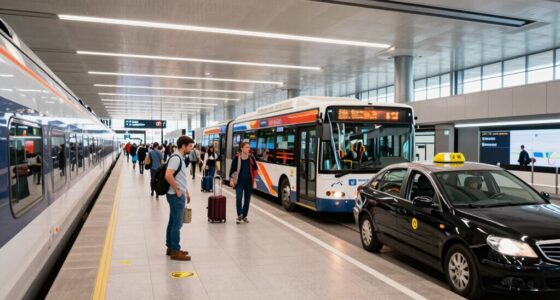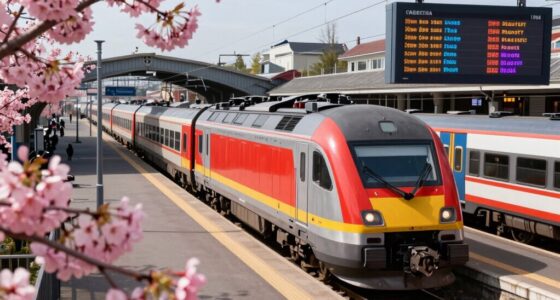
Traveling by train in Portugal is easy for reaching major cities like Lisbon and Porto, with frequent, modern services and straightforward ticket options. Booking online or via apps makes planning simple, and trains often come with Wi-Fi and comfortable seats. However, station accessibility can be limited at smaller stops, and some rural routes still face delays or limited service. To discover more about the best tips and tricks, keep exploring what’s involved with Portugal’s train system.
Key Takeaways
- Major routes like Lisbon–Porto are frequent, reliable, and increasingly fast with high-speed line upgrades.
- Booking is straightforward online, with digital tickets, discounts, and rail passes available for cost savings.
- Alfa Pendular trains offer high comfort, onboard Wi-Fi, and amenities, while regional trains are more basic.
- Infrastructure improvements, such as electrification and signaling, are enhancing speed, punctuality, and service quality.
- Challenges include limited international links, rural line deactivations, and variable accessibility at smaller stations.

PORTUGAL TRAIN TRAVEL GUIDE 2026: Explore Scenic Routes, Rail Pass Tips, Itineraries, and Top Destinations Across the Country
As an affiliate, we earn on qualifying purchases.
As an affiliate, we earn on qualifying purchases.
Extensive Network Coverage and Main Routes
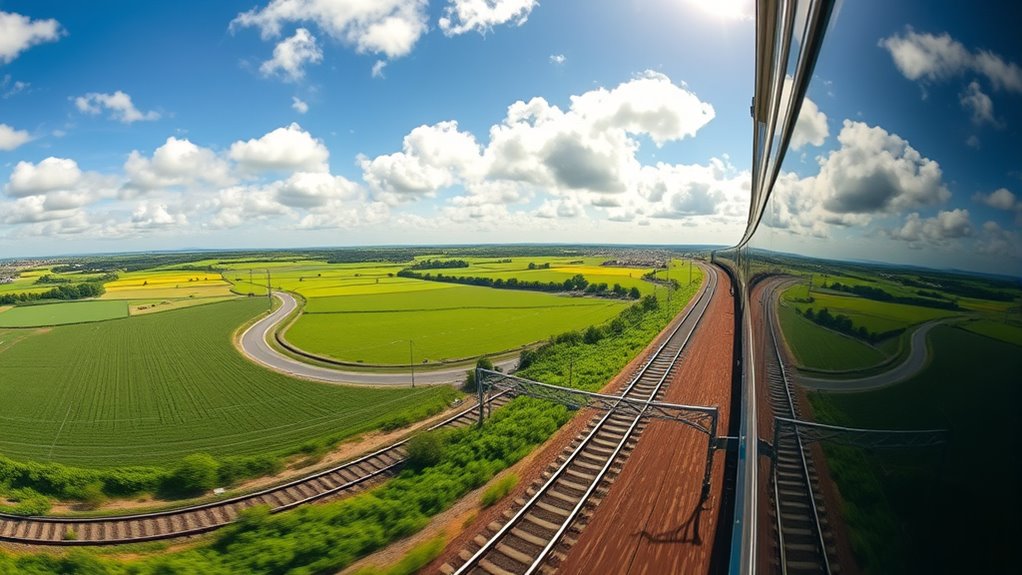
Portugal’s train network, operated primarily by Comboios de Portugal (CP), covers most major cities and regional areas, making travel across the country convenient. You’ll find several types of services, including Alfa Pendular, Intercidades, InterRegional, Regional, and Urbano trains, connecting key destinations efficiently. The Lisbon–Porto corridor is the busiest, with Alfa Pendular trains cutting travel time to under three hours, and plans for a high-speed line aim to reduce it further to around 1 hour and 15 minutes. Southern regions like Algarve are served by regional and intercity trains linking Faro with Lisbon, though some local connections can be slower than driving. International services to Spain are limited, but future high-speed links are planned to improve cross-border travel. Urban networks in Lisbon and Porto integrate with metros, buses, and ferries, enhancing regional accessibility. High-speed train development is a key focus to further improve travel times and connectivity across Portugal, supported by investments in rail infrastructure to modernize and expand the network, including innovations like smart transportation systems that enhance efficiency and passenger experience.

TP-Link Roam 6 AX1500 Portable Wi-Fi 6 Travel Router | Easy Public WiFi Sharing | Hotel/RV/Travel Approved | Phone WiFi Tether | USB C Powered | Multi-Mode | Tether App | Durable Design | TL-WR1502X
𝐑𝐨𝐚𝐦 𝟔 𝐀𝐗𝟏𝟓𝟎𝟎 𝐃𝐮𝐚𝐥-𝐁𝐚𝐧𝐝 𝐓𝐫𝐚𝐯𝐞𝐥 𝐑𝐨𝐮𝐭𝐞𝐫 – Delivers fast Wi-Fi 6 speeds (1201 Mbps on 5 GHz, 300…
As an affiliate, we earn on qualifying purchases.
As an affiliate, we earn on qualifying purchases.
Easy Booking, Ticketing, and Fare Options

Booking train tickets in Portugal is straightforward, with options available online through CP and third-party sites. Fare structures vary, with advance reservations often cheaper, while last-minute walk-ons can be more expensive. Understanding these options helps you choose the best deal for your trip. Additionally, being aware of dynamic pricing strategies can help you plan your purchase more effectively. It’s also useful to consider special promotions that may offer discounts during off-peak times. Being familiar with ticketing policies can further streamline your booking process and avoid potential issues. Knowing about ticket availability can also help you select the most convenient travel times and routes. Incorporating website functionality insights ensures you navigate the booking process smoothly and securely.
Online Booking Convenience
Online booking for Portugal’s train services is straightforward, with multiple options to purchase tickets easily before your trip. You can use the official CP website or third-party platforms for quick, convenient reservations. Here’s what makes it simple:
- Multiple platforms: Book directly through CP or via trusted third-party sites, often offering discounts.
- Ticket types: Reserve seats on Alfa Pendular and Intercidades, or buy point-to-point regional tickets with no reservations needed.
- Digital options: Use contactless payment methods and mobile tickets, especially in urban areas like Lisbon.
- Validation: Remember to validate your ticket at stations or onboard to avoid fines, particularly on regional lines.
- Free online tool allows users to instantly convert text into various capitalization styles, making it easier to create clear and consistent travel documents. Additionally, modern ticketing technology has improved the overall booking experience, reducing wait times and increasing accessibility, especially with the use of digital ticketing solutions. Utilizing online booking platforms can further streamline your trip planning and reduce last-minute stress.
Fare Structure Variability
The fare structure across Portugal’s train network varies considerably depending on the route, service type, and booking method, which can influence your overall travel costs. Premium services like Alfa Pendular and Intercidades often offer discounted fares when booked early, but last-minute tickets tend to be pricier. Regional and urban fares are usually point-to-point, with no reservations required, making spontaneous travel straightforward. Online booking through CP or third-party sites provides access to various discounts and passes, like the Portugal Rail Pass, though these exclude non-CP buses. Contactless and digital payments are increasingly accepted, but some regional lines still rely on paper tickets. Additionally, fare flexibility varies depending on the booking class and fare type, allowing travelers to choose options that best fit their budgets. Understanding fare options helps you optimize costs and travel smoothly across Portugal, especially given the pricing variability across different train services. Moreover, being aware of regulatory guidelines ensures compliance with fare rules and avoids unexpected charges. Being informed about ticketing procedures can also help prevent common booking errors and ensure smooth travel.
train station accessibility assistive devices
As an affiliate, we earn on qualifying purchases.
As an affiliate, we earn on qualifying purchases.
Comfort and Facilities on Board Trains
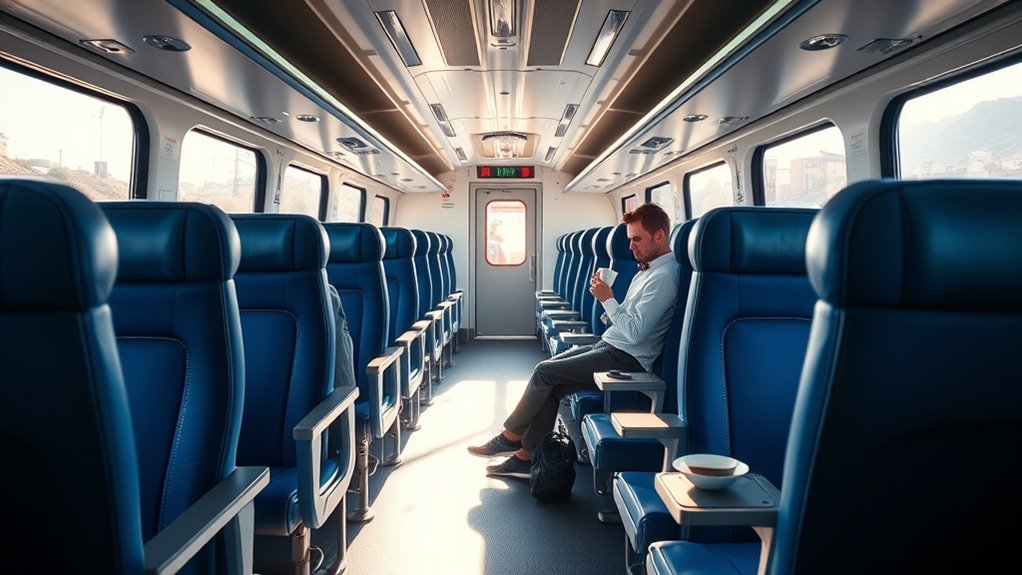
Comfort and facilities on board Portugal’s trains vary considerably depending on the service class and train type. On Alfa Pendular trains, you enjoy spacious, tilting seats, onboard Wi-Fi, and catering services, making long journeys more pleasant. Modern amenities are designed to enhance passenger comfort and convenience on these high-speed trains. Intercidades trains offer standard comfort with fewer amenities but still feature comfortable seating. Regional and suburban trains are more basic, with bench seating and limited luggage space, suitable for short trips. Additionally, some trains incorporate vintage design elements that enhance the nostalgic travel experience. Here’s what you can expect: 1. Alfa Pendular trains with Wi-Fi, power outlets, and dining options. 2. Intercidades providing comfortable seats but no onboard catering. 3. Regional trains with simple bench seats and limited amenities. 4. Accessibility features mainly at major stations, with smaller stations often lacking full accessibility. Other trains may also include period-specific decor, adding to the charm of certain routes. Some services also feature climate control systems to ensure passenger comfort in different weather conditions.

Travelon Folding ID and Boarding Pass Holder, Black, One Size
Wear around your neck or crossbody for easy hands-free check-in
As an affiliate, we earn on qualifying purchases.
As an affiliate, we earn on qualifying purchases.
Service Frequency, Reliability, and Travel Times

You’ll find that main routes like Lisbon to Porto run frequently and reliably, especially on suburban lines, though long-distance services may come less often. Travel times are improving thanks to ongoing upgrades, with new high-speed lines promising to cut journeys considerably. These developments aim to make train travel faster and more dependable across Portugal. Additionally, modernized infrastructure is enhancing overall service quality and passenger experience. As a result, service frequency and reliability continue to improve, making train travel a more attractive option for both commuters and tourists, especially as reliable backup power systems help ensure consistent operations during outages or disruptions. Continuous infrastructure upgrades are also helping to reduce delays and increase comfort for travelers.
Service Frequency and Punctuality
Service frequency varies across Portugal’s rail network, with the highest frequencies found on main corridors like Lisbon–Porto and Lisbon–Cascais, where trains run regularly throughout the day. On these routes, you can expect:
- Frequent departures every 15–30 minutes during peak hours.
- Reliable service, especially on long-distance Alfa Pendular and Intercidades trains.
- Slightly lower frequency on regional lines, with departures every 1–2 hours.
- Punctuality generally good on main routes, though regional lines may face delays due to single-track sections or maintenance.
- European cloud infrastructure improvements are underway to support better real-time updates and service reliability. These technological advances contribute to the overall service reliability and provide passengers with more accurate schedule information.
While major corridors keep you moving with consistent schedules, expect some variability on less busy routes. Planned upgrades aim to boost speeds and reduce delays, but current reliability is mostly solid on key routes.
Travel Time Improvements
Recent infrastructure projects and planned upgrades are set to considerably reduce travel times across Portugal’s rail network. The new high-speed line between Lisbon and Porto aims to cut journey times from nearly 3 hours to around 1 hour 15 minutes once fully operational. Upgrades to existing lines, including electrification and track improvements, boost line speeds up to 220 km/h and target 300 km/h on future sections. These advancements will make long-distance travel faster, more reliable, and more competitive with driving. Modern signaling systems like ERTMS reduce delays and improve punctuality. However, some rural and regional lines still face delays due to single-track bottlenecks and ongoing maintenance. Overall, these improvements promise quicker, more efficient travel, especially on key corridors, enhancing your ability to move seamlessly across Portugal.
Cost-Effectiveness and Tourist-Friendly Options
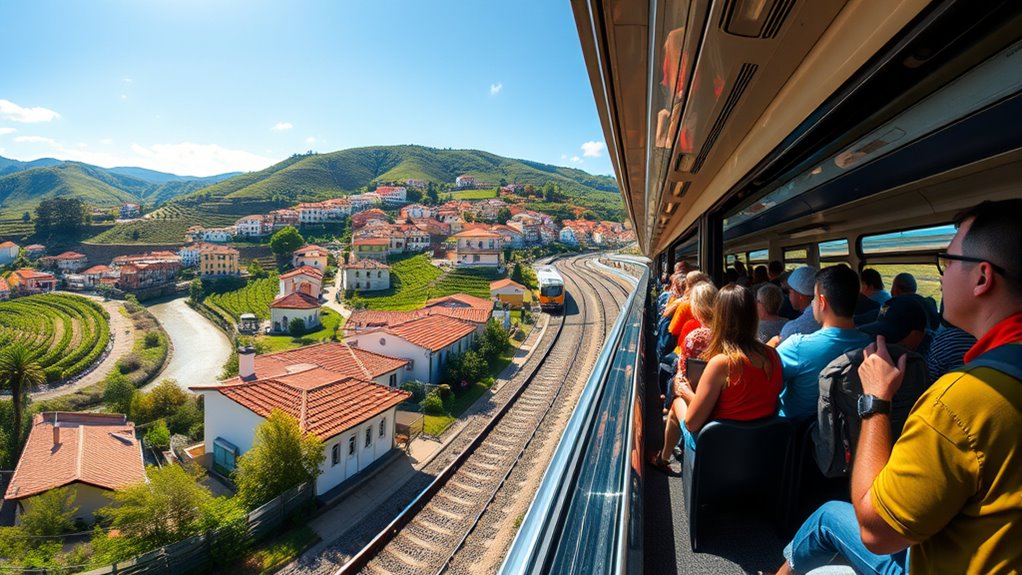
Traveling by train in Portugal can be a cost-effective and convenient way to explore the country, especially for tourists seeking to save time and money. You can find budget-friendly options by:
- Booking tickets early for reserved Alfa Pendular or Intercidades services, which often offer discounts.
- Using regional and urban fare options, which are point-to-point and don’t require reservations.
- Taking advantage of rail passes like Eurail or Portugal Rail Pass for multiple trips.
- Using urban transport cards (like Navegante) for unlimited trips within city areas, saving on taxis or buses.
Onboard amenities, like Wi-Fi and catering, add value, especially on long-distance routes. Overall, train travel offers good bang for your buck, with options tailored to different budgets and travel plans.
Operational Challenges and Service Limitations
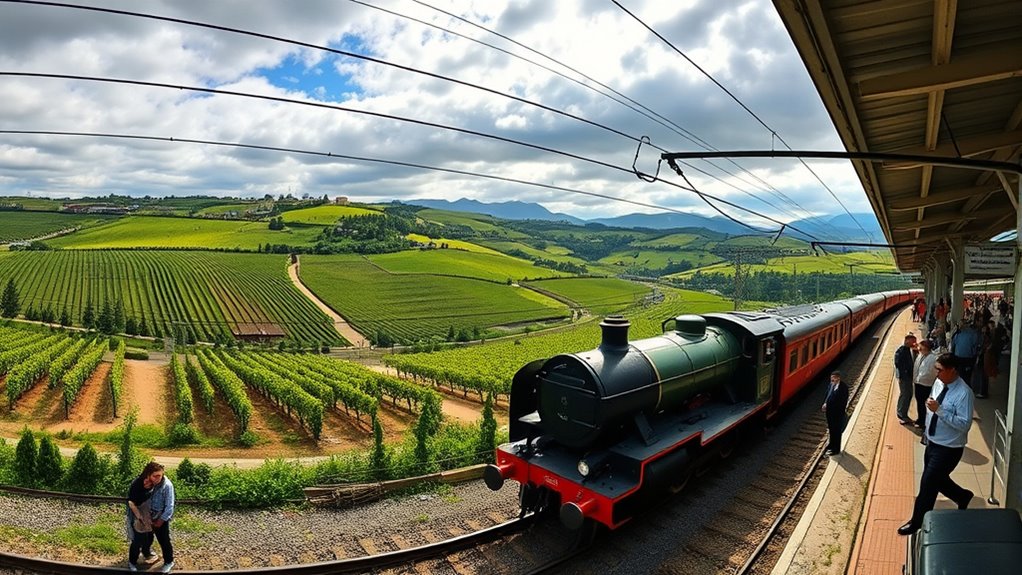
Despite the appealing options and modern amenities, Portugal’s rail network faces several operational hurdles that can impact your journey. Limited cross-border links to Spain mean fewer international options, and the high-speed Madrid–Lisbon connection isn’t operational yet. Rural lines are often deactivated, forcing you to rely on buses for last-mile access. Station accessibility varies; smaller stations may lack elevators or toilets, complicating travel for some travelers. Ticketing can be confusing due to differing validation rules and fare types across services, risking fines if you’re not careful. Infrastructure works, phased high-speed line construction, and single-track bottlenecks cause delays and limit speed gains. These challenges mean your trip might require patience and flexibility, especially during busy seasons or when connecting rural areas.
| Challenge | Impact on Your Journey |
|---|---|
| Cross-border connectivity | Fewer international train options |
| Rural line deactivation | Reliance on buses for last-mile access |
| Station amenities | Limited facilities at smaller stations |
| Ticketing fragmentation | Risk of fines, confusion during booking |
| Infrastructure works | Delays and phased speed improvements |
Accessibility and Station Facilities
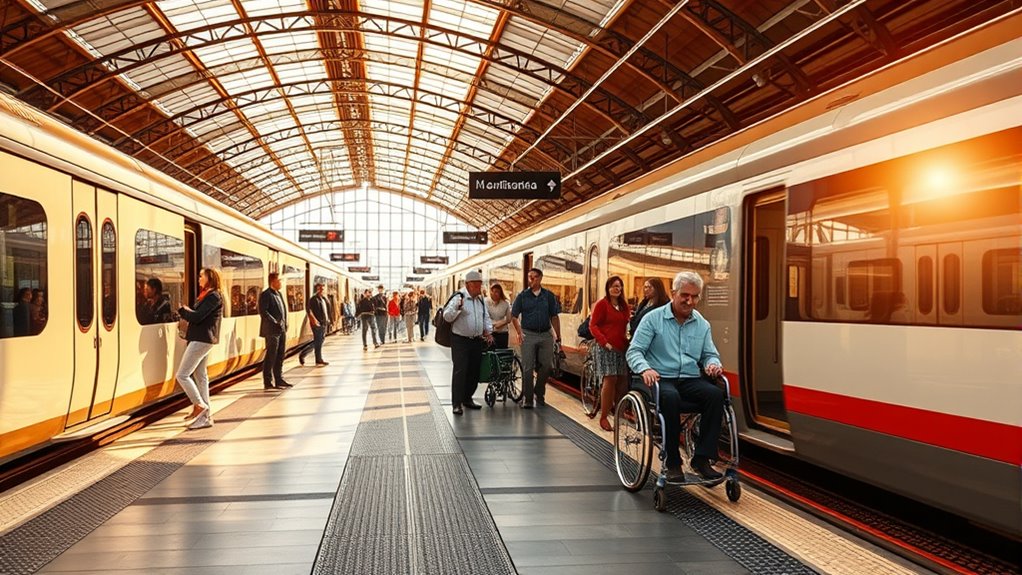
Accessibility and station facilities in Portugal vary widely, especially between major hubs and smaller stops. Larger stations like Lisbon’s Oriente or Porto’s Campanha generally offer step-free access, elevators, accessible restrooms, and clear signage. Smaller stations often lack these features, making travel difficult for those with mobility challenges. Here are key points to deliberate on:
- Most main stations have ramps, elevators, and accessible ticket counters.
- Many smaller stations may lack step-free access, making it harder for wheelchair users.
- Passenger facilities like toilets and waiting areas are more common in larger stations.
- Signage and information are clearer in main hubs, but confusing or absent in rural stops.
Future Developments and Infrastructure Upgrades
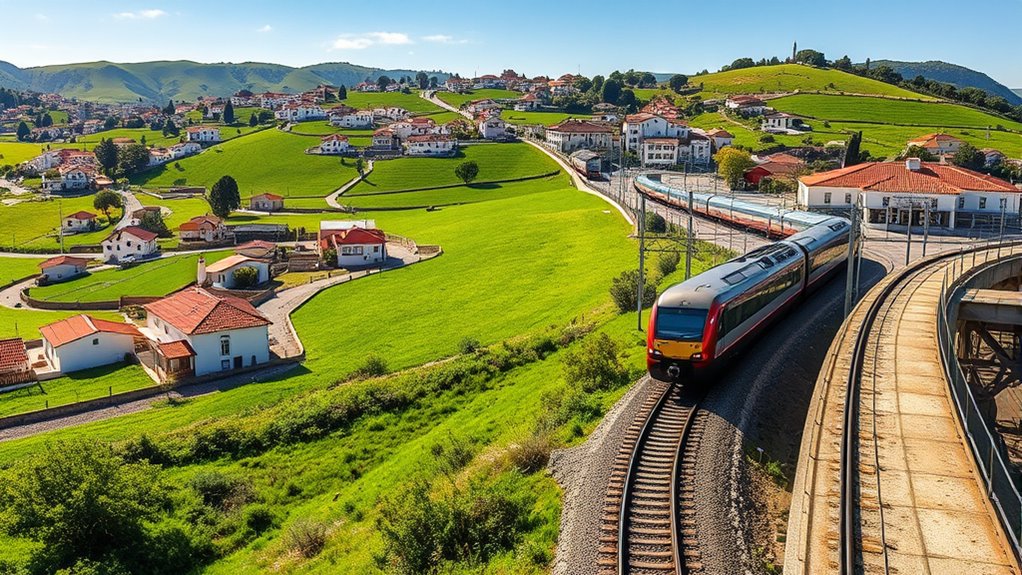
Portugal is actively investing in railway infrastructure to modernize and expand its network. Major projects include the new high-speed line between Lisbon and Porto, expected to cut travel times from nearly 3 hours to around 1 hour and 15 minutes in stages, starting with Porto–Soure by 2028. Upgrades to existing lines aim to increase speeds to 300 km/h, boosting efficiency. The TEN-T corridor and ERTMS rollout will improve interoperability and reduce delays. Plans also focus on renewing rolling stock, expanding regional services, and enhancing station accessibility. Cross-border connections to Spain are set for revitalization, with discussions on reintroducing high-speed links. These developments aim to modernize Portugal’s rail network, making train travel faster, more reliable, and better suited for future demands.
Frequently Asked Questions
Are Night Trains Available for Domestic Routes in Portugal?
Night trains aren’t available for domestic routes in Portugal. You won’t find sleeper services connecting cities like Lisbon and Porto or other regional destinations. The focus remains on daytime high-speed and regional trains, which offer reliable and comfortable travel options. If you’re looking to travel overnight, you’ll need to contemplate bus services or flights. Portugal’s rail network is improving, but night train options are still limited or nonexistent domestically.
Can I Use My Rail Pass on Regional and Suburban Trains?
Yes, you can use your rail pass on regional and suburban trains in Portugal. However, check the pass’s specific terms, as some passes might exclude non-CP services. Keep in mind, regional tickets are usually point-to-point and don’t require reservations, making them convenient for local trips. Just remember to validate your ticket or pass at the station or onboard to avoid fines and guarantee smooth travel.
How Do I Validate My Ticket on Regional Train Services?
Validating your ticket on regional trains is like giving your journey a green light. You’ll find validation machines at stations or, sometimes, conductors onboard. Simply insert or stamp your ticket before boarding, ensuring it’s active. If you forget, expect delays or fines because unvalidated tickets are like unpaved roads—bound to cause trouble. Always double-check station signs or ask staff if you’re unsure; a small step keeps your trip smooth.
Are There Direct High-Speed Trains Between Lisbon and Madrid?
There are currently no direct high-speed trains between Lisbon and Madrid. While political commitments exist to reintroduce or build a high-speed link, it hasn’t materialized yet. You’ll need to transfer, usually in Salamanca or another city, when traveling between the two capitals. International train services are limited, and high-speed options are still under development, so expect longer travel times, or consider flying for a quicker journey.
What Accessible Facilities Are Available at Smaller Rural Stations?
Only about 50% of smaller rural stations in Portugal have full accessibility features, which might surprise you considering the country’s efforts to modernize its rail network. At these stations, you’ll find limited facilities—often no elevators, fewer toilets, and minimal passenger services. If you rely on accessible travel, plan ahead, as some rural stops lack step-free access or staffed assistance, making your journey more challenging.
Conclusion
Traveling Portugal by train is like stepping into a seamless, whirlwind adventure—where every station feels like your personal gateway to the country’s heart. While some bumps and delays exist, the ease of booking, comfort on board, and scenic routes make it an unforgettable experience. With ongoing upgrades promising even smoother journeys, you’ll find that exploring Portugal by train isn’t just easy—it’s an epic voyage that transforms travel into pure magic.