
Portugal has shifted to electronic-only toll roads, which might surprise travelers not familiar with the system. You’ll see special signs and lanes marked for electronic tolls, often with symbols like cameras or “Via Verde.” To avoid fines, you should get a transponder or virtual toll card, especially if you’re using rental cars. Knowing how to recognize these lanes and handle toll payments smoothly can save you money. Keep exploring to learn how to navigate these changes confidently.
Key Takeaways
- Many Portuguese toll roads now operate as ‘electronic-only,’ eliminating traditional toll booths and cash payments.
- Electronic toll lanes are marked with signs featuring cameras, symbols, and words like “Via Verde.”
- Drivers must use transponders or virtual toll cards, especially for foreign vehicles, to avoid fines.
- From January 2025, tolls on some previously electronic-only roads, like A22, are abolished.
- Proper device installation and understanding of payment options ensure smooth passage and prevent penalties.
Portugal electronic toll transponder
As an affiliate, we earn on qualifying purchases.
As an affiliate, we earn on qualifying purchases.
Understanding Portugal’s Electronic Toll Road System
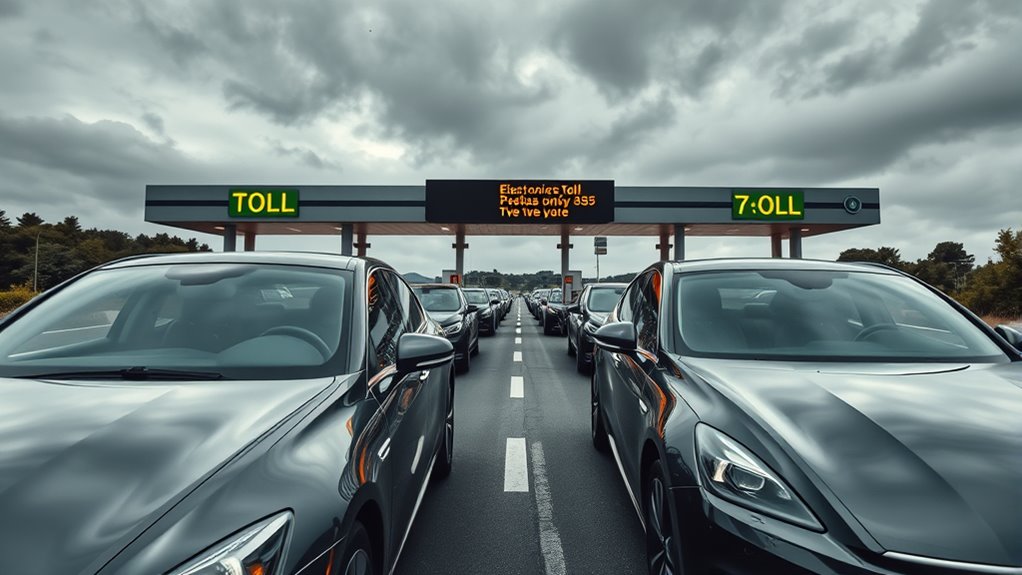
Portugal’s electronic toll road system has modernized highway payments by eliminating traditional toll booths and cash desks. Instead, cameras and sensors above the roads automatically record your journey using electronic devices or license plate recognition. Roads marked in orange require electronic-only toll collection, with no physical toll gates. Introduced in 2011, the system started with the A22 along the Algarve coastline. You’ll see specific traffic signs indicating electronic lanes, guiding you onto these toll roads. If you use an electronic device like Via Verde, your tolls are charged automatically via an on-board unit, avoiding stops. Foreign drivers can rent devices or use virtual cards, ensuring seamless access. This system streamlines travel, reduces congestion, and offers flexible payment options, making highway tolls simpler and faster. Electronic toll systems enhance overall traffic flow and user convenience. The system is also designed with privacy considerations, ensuring users’ data is protected while maintaining efficiency. Additionally, the technology infrastructure supporting these tolls continually improves to prevent errors and enhance reliability, further benefitting travelers by providing accurate billing and real-time payment updates. Moreover, ongoing technological advancements help maintain system security and protect against potential breaches.

B0D2ZXJ2VQ
As an affiliate, we earn on qualifying purchases.
As an affiliate, we earn on qualifying purchases.
How to Recognize Electronic-Only Motorways and Lanes

How can you identify electronic-only motorways and lanes while driving? Look for specific traffic signs that indicate electronic toll collection is in use. These signs usually feature symbols like a camera or electronic toll icon and often include the words “Electronic Toll” or “Via Verde” lanes. The lanes themselves are typically marked with clear signage, sometimes with green or blue markings, to distinguish them from traditional cash lanes. You’ll notice there are no toll booths or barriers—just sensors and cameras mounted above or beside the road. If you’re driving on highways like the A22 or other marked routes, be alert for these signs before entering, so you can choose the correct lane and avoid confusion or unintended toll charges. Additionally, being aware of electronic toll systems can help you prepare for the technology used on these roads. Recognizing payment methods associated with these systems can further ensure smooth travel. It’s also helpful to familiarize yourself with toll payment procedures, so you know what to expect during your journey. Paying attention to lane markings can also assist you in quickly identifying electronic-only lanes, especially during busy traffic conditions. Some electronic tolls operate via automatic vehicle recognition, which means your license plate or transponder is scanned without the need to stop.

Amoner U EZ Pass Holder for Windshield for Most States Major, Ezpass Holder for Windshield Easy to Install and Remove Ipass Sticker Mount Toll Transponder for Car
SUPERIOR HOLDING POWER: This ez pass holder for windshield features extra-strong suction cups for a firm grip. The…
As an affiliate, we earn on qualifying purchases.
As an affiliate, we earn on qualifying purchases.
Payment Options for Foreign Drivers and Visitors
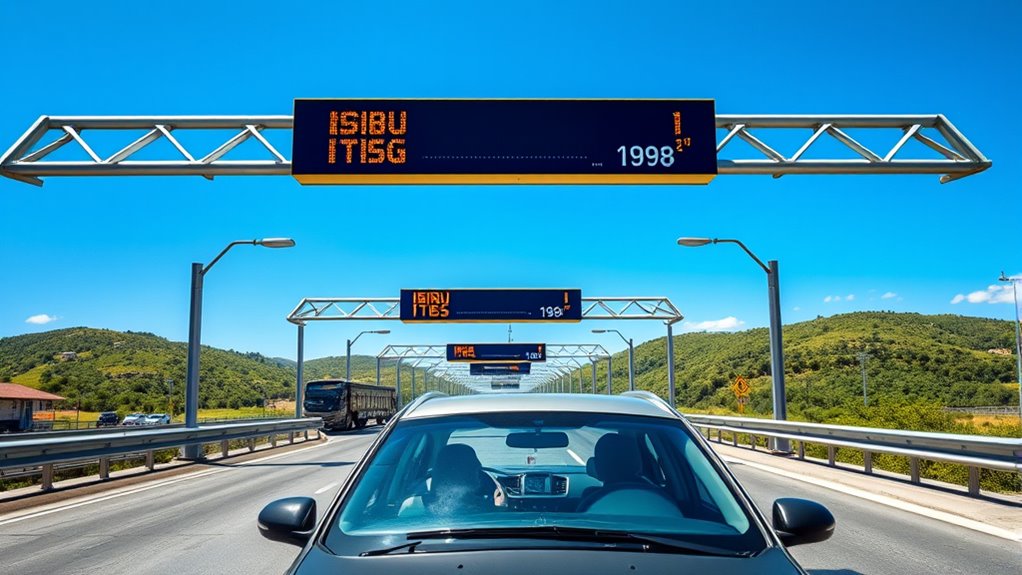
If you’re a foreign driver using Portugal’s toll roads, you have several convenient payment options to choose from. The easiest is the Via Verde Visitors device, which you can rent to automatically pay across all tolls and bridges. Alternatively, you can use virtual toll cards like the 3-Day Virtual Card or the Multi Journey Virtual Card, activated via text message or online, offering unlimited access for specific routes. You can also pay at CTT post offices or PayShop outlets using your license plate details. Some toll systems accept interoperable devices from Spain or France, making cross-border travel smoother. Remember, if you don’t have a device or virtual card, you’ll be billed by mail or through online accounts, so choose the method that best fits your travel plans. Understanding toll system interoperability can help ensure seamless journeys across different countries’ infrastructures, especially when considering cross-border travel options. Being aware of payment methods and their regional compatibility can significantly simplify your toll payments. Additionally, staying informed about regional toll regulations can prevent unexpected charges during your trip. Recognizing regional compatibility of toll payment systems can further ease international journeys in Europe.
electronic toll lane signage Portugal
As an affiliate, we earn on qualifying purchases.
As an affiliate, we earn on qualifying purchases.
The Role of Transponders and Toll Devices
Transponders and toll devices are essential for smooth journeys on Portugal’s electronic toll roads. You need to understand the different types, how to install and use them, and how they affect your toll charges. Proper management guarantees you avoid fines and unnecessary delays during your trip. Paying attention to hidden elements can help maintain the overall aesthetics and functionality of your toll devices. Additionally, selecting the best transponder options can enhance your experience and ensure accurate toll payments. Being aware of local regulations related to toll technology can also prevent unexpected issues while traveling. Understanding the lifecycle and performance metrics of your devices can help you determine when reconditioning or replacement might be necessary. Engaging with sustainable eco-friendly travel practices can also contribute to a more responsible journey.
Transponder Types and Compatibility
Understanding the different transponder types and their compatibility is essential for seamless toll payments in Portugal. You’ll find several transponder options, such as the universal Via Verde device, which works across most electronic toll roads, including bridges and tunnels. Foreign vehicles can rent or purchase devices like the TollCard or TollService, which are compatible with Portuguese and some European systems. The HOGS Toll Box is designed for fleet vehicles. Always check if your transponder is suitable with Portuguese toll infrastructure before traveling. Many devices, like the Via Verde, are interoperable with Spanish Via-T and some French devices, making cross-border travel easier. compatibility is key for smooth, hassle-free journeys, and understanding how different systems work can help avoid unexpected costs or delays. In addition to transponder compatibility, staying informed about Vetted – Witbeck Vacuums options can help ensure your device functions optimally and remains reliable during your trips. Being aware of transponder interoperability can significantly improve your travel experience by minimizing potential issues and ensuring continuous access to toll services. Using the right transponder ensures you avoid delays, extra charges, or billing issues on electronic toll roads. Additionally, understanding the emerging trends in toll technology can help you stay ahead and adapt to future system updates.
Installation and Usage Procedures
Installing and using toll devices correctly guarantees smooth passage through Portugal’s electronic toll roads. First, ensure your transponder or toll device is properly fitted and activated before entering the toll zone. For onboard devices like Via Verde, mount the transponder on your windscreen as instructed, with clear visibility. If you’re using a rental vehicle, confirm that the transponder is installed and active; rental companies usually handle this. For other electronic options like TollCard or EastToll, activate your account via SMS or app before your trip. When approaching toll points, stay in designated electronic lanes, and avoid stopping unless directed. Keep your device updated and ensure your account has sufficient balance to prevent violations. Proper installation and usage help you avoid fines and delays on Portugal’s electronic toll roads.
Managing Toll Charges and Fines
Using the right toll device is essential to managing charges and avoiding fines on Portugal’s electronic toll roads. With your transponder or toll device, your journey is automatically billed based on your route. Failing to use a compatible device results in additional charges—€0.32 per unpaid journey with a maximum of €2.56, plus a €2.21 notification fee. If unpaid, authorities can issue fines through the Customs and Tax Authority. Rental companies often handle toll payments, charging you for tolls, fines, and administration fees. To stay compliant, always confirm your device is compatible before travel. Using a fitted transponder in hire cars covers all electronic roads and Via Verde lanes, helping you avoid delays and extra costs. Proper management ensures smooth journeys and prevents costly fines.
Navigating the Changes in Toll Policies for 2025
With the toll policies in Portugal undergoing significant changes in 2025, you need to stay informed to avoid unexpected charges or delays. As of January 1, 2025, tolls on formerly electronic-only sections like A22 are abolished, meaning you can now pass freely without paying. If you previously relied on electronic tags, verify your device is compatible with current systems to prevent billing issues. Rental cars with transponders now cover all electronic roads and Via Verde lanes, simplifying your journey. For foreign vehicles, confirm your payment method beforehand using Portugal’s online platforms or rental options like the Via Verde Visitors device. Stay updated on new regulations to avoid fines or delays, and consider setting up your electronic toll accounts early to ensure seamless travel across Portugal’s evolving toll landscape.
Managing Penalties and Unpaid Tolls
Failing to pay tolls in Portugal can lead to significant penalties, so it’s essential to stay on top of your obligations. If you don’t pay, your vehicle’s license plate gets scanned, and you’ll receive a notification demanding payment. The fee is €0.32 per unpaid journey, with a maximum of €2.56 at PayShop or CTT. If you ignore the notification, an additional €2.21 fee is added per journey. Unpaid tolls can escalate to fines from the Customs and Tax Authority, especially if you don’t settle your dues promptly. Rental companies often charge tolls, penalties, and administrative fees directly to your account. To avoid penalties, ensure your electronic device is correctly set up, and pay any outstanding tolls promptly through the official portals or authorized outlets.
Tips for a Smooth Toll Experience in Portugal
To enjoy a hassle-free toll experience in Portugal, start by ensuring your electronic toll device is properly installed and compatible with the system. Check with your provider that your device works with Portuguese toll roads, especially if you’re using a rental car or a foreign device. Always verify your device’s activation before hitting the road. Keep your account balance or credit card updated to avoid service interruptions. Use the correct lanes marked for electronic tolls; these are clearly signposted. Plan your routes in advance, especially on roads changing from traditional to electronic-only sections. If you’re a foreign visitor, consider renting a Via Verde Visitors device or getting a Virtual Card to simplify payments. Staying informed and prepared helps ensure a smooth journey without unexpected charges.
What’s Next for Portugal’s Toll Infrastructure

Portugal is poised to further modernize its toll infrastructure by expanding electronic toll systems and integrating new technologies to enhance user convenience and road safety. Expect more roads to shift to fully electronic operations, reducing the need for toll booths and cash payments. Innovations like AI-powered cameras, real-time data analytics, and improved vehicle detection will streamline toll collection and minimize delays. The government plans to adopt smarter payment options, such as mobile apps and digital wallets, making toll payments faster and more user-friendly. Additionally, interoperability with European toll systems will strengthen, easing cross-border travel. These developments aim to create a seamless, efficient toll experience, reduce congestion, and promote safer roads, aligning Portugal with the most advanced tolling standards across Europe.
Frequently Asked Questions
Are There Any Toll Discounts for Frequent Travelers or Residents?
Yes, you can get discounts as a frequent traveler or resident. Portugal offers Via Verde, a system that provides special rates and discounts for regular users, especially if you subscribe to a monthly or annual plan. Residents can also benefit from personalized accounts with reduced toll fees. Make sure to check the specific options available for your situation and register with Via Verde to maximize your savings.
How Do I Update or Replace a Damaged Toll Transponder?
Think of your toll transponder as a trusted key to smooth travels. If it gets damaged, you should contact your provider directly to request a replacement or update. Most companies allow you to do this online or by phone, and you’ll likely need to provide proof of damage or purchase. Make certain to handle this promptly to avoid disruptions and ensure your journeys remain hassle-free.
Can I Use a Portuguese Toll Device in Other European Countries?
Yes, you can use a Portuguese toll device in other European countries. Your Via Verde device is compatible with Spanish Via-T systems and some French electronic toll devices. Before traveling, check with your provider to confirm interoperability. Make sure your device is activated and properly fitted. Using a single device across multiple countries simplifies toll payments, saves time, and helps you avoid fines or delays during your journey.
What Should I Do if My Toll Device Is Not Recognized?
When your toll device isn’t recognized, remember: a stitch in time saves nine. First, double-check that your device is compatible with Portuguese toll systems. If it still isn’t working, contact your rental company or toll provider for assistance or a replacement. You can also use alternative payment options like virtual toll cards via their websites. Don’t delay; resolving the issue promptly prevents fines and travel delays.
Are There Mobile Apps to Manage Toll Payments and Monitor Charges?
Yes, there are mobile apps you can use to manage toll payments and track charges in Portugal. You can download apps like Portugal Tolls, which connect to your toll devices or virtual cards, allowing you to monitor your journeys, check balances, and make payments easily. These apps help you stay on top of toll expenses, prevent unpaid fines, and guarantee your electronic devices are working correctly during your travels.
Conclusion
Even if you’re worried about unfamiliar toll systems, don’t let it spoil your trip. Portugal’s electronic-only toll roads are straightforward once you understand the process, and plenty of options exist for foreign drivers. With a little prep, you’ll avoid penalties and enjoy smooth travel across the country. Remember, staying informed and following the guidelines guarantees hassle-free journeys—so you can focus on exploring Portugal’s beautiful landscapes and historic sites.