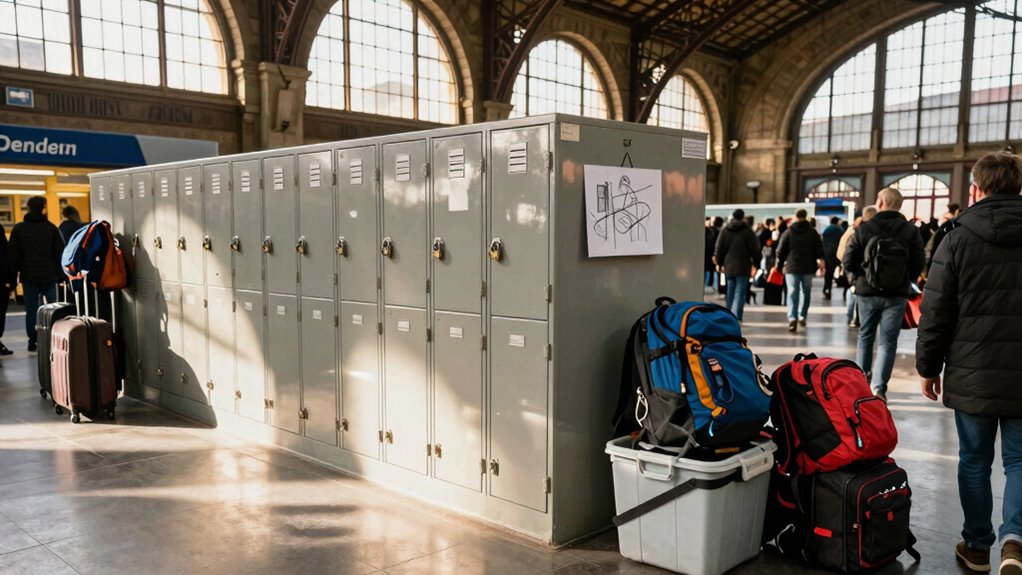
To find safe luggage storage in Europe, stick to well-lit, high-traffic locations like airports or train stations with CCTV and modern security features, including digital or biometric locks. Avoid poorly maintained lockers or those without visible security. Trust established providers with good reviews, and consider innovative parcel lockers for added security and convenience. Regional regulations vary, so always check size and weight limits. If you want practical tips on choosing reliable options, keep exploring for more insights.
Key Takeaways
- Opt for lockers in well-lit, high-traffic areas with CCTV, regular maintenance, and secure access features for maximum safety.
- Avoid poorly maintained lockers with broken locks or limited security measures to prevent theft or damage.
- Use modern lockers with biometric, digital, or encrypted access for enhanced security and real-time luggage tracking.
- Verify provider reviews, location reputation, and security features to ensure trustworthy luggage storage options.
- Be aware of regional size, weight, and security regulations to avoid delays or issues with your stored belongings.
Top picks for "luggage storage europe"
Open Amazon search results for this keyword.
As an affiliate, we earn on qualifying purchases.

When using public luggage lockers, safety and reliability should be your top priorities. Always choose lockers located in well-lit, high-traffic areas, such as major train stations or airports. Look for lockers that are maintained regularly, with clear signage and security features like CCTV cameras or monitored access points. Avoid lockers that seem poorly maintained, have broken locks, or lack visible security measures. Use sturdy, tamper-proof locks or your own padlock if possible. Check for user reviews or recommendations from trusted sources to gauge the locker’s reliability. Keep your belongings in sealed bags or containers inside the locker for added security. Prioritizing security features of the locker system can help you select options with better protection against theft or tampering. Selecting lockers with advanced security technology can further enhance your belongings’ safety during storage. Additionally, understanding the security measures in place can give you peace of mind while your items are stored. Being aware of the material quality of the locker can also impact its durability and resistance to tampering over time, especially when considering construction materials that influence overall security and longevity.
The Rise of Parcel Lockers: Convenience and Security in Europe
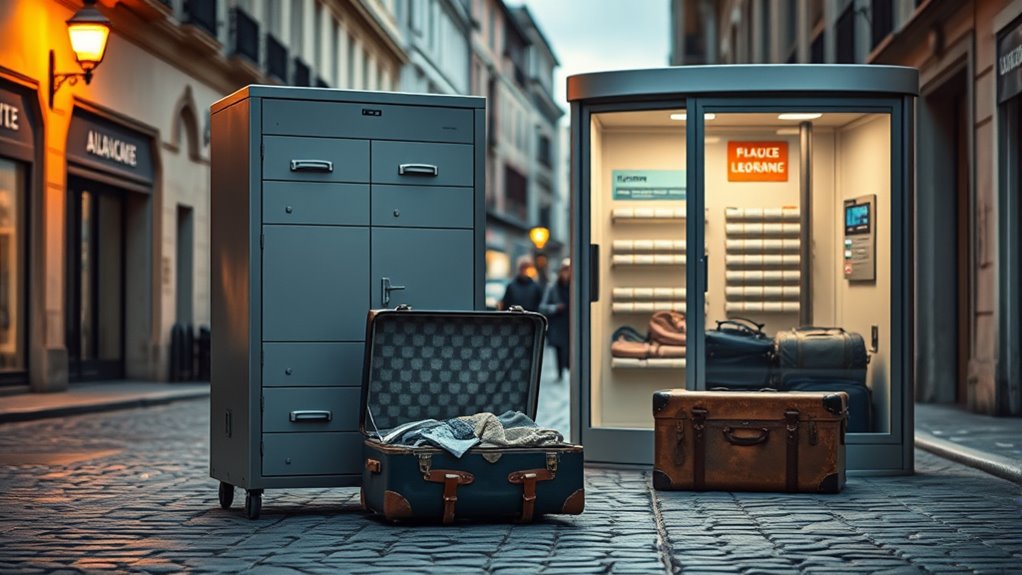
Have you noticed how parcel lockers are transforming delivery and logistics across Europe? These lockers offer unmatched convenience, allowing you to pick up packages anytime without waiting for couriers. With over 155,000 units nationwide, their expansion is rapid—Germany alone plans to double its lockers by 2030. They provide enhanced security, reducing theft risks compared to traditional delivery options. Many cities are rolling out solar-powered lockers, boosting eco-friendliness and operational efficiency. Parcel lockers are especially useful in busy urban areas, where traditional delivery can be unreliable or inconvenient. They cater to the rise of online shopping and out-of-home (OOH) delivery preferences, which 44% of European shoppers favor. Overall, parcel lockers are becoming a reliable, secure, and convenient solution for modern luggage and package storage needs. connected technology is playing a key role in making these lockers smarter and more efficient. Additionally, their integration with home energy systems can improve overall sustainability and operational costs. As European cloud innovation advances, the management and security of these lockers are becoming increasingly sophisticated. Furthermore, the implementation of safer, more reliable hardware has significantly enhanced user trust and system durability. Moreover, the increasing adoption of digital payment systems has streamlined the user experience and minimized handling errors.
Airport Baggage Screening Standards and Their Impact on Storage Options
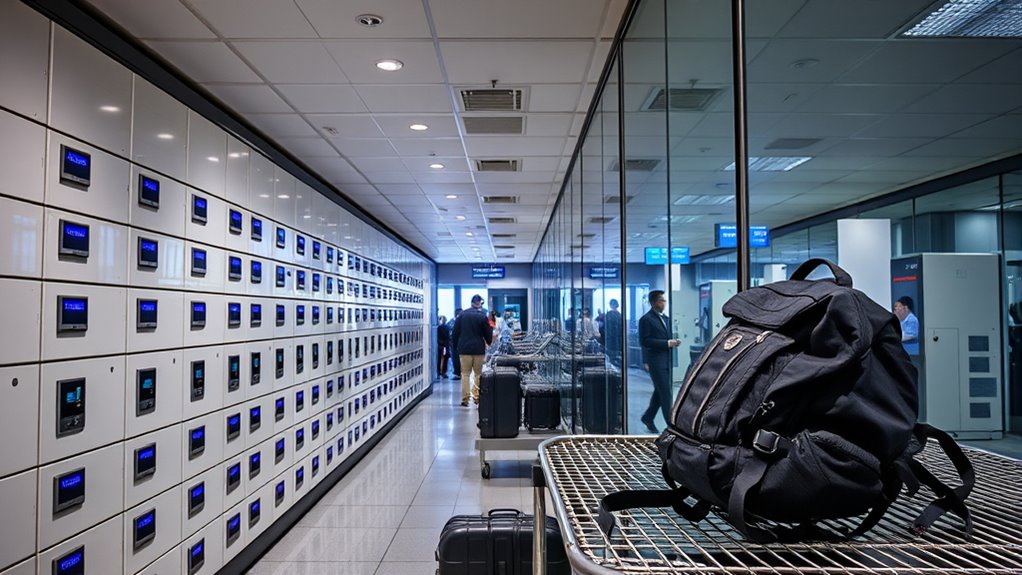
European airports adhere to strict baggage screening standards, which directly influence the availability and design of storage options. These standards guarantee all baggage—cabin, checked, freight, and even non-passenger items—undergo thorough screening to maintain security. As a result, storage facilities are often limited near security checkpoints or restricted zones, making it difficult to find secure, accessible lockers inside terminals. Instead, you’ll see designated luggage storage areas outside security, sometimes linked to baggage handling services. The screening process also affects the size and type of luggage that can be stored temporarily. Larger or non-standard items may require special handling or be disallowed altogether. Additionally, these standards promote security measures that help prevent theft or tampering, which can influence the design and operation of storage facilities. These security procedures also encourage the adoption of smart storage solutions, improving overall baggage management efficiency. Moreover, security protocols can sometimes lead to delays or restrictions during peak times, affecting the availability of storage options. Overall, these standards prioritize security, shaping the layout and accessibility of storage options you encounter at European airports.
Regional Variations in Luggage Regulations Across Europe
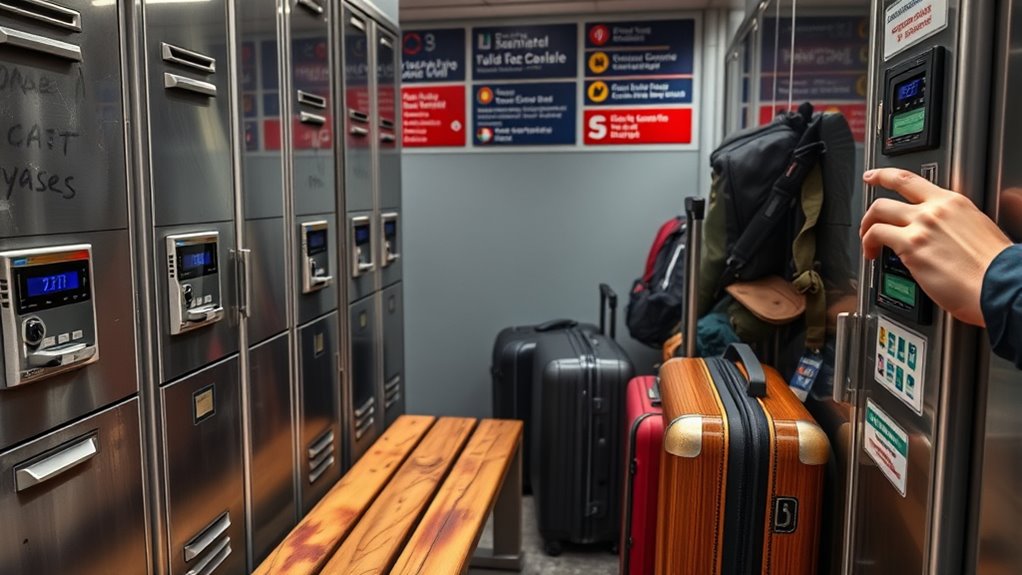
Luggage regulations across Europe vary considerably from country to country, influencing how you pack and store your belongings. In France and Spain, you can typically carry up to three pieces of luggage with maximum dimensions of 85 x 55 x 35 cm and a 25 kg weight limit per item. Germany enforces similar rules but has stricter size and weight restrictions in some regions. The UK allows slightly more flexibility, with a focus on safety and efficiency. However, regulations can differ at regional railway stations and transport hubs. These variations impact your planning—knowing specific country rules helps you avoid penalties or delays. Always check local regulations before traveling, especially if you’re using luggage storage services or transporting large or multiple items. Additionally, understanding electric bike performance can be beneficial if you plan to explore regions with varied terrain or transportation options. Being aware of regional transport regulations can further help you navigate the diverse rules across Europe more smoothly, especially when considering the cybersecurity aspects of digital ticketing and travel apps. Moreover, reviewing precious metal investment options can be advantageous if you’re considering financial planning during your travels. Being familiar with natural pool features can also enhance your outdoor experience while exploring different regions.
Comparing Traditional Storage Solutions to Innovative Locker Systems
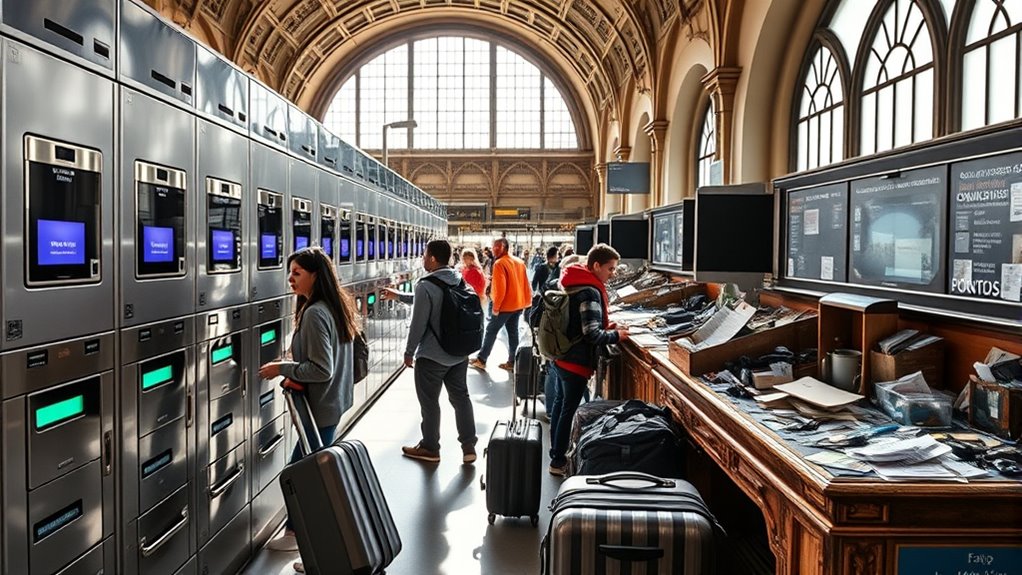
When comparing traditional luggage storage options to innovative locker systems, you’ll find that accessibility and convenience are key factors. Security features like surveillance and tamper-proof designs also play a major role in your decision. Additionally, you’ll want to reflect on costs and how flexible each solution is to fit your travel plans. Opting for smart gear options can significantly impact the safety and ease of your travel experience.
Accessibility and Convenience
Traditional storage solutions like baggage lockers and storage rooms often require you to plan ahead, find the facility, and wait in long lines, making it a hassle during tight schedules. You may need to carry your luggage around until you find a spot, which can be stressful and time-consuming. In contrast, innovative locker systems offer instant access at convenient locations like train stations, airports, and city centers. With digital booking, you can reserve a locker via your phone, drop off your luggage quickly, and explore without delays. These lockers operate 24/7, providing flexibility for early arrivals or late departures. Additionally, many of these smart lockers incorporate high‑end home appliances technology to enhance security and user experience. These advanced features often include security measures that ensure your belongings are safe during storage. Overall, modern locker systems markedly improve accessibility and convenience, allowing you to save time and effort while traveling through Europe’s busy transportation hubs.
Security and Safety Features
Innovative locker systems incorporate advanced security features that substantially enhance safety compared to conventional storage options. These lockers often include features like biometric access, real-time monitoring, and encrypted digital keys, making unauthorized access difficult. Unlike traditional lockers that rely on physical keys or simple codes, these systems offer enhanced control and accountability.
- Biometric authentication (fingerprint, facial recognition)
- 24/7 CCTV surveillance and remote monitoring
- Encrypted access via mobile apps or digital codes
These features reduce theft risk and provide peace of mind. With real-time alerts and automated logging, you can track your luggage’s safety at all times. Overall, innovative lockers deliver a higher standard of security, making them a smarter choice for travelers.
Cost and Usage Flexibility
Have you ever wondered how the costs and flexibility of luggage storage options compare? Traditional solutions, like station lockers or staffed storage, often charge by the hour or day, which can add up quickly if your plans change. They also require advance reservations or physical visits, limiting spontaneity. In contrast, innovative locker systems offer pay-as-you-go models, with flexible durations from a few hours to several days, often accessible via mobile apps. These lockers are typically located in high-traffic areas, making last-minute storage effortless. While traditional options might be more suitable for long-term needs, lockers provide greater flexibility for short-term or unpredictable plans. Overall, lockers tend to be more cost-effective and adaptable, especially for travelers seeking quick, convenient, and affordable luggage solutions.
Key Cities and Their Luggage Storage Ecosystems
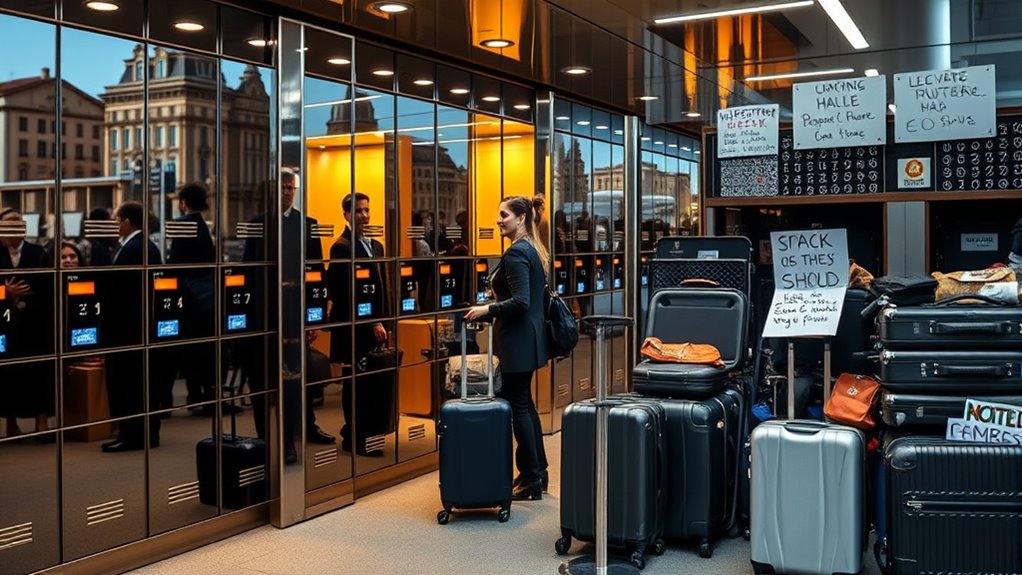
What makes certain European cities stand out as hubs for luggage storage? These cities attract travelers with dense transport networks, high tourist volumes, and established infrastructure. London, Paris, Rome, and Barcelona lead due to their popularity and connectivity, supporting a thriving ecosystem of storage options. Their extensive transportation hubs—airports, train stations, and metro systems—make drop-off convenient. Local governments and private providers have invested heavily in lockers and storage services, creating a reliable network.
- Major transport hubs ensure easy access and high demand
- Urban density supports numerous storage facilities
- Tourism volume drives continuous growth and innovation
Tips for Choosing the Most Trustworthy Luggage Storage Services

Choosing a trustworthy luggage storage service is essential to guarantee your belongings are safe and your travel experience remains stress-free. Start by researching providers with positive reviews and reliable reputations. Look for services that are partnered with well-known companies or located in reputable venues like train stations, airports, or hotels. Verify their security measures, such as CCTV, secure lockers, and insurance options. Check cancellation policies and pricing transparency upfront. Avoid providers with vague terms or limited customer support. It’s also wise to confirm their operating hours and whether they’ve been vetted by local authorities or industry associations. Trustworthy services prioritize safety, transparency, and customer satisfaction—making your trip smoother and worry-free.
Frequently Asked Questions
How Do European Luggage Lockers Ensure User Privacy?
European luggage lockers guarantee your privacy by using secure access methods like PIN codes, QR codes, or app-based entry, which only you can operate. They often have individual compartments with lockable doors, preventing unauthorized access. Some lockers also incorporate surveillance cameras and regular monitoring for added security. These measures make certain your belongings stay private and safe while you’re exploring, giving you peace of mind during your travels.
Are There Hidden Fees With Parcel Locker Services in Europe?
Yes, some parcel locker services in Europe may have hidden fees, so you should always read the fine print. Common extra charges include late pickup fees, oversized package fees, or service fees for after-hours access. To avoid surprises, check the terms and conditions beforehand, and consider using reputable providers with transparent pricing. Being aware helps make sure you won’t face unexpected costs when collecting your parcels.
What Are the Common Safety Standards for Airport Baggage Screening?
Think of airport baggage screening as a fortress safeguarding treasures, symbolizing Europe’s commitment to security. You’ll find all EU airports adhere to ECAC Standard 3, meaning your luggage undergoes rigorous checks. This involves multiple checkpoints, scanning cabin, hold baggage, freight, and even non-passenger items. You’re protected by strict standards, ensuring safety for millions of travelers annually, while balancing efficiency and security—your journey’s gatekeeper in Europe’s travel landscape.
Do Regional Luggage Regulations Affect Storage Options Across Europe?
Regional luggage regulations directly influence your storage options across Europe by setting size, weight, and quantity limits, which vary between countries and transport modes. You need to verify specific rules for trains, airports, and stations to make certain your bags comply. These regulations can impact whether you can store larger or multiple items, and knowing them helps you choose the right storage method, avoid extra charges, and travel smoothly across different regions.
How Can Travelers Verify the Reliability of Storage Providers?
You can verify a storage provider’s reliability by checking reviews on trusted platforms, reading customer feedback, and confirming their licensing or partnerships with reputable companies. Look for clear policies on security, insurance options, and operating hours. Don’t hesitate to ask questions about their safety measures and storage conditions. Trust your instincts—if something feels off, explore other options to guarantee your belongings’ safety.
Conclusion
Ultimately, you need to do your homework and pick storage options you can trust. Not all lockers are created equal, so look for well-reviewed services and secure locations. Remember, you don’t want to leave your belongings in a spot that’s more sketch than safe. It’s better to be safe than sorry—after all, a little extra effort now can save you a lot of headaches later. Stay vigilant and enjoy your European adventure worry-free.