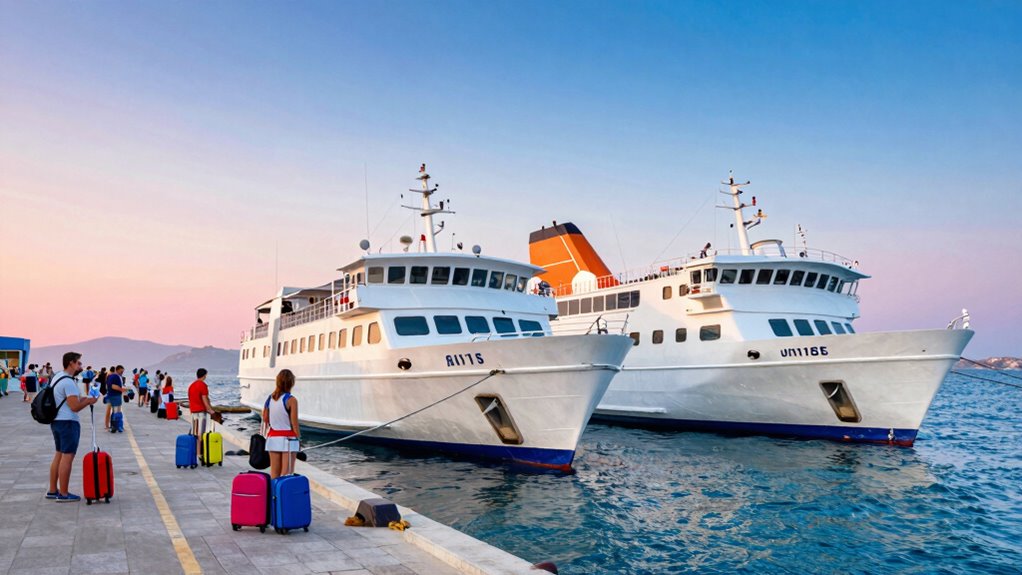

To book ferries in Greece, plan early and use online platforms for seat selection and ticketing. Choose between high-speed and conventional ferries based on your comfort preferences and weather conditions, and consider timing your trip during off-peak seasons or early mornings to avoid crowds. To prevent seasickness, sit midship near windows and bring remedies like ginger or motion sickness patches. For more tips on securing reservations, avoiding seasickness, and scheduling your trip, keep exploring.
Key Takeaways
- Book ferries early online, including vehicle reservations, to secure preferred times and avoid last-minute issues.
- Choose high-speed or conventional ferries based on weather, comfort preferences, and travel duration.
- Prevent seasickness by selecting seats midship, near windows, and using natural remedies or motion sickness aids.
- Travel during off-peak seasons or early mornings for better availability, lower prices, and fewer crowds.
- Check weather forecasts and vessel schedules regularly to minimize delays and select stable routes during rough seas.
How to Secure Your Ferry Reservations in Greece
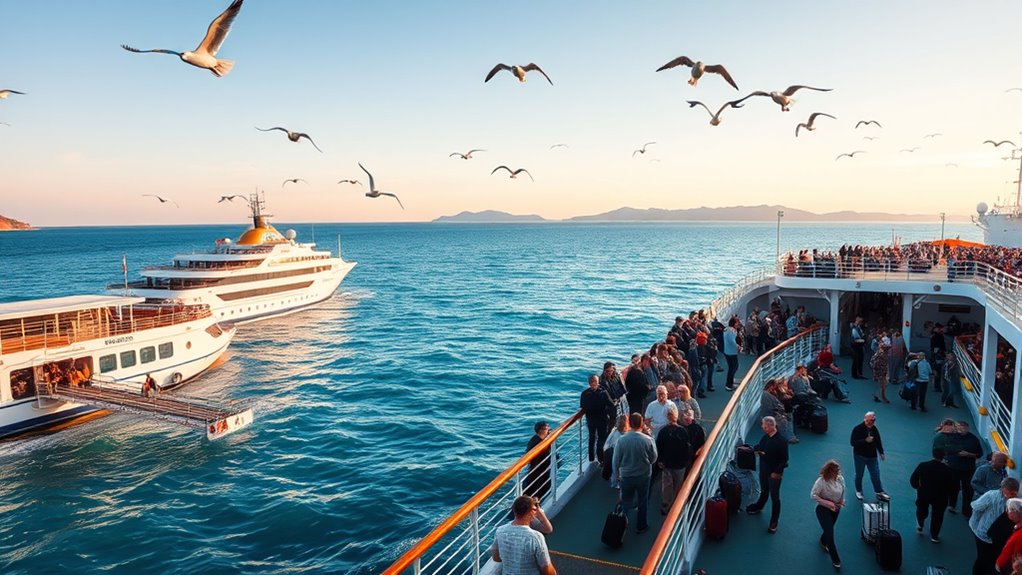
Securing your ferry reservation in Greece is essential, especially during the busy summer months when routes sell out quickly. You should book as early as possible, ideally several weeks before your trip, to guarantee your preferred departure times and seating options. Online platforms are the most convenient, allowing you to select seats, upgrade classes, and receive e-tickets instantly. Major operators and aggregator sites accept credit cards and display schedules, vessel types, and availability. For high-demand routes, avoid waiting until the last minute—walk-up tickets at ports may be limited or sold out, especially on peak days. If you’re traveling with a vehicle, remember to prebook vehicle reservations, as space on car ferries and high-speed services is often limited. Planning ahead ensures a smoother, stress-free journey. Additionally, understanding ferry schedules and the importance of early booking can greatly enhance your travel experience. Being aware of booking windows can help you secure the best options and avoid last-minute disappointments. To further ensure a seamless trip, consider checking for any ferry safety protocols or sanitation measures in place, especially during peak travel seasons. Also, being informed about booking policies can help prevent any unexpected issues during the reservation process. Plus, researching seasonal variations can help you plan for different weather conditions and travel times throughout the year.
Choosing Between High-Speed and Conventional Ferries
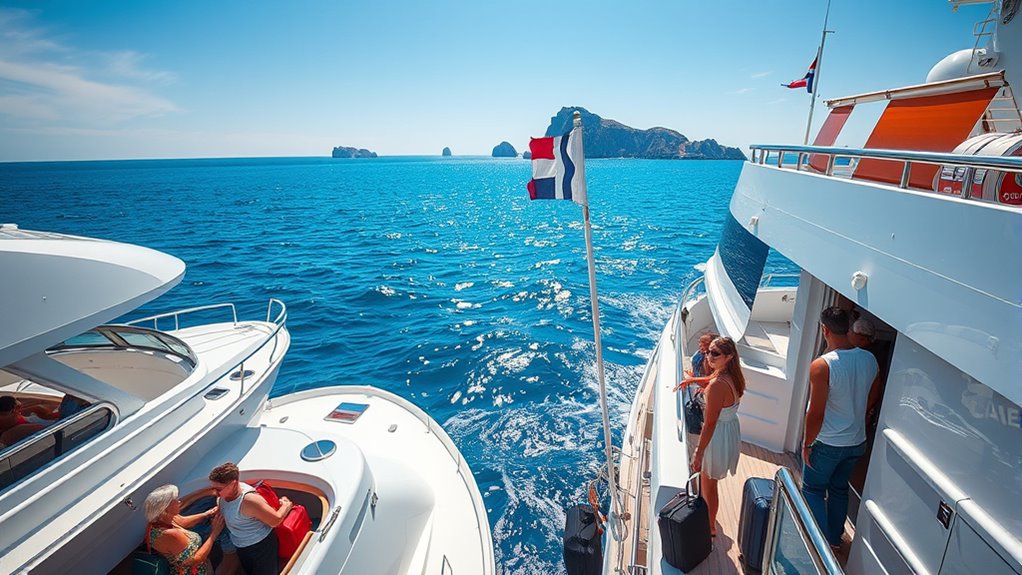
When choosing between high-speed and conventional ferries in Greece, consider your priorities for travel time, comfort, and budget. High-speed ferries cut crossing times considerably, making them ideal if you’re pressed for time. However, they tend to produce more motion, increasing the risk of seasickness, especially in rough weather. They also offer fewer onboard amenities and cabins, which can impact comfort during longer journeys. Conventional ferries are slower but more stable, with larger indoor spaces, lounges, and cabins that help reduce motion discomfort. They’re often cheaper and better suited for longer crossings or if you prefer a more relaxed experience. Weather conditions also influence your choice; high-speed vessels are more susceptible to cancellations during windy or stormy days. Additionally, ferry infrastructure and maintenance can affect the reliability of your chosen vessel. Consider the seasickness risk when planning your trip, especially if you’re prone to motion sickness. It’s also worth noting that ferry schedules can vary seasonally, so checking timetables in advance is advisable. Moreover, passenger comfort features can differ significantly between vessel types, influencing your overall experience. Different safety standards across vessels can also impact your peace of mind during the journey. Weigh your priorities carefully to select the option that best suits your trip.
Tips for Preventing Seasickness During Your Voyage
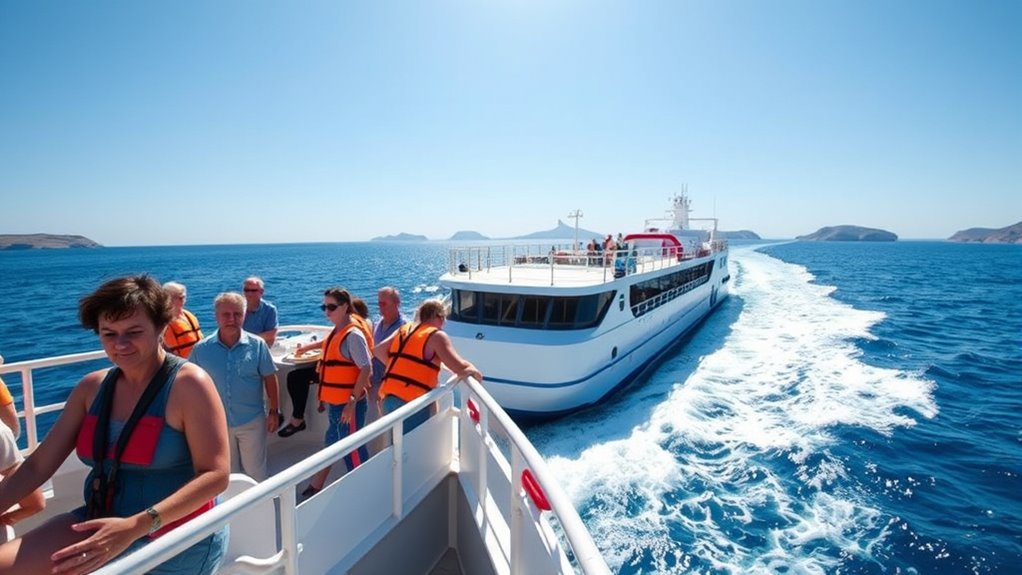
To stay comfortable during your ferry crossing, taking proactive steps to prevent seasickness can make a big difference. Start with these tips:
- Choose your seat wisely: Sit midship and on lower decks to reduce motion. Opt for a forward-facing seat near a window for a clear horizon view. Being near the center of the vessel minimizes the sensation of movement and can decrease seasickness symptoms. Additionally, a stable position can help manage motion sensitivity more effectively.
- Watch your diet: Avoid greasy, heavy meals and alcohol before departure. Instead, snack on bland crackers or fruit, and stay hydrated.
- Use natural or medicinal aids: Ginger supplements or ginger ale can soothe your stomach. Consider antiemetic medications like Dramamine or transdermal patches if you’re prone to seasickness.
- Be aware of motion sickness triggers: Recognizing factors that can increase seasickness allows you to take additional preventive measures. Knowing your personal susceptibility can help you choose the best strategies for comfort.
Best Timing and Scheduling Strategies for Ferry Travel
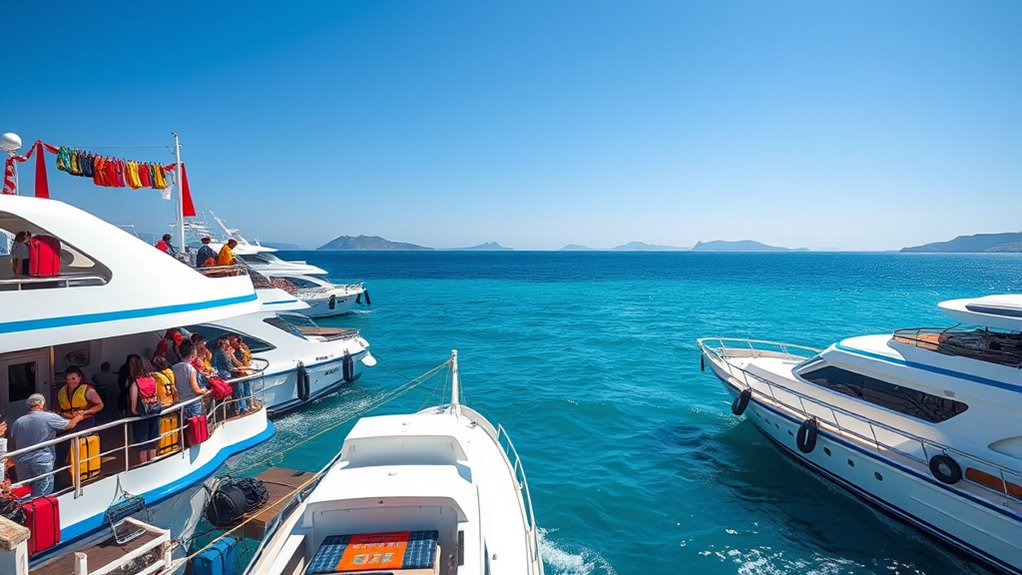
Timing your ferry travel strategically can considerably enhance your comfort and convenience. To avoid crowds and high prices, consider early-morning departures, which tend to be less busy and cheaper. If you’re traveling long distances or prone to seasickness, overnight ferries with cabins help you rest and reduce motion discomfort. Be flexible with your schedule during the off-peak seasons (spring and late fall) when services are less crowded and more reliable. Always allow at least 60–90 minutes for transfers, especially when connecting from land transport. Keep an eye on weather forecasts—rough seas during Meltemi winds or storms can delay or cancel ferries. Planning your timing carefully ensures a smoother, more enjoyable journey. For added peace of mind, check ferry schedules and updates regularly to adapt your plans as needed. Additionally, understanding ferry booking procedures can help streamline your travel arrangements and avoid last-minute surprises. Being aware of European cloud security standards can also be beneficial if you’re using online booking platforms to protect your personal information. Moreover, selecting off-peak travel times can further improve your experience by reducing wait times and increasing availability. Staying updated on seasonal ferry schedules can help optimize your travel plans and maximize your experience.
Enhancing Onboard Comfort and Navigating Route Factors
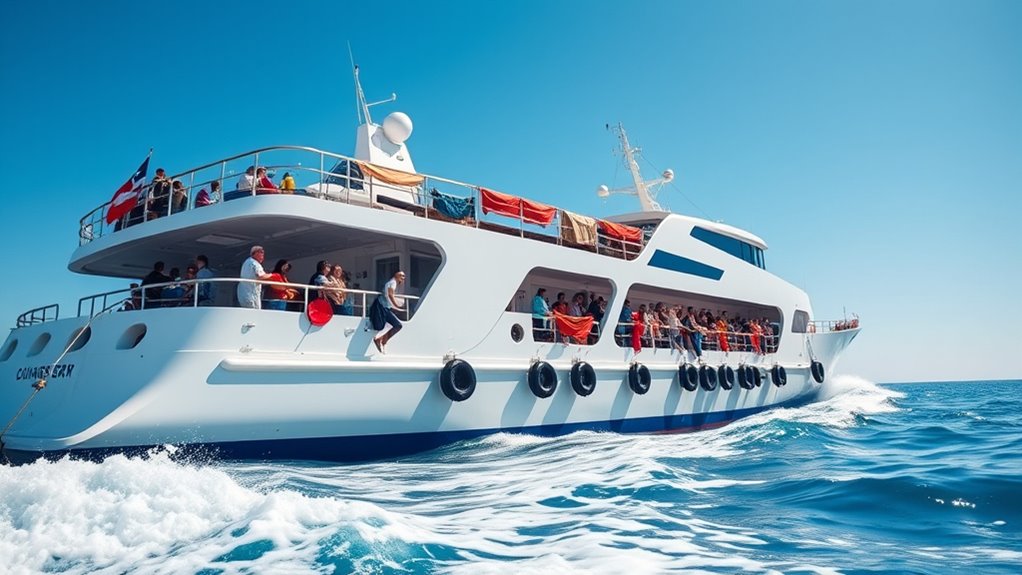
Optimizing onboard comfort can make a significant difference in your ferry experience, especially on longer routes. To improve your journey, consider these tips:
- Choose the right vessel: Opt for conventional ferries with cabins or reserved seats for stability and privacy. Outdoor decks and front-facing windows help reduce motion sickness by providing fresh air and a clear horizon view.
- Plan route-specific strategies: Be aware of seasonal factors like Meltemi winds that cause rough seas and cancellations. During high winds, prioritize routes with larger, more stable vessels and avoid high-speed services if you’re prone to seasickness. Weather conditions can greatly impact the safety and comfort of your trip. Additionally, selecting routes that utilize stabilization technology can further enhance stability and comfort.
- Utilize onboard amenities: Use lounges or Wi-Fi to stay distracted, and select light meals at onboard cafes. Have restroom and sick-bag locations in mind, ready to act quickly if symptoms develop.
- Consider natural remedies: Some travelers find that natural approaches such as ginger or acupressure wristbands can help alleviate seasickness symptoms.
Frequently Asked Questions
Are Group Discounts Available for Ferry Tickets in Greece?
Yes, group discounts are often obtainable for ferry tickets in Greece. You should verify directly with the ferry operators or booking platforms, as they sometimes offer special rates for groups of a certain size. It’s best to inquire early and compare options, especially during high season when discounts are more common. Booking in advance can also help secure these deals and ensure your group travels together smoothly.
Can I Change or Cancel My Ferry Reservation After Booking?
Yes, you can change or cancel your ferry reservation after booking, but it depends on the operator’s policies. Some offer flexible fares or refundable options, often for an extra fee. Always check the specific cancellation and change policies when you book, especially during high season, as some routes or fares may have strict nonrefundable terms. Act quickly to maximize your options and avoid losing your payment.
Is It Possible to Bring Large Luggage or Sports Equipment Onboard?
Yes, you can bring large luggage or sports equipment onboard, but you need to verify the ferry operator’s baggage policies first. Some routes require pre-booking or paying extra for oversized items, especially vehicles or sports gear like bikes and surfboards. Arrive early to handle check-in procedures, and secure any equipment properly to avoid inconvenience or extra fees. Always confirm specific rules with your ferry provider beforehand to ensure smooth travel.
Do All Ferries in Greece Accept Electronic Tickets or Mobile Boarding Passes?
Not all ferries in Greece accept electronic tickets or mobile boarding passes, but many major operators and aggregator sites do. You should check with your specific ferry company beforehand to confirm their policies. Booking online often provides e-tickets, which you can display on your device. To avoid any issues, arrive early with your digital confirmation and verify your device is charged and ready to show your ticket when boarding.
Are There Specific Health Requirements or Restrictions for Ferry Passengers?
You generally don’t need specific health requirements or restrictions to ride Greek ferries, but it’s wise to verify with your ferry operator beforehand. Some routes might have guidelines related to COVID-19 or other health concerns, especially during outbreaks. Make sure you’re up-to-date on vaccinations and carry any necessary medical documents. If you have health issues or special needs, inform the crew in advance for assistance and ensure a smooth journey.
Conclusion
So, after all that planning, you might think securing a ferry is a breeze—until seasickness and timing slip your mind. Ironically, the best way to enjoy Greece’s stunning views is often by battling the waves or juggling schedules. But hey, if you survive the seas and find the perfect window, you’ll have earned those breathtaking island vistas. Just remember, the most unpredictable part of your trip might be how smoothly everything actually goes!