European speed cameras use advanced technology and strict legal frameworks to detect violations and share data across borders. When you get caught, enforcement agencies automatically identify you using high-resolution images and secure data sharing systems. The ticket is then sent back to your home country, ensuring accountability even if you traveled. If you want to understand how these systems work and how your violations follow you, there’s more to discover right here.
Key Takeaways
- European countries share speed violation data through harmonized legal frameworks and secure data sharing systems.
- Speed cameras capture vehicle details, timestamps, and images, which are stored briefly and securely.
- Enforcement agencies use interoperable systems to identify offenders and issue tickets across borders.
- European laws mandate driver identification or vehicle owner liability, depending on the country.
- International cooperation and centralized servers ensure tickets are processed and sent to offenders’ home countries.

Hidden Camera Detectors & Anti-Spy Camera Finder, Wireless RF Signal Scanner, GPS Tracker Finder, Spy Device Detector for Travel, Office, Hotel, Dressing Room – Portable Privacy Protection
【4-IN-1 PROFESSIONAL DETECTOR|MAXIMUM PRIVACY PROTECTION】 Engineer6GHz full-band sweep for wireless cameras, GPS trackers & listening devices); 2) IR…
As an affiliate, we earn on qualifying purchases.
As an affiliate, we earn on qualifying purchases.
The European Framework for Speed Enforcement
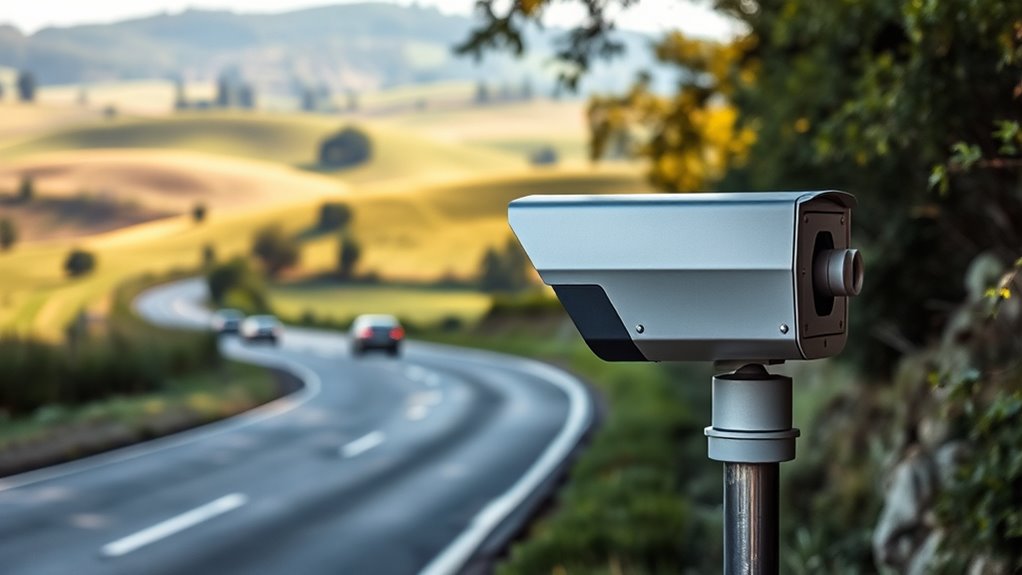
Europe has established a unified legal framework that standardizes speed enforcement across its member states. This framework guarantees consistent rules for how speed violations are handled, making cross-border enforcement more straightforward. You’ll find that countries like Sweden and Finland hold drivers legally responsible, requiring driver identification for speeding tickets, while others hold vehicle owners liable. Centralized regulations facilitate the deployment of similar speed camera technologies and enforcement methods across borders. Strict data protection laws, especially in Germany, delay some implementations, but overall, the system aims for uniformity. This harmonization allows authorities to share information efficiently, ensuring tickets reach you regardless of where you’re caught speeding. Additionally, the adoption of European Cloud Servers enhances the security and efficiency of data sharing among member states. As a result, drivers face a more cohesive and effective speed enforcement network throughout Europe, supported by interoperable enforcement systems that enable seamless identification and citation across countries. Furthermore, the standardized legal procedures streamline the process of issuing and managing tickets, reducing delays and misunderstandings. The integration of data sharing protocols further boosts the effectiveness of cross-border enforcement efforts, utilizing international cooperation agreements to facilitate swift and reliable ticket processing.
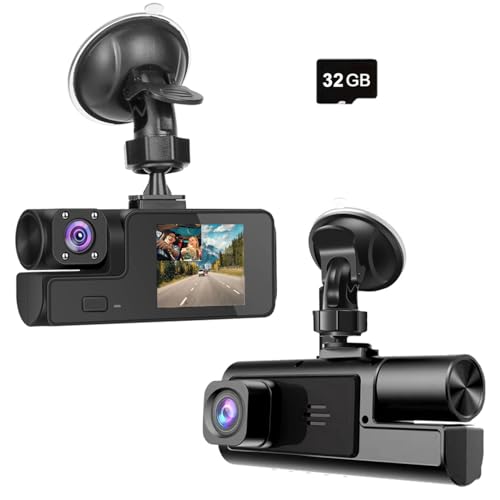
1080P Dual Dash Camera for Car Front and Inside Dashcam Car Security Video Recorder,170°Wide Angle Vehicle Cam,WDR,G-Sensor,2’’ IPS Screen,Loop Recording,Night Vision (Dual Dash Cam with 32G Card)
【1080P Front and Inside Dash Cam 】Super Clear 1920*1080P pictures can be provided by the small cam. The…
As an affiliate, we earn on qualifying purchases.
As an affiliate, we earn on qualifying purchases.
Cutting-Edge Technology in Speed Cameras
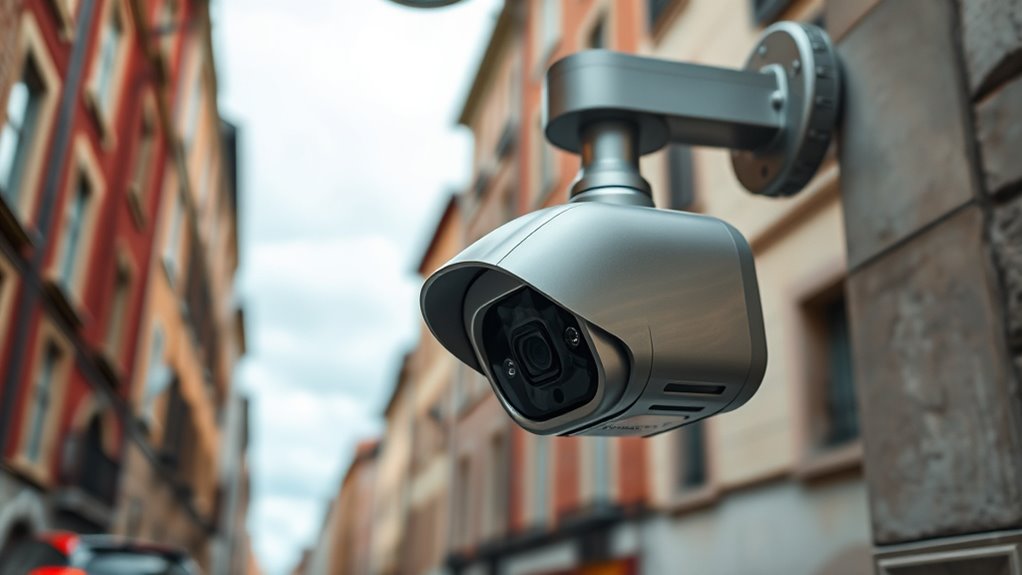
Cutting-edge speed cameras now use high-resolution imaging systems that can identify individual drivers with clarity. Vision-only detection methods, like Mobileye’s, recognize speed limit signs without relying on GPS, making enforcement more flexible. Integrated vehicle recognition systems combine multiple technologies to accurately capture and process violations across diverse road conditions. Additionally, some systems incorporate AI-driven analytics to improve detection accuracy and adapt to changing environments. These advancements are helping law enforcement agencies reduce false positives and improve overall traffic safety. Moreover, the integration of advanced sensor technology enhances the ability to monitor and respond to dynamic traffic situations effectively, supported by comprehensive data collection that aids in continuous system optimization. Incorporating cybersecurity measures ensures that these sophisticated systems remain protected from potential digital threats, maintaining data integrity and operational reliability.
High-Resolution Imaging Systems
High-resolution imaging systems have revolutionized speed enforcement by providing crystal-clear images of vehicles and their drivers, even at high speeds. These advanced cameras capture detailed photos that leave little room for doubt, ensuring accurate identification of offenders. They can clearly document license plates, vehicle makes, and models, reducing errors and disputes. In Europe, these systems are often combined with infrared or thermal imaging to operate effectively in low-light or adverse weather conditions. The high level of detail helps authorities verify violations quickly and efficiently, supporting automated ticketing processes. This technology also enhances enforcement in dense traffic or high-speed zones, making it harder for offenders to evade detection. The detailed imagery ensures precise verification of violations, further reducing wrongful ticketing and improving public trust in enforcement efforts. Additionally, real-time data processing allows for swift action, minimizing the chances of offenders escaping before detection. Advanced imaging technology continues to evolve, offering even greater accuracy and reliability in speed enforcement. Moreover, ongoing advancements in auditory and visual cues contribute to better system calibration and accuracy. These innovations are crucial for maintaining public confidence and adapting to new challenges in traffic law enforcement.
Vision-Only Detection Methods
Recent advancements have enabled speed cameras to rely solely on visual recognition without GPS or other location-based data, making enforcement more discreet and adaptable. These vision-only detection systems use high-resolution cameras and sophisticated image processing to identify speeding vehicles instantly. They can read license plates, detect speed limit signs, and track vehicle movements without relying on external signals. This technology improves accuracy, reduces false positives, and simplifies deployment in diverse environments. Additionally, the attention to detail in designing these systems ensures they operate effectively across different settings and conditions. The advanced imaging capabilities of these systems allow for precise operation even in challenging lighting or weather conditions.
Integrated Vehicle Recognition
Integrated Vehicle Recognition (IVR) technology enhances speed enforcement by combining multiple data sources into a unified system. It links high-resolution cameras, license plate recognition, and driver identification tools to accurately identify vehicles and their owners. When you speed, IVR captures detailed images of your license plate, often correlating them with driver data where available. This integration allows authorities to assign violations directly to the registered owner or responsible driver, regardless of location. IVR systems also support real-time data sharing across borders, making cross-country enforcement seamless. By unifying vehicle and driver information, IVR reduces errors, speeds up processing, and ensures violations are correctly attributed. This cutting-edge technology makes speed cameras more effective and reliable, strengthening enforcement and increasing compliance across Europe.

Camcrusher Warns About Speed Cameras, Red Light Cameras in Real time via APP | Activated Automatically | Bluetooth Enabled Cam Crusher
STAY FOCUSED ON THE ROAD: Up to 40% of traffic accidents are caused by distractions. CamCrusher minimizes distraction…
As an affiliate, we earn on qualifying purchases.
As an affiliate, we earn on qualifying purchases.
Impact of Speed Cameras on Road Safety

Speed cameras have proven to markedly reduce fatalities, with countries like Cyprus seeing a 39% drop in fatal collisions within 18 months. Data also shows that enforcement methods decrease speeding and improve overall road safety, often at a lower cost than traditional policing. These results highlight how investing in camera technology can save lives and provide cost-effective safety benefits across Europe. Additionally, the reliance on automated systems underscores the importance of proper enforcement strategies, which can be optimized through technological innovations to maximize safety outcomes. Implementing comprehensive automated enforcement programs ensures consistent compliance and enhances the overall effectiveness of speed camera initiatives. Properly managed and regularly updated regulatory frameworks further enhance these systems’ effectiveness in promoting safer driving behaviors. Recognizing the importance of maintenance and calibration of speed cameras ensures their accuracy and public trust in enforcement efforts.
Fatality Reduction Evidence
Speed cameras have proven to be a highly effective tool for reducing road fatalities across Europe. They directly target speeding, a leading cause of crashes, saving lives and preventing injuries. Countries like Sweden have seen dramatic declines in fatalities, thanks to extensive camera networks. Studies show that speed cameras can reduce fatal collisions by up to 39% in some regions. They also lower serious injuries and improve overall road safety. The cost-benefit ratio often favors their use, with significant reductions in emergency responses and healthcare costs. Effectiveness depends on proper enforcement and public acceptance. When integrated into legal frameworks, speed cameras contribute to safer roads and fewer deadly crashes. Standardization of signage and enforcement practices further enhances their effectiveness. To maximize their impact, consistent enforcement practices and clear signage are essential, helping drivers understand and comply with speed limits. Proper implementation strategies are crucial for maintaining public trust and ensuring consistent results. Additionally, ongoing public education about the benefits of speed cameras can improve public acceptance and compliance.
Speeding Decrease Trends
The widespread deployment of speed cameras across Europe has considerably contributed to a downward trend in speeding incidents. When you see these cameras, you’re more likely to stick to speed limits, knowing you’re being monitored. Countries with extensive camera networks, like Sweden and Scotland, have reported significant drops in speeding violations. This shift isn’t accidental—drivers modify their behavior when aware of enforcement. Average speeds decrease, leading to safer roads and fewer accidents. The data shows that areas with active camera enforcement experience a measurable reduction in speeding-related incidents. These cameras act as both a deterrent and a reminder to stay within legal limits. As a result, overall traffic safety improves, making roads safer for everyone, including pedestrians and other vulnerable road users.
Enforcement Cost Benefits
Implementing speed cameras offers significant economic benefits by reducing the costs associated with traffic accidents. They lower expenses related to medical care, vehicle repairs, and emergency response, while also decreasing lost productivity. Speed cameras enable more efficient enforcement, reducing the need for constant police patrols and manual ticketing. This automation cuts administrative and operational costs, making enforcement more sustainable. Additionally, they help prevent accidents before they happen, saving lives and reducing insurance payouts. The cost-benefit ratio for speed enforcement shows high efficiency, with Austria reaching a ratio of 5.3. Overall, speed cameras deliver substantial savings for road safety programs and public health budgets.
- Reduced accident-related expenses
- Lower law enforcement costs
- Increased enforcement efficiency
- Prevention of high-severity crashes
- Long-term financial savings

GPS Navigator for Car Truck RV, 2026 Latest Maps, 7-inch Touch Screen with Voice Guidance, Speed Limit & Red Light Camera Alerts (Blue)
Practical GPS Navigation: Provides intelligent speed camera alerts, audio prompts, route planning, street name announcement, real-time vehicle speed…
As an affiliate, we earn on qualifying purchases.
As an affiliate, we earn on qualifying purchases.
Methods of Speed Enforcement Across Countries

Across Europe, countries employ a variety of methods to enforce speed limits effectively. You might encounter mobile cameras on busy motorways or average speed checks over long stretches, ensuring compliance across entire routes. Some nations, like Belgium, use laser-based POLISCAN systems to capture all vehicles in dense traffic, while others, such as Scotland, deploy extensive average speed cameras covering hundreds of kilometers. Enforcement techniques evoke different emotions—safety, accountability, or frustration. Here’s a quick look:
| Method | Location | Purpose |
|---|---|---|
| Mobile photo-recognition | Cyprus motorways | Immediate enforcement |
| Average speed checks | Scotland A9 | Reduce accidents |
| Laser speed capture | Belgium dense traffic | Precise vehicle tracking |
| Section enforcement | Urban zones in Europe | Manage flow, cut emissions |
| Fixed cameras | City streets | Continuous monitoring |
These methods adapt to each country’s needs, making enforcement both effective and emotionally impactful.
Privacy and Data Handling in Speed Monitoring

Privacy and data handling are central concerns in Europe’s speed monitoring systems, especially as enforcement technologies become more advanced. Authorities must balance effective enforcement with protecting individual privacy rights. Data collected, such as vehicle images and timestamps, are often stored briefly and deleted once investigations are complete. Strict regulations in countries like the Netherlands and Austria limit data retention periods, ensuring data isn’t kept longer than necessary. Countries with driver responsibility laws, like Finland and Sweden, require clear, identifiable violation images, adding to privacy considerations. Conversely, vehicle owner responsibility nations may retain data longer for enforcement purposes. To prevent misuse, encryption, secure storage, and regular audits are implemented. Overall, data privacy remains a key component in maintaining public trust and compliance.
Data privacy in Europe’s speed monitoring systems balances enforcement with protecting individual rights through strict regulations and secure data practices.
- Data retention limits vary by country
- Encryption and secure storage are standard practices
- Deletion periods range from days to weeks
- Clear protocols protect non-violators’ data
- Regulations adapt to technological advances
Cross-Border Enforcement and Ticketing Systems
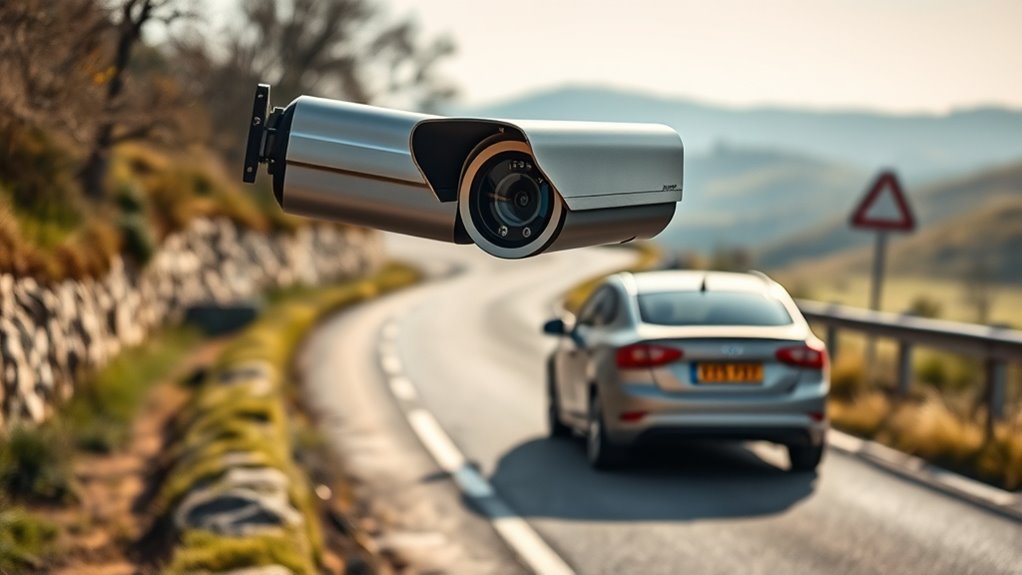
European countries have developed integrated systems that enable the enforcement of speed violations beyond national borders, guaranteeing drivers can’t evade penalties by crossing into neighboring states. Centralized databases and communication networks link law enforcement agencies across borders, allowing quick sharing of violation data. When a speed violation occurs, authorities can identify the vehicle owner or driver regardless of their location. Automated notification systems deliver tickets directly to drivers’ homes, based on vehicle registration details. Countries like Lithuania integrate license plate recognition with enforcement cameras, streamlining cross-border detection. EU policies support harmonized procedures, making enforcement consistent across nations. These systems ensure that speeding penalties follow drivers home, increasing compliance and reducing unsafe driving behaviors across Europe.
Legal Responsibilities and Driver Accountability
When it comes to enforcing speed violations, legal responsibilities determine who’s held accountable for offenses. In many European countries, the driver is legally responsible for speeding tickets, especially in nations like Finland, Germany, Norway, Sweden, and Switzerland, where driver identification is mandatory. Elsewhere, the vehicle owner bears responsibility, making it indispensable to update registration details. Enforcement methods vary, but clear documentation is essential for prosecution. Additionally, strict data protection laws influence how evidence is stored and used. If you receive a ticket, knowing whether you’re personally liable or if the vehicle owner is responsible helps you understand your rights.
- Driver identification required in some countries
- Vehicle owner liable in others
- Clear evidence needed for prosecution
- Data protection laws affect evidence handling
- Cross-border responsibility enforcement
Cost-Effectiveness of Speed Camera Programs
Implementing speed camera programs proves to be highly cost-effective, as they deliver significant safety benefits at relatively low ongoing costs. You save money compared to traditional police patrols, which require personnel, vehicles, and ongoing expenses. Speed cameras continually monitor traffic, creating a deterrent effect that reduces speeding and crashes over time. Countries like Austria report a high cost-benefit ratio of 5.3, meaning every euro invested yields over five euros in safety benefits. In Cyprus, mobile cameras cut fatal collisions by 39%, preventing costly accidents. The long-term savings come from fewer injuries, reduced emergency response costs, and decreased property damage. With automated enforcement, you also avoid the expenses linked to court proceedings and manual patrols, making speed camera programs an efficient investment in road safety.
Public Support and Acceptance of Automated Enforcement
Public support for automated enforcement has grown considerably across Europe, as drivers recognize the benefits of safer roads and fairer ticketing processes. Many see speed cameras as effective tools to reduce accidents and ensure consistent enforcement, rather than relying solely on physical police presence. This acceptance is reinforced by widespread awareness of the technology’s fairness and transparency, especially with data protection measures in place. Additionally, public trust increases when drivers understand that cameras help prevent reckless driving, protecting everyone. The high approval rate, with 66% of EU drivers favoring these systems, reflects this shift.
- Drivers believe cameras improve road safety.
- Fairer enforcement reduces bias.
- Data privacy concerns are addressed.
- Clear legal processes support acceptance.
- Increased transparency boosts trust.
Frequently Asked Questions
How Do European Speed Cameras Identify Individual Drivers Across Borders?
You’re identified across borders through high-resolution cameras that can recognize individual drivers using facial or driver-specific data. Countries like Sweden use advanced systems to match driver details with vehicle records, while others rely on vehicle owner identification. Centralized European systems link enforcement data, enabling authorities to track you regardless of where the violation occurred. Driver identification is essential for issuing fines and ensuring enforcement across different countries.
What Are the Legal Differences in Driver Responsibility Among European Countries?
Think of European countries as different chapters in a book, each with its own rules. In some, like Finland, you’re directly responsible if caught speeding, like being the hero of your story. Others, like Austria, hold the vehicle owner liable, akin to passing the responsibility. These legal differences shape how speed violations are enforced and who gets the ticket, making your responsibility vary depending on where you are in Europe.
How Is Data Protection Maintained With Extensive Speed Enforcement Systems?
You can trust that data protection is a top priority with Europe’s speed enforcement systems. Countries like the Netherlands and Austria require immediate deletion of non-violating vehicle data, while Austria keeps enforcement data only for 14 days unless needed for investigations. Strict laws mandate deleting images after specific periods, ensuring your privacy is protected. Centralized systems also anonymize data, preventing misuse, and aligning with EU privacy standards.
Can Foreign Drivers Receive Speeding Tickets While Visiting Europe?
Did you know that speeding causes one-third of fatal crashes in the EU? As a foreign driver, you can definitely receive speeding tickets while visiting Europe. Countries have centralized systems that share violation data across borders, making enforcement effective. If you’re caught speeding, authorities can identify you through vehicle registration or driver info, and tickets are often sent to your home country, ensuring you face consequences regardless of where you were caught.
What Technological Innovations Are Most Effective in Detecting Speed Violations?
You’ll find high-resolution cameras and Intelligent Speed Assist systems most effective in detecting speed violations. These innovations identify speed limit breaches accurately, even without GPS, by recognizing road signs and monitoring vehicle speeds continuously. Mobile and average speed cameras cover long stretches, ensuring compliance over time. These technologies make enforcement more reliable and efficient, helping authorities catch speeders quickly and improve overall road safety across Europe.
Conclusion
Just as the lighthouse guides ships safely past rocky shores, Europe’s speed cameras steer drivers toward safer roads and accountability. By embracing cutting-edge tech and cross-border systems, you can be confident your speed limits follow you home, wherever you roam. Remember, these cameras aren’t just about tickets—they’re about protecting lives and fostering responsible driving. So, stay alert, respect the signals, and let Europe’s vigilance be your steady guiding light.