
When you’re flying in Europe, gate checks happen when your carry-on exceeds size or weight limits, and gate staff may tag and transfer your bag to the hold. To handle this smoothly, keep your bags within airline restrictions, stay organized, and ask questions about the process. Being prepared can save you time, money, and stress. If you want to know more about how to avoid gate checks and what to expect, keep exploring the details below.
Key Takeaways
- Gate checks involve inspection and weighing, with oversized or overweight bags tagged for cargo hold transport.
- Reclassified carry-ons are loaded into the cargo hold and retrieved at baggage claim, possibly incurring extra fees.
- To handle gate checks, confirm storage, retrieval process, and fees with gate staff before boarding.
- Prepare by packing within airline size/weight limits, using lightweight luggage, and staying updated on policies.
- Monitoring baggage status with tracking systems reduces delays and helps manage expectations during gate checks.

Traveler's Choice Pagosa Hardshell Expandable Luggage with Spinner Wheels, Black, 22-Inch Carry-on
Impact Resistant: Durable polypropylene hardshell that’s abrasion-, scratch-, and water-resistant. Expansion gusset provide up to 2" to make...
As an affiliate, we earn on qualifying purchases.
Understanding Airline Carry-On Size and Weight Limits in Europe
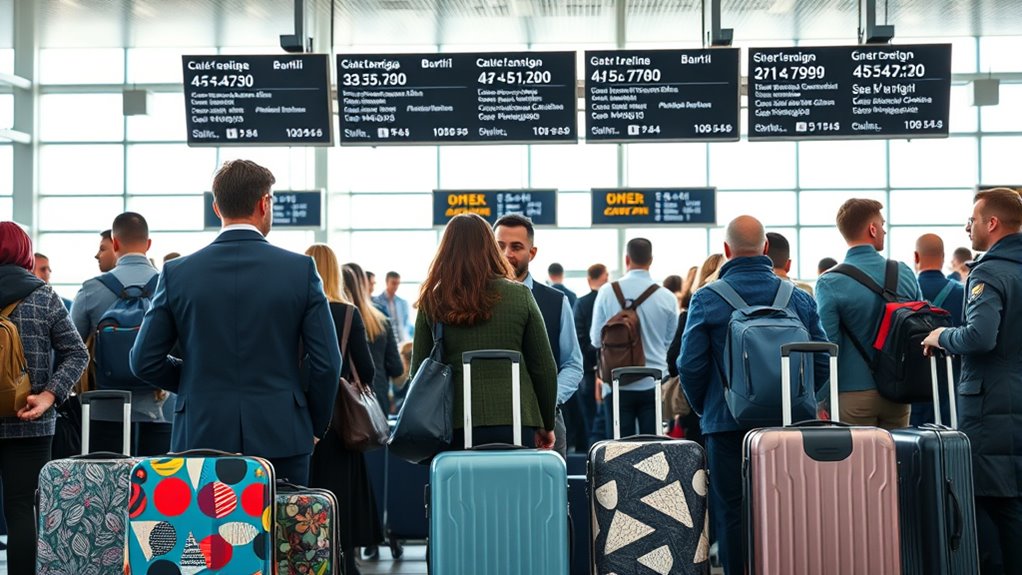
Understanding airline carry-on size and weight limits in Europe is essential to avoid last-minute gate checks and extra fees. Most airlines set maximum cabin bag dimensions around 55 x 40 x 23 cm, with personal items usually limited to 40 x 30 x 15 cm. Weight allowances generally cap carry-ons at 8 kg, and personal items at 4 kg, but these vary by airline. The standard European size limit is 22 x 16 x 8 inches, yet each airline enforces its own rules. Gate agents strictly check these limits, and bags exceeding them risk being forced into hold baggage. To stay compliant, measure your luggage carefully and pack within the specified dimensions and weight. Using airline-approved bags tailored for European restrictions can also help prevent surprises at the gate. Additionally, understanding vetted regulations and best practices for carry-on luggage can streamline your travel experience. Being aware of carry-on restrictions and potential fees can further help you prepare adequately before heading to the airport. Familiarizing yourself with size and weight limits can help you avoid last-minute surprises and ensure a smoother boarding process. To further reduce the risk of gate checks, consider pre-measuring your luggage before arriving at the airport. Knowing the specific airline policies in advance can also help you pack more efficiently and avoid unnecessary hassle.

Samsonite Freeform Hardside Carry-On Luggage with Spinner Wheels - Hardshell Suitcase - TSA, Airline-Approved - Expandable Hard Shell, Smooth Rolling Wheels for Lightweight Travel – Black
The Perfect Size: The textured, scratch-resistant exterior of this hardshell carry-on luggage is 15 x 10 x 23...
As an affiliate, we earn on qualifying purchases.
Common Triggers for Gate Checks at European Airports

When preparing for your flight, it’s important to recognize what can trigger a gate check at European airports. Oversized carry-ons that exceed airline-specific dimensions often lead to last-minute gate checks. Limited overhead bin space on fully booked flights means even compliant bags might be randomly gate-checked. Weight violations also prompt gate agents to inspect your luggage, possibly requiring you to check it. Passengers boarding later in the process face a higher chance of gate checks due to reduced storage options. Additionally, bags with non-standard shapes or those that bulge beyond allowed limits can be flagged for mandatory inspection. Being aware of these common triggers helps you pack within regulations, reducing the risk of unexpected gate checks and associated fees. Understanding floating on water in terms of water safety and standards can help travelers better prepare for water-related aspects of their journeys, such as airport amenities or nearby water parks.
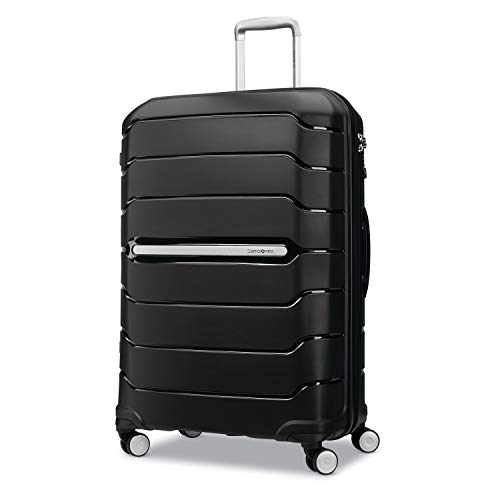
Samsonite Freeform Large Checked Luggage with Dual 360° Spinner Wheels - TSA Lock, Airline-Approved - Lightweight Durable Polypropylene Expandable Hardshell - Black
Durable & Stylish: This large checked spinner luggage features a scratch-resistant Polypropylene hardshell, measuring 31.1" x 20.9" x...
As an affiliate, we earn on qualifying purchases.
The Gate Check Process: What to Expect When Your Bag Is Referred
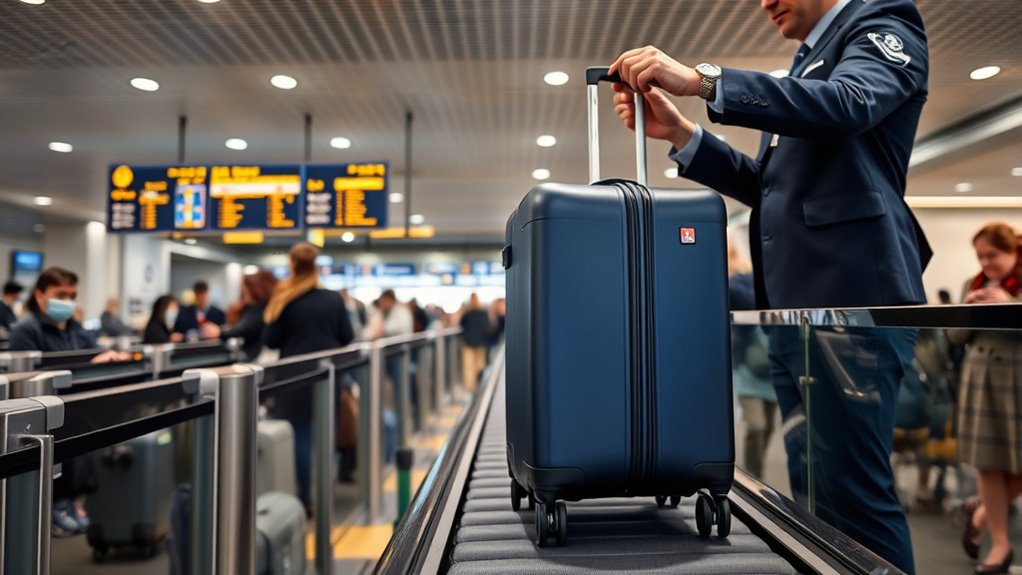
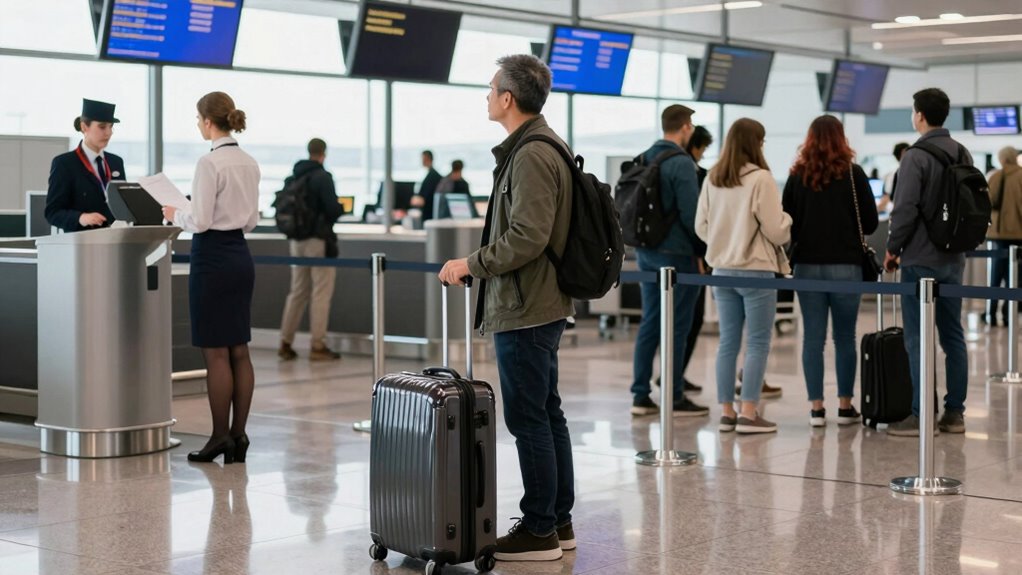
When your bag is referred for gate checking, you’ll notice the gate staff inspecting and weighing it to guarantee compliance. If it doesn’t meet the airline’s size or weight limits, they’ll attach a baggage tag and reclassify it as hold luggage. Once reclassified, your bag will be loaded into the cargo hold and later retrieved at baggage claim like regular checked luggage. Additionally, modern connected appliances can sometimes assist in tracking your luggage status through airline apps or smart tags. For added convenience, some airlines offer luggage tracking services that help you stay informed about your bag’s location during transit. Being aware of airline policies can also help you better prepare for such situations and avoid unexpected delays. Understanding gate check procedures can further streamline your travel experience and reduce stress during airport transfers. Familiarizing yourself with baggage weight limits can also prevent last-minute surprises at the gate.
Bag Inspection Procedures
If your carry-on bag exceeds airline size or weight limits, gate agents will typically initiate a quick inspection to verify compliance. They’ll often weigh or measure your bag right at the gate, sometimes using a dedicated scale or sizing device. If your bag is too large or heavy, they’ll attach a baggage tag, marking it for gate check. This process is usually swift, designed to keep delays minimal. You might be asked to open your bag briefly for visual inspection, especially if the agent suspects it’s over the limit due to bulging or unusual shape. The goal is to confirm your luggage meets the airline’s policies before reclassification. Once inspected and tagged, your bag will be loaded into the aircraft’s cargo hold, just like checked luggage. Ensuring proper compliance helps prevent delays and ensures smooth boarding procedures. Being aware of airline policies regarding carry-on limits can also streamline this process and reduce the need for gate checks.
Reclassification and Boarding
As your carry-on bag is flagged for reclassification at the gate, the gate agent will attach a baggage tag indicating it needs to be checked into the cargo hold. You’ll be asked to place your bag on a scale or have it measured to confirm compliance. If it exceeds size or weight limits, the agent will label it for gate check. You may be asked to relinquish your bag immediately or after some brief instructions. Once tagged, your bag is loaded into the aircraft’s cargo hold along with checked luggage. You’ll likely receive a receipt or claim tag for your bag. At your destination, it will be unloaded and placed on the baggage carousel alongside other checked bags. Remember, gate-checking often incurs extra fees, so stay within limits to avoid surprises. Additionally, understanding the baggage policies of your airline can help prevent unexpected reclassification at the gate. Being aware of the airline’s regulations can also help you prepare and pack accordingly, reducing the likelihood of needing to gate check your bag unexpectedly. Familiarizing yourself with the baggage restrictions can further streamline the boarding process and minimize inconvenience.

LIGHT FLIGHT Carry On Luggage 22x14x9 Airline Approved, Durable Hard Shell Carry On Suitcases with Wheels, Expandable Hardside Lightweight Travel Luggage with TSA Lock, Royal Blue
Airline-approved Luggage: This 20-inch carry-on Luggage meets the overhead compartment size requirements of most airlines. The durable hardside...
As an affiliate, we earn on qualifying purchases.
Implications of Reclassified Carry-Ons: Fees and Baggage Handling

Reclassified carry-ons, which are forced into the hold at the gate due to size or weight violations, have significant implications for travelers. You’ll face additional fees, often surprising if you weren’t expecting a gate check. Airlines commonly charge extra for last-minute reclassification, adding unexpected costs to your trip. The fees vary widely between carriers, making it essential to know each airline’s policy beforehand. Once your bag is reclassified, it’s treated like checked luggage, transported in the cargo hold, and retrieved at the baggage carousel. This process can delay your arrival and increase anxiety, especially if you’re unfamiliar with the procedure. Being prepared and understanding these implications helps you avoid surprises, manage costs better, and guarantee smoother baggage handling during your journey. Additionally, understanding the technological integration used by airlines can help you stay informed about your baggage status in real-time.
In some cases, airlines utilize tracking systems that provide real-time updates on your baggage’s location, reducing uncertainty and helping you plan accordingly.
Strategic Packing Tips to Avoid Last-Minute Gate Checks

To minimize the risk of last-minute gate checks, smart packing starts before you even arrive at the airport. First, double-check your airline’s specific size and weight limits for carry-on bags online. Use a luggage scale to ensure your bag stays within weight restrictions. Pack efficiently by choosing lightweight clothing and avoiding bulky items. Place heavier items at the bottom of your bag to distribute weight evenly. Opt for a bag that’s within the maximum dimensions—consider hard-shell luggage designed for European size limits. Keep your personal item organized and within size limits as well. Remember, avoiding last-minute surprises depends on meticulous preparation, so verify airline policies and pack strategically to stay compliant. This proactive approach reduces the likelihood of gate-checking at the last minute. Additionally, understanding boho lifestyle principles such as simplicity and organization can inspire you to pack more intentionally and avoid unnecessary clutter.
Traveling through multiple airlines on a single journey can be tricky because each carrier often enforces its own baggage rules, which may differ considerably. To stay compliant, you need to be proactive.
- Research each airline’s baggage policies—check size, weight limits, and possible fees before packing.
- Use airline-specific luggage tags to quickly identify your bags and avoid confusion at connections.
- Pack within the strictest airline guidelines to ensure your baggage remains compliant across all carriers.
- Prioritize versatile, compliant luggage that meets the most restrictive size and weight requirements.
The Impact of EU Policy Changes on Carry-On Regulations
EU policy changes aim to set new carry-on limits and standardize fee structures across airlines, making travel more predictable. These reforms also seek to harmonize airline policies, reducing confusion and last-minute gate checks. As a traveler, understanding these shifts helps you prepare and avoid unexpected costs or delays.
New Carry-On Limits
Recent EU policy changes are set to markedly reshape carry-on regulations across Europe by introducing standardized size and weight limits. These new rules aim to simplify travel and reduce disputes at gates. They specify that each passenger can carry one personal item and one cabin bag up to 7kg, with a combined maximum dimension of 100cm. This standardization impacts airlines’ policies and how you pack. To understand the changes better, consider:
- Uniform weight limit of 7kg for all cabin baggage
- Standardized maximum dimensions of 100cm total for carry-ons
- Clearer rules across EU airlines, reducing variability
- Potential penalties for non-compliance, including gate checks
These reforms will make it easier to plan your packing and avoid surprises at the gate.
Standardized Fee Structures
How will the new EU policies on carry-on baggage fees reshape your travel experience? They aim to standardize costs, reducing surprises. Currently, fee structures vary widely among airlines, causing confusion and unexpected charges. With upcoming regulations, you’ll see more transparency and consistency. Airlines will be required to display clear fee information, making it easier to compare options. The table below highlights typical fees:
| Airline Type | Typical Fee Range | Conditions |
|---|---|---|
| Low-cost carriers | €25 – €50 | For gate-checked or oversized carry-ons |
| Full-service | €0 – €30 | Fees may apply for extra baggage or checks |
| Budget airlines | €20 – €45 | Often charge for all carry-on checks |
| Charter flights | Usually none | Less common, minimal fees |
| Connecting flights | Varies | Additional fees during layovers |
These reforms will make costs more predictable, helping you plan better.
Harmonized Airline Policies
Harmonized airline policies are set to simplify your travel experience by standardizing carry-on baggage rules across Europe. These policies aim to create a consistent framework, reducing confusion and last-minute surprises. To understand their impact:
- They establish uniform size and weight limits, making it easier to pack within restrictions.
- Airlines align enforcement procedures, so gate checks are predictable regardless of carrier.
- The policies promote transparency, with clear rules communicated before boarding.
- They support compliance, decreasing the likelihood of additional fees or gate-checks at the last minute.
- By implementing sizing and load‑planning tools, travelers can better prepare and avoid unexpected issues. Additionally, ventilation considerations help ensure your carry-on items are stored safely and efficiently.
- These harmonized policies are also designed to accommodate security protocols, enhancing overall safety for travelers and staff alike.
- Incorporating training for staff on new regulations can further improve the consistency and efficiency of baggage checks.
Ultimately, harmonization helps you plan better, pack smarter, and avoid unexpected costs. While individual airlines may still have slight variations, the overall move toward standardization simplifies your journey across Europe’s skies.
How to Prepare for Gate Checks During Your European Travel

To prevent surprises at the gate, it’s essential to familiarize yourself with your airline’s specific baggage policies before traveling through Europe. Check their website for size and weight restrictions on carry-on and personal items, as these vary between airlines. Pack within these limits, choosing lightweight, compact luggage designed to meet size requirements. Weigh your bags at home with a portable scale to ensure compliance. Consider consolidating items or removing unnecessary belongings to stay well within limits. If you’re traveling on multiple airlines, follow the strictest rules across all carriers. Stay updated on any recent policy changes or restrictions. Planning ahead minimizes the risk of last-minute gate checks and unexpected fees, helping you travel smoothly through European airports.
What to Do if Your Carry-On Is Forced Into Hold Baggage

If your carry-on is forced into hold baggage, stay calm and cooperate with gate staff to avoid unnecessary tension. Confirm the reclassification details so you understand any fees or procedures you’ll face at your destination. Prepare yourself for arrival by knowing where to find your checked bag and any additional steps needed to retrieve it smoothly.
Remain Calm and Cooperative
When your carry-on is unexpectedly forced into hold baggage, staying calm and cooperative can make the situation much smoother. Remaining composed helps you think clearly and reduces tension with staff. Follow these steps:
- Listen carefully to the gate agent’s instructions, and avoid arguing or raising your voice.
- Respond politely, acknowledge their concerns, and ask any clarifying questions calmly.
- Keep your documents ready, such as boarding passes and ID, to verify your identity quickly.
- Collect any relevant information about additional fees or procedures without becoming confrontational.
Confirm Reclassification Details
Understanding exactly what happens when your carry-on is reclassified helps you stay prepared and avoid surprises. Once your bag is tagged for hold, confirm details with the gate staff. Ask whether your bag will be stored in the cargo hold and when it will be available at baggage claim. Clarify if any fees or documentation are required. Knowing these specifics helps you plan for potential delays and manage your belongings effectively.
| Action | What to Ask/Check |
|---|---|
| Confirm storage details | Is my bag being transported as checked luggage? |
| Confirm retrieval process | When and where will I pick up my bag? |
| Clarify fees | Are there additional charges for reclassification? |
| Request documentation | Can I get proof of reclassification or tags? |
Prepare for Arrival Procedures
Being prepared for arrival procedures is essential if your carry-on has been forced into hold baggage. Knowing what to expect helps you stay calm and efficient. First, make sure you have your baggage claim tags handy to identify your luggage quickly. Second, stay near the baggage carousel to retrieve your bag promptly, avoiding delays. Third, check for any additional fees or documentation requirements, as gate-checked bags may need special handling or payment. Fourth, inspect your luggage for any damage caused during reclassification and report issues immediately. Being proactive means you’re ready for customs or security checks and can address any concerns without hassle. Staying organized ensures a smoother arrival experience despite the unexpected gate check.
Future Trends: The EU’s Move Toward Fee-Free Hand Luggage
The European Union is actively working to eliminate baggage fees for carry-on luggage, aiming to simplify travel and reduce hidden costs for passengers. This move will standardize regulations across airlines, making it easier for travelers to understand and comply. The proposed reforms specify a free allowance of one personal item and one carry-on bag up to 7kg and 100cm total dimensions. These changes could reduce last-minute gate checks and unexpected charges, streamlining the boarding process. Here’s a quick overview of the upcoming regulations:
| Aspect | Current Status | Future Impact |
|---|---|---|
| Allowed Items | Varies by airline | Standardized free allowance |
| Bag Dimensions | Airline-specific limits | Harmonized size restrictions |
| Fees | Charges for exceeding limits | Potential fee elimination |
| Enforcement | Gate checks for violations | Reduced gate-checking incidents |
| Implementation Timeline | Pending EU approval | Expected within next few years |
This shift promises a more transparent, cost-effective travel experience across Europe.
Frequently Asked Questions
Can I Avoid Gate Checks by Choosing Specific Boarding Zones?
Yes, choosing specific boarding zones can help you avoid gate checks. Early boarders often find more overhead bin space, reducing the chance of your bag being gate-checked due to limited storage. However, if your bag exceeds size or weight limits, gate checks can still happen regardless of when you board. To minimize this risk, pack within airline restrictions, arrive early, and aim to board as soon as allowed.
Are There Exceptions for Certain Types of Luggage or Travel Groups?
You might think certain luggage or groups are exempt from gate checks, but airlines rarely give exceptions. Oversized or overweight bags are usually checked regardless of travel group. Children’s or special needs luggage might get some leniency, but it’s not guaranteed. To avoid surprises, always measure and weigh your bags beforehand. If you’re traveling with a group, make certain everyone’s luggage complies with airline rules to minimize the chance of gate checks.
How Do Gate Checks Differ Between Low-Cost and Full-Service Airlines?
On low-cost airlines, gate checks often happen more frequently and strictly, especially for oversized or overweight bags, because they prioritize quick turnaround and additional fees. Full-service airlines tend to be more lenient, offering more flexibility with carry-on limits, though they still enforce policies at the gate. You might find full-service carriers more willing to accommodate minor violations, but it’s best to follow their rules to avoid surprises.
What Are the Best Ways to Verify Compliance Before Arriving at the Gate?
You should check your airline’s baggage policies online before your trip. Measure your carry-on and personal items carefully using a ruler or tape measure, ensuring they fit within size and weight limits. Pack strategically, leaving some extra space for flexibility. Consider investing in luggage that’s designed to meet airline restrictions. By doing this, you’ll minimize surprises at the gate and avoid last-minute gate checks or fees.
Will Upcoming EU Regulations Eliminate All Carry-On Size Restrictions?
Upcoming EU regulations won’t eliminate all carry-on size restrictions but will standardize them. You’ll be allowed one personal item and one carry-on bag up to 7kg and 100cm combined dimensions without extra charges. This means you’ll have clearer guidelines, making packing easier. However, individual airlines might still impose stricter rules, so you should always verify specific airline policies before traveling to avoid surprises and gate checks.
Conclusion
Did you know nearly 70% of travelers experience gate checks in Europe? Understanding airline rules and packing smartly can help you avoid surprises. By staying informed about policy changes and preparing accordingly, you’ll keep your journey smooth and stress-free. Remember, a little planning today can save you time and money tomorrow. Stay proactive, pack wisely, and enjoy your European adventure without the hassle of unexpected gate checks.