When driving in Europe, you’ll encounter numerous roundabouts with varying rules—from giving way to circulating traffic to different signaling norms, depending on the country. Pay attention to road signs, markings, and local customs, as unwritten rules can differ widely. Be cautious of cyclists and pedestrians, especially at crossings, and watch out for diverse priority setups. Staying alert and adaptable helps guarantee a safe journey—keep exploring to understand these nuances better.
Key Takeaways
- Understand country-specific priority rules at roundabouts; for example, some countries yield to circulating traffic, others to entering vehicles.
- Always signal when exiting a roundabout and watch for local signage indicating right-of-way.
- Be aware of informal cues like eye contact or pacing, as signaling behaviors vary across Europe.
- Observe and adapt to differing road signs, markings, and driving customs to ensure safety and legal compliance.
- Exercise extra caution in wet conditions, and maintain defensive spacing to navigate unpredictable behaviors and cross-border variations.
The Rise and Adoption of Roundabouts in Europe
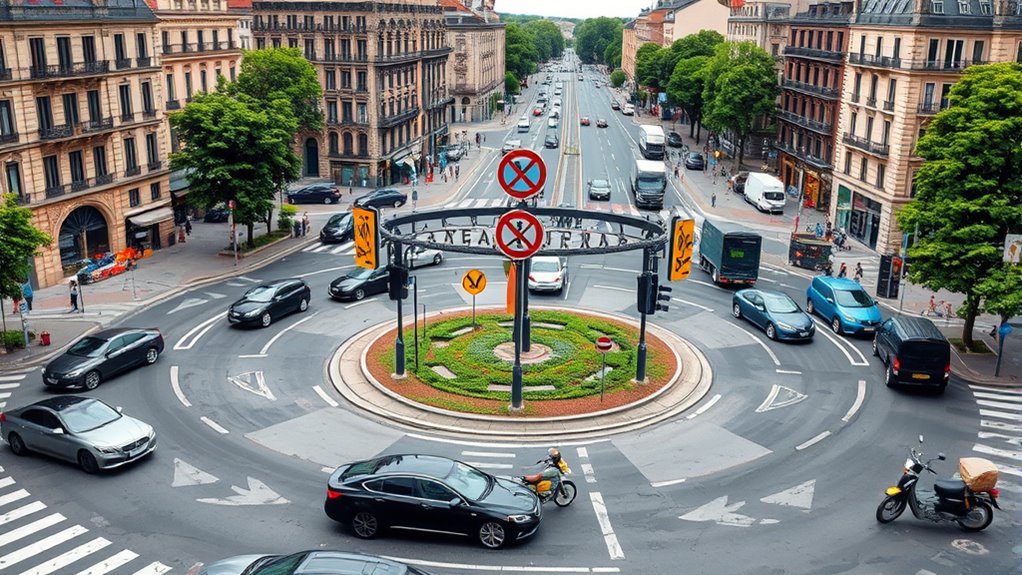
The adoption of roundabouts in Europe has accelerated considerably since the 1990s, transforming urban and rural intersections to improve safety and traffic flow. Countries like France expanded their networks rapidly, growing from around 12,000 in 1994 to over 22,000 by 2000. European nations now have a much higher density of roundabouts compared to the U.S., with France leading at nearly 1,000 per million people. This surge reflects a broader shift toward traffic-calming measures aimed at reducing accidents and congestion. Urban areas often install compact, four-arm roundabouts handling about 15,000 vehicles daily, emphasizing efficient design and capacity. Additionally, the widespread implementation of energy-efficient infrastructure like modern roundabouts demonstrates Europe’s commitment to sustainable and safe transportation solutions. The increase in roundabout use also aligns with the concept of traffic-calming measures, reinforcing safer driving environments. This rapid adoption is partly driven by the proven benefits of improved traffic flow, which help reduce delays and improve overall road safety. Moreover, the integration of smart traffic management systems within these roundabouts further enhances their efficiency, showcasing Europe’s innovative approach to transportation technology. Overall, the rapid increase highlights Europe’s commitment to safer, more organized road systems through widespread roundabout adoption.
Key Safety Benefits and Common Challenges
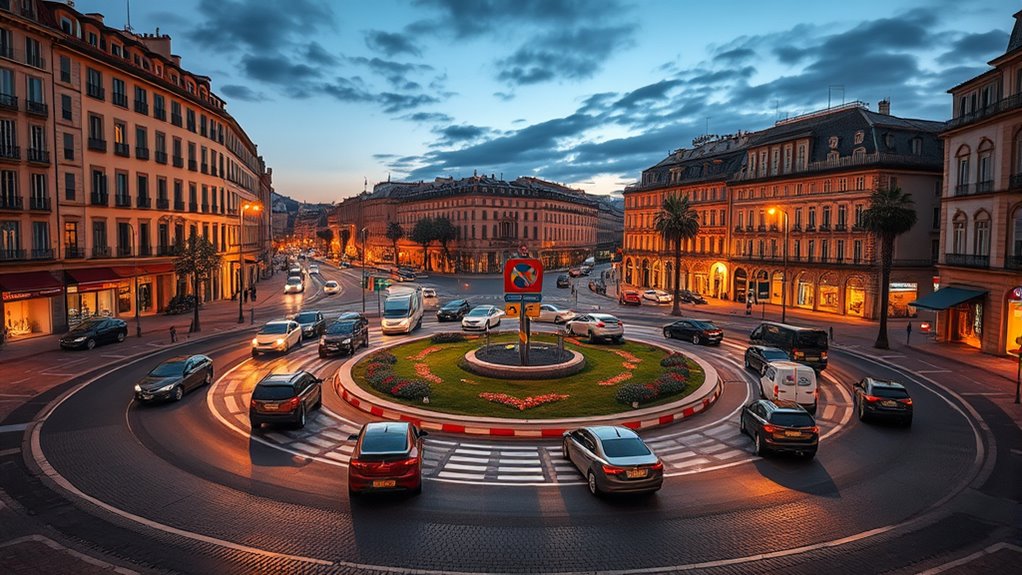
Adopting roundabouts across Europe has led to significant safety improvements, but they also present unique challenges. Studies show injury crashes drop by up to 80%, and pedestrian injuries decrease when crossings are well-designed. However, multi-lane roundabouts can increase conflicts, especially for cyclists and pedestrians, and wet conditions raise collision risks. Design features like central islands and entry angles help reduce speeds, but poor design or distractions can cause accidents. Variations in priority rules across countries require you to stay alert and adapt quickly. Interactions with vulnerable road users remain a concern, particularly during bad weather or in complex multi-lane setups. Overall, while roundabouts boost safety, understanding local norms and design limitations is *essential* to avoid common pitfalls. Additionally, recognizing traffic flow principles can improve driver awareness and reduce confusion at complex intersections. Moreover, a good understanding of connected road safety systems can further enhance safe navigation through these shared spaces. Implementing pedestrian crossing strategies can also help mitigate risks for non-motorized road users and promote overall safety. To maximize safety benefits, continuous driver education on local rules and best practices is highly recommended, especially regarding regional traffic regulations that may differ from those in other countries.
Design Features That Influence Traffic Flow and Safety
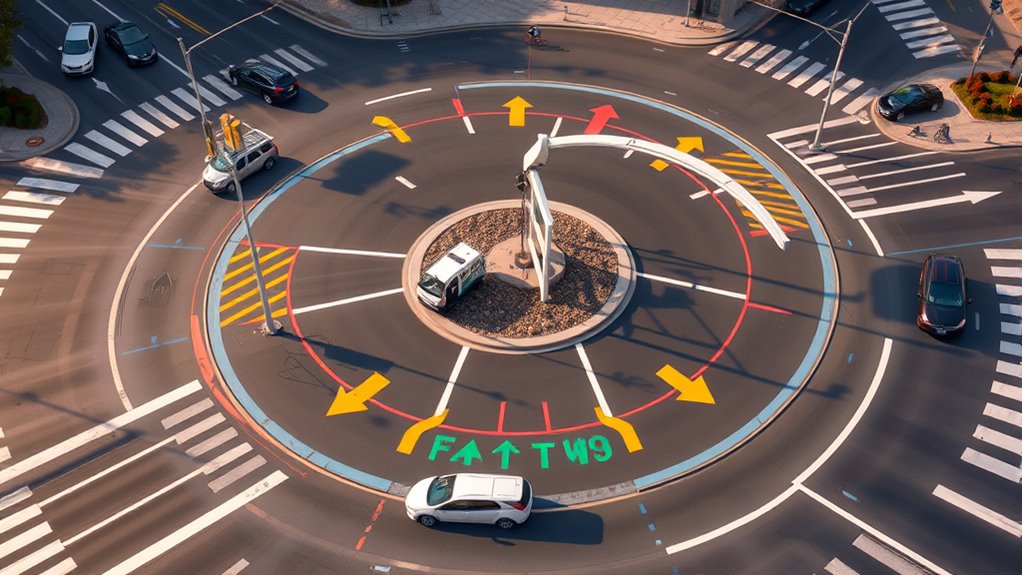
Design features of roundabouts play a crucial role in managing traffic flow and enhancing safety. The number of lanes, central island shape, and entry/exit geometry directly impact vehicle speeds and conflict points. Single-lane roundabouts are simpler and better suited for low traffic volumes, while multi-lane designs accommodate higher flows but increase complexity. Wider entries and multiple lanes can lead to more conflicts and accidents. Proper deflection in the central island slows vehicles, reducing crash risk. Compact, urban roundabouts typically handle about 15,000 vehicles per day, depending on approach angles and lane counts. Well-designed crossings and splitter islands improve pedestrian safety. Additionally, understanding field-of-view and imaging‑scale examples can inform better design choices to optimize traffic flow and safety. Thoughtful design also considers traffic capacity and how it influences congestion and efficiency. Ultimately, thoughtful design minimizes conflict points, controls speeds, and creates a smoother, safer traffic flow for all users.
Variations in Priority Rules Across Countries

Priority rules at roundabouts vary considerably across European countries, influencing driver behavior and intersection safety. In Germany and many countries, circulating traffic generally has priority, and drivers only indicate when exiting. Austria and Italy often follow a “right-before-left” rule, giving priority to entering traffic unless signage states otherwise. France typically favors entering traffic by default, but signage can reverse this rule at specific junctions. Switzerland, Spain, Portugal, and Poland prioritize vehicles already on the roundabout unless signs specify otherwise. The UK, with left-hand driving, grants priority to vehicles approaching from the right, meaning circulating traffic usually has the right of way. Knowing these differences helps you anticipate driver actions, reduce confusion, and navigate roundabouts safely across borders. Additionally, understanding traffic sign conventions can further improve your ability to interpret local rules quickly and drive confidently in unfamiliar countries. Recognizing local driving customs can also aid in adapting to unique driving environments and enhance overall safety.
Interacting With Pedestrians and Cyclists in Roundabouts

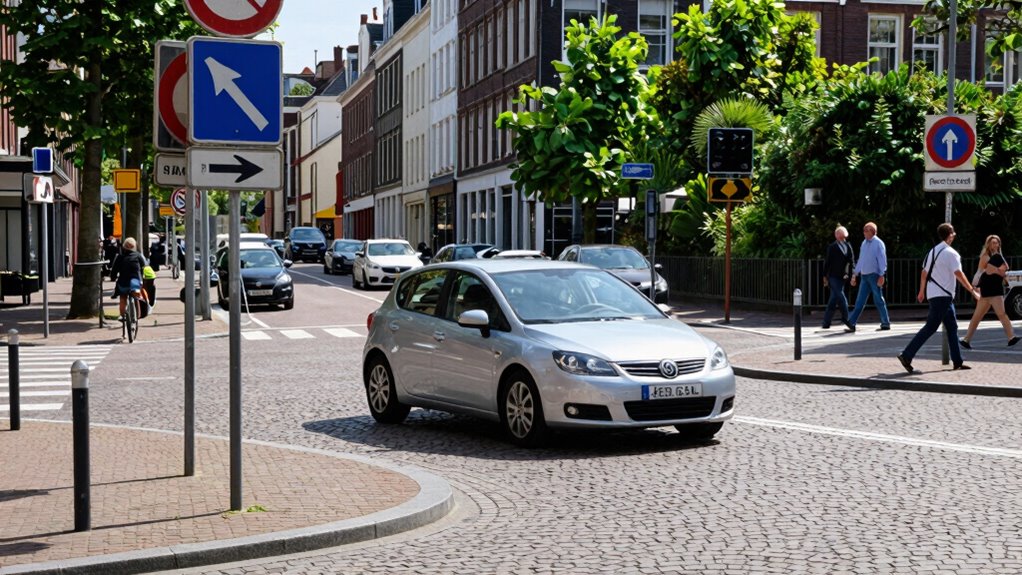
How you interact with pedestrians and cyclists at roundabouts can substantially impact safety for all road users. Always slow down as you approach, especially if you see pedestrians waiting or cyclists nearby. Look for dedicated crossings or splitter islands that create staged crossings, reducing conflict points. Yield to pedestrians crossing at marked crosswalks, even if signals aren’t explicitly present. For cyclists, give plenty of space when merging or passing, and watch for their signals or intentions. Be especially cautious in wet conditions, where traction is reduced, and collisions are more likely. Keep your speed moderate to allow quick reactions. Clear communication through eye contact, signaling, and predictable driving helps prevent misunderstandings and accidents, ensuring everyone moves safely through the roundabout. Being aware of unwritten rules in different countries can also aid in smoother interactions and enhance overall safety. Additionally, understanding local traffic regulations can further improve your safety and driving experience in unfamiliar areas. Recognizing the importance of exfoliation and skin care can also promote overall well-being, especially when traveling in different environments. Paying attention to local customs and behaviors can further foster respectful and safe interactions with all road users. Furthermore, being mindful of road signs and signals can help you navigate unfamiliar roundabouts more confidently and safely.
Cultural Norms and Practical Driving Tips
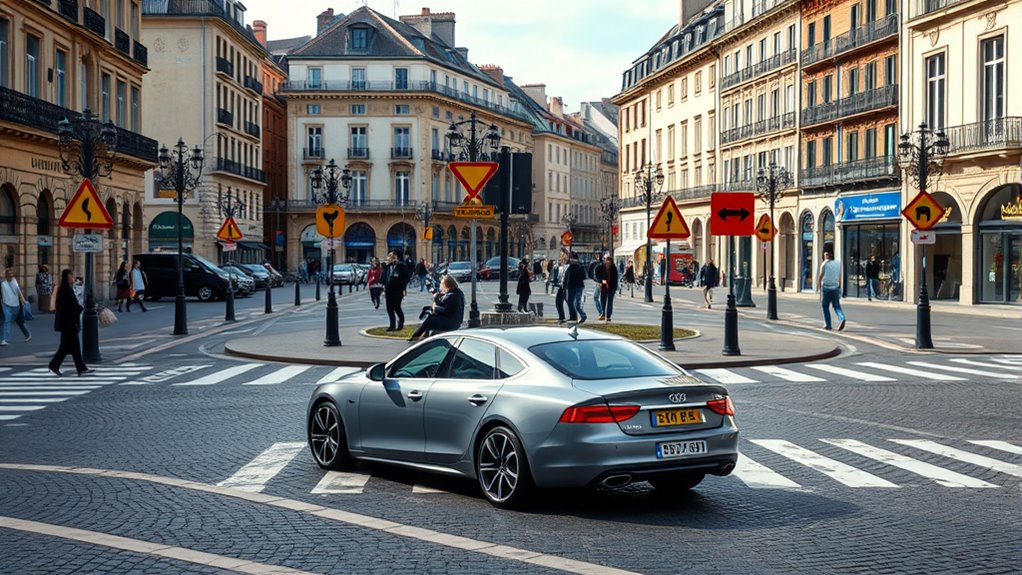
Understanding local driving customs is essential when steering through European roundabouts, as norms and expectations can vary markedly between countries. In some places, drivers yield to circulating traffic, while in others, entering vehicles have priority. Use your indicators consistently—some countries favor signaling when exiting, others less so. Expect drivers to slow considerably on approach, sometimes braking within the circulatory lane rather than yielding predictably. Lane discipline can be relaxed, especially in dense networks, so anticipate late lane changes and plan your exits early. Eye contact, pacing, and accepting small gaps are common informal cues, especially where signage is minimal. Adapt your driving style to local norms, stay alert for unexpected behaviors, and maintain defensive spacing to navigate roundabouts safely across borders.

Driving across European borders involves more than just switching countries; it requires awareness of differing traffic rules and customs at roundabouts. Each country has its own priority rules—Germany and Switzerland give priority to circulating traffic, while France often prioritizes entering vehicles. Signaling standards vary: in some nations, indicating on exit is common, while others rarely use turn signals. Be prepared for different lane discipline and driving behaviors—drivers may brake unexpectedly or change lanes late. Watch for local cues like eye contact or pacing, and stay alert for unwritten norms. When crossing borders, slow down, observe signs carefully, and adjust your driving to local customs. Staying attentive helps you navigate safely and avoid misunderstandings in these dynamic, multilingual driving environments.
Frequently Asked Questions
How Do Roundabout Design Differences Affect Driver Behavior Across Countries?
Roundabout design differences influence your driving by shaping expectations and behaviors. In countries with single-lane, compact roundabouts, you tend to slow down earlier and navigate more predictably. Multi-lane designs, common in some nations, can cause lane-changing and confusion, requiring extra caution. Variations in priority rules and signage mean you must stay alert, adapt your signaling, and anticipate other drivers’ actions based on local design cues and driving norms.
What Are the Best Strategies for Safe Cycling Around European Roundabouts?
To cycle safely around European roundabouts, stay visible by wearing bright gear and using lights. Follow local rules, like signaling clearly when exiting. Use dedicated bike lanes or splitter islands when available, and always yield to circulating traffic. Keep a safe distance from vehicles, stay alert for late lane changes, and anticipate driver behavior. Avoid blind spots, especially at multi-lane roundabouts, and slow down in wet conditions to prevent accidents.
How Do Seasonal Weather Changes Impact Roundabout Safety and Navigation?
As seasons paint the roads with changing moods, you should be mindful of how weather impacts roundabout safety. Rain and wet conditions make surfaces slick, requiring you to slow down and increase your alertness. Snow or ice can obscure lane markings and reduce traction, making navigation trickier. Cyclists and pedestrians become more vulnerable, so give extra space and exercise patience. Always adapt your driving to these seasonal shifts for a safer journey.
What Are Common Mistakes Drivers Make at Multi-Lane Roundabouts?
You often make mistakes at multi-lane roundabouts by changing lanes unexpectedly, which can cause conflicts. You might also enter without yielding properly or fail to signal your exit, confusing other drivers. Sometimes, you underestimate the complexity and drive too fast, risking collisions. Remember to stay in your lane, signal early, and reduce your speed. Always observe traffic flow and prioritize vehicles already in the roundabout to stay safe.
How Can Pedestrians Improve Safety at Busy European Roundabouts?
To improve safety at busy European roundabouts, you should always stay alert and make eye contact with drivers before crossing. Use designated pedestrian crossings and wait for signals or gaps in traffic. Wear visible clothing, especially in poor weather or low light. If available, use splitter islands or pedestrian refuges to reduce exposure. Avoid crossing during heavy traffic or wet conditions, and stay vigilant for turning vehicles or unexpected driver behaviors.
Conclusion
Driving through Europe’s roundabouts is like weaving through a living tapestry, where every turn and yield tells a story of shared trust and tradition. Embrace the rhythm, respect the unwritten rules, and let the flow guide you. As you navigate this intricate dance, remember you’re part of a larger community, each driver a thread in the vibrant fabric of European roads. With patience and awareness, you’ll find harmony in the journey.