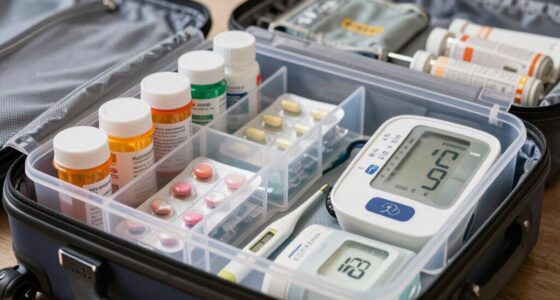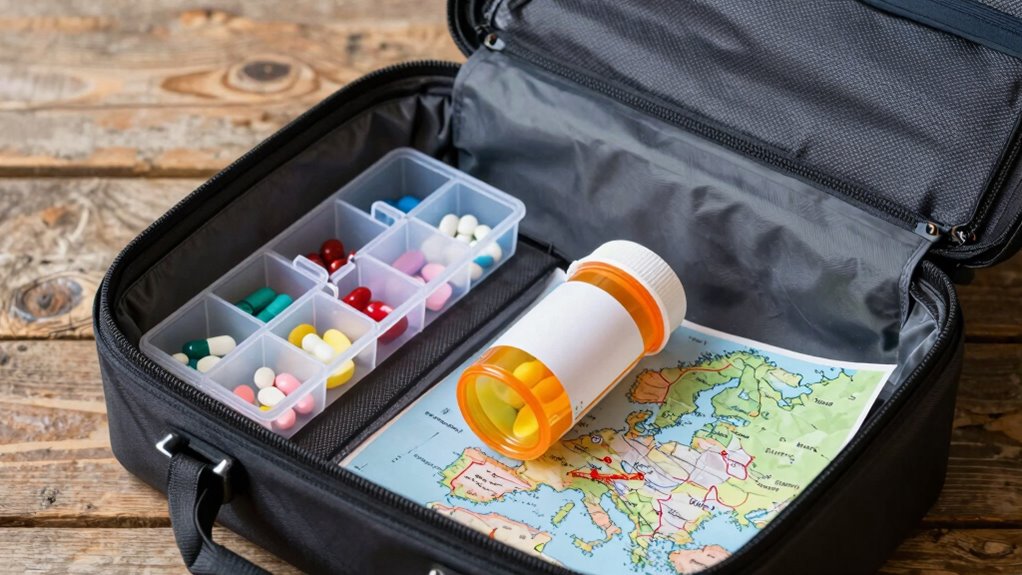

When traveling through Europe with prescription medication, keep your doctor’s note or healthcare provider’s letter handy, along with the original labeled containers. Store medications in your carry-on to avoid loss and extreme temperatures, and consider using a portable cooler if needed. Keep digital copies of your documents accessible. Be aware of local regulations on medications and carry extra doses if possible. For more tips on ensuring smooth travel with your meds, you’ll find helpful advice ahead.
Listen free for 30 days with Audible
Thousands of audiobooks and originals — cancel anytime.
As an affiliate, we earn on qualifying purchases.
Key Takeaways
- Carry original medication containers with visible labels and supporting doctor’s notes for customs clearance.
- Keep prescriptions and documentation digitally accessible in case of verification needs.
- Pack medications in carry-on luggage to prevent loss and ensure proper storage.
- Comply with European regulations on liquids, gels, and aerosols for security screening.
- Research specific country laws on medication to ensure compliance and avoid legal issues.
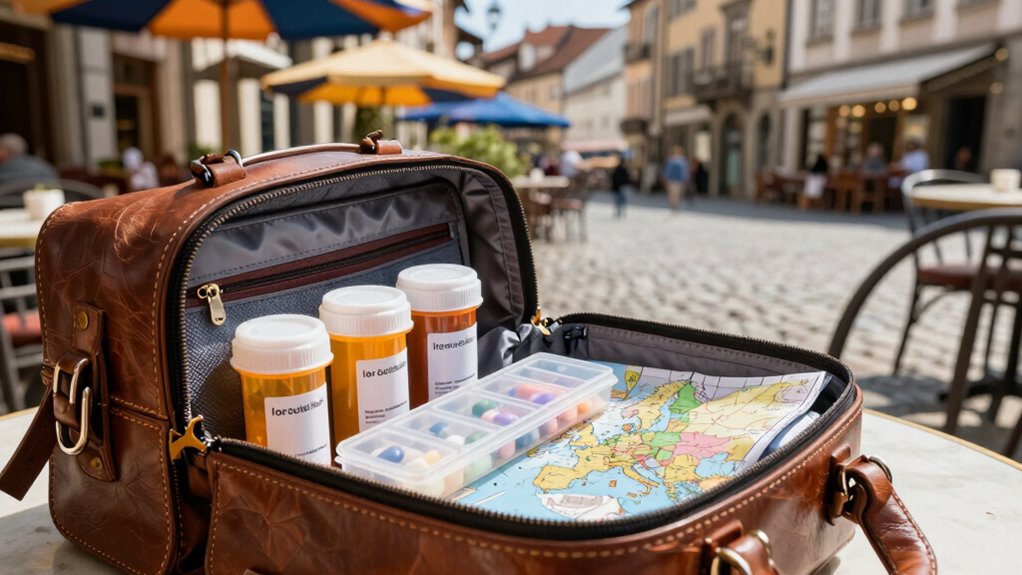
Traveling across Europe with prescription medication can be straightforward if you plan ahead. The key is ensuring you have everything in order before you leave, especially when it comes to your travel documentation and medication storage. First, make sure you carry your prescription and any supporting medical documents. Travel documentation isn’t just about having your prescription bottle; it’s about having proof that your medication is legally prescribed to you. A doctor’s note or a letter from your healthcare provider, detailing your condition and the necessity of your medication, can be invaluable—especially if you’re questioned by customs or security personnel. Keep these documents in your carry-on bag and consider also having them available digitally, such as in an email or a secure app, in case you need quick access. Additionally, understanding medication regulations across different countries can help prevent issues during your trip.
When it comes to medication storage, you want to keep your meds in their original containers with clearly visible labels. This helps verify that the medication belongs to you and is prescribed for your use, which can streamline any security checks. Avoid transferring pills into different containers, as this can cause confusion or suspicion. If you’re traveling with liquids, gels, or aerosols, remember to adhere to the TSA or airport security rules—usually, containers must be 3.4 ounces (100 milliliters) or less and fit within a single quart-sized bag. For international travel, check the specific regulations of each country you’re visiting because rules around medication and liquids can vary. Also, be aware that documentation and labeling can be crucial in avoiding misunderstandings at customs. Properly storing your medication in its original packaging can also help prevent misunderstandings with customs officials. Additionally, researching local medication laws can help you stay compliant and avoid unnecessary complications.
Proper medication storage is also essential for maintaining the effectiveness of your drugs. Pack your medication in your carry-on luggage rather than checked baggage to prevent loss or temperature fluctuations. If your medication requires refrigeration, consider bringing a small, portable cooler with ice packs, and research whether your destination has the facilities to store your medication properly. It’s wise to carry extra doses if possible, in case your travel plans are delayed, but be aware of quantity restrictions in your destination country. Also, keep your medication out of direct sunlight and extreme temperatures to prevent spoilage. Furthermore, familiarizing yourself with storage guidelines for your specific medication can help ensure it remains effective throughout your trip.
As an affiliate, we earn on qualifying purchases.
Frequently Asked Questions
Can I Bring Multiple Prescriptions for the Same Medication?
Yes, you can bring multiple prescriptions for the same medication. Make sure to carry prescription documentation for each, especially if prescribed by different doctors. Keep medication in its original containers to avoid confusion or suspicion, and avoid sharing your medication with others, as it can be illegal and unsafe. Having proper prescription documentation helps prove your medication’s legitimacy if questioned at customs or during your travels.
Are There Specific Packaging Requirements for Prescription Meds?
Your prescription meds should be packed like a neatly wrapped gift, with clear medication labeling on each container. International drug regulations often specify that medications must stay in their original packaging to avoid confusion. This helps authorities quickly verify your prescriptions. Make certain labels include your name, medication details, and prescribing doctor’s info. Proper packaging ensures smooth passage through customs and demonstrates compliance with the specific requirements of each country.
How Do I Handle Medication Shortages or Delays Abroad?
If you face medication shortages or delays abroad, first contact your medication insurance provider for guidance. Keep a copy of your prescription and a list of local emergency clinics nearby. If necessary, visit an emergency clinic for temporary relief or replacement. Always carry extra medication when possible, and know where to find pharmacies or clinics in your destination. Staying prepared helps guarantee your health remains protected during travel disruptions.
Is It Legal to Carry Over-The-Counter Medications in Europe?
Carrying over-the-counter medications in Europe is generally legal, like bringing a key to your own home. You should keep them in their original packaging to avoid issues at customs. Proper medication storage guarantees safety and compliance. Also, having travel insurance that covers medication mishaps offers peace of mind, just like a safety net. Always check specific country regulations beforehand, so your trip remains smooth and worry-free.
What Should I Do if My Medication Is Lost or Stolen?
If your medication gets lost or stolen, act quickly by contacting local authorities and your embassy. Keep your medication documentation, like prescriptions and doctor’s notes, on hand to prove your legal right to the medication. Call your emergency contacts for support and guidance. Also, notify your healthcare provider to discuss alternative solutions or replacements. Staying calm and organized helps you handle the situation more effectively.
travel document organizer for medications
As an affiliate, we earn on qualifying purchases.
As an affiliate, we earn on qualifying purchases.
Conclusion
Traveling through Europe with your prescription meds is like packing a trusted compass—your guiding star. Keep your prescriptions, doctor’s note, and medications close, and you’ll navigate your journey smoothly. Remember, a little preparation is like a trusty map, helping you avoid unexpected detours. So, stay organized and confident, and let your adventure unfold like a beautiful tapestry. With the right gear in hand, your European escapade will be as seamless as a well-choreographed dance.
medication travel bottles with labels
As an affiliate, we earn on qualifying purchases.
As an affiliate, we earn on qualifying purchases.
compact travel cooler for medicines
As an affiliate, we earn on qualifying purchases.
As an affiliate, we earn on qualifying purchases.
Flea & tick season Picks
flea and tick prevention
As an affiliate, we earn on qualifying purchases.