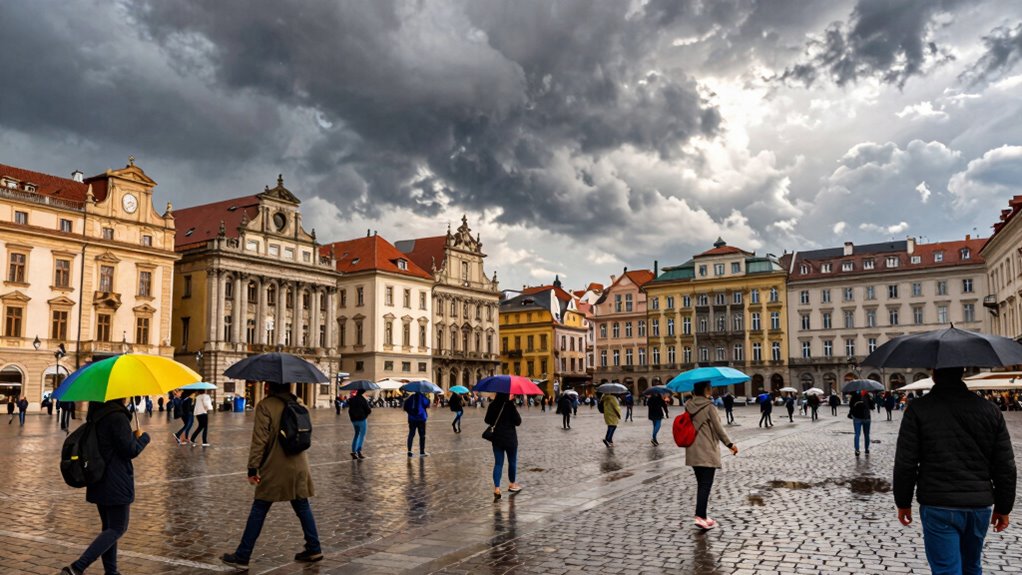

Weather forecast apps in Europe often mislead travelers because they rely on models that struggle with microclimates, sudden weather shifts, and local details, especially over remote areas and complex terrains. Limited data and lower resolution reduce accuracy, and even advanced AI models can’t fully predict rapid changes. If you understand these limitations, you’ll see why forecasts aren’t always reliable, and you can find ways to navigate weather surprises more effectively. Keep exploring to learn how to stay prepared.
Key Takeaways
- Microclimates and localized micro-events often occur within small areas, making them difficult for forecast apps to predict accurately.
- Limited data in remote or complex terrains leads to gaps, causing forecast apps to miss sudden weather changes or microclimates.
- Many apps rely on outdated or low-resolution models that cannot capture rapid atmospheric shifts or regional microclimates effectively.
- Sudden weather changes, especially in mountainous or coastal areas, often occur faster than forecast updates, misleading travelers relying solely on apps.
- Human meteorologists’ expertise and real-time adjustments are essential for accurate predictions, which apps may lack due to technological and data limitations.

FosPower NOAA Emergency Weather Radio A1 7400mWh Portable Power Bank, AM/FM, USB/Solar/Hand Crank Charging, Battery Operated, SOS Alarm & Flashlight for Indoor/Outdoor Emergency – Orange
[7400mWh (2000mAh) POWER BANK WILL KEEP DEVICES POWERED] The FosPower FOSPWB-2376 emergency radio incorporates a 7400mWh (2000mAh) power…
As an affiliate, we earn on qualifying purchases.
As an affiliate, we earn on qualifying purchases.
The Limitations of Short-Term Weather Forecasts in Europe

Short-term weather forecasts in Europe face significant limitations because even the most advanced models struggle to accurately predict rapidly changing conditions beyond a few days. You’ll notice that forecasts for precipitation and wind tend to be reliable only up to six or seven days, while temperature predictions hold reasonably well for two weeks. Yet, small-scale events like thunderstorms or microclimates often evade precise prediction, especially when data coverage is sparse over oceans and remote regions. Despite technological improvements, models still face challenges capturing sudden shifts or localized phenomena. Additionally, the contrast ratio of forecast accuracy varies greatly depending on the region and the specific weather parameters, which can impact the reliability of predictions. Variability in model resolution further complicates localized weather forecasting, making specific microclimate predictions difficult. This means your forecast may be close for general trends but can miss quick changes or micro-events, making it hard to rely solely on short-term predictions for detailed planning. Moreover, the coverage gaps in observational data further limit the ability of models to accurately simulate localized weather patterns, especially in less-monitored areas. Furthermore, the resolution of weather models is often insufficient to capture the nuances of microclimates and localized weather variations. To improve forecast reliability, continuous advancements in data assimilation techniques are essential for integrating observations more effectively into models.

33,000ft Women's Rain Jacket Waterproof Lightweight Packable Raincoat with Hood for Golf Hiking Travel Windbreaker
Packability and Portability: 33,000ft packable rain jacket women is super lightweight, with packable carrying pouch, easy to keep…
As an affiliate, we earn on qualifying purchases.
As an affiliate, we earn on qualifying purchases.
How Data Gaps Affect Forecast Accuracy Across the Continent

Data gaps across Europe substantially hinder forecast accuracy, especially in remote and oceanic regions where observations are sparse. Without sufficient data, models struggle to accurately capture local conditions, leading to less reliable predictions. In oceanic areas, limited weather stations mean forecasts rely heavily on satellite data, which can lack detail for microclimates. Remote mountain regions and islands often have fewer sensors, causing models to miss critical weather shifts. Investing in weather station networks and expanding satellite coverage can help close these gaps, improving local accuracy and benefiting global forecasting. When data is missing, forecasts become less precise, and your plans may be affected by unexpected weather changes. Filling these gaps is essential for more reliable predictions, especially in unpredictable European environments where microclimates and sudden shifts are common. Support Breakfast efforts can also contribute to better data collection, ensuring more accurate weather models for all regions. Additionally, public awareness about the importance of comprehensive data can encourage communities to support infrastructure improvements that enhance forecast reliability. Strengthening data collection methods is crucial to advancing forecast precision across diverse terrains. Moreover, integrating crowdsourced weather data from local communities can significantly enhance the granularity and accuracy of forecasts in hard-to-reach areas.
![Don't Die In The Woods - Survival Poncho [1-Pack] - Wearable Emergency Blanket For Rain Protection + Heat Retention - 10 Essentials Outdoor Gear For Hiking Camping Hunting First Aid Kit (Green)](https://m.media-amazon.com/images/I/51jUZ-4j41L._SL500_.jpg)
Don't Die In The Woods – Survival Poncho [1-Pack] – Wearable Emergency Blanket For Rain Protection + Heat Retention – 10 Essentials Outdoor Gear For Hiking Camping Hunting First Aid Kit (Green)
RELIABLE RAIN PROTECTION – Unexpected rain storm? Our Survival Poncho has you covered, literally. It’s 100% waterproof to…
As an affiliate, we earn on qualifying purchases.
As an affiliate, we earn on qualifying purchases.
The Role of Advanced AI Models in Improving European Weather Predictions

Advanced AI models are transforming European weather forecasting by addressing many limitations of traditional systems. They outperform conventional models by up to 20% up to 15 days ahead, run faster, and use 1,000 times less energy. These models, like GraphCast from Google DeepMind and ECMWF’s AI ensemble, enhance prediction accuracy, especially in complex scenarios. They complement physics-based models, providing more reliable forecasts and reducing errors. Here’s how AI improves predictions across key factors:
| Strengths | Limitations Addressed |
|---|---|
| Faster forecasts | Reduces reliance on slow, resource-heavy models |
| Higher accuracy in long-term | Overcomes short-term prediction gaps |
| Energy efficiency | Less environmental impact |
| Enhanced data integration | Fills gaps in remote areas |
Moreover, computational efficiency allows for more frequent updates and real-time adjustments, greatly enhancing the responsiveness of weather predictions. Additionally, data assimilation techniques incorporate diverse data sources, further improving forecast reliability and detail.
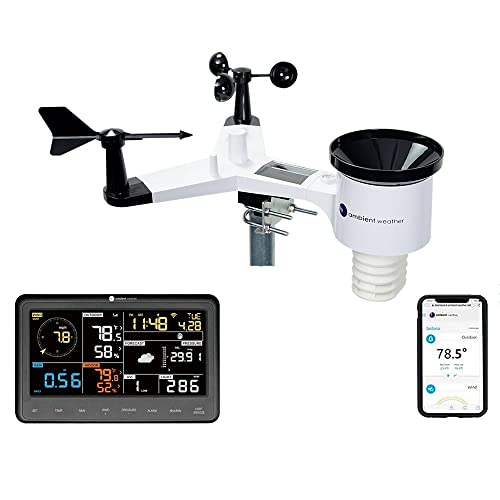
Ambient Weather WS-2902 WiFi Smart Weather Station
COMPLETE WEATHER STATION: (1) Osprey Sensor Array with Rain Cup, and (1) Brilliant, Easy-to-Read LCD Color Display
As an affiliate, we earn on qualifying purchases.
As an affiliate, we earn on qualifying purchases.
Regional Variations: Arctic and Remote Areas Present Unique Challenges
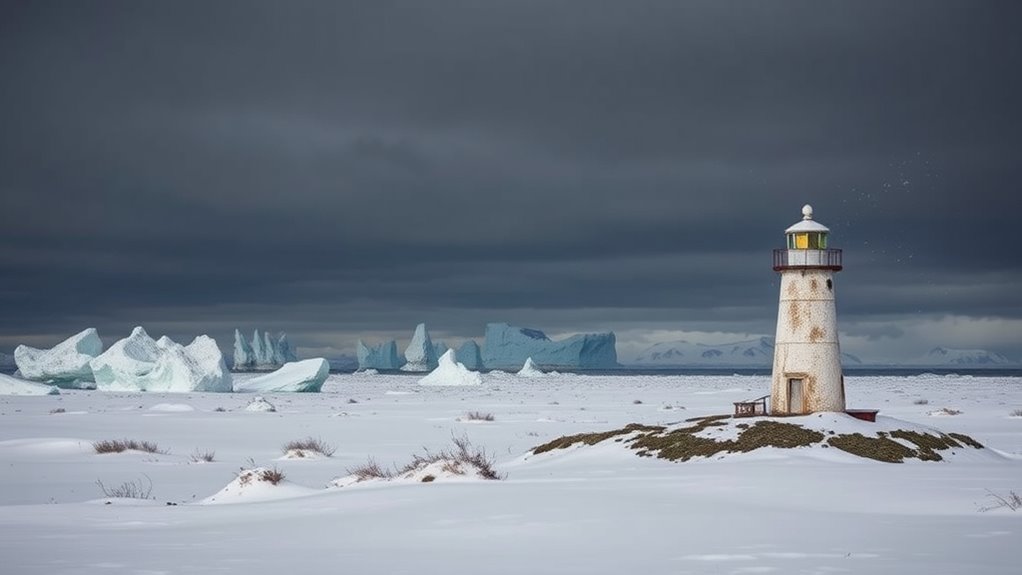
Remote regions like the Arctic and vast ocean areas pose unique challenges for weather forecasting because sparse data and harsh conditions hinder accurate predictions. With limited weather stations and satellite coverage, models struggle to capture microclimates and rapid shifts. The Arctic’s extreme cold, ice cover, and unpredictable storms make forecasts less reliable, especially beyond short timeframes. Oceanic areas face similar issues—waves, winds, and storms develop quickly, but the lack of detailed observations hampers precise predictions. These regions often rely on outdated or coarse data, leading to errors and uncertainties. Even advanced AI models can’t fully compensate for data gaps or extreme environments. The environmental complexity of these remote regions further complicates accurate forecasting. Additionally, the limited observational infrastructure means that real-time data collection is often insufficient to support reliable forecasts. Consequently, the inherent unpredictability of weather in these areas highlights the importance of cautious planning. As a result, travelers venturing into these areas should be cautious, knowing that forecasts are inherently less precise, especially for sudden weather changes. Data scarcity in these remote regions further complicates prediction accuracy, emphasizing the need for caution when planning activities.
The Impact of Human Oversight on Weather Forecast Reliability

While AI and high-resolution models have greatly enhanced forecast accuracy, human oversight remains vital to guarantee reliability. You need experts to interpret complex data, identify anomalies, and adjust predictions based on regional nuances. Without human judgment, models can produce errors, especially in unpredictable conditions. Human forecasters understand microclimates and sudden shifts that models might miss, ensuring better decision-making. Additionally, their expertise helps in understanding net worth and other nuanced factors that influence weather patterns, making forecasts more precise. The table below highlights key oversight roles:
| Role | Focus |
|---|---|
| Data Interpretation | Detect anomalies, validate model output |
| Regional Adjustment | Incorporate local climate factors |
| Error Correction | Fix unexpected inaccuracies |
Furthermore, ongoing training and experience enable forecasters to adapt to emerging weather patterns and refine their judgment. Recognizing the importance of *real-time data analysis* further enhances their ability to respond swiftly to sudden weather changes, making forecasts more dependable. A deep understanding of climate variability also contributes to more accurate adjustments and predictions. Moreover, continuous education in *forecasting techniques* ensures they stay updated with the latest advancements, ultimately improving forecast reliability.
Why Regional Forecast Apps Often Fall Short of ECMWF Standards
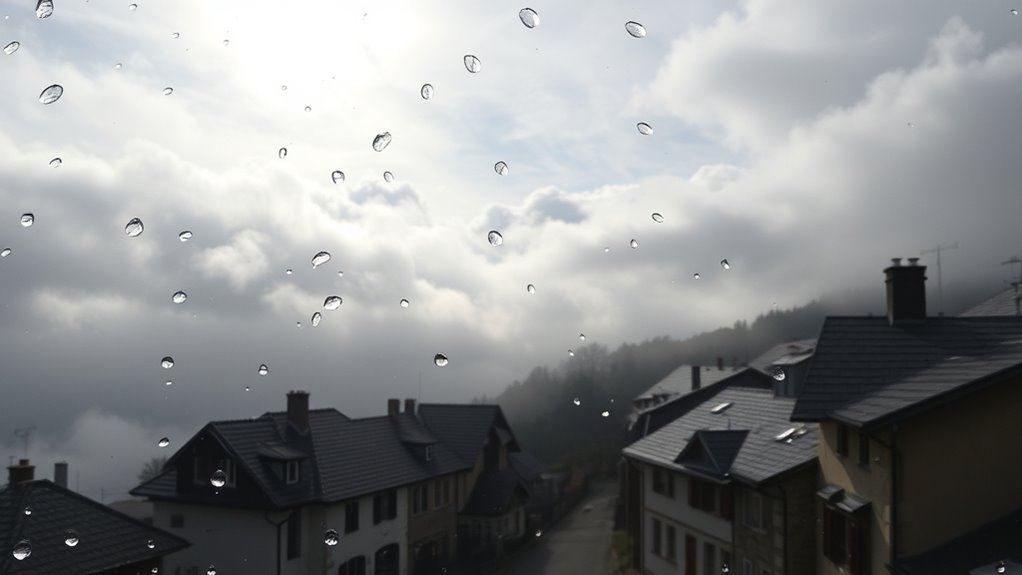
Regional forecast apps often fall short of ECMWF standards because they rely on lower-resolution models that can’t capture micro-scale weather events. Data coverage gaps, especially over oceans and remote areas, limit their accuracy and reliability. Additionally, regional challenges like complex terrain can make it hard for these apps to provide precise predictions. Incorporating advanced modeling techniques such as adaptive weather-responsive systems could help mitigate some of these forecasting limitations. Employing higher-resolution models can significantly improve the detail and precision of regional forecasts, especially in challenging environments. Furthermore, integrating real-time observational data can enhance forecast accuracy by providing up-to-date information to refine predictions. Embracing innovative analytical methods that utilize machine learning and big data can also further improve regional weather predictions.
Model Resolution Limits
Model resolution plays a crucial role in the accuracy of weather forecasts, and many regional apps fall short of ECMWF standards because they rely on coarser data grids. This limits their ability to capture small-scale features like microclimates, thunderstorms, or localized wind shifts. Higher-resolution models, like ECMWF’s HRES at 9 km, provide detailed insights impossible with lower resolutions. Regional apps often use coarser grids—around 20-50 km—missing critical local variations. This discrepancy affects forecast precision, especially for micro-events.
| Model Resolution | Forecast Detail |
|---|---|
| ECMWF (HRES) | 9 km – fine-scale phenomena |
| Regional Apps | 20-50 km – broad, less precise |
| ECMWF Ensemble | 18 km – probabilistic insights |
| Typical Regional | 50 km or more – general trends |
| Micro-Scale Events | Often missed by coarse models |
Data Coverage Gaps
Limited data coverage remains a key factor behind the gap between regional forecast apps and ECMWF standards. Without extensive data, these apps struggle to deliver accurate predictions, especially in remote or oceanic areas. This leads to significant blind spots that affect forecast reliability. You might notice sudden weather changes that regional apps cannot predict accurately due to these gaps. The lack of observations hampers the ability to model weather systems precisely. Investments like weather stations in under-resourced regions aim to bridge these gaps, but challenges persist. Without real-time, high-quality data, forecasts remain limited. Improving data coverage directly enhances regional accuracy and helps prevent misleading predictions, especially when planning travel or outdoor activities.
- Sparse oceanic and remote area data limits forecast precision
- Underfunded regions lack sufficient observation infrastructure
- Gaps hinder accurate modeling of localized weather phenomena
- Investment in new weather stations improves data completeness
Regional Forecast Challenges
Despite advances in AI and weather forecasting technology, regional apps often fall short of ECMWF standards because they lack access to extensive, high-quality data. This data scarcity hampers their ability to produce accurate forecasts, especially for microclimates and rapid weather changes. Remote areas, oceans, and less-resourced regions face persistent gaps, reducing forecast reliability. Regional models often rely on limited local information, which can’t capture the complex interactions of larger-scale systems. Additionally, high-resolution models demand significant computational power that many regional apps can’t support. As a result, they struggle to match ECMWF’s precision, especially beyond short-term predictions. Without exhaustive data, these apps can present misleading forecasts, leaving travelers unprepared for sudden or localized weather shifts.
Microclimates and Sudden Weather Changes That Confuse Apps

Microclimates and sudden weather shifts can quickly throw off your weather apps, making forecasts seem unreliable. These rapid changes often happen on a small scale, where standard models can’t keep up or predict accurately. As a result, you might find yourself caught off guard despite checking the forecast, highlighting the limits of current technology.
Microclimate Variability Challenges
Sudden weather changes and microclimates pose significant challenges for forecasting accuracy because they can develop rapidly and vary over short distances. These tiny weather zones, like a sheltered valley or urban canyon, can cause unexpected shifts that apps struggle to predict. If you’re planning outdoor activities, you might find the forecast misleading due to these micro-scale variations.
- Microclimates form from local topography, vegetation, and urban structures.
- They cause quick temperature swings and sudden rain showers.
- Apps rely on broader models that often miss these localized phenomena.
- Rapid shifts can happen within minutes, confusing even advanced AI systems.
Understanding these microclimate effects helps explain why your weather app may not match real conditions, especially in complex terrains.
Rapid Weather Shift Limitations
Rapid weather shifts often catch apps off guard because they develop quickly and can change over very short distances. Microclimates, mountain slopes, and urban areas create localized conditions that standard forecasts struggle to predict accurately. Sudden thunderstorms or temperature drops can occur unexpectedly, leaving apps outdated or misleading. These rapid changes are difficult to model because they depend on variables that fluctuate moment-to-moment, like atmospheric instability or terrain influences. Even AI-enhanced systems, despite their advances, sometimes produce errors when faced with these abrupt shifts. As a traveler, you might see a clear forecast in the morning, only to be surprised by rain or a temperature plunge later. This unpredictability underscores the limits of forecast apps in capturing the full complexity of rapid weather transitions.
The Limitations of Long-Range Forecasts for Travelers Planning Trips

Long-range weather forecasts are often unreliable for travelers planning trips beyond a week or ten days ahead. You might rely on these forecasts for trip planning, but they often miss sudden changes or regional microclimates. Their accuracy drops considerably, especially for specific locations or detailed weather events.
- Models struggle with micro-scale shifts like thunderstorms or fog.
- Data gaps over oceans and remote regions limit forecast precision.
- Long-term predictions tend to be less accurate for precipitation and wind.
- Regional variations, such as Arctic conditions, expose model weaknesses.
These limitations mean you risk being caught off guard by unexpected weather, making long-range forecasts a shaky guide for precise trip planning. Instead, focus on short-term updates closer to your departure for more reliable information.
Technological Constraints and the Need for Better Data Integration

Technological constraints considerably hinder the accuracy and reliability of modern weather forecasts, especially as models become more complex and data demands increase. High-resolution models require immense computational power, often limiting their real-time application. Despite advances like AI forecasting, unexpected errors still occur due to unpredictable variables such as thunderstorms or microclimates. Data gaps over oceans and remote regions persist, reducing forecast precision where it’s needed most. Integrating diverse data sources, from satellites to ground stations, remains challenging, causing delays and inconsistencies. You rely on forecast apps that often pull from outdated or lower-resolution models, leading to misleading predictions. Better data integration and more advanced, efficient models are essential to improve accuracy, but technological limitations still restrict how precisely we can predict weather, especially in rapidly changing or complex conditions.
How Travelers Can Make Better Decisions Despite Forecast Limitations

To make smarter travel decisions, start by relying on local forecasts that account for regional weather nuances. Check multiple sources to cross-verify predictions, especially when forecasts seem uncertain. Always plan for weather variability by packing flexible clothing and leaving room for unexpected shifts.
Use Local Forecasts
Despite the limitations of weather forecasts, using local observations can substantially improve your decision-making. Local forecasts and on-the-ground observations often capture microclimates and sudden changes that models miss. By paying attention to nearby weather stations, community reports, and real-time updates, you gain a clearer picture of current conditions. This immediate information helps you adapt plans more effectively, especially in unpredictable regions.
- Check nearby weather stations for real-time data
- Observe local cloud formations and wind patterns
- Listen to reports from residents or local guides
- Use regional weather alerts and community apps
Relying on local insights complements forecast apps, giving you a more accurate and timely perspective. This approach helps you avoid surprises and makes your travel decisions more reliable despite forecast limitations.
Check Multiple Sources
How can you make smarter travel decisions when weather forecasts have limitations? The key is to check multiple sources. Don’t rely solely on one app or forecast; compare data from different providers like ECMWF, local weather services, and regional apps. Each may use varied models and data, offering a broader perspective. Look for consistent patterns across forecasts to confirm trends. Pay attention to recent updates and alerts, especially for short-term decisions. Remember, forecasts can differ, especially in remote or complex regions. Cross-referencing helps identify discrepancies and reduces the risk of surprises. By gathering insights from diverse sources, you improve your understanding of likely conditions, making your plans more resilient to forecast inaccuracies. Always stay flexible and prepared for sudden weather shifts.
Plan for Variability
Have you ever planned a trip based on a weather forecast only to be caught off guard by unexpected conditions? That’s a common experience due to forecast variability. To make better decisions, you should:
- Always check multiple sources to confirm predictions.
- Be prepared for sudden weather shifts, especially in regions with high microclimate activity.
- Use flexible plans, like indoor activities or adaptable schedules.
- Monitor real-time updates, as forecasts can change quickly and unexpectedly.
Frequently Asked Questions
How Accurate Are Weather Apps for Planning Trips Beyond a Week?
Weather apps beyond a week aren’t very accurate for trip planning. You might see forecasts that seem reliable, but long-term predictions can be off due to data gaps and model limitations. Sudden weather changes, microclimates, and regional differences make it hard for apps to provide precise info that far ahead. For better planning, check short-term forecasts and stay updated with real-time data from trusted sources like ECMWF.
Why Do Regional Weather Apps Often Provide Less Reliable Forecasts?
Regional weather apps often provide less reliable forecasts because they rely on lower-resolution models or outdated data compared to advanced systems like ECMWF. Micro-scale events and sudden weather changes are hard to predict accurately at a regional level, especially beyond 7-10 days. Limited data coverage in remote areas and delays in updating real-time information also cause discrepancies, making long-term or localized forecasts less trustworthy for your plans.
What Causes Sudden Weather Shifts That Apps Fail to Predict?
When the weather throws a curveball, apps often miss the mark because sudden shifts stem from microclimates and unpredictable atmospheric variables that models struggle to capture. These quick changes happen faster than forecast updates can keep up, and tiny storms or microclimates can emerge unexpectedly. Since weather systems are complex, relying solely on app predictions is like counting on a crystal ball—you’re bound to be caught off guard.
How Do Data Gaps Impact Forecast Accuracy in Remote European Regions?
Data gaps in remote European regions limit forecast accuracy because there’s less real-time information available. When weather stations and radar coverage are sparse, models struggle to capture local conditions, leading to less reliable predictions. You might see sudden weather changes that apps can’t predict accurately. To improve, investments in expanding observation networks are essential, helping models fill in gaps and deliver more precise forecasts for these underserved areas.
Can AI Improve Long-Term Weather Predictions for Travelers?
Imagine gazing at a crystal ball that’s clearer than ever—that’s what AI offers for long-term weather predictions. While AI can enhance accuracy up to 15 days, weather’s inherent unpredictability still makes precise forecasts challenging. For travelers, this means better planning with AI’s improved models, but you should still expect some surprises. AI’s progress is promising, yet the atmosphere’s complexity keeps forecasts inherently uncertain beyond a couple of weeks.
Conclusion
While weather apps can seem like your crystal ball, they often miss the mark, especially in Europe’s complex landscape. Think of them as mapmakers with foggy glasses—use them as guides, not gospel. Stay flexible, check multiple sources, and trust your own instincts. Remember, weather’s unpredictability is the storm you can’t always see coming, so plan smart and stay ready to chase clear skies, no matter what the forecast says.