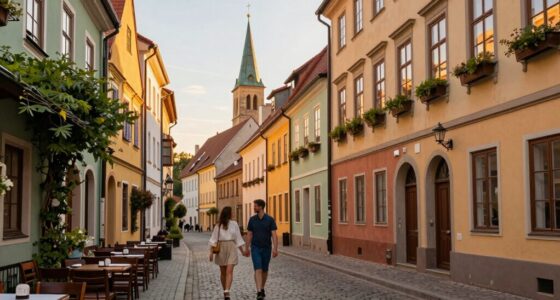
To split your trip efficiently, start in the big city to take advantage of public transit and see major sights without long travel times. Then, shift to a small town for a slower pace and authentic local experiences, choosing cozy accommodations like inns or guesthouses. Balance urban exploration with rural relaxation, and plan your routes to minimize transit stress. If you want to uncover more tips on creating a seamless journey, keep exploring.

Get travel and outdoor gear delivered free with Prime
- Fast, free delivery on millions of items
- Prime Video, Amazon Music and more included
- Member-only deals all year
Key Takeaways
- Plan your itinerary to start in the city for efficient sightseeing and transit, then transition to the small town for relaxed exploration.
- Use public transportation and local transit options to navigate urban areas quickly and minimize transit time.
- Schedule visits during local events or festivals to maximize cultural experiences in both environments.
- Choose accommodations that match each setting—hotels or rentals in cities, inns or guesthouses in small towns.
- Balance active city sightseeing with leisurely small-town activities for a diverse, rewarding trip experience.

Planning a trip that includes both big cities and small towns can be challenging, but with the right strategy, you can make the most of your time and resources. When you’re designing your itinerary, consider how urban planning shapes each destination. Big cities often have extensive public transportation systems, dense layouts, and well-developed infrastructure, making it easier to navigate quickly. Small towns, on the other hand, may rely more on walking, cycling, or limited local transit. Recognizing these differences helps you optimize your travel plans, so you’re not wasting time or energy moving from one place to another.
Optimize your trip by understanding urban planning differences between cities and small towns for seamless travel.
Cultural differences also play a significant role in your experience. In big cities, you’ll find diverse populations, a fast-paced environment, and a variety of attractions that reflect urban living. Small towns often boast a stronger sense of community, local traditions, and slower rhythms. Appreciating these distinctions allows you to tailor your activities. For instance, in a city, you might want to visit iconic landmarks or explore neighborhoods known for their vibrant street art. In a small town, engaging with local festivals or trying regional cuisine can give you a richer, more authentic experience.
When splitting your trip, plan your route to minimize transit time between vastly different environments. Start in a big city where you can utilize efficient public transit to see major sights without the hassle of parking or heavy traffic. Then, shift to a small town where you can slow down, walk around, and soak in the local vibe. This approach prevents burnout and ensures you get a balanced view of both worlds. Also, consider the timing of your visits. Big cities tend to be bustling year-round, but small towns might have seasonal events or closures, so check ahead.
Accommodation choices are another key factor. In the city, options range from hotels to Airbnb rentals, giving you flexibility. In small towns, staying in a cozy inn or guesthouse can enhance the local experience and give you a taste of daily life. Being mindful of cultural differences in lodging also helps—you’ll want to respect local customs and traditions, especially if you’re staying with hosts or in community-run accommodations.
Ultimately, your success depends on how well you plan for these differences. Use urban planning insights to navigate the city efficiently, and embrace cultural differences to deepen your experience in small towns. By balancing these elements, your trip will be seamless, rewarding, and truly memorable. Additionally, understanding how public transit systems are designed can significantly improve your urban navigation and save you time. Recognizing the importance of urban infrastructure can also help you better appreciate the planning that makes city travel more efficient. Being aware of local transportation options can further enhance your ability to adapt to different environments and make your trip smoother.
Products Worth Considering

Samsonite Tour Deluxe Hard-Sided Golf Travel Case

Travelpro Maxlite 5 Softside International Carry-On Luggage, Green, 20-Inch

Kindle Paperwhite Signature Edition 32GB (2024) – Auto-adjusting front light, wireless charging, weeks battery life – Metallic Jade
As an affiliate, we earn on qualifying purchases.
Frequently Asked Questions
How Do I Choose Which Cities and Towns to Visit First?
Start by prioritizing cities and towns that offer unique experiences like local cuisine and cultural festivals. Consider visiting larger cities first to enjoy their vibrant attractions and then move to smaller towns for authentic, quieter experiences. Check event schedules and seasonal festivals to maximize your trip. This way, you’ll get a well-rounded experience, sampling diverse cuisines and cultural celebrations while optimizing your travel route.
What Transportation Options Are Best for Mixed City and Town Travel?
You should consider a mix of transportation options like trains, buses, and car rentals to navigate between big cities and small towns efficiently. Trains are great for city-to-city travel, while buses or rentals give you flexibility in small towns. During your journey, immerse yourself in local cuisine and cultural festivals, which often highlight the unique charm of each place. This approach guarantees a rich experience across diverse settings.
How Can I Optimize My Travel Budget Across Big and Small Destinations?
To optimize your travel budget across big cities and small towns, start by comparing prices on budget airlines for flights, which can save you a lot. Use travel insurance to protect against unexpected costs, like cancellations or medical emergencies. Plan your accommodations early and look for deals or hostels in smaller towns. Eating locally and using public transportation also helps stretch your budget, making your trip more affordable and enjoyable.
Are There Specific Safety Tips for Traveling Between Cities and Towns?
Like steering a delicate bridge, you should prioritize local safety by researching area-specific risks and staying alert. Keep emergency contacts handy and know the nearest hospitals. Trust your instincts—if something feels off, leave! When shifting between big cities and small towns, always inform someone of your plans, carry a fully charged phone, and stay aware of local safety tips to guarantee a smooth, secure journey.
How Much Time Should I Allocate for Each Type of Location?
You should allocate more time for big cities—around 2-3 days—to explore local cuisine and cultural festivals, which often take longer due to their size and diversity. Small towns warrant about a day or two, letting you enjoy their charm, local traditions, and scenic spots. Balance your schedule so you can immerse yourself in the unique experiences each offers, ensuring a richer, more memorable trip.
Conclusion
By blending bustling city streets with quiet town squares, you create a journey that balances excitement with tranquility. Big cities offer vibrant energy, towering skyscrapers, and endless attractions, while small towns provide cozy charm, slower pace, and genuine connections. Together, they form a perfect rhythm—fast-paced days followed by peaceful nights. So, plan your trip wisely, and let the contrasts inspire your adventure, making each destination’s unique heartbeat part of your unforgettable story.