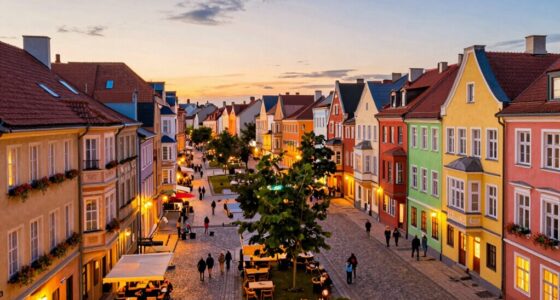

To choose the perfect European city for your first trip, consider your interests—like art, history, or food—and pick a destination that offers easy access, great public transport, and manageable crowds, especially during off-peak seasons. Think about your budget, preferred activities, and language comfort, then explore smaller or emerging spots for authentic experiences. If you keep these factors in mind, you’ll set yourself up for an unforgettable adventure, and there’s more to discover ahead.
Key Takeaways
- Identify your interests like art, history, food, or nightlife to select cities aligned with your preferences.
- Consider accessibility, transportation options, and walkability to ensure smooth travel within the city.
- Choose the best visiting season to avoid crowds and high prices, balancing weather and local events.
- Opt for budget-friendly accommodations, dining, and free activities to make your trip affordable and enjoyable.
- Prioritize safe, authentic experiences that support local communities and explore emerging or less crowded destinations.
Top picks for "choos right european"
Open Amazon search results for this keyword.
As an affiliate, we earn on qualifying purchases.
Assessing Your Travel Interests and Priorities
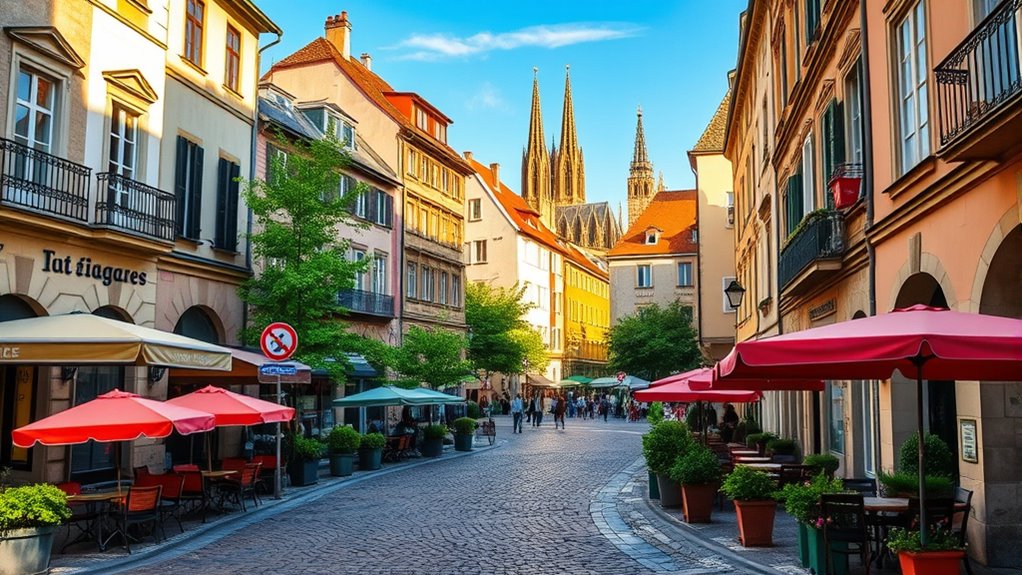
Understanding your travel interests and priorities is essential to choosing the right European city for your first trip. Think about what excites you most—art, history, food, or vibrant nightlife. If you love iconic landmarks and rich history, Rome or Paris might be ideal. For a mix of modern culture and accessibility, London offers diverse attractions and easy transportation. If you prefer a relaxed atmosphere with scenic canals and museums, Amsterdam suits well. Consider logistical factors too: do you want a city with excellent public transit or a more walkable, laid-back vibe? Budget matters, too—some cities are more affordable, while others are pricier. Clarifying these priorities helps narrow your options and guarantees your first European trip aligns perfectly with your interests. Additionally, exploring city-specific attractions can help you determine which destination will best match your travel style. To make your decision even easier, researching Gold IRA Markets can provide insights into investment options and financial planning, which might be helpful for future travel budgeting or planning. Moreover, understanding the European cloud infrastructure landscape can offer valuable insights into the technological innovations shaping your travel experience and connectivity.
Exploring Iconic Landmarks and Cultural Experiences
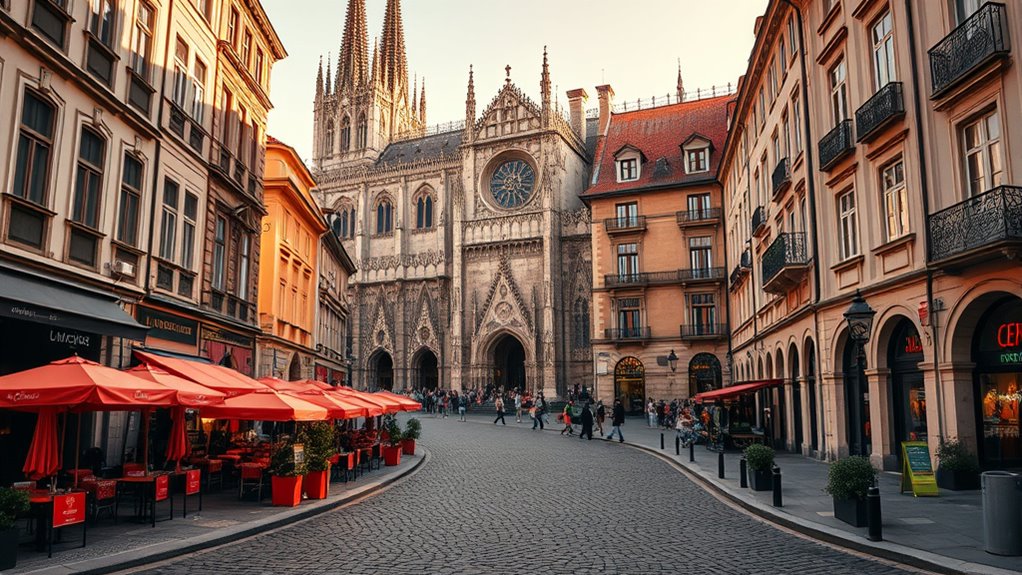
When you visit a European city, exploring its iconic landmarks helps you understand its unique history and spirit. You’ll want to see famous sights and enjoy local cultural delights that make each place special. These experiences will create lasting memories and give you a deeper connection to your destination.
Landmark Highlights
Have you ever wondered what makes a city truly unforgettable? It’s the iconic landmarks and cultural experiences that stay with you. Picture yourself standing beneath the Eiffel Tower, gazing up at its iron lattice. Imagine walking along the historic Roman Colosseum, feeling its ancient stones beneath your feet. Or envision wandering through Amsterdam’s picturesque canals, lined with charming, narrow houses. These landmarks tell stories of history, art, and tradition. They include:
- A towering monument or historic site that defines the city’s identity.
- A world-famous museum or gallery showcasing remarkable art and culture.
- An architectural marvel that captures the city’s unique style.
In addition, the quality of projector technology can greatly influence your experience when exploring these cultural treasures virtually.
Local Cultural Delights
Exploring a European city isn’t complete without immersing yourself in its cultural delights. You’ll want to wander through historic neighborhoods, admire iconic landmarks, and experience local traditions firsthand. Visit world-famous sites like the Eiffel Tower, Colosseum, or Tower of London to connect with the city’s history. Plunge into local art scenes at museums, galleries, and street murals that showcase the city’s creative spirit. Don’t miss tasting authentic cuisine—whether it’s French pastries, Italian pasta, or Spanish tapas—because food is a crucial part of cultural identity. Attend festivals, markets, or performances that reveal the city’s soul and lively atmosphere. Engaging with local traditions and customs can provide deeper insight into the city’s unique character. These experiences will deepen your understanding and make your trip truly memorable. Embrace every opportunity to discover what makes each city unique.
Considering Accessibility and Transportation Options
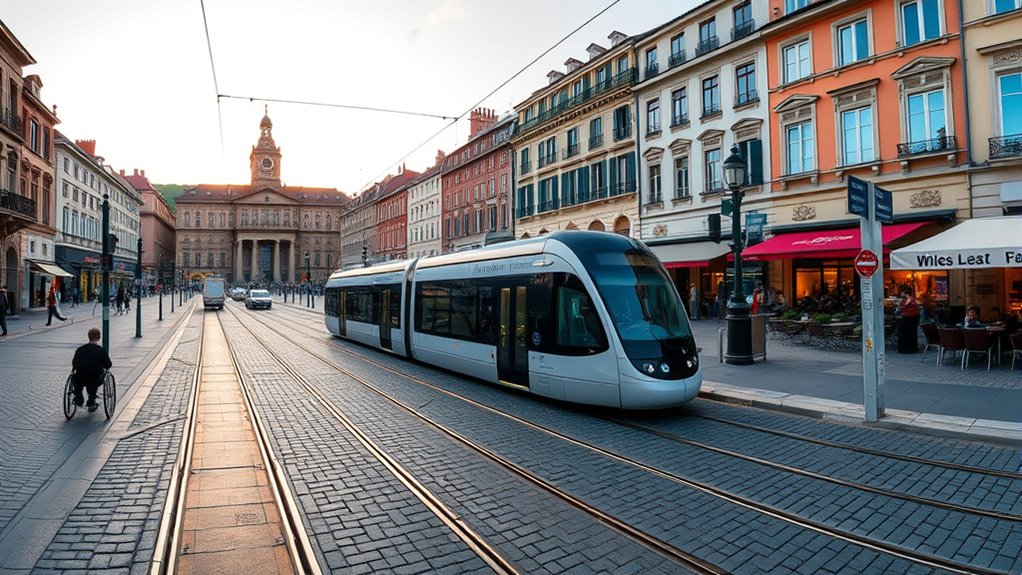
Choosing a city with convenient transportation options can make your first trip much smoother and more enjoyable. When selecting your destination, think about how easy it is to get around once you’re there. Consider these key aspects:
Pick a city with great transport options to make your first trip smooth and memorable.
- Public transit system – Visualize an extensive metro or bus network, like Paris’s efficient Metro, making city exploration quick and easy.
- Airport connectivity – Imagine arriving at a well-connected airport, such as Brussels, with direct links to major hubs and efficient transfers to the city center.
- Walkability and bike options – Picture strolling along Amsterdam’s canals or biking through Lisbon’s scenic paths, offering flexible ways to explore at your own pace.
- Smart transportation solutions – Modern European cities often incorporate smart transportation technologies like real-time tracking and contactless payment systems that further enhance the ease of travel.
Prioritizing these factors will ensure your first trip is seamless, memorable, and stress-free.
Evaluating Crowd Levels and Peak Tourist Seasons

Understanding the crowd patterns and peak tourist seasons is essential for planning a smooth first trip. Visiting during busy times can mean long lines and crowded sights, while off-peak visits offer a more relaxed experience. To help plan, consider the following:
| Season | Crowd Level | Best Time to Visit |
|---|---|---|
| Summer (Jun-Aug) | Very crowded, high prices | Late June or late August |
| Spring (Apr-Jun) | Moderate crowds, pleasant weather | Mid to late May |
| Fall (Sep-Nov) | Fewer tourists, mild weather | October |
| Winter (Dec-Feb) | Least crowded, festive season | January after New Year |
| Holiday Periods | Overcrowded, expensive | Avoid major holidays |
Knowing these patterns helps you choose the right time to enjoy your trip without feeling overwhelmed.
Budgeting for Accommodation, Food, and Activities
To make the most of your trip without overspending, you’ll want to find affordable lodging options that fit your budget. Knowing how to navigate dining costs can help you enjoy local flavors without breaking the bank, and planning budget-friendly activities ensures you get the most out of your visit. With some smart choices, you can experience a fantastic European city without overextending yourself. Additionally, exploring local transportation options can significantly reduce your overall expenses during your stay.
Finding Affordable Lodging Options
Finding affordable lodging in European cities doesn’t mean you have to sacrifice comfort or convenience. To save money, consider these options:
- Hostels and Guesthouses: Sleep in vibrant dorms or cozy rooms, often with free breakfast and social atmospheres.
- Vacation Rentals: Use platforms like Airbnb for entire apartments, ideal for cooking your own meals and staying longer.
- Budget Hotels: Look for chains or locally-run hotels that offer basic amenities at lower rates.
Book early to snag discounts, and explore neighborhoods outside tourist hubs—these areas usually have cheaper options. Also, consider staying slightly outside the city center and using public transport to get around. With a bit of planning, you can find comfortable, affordable lodging without missing out on the local experience.
Navigating Dining Costs Effectively
Budgeting for dining in European cities doesn’t have to mean sacrificing flavor or local experience; smart choices can help you enjoy delicious meals without overspending. Start by exploring local markets and street vendors for authentic, budget-friendly bites. Look for cafes or trattorias away from major tourist spots—they often serve better food at lower prices. Consider ordering a fixed-price menu or daily specials, which offer good value and a taste of local cuisine. Limit dine-in meals at expensive restaurants and opt for takeaway or picnics in parks when possible. Use apps to find discounts or free tapas with drinks. Planning your meals around local dining customs not only saves money but also enriches your experience. Being aware of AI ethics and the importance of responsible AI use can also inform smarter decision-making during your trip. Additionally, understanding the different cookie categories helps you manage your online privacy and tailor your browsing experience. With these strategies, you can indulge in the city’s flavors without breaking the bank.
Planning Budget-Friendly Activities
Smart planning can help you enjoy your trip without overspending on accommodation, food, and activities. To stretch your budget, prioritize free or low-cost options. First, look for local hostels or Airbnb rentals in neighborhoods away from tourist hotspots—think cozy, affordable, and authentic. Second, explore street food, markets, or small eateries for delicious meals that won’t break the bank—imagine savoring fresh pastries or hearty sandwiches. Third, seek out free or discounted activities like walking tours, public parks, or museums with free days—visualize strolling along historic streets or relaxing in scenic gardens. By focusing on these budget-friendly choices, you’ll enjoy an authentic experience without sacrificing fun or comfort. Planning ahead guarantees your trip remains memorable and affordable.
Understanding Local Language and Communication Ease
How easy is it to communicate in your chosen European city? If you’re visiting an English-speaking city like London or Amsterdam, you’ll find it simple to get around, ask for directions, and order food. Most locals in these places speak English well, and signs are often bilingual. In cities like Paris or Rome, some basic knowledge of French or Italian can go a long way, especially in smaller shops or restaurants. Many service workers in popular tourist areas speak enough English to help you, but outside these zones, communication might be trickier. Using translation apps can smooth things out and boost your confidence. Overall, understanding the local language varies by city, but with a little preparation, you’ll navigate conversations more easily and enjoy your trip without language barriers feeling overwhelming. Additionally, language accessibility plays a significant role in shaping your overall travel experience, and being aware of local communication ease can help you plan accordingly. Being familiar with multilingual signage and common phrases can also enhance your comfort level during your visit.
Analyzing Safety and Health Precautions
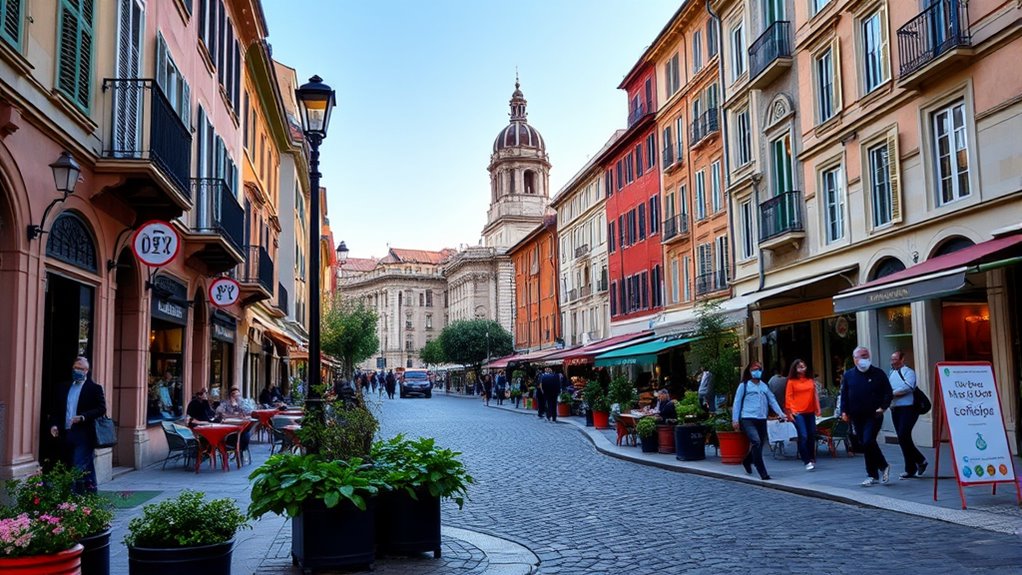
When visiting a European city for the first time, prioritizing safety and health precautions guarantees a smooth and worry-free trip. To stay protected, consider these key steps:
- Keep your belongings close, especially in crowded areas like markets or public transport, to prevent theft.
- Check the local health guidelines—vaccinations, masks, or testing requirements—before traveling.
- Familiarize yourself with emergency numbers and locate nearby hospitals or clinics, so help is always within reach.
- Use outdoor kitchen plans or guides to help you prepare for safe and enjoyable outdoor activities if you plan to cook or dine outside during your trip.
- Be aware of health and safety regulations specific to the destination, which can vary across different countries and cities.
Stay alert to your surroundings and avoid risky neighborhoods, especially at night. Carry a basic first aid kit and a copy of your ID or passport. Being prepared and cautious ensures you enjoy your trip without unexpected setbacks.
Identifying Smaller or Emerging Destinations for Unique Experiences

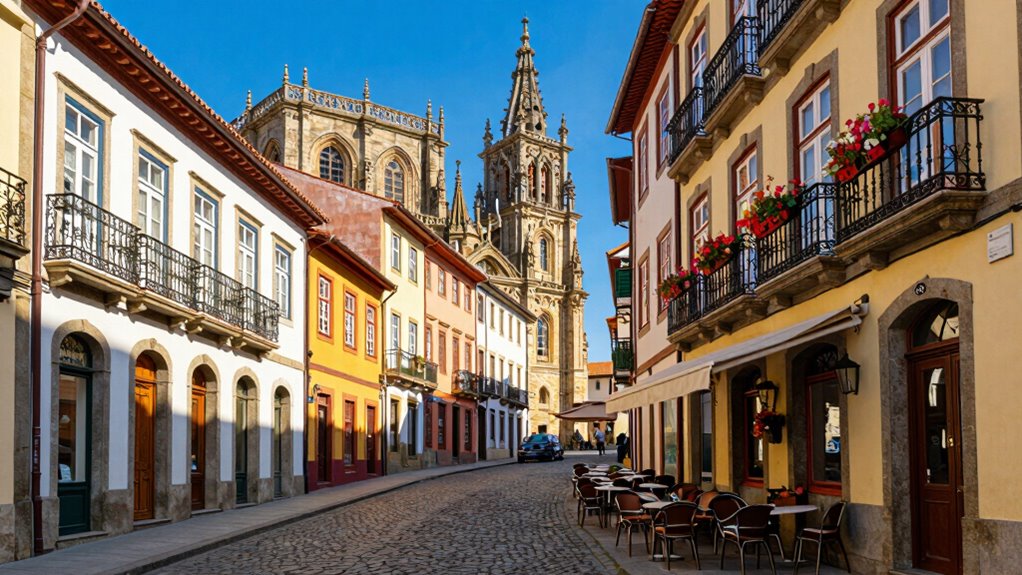
While safety and health are top priorities for first-time visitors, exploring smaller or emerging destinations offers a chance to experience Europe’s authentic charm without the overwhelming crowds of major cities. Places like Bruges in Belgium provide medieval beauty and a quieter atmosphere, perfect for soaking in history and culture at a relaxed pace. Lisbon, Portugal, combines vibrant neighborhoods with excellent public transit, making it easy to discover hidden gems away from tourist hotspots. Warsaw, Poland, offers a mix of modernity and history, often with fewer visitors and more affordable options. Brussels is rapidly growing as a hub for culture and cuisine, yet remains less crowded than Paris or London. These destinations let you enjoy unique experiences, authentic local life, and a more intimate connection to Europe’s diverse character. Understanding local customs and traditions can also help travelers engage more meaningfully with the communities they visit, enriching their overall experience. Additionally, choosing destinations with well-designed heating solutions can significantly enhance your comfort during colder months. Selecting places with thoughtful infrastructure not only improves comfort but also demonstrates a commitment to sustainable tourism, benefiting both visitors and local communities.
Planning Your Itinerary for a Memorable First Visit
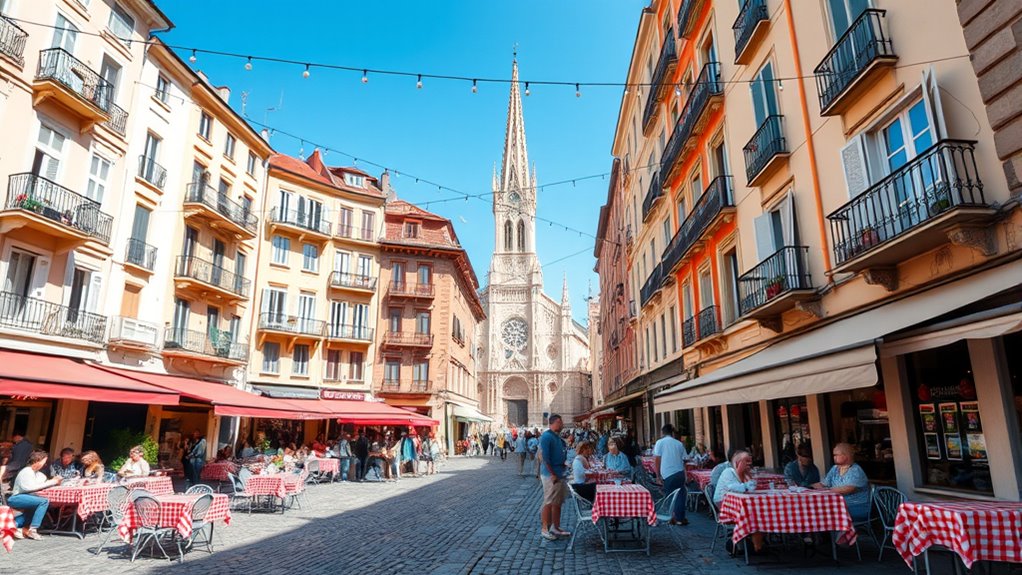
Planning your itinerary is the key to making your first trip to Europe both enjoyable and stress-free. Start by prioritizing must-see attractions: picture yourself marveling at iconic landmarks, wandering charming neighborhoods, and savoring local cuisine. To create a vivid experience, consider these steps:
- Map out your days, balancing popular sites like the Eiffel Tower or Colosseum with lesser-known gems to avoid crowds.
- Allocate time for leisurely strolls through markets, parks, or along canals, imagining yourself soaking up local ambiance.
- Schedule downtime to relax, enjoy a café, or absorb the scenery, making your trip feel less rushed and more memorable.
Frequently Asked Questions
Which City Offers the Best Value for First-Time Travelers?
You’ll find the best value in Lisbon, Portugal. It offers affordable prices for accommodations, food, and transportation, making it perfect for first-time travelers on a budget. The city’s excellent public transit, walkability, and bike-friendly streets help you explore without extra costs. Plus, Lisbon’s sunny weather and vibrant culture guarantee you get a rich experience without overspending, making it an ideal choice for a memorable first European trip.
How Do Weather Patterns Influence the Best Time to Visit?
Weather patterns greatly influence the best time to visit European cities. You should plan your trip during mild, dry seasons like spring (April to June) and early fall (September to October) to enjoy comfortable temperatures and avoid crowds. Summers can be hot and crowded, especially in popular destinations like Paris and Rome, while winter offers fewer tourists but colder weather. Adjust your travel dates to match favorable weather for a more enjoyable experience.
Are There Any Travel Restrictions or Visa Requirements for Major Cities?
Imagine opening a treasure chest—your journey begins with knowing the keys. For major European cities like Paris, London, or Rome, you’ll typically need a valid visa if you’re from outside the Schengen Area or UK. Many travelers can enter visa-free for short stays, but always check the latest requirements, as rules shift with political winds. Stay informed and prepared, so your adventure flows smoothly through these vibrant cityscapes.
Which Cities Are Most Suitable for Solo Travelers or Families?
If you’re traveling solo or with family, you’ll find cities like London, Amsterdam, and Paris particularly suitable. London offers friendly locals, easy transport, and plenty of attractions for all ages. Amsterdam’s walkability and relaxed vibe make it perfect for families, while Paris combines iconic sights with accessible public transit. These cities are known for safety, English friendliness, and kid-friendly activities, making your trip enjoyable and stress-free.
How Can I Find Authentic Local Experiences Away From Tourists?
Think of your journey as a hidden garden, waiting to be discovered. To find authentic local experiences away from tourists, venture beyond the main squares and popular landmarks. Walk through neighborhood markets, attend local festivals, or sit at small cafes where residents gather. Engage with locals, try regional dishes, and explore side streets. By seeking these secret spots, you’ll uncover the true soul of a city, making your trip uniquely memorable.
Conclusion
Like Odysseus charting his voyage, choosing your first European city guides you toward discovery and adventure. By weighing your interests, budget, and safety, you’ll craft a journey as unique as your own story. Embrace the excitement of new horizons, knowing each step brings you closer to unforgettable memories. Trust your instincts, be curious, and remember—every great explorer began with a single, brave decision. Your European adventure awaits, ready to unfold like a timeless legend.