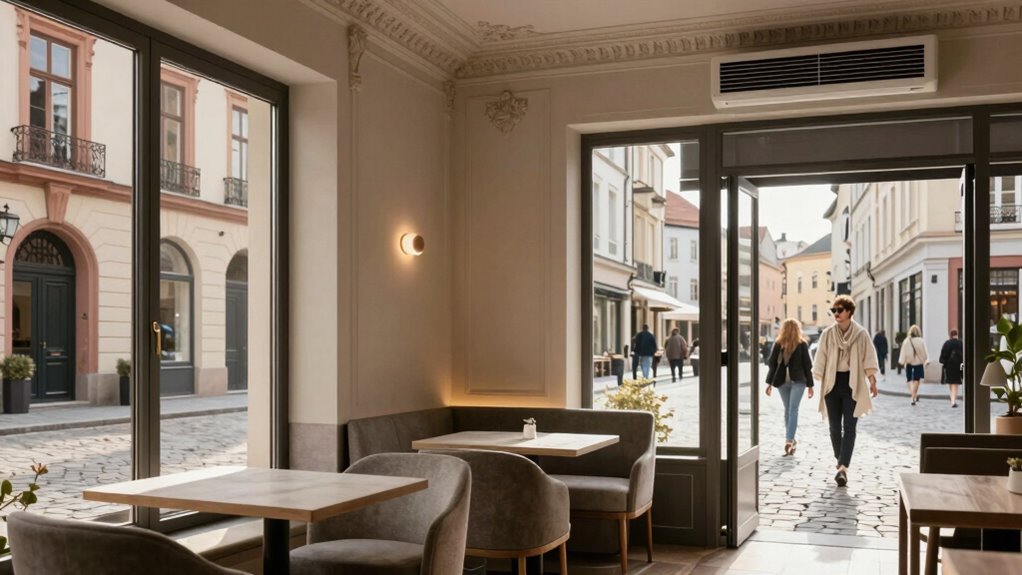

You’ll notice that air conditioning in Europe feels different because homes and buildings often have thick walls, small windows, and high ceilings that naturally regulate indoor temperatures. Europeans prefer passive cooling, like cross-ventilation and shading, instead of relying on air conditioning units. Cultural attitudes and preservation efforts also limit modern HVAC installations. If you’re curious how these factors influence European comfort practices and sustainability, there’s more to discover below.
Listen free for 30 days with Audible
Thousands of audiobooks and originals — cancel anytime.
As an affiliate, we earn on qualifying purchases.
Key Takeaways
- European architecture emphasizes passive cooling features like thick walls and small windows, reducing reliance on air conditioning.
- Cultural preferences favor outdoor activities and natural ventilation over mechanical cooling methods.
- Historic preservation limits modern HVAC installations in European buildings, maintaining architectural integrity.
- Higher energy costs and environmental policies promote energy-efficient cooling strategies in Europe.
- Europeans view air conditioning as less essential, prioritizing sustainable, traditional cooling techniques.
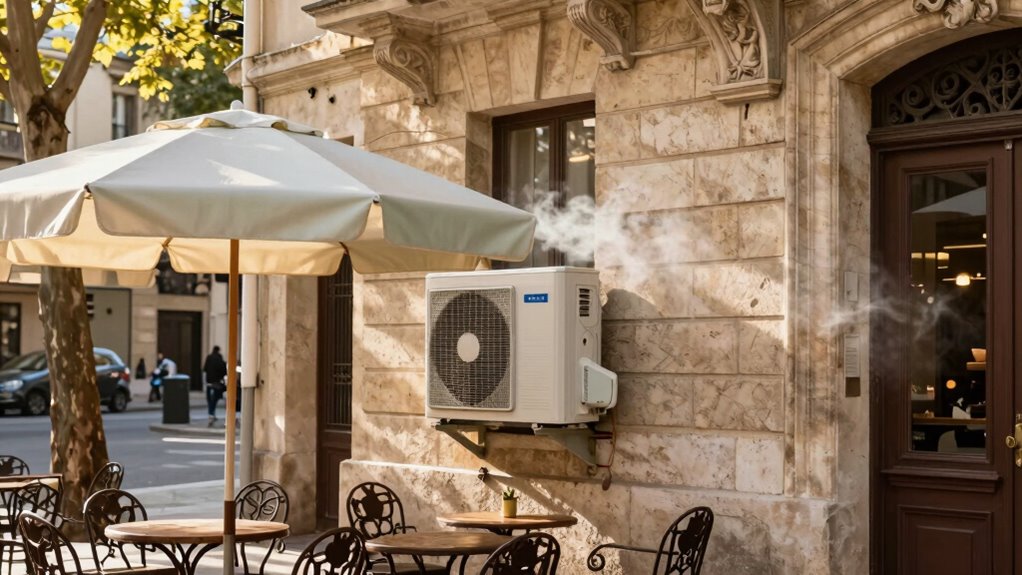
If you’ve ever visited Europe and noticed that the air conditioning feels less powerful or less common than in the U.S., you’re not imagining things. Many European cities and buildings prioritize a different approach to climate control, rooted in historical building preservation and energy consumption patterns. Unlike in the U.S., where modern construction often incorporates extensive air conditioning systems, Europe tends to preserve older architecture that wasn’t designed with centralized cooling in mind. These historic buildings often have thick stone walls, small windows, and high ceilings, all of which naturally help regulate indoor temperatures without relying heavily on air conditioning. Because of this, Europeans generally prefer methods like cross-ventilation and shading, which are more sustainable and less invasive to their historic structures. This also reflects a broader focus on sustainable living, emphasizing energy efficiency and environmental conservation. Energy consumption patterns also play a significant role in shaping Europe’s approach to cooling. Europeans tend to be more conscious of their energy use, partly because of environmental policies and partly due to higher energy costs. As a result, there’s less emphasis on installing powerful air conditioning units in homes and businesses. Instead, many opt for passive cooling techniques that reduce energy consumption and limit environmental impact. This approach aligns with efforts to preserve the integrity of historic buildings, which might not withstand modern HVAC installations without costly modifications. Consequently, the focus remains on maintaining the building’s original character and energy efficiency, rather than retrofitting with extensive cooling systems. Furthermore, cultural attitudes towards comfort and climate control influence the differences. In the U.S., air conditioning is often viewed as essential, especially during hot summer months, leading to widespread use. In Europe, there’s a stronger tradition of adapting to the climate through architecture and lifestyle. People might spend more time outdoors during warm weather or use fans and natural ventilation to stay cool. These Cultural preferences also play a role in shaping these attitudes toward cooling solutions. Additionally, the historic preservation efforts contribute to a less invasive cooling approach that balances comfort with maintaining architectural integrity.
As an affiliate, we earn on qualifying purchases.
Frequently Asked Questions
How Do European Buildings Naturally Stay Cooler Without Air Conditioning?
European buildings stay cooler through passive cooling strategies and thoughtful architectural design. You’ll notice features like thick stone walls, high ceilings, and small windows that reduce heat gain. Many buildings also incorporate shutters and natural ventilation, allowing air to flow and cool indoor spaces without air conditioning. These traditional methods naturally regulate temperature, making buildings more comfortable while reducing reliance on energy-intensive cooling systems.
Are There Health Concerns Linked to Different Air Conditioning Practices?
Yes, there are health concerns linked to different air conditioning practices. Poor indoor air quality can cause respiratory issues, allergies, and discomfort. In Europe, where humidity control is often emphasized, you might experience fewer mold and bacteria problems. Conversely, overly cold or dry air from some U.S. systems can dry out skin and sinuses. Proper maintenance, humidity management, and good ventilation are key to minimizing health risks regardless of your location.
How Does Climate Influence Air Conditioning Design in Europe Versus the U.S.?
Climate profoundly influences air conditioning design in Europe and the U.S. You’ll notice European systems often prioritize thermal insulation and ventilation strategies to adapt to milder, variable weather, reducing reliance on active cooling. In contrast, U.S. designs focus more on powerful air conditioning units to combat hotter, more humid climates. This approach shapes how buildings are constructed and cooled, making European cooling feel more integrated with natural conditions.
What Are the Typical Costs of Installing Air Conditioning in Europe?
Think of installing air conditioning in Europe like steering a winding mountain trail—you’ll encounter varied costs and challenges. Typically, costs range from €3,000 to €8,000, influenced by home size and system type. Compared to the U.S., the cost comparison reveals higher prices due to installation challenges like older buildings and limited space. You might find that the unique European architecture adds complexity, making the process more costly but ultimately more rewarding.
How Do Cultural Attitudes Impact Air Conditioning Usage in Europe?
Your cultural preferences in Europe often prioritize energy conservation and sustainability, which impacts air conditioning usage. You might notice that Europeans typically use air conditioning less and prefer natural ventilation or fans. This mindset reflects a value for environmental responsibility, so you’re less likely to see constant cooling. Your habits are shaped by these cultural attitudes, encouraging moderation and mindful energy consumption, even in hot weather.
cross ventilation window screens
As an affiliate, we earn on qualifying purchases.
As an affiliate, we earn on qualifying purchases.
Conclusion
So, next time you step into a European building and feel that cooler air, remember it’s like entering a different climate zone. It’s not just about temperature; it’s about expectations and design. Just like switching from a bustling city street to a peaceful park, the climate experience varies. Understanding these differences helps you appreciate the subtle art of comfort—whether in Europe or the U.S.—and realize that temperature is only part of the story.
thermal curtains for energy efficiency
As an affiliate, we earn on qualifying purchases.
As an affiliate, we earn on qualifying purchases.
portable outdoor shading umbrellas
As an affiliate, we earn on qualifying purchases.
As an affiliate, we earn on qualifying purchases.
Flea & tick season Picks
flea and tick prevention
As an affiliate, we earn on qualifying purchases.