

To make your trip across Europe easier, choose destinations known for accessible infrastructure, and research their facilities ahead of time. Use helpful apps and online resources to find accessible routes, accommodations, and transport options. Communicate your needs clearly with service providers and plan your itinerary around construction or upgrades. Packing assistive devices and budgeting for accessible services also enhance your experience. Keep exploring for more tips to guarantee a smooth, enjoyable journey.
Key Takeaways
- Research destinations’ accessibility features, including transportation, attractions, and accommodations, before booking.
- Use digital tools and apps to find real-time information on accessible routes and services.
- Communicate specific mobility needs clearly with providers and confirm assistance in advance.
- Prepare and pack essential assistive devices, extra batteries, and necessary documentation for smooth travel.
- Stay updated on construction or upgrades at key sites to avoid disruptions and maximize accessibility.
Top picks for "accessible europe plann"
Open Amazon search results for this keyword.
As an affiliate, we earn on qualifying purchases.
Choosing Accessible Destinations in Europe

When choosing accessible destinations in Europe, it’s crucial to prioritize cities known for their inclusive infrastructure and dedicated accessibility efforts. Look for places like Rome, Barcelona, and Paris, which have made significant strides in improving mobility options and barrier-free access. Research each city’s efforts in accessible transportation, smooth pavements, and accessible attractions. Check if popular sites have ramps, elevators, and wheelchair-friendly pathways. Consider cities with exhaustive accessibility information available online, including maps and virtual tours. These destinations often have specialized services and accommodations that cater to your needs. Choosing cities with a strong focus on accessibility ensures a smoother, more enjoyable experience, helping you explore cultural landmarks without unnecessary hurdles. Prioritizing inclusive destinations saves you time and enhances your overall trip. Additionally, understanding reliable backup power options can be useful for ensuring safety and comfort during your travels. Exploring accessible travel resources can further support your planning process, ensuring a seamless journey. Incorporating adaptive technology into your travel plans can also improve mobility and independence while exploring new cities. For instance, some cities offer innovative solutions like floating on water accessible boat tours, which provide unique and barrier-free ways to explore scenic areas. Moreover, researching local disability advocacy groups can provide valuable insights and support during your visit.
Researching Accommodation Options With Verified Accessibility Standards

Ensuring your accommodation meets verified accessibility standards can considerably improve your travel experience. To do this, research thoroughly using trusted sources like official accessibility directories, hotel websites, and verified reviews. Look for specific details such as door widths, bathroom setups, and step-free access. Photos and virtual tours help you assess if the space suits your needs. Prioritize accommodations with recognized certifications or labels indicating compliance with accessibility standards, as standards can vary across Europe. Contact the hotel directly to confirm features like assistive equipment availability and staff training. Keep an eye out for detailed information about the property’s layout and services. Incorporating accessibility standards and verified certifications into your planning can greatly reduce potential barriers and ensure a more comfortable stay. Being aware of disability-friendly amenities can help you choose options that better suit your individual needs. Additionally, consulting local disability organizations can provide valuable insights and recommendations tailored to specific destinations. Conducting site inspections or virtual tours prior to booking can further help you identify potential obstacles and confirm that the accommodations meet your expectations, ensuring your stay is comfortable, safe, and aligned with your mobility requirements, reducing surprises and enhancing your overall travel experience.
Utilizing Digital Tools and Apps for Seamless Planning
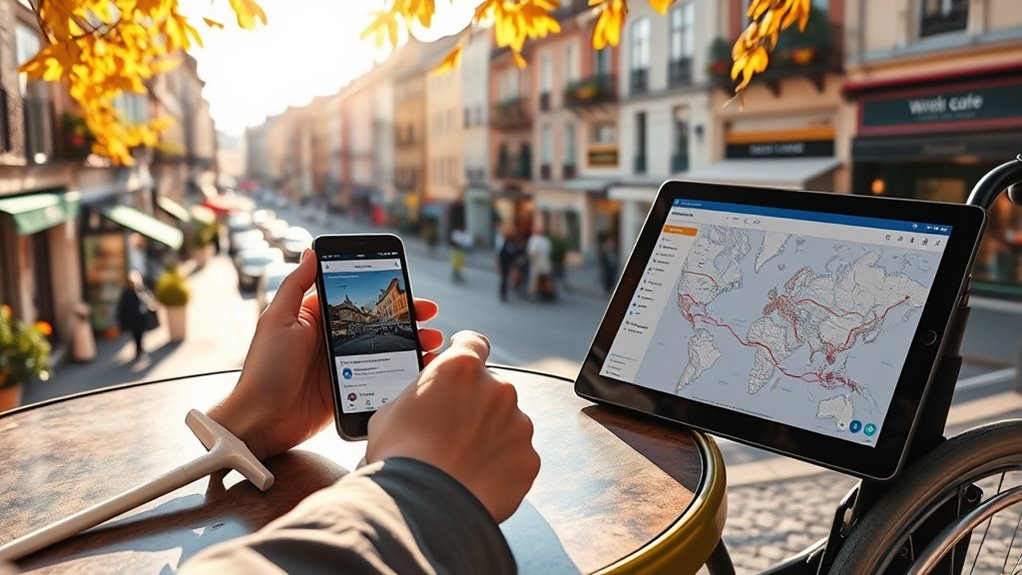
Digital tools and apps have revolutionized accessible travel planning by providing real-time, detailed information tailored to your mobility needs. They help you find accessible routes, restaurants, and attractions, saving time and reducing stress. With features like offline maps, voice commands, and live updates, you can navigate unfamiliar cities confidently. Many apps also include user reviews and ratings, helping you choose the most accessible options. To maximize benefits, select tools that sync across devices and offer customizable settings for your specific needs. Additionally, many of these platforms incorporate European cloud innovation to enhance data security and ensure reliable service during your travels. Leveraging cloud-based technology further ensures seamless updates and data synchronization, making your planning even more efficient. Utilizing accessible navigation features can significantly improve your travel experience by addressing specific mobility requirements, especially when combined with real-time accessibility data that keeps you informed about current conditions.
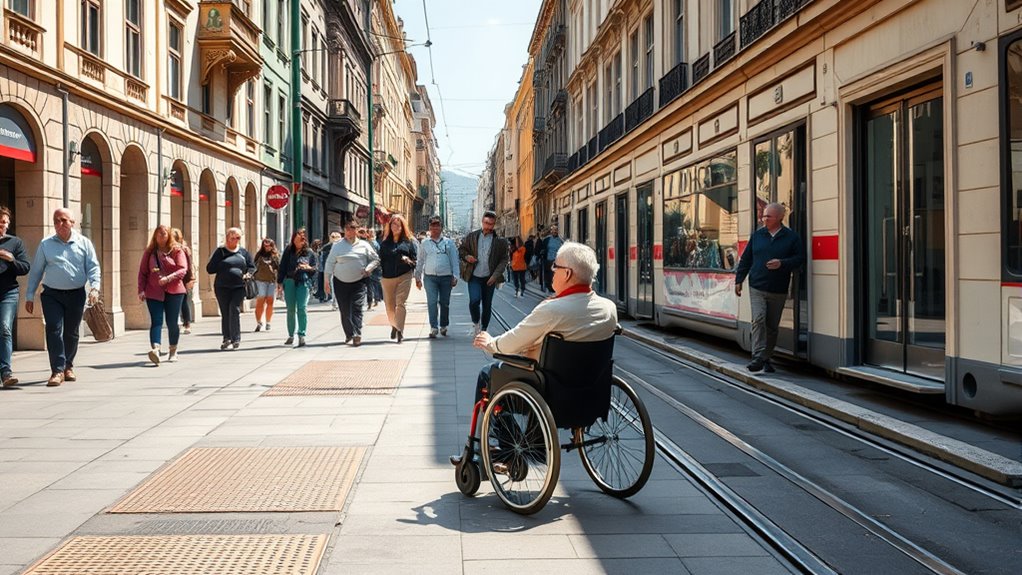
Managing transportation in Europe can be challenging but manageable with the right strategies. Start by researching accessible options ahead of time, including airports, train stations, and local transit. Many major airports are upgrading facilities for barrier-free travel, so check their websites for specific services like wheelchair assistance and accessible restrooms. Use apps and online tools to confirm availability and book assistance in advance. When using trains, look for routes with step-free access and onboard help. Public transport systems in cities like Rome and Barcelona are improving, but always verify accessibility details before traveling. Consider hiring accessible taxis or ride-shares for door-to-door convenience, especially if you encounter delays or limited assistance. Planning ahead guarantees smoother, stress-free transportation experiences across Europe. Additionally, understanding the accessible transportation options available can significantly enhance your travel experience and reduce stress during your trip. Being aware of the barrier-free travel initiatives can help you identify the most suitable routes and services for your needs. Exploring specialized transportation services like guided tour shuttles or private accessible vans can further improve your journey. Knowing about accessible infrastructure can help you better prepare for your travels and avoid unexpected obstacles. Preparing a sauna and cold plunge setup at your destination can also provide comfort and relaxation after long days of travel, ensuring your well-being throughout your trip.
Planning Inclusive Itineraries to Enjoy Cultural and Historic Sites

Planning inclusive itineraries is essential for fully experiencing Europe’s rich cultural and historic sites. To make the most of your trip, consider these key tips:
- Research accessibility options: Check official websites for detailed accessibility info, including ramps, elevators, and virtual tours. This helps you plan visits that suit your needs. Additionally, consulting vetted resources can provide trustworthy and up-to-date information on accessibility features. Incorporating vacuum features like easy-to-maneuver equipment can also enhance your comfort during travel. Being aware of field‑of‑view considerations can help you select appropriate viewing or photography spots suited to your mobility constraints.
- Prioritize major attractions: Focus on landmarks with proven accessibility, like Rome’s Colosseum or Barcelona’s Sagrada Família, which offer accommodations for mobility-impaired visitors. Being aware of accessible public transportation options can also streamline your travel planning.
- Utilize specialized resources: Use apps and directories that highlight accessible sites and transportation. They can help you navigate unfamiliar areas confidently and efficiently.
- Learn about adaptive gear: Familiarize yourself with aid devices and assistive technologies that can further enhance your mobility and comfort during your travels.
Understanding and Preparing for Airport and Station Access Challenges

You need to be prepared for the complexities of boarding procedures and transportation barriers at airports and stations. These challenges can cause delays and frustration if you’re not familiar with the available assistance options. Understanding how to navigate these access points guarantees a smoother, more enjoyable journey. Being aware of security zone info and how certain scents like bleach or spoiled food can signal health or safety issues may also help you identify and address potential concerns during travel. Knowing about accessible transportation options can further ease your transit experience and reduce stress.
Navigating Boarding Procedures
Navigating boarding procedures can be one of the most challenging aspects of accessible travel, as airports and stations often present complex barriers that hinder smooth transition onto transportation. To make this easier, you should:
- Confirm your mobility assistance needs in advance and communicate them clearly with airline or station staff.
- Arrive early to allow extra time for assistance, security checks, and boarding processes.
- Use accessible signage and maps to familiarize yourself with the layout, and request assistance at key points if needed.
Having your documentation ready, such as mobility aid information and support requests, speeds things up. Planning ahead ensures smoother boarding, reduces stress, and helps you enjoy your journey with confidence.
Overcoming Transportation Barriers
Understanding and preparing for airport and station access challenges is vital to guarantee smooth transportation for travelers with mobility needs. Research your departure and arrival locations to find accessible entrances, elevators, and assistance services in advance. Contact airlines and stations ahead of time to confirm your specific needs are scheduled and understood. Arrive early to allow extra time for assistance and navigating complex layouts. Pack essential items, like portable ramps or mobility aids, and ensure they’re in good condition. Use accessible travel apps to find step-free routes, service desks, and real-time assistance updates. Recognizing potential delays or obstacles helps you plan accordingly, reducing stress and avoiding missed connections. Being proactive ensures a more comfortable, efficient journey, making your travel experience across Europe more accessible and enjoyable.
Communicating Your Needs Effectively With Service Providers
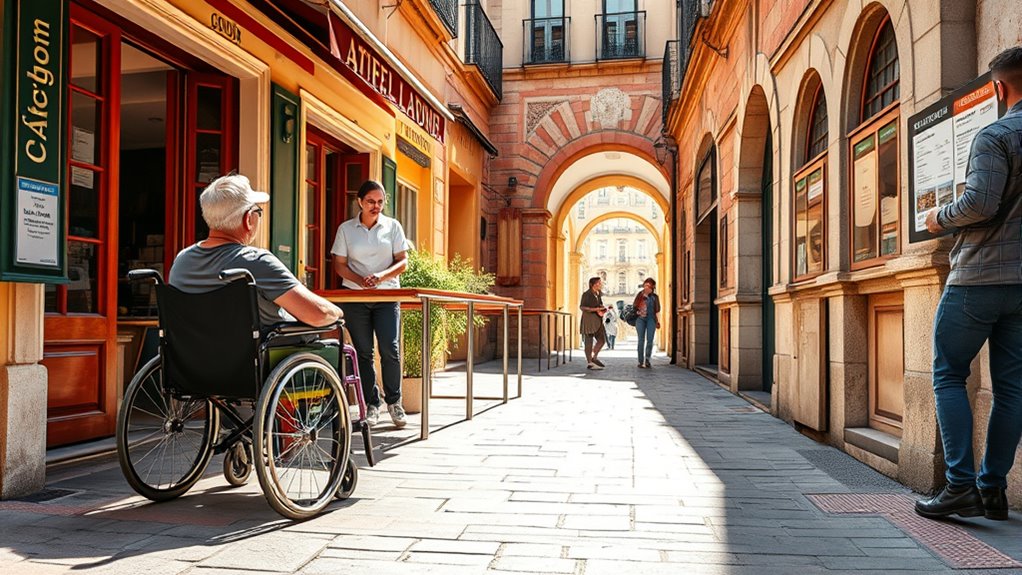
Effective communication with service providers is essential to guarantee your needs are met seamlessly during your travels. Clear, direct conversations help prevent misunderstandings and ensure you receive the assistance you require. To do this effectively:
- Be Specific: Clearly describe your mobility needs, assistive devices, and any support you require. The more details you provide, the better they can assist you.
- Use Written Confirmations: Follow up with emails or written confirmations of your requests to create a record and avoid miscommunication.
- Learn Key Phrases: Prepare essential phrases in the local language or use apps to help communicate your needs confidently, especially in areas with language barriers.
Proactive communication makes your travel experience smoother and more enjoyable.
Packing and Preparing Assistive Devices for Your Trip
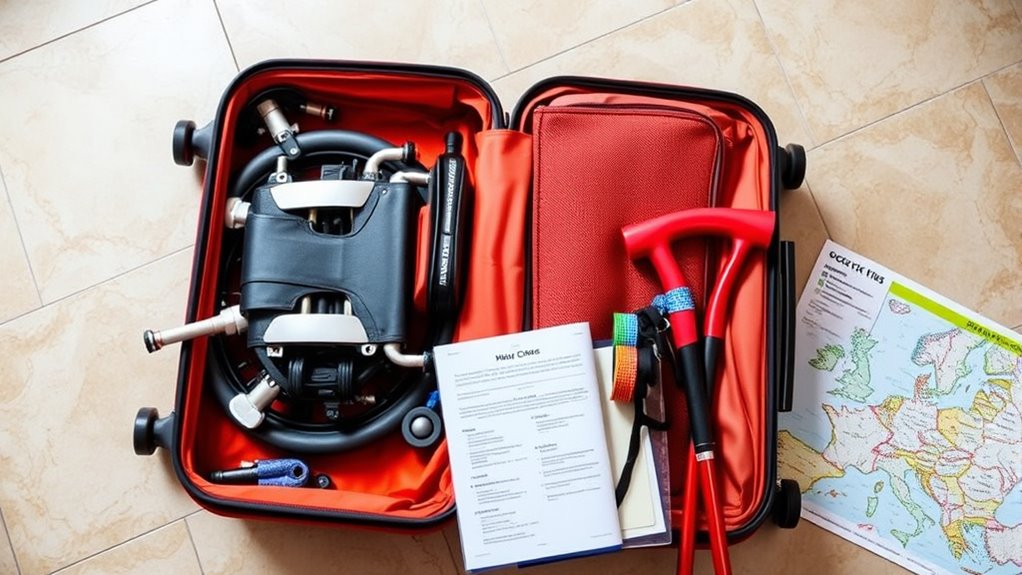
Preparing your assistive devices before you travel can make a significant difference in ensuring a smooth journey. Start by thoroughly inspecting your equipment—make sure batteries are fully charged, and all parts are in working order. Pack extra batteries, chargers, and any necessary accessories in your carry-on, not checked luggage, to prevent loss or damage. Label your devices clearly with your name and contact info. Consider bringing a maintenance kit for quick repairs, like screwdrivers or cleaning supplies. If traveling internationally, verify voltage compatibility and adapters needed for chargers. Keep all assistive devices easily accessible during security checks, and inform TSA or airport staff about your equipment in advance. Proper preparation helps prevent delays, reduces stress, and guarantees your devices support your mobility throughout the trip.
Budgeting for Accessible Travel: Costs and Resources

Budgeting for accessible travel requires careful planning to cover additional costs associated with mobility needs. You’ll need to account for expenses like specialized transportation, accessible accommodations, and assistive devices. To manage your budget effectively, consider these resources:
Effective accessible travel budgeting accounts for mobility needs, specialized transport, accommodations, and assistive devices.
- Accessibility Grants and Subsidies: Many countries and organizations offer financial support for travelers with disabilities. Research and apply early to maximize your chances.
- Accessible Travel Packages: Some tour operators bundle transportation, accommodations, and guides, often at a lower cost than booking separately.
- Travel Insurance: Choose policies that cover mobility equipment damage, medical emergencies, and assistance services, so you’re protected against unexpected costs.
Staying Updated on Accessibility Improvements and Travel Policies

You need to stay current on policy changes and infrastructure upgrades to guarantee smooth travel. Regularly check official tourism and transportation websites for updates. This way, you can plan ahead and avoid surprises during your trip.
Monitoring Policy Changes
How can travelers with mobility needs stay informed about the latest accessibility policies and improvements? Staying updated helps you plan effectively and avoid surprises. Here are three ways to keep current:
- Subscribe to official tourism and government websites for announcements on policy changes and new accessibility standards.
- Join online forums or social media groups focused on accessible travel in Europe; members often share recent updates and experiences.
- Sign up for newsletters from advocacy organizations that monitor accessibility legislation and infrastructure upgrades.
Regularly checking these sources guarantees you’re aware of evolving policies, helping you adapt your plans accordingly. Staying informed allows you to take advantage of new services, avoid outdated information, and travel confidently across Europe.
Tracking Infrastructure Upgrades
Keeping track of ongoing infrastructure upgrades is key to ensuring smooth travel across Europe’s accessible sites. Regularly check official transportation and tourism websites for updates on station renovations, airport improvements, and new barrier-free routes. Sign up for newsletters from relevant authorities to stay informed about planned changes and timelines. Use dedicated accessibility directories and apps that list current features and recent upgrades at hotels, stations, and attractions. Social media groups and forums also offer real-time insights from travelers who’ve experienced recent improvements. Staying updated helps you plan around construction periods, avoid delays, and take advantage of new accessible features. By actively monitoring these upgrades, you reduce surprises, maximize convenience, and guarantee a smoother, more enjoyable journey through Europe.
Frequently Asked Questions
How Can Travelers Verify the Accessibility Standards of European Accommodations?
You can verify the accessibility standards of European accommodations by checking detailed descriptions, measurements, photos, and virtual tours provided online. Look for properties with recognized accessibility certifications and consult trusted directories or apps that list accessible hotels and restaurants. Contact the hotel directly to confirm equipment availability and ask about specific needs. Using verified resources guarantees you find accommodations that genuinely meet your mobility requirements and provide a comfortable stay.
What Are the Best Strategies for Managing Unexpected Transportation Disruptions?
When faced with unexpected transportation disruptions, you should stay informed by checking real-time updates from transportation providers and using dedicated apps. Have backup options ready, like alternative routes or transportation modes, and communicate promptly with assistance services if needed. Flexibility is key, so remain patient and adaptable. Planning ahead by researching contingency plans and ensuring you have contact info for support can help you navigate disruptions smoothly.
How Do I Ensure My Assistive Devices Are Compatible With European Travel Infrastructure?
To guarantee your assistive devices are compatible with European travel infrastructure, check with your device manufacturer for international compatibility and updates. Research specific destination standards and contact hotels, airports, and transport providers in advance to confirm they can accommodate your equipment. Bring any necessary adapters, chargers, and backup supplies. Use accessible travel apps for guidance, and consider carrying documentation of your devices’ specifications for easier assistance.
Are There Specific Resources for Emergency Assistance During Travel in Europe?
You can find specific resources for emergency assistance in Europe by downloading accessible travel apps and checking with local tourism boards. Carry a list of emergency contacts, including local disability support services, and keep your embassy’s contact info handy. Many airports and train stations have dedicated assistance points, so always ask staff for help if needed. Remember, planning ahead guarantees you get quick support when emergencies arise.
How Can Travelers Find Real-Time Updates on Accessibility Improvements at Destinations?
You can stay informed about real-time accessibility updates by using dedicated travel apps and websites that focus on accessible tourism. Many tourism boards and local authorities provide live updates, alerts, and reviews on accessibility improvements. By regularly checking these resources before and during your trip, you’ll be aware of current conditions, ensuring smoother travel. Embrace technology; it’s your best tool to navigate and enjoy Europe’s evolving accessible destinations confidently.
Conclusion
Did you know that over 95% of European airports now offer accessible facilities? By choosing destinations wisely, using helpful apps, and communicating your needs clearly, you can make your trip smoother and more enjoyable. Planning ahead guarantees you won’t miss out on incredible sights and experiences. With the right preparation, accessible travel in Europe becomes not just possible but truly rewarding. So, take charge and explore the continent with confidence—adventure awaits!