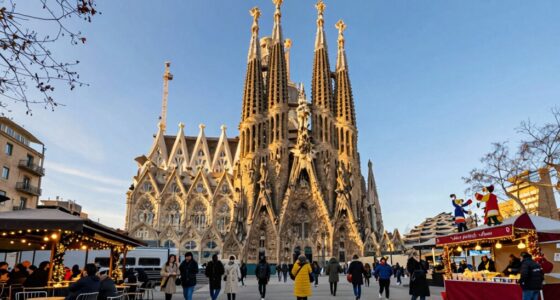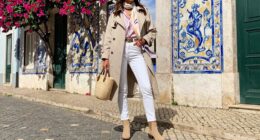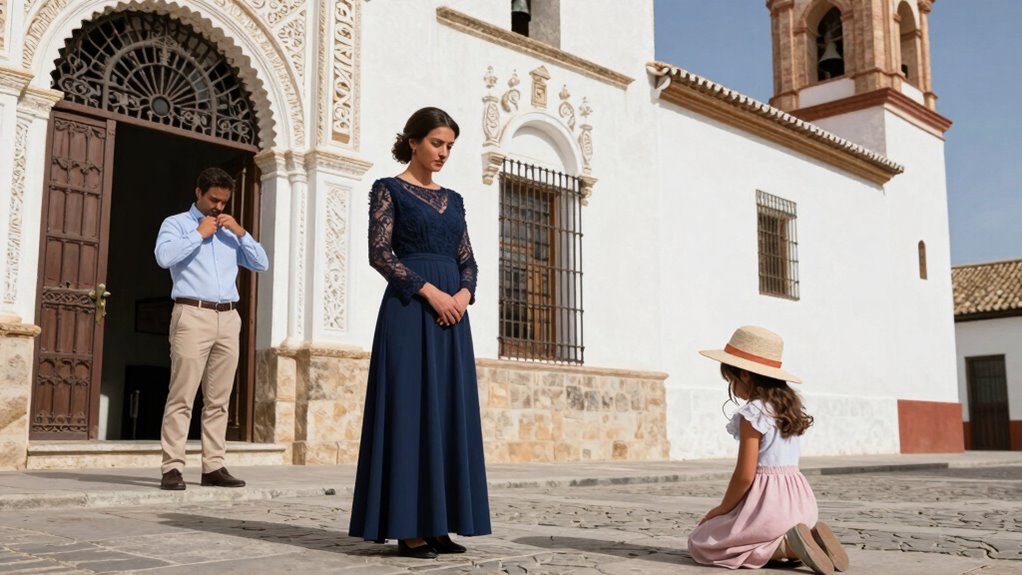

When visiting churches in Spain, it’s important to dress modestly and respect local customs; this varies by region. In Barcelona, cover your shoulders and knees, and carry a scarf or shawl for quick use. During Seville’s Holy Week, opt for long skirts or trousers with modest tops and avoid bright colors. On the northern Camino, prioritize comfort and modesty, removing hats inside sacred sites. To guarantee you’re appropriately dressed everywhere, continue exploring these regional guidelines.
Key Takeaways
- Cover shoulders and knees; avoid tank tops, sleeveless shirts, and short skirts in most regions.
- Carry a scarf or shawl to quickly cover shoulders when entering churches.
- Dress modestly with neutral, layered clothing suitable for weather conditions.
- Respect local customs: more conservative attire is expected during Holy Week and sacred site visits.
- Check specific site guidelines beforehand, as enforcement and dress codes vary by region.
Regional Dress Codes in Spanish Churches
Regional Dress Codes in Spanish Churches
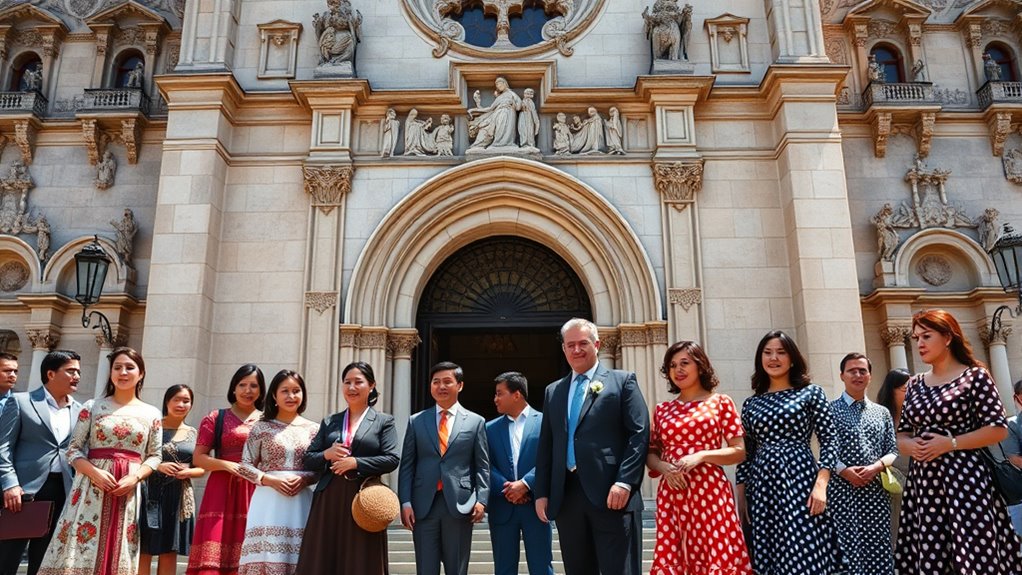
In Spain, dress codes for churches vary considerably by region, reflecting local customs and enforcement levels. In Barcelona, churches like the Cathedral and Sagrada Familia strictly enforce covering shoulders and knees, but enforcement can differ depending on guards’ attitudes. In Seville, especially during Semana Santa, modest dress is essential—women should wear long skirts or dresses, with shoulders covered. Outside major events, modest attire remains recommended. In Northern Spain, pilgrims generally wear practical clothing, including shorts, but tank tops and bare midriffs are discouraged. Men typically remove hats upon entering sacred sites, and backpacks are acceptable. Overall, Spanish churches tend to enforce stricter dress standards than Northern European countries, emphasizing modesty with options like scarves or shawls for quick coverage. Recognizing the importance of dress code enforcement can help visitors avoid issues and show respect during their visit. Being aware of regional cultural expectations can further enhance respectful attire choices during church visits, especially considering the varying degrees of enforcement policies across regions. Additionally, many churches have adopted dress guidelines that are designed to accommodate visitors from different backgrounds while maintaining reverence for the sacred spaces. Moreover, understanding the significance of religious traditions in different areas can guide visitors to dress appropriately and respectfully.
Guidelines for Barcelona’s Sacred Sites
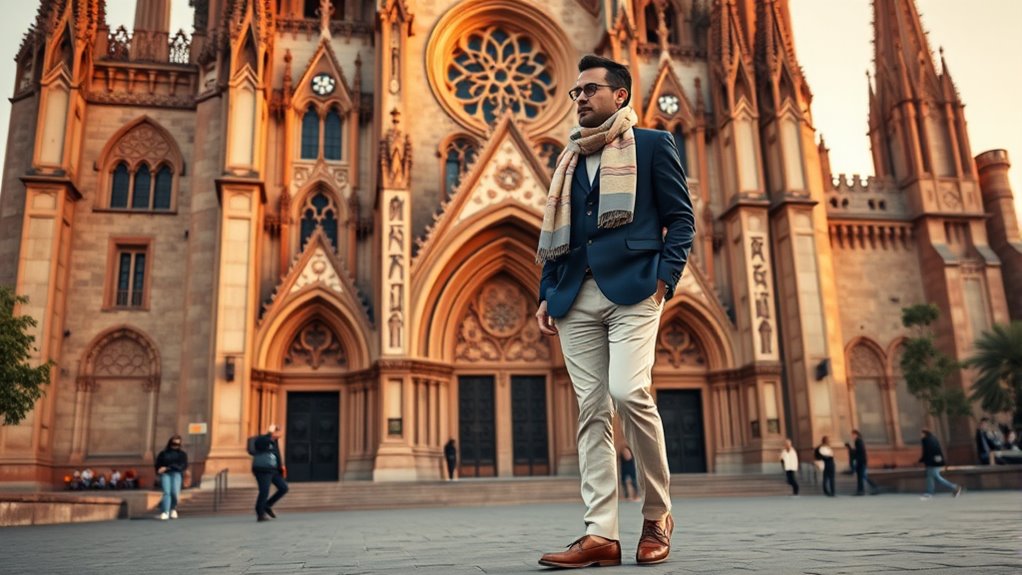
When visiting Barcelona’s renowned sacred sites like the Cathedral and Sagrada Familia, it’s important to guarantee specific dress guidelines to ensure smooth entry. Both sites require you to cover your shoulders and knees, so avoid tank tops, sleeveless shirts, shorts above the knees, or mini-skirts. While head coverings aren’t mandatory, it’s respectful to carry a scarf or shawl for quick coverage if needed. Be mindful that enforcement varies, especially at the Cathedral, where guards may be more vigilant. During summer, lightweight clothing is common, but ensure it’s modest and loose-fitting. Avoid flashy or bright attire. Remember to remove hats indoors, and opt for respectful, comfortable shoes. Preparing with these guidelines helps you fully appreciate Barcelona’s sacred beauty without hassle. Additionally, understanding the Free Floating guidelines can help you adapt your attire to various environments and remain respectful of local customs. Being aware of dress code enforcement practices can also prepare you for potential variations in how strictly rules are applied during your visit. It’s also helpful to research the security measures in place at each site to better understand the importance of adhering to dress codes.
Attire Expectations During Seville’s Holy Week

During Seville’s Holy Week, dressing appropriately is essential to show respect for the solemn occasion. You should wear modest, conservative clothing that covers shoulders and knees when attending processions or visiting churches. Women typically choose long skirts, dresses knee-length or longer, or trousers paired with modest tops. Men should opt for long pants and avoid sleeveless shirts. Keep your attire subdued—avoid bright colors and flashy patterns. Remember, loud or casual clothing can be seen as disrespectful. It’s also wise to carry a shawl or scarf to cover shoulders if needed, especially when participating in outdoor events. Hats should be removed inside churches. Additionally, considering ventilation considerations can help you stay comfortable in crowded indoor settings. By dressing respectfully, you honor the tradition and demonstrate your reverence during this deeply significant week.
Pilgrim Dress Rules on the Northern Camino
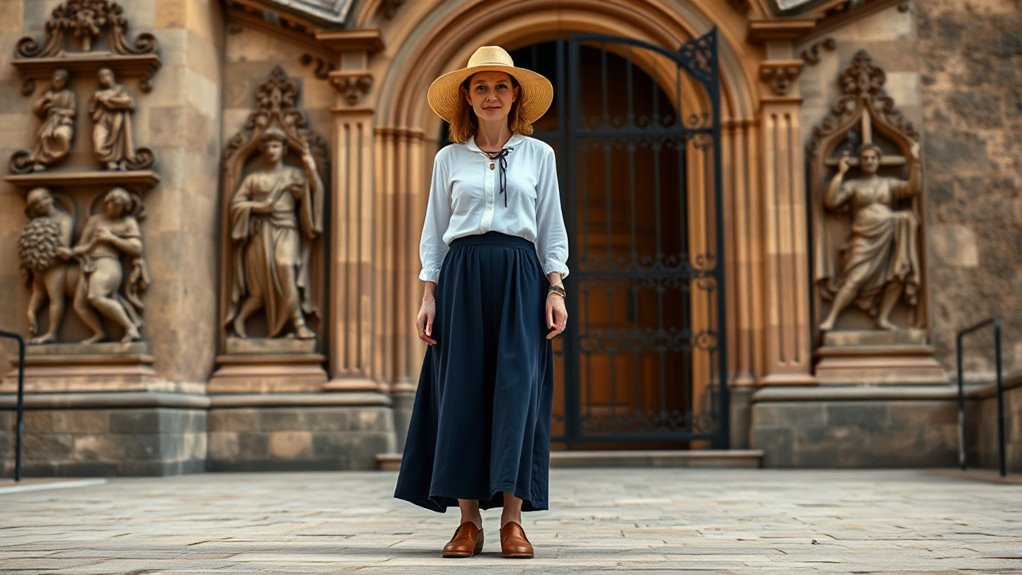
Pilgrim dress on the Northern Camino emphasizes comfort and modesty, ensuring respectful participation in religious activities. You can wear shorts, which are acceptable during your walk, but avoid tank tops and bare midriffs inside churches. Men are expected to remove caps or hats upon entering sacred sites. Backpack use is generally fine, but keep it modest and unobtrusive. While head coverings aren’t mandatory, a lightweight scarf can be handy for quick coverage if needed. During mass, maintain modest attire by covering shoulders and knees, especially in more conservative churches. Keep your clothing loose-fitting and avoid bright or flashy colors to respect the solemn atmosphere. Following these simple guidelines shows reverence and helps you fully engage with the spiritual experience on the Northern Camino. Materials and fuel primers can help you choose appropriate clothing fabrics that are breathable and suitable for variable weather conditions along the route. Additionally, understanding local customs and religious expectations can enhance your respectful participation in religious settings. Being aware of appropriate dress codes for religious sites ensures you do not unintentionally offend local traditions or customs. Being mindful of architectural and cultural differences can further deepen your understanding and appreciation of the sites you visit. Moreover, selecting clothing made from breathable fabrics can improve comfort during long walks in varying weather conditions.
Practical Tips for Respectful Church Attire in Spain
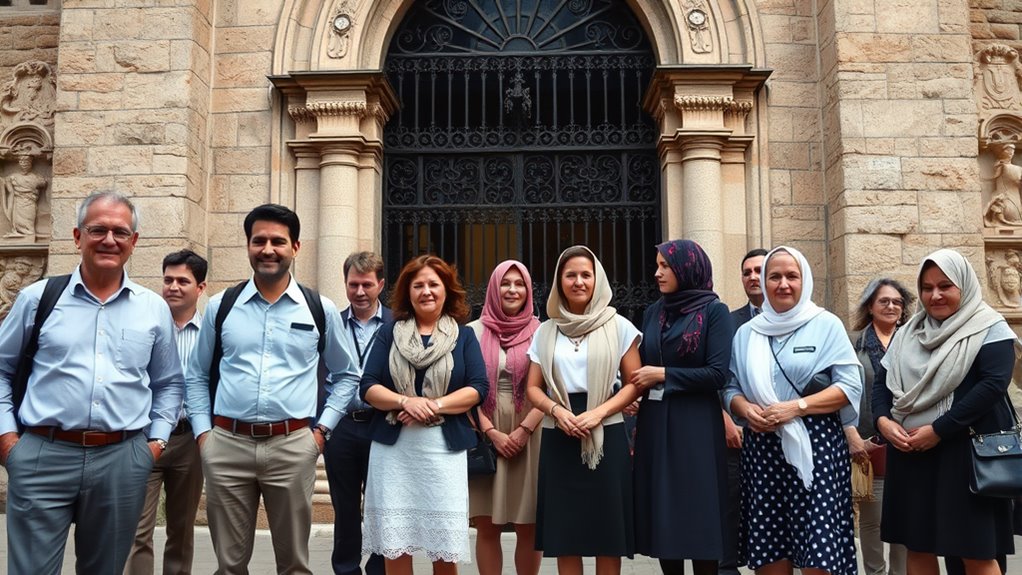
To guarantee you show proper respect when visiting churches in Spain, it’s wise to carry a lightweight scarf or shawl that can quickly cover your shoulders if needed. This simple accessory helps you comply with local dress codes, especially during religious services or in more conservative areas. Choose neutral, muted colors for versatility and to avoid drawing attention. Wear layers so you can adapt to changing weather—light pants or skirts and breathable tops work well. Avoid flashy or revealing clothing, as modesty is appreciated. Research each site’s specific rules beforehand, since dress code enforcement varies. If denied entry due to dress code violations, politely adjust your attire with your scarf or layers. Showing respect through appropriate dressing enhances your experience and demonstrates cultural sensitivity, which helps foster positive interactions during your visit.
Frequently Asked Questions
Are Hats Allowed Inside Spanish Churches?
Hats are typically not allowed inside Spanish churches. You should remove any hats or caps before entering, as a sign of respect. Men are expected to take off their caps, and women should do the same with any head coverings they might be wearing. Carry a scarf or shawl if you want to keep your head covered temporarily, but always remove hats once inside to adhere to church etiquette.
Can I Wear Sandals or Open-Toed Shoes?
Wearing sandals or open-toed shoes is like showing a little too much skin in churches—they’re generally discouraged. Many sites prefer closed-toed shoes as part of modest dress, especially in more traditional regions. You might be allowed in, but to respect local customs and avoid denied entry, opt for closed shoes. Carry a pair of comfortable, modest shoes, especially if you’re planning to visit multiple churches.
Is It Acceptable to Wear Bright or Flashy Clothing?
You should avoid wearing bright or flashy clothing when visiting churches in Spain. Keep your attire muted and modest to show respect and blend in with local customs. Bright colors can draw unnecessary attention and may be considered inappropriate for sacred spaces. Opt for subdued tones, simple styles, and conservative outfits, especially in major churches and during religious events. This way, you demonstrate proper decorum and guarantee a respectful visit.
Do Children Need to Follow the Same Dress Rules?
Did you know that children make up nearly 20% of Spain’s population? They do need to follow the same dress rules in churches. You should dress modestly, covering shoulders and knees, just like adults. Use a scarf or shawl if needed, and choose loose-fitting, respectful clothing. It’s important to teach kids about local customs, ensuring they show respect during religious services and avoid wearing flashy or casual clothes.
Are There Specific Rules for Men and Women Separately?
Yes, there are specific rules for men and women in Spanish churches. Men should wear modest, loose-fitting clothes, avoid sleeveless shirts, and remove hats when entering. Women should cover shoulders and knees with modest clothing, like skirts or pants below the knees, and avoid tight or revealing outfits. Both genders should carry a scarf or shawl if needed, and always dress respectfully to guarantee smooth entry and show reverence.
Conclusion
While dressing respectfully shows your reverence, it also reveals your understanding of Spain’s diverse traditions. In Barcelona’s elegance, simple modesty suffices, yet during Seville’s fiery Holy Week, more formality is expected, reflecting passion and devotion. On the Camino, practicality outweighs style, emphasizing humility. Balancing these regional nuances, your attire becomes more than clothing—it’s a silent gesture of respect, connecting you to Spain’s rich spiritual tapestry amid the vibrant, contrasting expressions of faith.