
During Italy’s winter sales, or ‘saldi,’ you’ll find regional start dates usually between January 2 and 8, lasting six weeks to two months. Shops must display original and discounted prices clearly, ensuring honest deals. Major cities like Milan, Rome, and Florence offer great discounts on fashion and accessories, especially in cold weather. To get the best deals, plan early and check regional calendars—there’s more to discover if you keep exploring!
Key Takeaways
- Sales typically start early January, with regional variations, and last from six weeks to two months, offering ample shopping opportunities.
- Shops must display original and discounted prices clearly, ensuring transparency and honest deals for tourists.
- Major cities like Rome, Milan, and Florence feature prime shopping districts with exclusive discounts during the sales period.
- Deep discounts promote high-end brand shopping, boost local economies, and attract tourists seeking savings on luxury and local products.
- Tourists should plan early, check regional sale dates, arrive early, and look for clear signage to maximize savings and avoid crowds.
Top picks for "winter italy saldi"
Open Amazon search results for this keyword.
As an affiliate, we earn on qualifying purchases.
When Do the Italian Winter Sales Start?
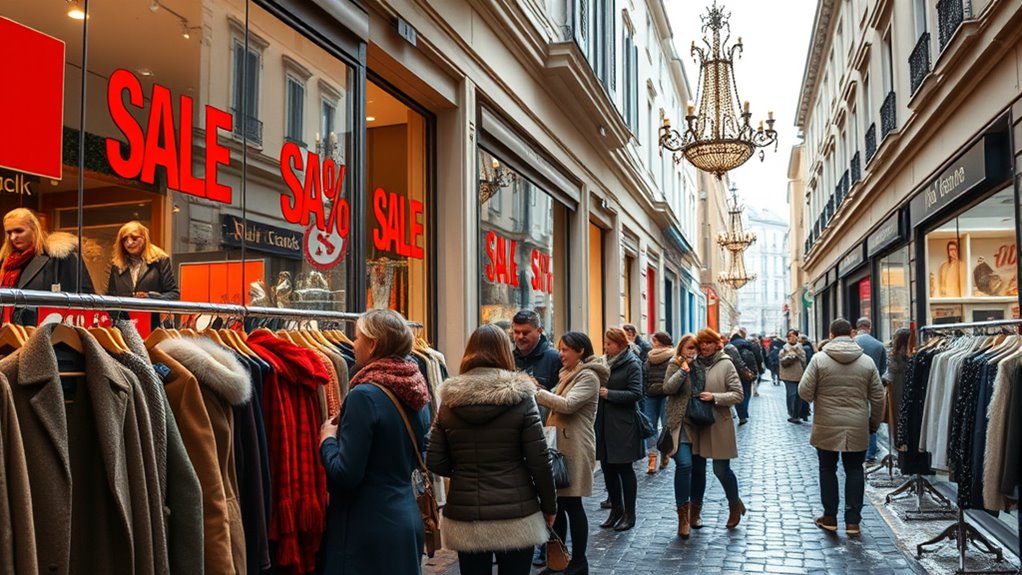
The Italian winter sales typically start in early January, with most regions beginning on January 4th, 2025. However, some areas kick off earlier or later; for example, Valle d’Aosta starts on January 2nd, while Alto Adige begins on January 8. When January 4th arrives, you can expect shops across many regions to open their sales, offering discounts on winter apparel, accessories, and more. Keep in mind that official sale periods usually run from January through February or March, depending on the region. Shopkeepers are required to display original prices alongside discounted ones, ensuring transparency. As a tourist, you’ll find that early January is a great time to browse, take advantage of the sales, and enjoy the lively shopping atmosphere. Additionally, understanding regional sale regulations can help you make informed purchasing decisions during your visit, especially regarding discounted items and pricing policies, and being aware of seasonal sale durations can help optimize your shopping experience. Being aware of local retail laws can further enhance your ability to spot genuine discounts and avoid misleading offers.
Regional Variations in Sale Dates and Durations
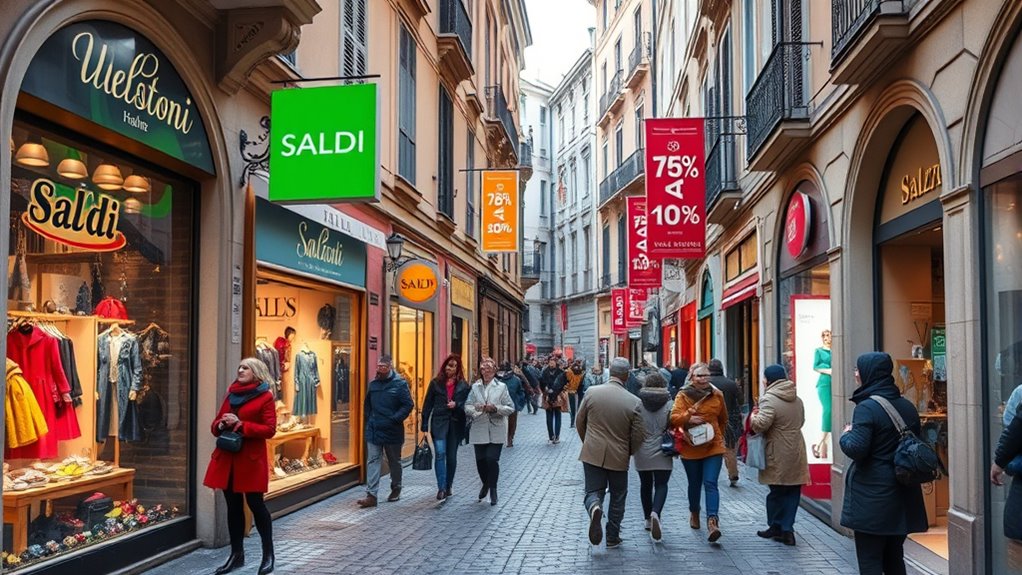
While most regions in Italy start their winter sales on January 4th, the dates and durations vary considerably across the country. For example:
- Valle d’Aosta begins sales on January 2nd, earlier than others.
- Alto Adige (Bolzano) kicks off on January 8th, later than the national start.
- Rome and Milan both start on January 4th, aligning with the national schedule.
- Tuscany’s sales last for two months, starting January 4th, boosting tourism.
- Abruzzo’s sales run for 60 days from January 4th, giving shoppers extra time.
- The regional variations can influence the availability of discounted items and shopping experiences.
- These differences are influenced by regional regulations and local economic factors, shaping the shopping calendar.
- Understanding regional sale regulations can help shoppers maximize their discounts and plan more effectively.
- Being aware of these regional differences can also help tourists avoid missing out on special deals or timing their visits for optimal shopping.
How Shops Are Regulated During ‘saldi
During the ‘saldi, shops must clearly display the original price alongside the discounted price to guarantee transparency. Regional regulations set specific start dates, durations, and end rules, so you’ll notice differences across Italy. These rules help protect consumers and keep the sales fair for everyone. Additionally, evidence‑informed guidance ensures that consumers can confidently make informed purchasing decisions during the sales period. To prevent impulse buying and ensure fair practices, many regions also implement strict monitoring during the sale seasons.
Price Tag Requirements
Shops in Italy are strictly regulated to guarantee transparency during the winter sales period. You’ll notice clear price tags showing both the original and discounted prices, ensuring you know exactly what you’re paying. These rules help prevent misleading discounts and protect consumers. Additionally, regulations also emphasize the importance of maintaining consistent sound quality and accurate pricing to ensure fair transactions.
Key requirements include:
- Displaying the original price clearly alongside the sale price
- Showing the percentage or amount of discount applied
- Using legible, permanent labels on all items
- Avoiding false or inflated price reductions
- Ensuring discounts are valid only during official sale periods
Stores must adhere to these regulations enforced by authorities like Codacons, making sure you get honest deals. As a shopper, you benefit from transparent pricing, making your sales experience more reliable and straightforward.
Regional Sale Dates
In Italy, the regulation of sale dates varies from region to region, ensuring that each area can manage its own shopping seasons effectively. Most regions start winter sales on January 4, 2025, but some, like Valle d’Aosta, begin earlier on January 2. Alto Adige kicks off on January 8, while Rome, Milan, and Tuscany start simultaneously on January 4. Duration differs regionally: Abruzzo lasts 60 days, Basilicata until March 1, Emilia Romagna extends to March 4, and Lazio’s sales span six weeks. These regional rules give shopkeepers flexibility, but they all adhere to national regulations that enforce clear pricing and restrict sales to specific periods. As a tourist, you’ll notice these regional differences influencing shopping options and timing during the winter sales season. Regional shopping regulations also help ensure transparency and fair trading practices across Italy. Moreover, these varying dates can influence tourist shopping experiences, making it advantageous to plan visits accordingly. Additionally, the sale periods regulation aims to prevent unfair competition and protect consumer interests throughout Italy. Understanding these variations can help tourists maximize their shopping during the saldi season and find the best deals.
Duration & End Rules
Regulations guarantee that shops stick to specific rules regarding the duration and end of winter sales. You’ll notice shops can’t extend sales beyond official dates or start early. The sale period varies regionally, but generally, they last around six weeks to two months. Keep these points in mind:
- Sales start regionally in early January, mainly between January 2-8
- Official end dates range from late February to early March
- Discounts remain until inventory runs out or the set end date
- Shops must clearly display both original and discounted prices
- Regional authorities enforce strict compliance with these rules
- The importance of evidence preservation during sales ensures transparency and prevents misleading pricing.
This regulation ensures transparency, prevents misleading pricing, and helps you plan your shopping around official sale periods, making your trip more efficient.
The Benefits of Winter Sales for Tourists
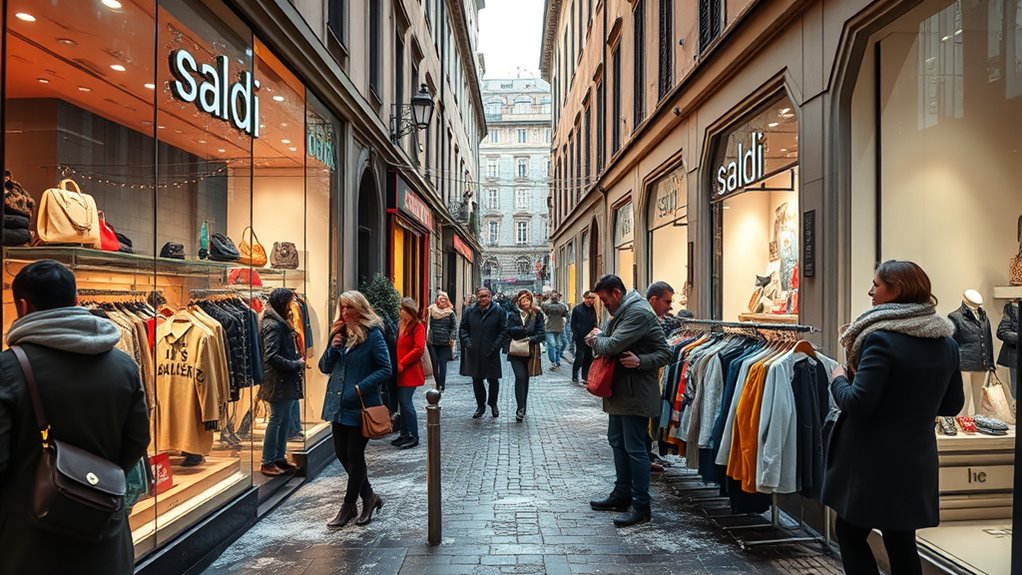
Have you ever taken advantage of Italy’s winter sales to explore the country’s vibrant cities while scoring great deals? If so, you benefit from significant savings on quality fashion, accessories, and souvenirs. The sales period aligns with post-Christmas tourism, meaning you can enjoy shopping without the summer crowds. Since discounts are often deep, you get great value, making it easier to indulge in luxury brands or local craftsmanship. The colder weather also encourages shopping for warm clothing, adding practicality to your trip. Plus, the regional regulations ensure clear pricing, so you’re confident about your bargains. Early January sales in major hubs like Rome and Milan mean you can explore iconic sites while shopping at your leisure. Additionally, understanding festival logistics can enhance your experience if your trip coincides with local events or festivals. Being aware of discount application rules can help you maximize your savings during the sales period. Overall, winter sales make Italy more affordable and enjoyable for tourists.
Key Shopping Areas in Major Italian Cities
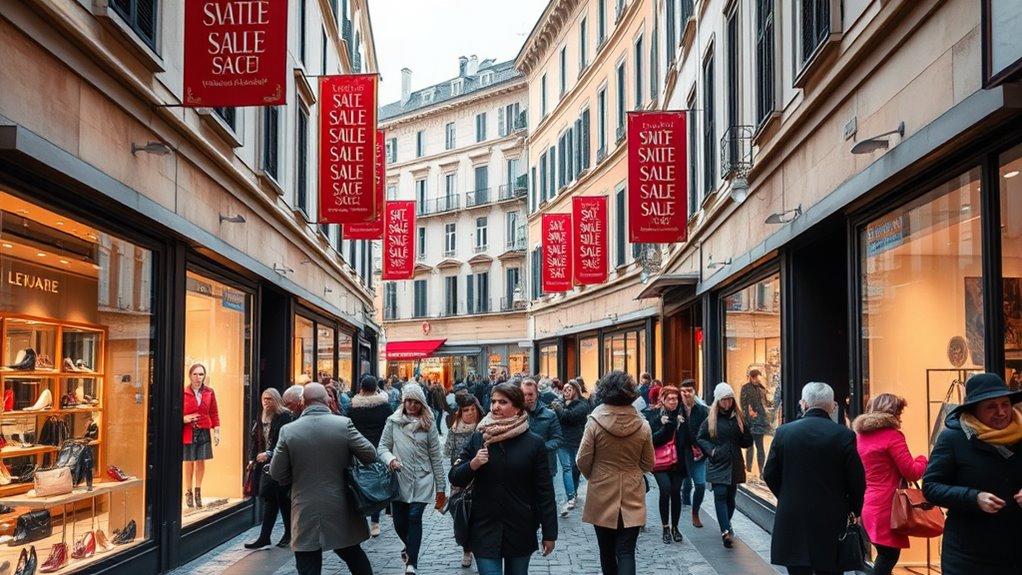
During the winter sales season, major Italian cities become vibrant shopping hubs, offering a variety of key areas where you can find the best deals. In Rome, head to Via del Corso and Piazza di Spagna for luxury brands and high-street fashion. Milan’s Quadrilatero della Moda is perfect for designer shopping, while Galleria Vittorio Emanuele II offers elegant boutiques and historic charm. Florence’s Santa Maria Novella district blends art and shopping, and Venice’s Mercerie features unique local and international shops.
Explore Italy’s winter sales: Rome’s Via del Corso, Milan’s Quadrilatero, Florence’s Santa Maria Novella, and Venice’s Mercerie offer top brands and great deals.
- Via del Corso (Rome)
- Quadrilatero della Moda (Milan)
- Galleria Vittorio Emanuele II (Milan)
- Santa Maria Novella (Florence)
- Mercerie (Venice)
These areas give you access to top brands, exclusive discounts, and lively atmospheres during Italy’s winter sales.
The Impact of Cold Weather on Shopping Trends
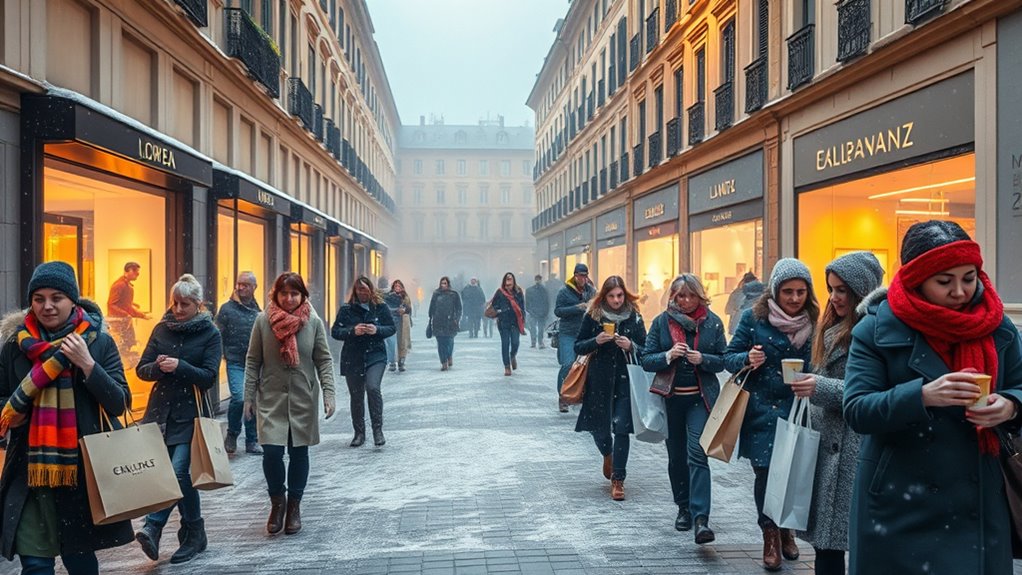
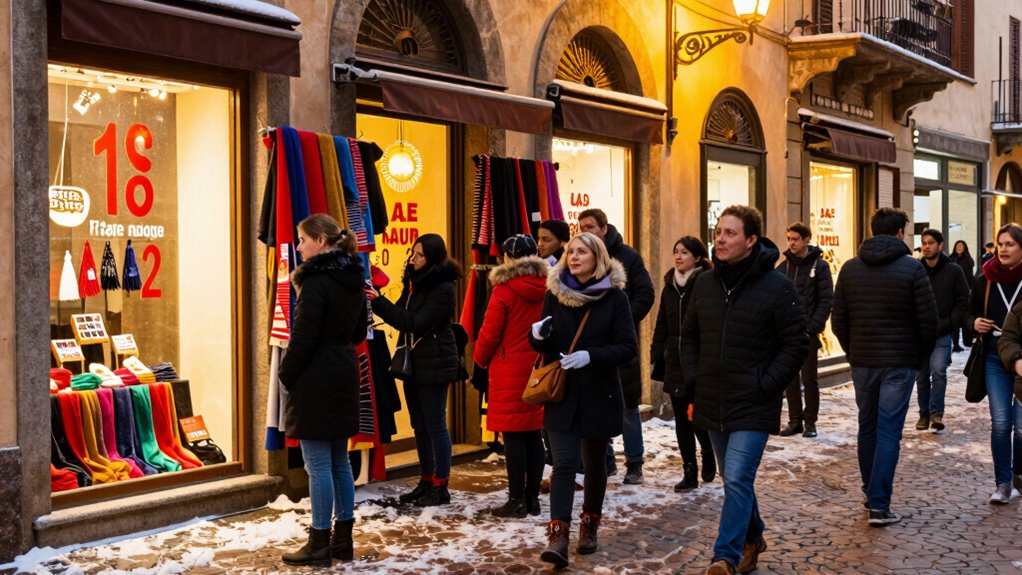
Cold weather considerably influences shopping patterns during Italy’s winter sales, prompting you to prioritize warm clothing and accessories. As temperatures drop, you’re more likely to visit stores for coats, scarves, gloves, and thermal wear. This shift in demand means retailers stock up on cold-weather gear, and sales of these items often spike early in the season. The chill also encourages shorter shopping trips, with many opting to browse nearby shops rather than venturing far. Tourist shoppers, in particular, benefit from the colder climate, as it increases their need for winter apparel, boosting sales in popular cities like Rome, Milan, and Tuscany. Additionally, the use of essential oils for respiratory health can help alleviate any winter-related congestion caused by the cold air, making shopping more comfortable. Overall, the cold weather shapes both your shopping priorities and the timing of peak sales, making winter sales a strategic opportunity for warm clothing bargains.
Economic Benefits of the ‘saldi’ Season in Tuscany
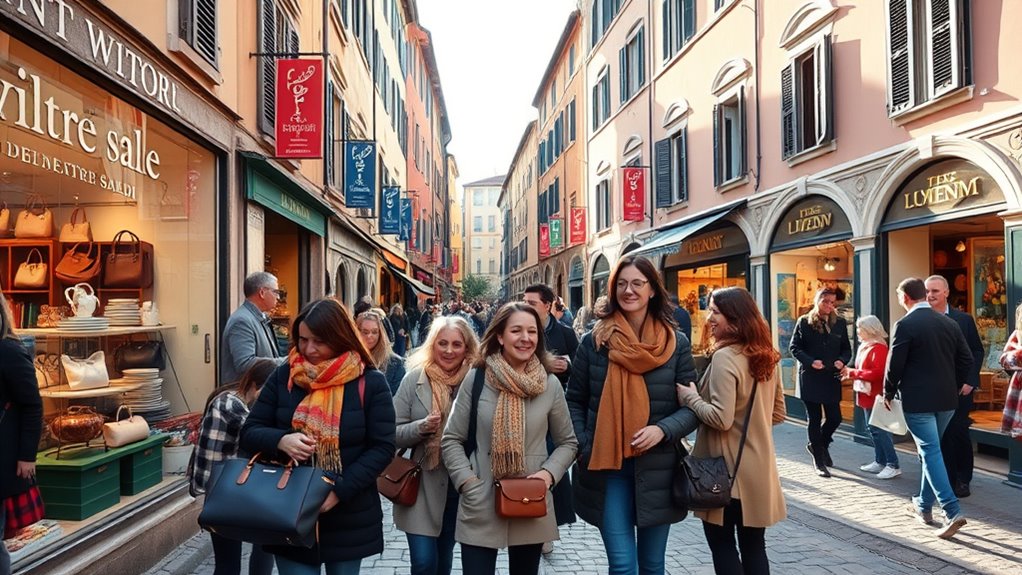
The ‘saldi’ season in Tuscany notably boosts the regional economy, generating an estimated turnover of €313 million. This surge benefits local businesses, creates jobs, and attracts tourists who spend on shopping and dining. During this period, you can enjoy significant discounts on high-quality products, making luxury items more accessible. Cycling-friendly shopping districts are often highlighted during sales, encouraging visitors to explore local shops on two wheels. Additionally, the seasonal sales promote local economic growth**, fostering a thriving community atmosphere. Increased tourist spending boosts hospitality and transportation sectors. Local shops see higher sales volumes and revenue. Job opportunities arise in retail and service industries. Tourists extend their stay to take advantage of sales. Regional marketing efforts attract more visitors annually. These benefits make Tuscany’s sales season a vital driver for economic growth, especially as more residents plan to shop and spend. Also, the affordable prices** during sales make it easier for tourists to indulge in luxury shopping without overspending. So, when you visit, you’re not just shopping—you’re supporting the local economy and enjoying exclusive deals.
Comparing Italy’s Sales Schedule to Neighboring Countries
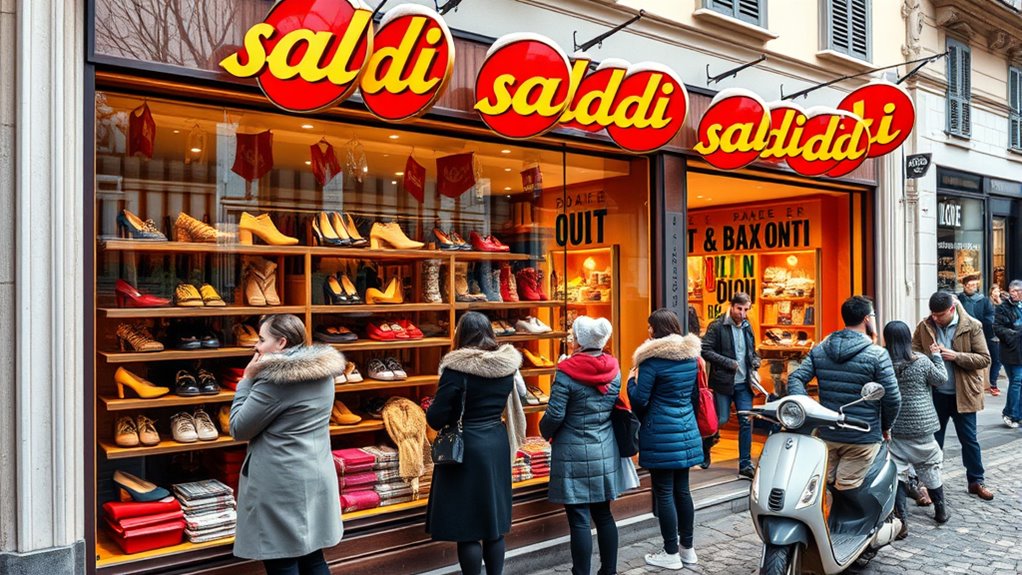
Italy’s winter sales schedule varies markedly from those of its neighboring countries, reflecting regional differences and regulatory approaches. Unlike France, which starts sales on January 7, 2026, Italy begins most regions on January 4, with exceptions like Valle d’Aosta, starting on January 2, and Alto Adige, on January 8. Spain’s sales run from January 7 to February 28, while the UK’s promotions occur from late December to mid-January without strict regulation. Germany’s sales span from December 26 to January 31. Italy’s regional variation means you can experience sales earlier or later depending on the area. This flexibility allows tourists to shop during less crowded periods and take advantage of local sales timings, especially in major hubs like Rome and Milan, which start early January.
Tips for Tourists to Maximize Their Shopping Experience
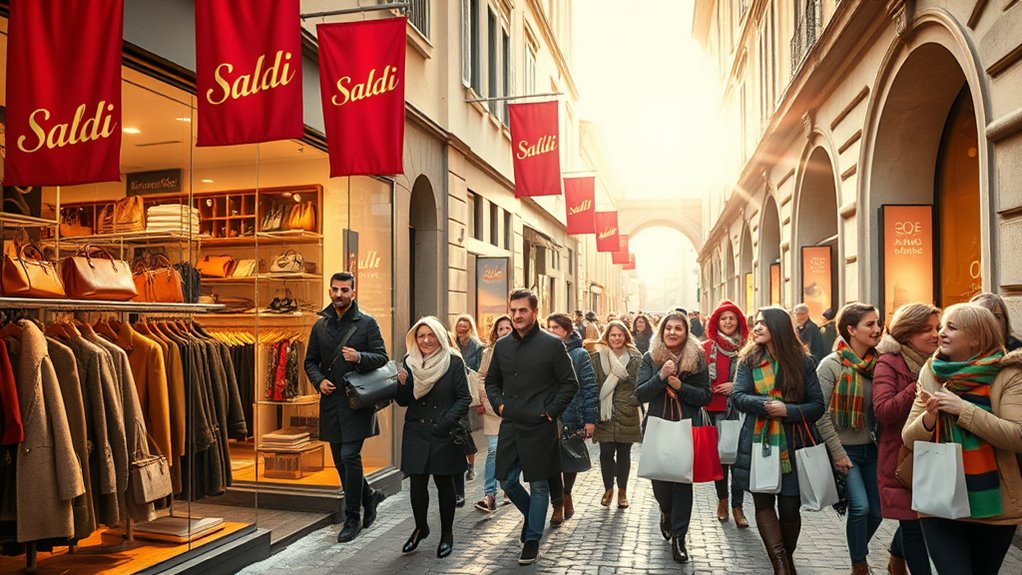
To make the most of the winter sales, plan your shopping trips around key regional start dates and take advantage of early openings in major cities like Rome and Milan. Arrive early to beat the crowds and secure the best deals. Keep these tips in mind:
- Check regional sales calendars to target the best timing
- Look for stores displaying clear original and discounted prices
- Focus on popular shopping districts for a wider selection
- Bring a shopping list to avoid impulse buys
- Be flexible with brands and styles to find hidden gems
Frequently Asked Questions
Are Online Shops Also Required to Follow Regional Sale Regulations?
Yes, online shops must follow regional sale regulations in Italy. You should check each region’s rules, as they require clear price displays and adherence to specific sale periods. Even if shopping online, sellers need to comply with regional laws, including proper pricing and timing. Failing to do so could lead to penalties. So, always verify the shop’s compliance and regional sale dates before making your purchase.
Can Tourists Benefit From Early Sale Start Dates in Italy?
Yes, you can benefit from Italy’s early sale start dates. Over 61% of Tuscans plan to shop during the sales, and tourists often arrive in early January, coinciding with the sales kickoff. This means you’ll find great deals in major cities like Rome, Milan, and Tuscany. Plus, the region-specific start dates guarantee you get access to discounts sooner than elsewhere, making your shopping experience more enjoyable and budget-friendly.
How Do Sales Regulations Differ Between Regions?
You’ll notice regional differences in Italy’s sales regulations. Each region sets its own start date, mostly beginning on January 4th, but Valle d’Aosta starts on January 2nd, and Alto Adige on January 8th. Duration varies, from six weeks to two months, and specific rules like price display and end dates depend on regional authorities. This regional variation means you might find some areas starting earlier or lasting longer, giving you more shopping flexibility.
Are There Specific Days When Sales Are Prohibited?
You won’t find specific days when sales are completely prohibited in Italy, as regulations mainly focus on display and timing. Shops must show original and discounted prices, and sales are allowed only during regional official periods from January to March. However, individual stores might choose to close or limit discounts on certain holidays or Sundays, so it’s wise to check local shop hours. Generally, the sales run continuously during the regulated periods without full bans.
Do Sales Include All Types of Stores or Only Certain Sectors?
You’ll find that sales in Italy cover a wide range of stores, but not every single sector. Think of it like a big tent where most retailers, from clothing shops to electronics outlets, participate. However, certain sectors like food, beverages, and some specialized stores are often excluded. It’s a golden opportunity to snag deals, but keep in mind, regulations vary regionally, so not everything might be on sale everywhere.
Conclusion
As winter sales in Italy kick off, you get the thrill of snagging bargains amidst chilly streets, a contrast to the warm, bustling shops. While the cold pushes you to seek cozy deals, the vibrant shopping scenes invite you to explore Italy’s fashion treasures. Embrace the winter wonderland and the retail excitement alike—each turn offers a chance to save, discover, and experience Italy’s unique blend of winter charm and shopping delight.