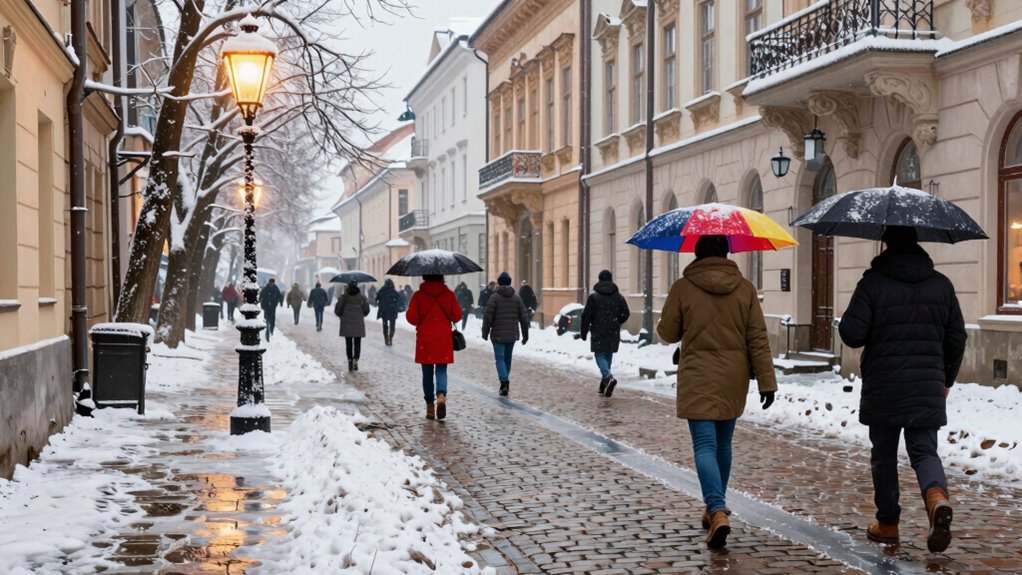

To stay safe walking in European cities during snow and ice, recognize hazards like shiny patches or uneven surfaces, and dress in footwear with good traction. Walk slowly, plant your feet firmly, and use handrails or aids if needed. Keep sidewalks clear with salt, sand, or community efforts, and pay attention to weather forecasts for warnings. Following proper precautions can greatly reduce falls and injuries—continue exploring ways to protect yourself during winter months.
Key Takeaways
- Wear slip-resistant footwear and brightly colored clothing to increase traction and visibility during icy conditions.
- Regularly clear snow and ice from sidewalks, using salt, sand, or de-icing materials to prevent slips.
- Install handrails, proper lighting, and warning signs in pedestrian areas to improve safety.
- Use urban infrastructure like heated sidewalks and slip-resistant surfaces to reduce winter hazards.
- Stay informed about weather forecasts to plan routes and take proactive measures against icy conditions.

Traveler's Choice Pagosa Hardshell Expandable Luggage with Spinner Wheels, Black, 22-Inch Carry-on
Impact Resistant: Durable polypropylene hardshell that’s abrasion-, scratch-, and water-resistant. Expansion gusset provide up to 2" to make...
As an affiliate, we earn on qualifying purchases.
Understanding the Risks of Snow and Ice for Pedestrians
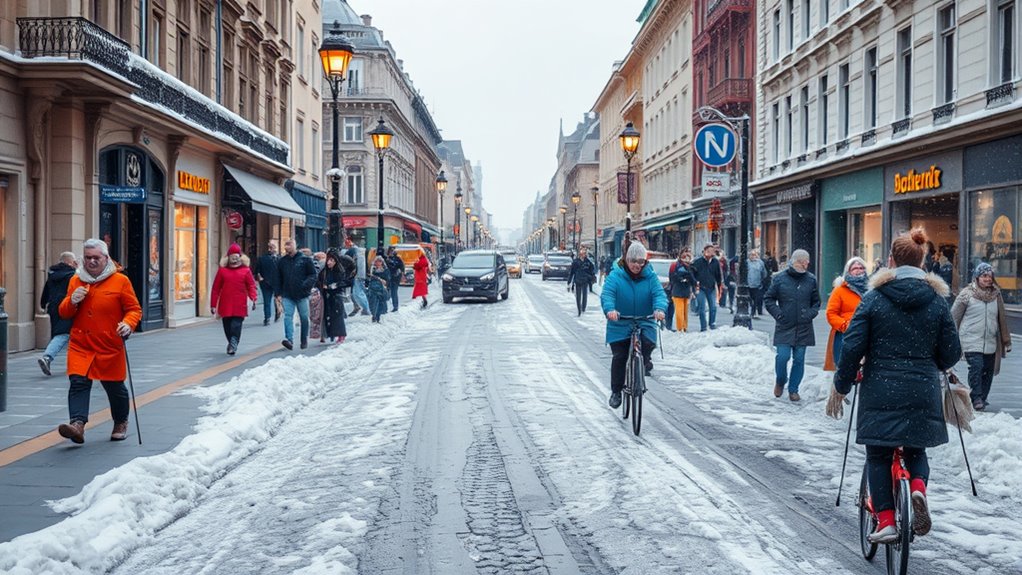
Snow and ice substantially increase the risk of falls for pedestrians, often resulting in injuries that can have serious health and financial consequences. When walking on icy sidewalks, your slip risk jumps more than three times compared to clear surfaces. During winter, the overall fall risk rises about 32 times, making accidents far more likely. Variations in snow cover between cities can cause slip injury rates to be three to five times higher. These conditions don’t just lead to injuries; they also strain healthcare systems and result in costly medical treatments. Older pedestrians, in particular, face higher risks of severe injury and complications, even if their overall chance of falling is lower. Understanding these risks helps you stay alert and take precautions during winter months.

Samsonite Freeform Hardside Carry-On Luggage with Spinner Wheels - Hardshell Suitcase - TSA, Airline-Approved - Expandable Hard Shell, Smooth Rolling Wheels for Lightweight Travel – Black
The Perfect Size: The textured, scratch-resistant exterior of this hardshell carry-on luggage is 15 x 10 x 23...
As an affiliate, we earn on qualifying purchases.
Recognizing Dangerous Conditions and When to Stay Indoors
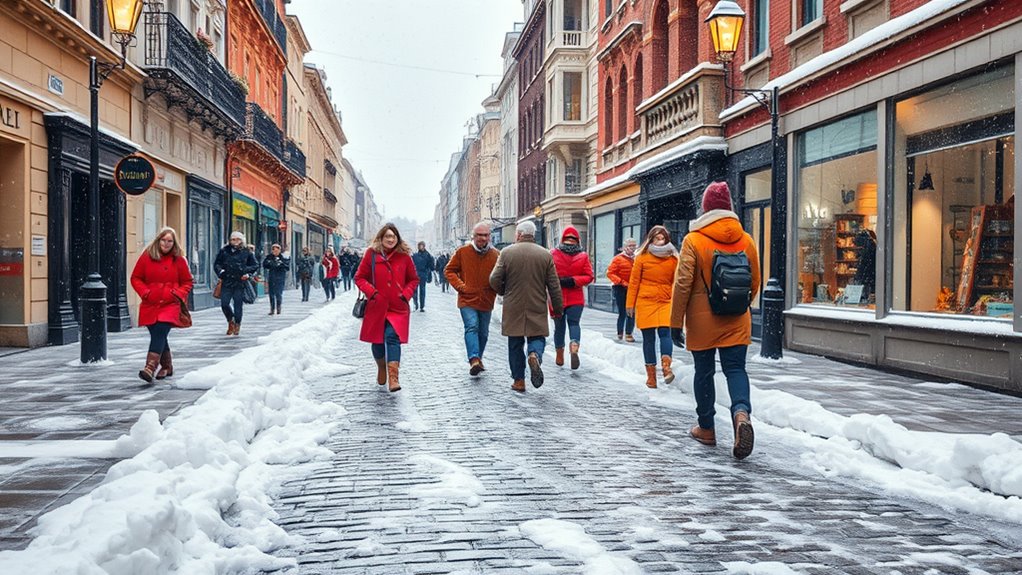
Recognizing dangerous conditions on winter sidewalks can save you from falls and injuries. Watch for icy patches that look shiny or wet, as they often hide treacherous ice. Pay attention to snow accumulation, especially if it’s melting and refreezing, creating uneven, slippery surfaces. Notice areas with poor lighting or shadowed spots, which can obscure hazards. Be cautious during snowstorms or when temperatures hover around freezing, as conditions can change rapidly. If sidewalks are heavily covered with snow or ice, or if authorities issue warnings or alerts, it’s safest to stay indoors. When in doubt, avoid walking in areas that seem icy or unsafe. Recognizing these signs early helps you decide when to delay your walk and prevent accidents. Additionally, understanding surface reflectivity can help you identify potentially hazardous icy patches that blend into snowy surfaces. Being aware of urban heat islands can also influence the formation of icy patches, making some spots more dangerous than others. Monitoring weather forecasts can provide advance warning of deteriorating conditions, enabling safer planning for outdoor activities.
LEVEL8 Grace Carry on Luggage Airline Approved, 20 Inch Expandable Hard Sided Luggages with Spinner Wheels, Harshell Small Rolling Suitcase for Women Men with Tsa Lock, Blue
Expandable Design: The Grace Expandable (6576 Series) suitcase is thoughtfully engineered to provide extra packing space whenever you...
As an affiliate, we earn on qualifying purchases.
Proper Footwear and Clothing for Winter Walking Safety
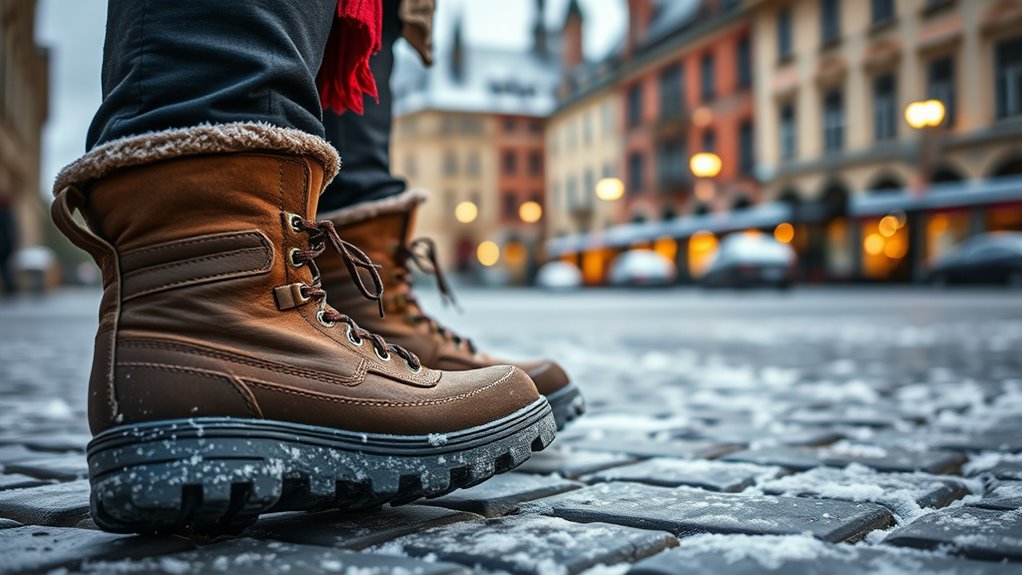
Wearing the right footwear and clothing is essential for staying safe while walking in winter conditions. Choose waterproof, insulated shoes with good traction to prevent slips on icy surfaces. Avoid smooth-soled shoes that lack grip, as they increase fall risk. Layer your clothing to stay warm and dry; wear moisture-wicking base layers, insulating middle layers, and waterproof outer shells. A hat, scarf, and gloves help retain body heat and protect exposed skin from the cold. Bright-colored or reflective clothing improves visibility in low-light winter conditions, reducing accidents. Proper footwear and clothing not only keep you warm and dry but also provide better stability and control, minimizing the risk of slips and falls. Regularly check your body jewelry measurements and materials to ensure your footwear and accessories fit properly and do not cause discomfort or irritation. Staying informed about winter safety tips can further enhance your walking safety during harsh weather conditions. Using footwear with high-quality soles designed for icy terrain can significantly improve grip and safety. Investing in quality winter accessories like traction cleats or ice grips can provide additional safety measures. Additionally, paying attention to surface conditions such as snow-packed or icy pathways can help you choose the safest routes for walking. Prioritize these safety essentials to walk confidently through snow and ice.

Travelpro Platinum Elite Softside Expandable Checked Luggage, 8 Wheel Spinner Suitcase, TSA Lock, Men and Women, Bordeaux Red, Checked Medium 25-Inch
EFFORTLESS MOBILITY: The Patented Precision Glide System with magnetic self-aligning 360° dual spinner wheels, adjustable 4-stop PowerScope extension...
As an affiliate, we earn on qualifying purchases.
Techniques for Walking Safely on Icy and Snow-Covered Surfaces
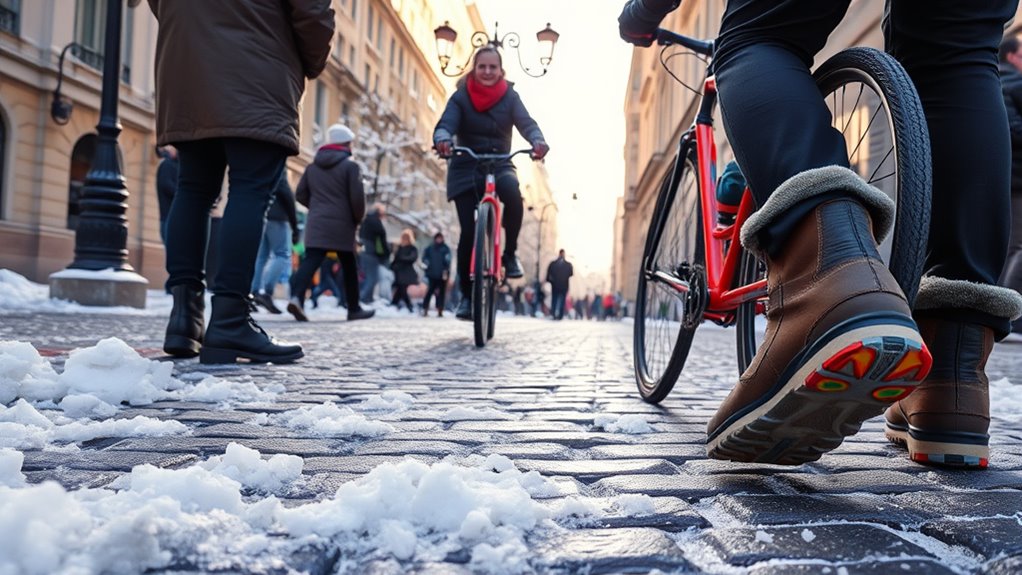
To walk safely on icy and snow-covered surfaces, you need to adopt specific techniques that improve stability and reduce fall risk. Start by shortening your stride to keep your center of gravity low and maintain better balance. Keep your arms slightly out to the sides for added stability. Walk at a slow, deliberate pace, and avoid sudden movements or turns. Plant your foot flat and firmly, rolling from heel to toe to maximize grip. Look ahead, not down, to anticipate icy patches, but be cautious when stepping onto slippery areas. If you feel unsteady, use your arms for balance and consider holding onto a sturdy object or using walking aids. Staying alert and taking controlled steps helps prevent slips and falls on treacherous surfaces.
The Role of Urban Infrastructure and Maintenance in Pedestrian Safety
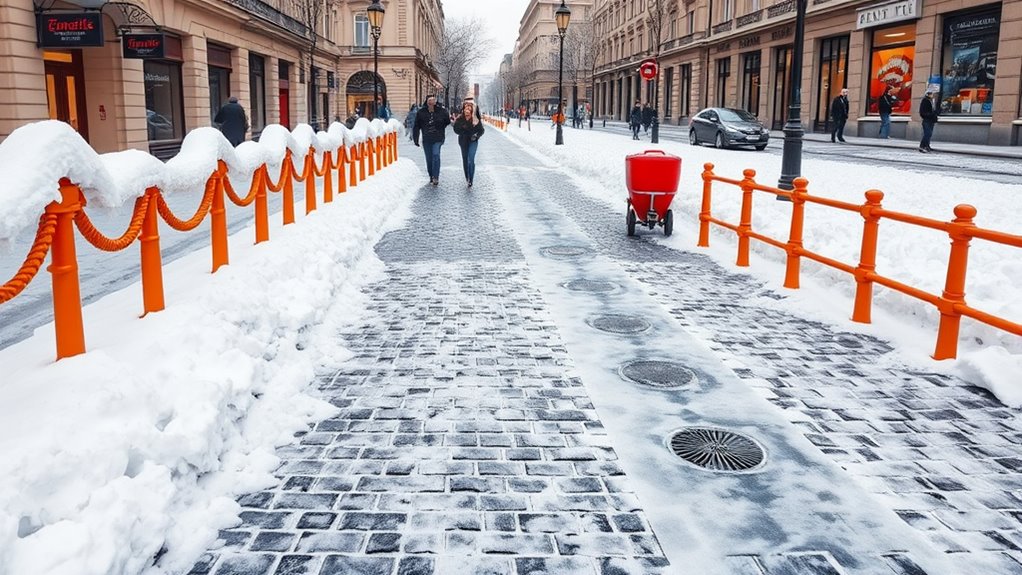
You play a key role in ensuring pedestrian safety through effective snow clearing and smart infrastructure design. Proper maintenance of sidewalks and crossings can considerably reduce slip and fall injuries during winter months. Investing in infrastructure improvements helps create safer walking environments, even in harsh winter conditions. Incorporating luxurious fabrics and intricate details into urban infrastructure can enhance durability and aesthetic appeal, ensuring that sidewalks and pathways remain resilient and visually appealing despite challenging weather. Additionally, applying weather-resistant materials to pathway surfaces can further improve their longevity and safety during severe winter weather. Implementing effective snow management strategies is essential to maintaining accessible and safe pedestrian pathways throughout the winter season. Recognizing the importance of urban infrastructure and maintenance in winter safety can lead to more proactive planning and better resource allocation for snow and ice removal efforts. Prioritizing winter weather preparedness in urban planning ensures that communities remain safe and accessible during the coldest months.
Effective Snow Clearing
Effective snow clearing plays a vital role in ensuring pedestrian safety during winter months by maintaining accessible and slip-resistant sidewalks. Regular removal of snow prevents accumulation that can hide ice patches and create tripping hazards. Using efficient plowing and shoveling methods, city crews can keep walkways clear of deep snow and reduce the likelihood of falls. Applying salt, sand, or other de-icing agents further enhances traction, especially on icy surfaces. Prompt response to weather changes is essential to prevent dangerous buildup. Clear signage indicating slippery conditions can alert pedestrians, encouraging caution. Proper maintenance not only reduces injury risks but also supports continued mobility for vulnerable populations, such as the elderly. Effective snow clearing is a critical component in creating safer walking environments during winter.
Infrastructure Design Improvements
Urban infrastructure and maintenance play a crucial role in enhancing pedestrian safety during winter months. You can improve safety by designing sidewalks with heated surfaces or using durable, slip-resistant materials that prevent ice buildup. Installing proper drainage systems helps remove melting snow quickly, reducing slippery patches. Adding clear, visible signage and lighting ensures pedestrians see hazards and navigate safely even in low visibility. Implementing snow and ice removal schedules, along with proactive salting and sanding, keeps walkways safer. Traffic calming measures, like raised crosswalks and curb extensions, slow vehicles and protect pedestrians. Regular inspections identify potential hazards early, allowing prompt repairs. Incorporating smart‑home integrations such as sensor-based alert systems can also notify maintenance crews of hazardous conditions promptly. Utilizing winter maintenance strategies that are based on data-driven assessments ensures resources are allocated effectively, creating a safer walking environment, reducing fall risks and fatalities during harsh winter conditions. Additionally, employing pedestrian-focused infrastructure design can further enhance safety by prioritizing foot traffic and reducing vehicle-pedestrian conflicts during winter. Furthermore, the use of specialized winter maintenance equipment can expedite snow removal efforts and improve overall effectiveness. Incorporating sound design principles in public announcements and signage can also improve communication and awareness during winter conditions.
How Weather Forecasts Can Help Prevent Winter Injuries
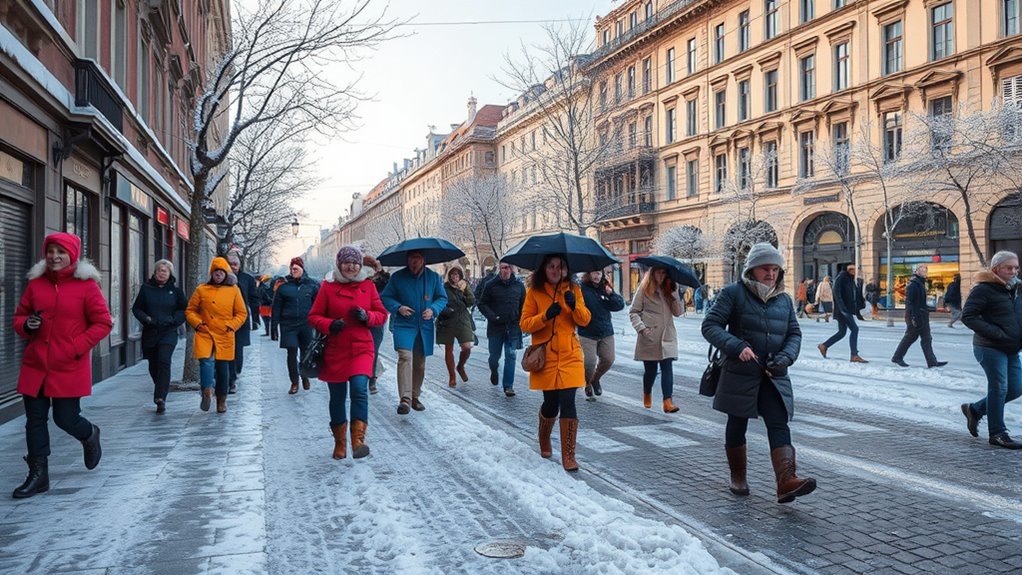
Weather forecasts play a crucial role in preventing winter injuries by providing timely warnings about slippery conditions on sidewalks and roads. Accurate forecasts enable you to plan your routes, select safer paths, and avoid walking during hazardous periods. They also inform city authorities to deploy snow removal or de-icing measures proactively. Better prediction models reduce the likelihood of slips and falls, especially during peak winter months. Additionally, understanding weather forecast accuracy can help individuals better interpret alerts and take appropriate precautions. Being aware of local climate patterns can further enhance your preparedness for winter conditions.
Implementing Personal and Community Measures to Reduce Fall Risks
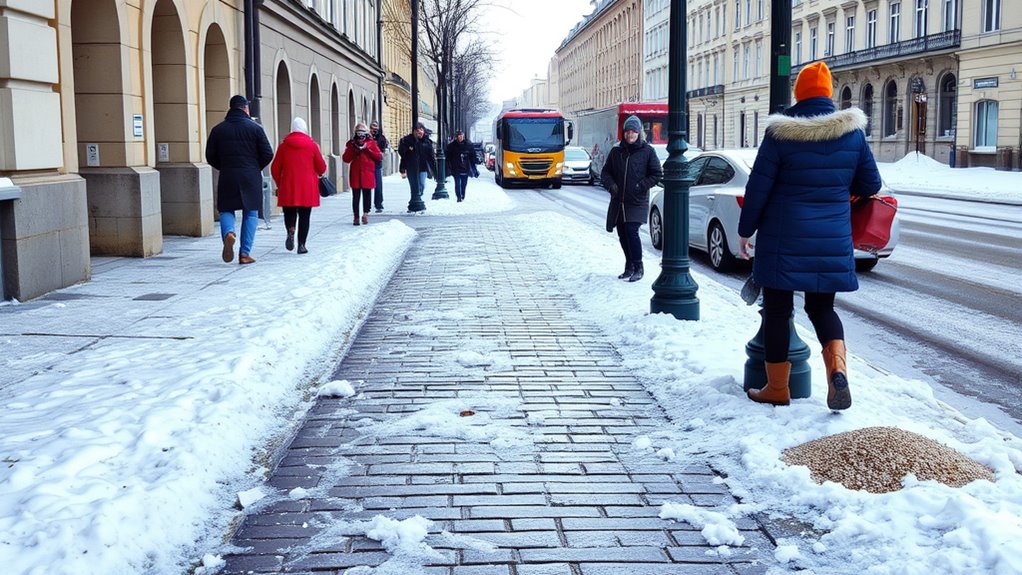
To reduce fall risks during winter, both individuals and communities must take proactive measures. You should wear footwear with good traction, such as winter boots with slip-resistant soles, and walk carefully, avoiding rushed or distracted movements. Keep sidewalks clear of snow and ice by shoveling regularly or encouraging community efforts to do so. Applying sand, salt, or other de-icing materials on walkways can improve grip. Communities can install handrails along busy pedestrian routes and ensure adequate lighting to improve visibility. Educating residents about winter safety tips and encouraging responsible snow removal helps create safer walking environments. Additionally, understanding the impact of celestial bodies on personal traits can foster a more holistic approach to health and well-being. Recognizing the importance of dog-friendly winter gear like festive dog sweaters can also help keep pets safe and warm during outdoor walks. Being aware of environmental conditions such as temperature fluctuations and wind chill can further aid in planning safe outdoor activities. By working together, you and your community can considerably lower fall risks, making winter walks safer for everyone, especially vulnerable populations.
Addressing Vulnerable Populations, Especially Older Adults
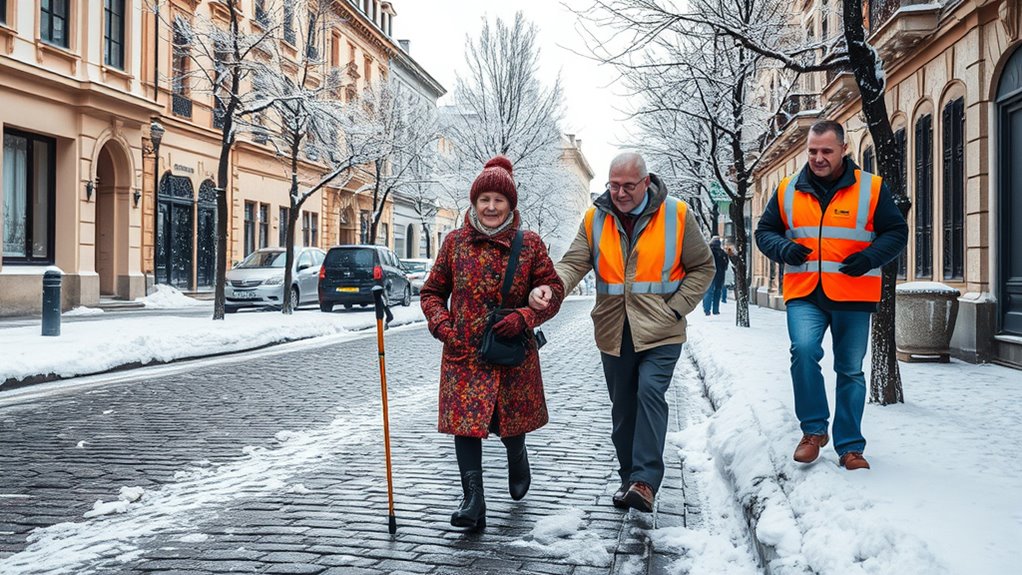
Older adults are particularly vulnerable during winter months because they face higher risks of injury and more severe health outcomes from falls on icy or snow-covered surfaces. Their bones are weaker, and recovery can be difficult. You can help by ensuring sidewalks are well cleared and salted and encouraging them to wear appropriate footwear. Recognize that a fall can lead to serious injuries, hospitalization, or loss of independence. Here’s how winter impacts vulnerable populations:
| Age Group | Fall Risk | Severity of Injury | Support Needed |
|---|---|---|---|
| 65+ | Lower chance but worse outcomes | Higher likelihood of fractures and hospitalization | Extra assistance and protective gear |
| 50-64 | Moderate risk | Moderate injuries | Community support and awareness |
| Under 50 | Lower risk | Minor injuries | General safety tips |
| All ages | Varies | Varies | Collective responsibility |
Prioritize their safety to prevent tragedies.
Investing in Long-Term Solutions for Safer Winter Pedestrian Environments
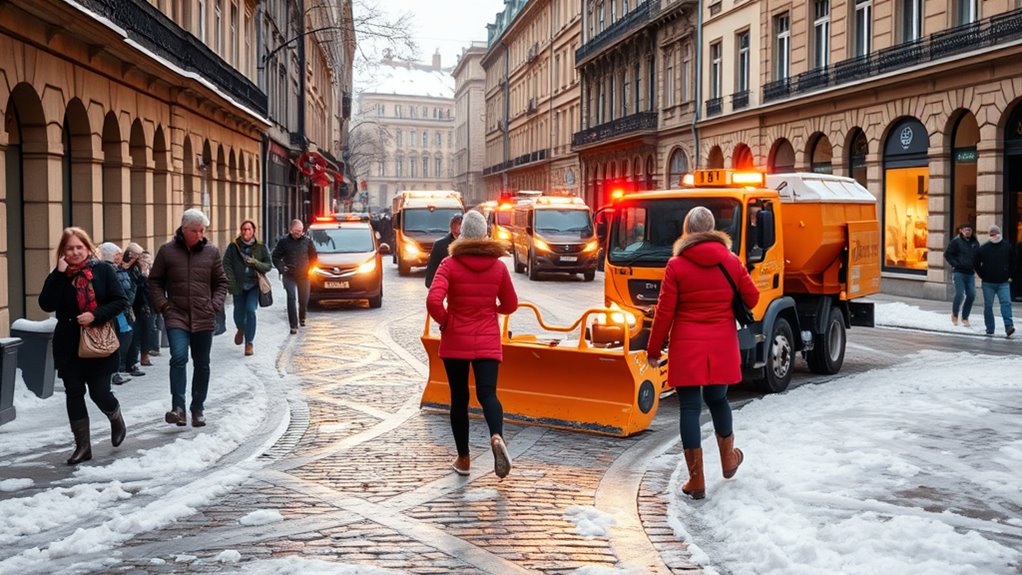
Investing in long-term solutions is key to creating safer winter pedestrian environments across European cities. You should prioritize infrastructure improvements, like heated sidewalks, better drainage, and durable, slip-resistant materials. Installing permanent handrails and guardrails can reduce fall risks for vulnerable pedestrians, especially the elderly. Implementing advanced weather prediction systems and real-time warning signs helps alert pedestrians to icy conditions before they become dangerous. Urban planning should incorporate traffic calming measures and clearly marked, well-maintained pathways designed for winter conditions. Regular maintenance, including timely snow and ice removal, ensures safer walking surfaces year-round. These investments not only reduce injuries and fatalities but also lower economic costs related to medical expenses and productivity losses, making cities more accessible and safer every winter.
Frequently Asked Questions
How Effective Are Winter Warning Systems in Reducing Pedestrian Injuries?
Winter warning systems can be quite effective in reducing pedestrian injuries when they provide accurate, timely alerts about icy conditions. You’ll benefit by adjusting your walking habits, like slowing down or avoiding risky areas. When these systems are integrated with infrastructure improvements and public awareness campaigns, they help you stay safer during winter months, ultimately lowering fall risks and preventing injuries on icy sidewalks.
What Are Cost-Effective Infrastructure Improvements for Winter Pedestrian Safety?
You can improve winter pedestrian safety cost-effectively by installing heated sidewalks, which melt snow and ice automatically, and applying slip-resistant coatings on walkways to reduce fall risks. Adding clear signage and early warning systems enhances awareness of slippery conditions. Regular maintenance, such as prompt snow removal, is essential. These measures are affordable, easy to implement, and substantially lower injury rates, making walking safer and saving costs on medical treatments and infrastructure repairs.
How Do Weather Variations Impact Regional Winter Injury Rates?
You’ll notice that weather variations markedly impact winter injury rates across regions. Severe winters with heavier snowfall and icy conditions lead to higher slip and fall incidents, especially in areas like Finland’s Uusimaa. Conversely, milder winters or regions with better infrastructure experience fewer accidents. Staying aware of local weather patterns, utilizing weather prediction services, and taking extra precautions during harsher seasons can help you avoid injuries on slippery surfaces.
What Community Programs Best Support Vulnerable Pedestrians During Winter?
You can make a real difference by supporting community programs like winter sidewalk clearing, elderly outreach, and pedestrian safety education. These initiatives help vulnerable pedestrians avoid falls and injuries, especially during harsh winter months. Volunteering or advocating for better infrastructure guarantees sidewalks stay safe and accessible. Your involvement can turn winter hazards into manageable challenges, saving lives and reducing injuries—because a little effort from you can be a game-changer in winter safety.
How Can Cities Improve Winter Maintenance on Sidewalks Efficiently?
You can improve winter sidewalk maintenance by prioritizing timely snow removal and applying effective de-icing methods. Invest in equipment like snowplows and salt spreaders to speed up clearing efforts. Collaborate with weather services for accurate forecasts, enabling preemptive treatments. Implementing rapid response teams ensures quick action after storms. Regular inspections and maintenance of infrastructure prevent hazards. These strategies help keep sidewalks safe, reducing fall risks and injury costs during winter months.
Conclusion
Don’t let winter’s challenges keep you indoors. By understanding risks, choosing the right footwear, and staying alert, you can walk safely even in snow and ice. Some might think it’s too much effort or dangerous, but with simple precautions, you reduce your fall risk considerably. Embrace these tips to stay active and safe this winter. Remember, a little preparation goes a long way—your safety is worth it.