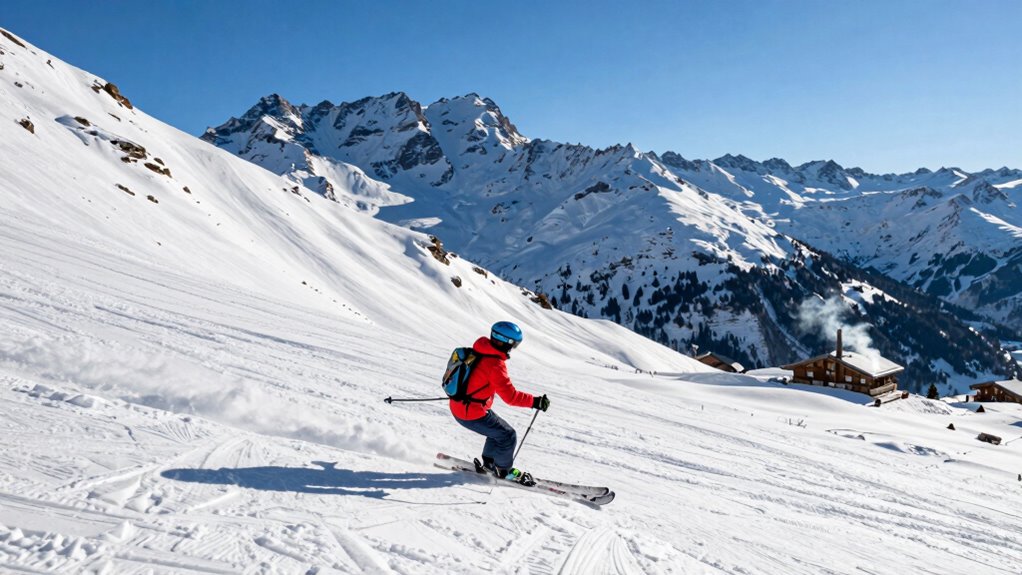

If you’re a beginner skiing the Alps as an American, expect steeper, narrower slopes that demand better control and technique. Costs can be higher, but online passes and multi-day deals help save money. Choose high-altitude resorts with glaciers for reliable snow, and start on gentle, family-friendly terrain. Planning ahead for equipment, accommodations, and weather details makes your trip smoother. Keep exploring to discover tips that will help you enjoy your Alpine adventure to the fullest.
Key Takeaways
- European slopes tend to be steeper and more technical than North American greens, requiring better control and technique.
- Many resorts offer beginner zones, magic carpets, and gentle slopes to build confidence for newcomers.
- Lift tickets can be costly; booking online in advance often provides discounts and shorter wait times.
- Snow conditions are best from late December to March, especially at high-altitude or glacier resorts for reliable coverage.
- Familiarize yourself with terrain maps, safety guidelines, and local regulations to ensure a safe and enjoyable experience.
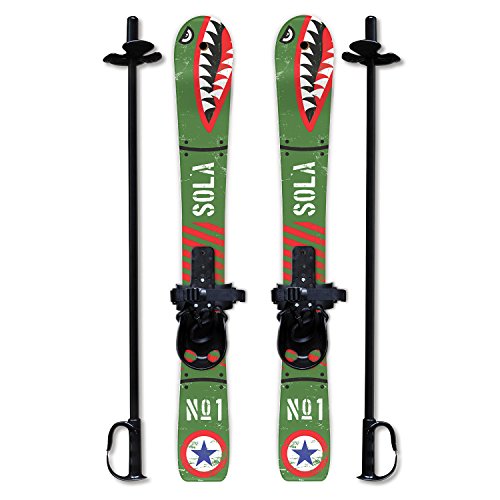
SOLA Kids Ski Set – Beginner Cross Country Skis with Poles and Adjustable Bindings for Ages 3–4, Backyard Winter Fun (Bomber)
Great for Beginners – Designed for kids ages 3–4, this starter ski set helps young learners build confidence…
As an affiliate, we earn on qualifying purchases.
As an affiliate, we earn on qualifying purchases.
Understanding the Terrain and Slope Difficulty

Have you ever wondered why European blue slopes can feel more challenging than North American greens? It’s mainly because they tend to be steeper, narrower, and more technical. While North American greens prioritize wide, gentle terrain, European blue runs often require better control and technique. Resorts like Kitzbüheler Horn offer wide, gentle slopes and dedicated beginner zones, but many other areas feature more moderate inclines that can surprise newcomers. Garmisch-Partenkirchen’s Hausberg area, for example, provides confidence-building runs with magic carpets, yet the terrain still demands attentiveness. Zugspitze’s glacier offers wide, straight blue runs that require little maneuvering. As a beginner, expect some slopes to be steeper than your typical North American green, so take your time and choose terrain carefully to build confidence safely. Additionally, understanding the terrain and slope difficulty can help you select appropriate runs and avoid unnecessary challenges. Being aware of slope grading systems used in Europe versus North America can further aid in choosing suitable terrain.
European ski lift pass discounts
As an affiliate, we earn on qualifying purchases.
As an affiliate, we earn on qualifying purchases.
Navigating Costs and Lift Pass Options

Understanding the costs involved in skiing the Alps is essential for planning your trip effectively. Lift pass prices vary depending on the resort, duration, and region. A daily pass for popular areas like Mont Blanc Unlimited costs about 74 Euros, granting access to over 200,000 acres across France, Italy, and Switzerland, including beginner zones. Many resorts offer discounts for multi-day passes, with some providing up to 50% off for six days or more. To save money, buy your passes online at least three days in advance, as prices increase at the window. Keep in mind that multi-resort passes can give you access to a variety of terrains, but they may also come at a higher cost. Budgeting ahead guarantees a smoother, stress-free experience on the slopes. Additionally, understanding Cryptid Mysteries can sometimes influence travelers’ perceptions of remote mountain areas, adding an extra layer of intrigue to your adventure. Moreover, considering energy infrastructure in the Alps can help in understanding how renewable energy sources, such as wind and solar, support the region’s sustainability efforts and impact local communities. Additionally, understanding European cloud infrastructure can help in planning digital aspects of your trip, such as sharing your experiences in real-time or accessing online resources seamlessly. Being aware of local transportation options can also help optimize your travel plans within the Alps region. Also, being familiar with Gold IRA Rollovers can be beneficial if you’re considering long-term financial planning for your travels or future investments.

Edgie Wedgie – The Original Kids Ski Tip Connector (Pink)
The original ski tip connector, since 1993
As an affiliate, we earn on qualifying purchases.
As an affiliate, we earn on qualifying purchases.
Ensuring Snow Reliability and Optimal Season Timing
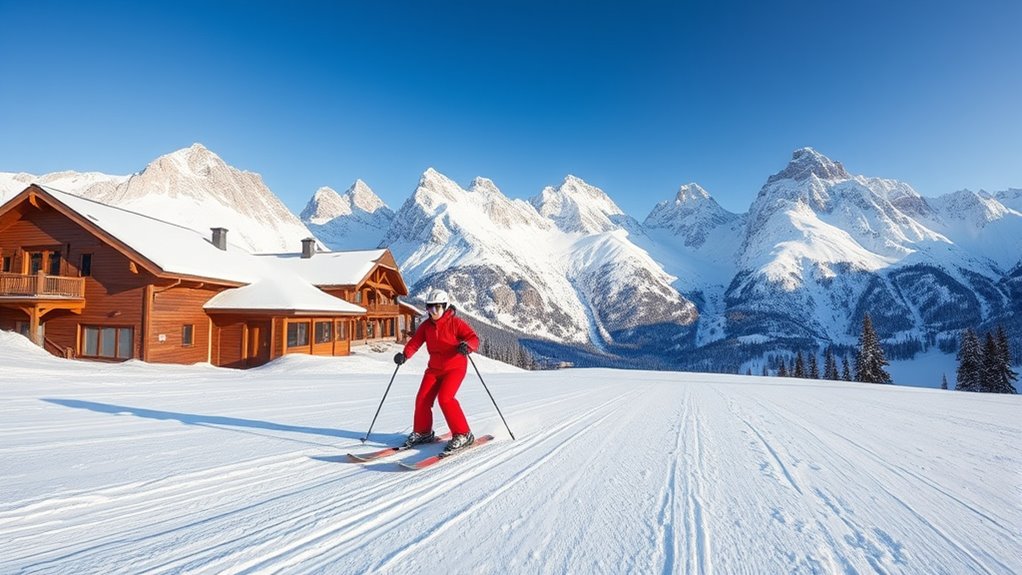
Choosing the right time to ski in the Alps guarantees you experience reliable snow conditions and maximize your enjoyment. The best months are typically from late December to March, when snow cover is most consistent. High-altitude resorts like Saas-Fee and Zugspitze offer dependable snow well into spring thanks to their elevation and glaciers. Early season, around late December, can be less crowded and still have good snow, but check snow reports to confirm. Mid-season often provides stable conditions, while late season skiing in April may be hit or miss, depending on weather. Planning your trip during peak months ensures longer, better-quality runs. Keep an eye on weather forecasts and snow reports, and consider resorts with glaciers or higher elevations for the most trustworthy snow.

Stubai Glacier Austria Ski Resort Skiing Snowboarding T-Shirt
Stubai Glacier Austria ski resort souvenir from a skiing holiday or ski trip in the mountains of the…
As an affiliate, we earn on qualifying purchases.
As an affiliate, we earn on qualifying purchases.
Exploring Family-Friendly Facilities and Learning Areas
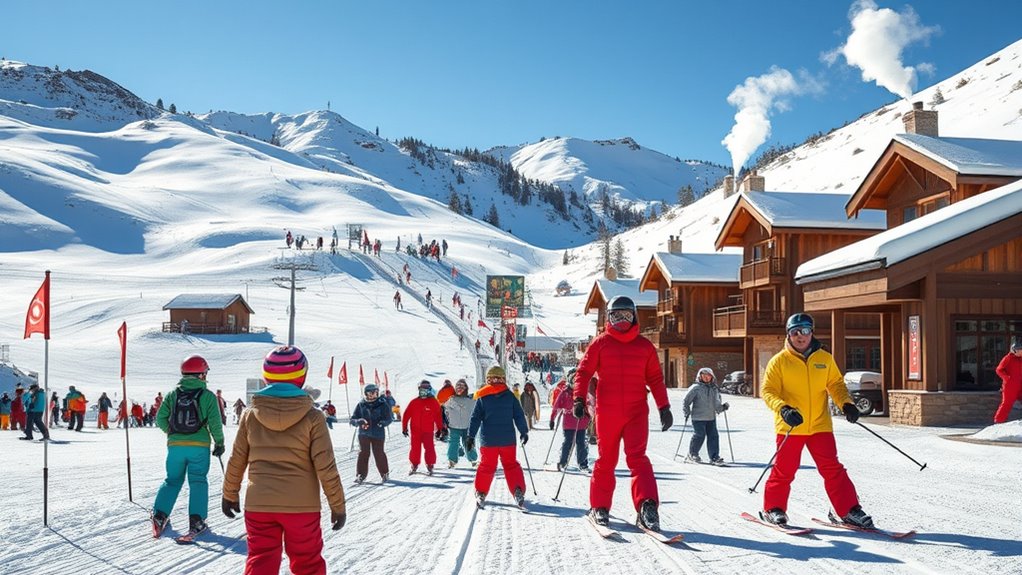
Many resorts in the Alps prioritize family-friendly facilities and dedicated learning areas to make skiing accessible and enjoyable for beginners. Saas-Fee offers excellent ski schools, along with tobogganing and snowshoeing options for families seeking variety. Verbier features dedicated beginner zones and scenic cruisers, perfect for gaining confidence. Crans-Montana provides gentle slopes and a snowpark designed for newcomers, making it easier to learn and have fun. Kitzbühel’s highly-rated ski schools are staffed with experienced instructors, ensuring proper guidance for children and adults alike. Les Houches and Vallorcine are known for their welcoming atmosphere and beginner-friendly terrain. These resorts focus on creating safe, accessible environments so families can learn together and build confidence before exploring more challenging slopes. Incorporating specialized learning environments enhances the overall beginner experience and encourages continued progress. Additionally, the availability of supportive instructional staff plays a crucial role in fostering a positive learning environment for novices. Providing appropriate safety measures, such as gentle slopes and clear signage, further ensures a secure and confident learning experience for all ages. Furthermore, many resorts implement modern teaching techniques to cater to different learning styles and boost beginners’ confidence more effectively. Emphasizing trustworthy equipment and well-maintained gear also contributes to a safer, more enjoyable learning process.
Practical Tips for American Travelers Planning Their Trip
Planning your trip to the Alps as an American requires some preparation to guarantee smooth travel and an enjoyable experience. First, make sure to research and purchase lift passes online at least three days in advance to secure better prices and avoid long lines. Familiarize yourself with the terrain and resort maps to identify beginner-friendly slopes and facilities. Also, learn about visa requirements, currency exchange, and health insurance coverage to prevent surprises. Additionally, understanding the importance of projector contrast ratio can enhance your experience of digital maps and resort information displayed during your trip. Being aware of skier safety tips can also help ensure a secure and enjoyable experience on the slopes. It’s also helpful to review backcountry safety guidelines to stay informed about potential hazards outside crowded areas. Incorporate local automation insights, such as digital resort updates and alerts, to stay seamlessly informed throughout your visit. For added convenience, consider micro-mobility options like e-bikes or shuttles to explore the surrounding areas easily. – Book accommodations early, especially during peak season, to get the best deals. – Consider multi-resort passes like the Chamonix or Swiss Alps options for added value. – Pack layered clothing, including waterproof gear, to handle variable mountain weather.
Frequently Asked Questions
What Are the Best Beginner Resorts in the Alps for First-Timers?
You should try Saas-Fee, Crans-Montana, or Garmisch-Partenkirchen for your first Alps experience. Saas-Fee offers long, gentle runs perfect for beginners, while Crans-Montana has sunny, relaxed slopes. Garmisch-Partenkirchen provides confidence-building runs with magic carpets. These resorts feature easy-to-navigate terrain, excellent ski schools, and reliable snow, making them ideal spots to learn and enjoy your first ski adventure in the Alps.
How Do European Blue Slopes Compare to North American Green Runs?
European blue slopes tend to be steeper, narrower, and more challenging than North American greens. You’ll find European runs often require sharper turns and more control, demanding improved skills. North American green runs prioritize gentler gradients, broader spaces, and easier navigation. So, if you’re used to North American greens, prepare for a more demanding but rewarding experience on European blue slopes, which challenge your confidence and boost your skills.
What Should I Know About Transportation Options to and Within the Alps?
You should know that transportation options in the Alps are diverse and convenient. You can take trains, like the scenic Swiss Railways or French SNCF, which connect major resorts efficiently. Many resorts have dedicated shuttle buses or cable cars for easy access within ski areas. Renting a car is also a good option, especially if you want flexibility. Plan ahead, buy tickets in advance, and verify schedules to guarantee smooth travel.
Are There Specific Accommodations Ideal for Beginner Skiers?
Imagine stepping into a cozy, welcoming cabin after a day on gentle slopes—that’s what ideal beginner accommodations feel like. Look for resorts with ski-in/ski-out options, family-friendly lodges, or ski schools nearby. Saas-Fee and Crans-Montana offer charming lodges close to beginner zones, making it easy to relax and focus on learning. These accommodations give you a comfortable base, helping you enjoy your first Alps ski experience stress-free.
How Early Should I Book Lift Passes and Lodging for a Beginner Trip?
You should book your lift passes and lodging at least three to four weeks in advance, especially during peak season. This guarantees you get the best deals, availability, and specific beginner-friendly accommodations. Planning early also helps you secure passes at discounted rates, like online discounts or multi-day packages. For a smoother trip, consider booking even earlier if you’re traveling during holidays or busy periods, so you have ample time to prepare.
Conclusion
Remember, every journey begins with a single step, so don’t let the unknown hold you back. With a bit of research and preparation, skiing the Alps as a beginner can be an unforgettable adventure. Trust in your plans, stay flexible, and enjoy the stunning scenery and new skills you’ll gain. Like they say, “The journey is the reward,” so embrace every moment and make the most of your Alpine experience!