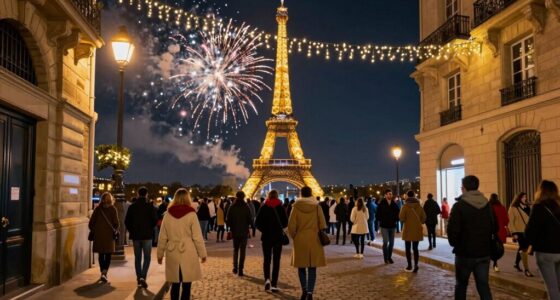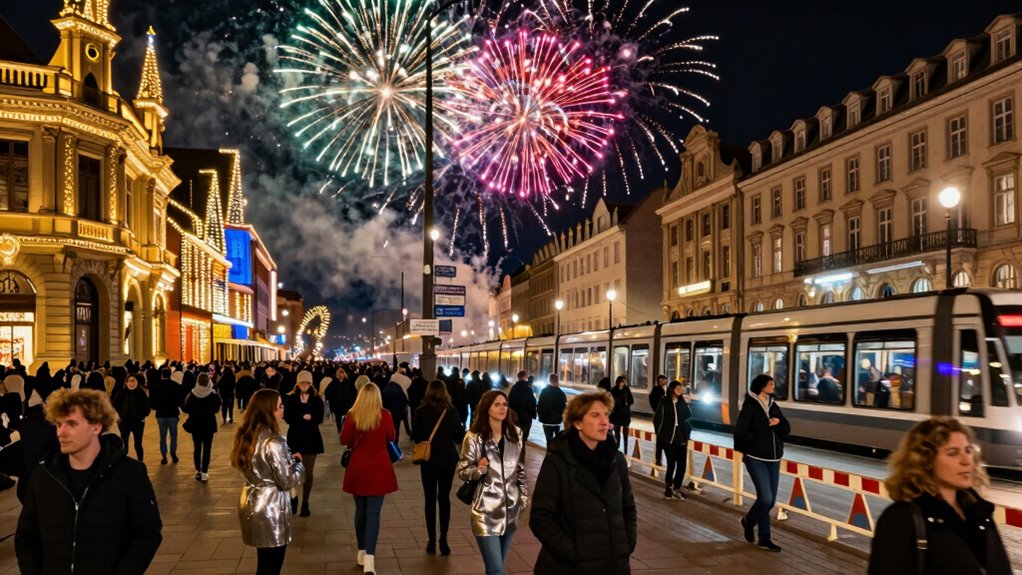

On New Year’s Eve in Europe, massive crowds gather in city centers, requiring careful planning of transport, safety, and crowd management. Expect peak pedestrian flow at fireworks shows and countdown areas, with demand for public transit surging. Road closures and pedestrian zones help manage crowds and guarantee safety, while regulations on fireworks aim to reduce hazards. To stay safe and enjoy the festivities, understanding these basics will prepare you for a smoother celebration.
Key Takeaways
- Major European cities attract large crowds for fireworks, street parties, and countdowns, with peak pedestrian flows within two hours of midnight.
- Public transportation demand surges before and after midnight, requiring extended services and real-time management to prevent congestion.
- Safety measures include crowd control barriers, designated pathways, medical stations, and clear signage to prevent incidents and manage emergencies.
- Ticketing, capacity limits, and regulated fireworks reduce overcrowding and fire hazards during New Year celebrations.
- Policies focus on safety, sustainability, and infrastructure improvements to ensure enjoyable, secure, and eco-friendly festivities.
Top picks for "year europe crowd"
Open Amazon search results for this keyword.
As an affiliate, we earn on qualifying purchases.
Major Crowd Sizes and Attendance Dynamics in European Cities

Ever wonder how large crowds get during New Year’s Eve celebrations across Europe? Major public countdowns attract tens of thousands to over two million attendees, depending on the city and event format. Iconic waterfronts and fireworks shows often draw hundreds of thousands, with some regional events like Antwerp’s fireworks attracting around 120,000 spectators. Capital cities plan ticketed street parties for 40,000 to 100,000+ people, while tourist-heavy destinations like Madrid expect over 200,000 visitors during the season. Many events require advance ticket purchases, with over 60% of attendees buying tickets roughly 18 days ahead. Peak pedestrian flows concentrate at riverfronts, squares, and transit hubs around midnight, creating intense density and surge conditions in chokepoints. Techniques for managing these crowds include crowd control measures, which are essential for ensuring safety during such large-scale gatherings. Additionally, utilizing technological integration like mobile apps and digital tools can improve crowd management and communication during these events. Modern crowd management solutions, often supported by European cloud servers, enhance real-time monitoring and responsiveness, further boosting safety during these celebrations. Implementing advanced surveillance systems can also help authorities detect and respond to potential issues more swiftly, ensuring a safer environment for all attendees. Incorporating creative storytelling into event branding can also foster a sense of community and shared celebration among attendees.
Peak Locations and Timing of Pedestrian Flows
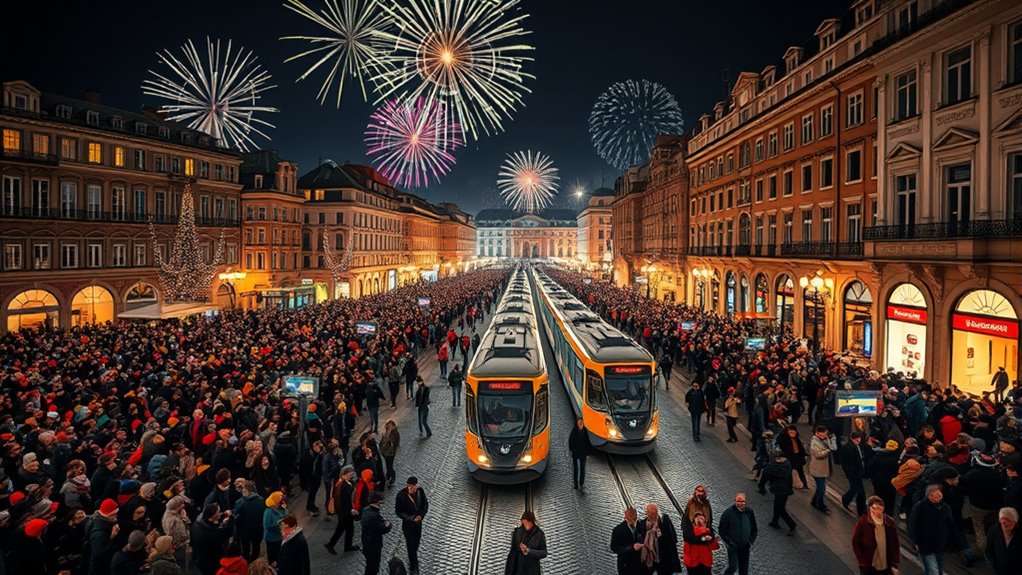
During New Year’s Eve celebrations, pedestrian flows typically peak at key public gathering points just before and after midnight. You’ll notice crowds surge at iconic locations like city squares, riverfronts, and main transit hubs as people gather for countdown events. These areas attract large numbers early in the evening, with people arriving hours beforehand to secure good spots. Just before midnight, density spikes as crowds converge for fireworks, countdowns, and celebrations. After the clock strikes twelve, many disperse quickly, causing another surge of movement. The timing of these peaks varies by city and event format, but generally, the highest pedestrian flows occur within the two hours around midnight. Planning your movements around these times helps avoid bottlenecks and guarantees safety. Managing pedestrian flow strategies can further enhance safety during these busy times. Additionally, the reliance on public transportation increases during these events, so coordinating travel plans can prevent delays and overcrowding.
Public Transport Demand Spikes and Capacity Challenges
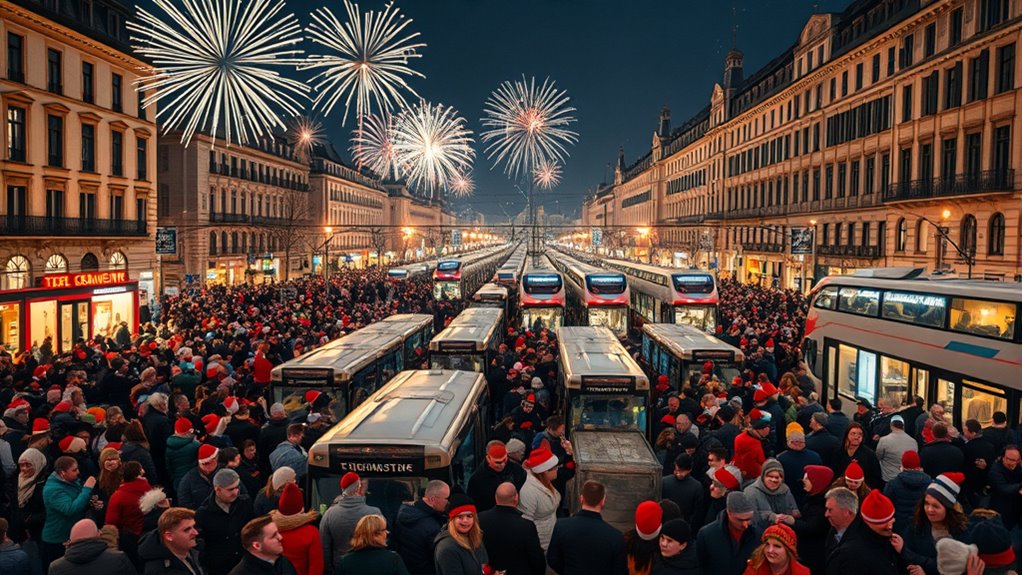
As crowds gather at key public spaces for New Year’s Eve celebrations, the demand for public transportation surges sharply before and after midnight. You’ll likely see extended service hours, additional vehicles, and increased trips to handle the influx. Expect bottlenecks at metro stations, tram stops, and transit hubs, as last-minute travelers and party-goers converge. Road closures and pedestrian zones shift demand to nearby park-and-ride facilities and surrounding streets, often causing congestion. Airports, long-distance trains, and intercity buses experience elevated arrivals and departures, straining terminals. To manage these challenges, cities may implement staged egress, one-way flows, or ticketing controls. Planning your travel early, purchasing tickets in advance, and staying informed about transit updates will help you navigate these capacity spikes smoothly. Developing a relationship with your inner guidance can help you stay flexible and calm amid the logistical challenges, especially as public transport demand can vary depending on local events and weather conditions. Additionally, implementing cybersecurity measures for transit systems ensures the safety of digital infrastructure amid increased online planning and ticketing activities. Being aware of capacity challenges and possible delays can further prepare you for a smoother experience during these busy times.
Managing Road Closures and Pedestrian Zones

Managing road closures and pedestrian zones is essential for ensuring crowd safety and smooth traffic flow during New Year’s Eve celebrations. You should plan closures strategically, focusing on key event sites like waterfronts and squares, while maintaining access for emergency vehicles. Use clear signage and real-time updates to inform visitors about route changes and restricted areas. Temporary barriers and designated pedestrian pathways help prevent bottlenecks and control surges at chokepoints. Coordinate with local authorities to stagger closures and facilitate staged dispersal. This approach minimizes congestion and reduces risks of crowd crushes. Proper traffic management is crucial to adapt quickly to changing crowd dynamics and event needs. Incorporating reliable backup power solutions can ensure that critical signage and communication systems remain operational even during power disruptions. Additionally, implementing crowd control strategies can further enhance safety by guiding crowds effectively and preventing overcrowding in sensitive areas. Effective crowd monitoring tools and systems can provide real-time insights to responders and organizers, allowing for swift adjustments as needed. Utilizing specialized crowd management systems can optimize crowd flow and improve overall safety during large-scale celebrations.
Incidents and Safety Risks During Celebrations

Incidents and safety risks are a significant concern when celebrating New Year’s Eve in Europe, especially given the large crowds and dense gatherings. Crowd crushes and trampling can happen at narrow exits, choke points, or during emergency evacuations, risking serious injuries. Alcohol consumption often increases disorder, leading to fights, injuries, and medical emergencies. Fireworks pose burn and blast hazards, especially with high consumer firework sales. Medical issues like cardiac events, hypothermia, or fainting spike due to cold weather and prolonged standing. Pickpocketing and theft rise sharply in crowded hotspots and transit points. To stay safe, you should follow crowd-control guidelines, avoid narrow passages, carry minimal valuables, and be aware of emergency help points. Planning ahead and staying alert can help prevent incidents and ensure a safer celebration. Additionally, being aware of nearby Waterparks and their operating hours can provide a safe and enjoyable alternative for families seeking refuge from the crowds.
Crowd Control Infrastructure and Emergency Preparedness
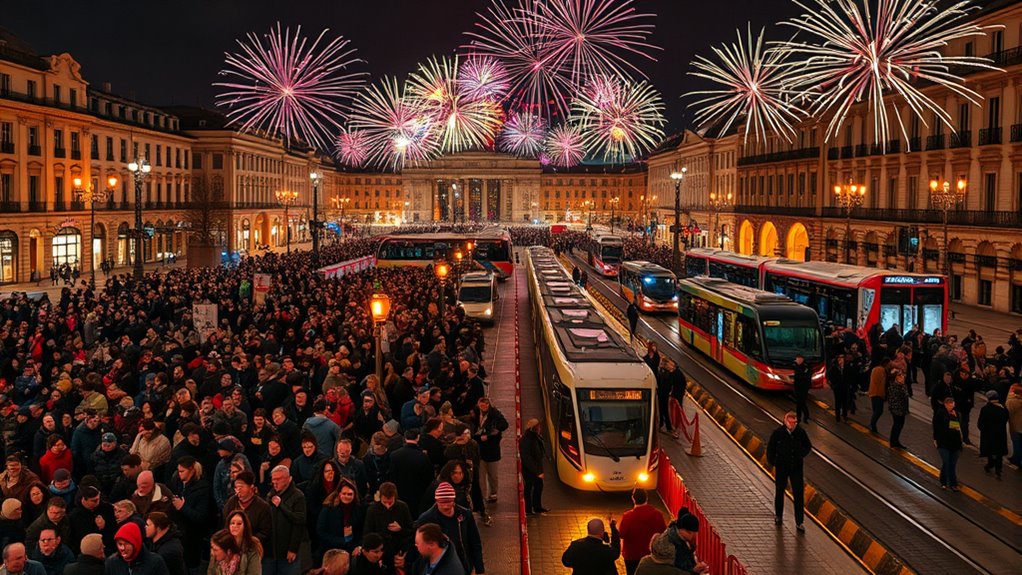
Effective crowd control infrastructure is essential for ensuring safety during New Year’s Eve celebrations in Europe. You’ll find cities deploying barriers, designated entry and exit points, and one-way circulation paths to prevent bottlenecks and manage large crowds. Staged dispersal zones and controlled access help keep densities manageable, reducing crush risks at chokepoints. To prepare for emergencies, cities set up on-site medical stations and improve ambulance access, minimizing response times. Real-time monitoring via command centers enables quick coordination among police, transport, and event organizers. Clear signage, multilingual announcements, and pre-event travel advisories guide visitors and set expectations. These measures collectively help you enjoy festivities safely, knowing that infrastructure and preparedness plans are in place to handle large crowds and potential incidents effectively.
Personal Safety Tips for Celebrants
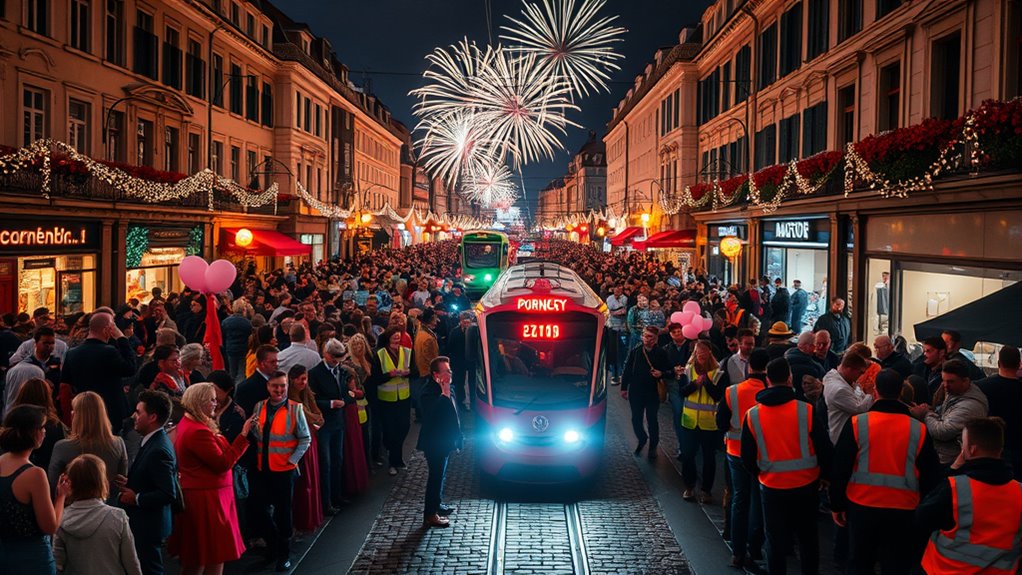
To stay safe during New Year’s Eve celebrations, it’s essential to plan ahead and stay aware of your surroundings. Book tickets in advance for popular events and know your entry and exit points. Dress warmly and wear comfortable shoes to handle long hours of standing and walking. Carry only essentials in secure pockets or a money belt to reduce theft risk. Stay close to your friends or family, and establish a clear meeting spot in case you get separated. Be cautious near narrow passages, bridges, or fencing where surges can happen. Keep emergency contacts handy and locate nearby first-aid stations. Avoid overindulging in alcohol, as it impairs judgment and awareness. Staying alert and prepared helps you enjoy the festivities safely. Understanding crowd dynamics can also help you navigate large gatherings more effectively. Additionally, being aware of electric bike speeds and their capabilities can be useful if you plan to use bikes for transportation during the celebrations. Familiarizing yourself with risk management strategies can help you prepare for unexpected situations and respond appropriately if needed. Being familiar with Rhythm Failure songs might also come in handy if you want to stay upbeat and energetic during the festivities. To further enhance safety, consider researching local laws and regulations related to public celebrations and transportation options.
Ticketing, Access Control, and Capacity Limits
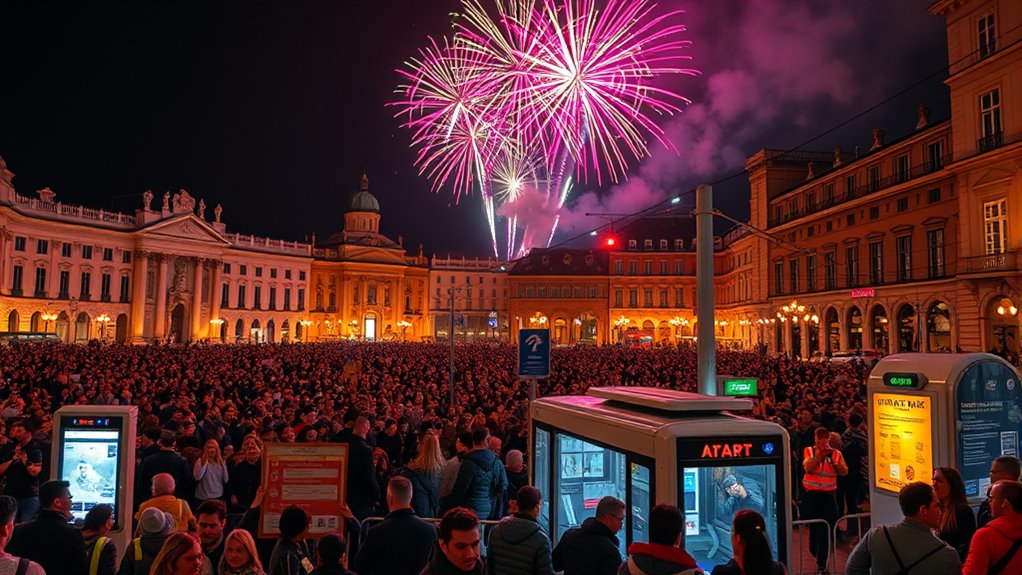
Ticketing, access control, and capacity limits play a essential role in managing crowds and ensuring safety during New Year’s Eve celebrations across Europe. They help prevent overcrowding, facilitate smooth entry and exit, and enable effective resource deployment. Here are three key aspects to contemplate:
- Many large events require advance ticket purchases, with over 60% of attendees buying tickets ahead of time to control numbers and avoid last-minute refusals.
- Organizers often implement physical barriers, designated entry and exit points, and staged dispersal zones to prevent bottlenecks.
- Capacity caps and ticketing limits are enforced to reduce risks of crowd crushes, especially at narrow exits or during surges around midnight.
- Incorporating sound healing science principles can enhance the overall atmosphere, promoting calmness and safety among attendees. Additionally, understanding crowd management techniques can further improve event safety and attendee experience.
- Employing communication systems such as public address and digital alerts ensures timely information dissemination, helping attendees stay informed and respond appropriately during emergencies.
Fireworks Regulations and Their Impact on Public Safety

Fireworks regulations are evolving across Europe, with some countries tightening policies to reduce accidents and injuries. Despite stricter rules, many regions still see high consumer fireworks usage, leading to safety concerns and incident spikes. Understanding these policy changes and their effects is key to improving public safety during New Year’s celebrations. The impact on public safety continues to be a significant concern as authorities balance tradition with safety measures.
Fireworks Policy Changes
Recent changes in fireworks regulations across European cities have considerably impacted public safety and event planning. Stricter rules now limit consumer fireworks sales, requiring permits or outright bans in some locations. These policy shifts aim to reduce injuries and emergency incidents. Specifically, you should be aware that:
- Many cities enforce restricted sales hours and set limits on firework types allowed for public use.
- Some regions have implemented designated fireworks zones, separating spectators from launch sites.
- Authorities increasingly require event organizers to obtain special licenses and adhere to safety standards for public displays.
- Maximize Your Truck Bed’s Potential by using proper storage and transportation methods for fireworks and related equipment during celebrations.
These policies can substantially reduce accidental injuries and chaos, but they also influence how people celebrate. You may find fewer spontaneous fireworks and more organized, controlled displays during New Year’s Eve.
Public Fireworks Usage
Stricter regulations on fireworks across many European cities have considerably changed how you celebrate New Year’s Eve, resulting in safer environments and fewer injuries. Many regions have imposed limits on consumer fireworks sales, restricted specific types, or banned personal use altogether, shifting the focus to organized displays. These regulations reduce the risks of burns, blast injuries, and fires caused by untrained handling. As a result, fewer incidents occur in crowded public spaces, and emergency services can better manage medical emergencies. You might notice official firework shows are now more prevalent, with authorities controlling the timing and location to enhance safety. Overall, these stricter rules encourage responsible enjoyment and help prevent chaos caused by uncontrolled or illegal fireworks during the celebrations.
Safety and Incident Trends
Enhanced regulations on fireworks across many European cities have led to noticeable improvements in public safety during New Year’s Eve celebrations. These stricter rules reduce illegal and unsafe firework use, lowering injury and incident rates. However, risks still persist, especially at crowded event sites. You should be aware of three key safety trends:
- Firework-related injuries remain common, primarily burns and blast injuries from consumer fireworks, especially in regions with high usage.
- Crowd crushes and surges occur at choke points during midnight, emphasizing the need for controlled access and crowd management.
- Alcohol-related incidents increase, contributing to disorder, medical emergencies, and injuries, reinforcing the importance of moderation and vigilance.
Trends in Policy, Planning, and Data-Driven Event Management
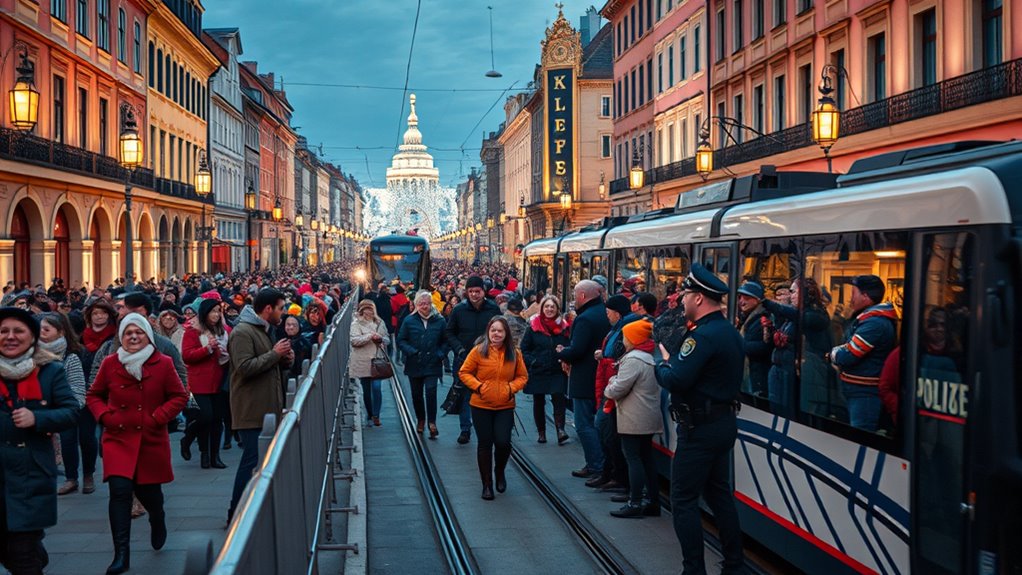
As cities prepare for New Year’s Eve celebrations, policymakers and event organizers increasingly rely on data-driven approaches to optimize safety and crowd management. You’ll see more use of historical attendance data, hotel occupancy reports, and ticket sales forecasts to plan capacity and deploy resources efficiently. Capacity caps and ticketed entry systems help prevent overcrowding by controlling access and enabling enforcement of safety limits. Municipalities also utilize real-time monitoring through integrated command centers to track crowd flows, adjust traffic plans, and coordinate emergency responses swiftly. Additionally, regulations around fireworks and public events are tightening, influencing planning and public behavior. These trends aim to reduce incidents, improve safety, and make celebrations more sustainable, ensuring a safer experience for everyone involved.
Frequently Asked Questions
How Do Cities Estimate and Forecast Crowd Sizes for New Year’s Eve Events?
You can estimate and forecast crowd sizes by analyzing historical attendance data, hotel bookings, and ticket sales. Cities also monitor pre-event ticket purchases, which often lead by around 18 days, and use seasonal tourism trends. They incorporate transportation demand forecasts, past event patterns, and social media activity to refine their predictions. These methods help planners allocate resources, set capacity limits, and implement crowd-control measures effectively for New Year’s Eve celebrations.
What Are the Most Effective Crowd Dispersal Strategies Used by European Cities?
You need to keep the flow of people moving smoothly, so European cities often use effective dispersal strategies like staged exits, one-way circulation, and designated dispersal zones—think of them as traffic lights guiding crowds safely apart. Temporary barriers and clear signage help prevent bottlenecks, while integrated command centers coordinate police and medical teams. These tactics act as a well-oiled machine, ensuring crowds leave safely and efficiently, reducing risks of crushes and chaos.
How Do Transport Authorities Coordinate With Event Organizers to Manage Capacity?
Transport authorities coordinate with event organizers by sharing real-time crowd data and capacity forecasts, enabling proactive adjustments. They plan extended transit hours, deploy additional vehicles, and implement staged egress strategies to prevent overcrowding. Clear communication channels ensure coordinated responses to incidents. You should follow official updates, buy tickets early, and use designated transit routes to stay safe and avoid congestion during these large-scale celebrations.
What Are the Best Personal Safety Practices During Large New Year’s Eve Crowds?
You should treat large crowds like a calm river—stay steady and aware. Plan your arrival and departure times, buy tickets in advance, and stick to designated viewing spots. Keep valuables secure, dress warmly, and carry snacks and water. Establish a meeting point with friends, know where first aid stations are, and stay alert to your surroundings. By staying cautious and prepared, you’ll navigate the festivities safely and enjoy the celebration.
How Do Fireworks Regulations Influence Incident Rates and Public Safety Measures?
Fireworks regulations directly impact incident rates and safety measures by limiting consumer sales, reducing illegal fireworks use, and enforcing stricter handling rules. When regulations are strict, fewer injuries and fires occur, prompting cities to implement enhanced safety protocols like designated viewing zones, firework bans, and increased police presence. Conversely, lax laws often lead to higher incidents, requiring more emergency response planning and crowd control efforts to protect public safety during celebrations.
Conclusion
As you celebrate New Year’s Eve in Europe, remember that behind the dazzling fireworks and lively crowds, careful planning guarantees everyone safe. Sometimes, it’s a coincidence—an unexpected crowd surge or a sudden transport delay—that tests event management. Staying alert, respecting local rules, and keeping safety in mind ensures your night ends with joy, not surprises. Embrace the magic, but trust that behind the scenes, organizers are working tirelessly to make your celebration memorable and safe.