In March, northern Europe experienced unprecedented warmth, with temperatures soaring over 2 °C above average and very dry conditions, especially in Ireland and Arctic regions. Meanwhile, southern areas faced intense storms, flooding, and variable rainfall—some regions drenched while others remained arid. These sharp contrasts highlight the extreme regional differences, with the north warming rapidly and the south battling fluctuating weather patterns. To understand how these trends affect various regions, continue exploring the detailed climate impacts across Europe.
Key Takeaways
- Northern Europe experienced record-high temperatures, with Ireland feeling early spring-like warmth and Arctic sea ice reaching its lowest in 47 years.
- Southern Europe faced intense storm activity, flooding, and erosion, especially along Iberian coasts and the central Mediterranean.
- Northern regions saw persistent dry conditions and high sunshine, increasing wildfire risks and drought stress, contrasting with wetter southern areas.
- Eastern and northern Europe experienced temperature anomalies exceeding +10 to +15 °C, marking their hottest March on record.
- Regional climate variability created sharp contrasts, with dry northern zones and flood-prone southern and coastal areas.
Amazon Product B0CW9JCR3M
As an affiliate, we earn on qualifying purchases.
Unprecedented Warmth and Anomalies in Northern Europe
Northern Europe experienced extraordinary warmth in March 2025, breaking multiple temperature records and deviating sharply from long-term norms. You’d notice that average temperatures soared about 2.41 °C above the 1991–2020 March mean, with eastern and northern regions most affected. Some areas, like Ireland, enjoyed very mild, sunny conditions under high-pressure dominance, feeling almost like early spring rather than late winter. A persistent heat dome and blocking high-pressure systems caused these anomalies, trapping warm air over the region. The Arctic sea ice reached its lowest monthly extent in 47 years, about 6% below average, influencing regional climates and feedbacks. This intense warmth highlights how climate change is accelerating, leading to unprecedented conditions that are likely to impact ecosystems, weather patterns, and future climate risks in northern Europe. Color accuracy in weather prediction models improves understanding of such anomalous events and their impacts. Additionally, the Arctic sea ice decline plays a crucial role in amplifying regional climate variability, further contributing to these unprecedented weather patterns, as ongoing climate feedback mechanisms accelerate these changes. The decline in sea ice also results in reduced albedo, which absorbs more solar energy and intensifies regional warming.

Travelpro Maxlite 5 Softside Expandable Luggage with 4 Spinner Wheels, Lightweight Suitcase, Men and Women, Black, Carry-on 21-Inch
LIGHTWEIGHT: A half pound lighter than Maxlite 4, this spinner meets most international carry-on size limits. Case Dimensions:...
As an affiliate, we earn on qualifying purchases.
Contrasting Dryness and Sunshine in the North
Despite the overall warmth in March 2025, the northern regions experienced a striking contrast between dryness and sunshine. Some areas, like Ireland, enjoyed very mild, dry, and sunny conditions under high-pressure dominance, leading to near-record warmth. In contrast, other northern zones faced persistent dryness that heightened wildfire risks and affected ecosystems. The blocking high pressure over parts of northern Europe created stable, sunny weather, but this also suppressed rainfall in certain locations, leading to drought stress. Meanwhile, regions closer to the Arctic saw less cloud cover, amplifying sunshine and further drying soils. This variability meant that, even within the same region, some areas basked in sunshine and dryness, while others remained relatively wetter or cooler. This persistent dryness further contributed to the overall drought conditions, which can be linked to the impact on ecosystems and agriculture, intensifying the impacts on local agriculture and water resources. The result was a patchwork of contrasting conditions across northern Europe, with some areas experiencing climate variability that complicates water management efforts. Additionally, the atmospheric circulation patterns that caused these conditions are expected to influence regional weather in the coming months, making long-term planning more challenging. Moreover, the regional differences in weather patterns underscore the importance of localized climate resilience strategies to address these disparities.

SWISSGEAR Sion Softside Expandable Spinner Luggage Durable Lightweight Travel Suitcase, Black, Carry-On 21-Inch
SOFTSIDE LIGHTWEIGHT DESIGN – Durable polyester fabric construction provides flexible packing while maintaining structure for reliable travel performance
As an affiliate, we earn on qualifying purchases.
Record-Breaking Heat and Variability in Central and Eastern Europe
Central and eastern Europe experienced unprecedented warmth in March 2025, with some locations recording temperature anomalies of +10 to +15 °C above normal during the peak of the heat dome. This extreme warmth made March Europe’s hottest on record, driven by a blocking high pressure system. You should note:
- The heat dome caused sustained warm advection, suppressing rainfall and drying out parts of the region.
- Anomalies increased wildfire risks, especially as vegetation dried under early warmth.
- Record temperature deviations fueled concerns about early phenological shifts and frost risks.
- As moist Atlantic air and a low from the Bay of Biscay moved east, temperatures moderated later in the month.
- Understanding the climate variability of the region can help anticipate future extreme weather events.
- Such climate volatility underscores the importance of monitoring long-term climate trends and their potential impacts.
These factors highlight the region’s climate volatility and the ongoing impact of global warming trends.
Amazon Product B085B6M51S
As an affiliate, we earn on qualifying purchases.
Southern Europe’s Mixed Outcomes: Warmer Yet Wetter in Many Areas
March 2025 brought a complex mix of weather conditions across southern Europe, with many areas experiencing warmer temperatures alongside significant rainfall variability. You’ll notice that while some regions enjoyed milder, more stable weather, others faced intense storms and flooding, especially in the Iberian Peninsula. Many southern areas recorded their wettest March in decades, driven by frequent Mediterranean cyclones and moist Atlantic intrusions. Additionally, the region’s climate variability posed challenges for local agriculture and infrastructure planning. The presence of regional climate patterns such as the Mediterranean oscillation further influenced the uneven weather distribution across the region. These patterns can lead to unexpected weather shifts, complicating forecasting efforts. Conversely, nearby basins experienced dryness, highlighting sharp mesoscale contrasts. The seasonal shift amplified this variability, as high-pressure systems alternated with wet periods. Despite the overall warmth, pockets of cooler, stormy weather disrupted the expected pattern. This patchwork of conditions underscores the region’s climate vulnerability, with wetter zones facing flooding risks and drier areas confronting drought concerns as the season progresses. Furthermore, climate change continues to impact the frequency and intensity of such weather extremes, making adaptation increasingly crucial. Understanding regional climate patterns remains crucial for anticipating the impacts of such variability.
The Mediterranean’s Sharp Rainfall Contrasts and Storm Activity
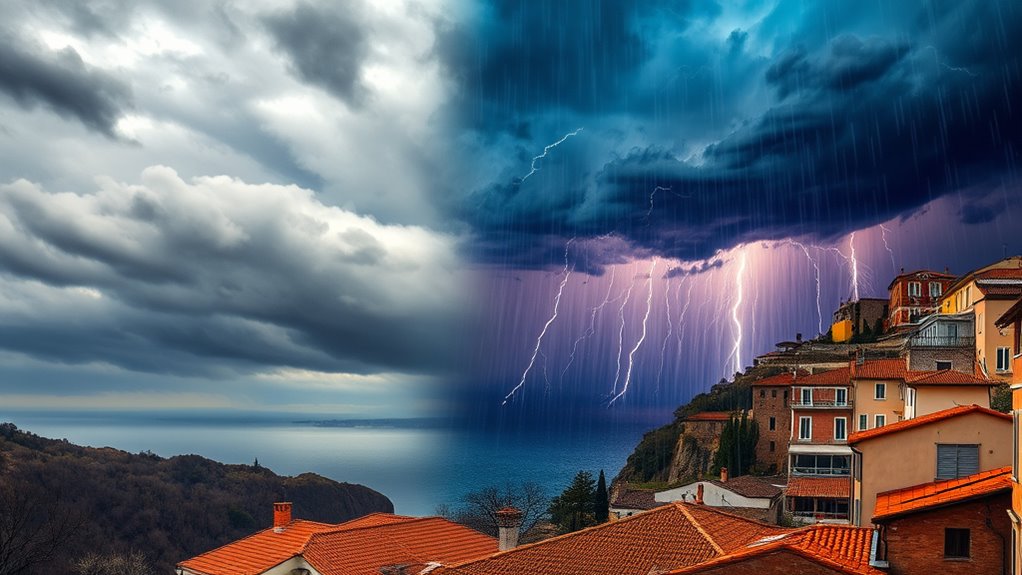
The Mediterranean region experienced striking rainfall contrasts in March 2025, with some areas facing intense storms while others remained unusually dry. You’ll notice that storm activity was concentrated along coastal zones and the central Mediterranean, driven by persistent low-pressure systems and moist Atlantic inflows. Meanwhile, inland areas, especially parts of the Levant and southeastern Spain, stayed dry, exacerbating drought conditions.
- Coastal storm tracks intensified erosion and flooding, challenging local infrastructure.
- Variability in rainfall created rapid shifts between flood-prone basins and arid zones.
- Mesoscale systems caused sharp spatial contrasts, complicating water management.
- Persistent storm activity increased the risk of flash floods, especially in storm-prone basins.
This sharp rainfall variability underscores the Mediterranean’s vulnerability to fluctuating storm patterns amid climate change.
Flooding and Wet Conditions in Western Iberia and the Atlantic Margin
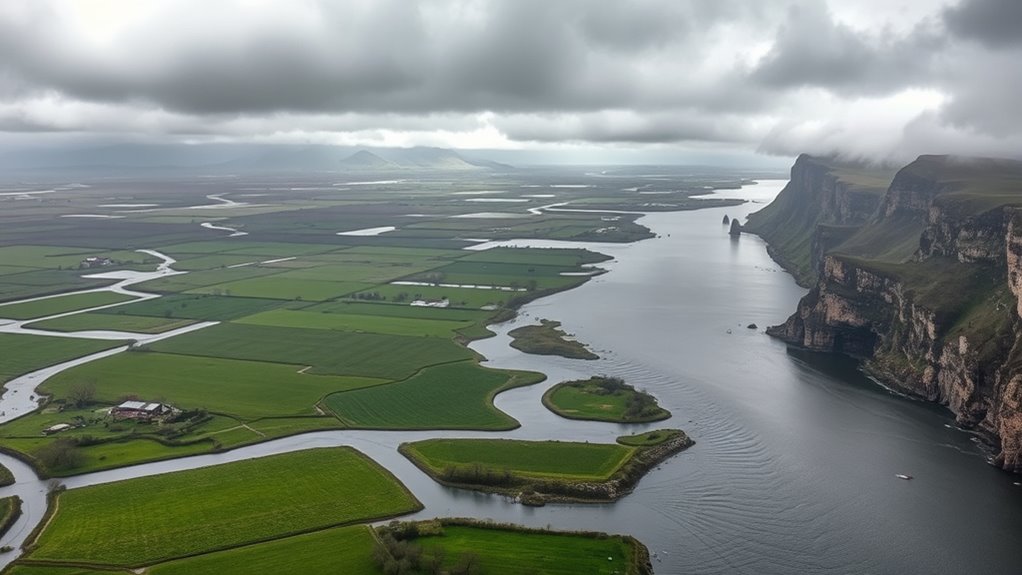
Frequent storms over western Iberia and the Atlantic margin during March 2025 brought above-average rainfall, leading to widespread flooding in many areas. Persistent surface lows over the Bay of Biscay fueled a steady maritime flow, driving intense cyclonic activity. These storms caused heavy precipitation along Iberian coasts and western France, filling reservoirs depleted by previous droughts. Contrasts emerged: southern Iberia experienced intense rainfall and flooding, while some UK and Irish regions remained relatively dry early in the month. The spatial variability was striking, with catchments in wetter zones flooding and neighboring basins staying parched. The stormy pattern created a complex flood risk landscape, demanding immediate attention to water management and infrastructure resilience across the Atlantic-facing regions of Iberia and France. Understanding flood risk patterns is essential for developing effective mitigation strategies in these vulnerable areas. Additionally, precipitation variability played a crucial role in shaping the differing flood impacts across these regions, emphasizing the importance of localized water management approaches. Furthermore, the impact on infrastructure highlighted the need for adaptive solutions to mitigate future flood risks effectively.
Broader Climate Context and Future Outlook for European Weather

Recent climate patterns highlight that Europe is experiencing unprecedented warming trends, with March 2025 setting a new record as the warmest month on record for the continent. This acceleration aligns with global warming signals, indicating that extreme temperature anomalies and variability will become more common. As you look ahead, consider these key points:
- Warming will continue, especially in eastern and northern regions, driven by persistent high-pressure systems.
- Precipitation patterns will grow more uneven, with some areas facing droughts and others experiencing intense rainfall and flooding.
- Wildfire risks and heat-related hazards will increase, demanding better preparedness and adaptation strategies.
- Climate change will amplify existing regional differences, making weather patterns more unpredictable and requiring flexible responses for agriculture, water, and infrastructure planning.
Frequently Asked Questions
How Will These Extreme Temperature Anomalies Affect Europe’s Long-Term Climate Trends?
These temperature anomalies indicate that Europe’s long-term climate is warming faster, intensifying existing trends. You’ll see more frequent, severe heatwaves, droughts, and wildfires, especially in eastern and central regions. The record-breaking warmth and variability also suggest increased unpredictability in weather patterns. This underscores the urgent need to adapt infrastructure, agriculture, and ecosystems to cope with a changing climate driven by ongoing global warming.
What Are the Potential Impacts of March 2025’s Weather on European Agriculture?
March 2025’s weather hits like a double-edged sword for your agriculture. Early warmth in eastern and central Europe speeds up crop phenology, risking frost damage if cold snaps return. Meanwhile, uneven rainfall—drought in some areas and flooding in others—disrupts planting schedules and water supplies. This patchwork of conditions creates a fragile balance, making your farming calendar more unpredictable and vulnerable to extreme weather swings.
Could the Observed Variability Lead to More Frequent Regional Droughts or Floods?
Yes, the variability you see in March 2025 can lead to more frequent droughts or floods. If dry conditions persist, especially in central Europe, groundwater recharge and reservoir levels could drop, increasing drought risk. Conversely, areas experiencing heavy rainfall, like southwestern Iberia, may face flooding and infrastructure stress. These contrasting patterns highlight how ongoing climate change amplifies regional extremes, making droughts and floods more common and severe.
How Might Arctic Sea Ice Decline Influence Future European Weather Patterns?
You might see more extreme European weather patterns as Arctic sea ice declines. Less sea ice means less reflection of sunlight, warming the Arctic and disrupting jet stream patterns. This can cause prolonged cold spells in some areas and intense warmth in others, leading to increased storms, droughts, or floods. Expect greater variability and unpredictability, making it harder to prepare for seasonal changes and extreme weather events across Europe.
What Adaptation Strategies Are Being Considered for Europe’s Increasing Storm and Heat Risks?
Adaptation strategies for Europe’s rising storm and heat risks are like planting seeds for resilience. You should prioritize enhancing flood defenses, investing in green infrastructure, and updating building codes to withstand extreme weather. Promoting water conservation, expanding early warning systems, and increasing public awareness are equally crucial. By adopting these measures, you help turn Europe’s climate challenges into opportunities for stronger, more resilient communities.
Conclusion
This March, Europe’s weather paints a vivid picture of contrasts. In the north, you experience unprecedented warmth, while the south sees wetter conditions despite overall mildness. Did you know that some parts of Central Europe hit record temperatures of 25°C, making it feel like spring on steroids? So, as you plan for the months ahead, remember that Europe’s climate is shifting rapidly, blending extremes that keep you guessing what tomorrow’s weather might bring.