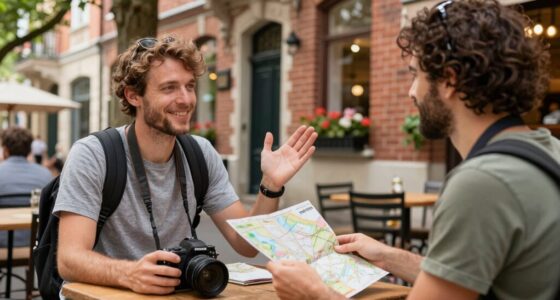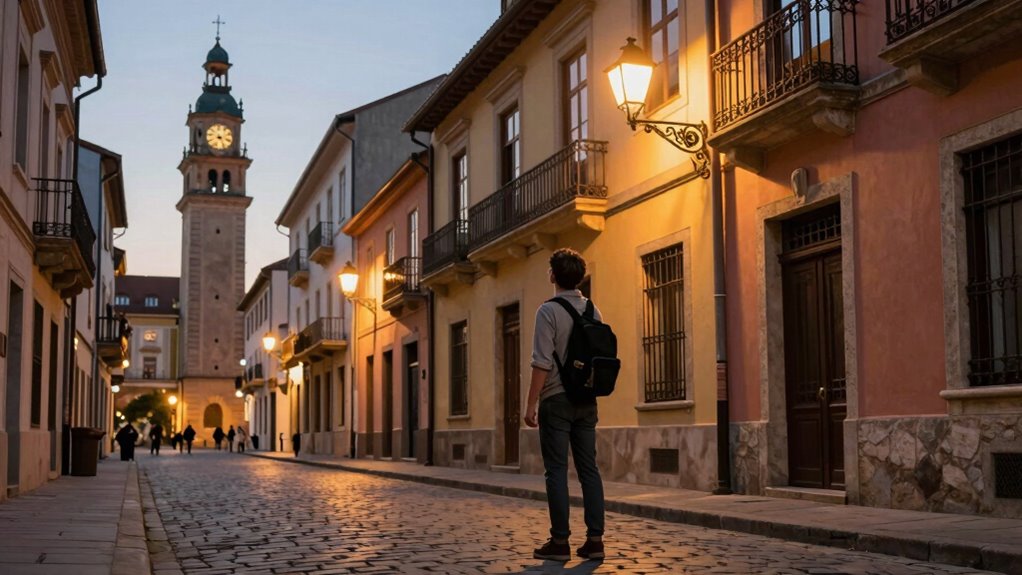

To feel safe while solo traveling in Europe without becoming paranoid, pick destinations with low crime rates like Ireland, Switzerland, or Portugal. Prepare by researching local laws, safety tips, and reliable transport options. Stay alert, trust your instincts, and keep valuables secure. Connect with locals or fellow travelers for support and advice. By staying cautious, confident, and informed, you’ll enjoy every moment—and there’s more to explore on how to travel smartly and safely.
Key Takeaways
- Research and choose low-crime destinations like Ireland, Switzerland, or Portugal for a safer travel experience.
- Pack safety essentials, stay aware of your surroundings, and use safety apps to maintain vigilance without paranoia.
- Familiarize yourself with local laws, customs, and transportation to navigate confidently and respectfully.
- Trust your instincts, secure valuables, and avoid risky areas to prevent danger without constant worry.
- Connect with local communities or hostels for support and tips, fostering confidence while remaining security-conscious.
Choosing Safe Destinations in Europe
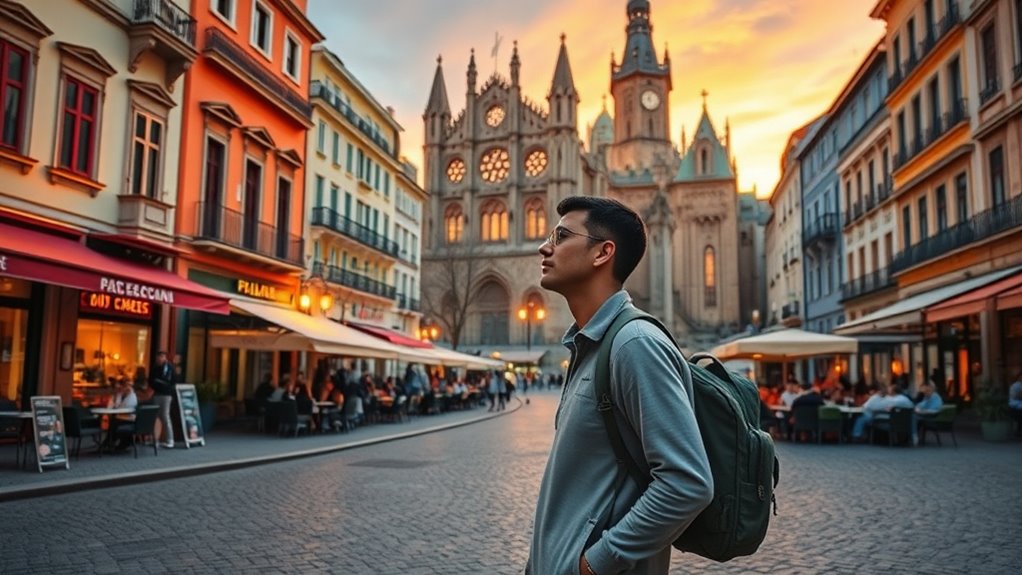
When choosing safe destinations in Europe, it’s important to focus on countries with low crime rates and strong protections for women. Countries like Ireland, Switzerland, and Portugal rank high for safety, thanks to low crime levels. Austria is also a top choice, with a low Women’s Danger Index and minimal sexual violence. Spain, despite its lively reputation, has strong laws against violence, making it safer for solo women. Luxembourg stands out, with 86% of women feeling safe walking alone at night. Norway maintains zero political violence targeting women, further emphasizing its safety. Additionally, local safety measures such as well-trained police forces and public awareness campaigns contribute significantly to a secure environment for travelers. These measures create an environment where emotional well-being can flourish, especially for solo travelers seeking peace of mind. Implementing preventive safety strategies can further boost your confidence and security during your travels. Moreover, understanding the importance of projector specifications can help travelers ensure a comfortable and safe experience when choosing accommodations with multimedia facilities. Prioritize destinations known for safety, good infrastructure, and supportive environments for solo female travelers. Personal safety measures can further enhance your confidence and security during your travels.
Essential Preparations for Solo Female Travelers
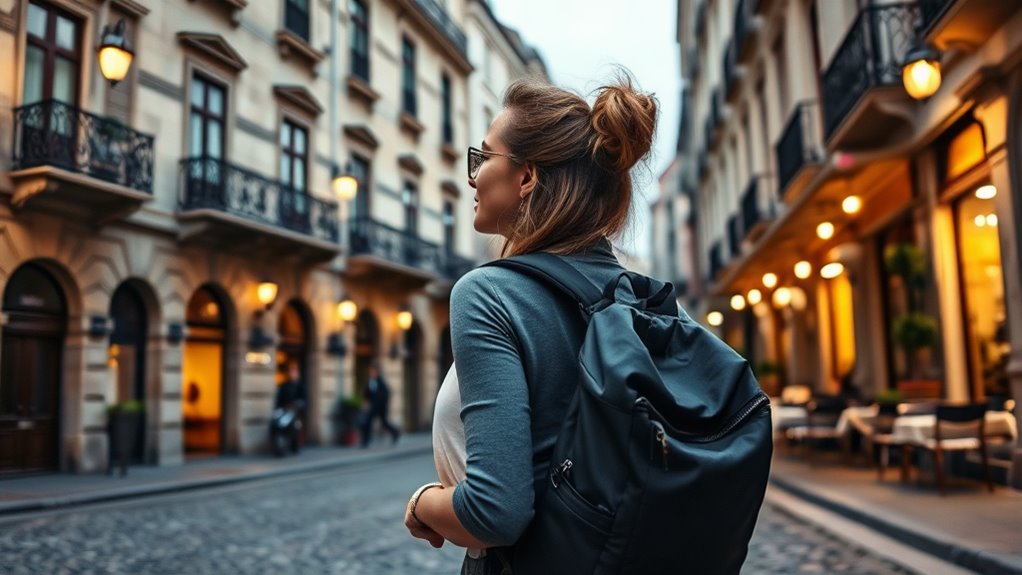
Proper preparations can make or break your solo trip, especially for women traveling alone. You need to plan ahead to stay safe and confident. Research countries with low crime rates like Ireland, Switzerland, and Portugal. Pack essentials such as a personal safety alarm, a power bank, and copies of important documents. Use safety apps to receive real-time alerts and check reviews for women-friendly accommodations. Being aware of financial safety measures can further protect you during your travels. Additionally, familiarize yourself with cultural norms to ensure respectful and safe interactions in unfamiliar settings. Knowing how to interpret public safety information can also help you make informed decisions while exploring new cities. Being aware of electrical safety tips, such as avoiding overloaded outlets or using certified chargers, can enhance your overall safety during your trip. Moreover, understanding cookie categories and managing your privacy preferences can help protect your personal data while browsing online safety resources.
Navigating Public Transportation and Local Laws

Ever wondered how to navigate Europe’s public transportation safely and confidently? Here are four tips to help you stay secure and informed:
- Research local laws and customs—know what’s legal and taboo to avoid misunderstandings. Additionally, understanding the local transportation regulations can prevent accidental violations and ensure smoother travel experiences.
- Use official transit apps for real-time updates, schedules, and route maps.
- Keep an eye on your belongings—use secure bags and stay alert on crowded buses or trains.
- Follow local signage and instructions—pay attention to station announcements and posted rules.
- Stay aware of cultural sensitivities—understanding regional etiquette can enhance your safety and experience.
Staying Vigilant and Recognizing Risks
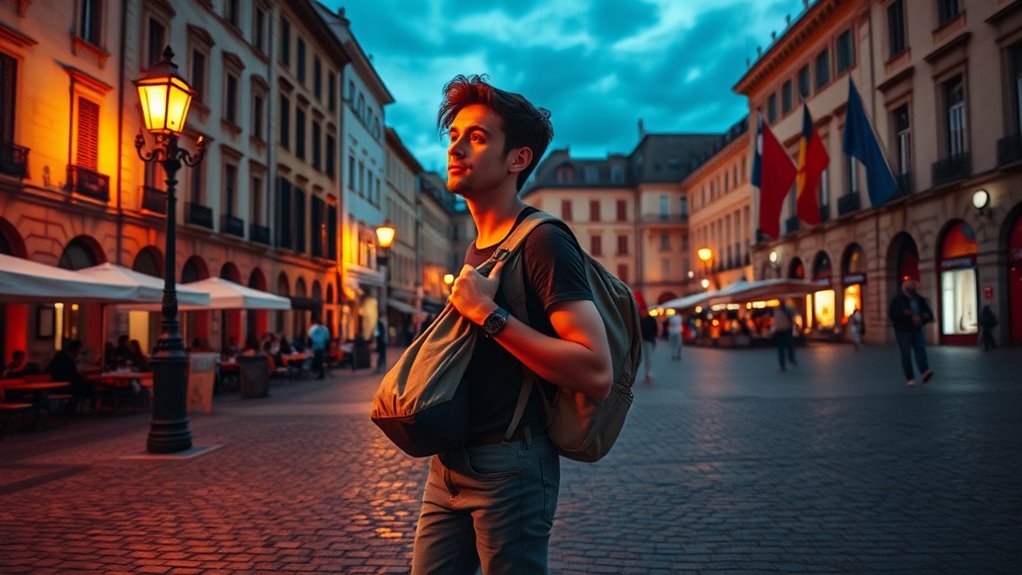
Staying vigilant is key to enjoying your solo trip safely; it requires constant awareness of your surroundings and quick recognition of potential risks. Pay attention to what’s happening around you, especially in unfamiliar areas or after dark. Trust your instincts—if something feels off, remove yourself from the situation. Keep your valuables secure and avoid flaunting expensive items. Be cautious with strangers offering unsolicited help or deals, and don’t share personal details with new acquaintances immediately. Stay alert in crowded places where pickpocketing often occurs. Recognize signs of unsafe environments, like poorly lit streets or deserted areas. Regularly check your surroundings and use safety apps for alerts. Being proactive and attentive helps you spot risks early and keeps your trip safe. Additionally, understanding the concept of Free Floating safety measures can help you adapt quickly to unexpected situations. Familiarizing yourself with sound quality and levels can also assist in assessing the environment, especially in noisy or chaotic settings. Maintaining situational awareness is crucial for detecting subtle cues that could indicate danger before it escalates, and practicing environmental vigilance can further enhance your ability to respond effectively. Developing a sense of peripheral vision can help you stay aware of what’s happening around you without fixating on a single point.
Connecting With Community and Local Support
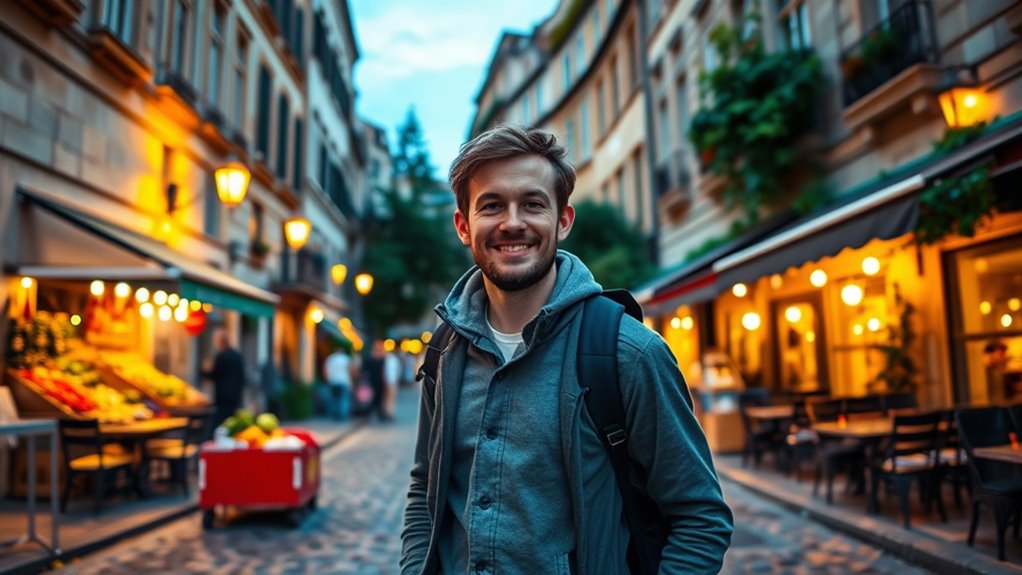
Connecting with local communities can considerably enhance your safety and enrich your solo travel experience. Building genuine connections gives you insights into safe neighborhoods, trusted services, and cultural norms. It also provides a support network if you encounter issues. Here are four ways to connect effectively:
- Join local events or meetups—these are great for making quick connections and gaining local tips. Engaging with community members can also foster trust-building that increases your sense of security during your trip.
- Use social media groups—find expat or traveler communities for advice and companionship.
- Visit community centers or cafes—these spots often host events and provide safe spaces to meet locals.
- Engage with hostel or hotel staff—they know the area well and can offer personalized safety advice. Familiarity with local gelato spots can also be a delightful way to connect with the community and enjoy authentic experiences. Additionally, understanding how AI-powered data analytics are used by local businesses can help you identify popular and secure places to visit. Recognizing the role of local traditions can further deepen your cultural understanding and foster more meaningful interactions. Being aware of seasonal festivals and events can also offer unique opportunities to engage with the community and stay informed about local safety considerations.
Building Confidence and Enjoying Your Trip
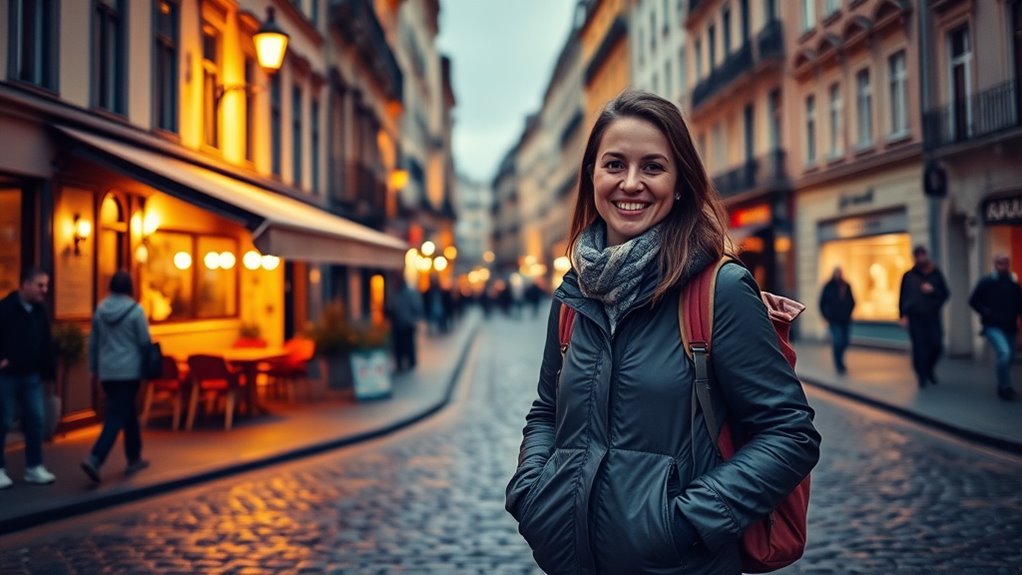
Building confidence is key to truly enjoying your solo trip in Europe. When you trust your preparations and instincts, you’ll feel more relaxed and open to new experiences. Focus on small wins—like navigating public transport or ordering in a local café—to build momentum. Remember, safety measures like choosing well-lit areas and secure accommodations boost your confidence. Use tools such as safety apps and reviews from fellow travelers to stay informed and reassured. Additionally, staying informed about local regulations and safety tips can help you avoid common scams and ensure a smoother experience. Being aware of European safety standards and local customs further enhances your sense of security. Incorporating trusted safety resources into your planning will also help you stay prepared for unexpected situations. Embracing a security mindset and remaining vigilant throughout your journey will help you enjoy your trip with peace of mind.
Frequently Asked Questions
How Can I Find Reliable Safety Reviews for Accommodations?
You can find reliable safety reviews by checking trusted platforms like Booking.com, Hostelworld, and TripAdvisor, focusing on comments mentioning safety, security, and staff helpfulness. Use filters like “solo female travelers” or “safe accommodations” to narrow your options. Read recent reviews for updated insights. Also, look for reviews that mention well-lit areas, CCTV, and secure entry points. Cross-reference reviews across multiple sites to verify consistency before booking.
What Are the Best Safety Apps for Solo Female Travelers?
You should download safety apps like Google Maps for real-time location sharing, and StaySafe or bSafe for emergency alerts and distress signals. Download WhatsApp to stay connected with friends or local contacts, and Citymapper for safe public transit info. Consider apps like TripWhistle or RedZone Map for crime updates in your area. These tools help you stay aware, connected, and prepared without feeling paranoid, ensuring safer solo travels.
How Do I Handle Cultural Differences Related to Gender Safety?
Did you know 69% of women cite safety as a travel barrier? To handle cultural differences related to gender safety, respect local customs and dress modestly where appropriate. Learn basic phrases to communicate politely and ask for help if needed. Research local attitudes beforehand, and choose female-friendly accommodations with good reviews. Trust your instincts, stay in well-lit, busy areas, and avoid isolated spots to feel secure and show respect for local norms.
What Should I Do if I Experience Harassment or Threats?
If you experience harassment or threats, stay calm and assertively set boundaries. Move to a safe, well-lit area or seek help from nearby staff or security. Use your phone to call local authorities or emergency services if needed. Trust your instincts—if a situation feels unsafe, don’t hesitate to leave. Remember, your safety comes first; you’re empowered to protect yourself and seek support whenever necessary.
Are There Local Support Services Available for Travelers in Emergencies?
Yes, there are local support services ready to swoop in like your travel guardian angels. Dial emergency numbers like 112 in most European countries, and you’ll connect to police, medical aid, or fire services. Many cities also have tourist helplines, embassy assistance, and multilingual support centers. Remember, being aware of these options means you’re never truly alone—your safety net is just a call away, even if you’re feeling a bit lost.
Conclusion
Traveling solo in Europe can be empowering, and with the right preparations, you’ll feel confident exploring new places. Did you know that women traveling alone report higher satisfaction and personal growth? Staying aware and connected helps you enjoy your trip without paranoia. Trust your instincts, stay informed, and embrace the adventure — safety is about balancing caution with curiosity. Now, go ahead and create unforgettable memories while feeling secure every step of the way.