To avoid being that tourist on European public transit, respect personal space, queue patiently, and keep noise levels low, especially in quiet zones. Offer your seat to those in need, keep your belongings organized, and dispose of trash properly. Follow local customs, like standing on the right of escalators or respecting priority seating. Be aware of signs and signals, and avoid drinking alcohol where prohibited. Want to become a courteous traveler? Keep exploring these essential tips.
Key Takeaways
- Respect personal space, avoid pushing or crowding, and offer seats to those in need.
- Follow local queuing customs, allow disembarking passengers to leave first, and keep belongings organized.
- Keep noise levels low, especially in designated quiet zones, and use headphones for audio devices.
- Pay attention to signage, signals, and cultural norms like standing on the right side of escalators.
- Refrain from drinking alcohol or using substances onboard unless explicitly permitted and appropriate.

ASA Guide to the Flight Review
As an affiliate, we earn on qualifying purchases.
As an affiliate, we earn on qualifying purchases.
Respect Personal Space and Physical Boundaries
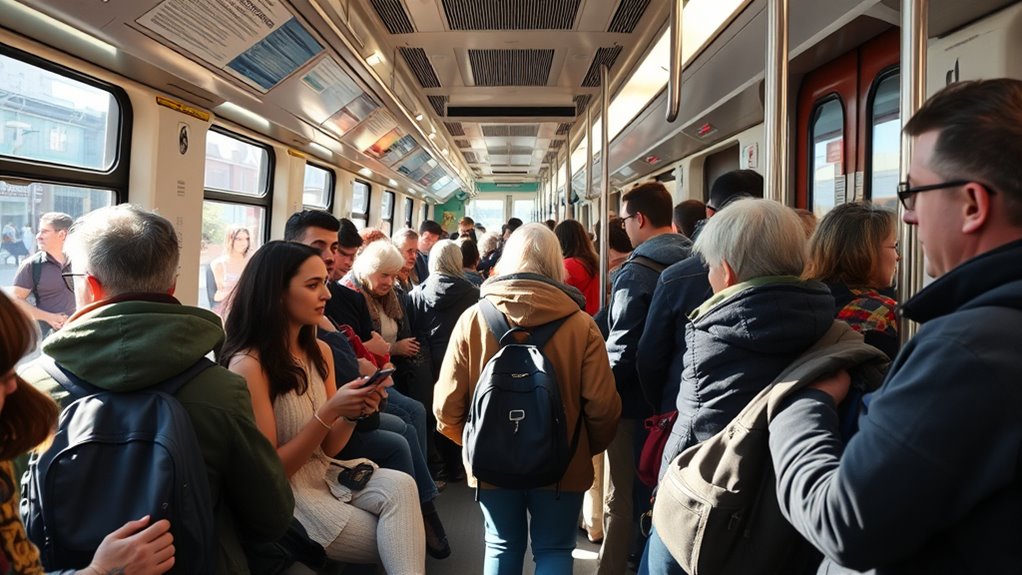
Respecting personal space is essential when using public transit in Europe, especially during peak hours when trains, buses,, and metros are crowded. You should avoid standing too close to others or invading their personal bubble. Keep your bags out of walkways or place them on your lap to prevent blocking seats or aisles. Be mindful of physical contact, which varies by culture; in some countries, close proximity is normal, while others expect more distance. Watch for cues from locals—if they lean away or shift away, respect their comfort zone. In crowded areas, don’t push or shove. Instead, move smoothly and patiently. Showing awareness of personal boundaries helps you blend in and ensures a respectful, comfortable experience for everyone onboard. Additionally, being aware of modern transit etiquette can help you navigate these situations more confidently. Understanding cultural differences in public behavior can further enhance your ability to adapt respectfully in diverse settings. Being observant and responsive to these cues demonstrates respect for local customs and fosters a more positive environment during your travels. Recognizing the importance of personal space awareness can also prevent misunderstandings and promote smoother interactions, especially when combined with empathy for others.

Soundcore by Anker Q20i Hybrid Active Noise Cancelling Headphones, Wireless Over-Ear Bluetooth, 40H Long ANC Playtime, Hi-Res Audio, Big Bass, Customize via an App, Transparency Mode (Black)
Hybrid Active Noise Cancelling: 2 internal and 2 external mics work in tandem to detect external noise and…
As an affiliate, we earn on qualifying purchases.
As an affiliate, we earn on qualifying purchases.
Master the Art of Queuing and Boarding
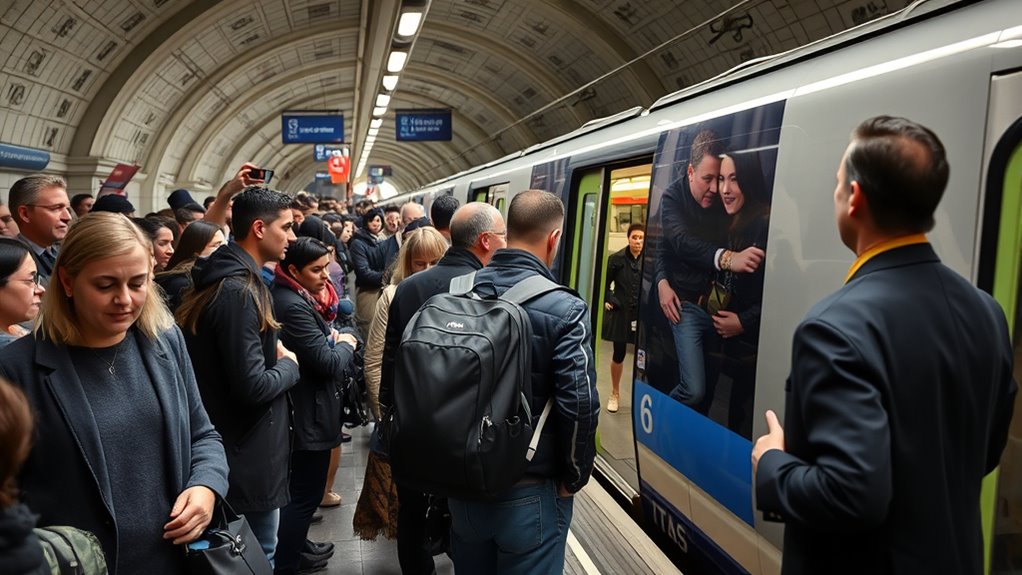
Mastering the art of queuing and boarding is essential for a smooth and respectful journey on European public transit. Always join lines patiently, avoiding cutting in front of others. When boarding, let passengers disembark first, especially during rush hours, to prevent congestion. Be mindful of local habits—while Scandinavians value orderly boarding, Italians may board more lively, but always stay aware of the flow. Stand to the right on escalators in countries like Germany to keep the flow smooth. Keep your bags out of walkways, either on your lap or on the floor, to avoid blocking exits or seats. Respect personal space, and don’t push or crowd the doors. Being aware of body jewelry measurements and materials can help ensure your accessories don’t interfere with your comfort and safety while using transit. Additionally, understanding the weight of wind turbine blades can provide insight into the importance of design and logistics in large-scale infrastructure. Planning your public transit routes in advance using technology can also help you navigate systems more efficiently. Considering the essential tanning tips can help you stay comfortable during long waits or outdoor transit stops. Following these rules ensures a pleasant experience for everyone and shows your respect for local transit etiquette.

Zuihug 1Pack Travel Pill Organizer – 10 Compartments Pill Case, Compact and Portable Pill Box, Perfect for On-The-Go Storage, Pill Holder for Purse Blue
Keep your medication safe and organized while on-the-go with our Travel Pill Organizer.
As an affiliate, we earn on qualifying purchases.
As an affiliate, we earn on qualifying purchases.
Keep Noise Levels Considerate and Respect Quiet Zones
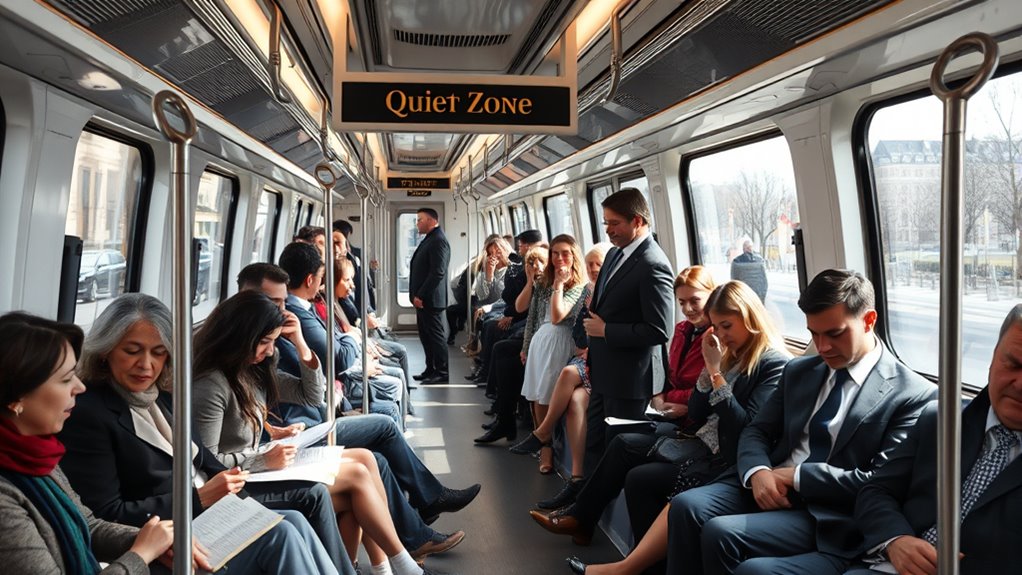
Maintaining a considerate noise level on European public transit helps guarantee a comfortable environment for all passengers. Keep your voice low, especially in designated quiet zones, to avoid disturbing others. Silence your phone notifications and refrain from making phone calls in quiet cars. Use headphones for music or videos at a modest volume, respecting local rules. Be mindful of the cultural norms—German trains enforce silence strictly, while lively conversations are common elsewhere. Additionally, understanding cultural norms related to noise can help you adapt your behavior to different regions and avoid unintentional disturbances. Staying informed about regulatory standards can further assist in maintaining respectful conduct during your journeys. Being aware of local customs regarding noise levels can enhance your travel experience and demonstrate cultural sensitivity. Recognizing the volatility of markets can also prepare you to react appropriately to sudden changes during your travels or investments.

G4Free 20L Lightweight Packable Backpack Travel Hiking Daypack Foldable Backpack for Men Women
Foldable & Lightweight– Minimalist Designed. The ultra-lightweight small backpack save your space to fold into its built-in pouch…
As an affiliate, we earn on qualifying purchases.
As an affiliate, we earn on qualifying purchases.
Practice Thoughtful Seating and Priority Seat Etiquette
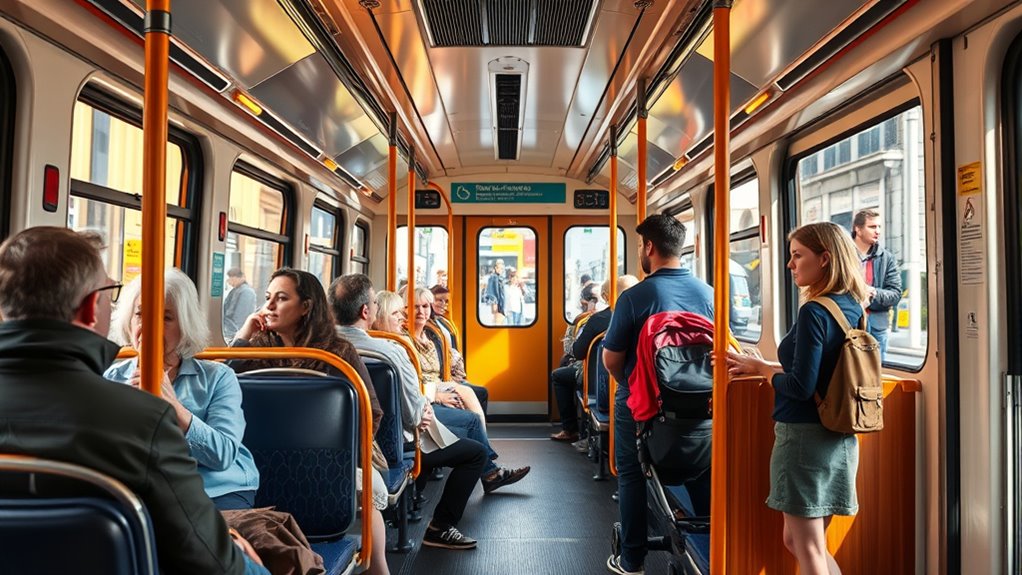
Practicing thoughtful seating and priority seat etiquette is essential for ensuring a comfortable and respectful environment on European public transit. Always be aware of those who need seats more than you, such as the elderly, pregnant women, or travelers with disabilities. If you see someone in need, offer your seat without hesitation. When seated, keep your feet off seats and avoid spreading out unnecessarily, especially when space is limited. Respect designated priority seats, and do not sit there if you’re not eligible. Before taking a seat, check for reservation signs or markings. During busy times, give up your spot if someone urgently needs it. Being considerate with your seating helps create a courteous atmosphere for everyone. Incorporating adaptive public transit features can also enhance accessibility and comfort for all passengers. Additionally, being aware of local customs and public transit etiquette can further improve the travel experience for everyone involved. Recognizing how passenger behavior impacts overall comfort can encourage more considerate interactions.
Maintain Cleanliness and Dispose of Trash Properly
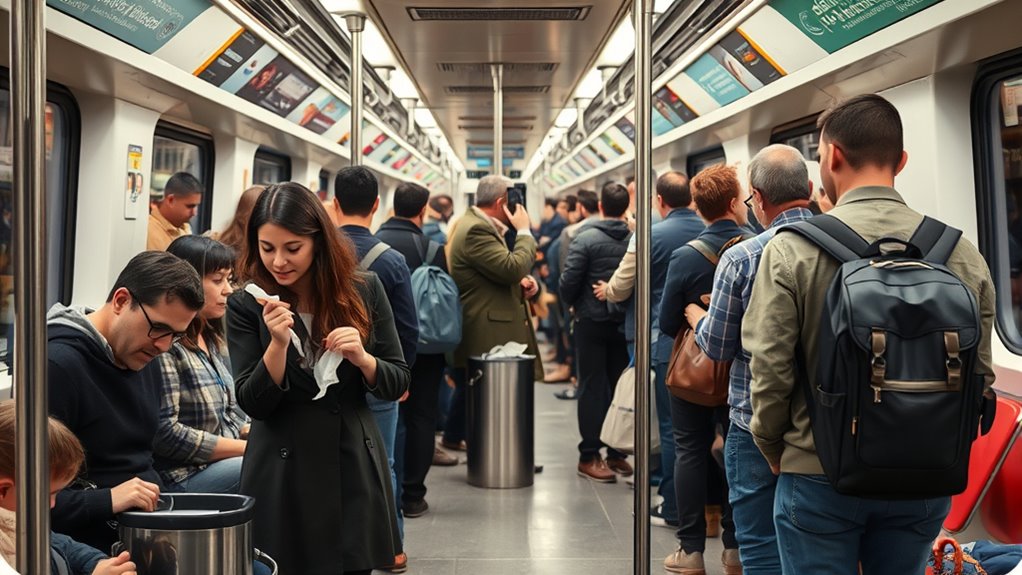
You should always dispose of your trash properly and keep the transport clean for everyone’s comfort. Use designated bins and avoid leaving messes behind, even if it’s just a snack wrapper or a cup. Maintaining a tidy environment shows respect for fellow passengers and helps preserve the quality of public transit. Additionally, practicing cultural etiquette by following local customs can enhance your travel experience and demonstrate consideration for the community. Being aware of cleaning appliances and systems used in public transit can also help you understand the importance of maintaining sanitation standards. Recognizing market regulations related to public service can further promote responsible usage and support a positive environment. Understanding proper hygiene practices on public transit can also reduce the spread of germs and contribute to a healthier space for everyone. Moreover, awareness of safety protocols can ensure a secure and comfortable journey for all passengers.
Proper Trash Disposal Etiquette
To keep public transit clean and pleasant for everyone, it’s important to dispose of trash properly. Always carry a small bag or use your pockets to hold wrappers, receipts, or used tissues until you find a bin. Look for designated trash containers on trains, buses, or stations—don’t leave trash behind or on seats. Be mindful of local customs; some countries have strict rules against littering, with fines or social disapproval. Avoid eating messy foods that might spill or produce crumbs, and clean up after yourself. If there’s no trash bin nearby, hold onto your trash until you reach a proper disposal point. Respecting these habits helps maintain a tidy environment and demonstrates consideration for fellow passengers.
Keep Transport Clean and Tidy
Maintaining a clean and tidy environment on public transportation shows respect for fellow passengers and helps everyone enjoy a more pleasant journey. To do this, follow these steps:
- Dispose of trash properly by using designated bins or taking your rubbish with you.
- Avoid eating messy foods that can spill or leave crumbs behind.
- Keep your belongings organized, placing bags on your lap or in designated areas, not on seats or walkways.
Adapt to Country-Specific Cultural Norms
Adapting to country-specific cultural norms is essential for respectful and smooth public transit experiences across Europe. In Scandinavia, maintain orderliness by standing on the right side of escalators and queueing patiently. In Italy, expect lively interactions and a more relaxed boarding atmosphere, so don’t be surprised by crowded stops or energetic conversations. In Germany, quietness is valued—keep phone volumes low, and avoid loud talking or disruptive behavior. Eastern European countries may have larger personal space norms, so respect these boundaries, especially during busy hours. In France, body contact, like light touches or proximity, can be common, but always gauge local comfort levels. Observing and following these cultural cues shows respect and helps you blend in seamlessly, ensuring a more pleasant journey for everyone. Being aware of cultural norms can also prevent misunderstandings and make your trip more enjoyable. Additionally, understanding Deaf Vibes techniques related to auditory sensitivities can be beneficial if you or fellow travelers experience auditory processing challenges, fostering more inclusive environments. Recognizing and respecting local customs is key to a positive transit experience throughout Europe. One way to enhance your awareness is by learning about public transportation etiquette, which varies across countries and can help you navigate more confidently.
Observe Local Rules on Alcohol and Substance Consumption
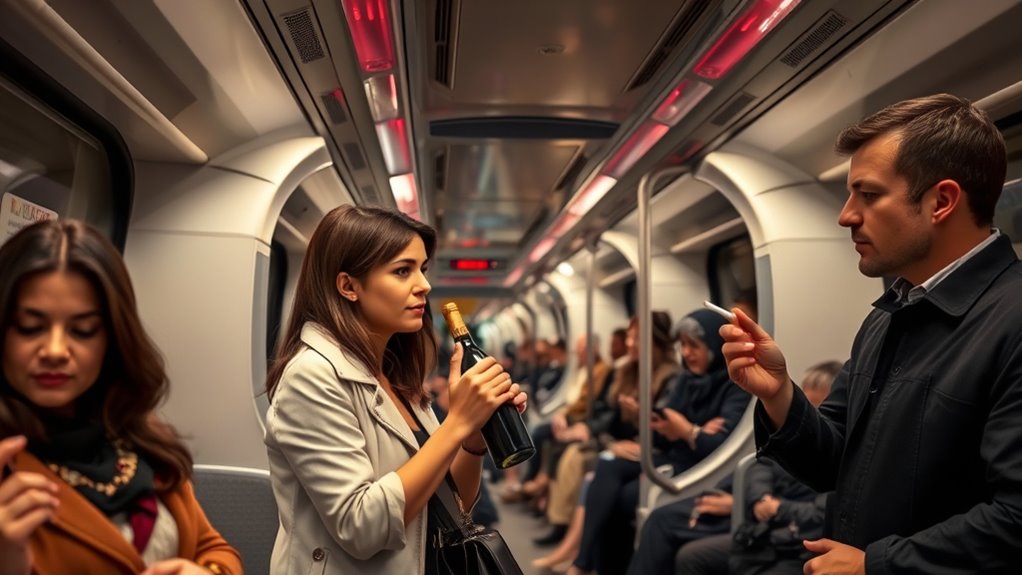
You should always respect local laws regarding alcohol on public transit, as many European countries have strict regulations. Avoid consuming or carrying alcohol in stations, buses, or trains unless permitted, since penalties can be severe. By following these rules, you help maintain a safe and respectful environment for everyone onboard.
Respect Drinking Regulations
While enjoying Europe’s diverse public transit systems, it’s essential to respect local rules on alcohol and substance consumption. In many places, drinking alcohol on trains, buses, or metros is prohibited. To avoid issues, keep these points in mind:
- Refrain from opening bottles or cans onboard, especially in countries like Germany or Sweden where alcohol bans are strict.
- If alcohol is allowed, consume quietly, avoiding loud behavior that disturbs other passengers.
- Be aware of signs or notices indicating specific restrictions, such as alcohol bans in certain stations or regions.
Ignoring these rules can lead to fines or removal from the vehicle. Always check local regulations beforehand and respect the environment and fellow travelers by adhering to the rules. This ensures a smooth, respectful journey for everyone.
Avoid Public Substance Use
Observing local rules on alcohol and substance consumption is essential for maintaining respectful and safe public transit environments across Europe. Many countries prohibit drinking alcohol on buses, trains, and metros, and violating these rules can lead to fines or ejection. Some places, like Germany and Scandinavia, strictly enforce no alcohol policies, while others may have more relaxed attitudes in designated areas. Using substances like recreational drugs in transit areas is generally illegal and can cause safety concerns or discomfort for other passengers. To avoid trouble, refrain from consuming alcohol or any substances publicly. Respect the rules and local customs, and if you want to enjoy a drink, do so responsibly in permitted venues outside transit vehicles. This approach ensures a pleasant journey for everyone.
Understand and Follow Local Signage and Signals
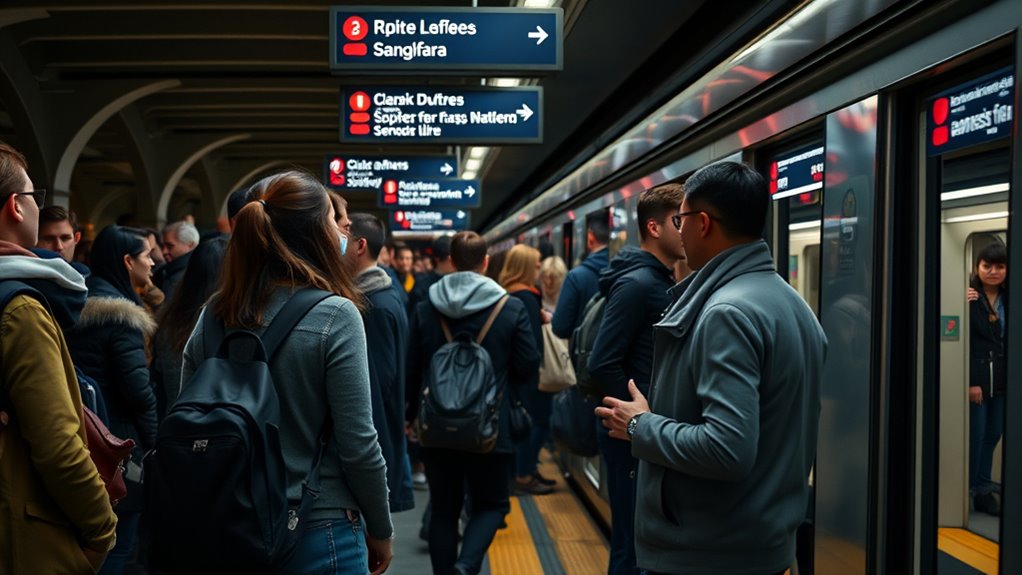
Understanding and following local signage and signals is vital for steering public transit smoothly across Europe. You’ll encounter various signs and signals that guide safe and efficient travel. For example:
- Pay attention to colored lights at stations indicating when trains or buses are arriving or departing.
- Follow directional signs to locate platforms, exits, or ticket machines quickly.
- Observe symbols for priority seating, quiet zones, or no-smoking areas to respect local rules.
Always look up and read signs carefully—they vary by country, and missing a key instruction can cause delays or confusion. When signals are unclear, ask a nearby staff member or fellow passenger for guidance. Adapting to these cues ensures respectful, smooth transit experiences.
Be Mindful of Pedestrian and Passenger Flow

Being mindful of pedestrian and passenger flow is essential for smooth and courteous public transit in Europe. Always wait for passengers to exit before stepping onto trains, buses, or trams. Keep to the right on escalators, allowing others to pass on the left, especially in Germany. Avoid blocking doorways or crowding entrances and exits, which can slow everyone down. When boarding, adapt to local customs—some countries prefer orderly queues, while others are more lively. Be aware of crowded areas and move efficiently to prevent congestion. Keep your belongings close and out of walkways, giving space to others. Respect the flow of foot traffic, especially during rush hours, to ensure a hassle-free experience for all passengers.
Frequently Asked Questions
How Should I Handle Personal Space in Crowded European Transit During Peak Hours?
During peak hours, you should stand close to others without invading their personal space by keeping your bags out of walkways and on your lap. Be mindful of local norms—some countries tolerate closer proximity, while others value more space. Avoid excessive contact and adjust your behavior to the crowd’s comfort level. Respect personal boundaries, and you’ll navigate crowded European transit smoothly and politely.
What Is the Proper Way to Queue and Board in Different European Countries?
In Europe, queuing and boarding are serious business—think of it as a dance where every step matters. You join lines patiently, never cut, and stand to the right on escalators in Germany. Allow exiting passengers to leave first, and board only when it’s your turn. In lively countries like Italy, be prepared for more energetic boarding. Always observe local customs, and you’ll blend seamlessly into the rhythmic flow of European transit.
How Loud Is Acceptable When Talking or Using Phones on European Trains?
You should keep your voice quiet and avoid loud conversations on European trains. Use headphones for music or videos, and silence notifications to prevent disturbances. In quiet zones, speak softly or not at all. Phone calls are generally discouraged, especially in designated quiet cars. Respect local norms by adjusting your volume based on the country—German trains, for example, demand extra quietness, while Italy’s lively atmosphere allows for slightly louder chats.
When and How Should I Offer My Seat to Those in Need?
Think of your seat as a bridge of kindness. When you see an elderly person, pregnant passenger, or someone with a disability, step forward and offer your seat without hesitation. Make eye contact, smile, and politely say, “Please, take my seat.” If they decline, respect their choice. Your small act creates a ripple of respect, turning a simple gesture into a symbol of European courtesy.
Are There Specific Rules for Drinking Alcohol or Eating on European Public Transport?
In most European countries, you shouldn’t drink alcohol or eat messy foods on public transport. German trains, for example, have strict rules against alcohol, and you’re expected to keep noise levels low. In many places, eating is discouraged to maintain cleanliness and avoid disturbing others. Always check local signs or ask if unsure, but generally, it’s best to enjoy drinks and snacks before or after your ride.
Conclusion
By following these simple tips, you’ll not only show respect for local customs but also enjoy a smoother, more pleasant transit experience. After all, isn’t it worth making an effort to be a considerate traveler? When you prioritize kindness and awareness, you help create a more comfortable environment for everyone. So next time you hop on a European transit system, ask yourself: are you being the respectful tourist others would thank?