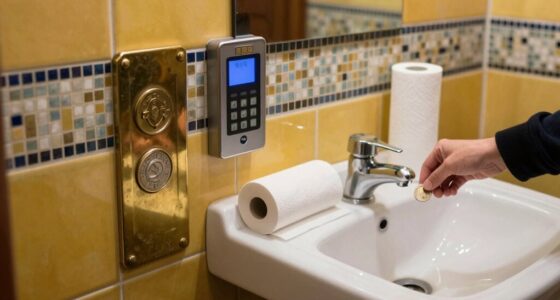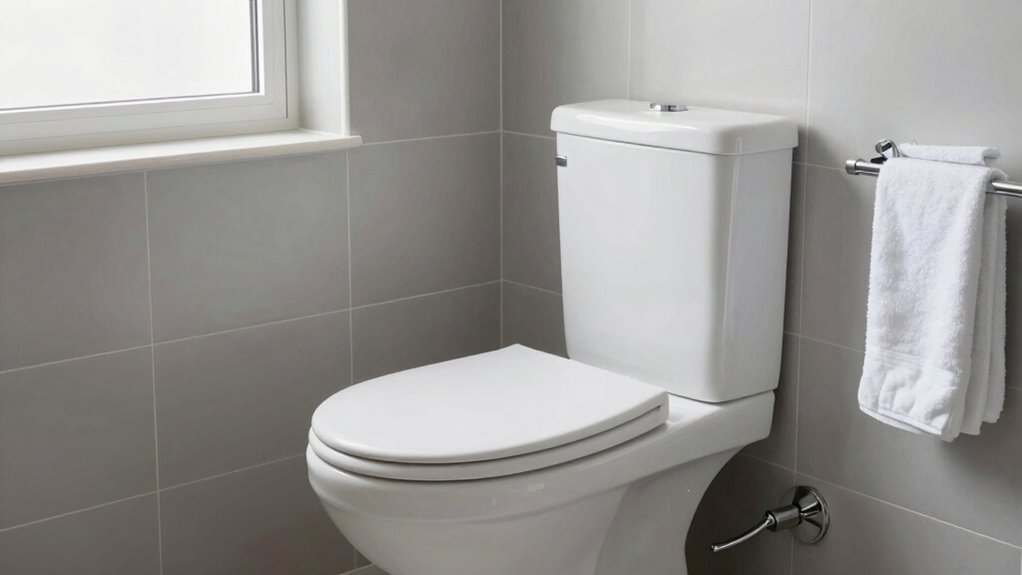

When using European toilets, you’ll encounter varied payment methods, from coin-operated stalls to attendants who accept tips. Flushing mechanisms differ—some have dual buttons, pull cords, or wall levers—and in fragile plumbing areas, avoid flushing sanitary items. Bidets are common, and hygiene norms vary, so use them respectfully. Privacy can mean fully enclosed cubicles or shared spaces. Understanding these quirks and customs guarantees a smooth experience—there’s plenty more to discover if you continue exploring.
Key Takeaways
- Always carry small change for coin-operated toilets and be aware of local payment methods and tipping customs.
- Follow local disposal practices: use bins for sanitary products if flushing is restricted to prevent plumbing issues.
- Respect regional hygiene norms by properly using bidets, washing thoroughly, and leaving the restroom tidy.
- Be mindful of privacy, signage, and gender-neutral facilities; fully close doors and observe shared restroom etiquette.
- Adapt to diverse toilet types and flush mechanisms, and carry tissues or essentials to navigate different bathroom setups comfortably.
European public toilet coin adapter
As an affiliate, we earn on qualifying purchases.
As an affiliate, we earn on qualifying purchases.
Navigating Coin-Operated and Attendant-Paid Toilets

In many European cities, public toilets are still coin-operated or maintained by attendants who collect fees at the entrance, so it’s important to be prepared with small change. Coin-operated stalls usually cost around €0.50, and having exact change speeds up the process. In places with attendants, you’ll often pay a small tip, usually a few cents or a euro, even if not mandatory. Some attendants might place larger bills on the payment plate to get change, so carrying small bills is helpful. Keep in mind that free public toilets are rare and may lack supplies like soap or toilet paper. Always check for signs or ask if you’re unsure about the fee or payment method, ensuring you’re respectful and prepared. Additionally, many European bathrooms are designed with public restroom etiquette in mind, so observing local customs can enhance your experience. Being aware of payment methods and local customs can make your visit more comfortable and respectful. For example, understanding toilet cleanliness standards can help you navigate unfamiliar facilities more confidently.

Portable Bidet Travel Large Capacity 450ml(15oz) Personal Toilet Handheld Blue
No Batteries Needed – Simply fill with Cool or Warm water and easy to squeeze bidet bottles, You…
As an affiliate, we earn on qualifying purchases.
As an affiliate, we earn on qualifying purchases.
Understanding Flushing Systems and Disposal Etiquette
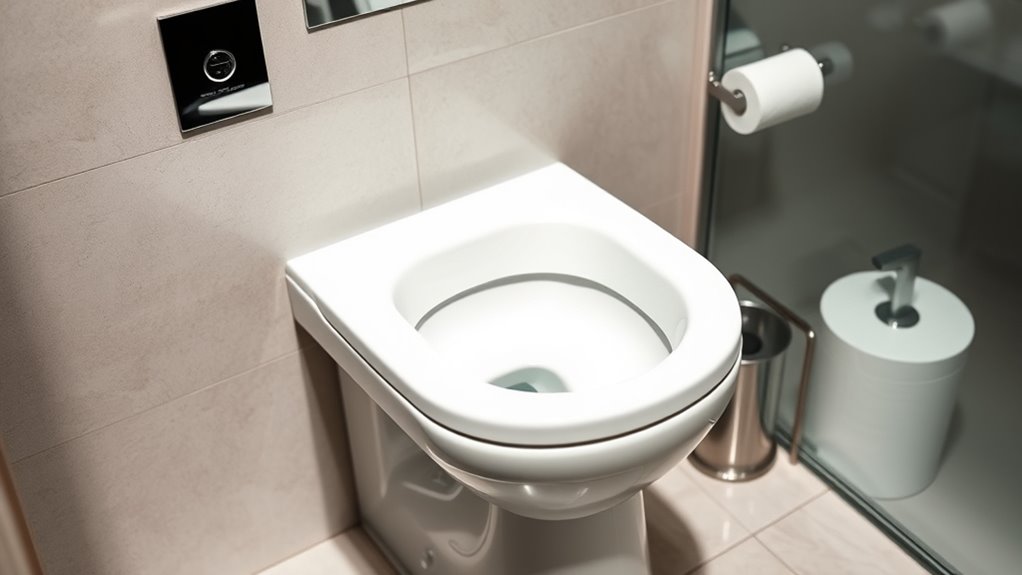
European toilets use a variety of flushing mechanisms, from modern dual-flush buttons to older pull-cords and wall levers. Proper waste disposal practices are important, especially in regions with fragile plumbing systems where toilet paper may need to be tossed in bins instead of flushed. Understanding these differences helps you avoid mishaps and maintain good etiquette during your visit. Additionally, being aware of energy-efficient technology in some modern European toilets can enhance your understanding of their sustainability features. Using water-saving features can also contribute to more eco-friendly bathroom habits during your travels. Recognizing the different disposal practices employed in various countries can further improve your bathroom etiquette awareness. Being mindful of regional plumbing standards can help prevent clogs and ensure smooth operation during your stay. Many countries also implement water conservation measures that influence how toilets are designed and used, which is useful to know for proper bathroom etiquette.
Flushing Mechanism Variations
Many public restrooms across Europe feature a variety of flushing mechanisms, reflecting both modernization and regional plumbing traditions. You might encounter dual-flush buttons, with a smaller button for liquid waste and a larger one for solids, promoting water conservation. Older facilities often use pull-cord cisterns or wall-mounted levers, so locate the control before use. In some southern regions, fragile sewer systems mean you should dispose of toilet paper in bins rather than flushing it; check for signage or ask if unsure. Squat toilets remain common in certain areas, requiring different posture and hygiene practices. Be aware that some toilets lack seats or have uniquely shaped pans, so carrying tissues or a portable seat cover is helpful. Additionally, understanding the flushing mechanisms can help you operate different toilets efficiently and respectfully, especially as technology varies widely across countries. Being aware of water-saving features can also influence how you should use the toilet to avoid unnecessary waste and potential plumbing issues. For example, some modern toilets are equipped with sensor-based or automatic flushing systems, which require less manual operation and help maintain hygiene.
Proper Waste Disposal Practices
Understanding proper waste disposal practices is essential to prevent plumbing issues and respect local norms. In many European countries, older plumbing systems can’t handle toilet paper or sanitary items flushed in certain areas, especially in Southern Europe. Always check for signs or ask if unsure. Use bins provided for tissues, sanitary products, or wipes, and avoid flushing them. In some places, you’ll find dual-flush toilets—use the small flush for liquids to conserve water. Be mindful of local customs: in some regions, toilet paper is only flushed if the system allows, while in others, it’s strictly prohibited. When in doubt, follow cues like signage or ask attendants. Proper disposal guarantees the plumbing remains functional and shows respect for the local infrastructure. Additionally, understanding the flushing systems helps you adapt your habits accordingly to prevent blockages and ensure smooth operation. Recognizing the importance of waste disposal etiquette can further help you avoid accidental mishaps and maintain good hygiene standards. Familiarity with local plumbing infrastructure also aids in quickly addressing any issues should they arise during your stay. Regularly inspecting the piercing area and adhering to proper hygiene practices can also prevent infections and promote overall well-being. Being aware of local plumbing limitations is key to avoiding costly repairs and ensuring your visit remains hassle-free.

Hospeco Flushable Toilet Seat Covers – 1000 Pcs, 4 Packs of 250 – Disposable Paper Discreet Seats for Commercial Wall Dispenser, 16.75 x 14.25 Half-Fold, White
Essential Restroom Accessories: This pack of 1000 half-fold paper toilet seat covers allows you to meet personal hygiene…
As an affiliate, we earn on qualifying purchases.
As an affiliate, we earn on qualifying purchases.
The Role and Use of Bidets in European Hygiene Practices
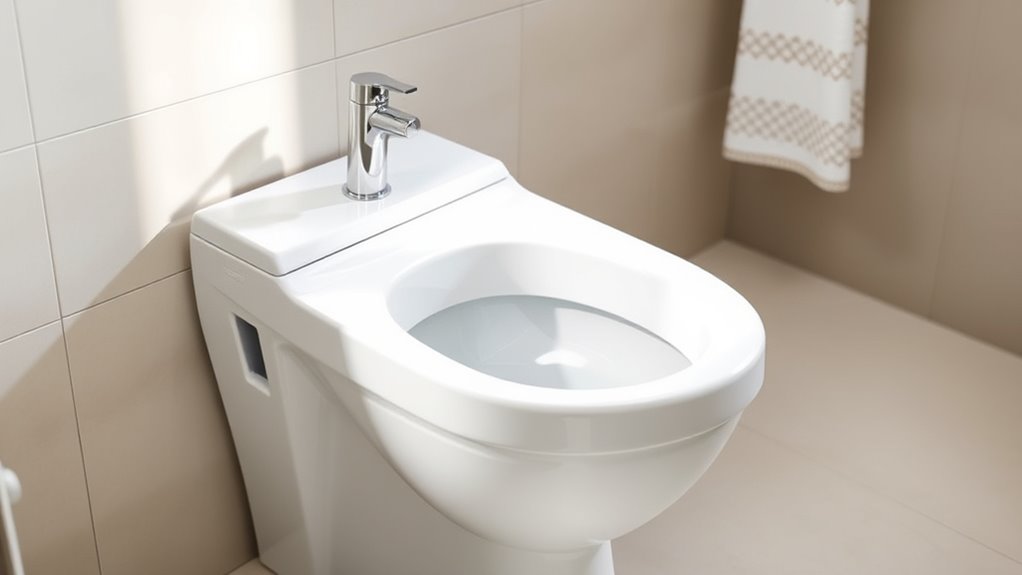
In many European countries, bidets are seen as essential for personal hygiene, especially in private homes and hotels. Knowing the proper way to use a bidet and understanding regional differences can make your experience more comfortable. Pay attention to local customs, as etiquette and bidet designs vary across regions. Incorporating evidence‑based insights can help you navigate these practices more confidently. For example, some regions emphasize hygiene practices that prioritize water temperature and pressure settings to optimize comfort and cleanliness. Additionally, awareness of the AI ethics surrounding data collection and privacy concerns related to smart bidets can enhance your understanding of modern bathroom technology. Recognizing regional variations in bidet use can further improve your comfort and adherence to local customs. Being familiar with product features such as adjustable water flow and temperature can also significantly improve your experience.
Bidet Usage Etiquette
Bidets are a common feature in many European homes, hotels, and vacation rentals, especially in Southern and Western Europe. When using a bidet, keep a few etiquette tips in mind to guarantee proper hygiene and courtesy:
- Always wash your hands after using the bidet to promote cleanliness.
- Adjust water temperature and pressure gently before use to avoid discomfort.
- Use a small amount of water; excessive spraying can waste water and be uncomfortable.
- If you’re unfamiliar, observe local habits or ask hosts for guidance.
- Avoid splashing outside the bidet to keep the area tidy.
- Be mindful of your water usage to support sustainable practices and reduce unnecessary waste.
Being respectful of these practices helps maintain hygiene standards and shows consideration for others sharing the space. Proper bidet etiquette is an important part of European bathroom culture.
Regional Bidet Variations
European countries vary markedly in how they incorporate bidets into daily hygiene routines. In Western Europe, you’ll find standalone bidets in many homes and hotels, especially in France, Italy, and Spain. In contrast, Northern Europe often relies on handheld bidet sprayers or don’t use bidets much at all. Eastern Europe features a mix, with some countries adopting modern bidet toilets, while others prefer simple washbasins. Regional preferences influence the type and frequency of bidet use across the continent, shaped by cultural norms and hygiene practices that differ widely from one region to another. The market trends also reflect these regional differences, with varying adoption rates and preferences for traditional versus modern bidet solutions.

Coghlan's Tissue on The Go – Compact Travel Pack with Dispenser for Camping, Hiking, Backpacking, and Outdoor Adventures, Portable and Convenient Tissue Essentials, 2-Pack
Soft and durable 2-ply tissue: Gentle yet strong bathroom tissue for reliable use in outdoor settings like campgrounds…
As an affiliate, we earn on qualifying purchases.
As an affiliate, we earn on qualifying purchases.
Maintaining Cleanliness in Public Restrooms

Maintaining cleanliness in public restrooms relies heavily on individual responsibility and proper disposal habits. You should always flush thoroughly after use and avoid leaving paper or waste behind. Use the provided brush if the toilet seat or bowl needs tidying up. Dispose of used tissues and sanitary items in the bin, not the toilet, especially in countries with fragile plumbing. Remember to wash your hands with soap and dry them properly—either with paper towels or hand sanitizer if necessary. Be courteous to restroom attendants by leaving the space tidy and tipping modestly if appropriate. Keep these practices in mind:
- Flush completely and double-check
- Use toilet brush for cleanliness
- Dispose of paper in bins, not the toilet
- Wash and dry hands thoroughly
- Leave the restroom tidy for the next user
- Consider using essential oils to maintain a fresh environment in the restroom when appropriate.
- Be aware of regulatory standards that ensure restroom hygiene and safety.
Privacy Norms and Restroom Layout Variations
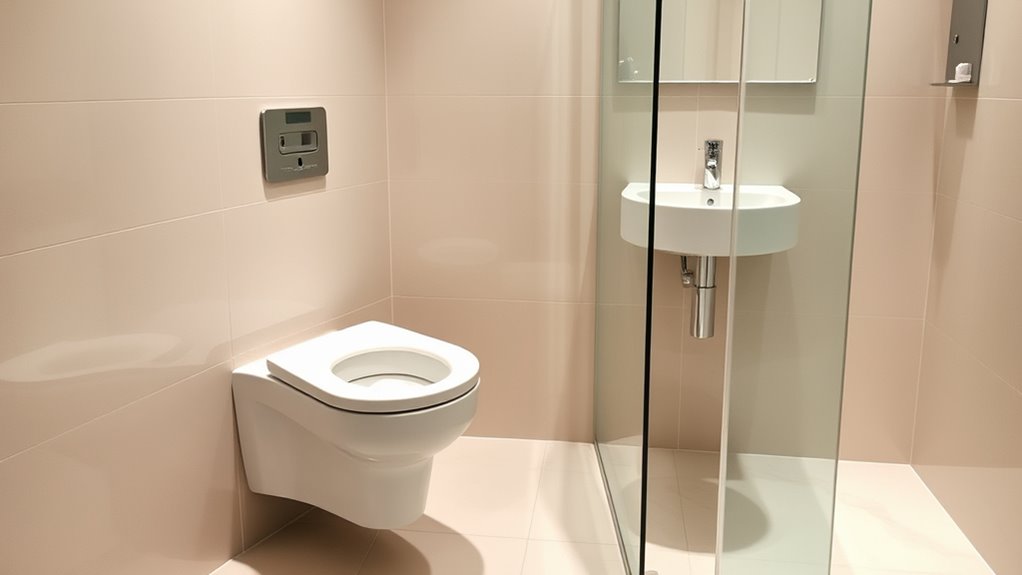
As you encounter European restrooms, you’ll notice that privacy norms vary widely, with some places offering traditional gendered stalls and others featuring gender-neutral or shared facilities. You might find that expectations for door closing and odor control differ from country to country, influencing your comfort level. Understanding these layout differences helps you navigate restroom etiquette with confidence and respect local customs.
Gender-Neutral Facilities Expand
Gender-neutral facilities are becoming more common across European cities, reflecting changing attitudes toward privacy and inclusivity. These restrooms often feature single-occupant stalls or shared spaces designed to accommodate any gender. You might find:
- Fully enclosed, lockable cubicles for complete privacy.
- Combined toilets and sinks in a single space to maximize efficiency.
- Signage that clearly indicates gender-neutral or inclusive options.
- Facilities located in public buildings, transport hubs, or modern commercial areas.
- Some places offering unisex restrooms as the default, with traditional gendered options nearby.
These changes aim to create a more welcoming environment for everyone, reducing waiting times and easing discomfort for gender-diverse users. Expect to see more of these inclusive layouts as European cities prioritize accessibility and privacy.
Privacy Expectations Differ Widely
Have you ever noticed how privacy expectations in European restrooms can vary dramatically from one country to another? In some places, doors close tightly, and you’re expected to keep others out completely. In others, doors might be left ajar or only partially close, signaling a more relaxed attitude. Public facilities can feature open-air urinals, shared sinks, or communal wash areas, especially in older or more casual settings. Cultural norms influence whether privacy is prioritized; in some countries, closing the door is essential, while in others, minimal privacy is acceptable. Expect differences in signage, door locks, and bathroom layout, so adapt accordingly. Being aware of these variations helps you navigate European restrooms smoothly and respects local customs.
Local Etiquette and Tipping Customs for Bathroom Staff
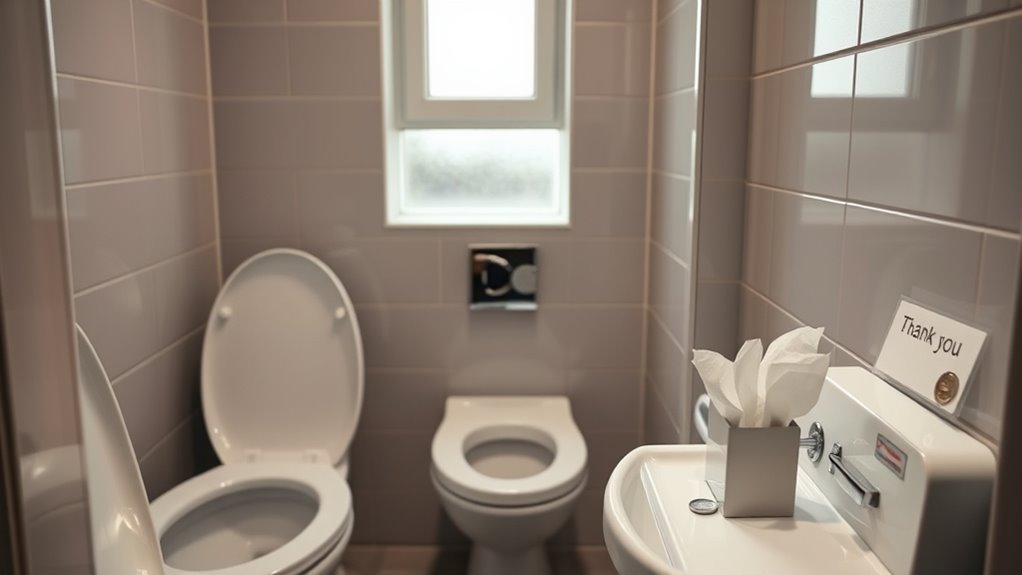
Tipping bathroom staff in Europe varies by country and setting, but generally, a small gratuity is appreciated for their service. If you encounter attendants at entrances or in high-traffic areas, consider leaving a few cents to a euro as a courtesy. Keep these points in mind:
- In some countries, like Germany, tipping €0.50–€1 is common for attendants’ help.
- In France, small tips are customary, especially for well-maintained facilities.
- In Eastern Europe, tipping is appreciated but less expected; a euro or two suffices.
- When using paid toilets, tipping the attendant directly or leaving change is polite.
- Always carry small bills or coins, as larger notes may prompt awkward change situations.
Being aware of local customs helps you show respect and enhances your bathroom experience.
Handling Toilet Paper and Sanitary Disposal
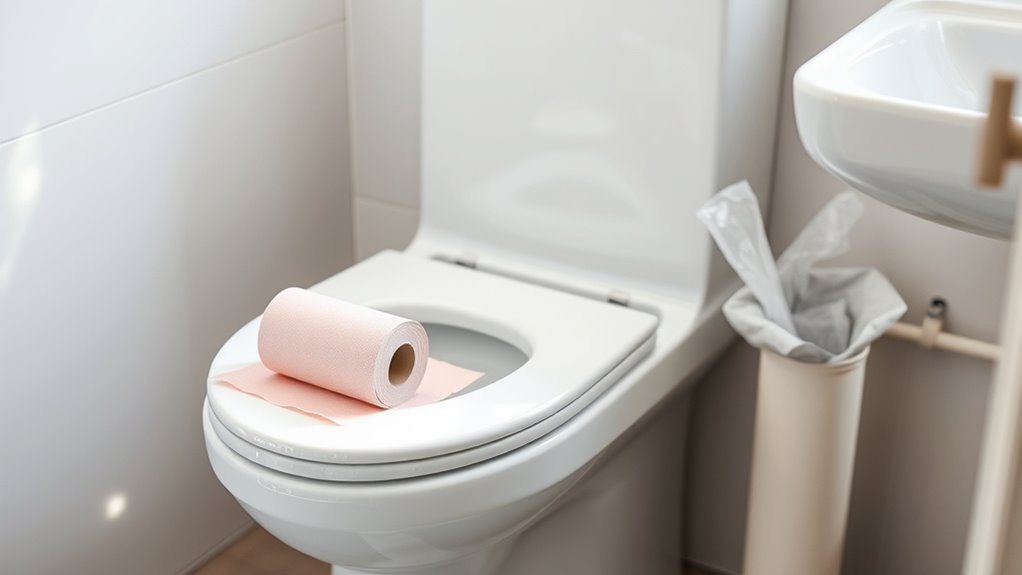
In many European countries, handling toilet paper and sanitary waste requires some attention to local plumbing practices. In some regions, especially in Southern Europe, toilets have fragile or older sewer systems that can clog if non-flushable items are disposed of improperly. Always check for signs indicating whether to discard paper in the bin or flush it; if unsure, use the bin. Sanitary products like tampons and pads should go into wastebaskets, not the toilet, unless specified otherwise. Carry small tissues or pocket wipes, as public toilets may have inconsistent supplies of toilet paper and soap. Using toilet paper sparingly and disposing of it correctly helps prevent plumbing issues and keeps facilities clean. Respect local cues and follow signage to ensure proper hygiene and avoid inconvenience.
Cultural Expectations for Gender and Privacy
Cultural expectations around gender and privacy in European restrooms vary considerably from country to country, shaping how you should approach bathroom etiquette. In some places, gender-specific facilities are strict, while others lean toward gender-neutral or single-occupant options. Privacy norms also differ; in certain countries, closing the door is expected, and keeping odors private is taken seriously. Be mindful of shared spaces, especially in high-traffic areas, where attendants may work across genders. Respect local customs by observing signage and behavior. If unsure, opt for private or single-stall restrooms to avoid discomfort. Remember, in some regions, modesty is highly valued, and respecting privacy is an essential part of proper etiquette.
- Gender-neutral and single-occupant toilets are increasingly common.
- Doors are usually expected to be closed to guarantee privacy.
- Attendants may serve across genders in busy tourist spots.
- Sharing sinks or wash areas with mixed genders is common.
- Local customs may include discreet behavior around odors and privacy.
Dealing With Plumbing Quirks and Older Facilities
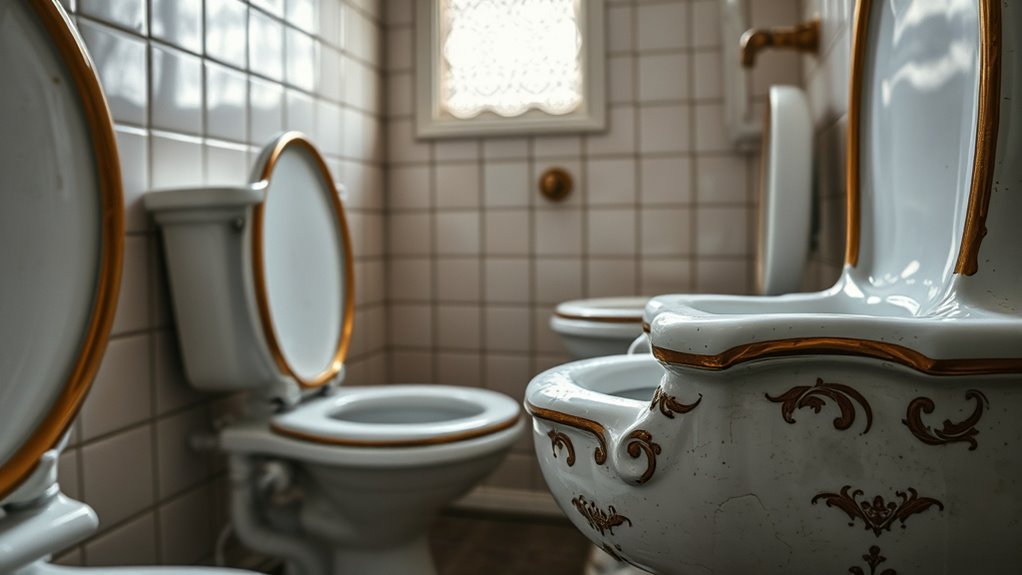
Older European toilets often come with unique plumbing quirks that can catch you off guard. You might encounter dual-flush buttons, pull-cord cisterns, or wall-mounted levers—sometimes all in one restroom. In some regions, especially southern Europe, sewer systems are older and less robust, so you’ll need to dispose of toilet paper in bins rather than flushing it. Squat toilets may also appear, requiring different posture and hygiene habits. Be prepared for fragile plumbing or unusual shapes of toilet pans, which can make sitting or aiming tricky. Sometimes, the flush isn’t powerful, so a second try might be needed. When in doubt, look for obvious controls or ask locals for guidance—most are happy to help you navigate these quirks.
Tips for a Comfortable and Respectful Bathroom Experience

To guarantee a comfortable and respectful bathroom experience abroad, it’s important to observe local customs and be prepared for different facilities. Respect privacy by closing doors fully and following signage. Carry small change or tissues, especially where coin-operated toilets or lack of toilet paper is common. Be mindful of plumbing; dispose of paper in bins when necessary. When using bidets, follow local etiquette—thorough washing is often expected. Observe cleanliness norms by using toilet brushes if available, and leave the space tidy. In high-traffic areas, consider tipping attendants for their service. Lastly, adapt to gender-neutral or shared facilities, respecting signs and cues. Being aware of these tips helps ensure a smooth, respectful bathroom experience wherever you go.
Respect local bathroom customs: close doors, dispose properly, wash thoroughly, and be considerate in shared facilities.
- Carry exact change or tissues for convenience
- Close doors fully for privacy and hygiene
- Dispose of toilet paper in bins if required
- Use bidets and wash thoroughly where available
- Tip attendants in busy or clean facilities
Frequently Asked Questions
Are Public Toilets in Europe Generally Accessible to Non-Customers?
Most public toilets in Europe are generally accessible to non-customers, especially in tourist areas, train stations, and city centers. You might encounter coin-operated stalls or pay at the entrance, sometimes with attendants collecting fees. In some places, like cafes or restaurants, a purchase or tip is customary if you use their facilities. Carry small change and be prepared for varying policies—accessibility is usually straightforward but can differ depending on the location.
How Do I Identify the Correct Flush Option on Dual-Flush Toilets?
You’ll spot the correct flush option on dual-flush toilets instantly—look for the tiny, often color-coded buttons or levers that seem to hold the secret to saving the planet. The small button or half-sized flush is for liquids, while the larger one is for solids. Sometimes, the buttons are side-by-side or stacked; just press lightly, and you’re good to go. Remember, conserving water starts with your finger!
Can I Use a Bidet if I’Ve Never Tried One Before?
Yes, you can use a bidet even if you’ve never tried one before. Start by familiarizing yourself with the controls, which are usually simple handles or buttons for water temperature and pressure. Begin with a gentle spray to see how it feels, and adjust settings as needed. Remember, bidets are common in Europe, and many people find them more hygienic and invigorating than just using toilet paper.
What Is the Proper Way to Tip Bathroom Attendants?
You should tip bathroom attendants with a small amount, typically a few cents to €1, depending on the service and location. When you receive extra help, like opening the door or providing paper towels, tip more generously if you’re satisfied. Carry some small change to make tipping easy. Be polite and discreet when giving the tip, and remember that tipping is customary but not mandatory.
Is It Acceptable to Leave Toilet Paper on the Floor or in Bins?
You shouldn’t leave toilet paper on the floor or in bins unless specifically instructed. In many European restrooms, especially in countries with fragile plumbing, used toilet paper goes into bins instead of flushing. Always follow signs or local customs—if there’s a bin for used paper, use it. Otherwise, flush toilet paper in the toilet unless told otherwise. Proper disposal helps prevent plumbing issues and shows respect for the facilities.
Conclusion
Finding your way through European toilets might seem tricky at first—coins, bidets, quirks—but with respect and awareness, it becomes second nature. You’ll find that privacy and cleanliness are valued just as much as tradition and history. Embrace the differences, stay courteous, and remember: behind every quirky fixture lies a culture enthusiastic to share its unique bathroom etiquette. In these moments, comfort and respect go hand in hand, making your experience smoother and more authentic.