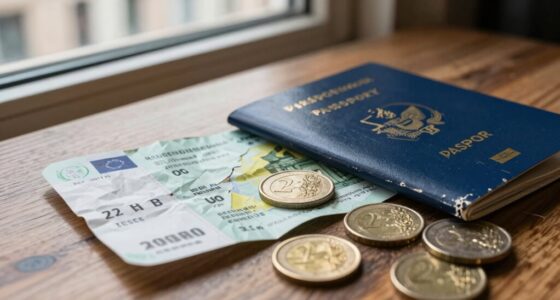
In Europe, beware of scams like fake ticket sellers at landmarks, street vendors pushing jewelry with distractions, fake police officers demanding passports, and unofficial taxis overcharging. Also, watch out for counterfeit currency and ATM skimming devices. Protect yourself by staying alert, insisting on official sources, and confidently saying, “No, thank you.” If you want to stay safe and recognize these tricks, keep exploring the best ways to disarm these common tourist traps.
Key Takeaways
- Recognize fake ticket and petition scams near landmarks; always purchase tickets from official sources.
- Stay alert for street vendors using distraction tactics or forced jewelry acceptance to steal valuables.
- Verify police credentials and insist on official IDs before cooperating with authorities or taxi drivers.
- Confirm accommodation and tour bookings through trusted websites and avoid upfront payments for suspicious deals.
- Inspect ATMs for tampering and use well-lit, banked locations to prevent card skimming and counterfeit currency issues.
The Eiffel Tower Ticket and Petition Scams
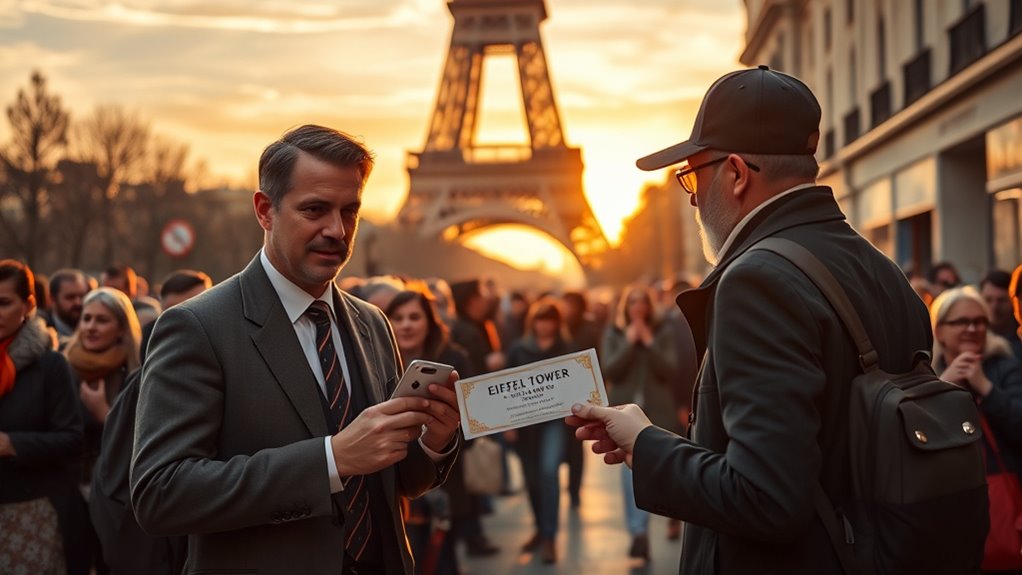
If you visit the Eiffel Tower, be cautious of ticket and petition scams that frequently target tourists. Scammers often pose as official vendors, offering “discounted” tickets or fake entry passes. They might pressure you into buying quickly or distract you with fake petitions claiming to support charities. Remember, official tickets are only available through the official website or authorized vendors. Never accept tickets from strangers on the street, especially if they’re pushing you to buy immediately. Petition scams are also common, with fake charity workers claiming to need signatures or donations for causes like deaf aid. To avoid falling for these tricks, politely decline offers, ignore pressure tactics, and stick to official channels. Stay alert and always verify before making any purchase or signing anything. Utilizing European cloud solutions can also help you access reliable information and avoid scams by providing secure online resources.
Street Vendor Tricks: Bracelets, Rings, and Distractions
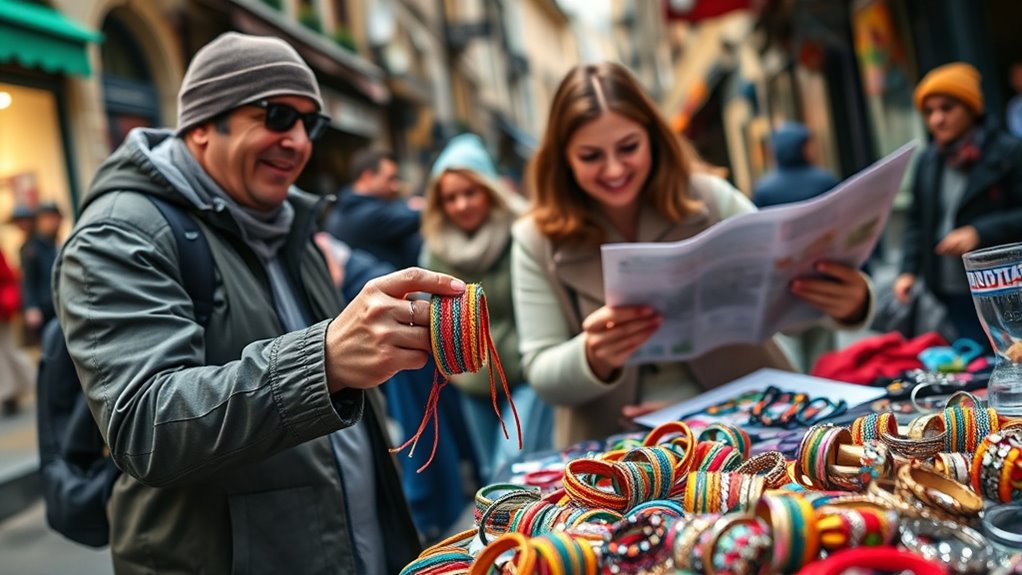
Street vendors often use tricks like forcing you to wear bracelets or rings, then demand payment once you’ve accepted. They might drop fake jewelry on the ground and insist you pick it up, claiming you’ll get a free gift, but then pressure you to pay. Distraction techniques such as creating a scene or offering fake items are common to divert your attention and steal your valuables. Being aware of common scamming techniques like these can help you recognize and avoid these ploys. Additionally, understanding how projector technology influences image quality can be useful if you’re considering a home cinema setup.
Forced Tying and Payment
Forced tying and payment scams often involve vendors who insist you accept their bracelets or rings, sometimes physically tying them to your wrist or finger without genuine consent. They may grab your arm or hand, forcing the jewelry onto you, then demand payment. This pressure makes you feel trapped and unsure how to escape. Here are three ways to avoid falling for this trick:
- Firmly say, “No, thank you,” and pull away if they try to tie or attach jewelry.
- Keep your hands visible and avoid engaging with pushy vendors.
- Walk confidently past, avoiding eye contact, and don’t feel obligated to stop or respond.
- Remember that piercings are personal and should never be imposed on you without your consent.
- Be aware of market regulations and your rights as a tourist to prevent being coerced into unwanted transactions.
Fake Jewelry Drop Technique
The Fake Jewelry Drop Technique is a common trick used by vendors to distract tourists and steal valuables. You might be approached by someone offering to give you a bracelet or ring, then suddenly dropping it or pretending it fell. While you’re busy reacting, they or an accomplice might grab your wallet, phone, or jewelry. Sometimes, they’ll insist you pick up the jewelry, creating a sense of obligation, or claim it’s a gift. The distraction keeps you focused while others work behind the scenes. To avoid falling for this trick, don’t accept jewelry from strangers, especially when they drop or insist you take it. Keep your valuables secure, and stay alert—these vendors thrive on your momentary distraction. Remember, if it looks too good to be true, it probably is. Being aware of pinball machine weights and their typical weights can help you recognize if someone is trying to distract you for theft.
Distraction Methods Used
Distraction methods employed by vendors often involve offering tourists free or inexpensive jewelry like bracelets and rings, then using sudden drops or gestures to divert attention. Once your focus shifts, they exploit the moment to steal valuables or create confusion. Here are three common tricks:
- Drop and Distract: They drop jewelry or objects, prompting you to pick them up while someone else sneaks away with your belongings.
- Gesture Diversion: A vendor waves or gestures wildly, drawing your gaze away from your bag or wallet while a partner sneaks close.
- Fake Gifts: They press a bracelet or ring on your arm, insisting you accept it, then claim you owe money if you try to remove it. Stay alert and keep your valuables secure. Additionally, understanding Free Floating tactics can help you recognize when vendors are employing covert distraction methods.
Fake Police and Taxi Overcharges
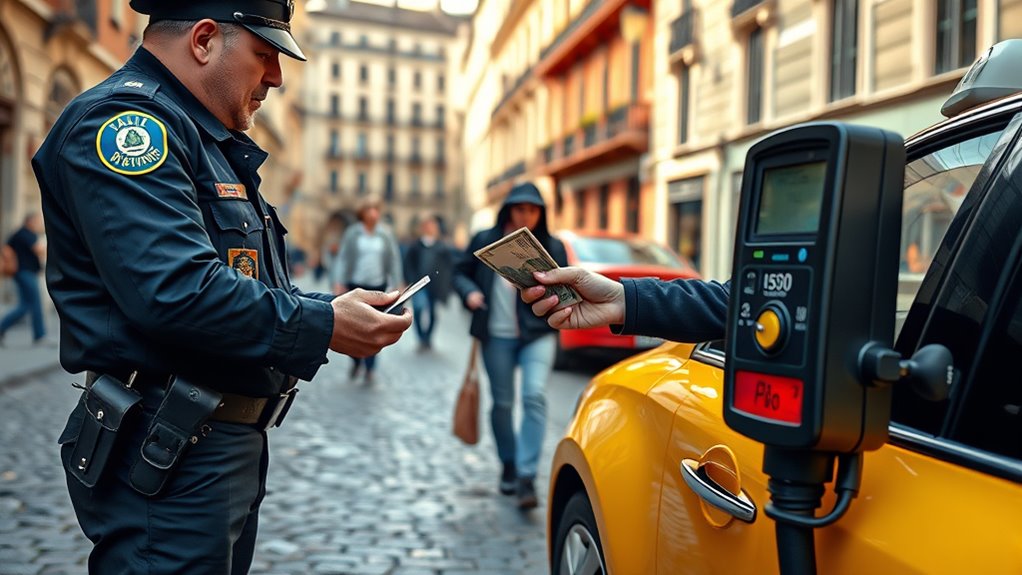
Ever wondered how to spot fake police officers on the streets of Europe? Fake cops often wear uniforms that look official but lack proper insignia or badges. They might demand to see your passport or wallet without good reason and insist on taking you to a “police station” that’s actually a nearby café or car. Always ask to see official identification and refuse to cooperate if you’re unsure. When taking taxis, avoid unmetered rides or those offering scenic routes. Always insist on using the meter or agree on a fare beforehand. If approached by someone claiming to be police, confidently say, “Take me to the police station,” and walk away if they hesitate. Staying alert and skeptical keeps you safe from these common scams. Additionally, understanding security zone info tips on protecting your assets can help you stay cautious in unfamiliar situations. Being aware of common tourist scams can further improve your safety and prevent falling victim to deception.
Common Accommodation and Tour Deception Tactics

Many travelers fall victim to accommodation and tour scams by booking through fake websites or unverified agencies that promise unbelievable deals. These scams often look legitimate but hide hidden costs or lead to subpar accommodations. To avoid falling for these tricks, watch out for:
- Fake booking sites that mimic real hotel pages, requiring upfront payment and offering suspiciously low prices.
- Bogus tour operators claiming exclusive access or private guides, only to disappear after payment.
- Overbooked or non-existent accommodations where your reservation is canceled last minute, leaving you stranded.
Always verify URLs, read reviews from trusted sources, and book through official channels. Never pay before confirming the legitimacy of the offer, and trust your instincts when something feels off. Being aware of common scams can help you stay vigilant and protected during your travels.
The Rise of ATM Skimming and Counterfeit Currency
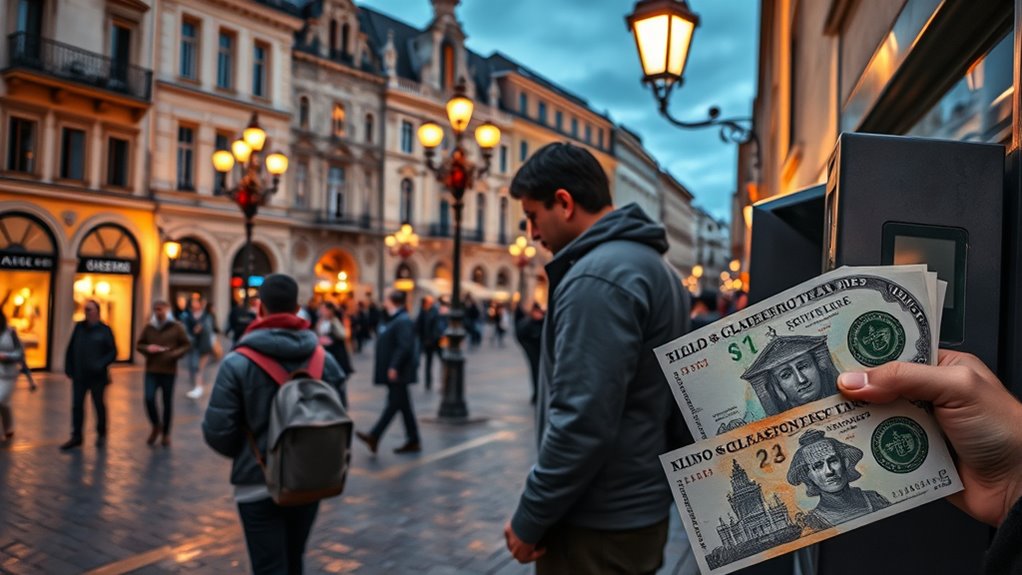
ATM skimming devices and counterfeit currency have become increasingly sophisticated, making it harder for travelers to spot scams at a glance. Thieves install tiny card readers on legitimate ATMs, capturing your card details when you withdraw cash. These devices often blend seamlessly, so you might not notice anything unusual. Once your data is stolen, scammers clone your card or make unauthorized transactions. Counterfeit bills also circulate more convincingly, with fake notes designed to pass through machines easily. To protect yourself, always inspect ATMs closely for signs of tampering—wiggly card readers or loose parts—and avoid machines in isolated or suspicious locations. Use ATMs inside banks or well-lit, busy areas. Check your bank statements frequently for unauthorized charges, and handle cash carefully to prevent falling victim to counterfeit currency. Being aware of vetted security measures can further help you recognize and avoid these scams effectively, especially as advanced scam techniques evolve.
How to Recognize and Avoid Regional Scams in Popular Cities

To effectively recognize and avoid regional scams in popular cities, you need to stay vigilant and aware of common tactics used by scammers. Being cautious can save you from losing money or belongings.
Here are three key tips:
- Watch out for fake ticket sellers near landmarks like Notre-Dame or the Eiffel Tower. Always buy tickets from official sources or websites.
- Ignore unsolicited offers from street vendors or flower sellers. Use a firm, “No thanks, keep walking.”
- Be cautious around taxi drivers who refuse meters or suggest scenic routes. Insist on a meter or arrange transportation beforehand.
- Familiarize yourself with common scam tactics used in tourist areas to better identify suspicious behavior and protect yourself. Additionally, understanding local safety tips can further enhance your awareness and help you stay safe during your travels.
Staying alert and following these simple rules will help you spot scams before they happen, keeping your trip safe and enjoyable.
One Simple Phrase to Disarm Most Tourist Hustlers

Using a simple, assertive phrase can often stop a scammer in their tracks. Speak calmly and confidently, maintaining steady body language to show you’re in control. This combination of words and demeanor can disarm most tourist hustlers quickly.
Assertive Decline Phrases
When approached by street vendors or scammers posing as officials, a simple, confident phrase can quickly disarm them. Your tone matters—stay firm and unwavering. Here are three key phrases to use:
- “No thanks, I’m not interested.”
- “Take me to the police station.”
- “Official tickets only from the website.”
Using these statements, you set clear boundaries without hesitation. Keep your voice steady, make eye contact, and don’t show doubt. Scammers rely on your hesitation or uncertainty; your assertiveness can make them back off instantly. Remember, most hustlers want quick, easy targets—they’ll move on when they see you’re confident and in control. Practice these phrases and keep your tone firm. That simple shift can save you from many scams across Europe.
Being aware of common tourist scams and how to respond can enhance your safety and confidence while traveling.
Calm and Firm Tone
A confident, calm tone can be your best defense against street scams. When approached by someone trying to sell or distract you, respond with a steady, composed voice. Say, “No, thank you,” or “I’m not interested,” without hesitation or apology. This shows you’re in control and not easy to intimidate. Scammers often thrive on creating pressure or making you doubt yourself. By remaining calm and firm, you signal that you’re aware of their tactics. Keep your body language relaxed, avoid rushing, and maintain eye contact. Your calm demeanor makes it clear you’re not an easy target, discouraging further approach. Remember, most street scams rely on your uncertainty—your composed response can disarm them instantly.
Consistent Body Language
Maintaining a consistent body language is one of the most effective ways to disarm tourist hustlers quickly. When you project confidence and calmness, you signal that you’re not easily manipulated. Here are three key tips:
- Stand tall and face the person directly – Avoid nervous glances or fidgeting, which can invite suspicion.
- Keep your hands visible and relaxed – Hidden hands can be seen as a threat; open gestures convey honesty.
- Use a firm, steady voice – Repeating a single, confident phrase like “No, thank you” or “Take me to the police” shows you’re in control.
- Consistent body language reinforces your authority and makes it clear you’re aware of common scams. Additionally, maintaining a neutral facial expression can prevent scammers from sensing hesitation or uncertainty. Practicing these cues helps you stay calm under pressure, which is crucial in high-stress situations with potential scammers.
Frequently Asked Questions
How Can I Quickly Identify a Fake Ticket or Petition Scam?
To quickly spot a fake ticket or petition scam, always check for official branding and authorized vendors. For tickets, buy directly from official websites or trusted outlets, and avoid third-party sellers offering deals that seem too good to be true. For petitions, verify the charity’s credentials online before signing. Trust your instincts—if something feels off or pressuring, step back and seek official sources to avoid falling victim.
What Are the Best Ways to Spot Counterfeit Currency Abroad?
You can spot counterfeit currency abroad by checking the paper’s texture, which should feel crisp and slightly textured. Hold the note up to the light to see security features like watermarks, holograms, and color-shifting ink. Use a counterfeit detector pen on the bill’s surface; genuine bills won’t react. Compare the note with a known authentic one, paying close attention to fine details, colors, and fonts.
How Do I Safely Handle Encounters With Fake Police Officers?
Over 1,000 British tourists were scammed by fake police officers in the last five years. When you encounter someone claiming to be an officer, stay calm and ask to see official identification—real officers carry IDs and badges. If you’re unsure, call the local police number or visit the nearest station. Trust your instincts, don’t hand over money, and remember, genuine police won’t pressure you on the spot.
Which Common Phrases Reliably Deter Street Vendors and Scammers?
To deter street vendors and scammers, use clear, confident phrases. Say, “No thanks, keep walking,” or “Take me to the police station” if they persist. When approached for fake tickets or flowers, firmly respond, “Official tickets only from the website,” or “Ignore and secure valuables.” These phrases signal you’re aware and unbothered, often discouraging their attempts. Stay firm, polite, and keep moving to avoid unnecessary trouble.
How Can I Verify Legitimate Tour and Accommodation Providers?
Verify legitimate providers by doing diligent data digging. Double-check official websites, reviews, and references to distinguish genuine guides and accommodations. Demand detailed documentation, and don’t shy away from scrutinizing service specifics. Confirm credentials from credible sources, and compare prices to spot suspiciously cheap deals. Trust your instincts and take your time, tackling tour and lodging legitimacy with thoroughness to keep scamsters at bay and secure a safe, satisfying stay.
Conclusion
Just remember, like a lighthouse guiding ships safely through fog, trust your instincts and stay alert. If a deal feels too good to be true or someone’s pushy, walk away and say, “No, thank you.” Keep your wits about you, and you’ll navigate Europe’s streets as confidently as a traveler with a map. Stay vigilant, and you’ll avoid being caught in the shadows of scams, shining brightly as your own best guide.