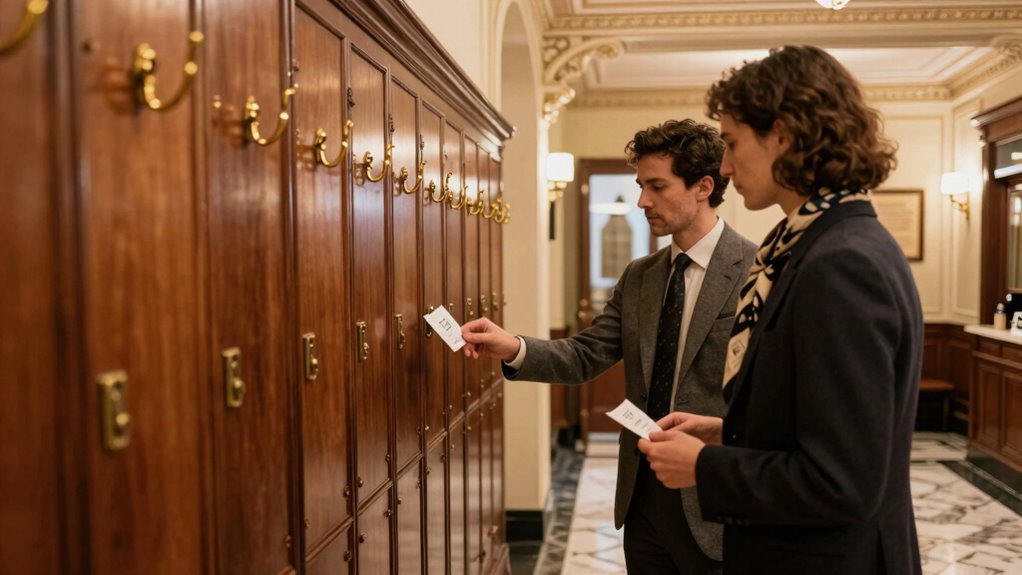

When using European coat checks and cloakrooms, arrive politely and hand your outerwear to staff, ensuring your claim ticket is kept safe. Match your ticket with your coat when retrieving it, and tip discreetly if appropriate for the venue. Respect local customs, dress appropriately, and consider when skipping the coat check if weather permits. For a smooth experience and helpful tips, continue exploring how to navigate these services with confidence.

Get travel and outdoor gear delivered free — and shop member deals
- Fast, free delivery on millions of items
- Access to Prime Big Deal Days deals on October 6–7
- Prime Video, Amazon Music and more included
Key Takeaways
- Approach staff politely, hand over your coats, and receive a claim ticket for retrieval.
- Securely hang or place belongings in designated compartments, ensuring items are visible and safe.
- Match your coat tags with claim tickets before leaving the coat check area.
- Tip discreetly—usually one to two euros or dollars per coat—to show appreciation for service.
- Follow local etiquette and dress appropriately, especially in formal or cultural venues, to show respect.
European coat check claim ticket holder
As an affiliate, we earn on qualifying purchases.
As an affiliate, we earn on qualifying purchases.
Recognizing When and Where to Use Coat Checks in European Venues
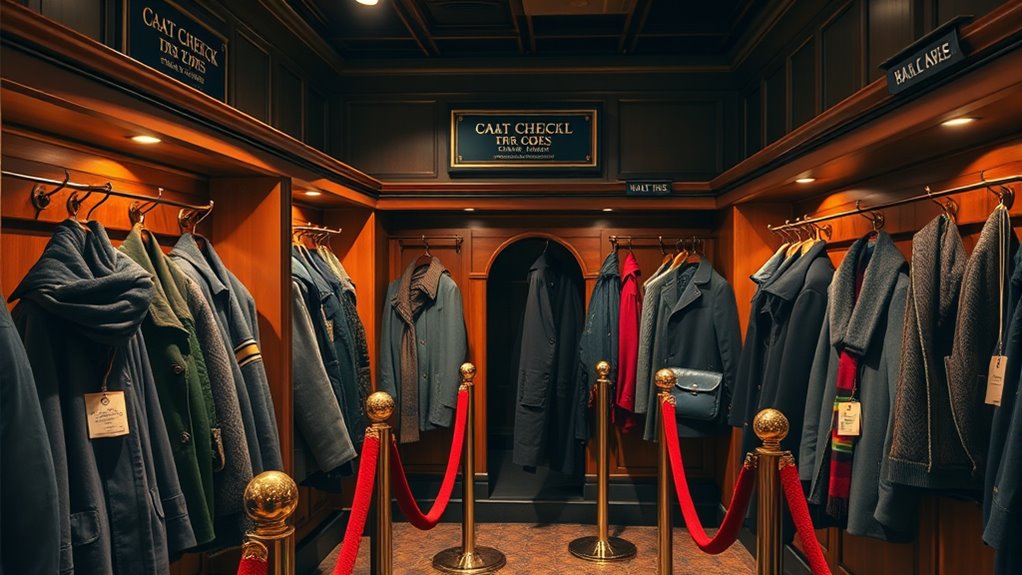
Recognizing when and where to use coat checks in European venues is straightforward, especially during colder months or in formal settings. When you arrive at theaters, operas, or concert halls, look for staff offering to take your coat. These places often require coat checks due to space constraints and the need for a tidy environment. High-end restaurants also typically have coat check services, signaling sophistication and elegance. Museums and crowded events might offer coat storage to keep walkways clear and ensure safety. In general, if you’re dressed warmly or attending a formal event, it’s wise to utilize the coat check. Doing so helps you enjoy the experience comfortably without worrying about your outerwear blocking aisles or seats. Additionally, understanding the essential oils for coat checks can subtly enhance your comfort and well-being during your visit. Being aware of European customs regarding coat checks can also help you navigate these services more smoothly. Recognizing the appropriate etiquette can ensure a respectful and pleasant interaction with staff during your coat check experience. Moreover, knowing the clothing etiquette for different venues can help you dress appropriately and avoid unnecessary inconvenience.
luxury coat check service accessories
As an affiliate, we earn on qualifying purchases.
As an affiliate, we earn on qualifying purchases.
Proper Procedures for Handing Over and Retrieving Your Items
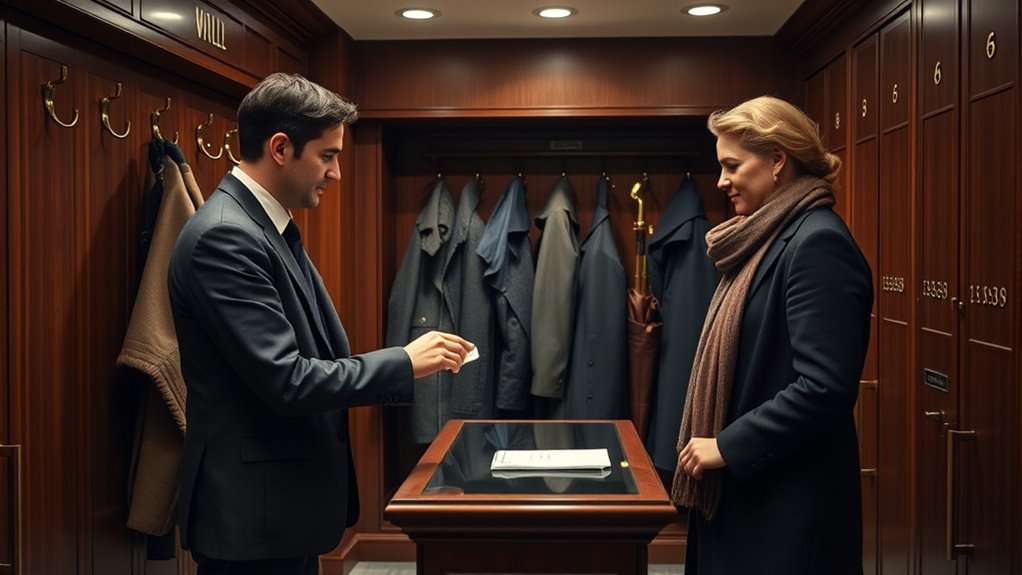
When you arrive at a European venue with a coat check service, the process of handing over and retrieving your items is straightforward. Approach the staff politely, and hand over your coat and accessories. They’ll give you a ticket or token, which you must keep safe to reclaim your belongings. When you’re ready to leave, present the ticket to staff to retrieve your items. Use this table to understand typical procedures:
| Step | Action |
|---|---|
| Handing Over | Give your coat and tokens to staff |
| Ticket Management | Keep your ticket safe, avoid losing it |
| Retrieval | Show your ticket to get your items |
Following these steps ensures a smooth experience, respecting local customs and procedures. Also, be aware that some venues may implement sustainable practices in their services, reflecting current trends in eco-consciousness. Proper ticket handling not only facilitates a quick exchange but also demonstrates courteous behavior. Additionally, many European cloakrooms incorporate digital ticketing systems, which can streamline the process and reduce paper waste, aligning with eco-friendly initiatives. Using modern technology can further enhance the efficiency and convenience of the coat check process. Being aware of local customs related to cloakroom etiquette can also help avoid misunderstandings during your visit.
digital coat check ticket system
As an affiliate, we earn on qualifying purchases.
As an affiliate, we earn on qualifying purchases.
Tipping Etiquette for Coat Check Services in Europe
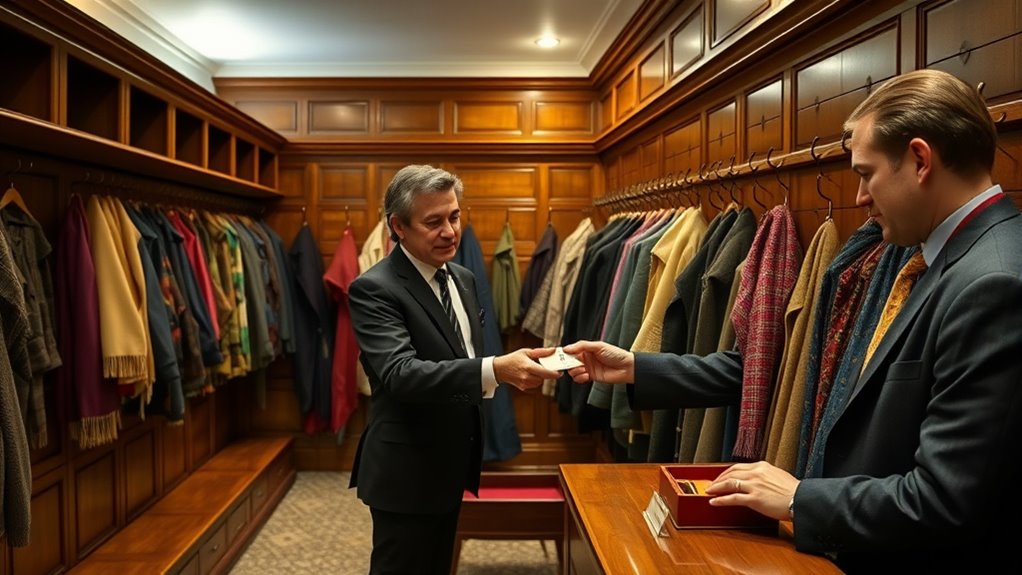
Tipping for coat check services in Europe generally follows a modest and respectful standard, reflecting the formal nature of many venues. Typically, you’ll tip one to two euros or dollars per coat, depending on the setting. In high-end theaters, opera houses, or fine restaurants, tipping at the lower end of this range is customary unless the service exceeds expectations. European etiquette favors discreet, direct handovers rather than leaving tips on tables or counters. When you retrieve your items, a simple tip shows appreciation for attentive service. Keep in mind that in many European countries, staff may not expect large tips, but a small gesture demonstrates respect and gratitude for their professionalism. Additionally, understanding local service gratuity practices can help ensure your tip is appropriate and appreciated. Being aware of cultural norms regarding tipping can further enhance your interactions and ensure you remain respectful of local customs. Recognizing the importance of cultural sensitivity when offering tips can contribute to smoother and more respectful exchanges with service staff. Moreover, familiarizing oneself with tipping etiquette can make your experience more seamless and culturally appropriate during your visit.
As an affiliate, we earn on qualifying purchases.
Cultural Considerations and Local Customs in European Cloakrooms
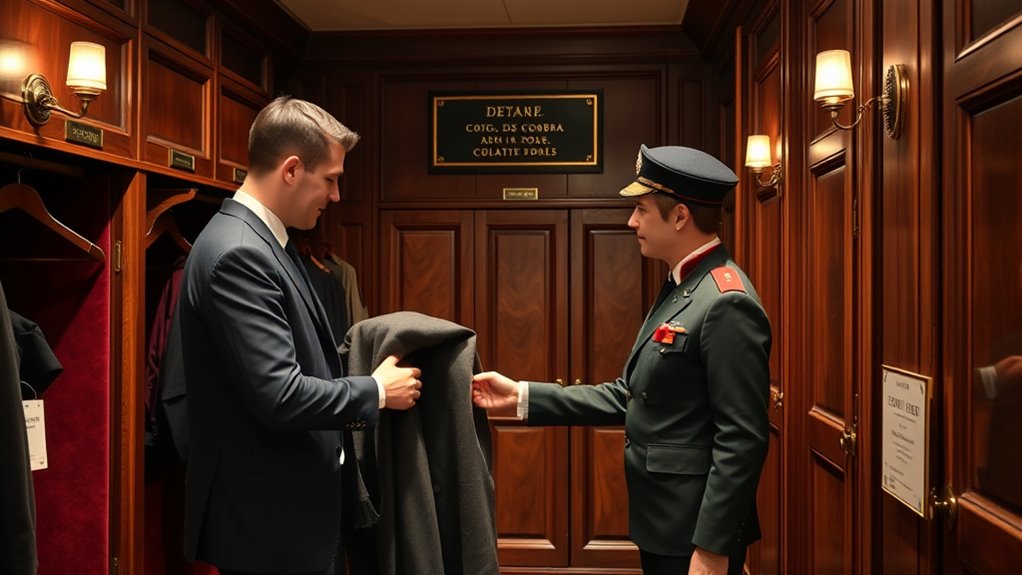
When using European cloakrooms, it’s important to understand local customs like tipping norms and traditional attire expectations. You should also be aware of regional language and gestures that can vary and may influence your interactions with staff. Being respectful of these cultural nuances guarantees a smooth and courteous experience. Additionally, understanding local etiquette can help you navigate different social situations more comfortably. Familiarizing yourself with cultural considerations, such as appropriate dress codes and the use of Suprem fabric in fashion, can further enhance your experience when using cloakrooms across different regions. Recognizing wave and wind as elements of regional climate can also help you dress appropriately and prepare for weather variations. Being aware of European cloud innovation initiatives can even inspire you to adopt sustainable fashion choices that align with regional trends.
Tipping Etiquette Norms
In European countries, tipping practices at cloakrooms are generally more subdued and less formalized than in North America. Usually, a small tip of one euro or a couple of coins suffices, signaling your appreciation without overdoing it. Unlike in the U.S., where larger tips are common, Europeans tend to avoid excessive tipping at cloakrooms, viewing it as unnecessary or overly generous. When staff assist you with your coat, a discreet tip shows your gratitude and respects local customs. If you’re attending a high-end venue or special event, tipping slightly more might be appropriate, but always keep it modest. Remember, in many European countries, the focus is on good manners and appreciation rather than large gratuities. Keep your tipping simple, polite, and in line with local traditions.
Traditional Attire Expectations
Understanding the local customs around attire can enhance your experience when using European cloakrooms. In many European countries, dressing formally or elegantly for cultural venues signals respect and appreciation for the setting. When attending theaters, operas, or art galleries, avoid casual wear like sneakers, jeans, or t-shirts, which might be considered inappropriate. Instead, opt for smart, refined clothing—think tailored coats, dress shoes, or modest accessories. In high-end restaurants and historic venues, dressing well aligns with local expectations and shows your respect for tradition. Keep in mind that some places may have specific dress codes, especially during special events or performances. Dressing appropriately not only helps you blend in but also ensures a smoother coat check experience, reflecting good manners and cultural awareness.
Regional Language and Gestures
Recognizing regional language and gestures can greatly enhance your experience when using European cloakrooms, as customs vary across countries. In some places, a simple nod or smile suffices, while others rely on specific phrases or gestures. For example, in France, a polite “Bonjour” and a slight bow are appreciated. In Italy, a handshake or “Buongiorno” works well, and in Germany, direct eye contact coupled with a firm handshake signals respect. Be aware that pointing or waving might be considered rude in certain cultures. Use this table to guide your interactions:
| Country | Typical Gesture | Common Phrase |
|---|---|---|
| France | Slight bow, smile | “Bonjour” |
| Italy | Handshake, “Buongiorno” | “Buongiorno” |
| Germany | Eye contact, handshake | “Guten Tag” |
| Spain | Friendly wave | “Hola” |
| Austria | Nod with smile | “Guten Tag” |
Tips for Maintaining Comfort and Safety While Using Coat Checks
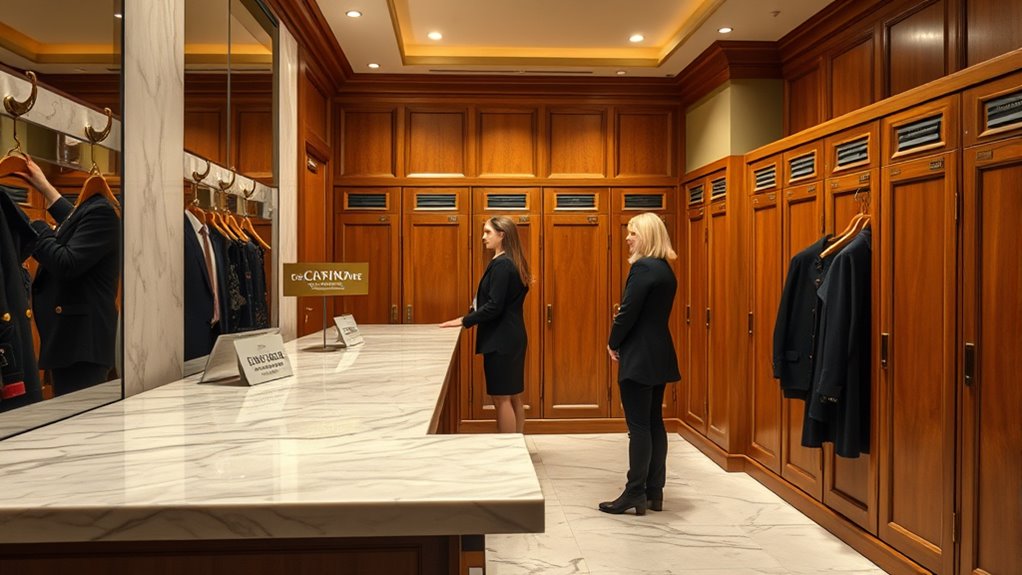
To stay comfortable and safe while using coat checks, always guarantee your items are properly secured and clearly visible. Make sure your coat and belongings are hung securely on the hooks or placed carefully in the designated compartment. Double-check that your coat tag matches your claim ticket to avoid mix-ups. Keep your claim ticket in a safe place; avoid losing it, as you’ll need it to retrieve your items. If you’re carrying valuables like a wallet or phone, consider carrying them with you instead of leaving them in your coat. Be mindful of your surroundings when handing over your belongings—ensure staff handle your items carefully. When retrieving your coat, do so promptly to prevent clutter or accidental loss. Maintaining awareness helps ensure a safe, comfortable experience. Utilizing professional equipment can also improve the security of your belongings during storage. Additionally, understanding proper storage techniques can help prevent damage or loss of your items. Recognizing the importance of item organization can facilitate quicker retrieval and reduce confusion. Familiarizing yourself with standard safety procedures can further enhance your overall experience and protect your belongings. Being aware of local regulations regarding item storage can also help you stay compliant and avoid potential issues.
When to Skip the Coat Check and Alternative Storage Options
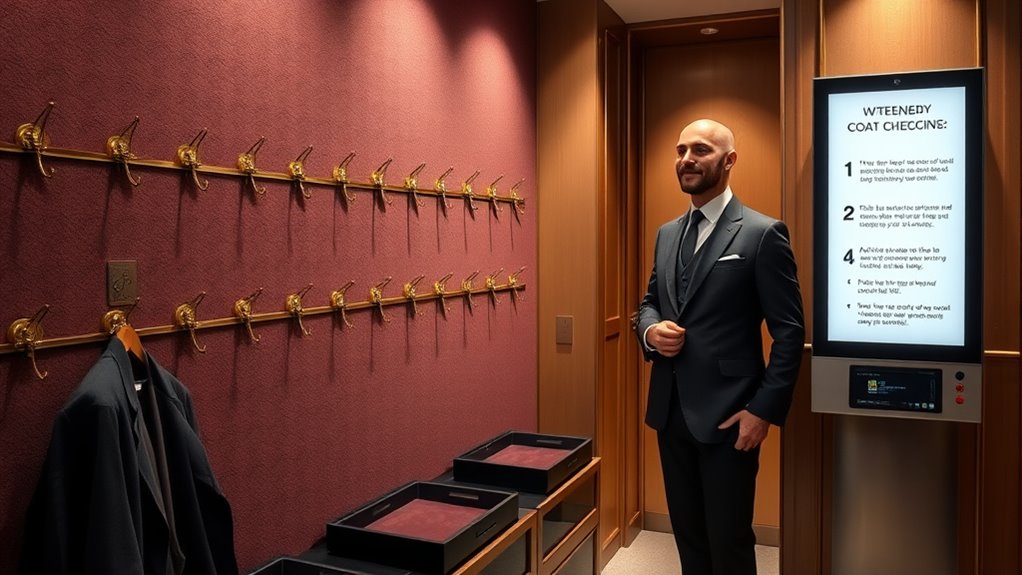
When the weather’s warm or your visit is brief, skipping the coat check can save time and hassle. Casual or informal settings often don’t require storing your belongings, making alternative options more convenient. Consider carrying your coat or using nearby hooks or lockers to keep things simple.
Warm Weather Attendance
During warm weather, you can usually skip the coat check because light clothing and the absence of heavy outerwear make storage unnecessary. When temperatures are mild or hot, carrying bulky coats or jackets is unnecessary and uncomfortable. Instead, wear lighter layers or carry small personal items like a purse or wallet. If you’re attending an event with a dress code requiring formal attire, opt for minimal outerwear or a wrap that’s easy to carry. Some venues may still offer coat check for safety or space reasons, but it’s often optional. For added convenience, consider storing your outerwear in a car, a nearby locker, or at a designated baggage area if available. This approach simplifies your experience and keeps you comfortable during warm-weather outings.
Short Duration Visits
If your visit is brief, you might find it more convenient to skip the coat check altogether. For short trips, carrying your coat or using a personal bag is often simpler. Many venues understand that quick visits don’t require stored belongings, especially if you’re only staying for a meal or a quick event. If the weather is mild, you can comfortably wear lighter outerwear or keep your coat with you. Some places may have designated spots for jackets near entrances or offer hooks on walls. Using these options can save you time and avoid the hassle of waiting in line. Just be mindful of security and personal belongings, and always check if the venue permits surface storage.
Casual or Informal Settings
In casual or informal settings, skipping the coat check often makes sense to save time and stay comfortable. If you’re visiting a cozy café, a friend’s house, or a casual outdoor event, there’s usually no need to leave your coat with staff. Instead, keep your belongings with you or find a designated spot like a hook or a small table. This approach speeds up entry and avoids the hassle of waiting for your coat later. When space is limited or the venue is relaxed, handling your coat yourself is more practical. Additionally, if the weather is mild, carrying your jacket is lightweight and convenient. Remember, coat checks are mainly reserved for formal or crowded settings, so in informal environments, trust your judgment and use alternative storage options.
Frequently Asked Questions
Are Coat Checks Always Available at European Events?
You might find coat checks at European events, but they’re not always guaranteed. In formal settings like theaters, operas, or upscale restaurants, staff often offer to take your coat for convenience and safety. However, in casual or outdoor gatherings, coat checks may be less common. It’s best to ask upon arrival or look for designated areas, especially if you’re attending a formal event or visiting a high-end venue.
Can I Leave Valuables in the Coat Check?
Yes, you can leave valuables in the coat check, but it’s wise to keep only essentials. Many coatrooms offer secure storage, yet valuables like jewelry or cash are better kept on you. To avoid any risk, use the provided lockers or take small items with you. This way, you enjoy your event without worry, knowing your valuables are safe and close at hand.
What Should I Do if My Coat Gets Lost?
If your coat gets lost, report it immediately to the staff, providing a detailed description. Check if the coat has been misplaced or moved. Ask if there’s a lost and found department or a specific process for missing items. Stay calm and cooperate with staff to trace your coat. If necessary, file a formal complaint or claim, especially if you’ve left valuables inside. Keep receipts or proof of check-in to support your case.
Is Tipping Expected at All European Cloakrooms?
Tipping isn’t always expected at European cloakrooms, but it’s appreciated in formal settings. If you receive good service, leaving a small tip—like a euro or two—shows your gratitude. In many European countries, staff prefer direct hand tips rather than adding it to the coat check fee. Use your discretion based on the service quality and the venue’s customs, and always be polite when offering a tip.
How Do I Know if a Coat Check Is Free?
Imagine you’re about to hail a cab in the 1920s—first, look for signs or ask staff if the coat check is free. Many high-end venues offer complimentary service, especially in Europe, but some might charge a fee. To avoid surprises, inquire upfront or check for posted signs. If unsure, politely ask staff upon arrival. Remember, in some places, a small tip might be appreciated even if the coat check is free.
Conclusion
By understanding the nuances of European coat checks and cloakrooms, you’ll navigate your outings with ease and grace. Embrace the little rituals, respect local customs, and trust your instincts to find the best storage for your belongings. With a touch of cultural finesse, you’ll enjoy your experience more fully—allowing your focus to remain on the memories you create. After all, sometimes letting go of your coat opens the door to new adventures.
Fall Picks
fall essentials
As an affiliate, we earn on qualifying purchases.