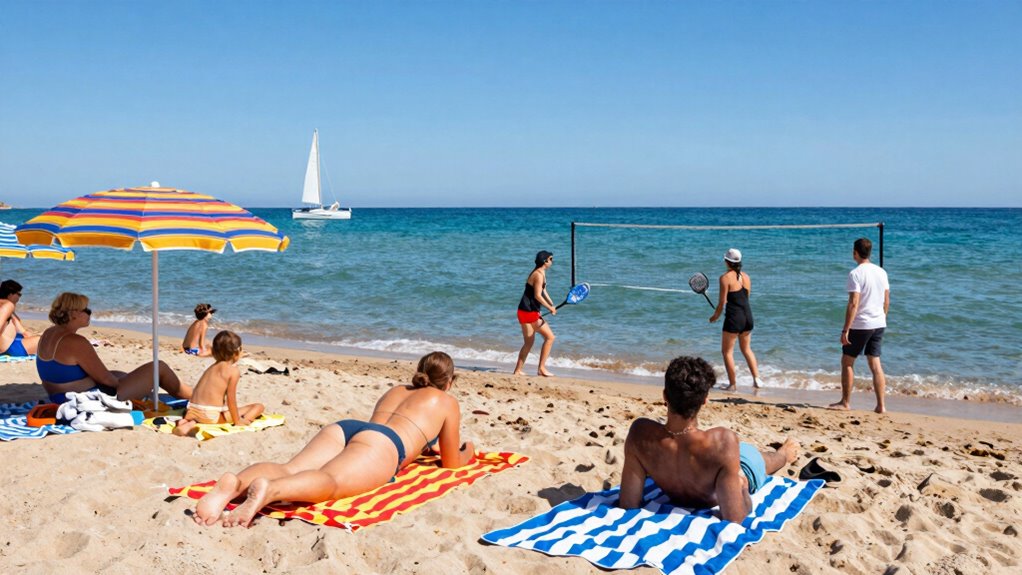

Many tourists ignore local customs, dress codes, and environmental rules on Southern European beaches, causing discomfort or offense. You might walk through towns shirtless or in bikinis, which can be inappropriate, or forget to cover up after swimming. Respecting local behaviors, modest attire, and eco-friendly practices shows consideration and enhances your experience. If you keep these points in mind, you’ll fit in better and guarantee your beach visits are respectful and enjoyable.

Get travel and outdoor gear delivered free — and shop member deals
- Fast, free delivery on millions of items
- Access to Prime Big Deal Days deals on October 6–7
- Prime Video, Amazon Music and more included
Key Takeaways
- Wearing revealing swimwear or walking through towns shirtless can be considered inappropriate; modest dress is often expected outside the beach.
- Loud behavior and excessive drinking are frowned upon in Greece and Spain, especially in more reserved or traditional areas.
- Ignoring local environmental regulations, such as discarding trash or disturbing wildlife, can harm ecosystems and offend locals.
- Failing to cover up after swimming, like leaving the beach in bikinis or without sarongs, may be seen as disrespectful in some destinations.
- Overlooking local customs and unspoken social cues can lead to discomfort or negative interactions with residents.
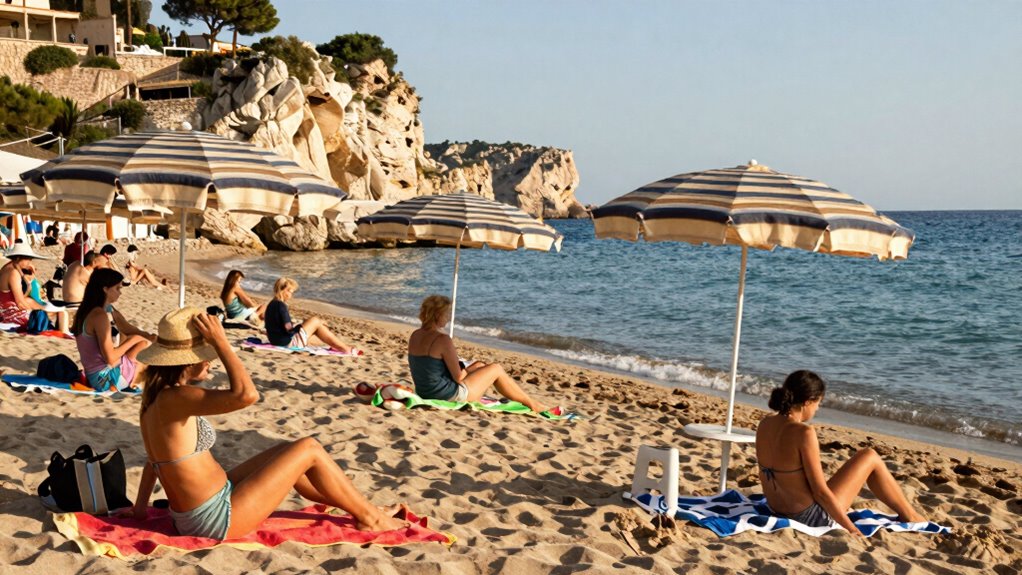
Visiting beaches in Southern Europe offers stunning scenery and a relaxing atmosphere, but understanding local etiquette guarantees everyone enjoys their time. One of the key aspects often overlooked by tourists is respecting local customs. Each country has its own unspoken rules about how to behave on the beach, and ignoring these can lead to discomfort or even offending locals. For example, in countries like Greece and Spain, people tend to value a more reserved attitude; loud behavior, excessive drinking, or inappropriate conduct can be frowned upon. It’s essential to observe how locals interact and adapt accordingly—what’s acceptable in a lively tourist spot might not be appropriate elsewhere. Being mindful of these customs shows respect and helps you blend in more seamlessly with the local crowd.
Respect local customs and behavior to enjoy a more authentic, seamless beach experience in Southern Europe.
Another common mistake tourists make relates to the dress code. While beachwear is expected, the specifics vary from place to place. In many Southern European destinations, modesty is appreciated, especially when leaving the beach area. For instance, after swimming, it’s polite to cover up with a sarong, beach dress, or shirt before entering cafes or shops near the beach. Going shirtless or wearing a bikini while walking through town might be acceptable in some areas but could be considered inappropriate or overly revealing in others. Pay attention to local cues—locals often wear a cover-up or opt for more conservative clothing when away from the water. This isn’t about strict rules but about respecting the local standards of decency and avoiding unwanted attention.
It’s also wise to familiarize yourself with specific dress code expectations for different beaches. Some beaches, especially private or resort ones, might be more relaxed about attire, but public beaches tend to have a more conservative vibe. Overdressing, or underdressing, can make you feel out of place, and in some cases, may even attract unwanted attention or fines. Remember, the goal is to enjoy the sun and sea comfortably while respecting local customs. You don’t need to become a local fashionista, but small adjustments—like covering up after swimming or avoiding overly revealing attire in certain areas—can make a big difference. Additionally, understanding the significance of local biodiversity and respecting natural environments enhances your overall experience and supports conservation efforts. Being environmentally conscious is crucial in preserving the natural beauty that attracts visitors to these beaches. Moreover, many beaches have environmental regulations posted to promote sustainable tourism and protect marine life, so staying informed can help you avoid unintentional violations.
Furthermore, being aware of local environmental regulations can help prevent unintentional violations and supports sustainable tourism. It’s also beneficial to learn about the marine ecosystems that thrive in these regions, as this knowledge encourages more responsible behavior. In the end, understanding and respecting local customs and dress codes isn’t just about politeness; it’s about enriching your experience and ensuring that you and everyone else can enjoy the beaches in Southern Europe without unnecessary discomfort. Being attentive to these details helps foster a positive environment, making your trip more pleasant and culturally respectful.
As an affiliate, we earn on qualifying purchases.
Frequently Asked Questions
Are Bikinis Acceptable for Men on Southern European Beaches?
Yes, bikinis are acceptable for men on southern European beaches, especially in more relaxed or tourist-heavy areas. Men’s swimwear norms in these regions are quite flexible, often including swim trunks, board shorts, or even bikinis for men. Cultural beach dress is generally casual and tolerant, so you can wear what makes you comfortable. Just be mindful of local customs and avoid overly revealing or inappropriate attire to respect the local culture.
Can I Wear Flip-Flops or Sandals in the Water?
You can wear flip-flops or sandals in the water, but it’s best to follow footwear guidelines and water footwear etiquette. Many beaches prefer you to remove your footwear before entering the water to keep the sand and sea clean. Wearing water shoes is more appropriate if you plan to walk over rocky or uneven surfaces. Always check local signs or ask locals about specific rules, respecting the beach’s customs and environment.
How Close Is Too Close When Sunbathing Near Others?
You should keep at least an arm’s length between you and others when sunbathing. Just like personal space in a busy café, sunbathing boundaries matter to respect others’ comfort. Getting too close can feel intrusive, like overhearing someone’s private conversation. Aim to create a comfortable distance, allowing everyone to relax and soak up the sun without feeling crowded or invaded. Think of it as sharing the space, not intruding on it.
Are Beach Umbrellas Shared or Reserved?
Beach umbrellas are typically reserved with umbrella reservations, so don’t assume you can just set up anywhere. Follow beach umbrella etiquette by checking if reservations are needed and respecting marked spots. Usually, umbrellas aren’t shared unless explicitly allowed, so it’s polite to avoid invading someone’s reserved space. Always look for signs or ask staff about the rules, ensuring you’re courteous and respectful of others’ designated spots.
Is It Polite to Greet People in Local Beach Towns?
Think of greeting someone as opening a window to their culture; yes, it’s polite to engage in local customs. When you meet people in beach towns, offering a friendly “buongiorno” or “hola” shows respect and warmth. Small gestures like this break down barriers and help you blend in. Embracing cultural greetings demonstrates your appreciation for their traditions, making your experience more authentic and enriching.
modest swimwear for Europe beaches
As an affiliate, we earn on qualifying purchases.
As an affiliate, we earn on qualifying purchases.
Conclusion
By embracing respectful rules and remembering these simple standards, you’ll foster friendly, fuss-free beach days. Respect, relax, and remember: Southern Europe’s sun-soaked shores thrive on thoughtfulness and tact. So, seize the serenity, steer clear of selfishness, and savor the sunshine sensibly. Your considerate conduct creates a caring coastal community, cultivating comfort, connection, and countless carefree memories. Make your beach visit beautiful by being mindful—because a mindful mind makes for a memorable, magical Mediterranean moment.
As an affiliate, we earn on qualifying purchases.
As an affiliate, we earn on qualifying purchases.
Fall Picks
fall essentials
As an affiliate, we earn on qualifying purchases.