To avoid overpaying for taxis in Europe, learn the local fare rules and always check posted tariffs at taxi stands or airports. Use reputable booking apps that show transparent estimates before you ride and confirm the price beforehand. Consider cheaper options like public transit or shared shuttles, and watch out for surcharges and surge pricing during busy times. Having practical payment techniques and understanding your rights will help you save — and there’s more helpful advice ahead.
Key Takeaways
- Use licensed booking apps like myTaxi or Free Now for transparent fare estimates and route tracking.
- Familiarize yourself with local fare structures, flat rates, and surcharges at airports or taxi ranks.
- Compare alternative transportation options such as public transit, ride-sharing, or walking to find cost-effective choices.
- Watch for surge pricing or extra fees for luggage, late-night rides, or airport pickups before confirming.
- Carry small local currency, request written or app-based fare quotes, and verify meter use to ensure fair pricing.
Know the Local Fare Structures and Tariffs
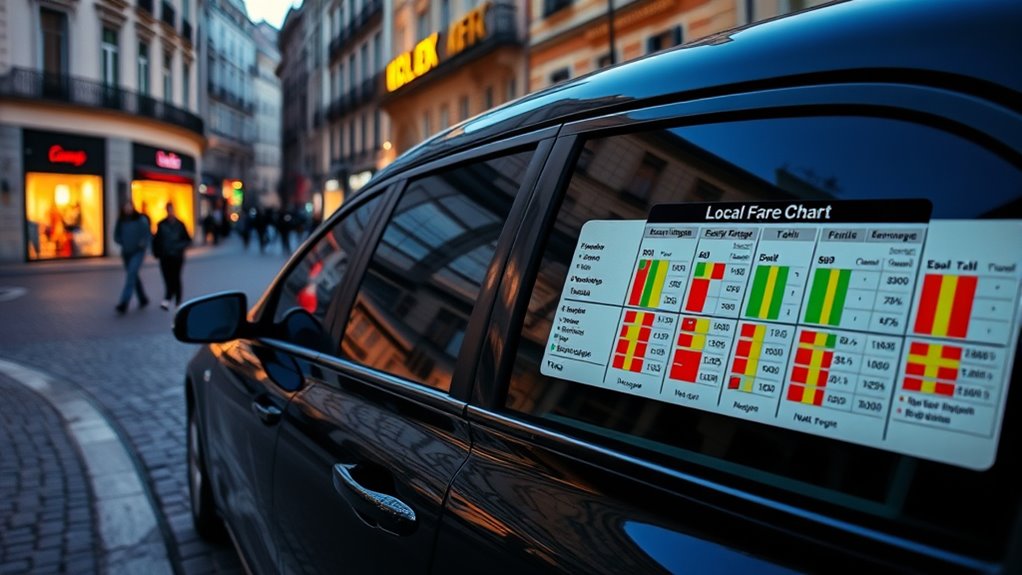
Understanding the local fare structures and tariffs is essential to avoid overpaying for taxis in Europe. Each city has its own rules, with some charging high flat fees for short trips, especially in expensive cities like Zurich, Paris, and London, where 5 km fares can exceed $25. Others, like Luxembourg and Geneva, also have high rates due to local costs and regulations. Typically, fares include a base fee plus per-kilometre and per-minute charges. Airport transfers often have extra surcharges or flat rates, and night or holiday trips may multiply costs. Familiarize yourself with posted tariffs at taxi ranks or airports, and look out for minimum fares or waiting charges. Knowing these details helps you spot unfair charges and avoid surprises. Additionally, innovative European cloud servers are increasingly used to develop real-time fare calculators that can help travelers compare prices and avoid overpaying.
Use Licensed Booking Apps and Confirm Estimated Prices
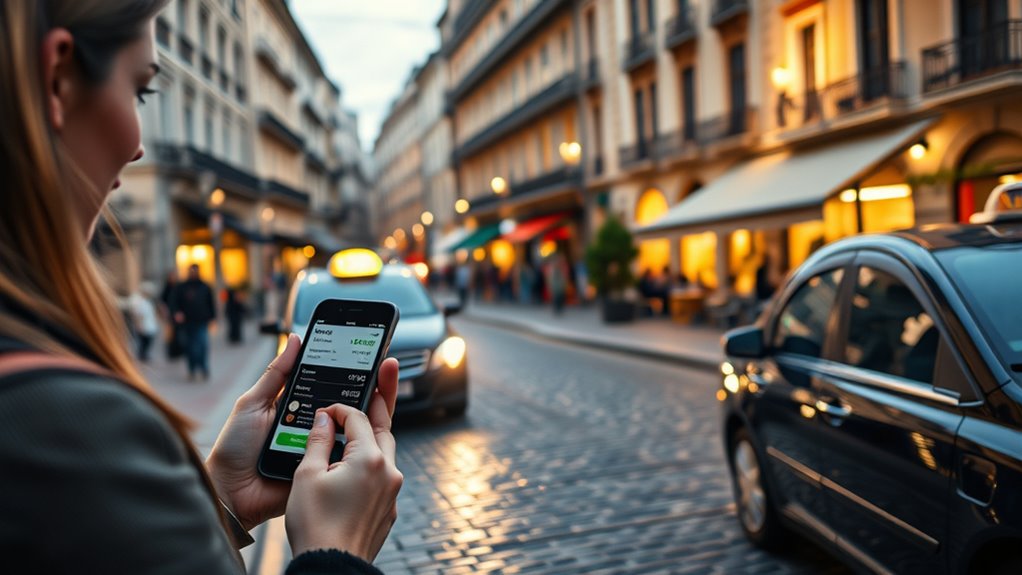
Using licensed booking apps and municipal taxi services can substantially reduce the risk of overpaying. These platforms typically display transparent fare estimates before you confirm your ride, helping you avoid surprises. Always verify the estimated price and guarantee the driver uses the meter or adheres to fixed rates, especially at airports or tourist hotspots. Reputable apps like myTaxi, Free Now, or local municipal services often track your route, providing accountability and preventing overcharging. Avoid unregulated private hires or drivers offering flat-rate deals without clear written quotes. When booking, compare the app’s estimate with official tariffs or flat rates posted at pickup points. Confirm the fare before starting, and keep records of the quoted price to ensure you’re not paying more than necessary. Understanding fare transparency can help you make more informed choices and avoid inflated charges. Being aware of projector technology can also guide you in making better purchasing decisions for home entertainment systems. Additionally, being familiar with wave and wind conditions can help you plan your travel times more effectively and avoid unnecessary charges during peak periods.
A thorough knowledge of meter regulations in the region can further assist in recognizing when a driver might be overcharging or not following legal fare practices.
Compare Alternative Transportation Options

When choosing transportation in European cities, comparing options beyond taxis can save you money and time. Public transit like metro, trams, and buses are often reliable and considerably cheaper than taxis, especially for short trips. Check local transit maps and schedules to plan your route and take advantage of day passes or travel cards that offer unlimited rides at a fixed price. Rideshare apps like Uber or Bolt may be cheaper during off-peak hours or when surge pricing isn’t active. Biking or walking can be practical in compact cities, offering both savings and sightseeing opportunities. Pre-booked airport shuttles or private transfers might also offer flat rates that beat taxi fares. Additionally, considering options like electric bikes can provide a quick and eco-friendly way to navigate urban areas more affordably. Exploring local transportation apps can help you find the most current deals and discounts for various transit options, ensuring you save money. For example, many cities also have city transportation passes that can significantly reduce transportation costs for visitors. Furthermore, some cities have discounted group tickets which can be economical for travelers traveling together. Incorporating integrated transit systems that combine multiple modes of transportation may also lead to additional savings and convenience.
Watch Out for Surcharges and Surge Pricing
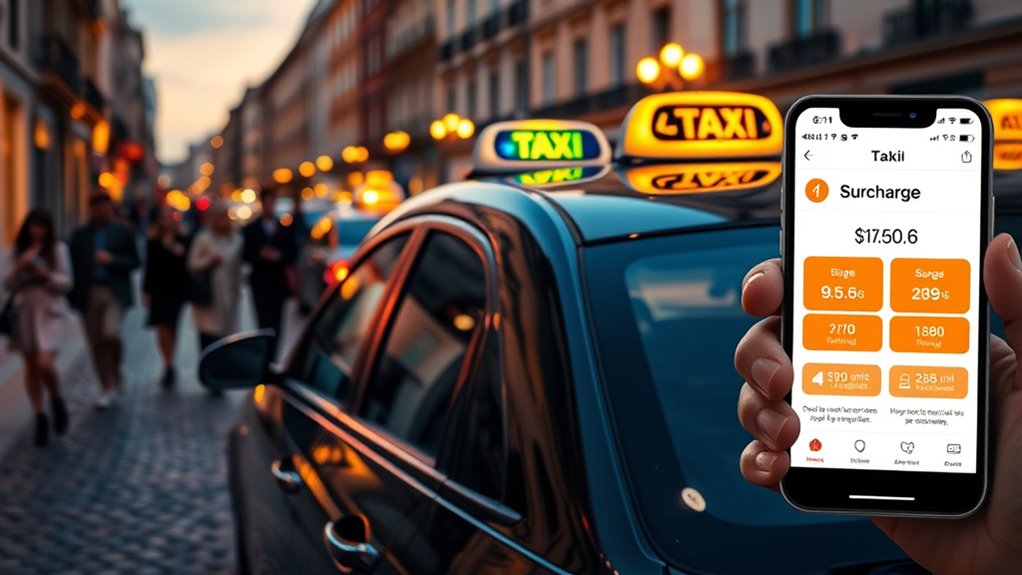
Surcharges and surge pricing can enormously inflate your taxi fare without warning, especially during busy periods or at peak hours. Many cities add extra fees for airport pickups, luggage, or late-night rides, which can considerably boost costs. Ride-hailing apps often implement surge pricing during high demand, sometimes doubling or tripling fares. Always check for posted surcharge notices at taxi ranks or airports, and confirm whether the driver will apply additional fees before starting your trip. Use licensed apps that display fare estimates and alert you to surge pricing. If you notice a ride’s cost is unexpectedly high due to surge pricing, consider waiting until demand drops or switching to public transportation. Being aware of these surcharges helps you avoid surprises and keeps your trip within budget. Additionally, understanding the Gold IRA markets can be a useful analogy for recognizing hidden costs and making more informed financial decisions. Recognizing surcharge notices can help you better anticipate total fares before your trip begins.
Practice Practical Payment and Negotiation Tactics

Practicing practical payment and negotiation tactics can save you money and prevent overpaying for taxis in Europe. First, always check posted tariffs at official taxi ranks or airports before hiring, and confirm whether the driver will use the meter or offer a flat rate. Second, use licensed apps or municipal taxi services that show fare estimates and route tracking—this keeps you informed and lessens chances of being overcharged. Third, compare alternative transport options like public transit, which is often cheaper and reliable. If offered a flat fare, request a written or app-based quote before starting the ride. Carry small local currency for exact payments, avoiding card surcharges. Additionally, understanding deep-sky imaging principles can help you better plan your equipment setup if you’re interested in astrophotography during your travels, ensuring you get the most out of clear night skies. Being aware of tanning trends can also help you choose appropriate skincare products to protect your skin from sun damage while exploring outdoors. To further avoid surprises, familiarize yourself with local taxi regulations so you know your rights and the standard fares in each city. Knowing local transportation laws can improve your negotiation skills and help you identify fair pricing in unfamiliar environments. Researching local fare structures beforehand can give you a better idea of what to expect and prevent you from being overcharged. These tactics help you stay in control and ensure you pay fair prices.
Frequently Asked Questions
How Accurate Are Taxi Fare Estimates From Mobile Apps?
Taxi fare estimates from mobile apps are generally accurate but can vary due to factors like traffic, route changes, and surge pricing. You should always check the route and fare estimate before confirming your ride. Keep in mind that during peak hours or special events, prices may spike unexpectedly. To avoid surprises, compare app estimates with official taxi tariffs or ask drivers about potential surcharges.
Can I Negotiate Fares With Private Airport Drivers?
You can try negotiating fares with private airport drivers, but don’t expect discounts in high-demand periods or from reputable providers. To improve your chances, research standard flat rates beforehand and politely ask if they’re flexible. Be prepared to compare their offer with official taxi rates or prebooked transfers. Keep a friendly attitude, and if they’re unyielding, don’t hesitate to opt for a regulated taxi or public transport instead.
What Should I Do if the Meter Is Not Running?
If the meter isn’t running, you should immediately ask the driver to activate it or clarify the fare upfront. If they refuse, consider refusing the ride and finding another licensed taxi or using a trusted ride-hailing app with fare estimates. Always verify if the driver is licensed and check posted fare information at taxi stands or airports. Don’t accept flat rates without clear, written confirmation to avoid overpaying.
Are Tipping Customs Included in Taxi Fares?
Tipping customs aren’t usually included in taxi fares, so you should tip based on the service quality. In most European cities, rounding up the fare or leaving about 10% is customary for good service. If the driver helps with luggage or provides extra assistance, consider tipping a bit more. Always check local customs, as tipping practices vary, but in general, tipping isn’t mandatory and is left to your discretion.
How Can I Identify Unlicensed or Unregulated Taxis?
You can spot unlicensed taxis by checking for official markings like a taxi license number, company ID, or city badge displayed prominently. Unregulated taxis often lack meters, visible tariffs, or official signage. If the driver refuses to use the meter or insists on a flat rate without clear authorization, it’s likely unlicensed. Always hail taxis from official ranks or use reputable apps that verify driver credentials to stay safe.
Conclusion
By understanding local fares, using trusted booking apps, and comparing options, you can avoid overpaying for taxis in Europe. Keep an eye out for surcharges and be prepared to negotiate if needed. Did you know that over 20% of travelers have paid more than they should because they weren’t aware of the fare structures? Staying informed and cautious guarantees you get fair prices and makes your trip more enjoyable without unnecessary expenses.