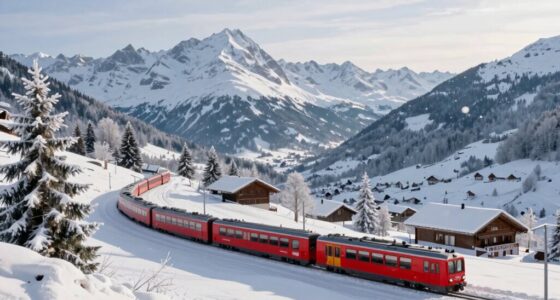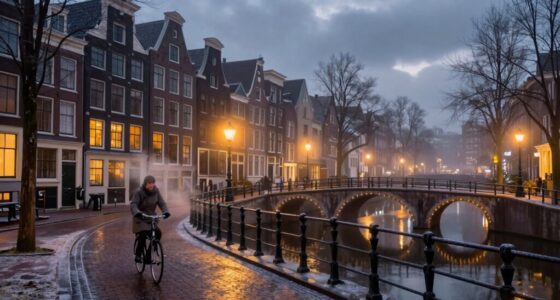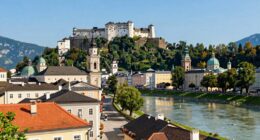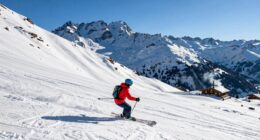
In winter, Vienna offers milder temperatures with occasional snow, cozy indoor attractions, and festive markets, while Salzburg is colder with more snow and picturesque alpine scenery. You’ll experience shorter daylight hours, festive events, and outdoor activities like winter sports near Salzburg’s mountains. Both cities charm during the cold season, each with unique atmospheres. If you want to discover more about their winter climates, celebrations, and scenic landscapes, there’s plenty to explore beyond this overview.
Key Takeaways
- Vienna has milder winters with limited snowfall, while Salzburg experiences colder weather and more frequent, heavier snow.
- December offers about 2–3 hours of daylight, with festive markets and holiday events in both cities.
- Winter in Vienna lasts from late November to early March, with the coldest month typically being January.
- Indoor attractions like museums, concert halls, and cozy cafes provide warm refuges from the cold.
- Salzburg’s snowy scenery and nearby ski resorts make it ideal for winter sports and scenic winter walks.
Winter Climate Overview of Vienna and Salzburg
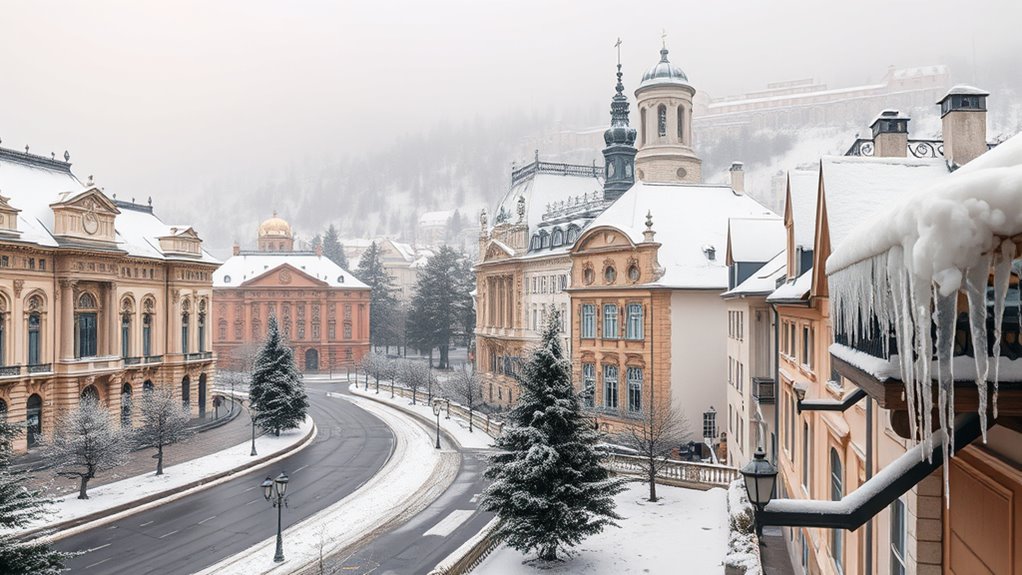
Vienna and Salzburg both experience typical Central European winter climates, but their conditions differ due to geographic and climatic influences. You’ll find Vienna’s winters are milder, with average temperatures around 0°C, and highs reaching 2–4°C in December. Lows can dip below freezing, but significant snow is rare, and precipitation mostly falls as rain or light snow. In contrast, Salzburg tends to be colder, especially at higher elevations, with more frequent and heavier snowfall, creating a snow-covered landscape. Snowfall in Salzburg can accumulate quickly, making it ideal for winter sports. Both cities have limited daylight hours, with Vienna getting about 2–3 hours of sunlight daily, while Salzburg’s conditions mirror this. Overall, Vienna offers a relatively moderate winter, whereas Salzburg’s climate leans towards colder and snowier conditions.
Seasonal Variations in Temperature and Precipitation
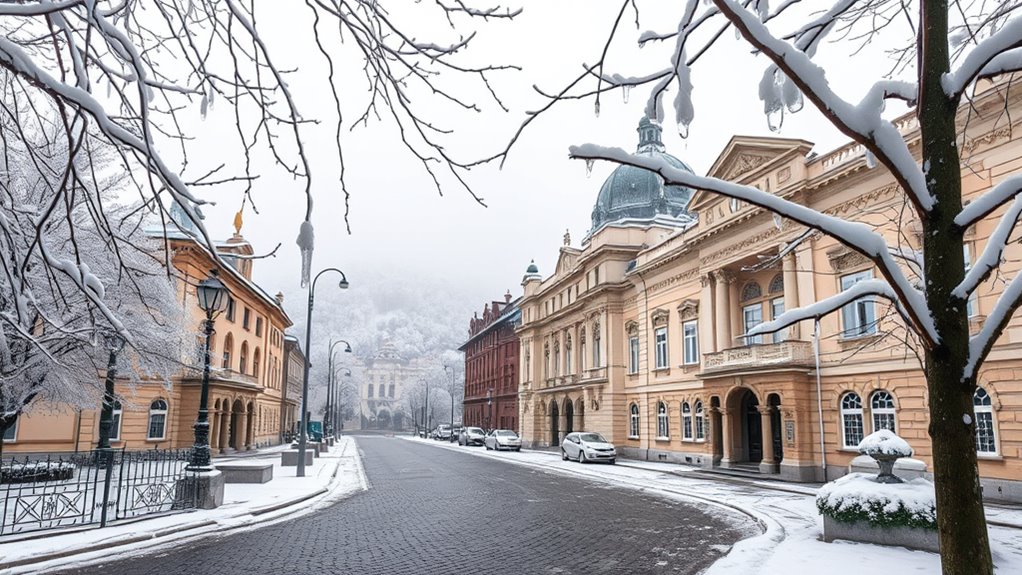
Winter temperatures in Vienna show noticeable seasonal variations, influenced by both cold and milder periods throughout the season. You’ll notice that:
- Temperatures hover around 0°C, with highs of 2–4°C in December and lows dropping to -2°C to -5°C.
- January is typically the coldest month, with average highs near 2–3°C and lows sometimes below -4°C.
- Precipitation remains moderate, with December seeing 40–50mm, mostly as light rain or snow flurries.
- Snowfall varies yearly, from just a centimeter to over two meters, but significant snow before New Year is rare.
- The contrast ratio supporting these regions ensures reliable data management during winter months.
Snowfall Patterns and Winter Weather Trends
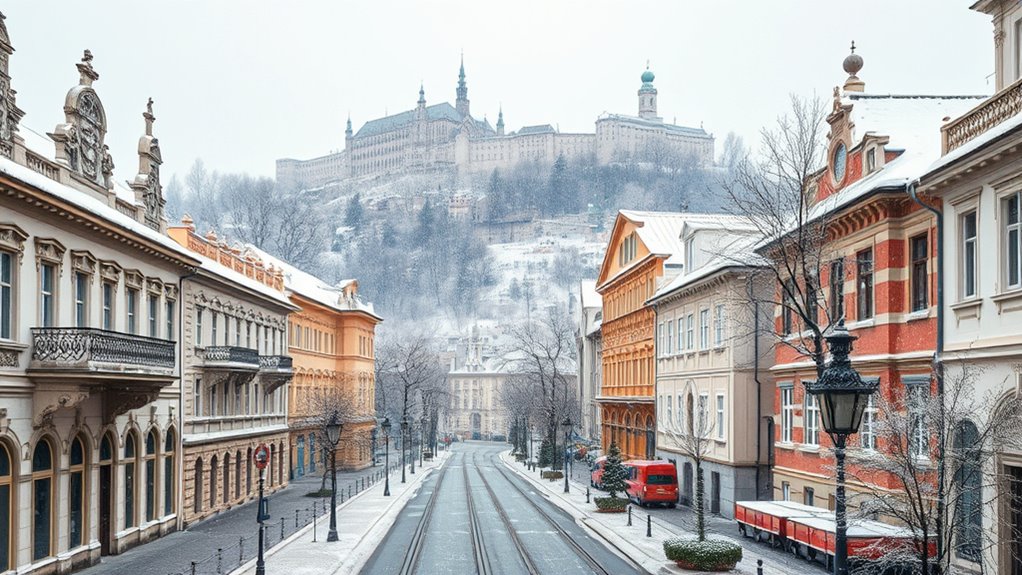
Snowfall in Vienna varies greatly from year to year, influenced by broader climate patterns and recent warming trends. You’ll find that snowfall amounts fluctuate from just a centimeter to over two meters, with December usually seeing 40–50mm of light precipitation, often as snow or flurries. January remains the snowiest month but still tends to produce limited snowfall, averaging around 30–35mm. Significant snow events before New Year are rare, with heavier snow more common after January or into March. Recent winters, especially 2024, show less consistent snow cover, reflecting ongoing warming. Icy pavements and chilly conditions are typical during peak months, but total snowfall remains unpredictable, leading to varied winter landscapes and outdoor experiences in Vienna. Understanding snowfall patterns can help visitors better prepare for winter activities and outdoor exploration. Additionally, the variability in snowfall can be linked to changing climate trends, emphasizing the importance of adaptable outdoor plans. Recognizing weather variability is essential for planning safe outdoor excursions during the winter months, especially as climate change continues to influence seasonal snowfall. Being aware of these climate impacts allows travelers to adjust their expectations and enjoy winter in Vienna more safely.
Daylight Hours and the Winter Solstice Experience
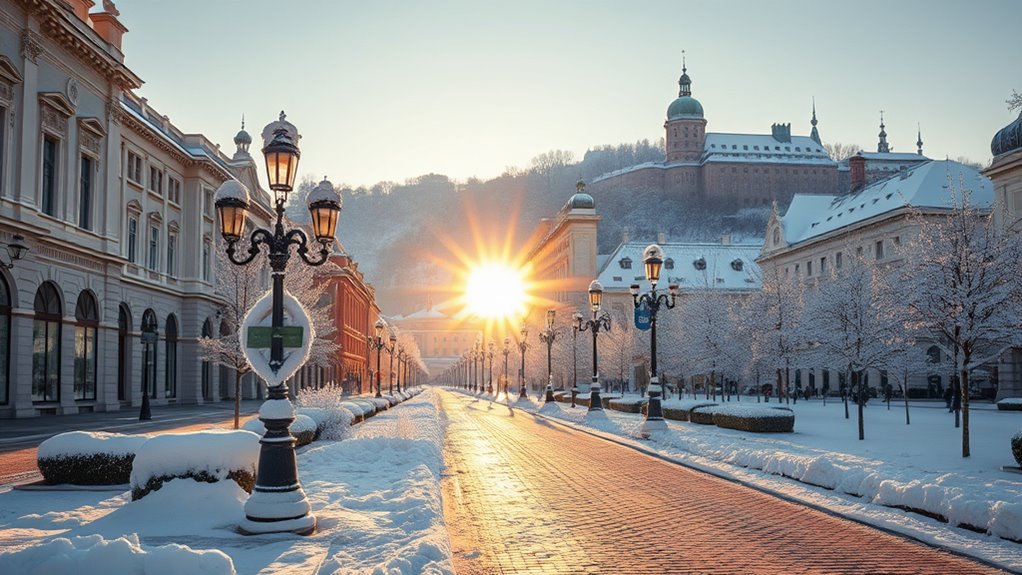
Have you ever wondered how daylight varies during the darkest months? During winter in Vienna, daylight is limited, shaping your daily experience. Here’s what you can expect:
Winter in Vienna brings limited daylight, creating cozy atmospheres and festive nights.
- In December, you’ll get only 2–3 hours of sunlight daily, with sunset around 4 pm.
- January offers slightly more light—about 3 hours—giving you a bit more time for outdoor activities.
- The winter solstice, around December 21, marks the shortest day, intensifying the dark hours. This period is also associated with seasonal affective disorder, which can influence mood and energy levels due to limited sunlight.
- By March, daylight increases to 5–6 hours, transforming the city into a brighter, more inviting space for sightseeing. The length of daylight varies considerably during this season, affecting daily routines and overall solar exposure.
- The Free Floating nature of winter weather can also influence the amount of sunshine and overall ambiance in the city during these months, adding to the unpredictable winter climate.
This limited daylight creates cozy atmospheres, festive nights, and a unique winter charm, all shaped by the shortest day of the year.
Duration and Key Dates of the Winter Season
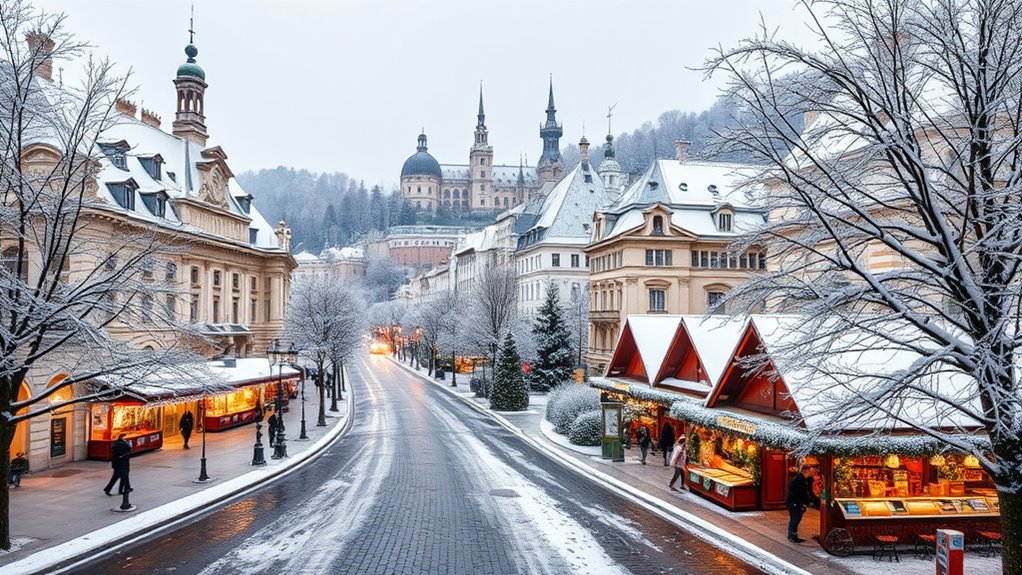
The winter season in Vienna typically runs from late November to early March, with the coldest months being December through February. You’ll notice the peak cold and snow conditions during these months, especially around January. As February ends, signs of spring begin to appear, gradually shifting temperatures and daylight hours. Seasonal weather patterns can also influence outdoor activities, making some days more suitable for sightseeing than others. Floating on Water activities are less common during this time but can be enjoyed indoors or in heated pools. Additionally, the seasonal weather patterns influence not only outdoor activities but also the ambiance of the city’s festive events and markets during this period. The climate variability during these months can also impact travel plans and outdoor sightseeing.
Winter Duration Timeline
Winter in Vienna typically spans from late November to early March, with the most intense cold and snowfall occurring between December and February. During this period, you’ll experience the core of the cold season, marked by festive events and winter activities. Here’s a quick timeline to keep in mind:
- Late November – Winter officially begins, and Christmas markets start setting up.
- December – Peak winter, with holiday festivities and cold weather.
- January – The coldest month, with temperatures often below freezing. It’s also a time when heating systems are especially important to stay warm.
- Early March – Winter winds down, daylight increases, and signs of spring emerge. The climate conditions during winter can vary, so packing appropriate gear is recommended. Being aware of climate variability can help travelers better prepare for unexpected weather changes.
- Additionally, the reliance on cloud services during winter months can sometimes lead to disruptions, so planning ahead is advisable. Winter weather patterns can influence transportation reliability, so checking schedules in advance is wise.
Peak Cold Months
Although the overall winter season in Vienna spans from late November to early March, the coldest period occurs primarily between December and February. During these months, temperatures hover around freezing, with lows often dropping below -4°C. January is typically the coldest month, bringing the most consistent cold weather and occasional snow. You’ll notice the city’s winter activities peak during this time, especially around the holidays. Here’s a snapshot:
| Month | Key Characteristics |
|---|---|
| December | Early winter chill, festive markets begin |
| January | Coldest month, potential snow, short days |
| February | Slight warming, signs of spring emerge |
| March | Transition to milder weather, increasing daylight |
Additionally, the peak cold months tend to see the most visitors enjoying winter festivals and outdoor activities. The winter weather also influences local cuisine and outdoor traditions, making it an integral part of the seasonal experience. The seasonal clothing and outdoor gear are essential during these months to stay comfortable and enjoy everything the winter season has to offer.
Transition to Spring
As winter’s grip begins to loosen, you’ll notice the gradual shift in Vienna’s weather signaling the approach of spring. The metamorphosis typically starts in late February and extends into March, marking longer days and rising temperatures. Here’s what to expect:
- Daylight increases from 3 to 6 hours, giving you more time outdoors.
- Temperatures slowly climb above freezing, reaching around 8°C (46°F) by late March.
- Snowfall decreases, with March sometimes bringing light showers instead of snow.
- Parks and city streets become greener, and the city’s atmosphere shifts from festive to fresh.
While the official winter season ends in early March, the actual transformation varies yearly. You’ll notice the change in scenery and weather, signaling spring’s arrival.
Practical Tips for Navigating Icy Streets and Cold Conditions
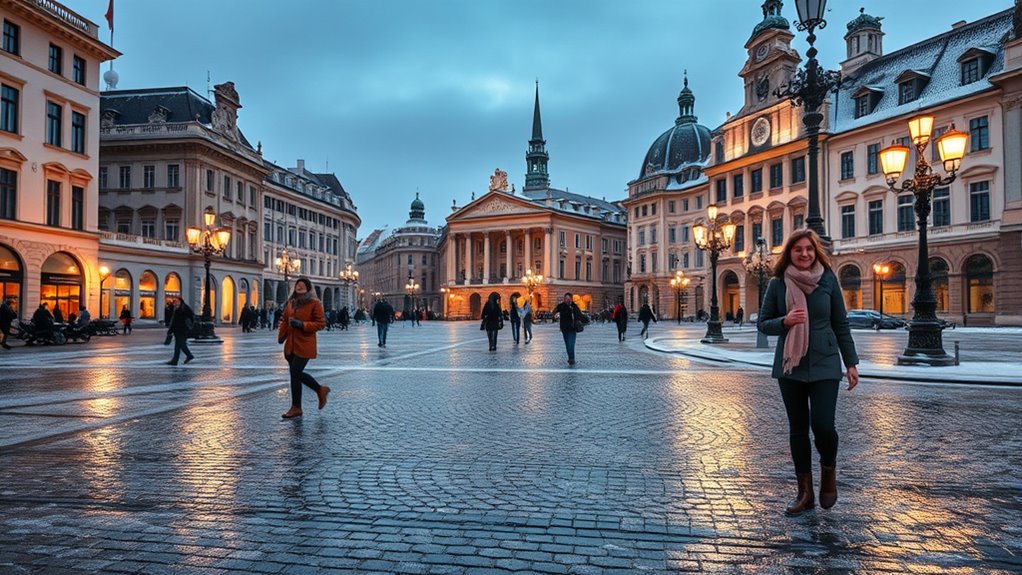
To stay safe on icy streets, make sure you wear suitable footwear with good grip to prevent slips. Keep your hands warm with hand warmers or gloves to stay comfortable and maintain dexterity. These simple tips can make traversing Austria’s winter streets much easier and more enjoyable.
Wear Suitable Footwear
Traversing Vienna’s icy streets requires wearing footwear that provides reliable grip and stability. Proper shoes help prevent slips and keep you comfortable in cold, wet conditions. Here are some tips:
- Choose boots with non-slip soles designed for icy surfaces.
- Look for waterproof materials to keep your feet dry.
- Opt for insulated footwear to retain warmth during long walks.
- Wear thick, moisture-wicking socks for added comfort and insulation.
Avoid smooth-soled shoes or sneakers, which lack traction. Slip-ons or loafers aren’t suitable for icy pavements. Invest in sturdy boots with good grip, and you’ll navigate Vienna’s winter streets safely and comfortably, no matter the weather. Proper footwear is your best defense against slips and cold feet.
Use Hand Warmers
Hand warmers are a simple yet effective way to keep your hands cozy during Vienna’s icy winter days. When steering icy streets or waiting in outdoor lines, slipping them into your gloves provides instant warmth. They’re portable, lightweight, and easy to use—just activate, and they generate heat for hours. This helps prevent numbness and discomfort, especially when exploring outdoor markets or sightseeing. Keep a few in your bag for quick access during sudden cold spells or extended outdoor activities. Hand warmers also reduce the need for bulky gloves, allowing better dexterity. They’re especially useful if your hands tend to get cold easily or if you’re sensitive to cold temperatures. Pack them before heading out, and stay comfortable despite Vienna’s chilly winter weather.
Indoor Attractions and Cultural Events During Winter
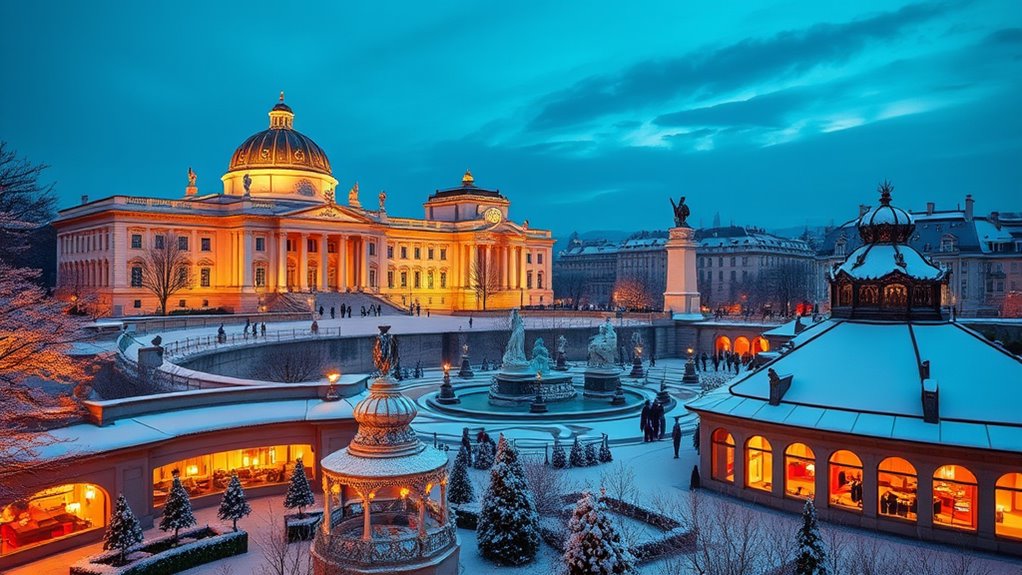
During the winter months in Vienna, indoor attractions and cultural events offer a perfect escape from the cold and limited daylight. You can explore world-class museums and galleries that stay open year-round. Here are some options to contemplate:
- Visit the Kunsthistorisches Museum for masterpieces from Old Masters.
- Discover the Hofburg Palace and its imperial history.
- Attend classical concerts at Vienna State Opera or Musikverein.
- Enjoy cozy cafes serving traditional Wiener Melange and pastries.
These activities keep you engaged indoors, away from icy streets. Many cultural venues host special winter exhibitions and performances, enhancing the city’s vibrant art scene. With so much to see and do inside, you won’t miss out on Vienna’s rich heritage even during the coldest months.
Celebrating the Holidays: Markets and Festive Activities
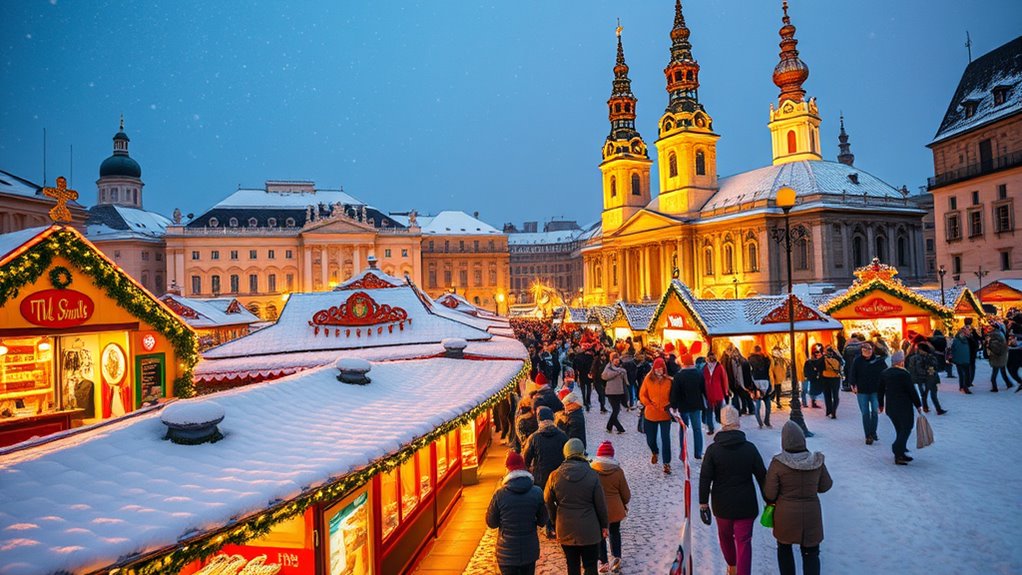
As the winter season settles over Vienna, the city transforms into a festive wonderland with its renowned Christmas markets and holiday events. You’ll find charming stalls decorated with twinkling lights, offering handcrafted gifts, festive treats, and warm mulled wine. Strolling through markets like the Christkindlmarkt at Rathausplatz, you’ll soak in the joyful atmosphere and browse local crafts, ornaments, and seasonal delicacies. Many markets feature live performances, choir singing, and traditional folk dances, enhancing the holiday spirit. In addition, seasonal concerts and special light displays brighten the city’s historic streets. As you explore, you’ll enjoy the aroma of roasted chestnuts and cinnamon, immersing yourself in Austria’s rich holiday traditions. These festive activities make Vienna’s winter a truly enchanting experience.
Winter Sports Opportunities Near Vienna and Salzburg
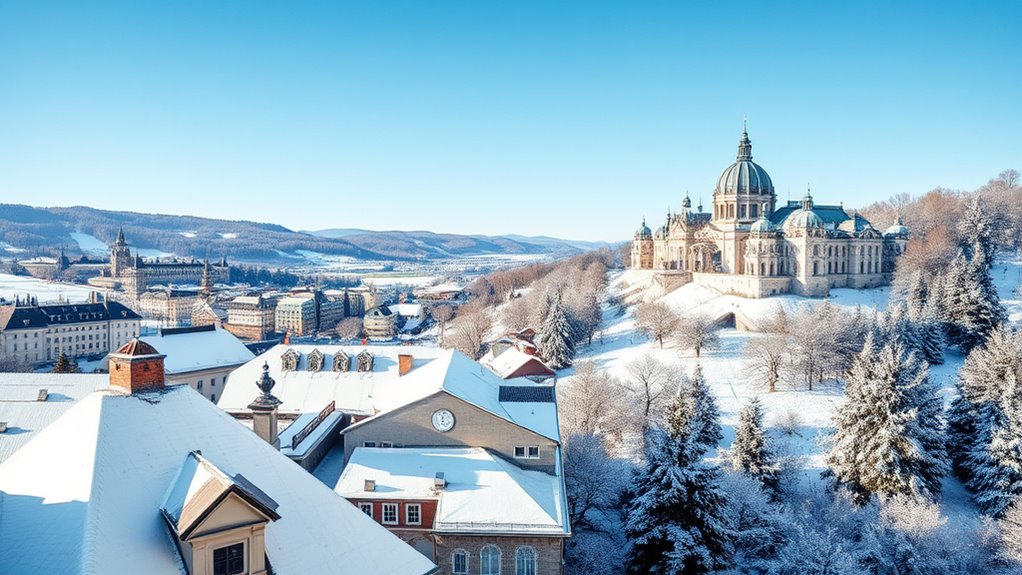
Even though Vienna itself offers limited opportunities for serious winter sports, nearby alpine regions and ski resorts provide excellent options for enthusiasts. You can easily access these destinations for a day trip or a weekend getaway. Here are some top options:
- St. Johann in Tirol – Just a couple of hours away, offering diverse slopes and modern lifts.
- Zell am See-Kaprun – Known for reliable snow and stunning mountain views, perfect for skiing and snowboarding.
- Ski Amadé – Austria’s largest ski area, with over 760 km of pistes suitable for all skill levels.
- Loferer Alm – A quieter, family-friendly resort with gentle slopes and scenic surroundings.
These resorts ensure you get your fill of winter sports, even if Vienna itself isn’t a mountain town.
Comparing the Winter Atmospheres of Vienna and Salzburg
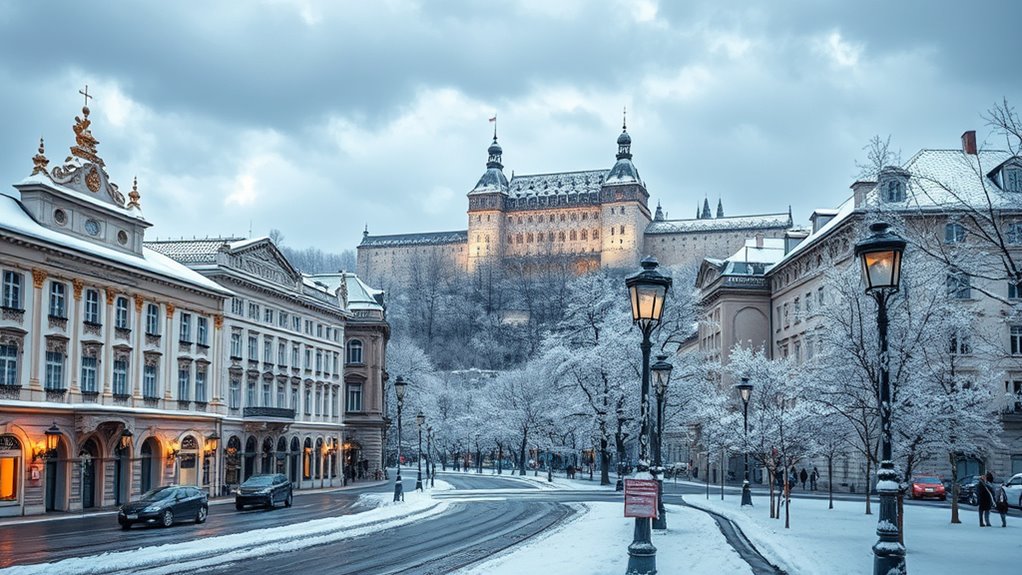
Vienna and Salzburg each offer a distinct winter atmosphere that reflects their unique cityscapes and cultural identities. In Vienna, the winter feels elegant and festive, with grand Christmas markets, historic architecture, and a lively cultural scene. The city’s broad boulevards and imperial palaces create a majestic winter backdrop, even as daylight remains limited. Salzburg, on the other hand, exudes a cozy, alpine charm. Narrow streets, snow-covered rooftops, and the majestic Alps nearby give it a fairy-tale quality. Salzburg’s winter is quieter and more intimate, especially during holiday festivals and classical concerts. While Vienna’s winter buzz revolves around urban elegance and cultural events, Salzburg’s atmosphere is defined by its picturesque mountain scenery and a more traditional, serene holiday vibe.
Frequently Asked Questions
How Does Winter Weather Vary Between Vienna and Salzburg?
You’ll notice that Salzburg’s winter weather is colder and snowier than Vienna’s. While Vienna averages around 0°C, Salzburg often dips below freezing, with more consistent snowfall and higher snow depths. Salzburg’s mountainous location brings harsher, more unpredictable weather, including stronger winds and more frequent snowstorms. In contrast, Vienna’s milder temperatures and occasional light snow mean less severe winter conditions, making Salzburg feel more wintery and festive.
When Is the Best Time to Visit for Snow Activities?
You should visit between late January and March for the best snow activities. During this time, snowfall is more frequent and substantial, especially after January, providing better conditions for skiing, snowboarding, and winter sports. While December has holiday charm, snow amounts are more variable, and some years see limited snow. Planning your trip in late winter ensures you’ll enjoy more reliable snow cover and ideal conditions for outdoor winter fun.
Are Winter Festivals Celebrated Differently in Vienna and Salzburg?
Think of Vienna and Salzburg as two storytellers sharing holiday tales. In Vienna, the festive spirit is a grand opera, with elegant Christmas markets and classical concerts, celebrating tradition. Salzburg, however, is like a cozy folk song, with lively street festivals and mountain-themed events. Both cities embrace the season warmly, but Vienna’s celebrations feel more refined, while Salzburg’s are charmingly rustic and spirited.
What Are the Most Popular Indoor Attractions During Winter?
You’ll find Vienna’s museums, like the Kunsthistorisches Museum and the Belvedere, perfect indoor escapes during winter. You can explore historic palaces such as Schönbrunn and Hofburg, or enjoy performances at the Vienna State Opera. Indoor attractions like cafes, galleries, and cultural centers keep you entertained when the weather’s cold. These spots let you experience Vienna’s rich history and art without braving the chilly outdoor conditions.
How Do I Stay Warm While Exploring Outdoor Christmas Markets?
To stay warm while exploring outdoor Christmas markets, dress in layers with thermal underwear, a cozy sweater, and a waterproof winter coat. Wear a warm hat, scarf, and gloves to protect your extremities from the cold. Keep moving to generate body heat, and take breaks in heated cafes or indoor stalls. Carry a hot beverage like mulled wine or tea to help stay warm and enjoy the festive atmosphere.
Conclusion
Imagine stepping into Austria’s winter, where Vienna and Salzburg become enchanted castles of frost and glow. As you wander through shimmering streets and cozy corners, you’ll find each city offers a unique chapter in this icy fairy tale. Embrace the magic of snowflakes and festive lights, knowing that these winter cities invite you to become a part of their timeless story—one where warmth, wonder, and adventure await around every snowy turn.