
Tourist taxes in Europe are unexpected fees that many travelers overlook, but they can add up quickly during your trip. These taxes are imposed by local governments on accommodations, attractions, or activities and vary by country or city, often ranging from €0.50 to €5 per night. Understanding how they’re calculated, where they apply, and exemptions can help you budget better. Keep exploring to learn how to manage these costs and travel smarter.
Key Takeaways
- European countries like France, Italy, and Switzerland impose tourist taxes ranging from €0.50 to €5 per night.
- Taxes are often included in hotel bills or paid separately at check-in or check-out.
- They fund local infrastructure, cultural sites, and eco-friendly tourism initiatives.
- Exemptions may apply for children, residents, or long-term visitors; check local policies beforehand.
- Use official tourism websites and visitor centers to stay informed about current rates and regulations.
Amazon Product B085B6M51S
As an affiliate, we earn on qualifying purchases.
Interactive Tourist Tax Calculator
Tourist Tax Calculator (Europe)
Amazon Product B0DFCC5WLC
As an affiliate, we earn on qualifying purchases.
Understanding Tourist Taxes: What Travelers Need to Know
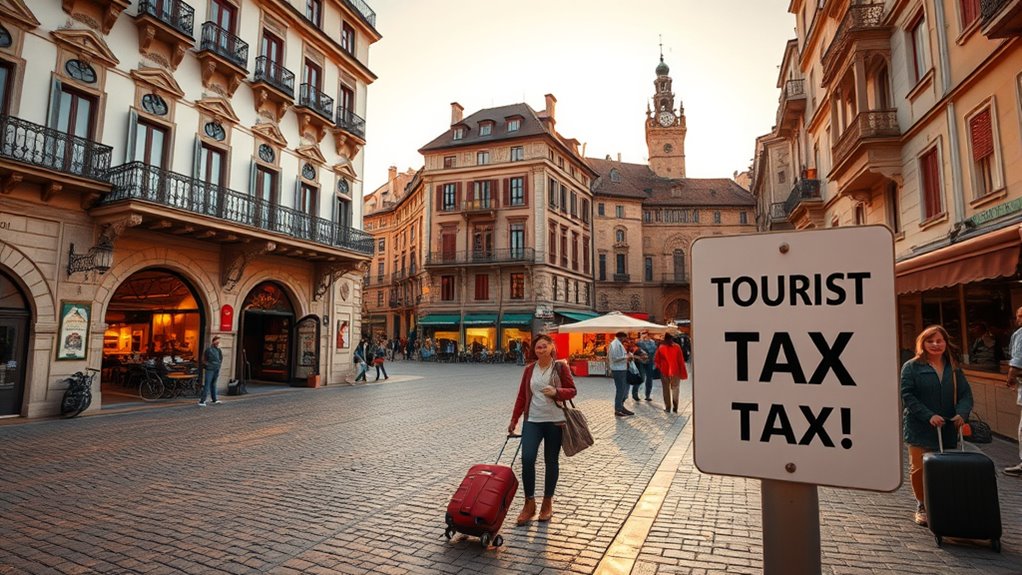
Tourist taxes are fees imposed on travelers by local governments, often collected when you check into accommodations or participate in certain activities. To navigate these costs smoothly, it’s helpful to understand local customs and cultural etiquette. Many European destinations include these taxes as part of their hospitality practices, so being aware of them shows respect for local traditions. Some places may display signs or provide information about the fees, while others include them subtly in your bill. It’s common to pay these taxes upfront or during check-out, so don’t be surprised if they’re added to your total. Recognizing the role of these taxes in supporting local infrastructure and tourism efforts helps you appreciate their purpose and avoid unexpected expenses during your trip. Additionally, the impact on local economies is significant, as these fees contribute to maintaining attractions and public services. Understanding how regulations vary across regions can further help you plan your budget effectively, especially as regional rules may differ widely from one country to another. Being aware of the support for local initiatives funded by tourist taxes can deepen your understanding of their importance in sustainable tourism development.

Samsonite Freeform Hardside Carry-On Luggage with Spinner Wheels - Hardshell Suitcase - TSA, Airline-Approved - Expandable Hard Shell, Smooth Rolling Wheels for Lightweight Travel - Pink Rose
The Perfect Size: The textured, scratch-resistant exterior of this hardshell carry-on luggage is 23in x 15in x 10in...
As an affiliate, we earn on qualifying purchases.
Countries With the Highest and Most Notable Fees

Some European countries charge considerably higher tourist fees than others, making your travel budget more important to plan. You’ll find notable examples like Venice’s city tax or France’s eco-taxes that stand out for their size and impact. Understanding these top fee destinations helps you prepare for the costs you might encounter during your trip. Additionally, being aware of cookie categories and how they influence your browsing can help you manage your online privacy while researching travel costs. Embracing cloud security solutions can also ensure that your travel data remains protected when planning your trip online. Staying informed about AI-driven solutions in healthcare might even lead to future travel health benefits, especially when considering European healthcare systems and how they support travelers. Recognizing the importance of piercing aftercare can be useful if you plan to get body modifications during your travels, ensuring proper healing and infection prevention.

SWISSGEAR Sion Softside Expandable Spinner Luggage Durable Lightweight Travel Suitcase, Black, Carry-On 21-Inch
SOFTSIDE LIGHTWEIGHT DESIGN – Durable polyester fabric construction provides flexible packing while maintaining structure for reliable travel performance
As an affiliate, we earn on qualifying purchases.
Table of Common Tourist Taxes in Europe
Here’s a summary table of common tourist taxes in Europe showing typical charges by country or major city. Tourist taxes (also called city tax, visitor tax, accommodation tax, etc.) vary widely — often by city, type of accommodation, star rating, and season — and are usually charged per person, per night or as a percentage of the room cost and collected locally at the hotel or accommodation bill.
| Country / City | Tax Type | Typical Amount (2025) | Notes |
|---|---|---|---|
| France (national) | Taxe de séjour | ~€0.20–€4 per person/night | Varies by accommodation quality; Paris higher. (Authentic Europe) |
| Paris, France | Tourist tax | ~€5.20–€8.45 per person/night | Rate depends on hotel star rating. (Authentic Europe) |
| Germany (Berlin) | Bed / Culture tax | ~7.5% of accommodation cost | Paid on hotel bill; capped after ~21 days in Berlin. (KAYAK) |
| Germany (Frankfurt) | Tourist tax | ~€2 per person/night | Depends on city. (KAYAK) |
| Greece (nationwide) | Tourism / “Climate” tax | ~€1.50–€10 per room/night | Based on accommodation category. (KAYAK) |
| Italy (Rome) | Tassa di soggiorno | ~€3.50 per person/night | Varies by city and hotel quality. (KAYAK) |
| Italy (Florence) | Tourist tax | ~€1.00–€5 per person/night | Depends on lodging category. (KAYAK) |
| Italy (Milan) | Tourist tax | ~Up to €7 per person/night | Varies by accommodation. (KAYAK) |
| Italy (Venice) | Tourist tax | ~€3–€5+ per person/night | Plus day-tripper entry fee in high season. (unaitalianhospitality.com) |
| Netherlands (Amsterdam) | Toeristenbelasting | ~12.5% of room rate | % of cost per person per night; amounts vary by city. (eurailingpackages.com) |
| Portugal (Lisbon) | Municipal tourist tax | ~€4 per person/night | Applies for first 7 nights. (eurailingpackages.com) |
| Portugal (Porto) | Municipal tourist tax | ~€2 per person/night | Local level. (eurailingpackages.com) |
| Austria (Vienna) | Accommodation tax | ~3.2% of cost | % of accommodation bill. (KAYAK) |
| Austria (Salzburg) | Tourist tax | ~€3 per person/night | Local rate. (EasyJet) |
| Czech Republic (Prague) | Tourist fee | ~CZK 50 (~€2) per person/night | Collected at checkout. (KAYAK) |
| Belgium (Brussels) | Visitor tax | ~€4 per night | Varies by city. (CN Traveller) |
| Belgium (Antwerp, Bruges) | Flat fee | ~€8 per night (approx) | Local tourism charge. (Trainline) |
| Croatia (e.g., Dubrovnik) | Sojourn tax | ~€2.65 per person/night | Seasonal variation. (euronews) |
| Latvia (Riga) | Municipal tax | ~€1 per person/night | Introduced 2023. (Wikipedia) |
- Percentage-based taxes (e.g., Berlin, Vienna, Amsterdam) are charged as a portion of the accommodation bill rather than a fixed euro amount. KAYAK+1
- Flat per-night fees vary significantly with destination and accommodation type (luxury hotels cost more). Authentic Europe
- Some cities/regions offer exemptions for children or longer stays. Authentic Europe
- Some European destinations like Edinburgh (UK) plan new tourist taxes starting in 2026 (~5% accommodation cost). New York Post
Top Fee Countries
Have you ever wondered which European countries charge the highest tourist taxes? Countries like France, Italy, and Austria top the list, emphasizing the financial impact on travelers and local communities. These fees can influence sustainable tourism by encouraging visitors to respect cultural sites and reduce environmental strain. Here’s a quick overview:
| Country | Typical Tax Rate | Notable Fee Characteristics |
|---|---|---|
| France | €0.50–€4 per night | Funds cultural preservation |
| Italy | €1–€5 per night | Supports historic site maintenance |
| Austria | €2–€3 per night | Promotes eco-friendly tourism |
| Switzerland | CHF 2–CHF 5 | Balances tourism growth |
| Croatia | €1–€3 per night | Enhances sustainable practices |
Additionally, some countries use tourist taxes as a means to fund infrastructure improvements that benefit visitors and residents alike. These fees remind you to budget wisely, supporting local efforts for sustainable tourism and minimizing cultural impact. Implementing these charges can also help manage visitor flow to popular destinations, ensuring they remain enjoyable for future visitors. Furthermore, understanding the wave and wind patterns can help travelers better plan their trips to optimize comfort and safety during their stay, especially when considering outdoor activities that depend on weather conditions.
Notable Tourist Tax Examples
Among European countries, France and Italy stand out for imposing some of the highest and most notable tourist taxes. In France, a city tax applies to hotel stays, with rates varying by local customs and hotel category, often affecting budget travelers. Italy also enforces a tourist tax, which can be mandatory in cities like Venice and Florence, with exemptions for certain age groups or stays in specific accommodations. These countries exemplify how tourist taxes reflect local customs, balancing tourism revenue and preservation efforts. Be aware that tax exemptions might apply, so it’s worth checking local regulations before your trip. Additionally, understanding local taxation policies can help travelers better prepare for unexpected costs. Recognizing revenue-generating strategies such as tourist taxes allows destinations to maintain their cultural and historical sites. Knowing these notable fees helps you budget accurately and avoid surprises, especially in popular destinations with high tourist influx and unique tax policies. It’s also helpful to research payment options to ensure smooth transactions when settling these fees during your visit. Being aware of the administration process for tourist taxes can also streamline your payment experience and prevent misunderstandings.
How Tourist Taxes Are Calculated and Charged

Tourist taxes are typically calculated based on a combination of factors such as the type of accommodation, its location, and the length of your stay. Local tax policies determine how much you’ll pay, with some areas setting fixed fees while others base charges on room rates or visitor counts. In many destinations, higher-end hotels face higher rates, whereas budget accommodations may have lower or flat fees. It’s important to note that some locations offer fee exemptions for certain travelers, such as children, long-term visitors, or residents. The way these taxes are levied varies—some cities include them in your bill, while others require separate payments at check-in or check-out. Understanding the local policies helps ensure you’re prepared for the additional costs during your trip. Additionally, boho-inspired decor in accommodations can sometimes reflect the local culture and influence the overall experience. Being aware of local taxation policies can also help you budget more accurately and avoid surprises. Moreover, understanding microeconomic factors that influence tourist taxes can give you a deeper insight into how local governments fund tourism infrastructure and services. Recognizing the role of self-sufficiency in managing expenses can help travelers better navigate unforeseen costs, including taxes. Familiarizing yourself with cybersecurity measures in hotel booking platforms can protect your personal information during transactions.
Tips for Budgeting and Avoiding Unexpected Costs
Knowing how tourist taxes are calculated helps you plan your trip costs more accurately, but unexpected expenses can still catch you off guard. To stay prepared, always carry some local currency for smaller fees and tips. Keep receipts to track your spending and know if you’re eligible for a tax refund, which can help offset costs. Additionally, understanding affiliate disclosure policies can inform you about potential commissions from recommended services or purchases during your trip.
Alternatives to Minimize or Bypass Tourist Taxes

To reduce or bypass tourist taxes, consider alternative accommodation options like vacation rentals or private hosts, which often include taxes in their total price or may not charge them at all. Booking early can also help you secure better deals and avoid last-minute surcharges. Using digital payment methods makes transactions smoother and can sometimes offer discounts or incentives for prepayment. By planning ahead and choosing private or rental options, you may avoid the additional fees that come with hotels or tourist hotspots. These alternatives often give you more control over your budget, especially if you pay upfront via digital payment platforms. This approach not only helps you stay within your budget but also provides a more authentic and flexible travel experience.
Staying Informed: Resources and Tips for Travelers

To stay well-informed about tourist taxes, check out official tourism websites for the latest updates. Joining travel forums and reading blogs can give you real-world tips and experiences from fellow travelers. Also, visit local visitor centers when you arrive—they’re a great resource for accurate, up-to-date information.
Official Tourism Websites
Ever wondered where to find the most accurate and up-to-date information about travel regulations and local attractions? Your best resource is the official tourism websites of each destination. These sites provide essential details on local tax exemptions, allowing you to understand which fees you might avoid or need to pay. They also often feature online payment options, making it easier to settle charges before or during your trip. To stay informed, look for sections on visitor information, travel alerts, and local policies. Here are some helpful tips:
- Check for updates on tourist taxes and exemptions
- Use official sites for reliable, current info
- Find details on online payment options
- Review local regulations regularly to avoid surprises
Travel Forums & Blogs
Travel forums and blogs are invaluable resources for staying informed about tourist taxes and local regulations. They provide firsthand experiences and tips, helping you understand local customs that influence tax policies. By browsing these platforms, you can learn about common tax exemptions and how they apply to travelers, avoiding surprises at checkout. Forums often feature recent updates, so you’ll stay current on any changes or temporary adjustments to tourist taxes. Additionally, fellow travelers share practical advice on charting courses through fees and avoiding pitfalls. Engaging with these communities allows you to ask questions and gain insights specific to your destinations. Overall, forums and blogs are essential tools for preparing your trip, ensuring you budget accurately and experience local customs smoothly.
Local Visitor Centers
Local visitor centers are invaluable resources that keep you informed about tourist taxes and local regulations during your trip. They offer reliable tourist information, helping you navigate fees with confidence. When you stop by, you can ask about the latest updates on taxes, discover local policies, and get tips tailored to your destination. These centers often provide maps, brochures, and multilingual staff ready to assist. To make the most of your visit, consider:
- Picking up brochures with tax details
- Asking staff about recent changes
- Clarifying any fees you might encounter
- Getting recommendations for budget-friendly activities
Using local visitor centers ensures you’re well-informed, avoiding surprises and making your trip smoother. Always check their hours and plan a quick visit early in your stay for the best insights.
Expanded and Updated Tourist Taxes Across more European Countries and Cities
| Country / City | Tax Type | Amount / Rate (2025) | Notes |
|---|---|---|---|
| Austria | Accommodation tax | ~3–5% of cost | Varies by province (e.g., Vienna, Tyrol). (bestintravelgroup.com) |
| Belgium (Brussels) | City tax | ~€7–€8 per night | Per room; varies by hotel size/rating. (adaptabletravel.co.uk) |
| Belgium (Antwerp, Bruges) | Visitor tax | ~€8 per night | Flat rate per room. (Trainline) |
| Bulgaria (general) | Tourist tax | varies by location | Charged per night; higher for better hotels. (Check-in Scan) |
| Croatia (e.g., Dubrovnik) | Sojourn tax | ~€2.65 per person/night | Can vary seasonally; Dubrovnik also charging cruise/city fees. (euronews) |
| Czech Republic (Prague) | Tourist fee | ~CZK 50 (~€2) per person/night | Children under 18 often exempt. (euronews) |
| France (national cities) | Taxe de séjour | ~€0.65–€8.13 per person/night | Varies by location & accommodation rating. (Authentic Europe) |
| Paris, France | City tax | ~€5.20–€8.45 per person/night | Higher in bigger cities; children usually exempt. (Authentic Europe) |
| Germany (Berlin) | Culture/Bed tax | ~7.5% of accommodation cost | Percentage on hotel bill. (adaptabletravel.co.uk) |
| Germany (Frankfurt & others) | Tourist tax | ~€2 per night | Varies by city. (adaptabletravel.co.uk) |
| Greece (nationwide) | Tourism tax | ~€2–€15 per person/night | Depends on hotel star rating & season; up to €15 in 5-star. (Radical Storage) |
| Hungary (Budapest) | Tourist tax | ~4% of room cost | Charged on accommodation cost (children often exempt). (UKTrtlTravel) |
| Italy (Rome) | Tourist tax | ~€4–€10 per person/night | Depends on hotel star rating. (KAYAK) |
| Italy (Florence) | Tourist tax | ~€3.5–€8 per person/night | By hotel category. (travelnews.co.za) |
| Italy (Milan) | Tourist tax | Up to ~€7 per person/night | Varies by accommodation. (euronews) |
| Italy (Venice) | Tourist & day-tripper tax | Accommodation tax + €5–€10 day tax | Day-visitor entry fee separate from overnight tax. (euronews) |
| Latvia (Riga) | Municipal tourism tax | ~€1 per person/night | Introduced 2023. (Wikipedia) |
| Netherlands (Amsterdam) | Toeristenbelasting | ~12.5% of room cost | One of Europe’s highest; other Dutch cities vary. (Authentic Europe) |
| Netherlands (other cities) | City tax | ~€1.45–€6.20 per person/night | Varies by municipality. (stayokay.com) |
| Portugal (Lisbon) | Municipal tax | ~€4 per person/night | Applies first 7 nights; children exempt. (euronews) |
| Portugal (Porto) | Municipal tax | ~€2 per person/night | Local level. (euronews) |
| Portugal (Galicia – Santiago) | Tourist tax | ~€1–€2.50 per person/night | New tax for parts of Spain (Galicia). (WAW.travel) |
| Spain (Barcelona) | City + regional tax | ~€4 city + €1.70–€3.50 regional | Catalonia region also planning phased increases. (euronews) |
| Spain (Balearic Isles: Mallorca, Ibiza, Menorca) | Green/eco tax | ~€1–€4 per person/night | Seasonal and structure-varied. (euronews) |
| Spain (Mogán, Gran Canaria) | Tourist tax | ~€0.15 per person/night | Small fixed local tax. (euronews) |
Quick Notes
- Star Rating & Season: Many European tourist taxes scale with hotel star classification and season (peak vs off-peak), especially in Italy, Greece, Spain, and France. euronews+1
- Percentage vs Flat Fees: Some cities use a percentage of accommodation cost (e.g., Amsterdam, Budapest, Berlin), while others charge a flat per-person fee per night. Authentic Europe+1
- Day-Visitor Fees: Destinations like Venice now also charge day-trip entry fees separate from overnight tourist taxes. AP News
- Children & Exemptions: Many places exempt children and some long-term stays, though rules vary locally. Authentic Europe
Frequently Asked Questions
Are Tourist Taxes Refundable if I Leave Early?
If you leave early, tourist taxes are generally non-refundable due to the hotel’s refund policy. When you check in, ask about their specific rules for early departure, as some may offer partial refunds or credits. However, most cities charge these taxes upfront and don’t refund them if your stay is shortened. Always clarify the refund policy beforehand to avoid surprises and plan your budget accordingly.
Do Tourist Taxes Apply to All Types of Accommodations?
Tourist taxes usually apply to most accommodation types, including hotels, hostels, and vacation rentals. However, tax collection methods can vary depending on the accommodation type and location. Some places include the tax in your booking price, while others add it upon check-in or check-out. Always check your booking details and local rules, so you know what to expect and budget accordingly for your stay.
How Do Tourist Taxes Impact Group or Family Bookings?
Nearly 60% of travelers say extra fees impact their plans, and tourist taxes can add up for families or groups. When booking, you might find family discounts or group rates help offset these costs, but they still influence your overall budget. Expect to pay per person or per night, so larger groups should plan ahead to avoid surprises and make the most of discounts available.
Are There Exemptions for Certain Travelers or Circumstances?
Yes, exemptions exist for certain travelers or circumstances. You might qualify based on exemption criteria like age, residency, or disability. Special traveler categories, such as students, seniors, or residents, often get a waiver or reduced rate. Always check local rules before your trip, as these criteria vary by city or country. Being aware of these exemptions can help you save money and avoid unexpected charges during your travels.
Can I Claim Tourist Taxes as a Travel Expense?
Think of tourist taxes like a toll on your journey—you can’t always claim it as a travel expense deduction. Usually, these taxes aren’t deductible unless they’re part of your business travel costs. Refund policy exceptions may allow some recovery if you qualify under specific circumstances. Check with your tax advisor, keep receipts, and remember, personal trips typically don’t qualify for travel expense deductions involving tourist taxes.
Conclusion
Now that you know about tourist taxes, don’t forget to budget accordingly—think of it as your modern-day toll booth. Staying informed helps you avoid surprises, so check local rules before you go. Remember, even in this digital age, some fees like tourist taxes still feel like a relic from the past. With a little planning, you can enjoy your trip without being caught off guard—no need for a time machine to escape unexpected costs!