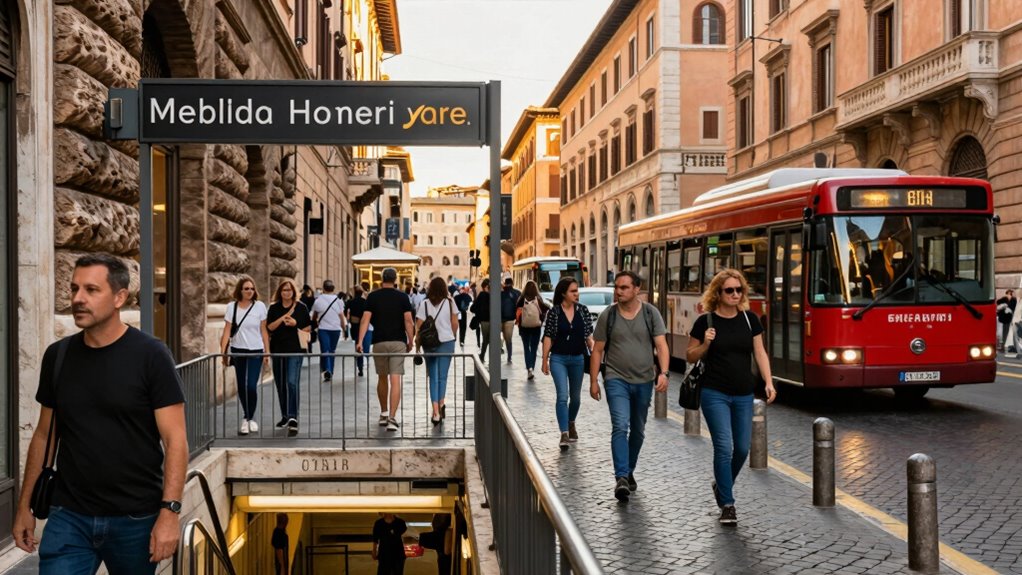

Navigating Rome’s transit means combining its expanding metro, bus, and tram networks with walkable streets, especially in historic areas. The metro offers quick cross-city travel, but coverage can be limited, and accessibility improvements are ongoing. Buses and trams provide extensive connections, including eco-friendly electric options. Walking remains essential, especially through pedestrianized zones, but maneuvering uneven sidewalks can be challenging. Discover tips on making the most of Rome’s transit system and overcoming common hurdles as you explore.
Key Takeaways
- Rome’s transit network combines metro, bus, tram, and urban trains, with ongoing expansions to improve coverage and reliability.
- The metro system offers fast, high-frequency service, but has limited coverage and accessibility issues at some stations.
- Surface transit includes modern electric buses and trams, enhancing sustainability and easing traffic congestion.
- Pedestrian zones and well-signed routes facilitate walking and last-mile connections, especially in historic and dense areas.
- Ticketing is unified and digital, but peak hours can be crowded; planning trips outside peak times improves comfort.
Overview of Rome’s Transit Network
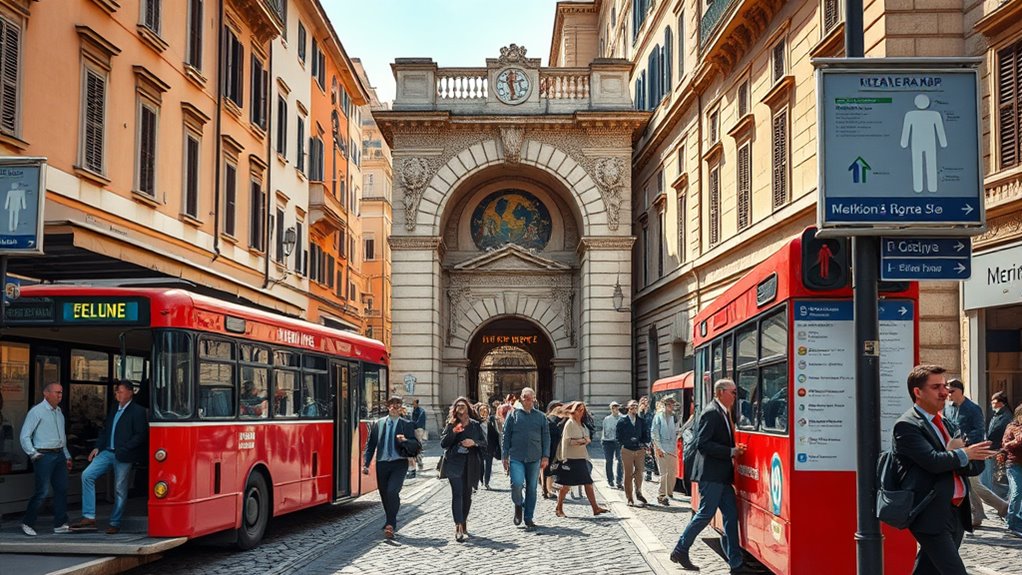
Rome’s transit network offers a diverse mix of metro, bus, tram, and urban train services designed to connect the city’s key areas. The metro has three lines in operation—Line A, Line B, and Line C—though the network remains limited compared to surface modes. Buses serve over 300 routes, covering central and peripheral districts with day and night services, but face delays from surface traffic. Trams run on six lines, supporting medium-distance travel and planned expansions with new vehicles. The network operates from early morning to late evening, with extended hours on weekends. Ticketing is unified across modes, with €1.50 tickets valid for 100 minutes. Despite ongoing improvements, coverage gaps and accessibility challenges remain, prompting continuous expansion efforts.
Metro System: Lines, Capacity, and Expansion
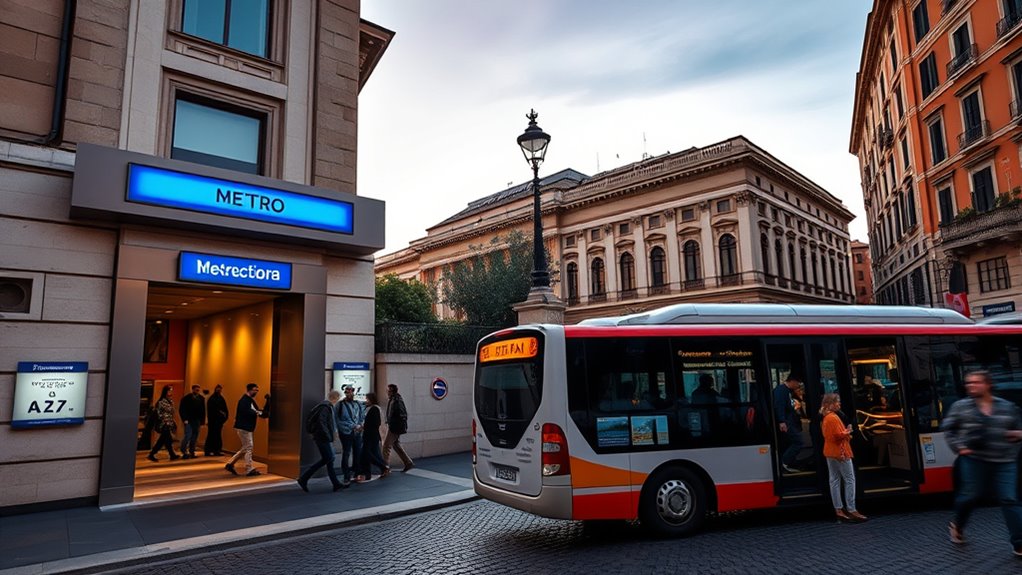
The metro system currently operates three lines—Line A, Line B, and Line C—serving key parts of the city. Line C is partly completed and being extended to reach the eastern suburbs, expanding coverage. The metro runs roughly from 05:30 to 23:00 on weekdays, with some lines extending service until around 01:30 on weekends. It offers a fast way to cross the city and avoid surface traffic, with frequent trains during peak hours. However, network coverage is limited compared to buses, and some stations lack full accessibility features like elevators. Ongoing expansion projects aim to increase station density, improve connectivity, and better serve growing areas. Capacity remains adequate but is tested during busy hours and events, prompting continual upgrades.
Bus Network: Coverage, Modernization, and Challenges
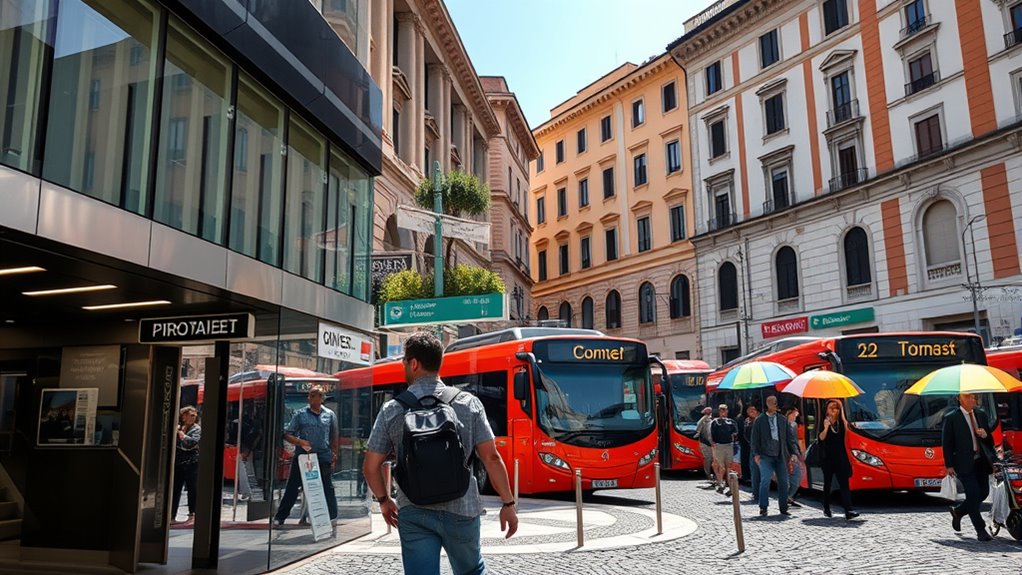
An extensive bus network connects the city center to its periphery, playing a vital role in Rome’s public transportation system. You rely on hundreds of lines and thousands of stops to reach destinations beyond the metro’s reach. Recent modernization efforts include deploying over 250 electric buses and high-power charging stations, aiming for a cleaner, more sustainable system. Yet, surface traffic delays and route complexity challenge punctuality. Express and limited-stop services help improve speed, but congestion remains a concern. Ticketing is seamless across buses, trams, and metro, supporting easy transfers within 100 minutes. Additionally, implementing high contrast ratios and advanced calibration techniques can further improve the visibility and clarity of transit signage and information displays for passengers. Incorporating sustainable transit solutions such as electric buses can also help reduce the city’s carbon footprint. Embracing European cloud innovation in transit data management could further optimize scheduling and real-time updates to enhance passenger experience. Moreover, integrating real-time data analytics can enable more efficient route planning and responsiveness to traffic conditions, ultimately making the transit system more resilient to disruptions.
Tram and Light Rail: New Vehicles and Connectivity
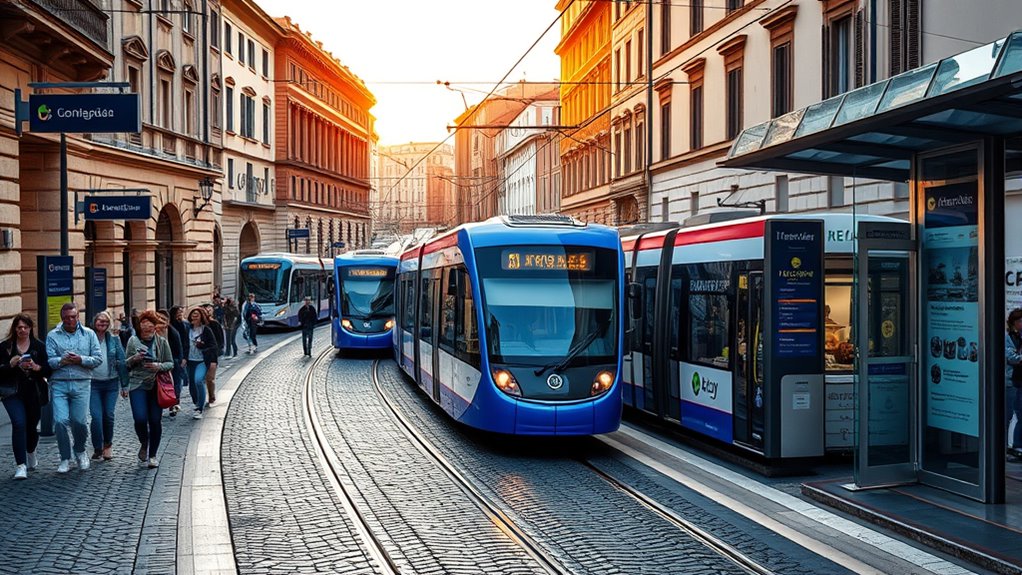
Rome is upgrading its tram fleet by deploying 40 new CAF Urbos trams, boosting capacity and passenger comfort. These vehicles feature low floors, video surveillance, air conditioning, and onboard energy storage for catenary-free operation. As a result, surface connectivity improves, making it easier to travel between dense districts and key hubs. This modernization also incorporates smart appliance technology to enhance operational efficiency and passenger experience. Moreover, the integration of nanotechnology in vehicle components can lead to more durable and lightweight parts, further improving performance and sustainability. Additionally, implementing deployed safety glasses for 2024 can ensure better protection for maintenance staff working on new vehicles. Incorporating home charging solutions can streamline maintenance and operational readiness for these modernized trams. Embracing advanced materials can also contribute to increased vehicle lifespan and reduced environmental impact.
Modern Tram Fleet Deployment
Deploying a modern tram fleet in Rome aims to enhance surface mobility and connect key urban corridors more efficiently. You’ll see 40 CAF Urbos trams, with plans for up to 81, to replace older vehicles and increase capacity. These new trams feature low floors, making boarding easier, plus air conditioning, video surveillance, and onboard energy storage for catenary-free stretches. They’re designed to serve dense neighborhoods and future lines like Termini–Venezia, improving accessibility and reducing surface traffic. Operating roughly from 05:30 to midnight, these trams use the same €1.50 ticket system as other modes, supporting seamless transfers. With increased capacity and modern features, the fleet aims to boost surface transit reliability, especially during peak hours and major events, making urban travel more comfortable and efficient. Incorporating modern transit technologies can further optimize route management and passenger experience.
Enhanced Surface Connectivity
The new CAF Urbos trams considerably boost surface transit connectivity by providing modern, high-capacity vehicles that serve dense urban corridors more efficiently. These trams offer low floors, air conditioning, and advanced safety features, making urban travel more comfortable and accessible. They operate alongside metro and bus services, filling coverage gaps and improving connections to key hubs like Termini and Venezia. The fleet renewal project includes 40 trams with options for more, scheduled for deployment by 2026. These vehicles enhance reliability and frequency, encouraging more residents and visitors to choose surface transit. To visualize their impact, consider this overview:
| Feature | Benefit | Deployment Timeline |
|---|---|---|
| Low-floor design | Easy access for all | 2025–2026 |
| Passenger capacity | Handles dense corridors | Ongoing |
| On-board safety tech | Ensures secure travel | Already integrated |
| Energy storage | Supports catenary-free stretches | 2025–2026 |
| Connectivity improvements | Better links to city centers | Continuous upgrades |
Furthermore, modern tram technology enhances overall transit efficiency, making surface travel more appealing to commuters. Additionally, the incorporation of electric power systems in the new trams reduces environmental impact and operational costs, aligning with sustainability goals. Moreover, the integration of smart transit management systems optimizes scheduling and real-time passenger information, further improving service quality. A focus on sustainable transportation ensures that urban mobility becomes more eco-friendly and cost-effective. The ongoing advancements in vehicle design contribute to a more seamless and enjoyable urban transit experience for all users.
Pedestrian Spaces and Last-Mile Solutions
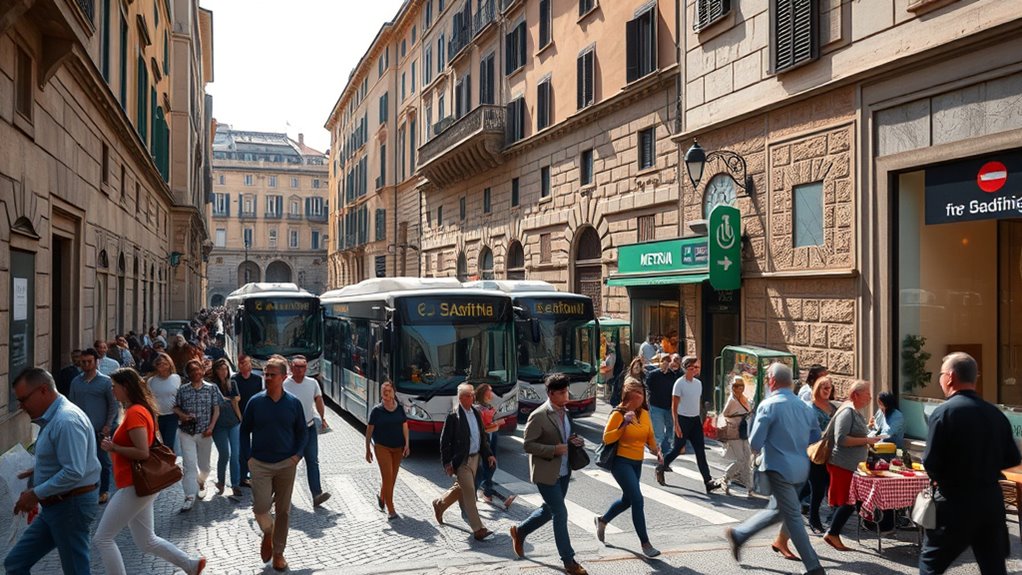
As you explore Rome, you’ll notice that pedestrian zone conditions vary, with some areas featuring uneven sidewalks and narrow streets that can slow your walk. Safety and wayfinding are generally good near major attractions, but crowded sidewalks and pickpocket risks mean you should stay alert. Many rely on walking to connect between metro stations and destinations, making intermodal last-mile links essential for smooth travel. To enhance your experience, consider using smartphone navigation tools to better understand pedestrian zones and plan your routes effectively. Recognizing that pedestrian infrastructure quality can differ across neighborhoods will help you choose the safest and most efficient paths. Being aware of urban walking infrastructure can further improve your navigation and safety. Additionally, understanding how public transit integrates with pedestrian pathways can make your exploration even more seamless. Familiarity with pedestrian zone regulations can also help you avoid violations and navigate more confidently.
Pedestrian Zone Conditions
Have you noticed how Rome’s historic center prioritizes pedestrian zones, making walking the easiest way to explore its attractions? The narrow streets, cobblestones, and limited vehicle access create an authentic, walkable environment. However, uneven pavements and crowded sidewalks can slow you down and challenge accessibility, especially for those with mobility issues. Pedestrian zones are well-signed, guiding visitors smoothly from one landmark to another, but congestion and pickpocketing risks require vigilance. These zones seamlessly connect to the wider surface transit network, encouraging last-mile solutions like walking from metro stations or bus stops. While walking is often the most efficient way to experience central Rome, expect surface conditions to vary, and stay attentive to your surroundings for a safe, enjoyable visit. Additionally, urban accessibility improvements can help make these pedestrian spaces more welcoming for everyone.
Walkability and Safety
Walking in Rome offers a convenient way to explore many of its attractions, especially within dense pedestrian zones near historic sites. However, uneven sidewalks, cobblestones, and narrow lanes can slow you down and challenge accessibility. Pedestrian safety is generally good near major tourist spots, with clear signage and well-marked crossings, but crowded sidewalks and pickpocketing risks demand vigilance. Many travelers rely on walking for last-mile connections, bridging gaps between metro stations and their destinations. To help you navigate smoothly, here’s a quick overview:
| Aspect | Details |
|---|---|
| Pedestrian Zones | Well-marked, crowded near attractions |
| Sidewalk Conditions | Uneven, cobblestone, narrow |
| Safety Risks | Pickpocketing, traffic in busy areas |
| Signage & Wayfinding | Clear near tourist sites |
| Last-Mile Solutions | Walking complements public transit |
Additionally, being aware of local pedestrian regulations can enhance your safety and experience while exploring the city.
Intermodal Last-Mile Links
Rome’s intermodal last-mile links rely heavily on pedestrian spaces and practical solutions that connect transit hubs to final destinations. In the historic center, walking is often the fastest and most convenient way to reach attractions, thanks to compact layouts and pedestrian zones. However, uneven sidewalks, cobblestones, and narrow lanes can slow you down and affect accessibility. To bridge gaps between stations and nearby neighborhoods, well-signed pedestrian routes facilitate smooth transfers. In busy areas, crowded sidewalks and safety concerns like pickpocketing require vigilance. Integration is seamless because of unified ticketing, encouraging combined trips—walking to a metro or tram stop before boarding. These last-mile solutions are essential for orienting yourself within Rome efficiently, especially given limited metro coverage and surface congestion. Additionally, awareness of cryptid mysteries and local folklore can add an intriguing cultural layer during your urban exploration.
Ticketing Systems and Payment Options
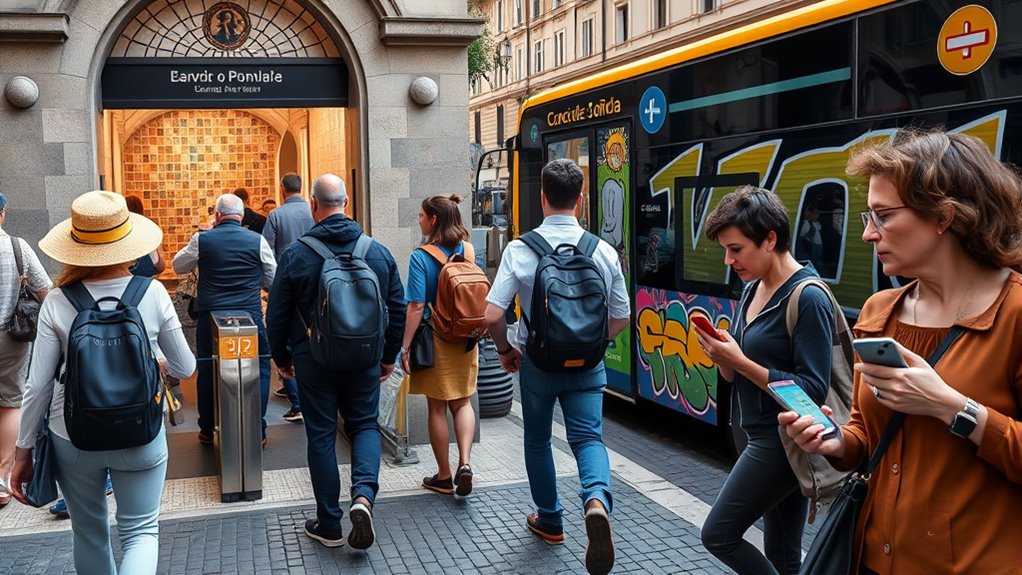
How seamless is the ticketing experience across Rome’s transit modes? It’s designed to be straightforward. You’ll pay a standard €1.50 for a single ticket, valid for 100 minutes on metro, buses, trams, and urban trains. You can buy tickets at station machines, authorized vendors, or via official apps for contactless payments. Digital options let you purchase and validate tickets right on your phone, saving time. For frequent travelers, day passes and monthly subscriptions offer cost-effective choices—monthly passes cost around €35 and cover multiple modes. When you board, you must validate your ticket either at the station or onboard. Inspectors regularly check, and fines are issued for unvalidated or expired tickets. Overall, the system emphasizes ease, flexibility, and integration across Rome’s public transport network, supported by the availability of digital payment options that streamline the process. Additionally, the system’s ticket validation process is designed to be quick and hassle-free, ensuring smooth boarding and travel experience.
Managing Crowds and Peak Travel Conditions

Managing crowds during peak travel times remains a significant challenge for Rome’s transit system. During rush hours, trains, buses, and trams become crowded, making comfort and safety a concern. To cope, you might consider traveling outside peak hours or using alternative routes. The city’s expanding network aims to ease congestion, but high demand persists, especially near central hubs. Here’s a quick look at how different modes handle peak loads:
| Mode | Peak Strategies | Challenges |
|---|---|---|
| Metro | Extra trains, extended hours | Overcrowding, limited coverage |
| Bus | Express routes, traffic management | Surface delays, route complexity |
| Tram | Scheduled frequency, new vehicles | Congestion at stops |
| Walking | Shorter distances, scenic routes | Uneven sidewalks, crowding |
| Last-mile | Pedestrian links, bike-sharing | Limited infrastructure |
Managing crowds calls for flexibility and planning.
Accessibility and Coverage Gaps in Urban Transit
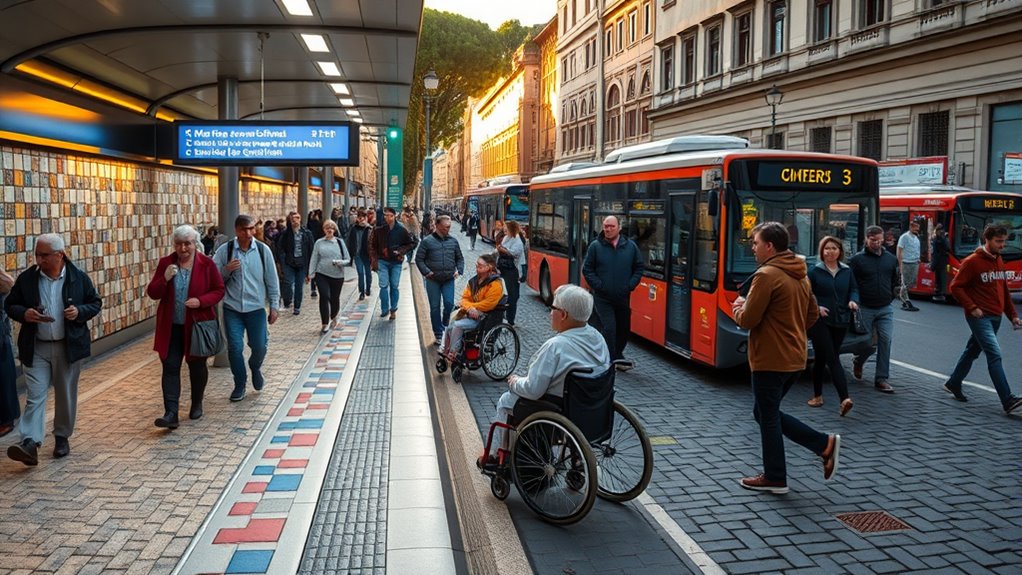
Despite ongoing efforts to expand and upgrade Rome’s transit network, significant accessibility and coverage gaps remain. Many metro stations lack full accessibility features like elevators and ramps, making it tough for people with mobility challenges. The metro network’s limited coverage means some neighborhoods, especially on the outskirts, have poor transit access, forcing residents to rely on buses or private cars. Bus routes are extensive but face delays due to surface traffic, and their complexity can make transfers confusing. Pedestrian infrastructure is uneven, with narrow, cobbled sidewalks in historic areas that hinder safe walking. Station density remains low in some districts, leaving gaps in coverage. Overall, these issues limit equitable access, especially for vulnerable populations and those living farther from central hubs.
Future Developments and Strategic Improvements
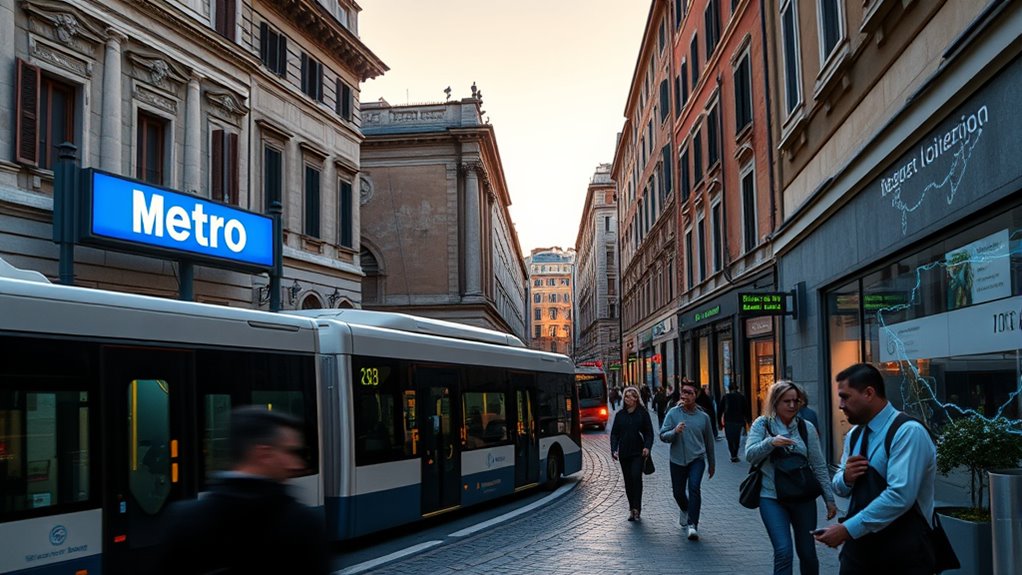
Rome’s transit authorities are pursuing a range of strategic improvements aimed at expanding capacity, enhancing accessibility, and reducing congestion. You can expect ongoing metro extensions, including the completion of Line C’s eastern expansion, which will improve coverage for underserved suburbs. New electric buses and high-capacity trams are being introduced to boost surface transit efficiency and sustainability. Upgrades also focus on station accessibility, with plans to install elevators and ramps at key points. Smart fleet management and expanded charging infrastructure will support electric vehicle deployment, reducing surface traffic and emissions. Additionally, new transit corridors and increased service frequencies aim to alleviate crowding during peak hours. These initiatives collectively endeavor to create a more integrated, reliable, and accessible system that better meets Rome’s evolving mobility needs.
Frequently Asked Questions
How Does the Ticketing System Support Seamless Transfers Across Modes?
Your ticketing system supports seamless transfers by allowing you to use a single €1.50 ticket across metro, bus, tram, and urban trains within 100 minutes. You can switch modes without buying extra tickets, making your journey smooth. Just validate your ticket once, and it’s valid for multiple rides across different modes. Digital options and mobile apps further simplify your access, ensuring convenient, integrated travel throughout Rome’s transit network.
What Are the Current Plans for Expanding Metro Coverage Into Underserved Areas?
Think of Rome’s metro expansion like assembling a giant jigsaw puzzle—each new piece brings the city closer together. Currently, plans focus on extending Line C into the eastern suburbs, aiming to improve coverage and accessibility. Ongoing projects also include new stations and fleet upgrades, making it easier for you to reach underserved areas. These developments will reduce reliance on surface transport, fostering more sustainable and equitable mobility options for all residents and visitors.
How Are New Electric Buses Integrated Into Rome’s Existing Fleet?
You’ll see new electric buses integrated into Rome’s fleet through the ongoing procurement of 250 vehicles with over 100 high‑power renewable-energy charging points. They operate alongside existing buses, supporting the city’s shift to greener transport. These electric buses run on the same routes, use the unified ticketing system, and help reduce emissions. This modern upgrade aims to improve air quality and offer more sustainable urban mobility options for your daily travels.
What Safety Measures Are in Place for Pedestrians in Crowded Tourist Zones?
In crowded tourist zones, pedestrian safety is like a well-orchestrated dance. You’ll find well-signed routes guiding your steps, and pedestrian zones that keep vehicles at bay, creating a safe stage for foot traffic. Narrow alleys are monitored with lighting and security cameras, while busy crossings have designated signals. Vigilance is key—stay alert, use crosswalks, and enjoy Rome’s historic charm safely, step by step.
How Will Upcoming Infrastructure Projects Impact Daily Commuting Times?
Upcoming infrastructure projects will considerably improve your daily commute by expanding metro lines, introducing new trams, and upgrading bus fleets. These enhancements will reduce congestion, increase service frequency, and provide more accessible stations. As a result, you’ll experience shorter travel times, less crowding during peak hours, and better connections across the city. Over time, these developments aim to make your journeys smoother, faster, and more reliable, especially as Rome continues expanding its transit network.
Conclusion
Exploring Rome’s transit is like stepping into a living mosaic—each piece connecting history with modern life. As you traverse the metro, buses, and pedestrian pathways, remember that even the greatest cities evolve, much like the eternal city itself. Embrace the journey, knowing that with strategic improvements on the horizon, your travels will become even smoother. So, keep exploring, and let Rome’s vibrant transit system be your trusted guide through its timeless streets.