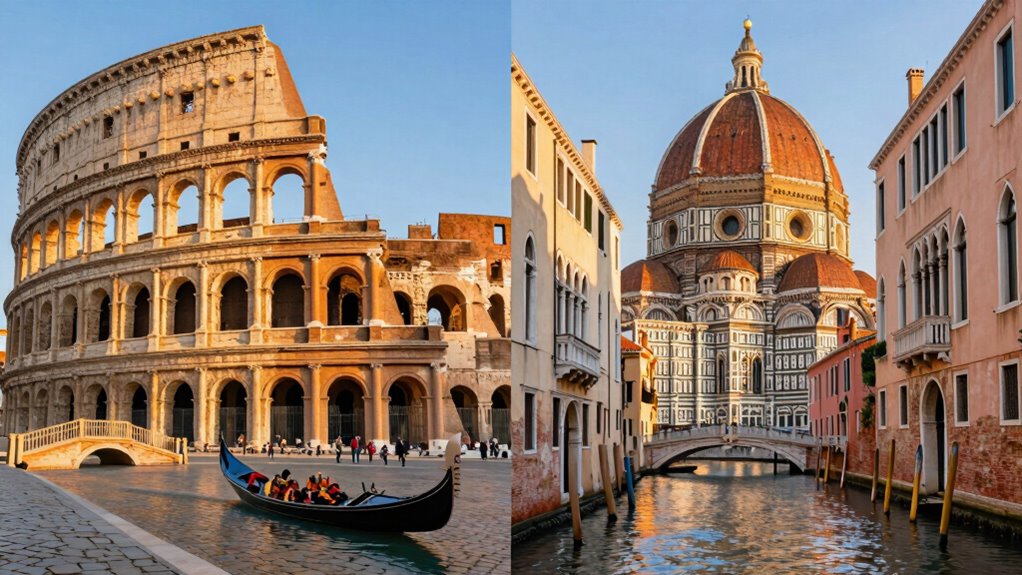

If you’re drawn to ancient history and iconic landmarks, Rome’s vibrant city life and millennia of stories might be your best fit. For art lovers who seek Renaissance masterpieces and a refined cultural scene, Florence offers an immersive experience. If romantic waterways, scenic views, and a tranquil atmosphere attract you, Venice’s unique maritime charm will suit your style. To discover which city aligns perfectly with your interests, explore more about each city’s unique vibe.
Key Takeaways
- Choose Rome if you love ancient landmarks, layered history, and vibrant city life.
- Opt for Florence if you’re an art enthusiast seeking Renaissance masterpieces and cultural refinement.
- Select Venice for a romantic, water-based environment with picturesque canals and maritime charm.
- Consider your preferred pace: bustling Rome, manageable Florence, or leisurely Venice.
- Prioritize local cuisine and markets to match your culinary interests in each city.
Exploring Rome’s Iconic Landmarks and Rich History
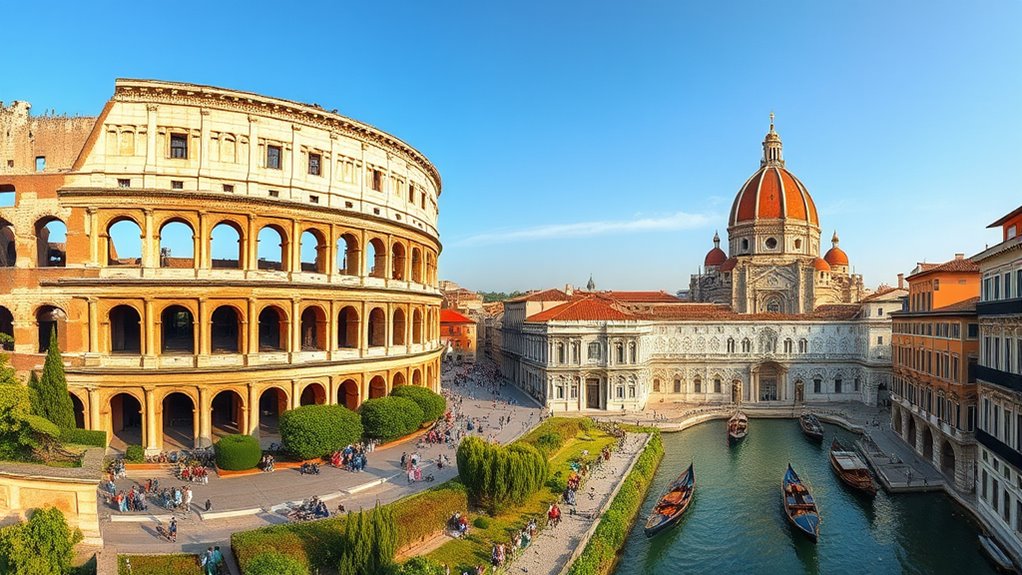
Rome’s iconic landmarks and rich history captivate visitors at every turn, offering a glimpse into over two millennia of civilization. You’ll stand in awe before the Colosseum, imagining the battles that once thrilled thousands. The Roman Forum surrounds you with remnants of ancient government and daily life, while the Pantheon’s massive dome showcases engineering brilliance. As you walk through the Vatican, you enter the heart of Christianity, with St. Peter’s Basilica and breathtaking art by Michelangelo. The city’s layered past as the capital of the Roman Empire and its continuous occupation reveal a city of resilience and grandeur. Every piazza, monument, and archaeological site tells a story, making Rome a living museum that immerses you in history at every corner.
Embracing the Artistic Renaissance and Cultural Charm of Florence
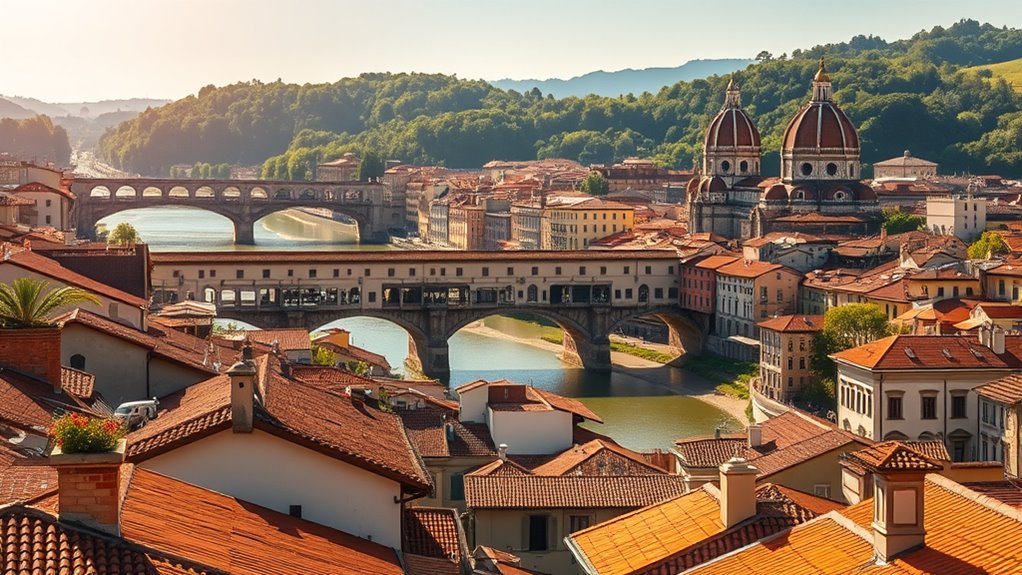
Florence’s artistic heritage and lively cultural scene make it a must-visit for art lovers. You can explore world-renowned Renaissance masterpieces and experience the city’s vibrant creative energy. Its rich history continues to inspire visitors and locals alike. Additionally, the city’s color accuracy in its preserved artworks and architecture showcases the meticulous attention to detail characteristic of the Renaissance period. The city’s commitment to Free Floating principles in its urban planning and preservation efforts ensures that the beauty of its historic sites remains accessible and authentic for generations to come. Moreover, Florence’s emphasis on sustainable tourism helps protect its artistic treasures while welcoming visitors from around the world. Embracing innovative technology in fashion can also enhance visitors’ cultural experience through virtual tours and augmented reality exhibits, making the city’s art more accessible to a global audience.
Renaissance Art Heritage
Nestled in the heart of Tuscany, Florence stands as a living proof of the artistic and cultural rebirth that defined the Renaissance era. Here, you can walk through streets lined with masterpieces by Michelangelo, Botticelli, and Leonardo da Vinci. The city’s iconic landmarks, like the Florence Cathedral and the Uffizi Gallery, showcase centuries of artistic achievement. Florence’s rich heritage is woven into every corner, from its historic palaces to its vibrant art workshops. If you’re passionate about Renaissance art, this city immerses you in a living museum. You’ll feel the spirit of innovation and creativity that made Florence the cradle of Western art and culture. It’s a place where history and artistry blend seamlessly, offering an authentic Renaissance experience.
Vibrant Cultural Scene
The city pulses with a vibrant cultural scene that celebrates its Renaissance roots while embracing contemporary creativity. You’ll find Florence teeming with energy, from lively street performances to cutting-edge galleries. Its artistic heritage is alive in every corner, inspiring both locals and visitors. Immerse yourself in this dynamic atmosphere with:
- Renowned art exhibitions and installations
- Traditional festivals celebrating local crafts
- Modern theater and music venues
- Innovative culinary experiences blending old and new
- Workshops and events fostering emerging artists
This blend of historic charm and contemporary flair creates a unique cultural vibrancy that keeps Florence at the forefront of Italy’s artistic scene. Whether you’re exploring historic piazzas or engaging with contemporary artists, you’ll feel the city’s creative heartbeat at every turn. Additionally, the city’s dedication to artistic craftsmanship ensures that traditional techniques are preserved and celebrated alongside innovative expressions. The ongoing preservation of traditional art techniques highlights Florence’s commitment to maintaining its rich artistic legacy for future generations.
Experiencing Venice’s Unique Maritime Atmosphere and Canals
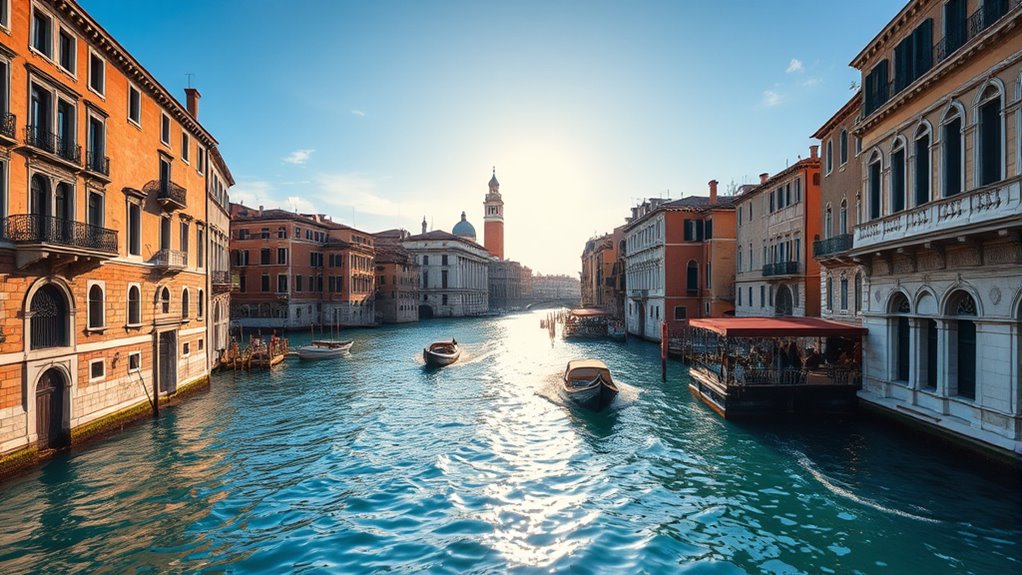
Experiencing Venice’s maritime atmosphere and canals immerses you in a city unlike any other, where waterways replace streets and boats are the primary mode of transport. You’ll glide along narrow canals on gondolas, feeling the gentle sway beneath you. The sound of water lapping against historic buildings and the hum of water taxis create a constant, soothing backdrop. Walking isn’t the main mode here; instead, you navigate via boat, giving you a unique perspective of the city’s architecture and vibrant life along the canals. Bridges connect neighborhoods, and every turn reveals a picturesque view—hidden courtyards, lively markets, centuries-old palaces. This maritime environment shapes Venice’s distinct charm, making it a living, breathing water city full of romance, history, and vibrant energy. Incorporating style elements like colorful facades and ornate balconies further enhances the city’s enchanting atmosphere.
Comparing Urban Lifestyle and Population Dynamics
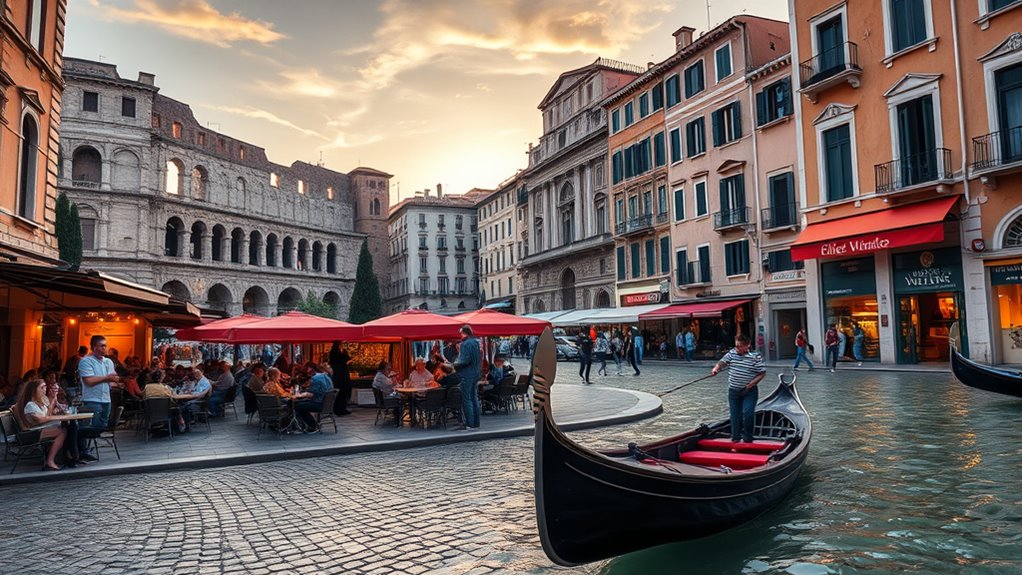
While Venice’s waterways create a unique, intimate atmosphere, the daily urban lifestyle there is shaped by its small size and water-based transport, leading to a slower, more relaxed pace. You’ll notice residents and visitors move at a leisurely speed, with most commutes involving boats or walking along narrow streets. Venice’s population decline impacts its vibrancy, yet it preserves a close-knit community feel. In contrast, Rome’s sprawling population of over 4 million fosters a bustling, dynamic environment with lively neighborhoods and diverse cultural activities. Florence, with around 710,000 residents, offers a stable, manageable size, blending history with a steady pace. Key differences include:
- Venice’s small, water-centric community
- Rome’s vast, diverse urban sprawl
- Florence’s manageable size and stability
- Population growth in Rome
- Population decline in Venice
- Population dynamics influence each city’s unique character and development trajectory
Discovering Local Cuisine and Traditional Delights

As you explore each city, you’ll notice their unique culinary traditions that reflect their rich histories. From Rome’s hearty pasta dishes to Florence’s rustic bistecca and Venice’s seafood specialties, there’s something to satisfy every palate. Don’t miss out on visiting local markets to taste authentic delights and discover regional specialties firsthand. Engaging with local culinary traditions can provide deeper insight into each city’s cultural identity and history. Additionally, understanding halal dietary practices within each region can enhance your culinary exploration and ensure your choices align with your dietary needs. Exploring regional ingredients can also help you appreciate the distinct flavors that define each city’s cuisine, highlighting the importance of food sourcing methods in maintaining culinary authenticity.
Regional Culinary Specialties
Italy’s renowned cities each boast their own distinctive culinary traditions that highlight their rich history and local ingredients. In Rome, you’ll find hearty dishes like carbonara and saltimbocca, emphasizing simplicity and bold flavors. Florence’s cuisine celebrates Tuscan staples such as bistecca alla fiorentina and ribollita, showcasing rustic, farm-fresh ingredients. Venice offers unique seafood specialties like sarde in saor and risotto al nero di seppia, reflecting its maritime roots. To deepen your culinary experience, explore:
- Roman pasta carbonara and amatriciana
- Tuscan crostini and wild boar stew
- Venetian cicchetti and seafood risottos
- Local wines like Chianti, Frascati, and Prosecco
- Traditional desserts such as tiramisu and gelato
Each city’s culinary scene reveals its history and regional identity, inviting you to taste Italy’s diverse flavors.
Iconic Traditional Dishes
Discovering the iconic traditional dishes of Rome, Florence, and Venice offers a delicious glimpse into each city’s unique culinary heritage. In Rome, you’ll savor classics like carbonara, made with eggs, Pecorino cheese, and guanciale, and cacio e pepe, a simple yet flavorful pasta. Using traditional culinary techniques is key to achieving authentic flavors and preserving regional traditions. Florence is famous for its hearty bistecca alla Fiorentina, a thick, grilled T-bone steak, and lampredotto, a traditional sandwich featuring cow stomach. Venice delights with seafood dishes like sarde in saor, marinated sardines, and risotto al nero di seppia, infused with squid ink. These dishes reflect local ingredients and history, giving you an authentic taste of each city’s culture. By exploring these culinary staples, you connect with Italy’s rich traditions and regional flavors in every bite.
Food Markets & Delights
Exploring local food markets reveals the vibrant heart of each city’s culinary scene, where fresh ingredients and traditional delights come together. In Rome’s Campo de’ Fiori or Testaccio Market, you’ll find aromatic herbs, artisanal cheeses, and hearty pasta ingredients. Florence’s Mercato Centrale offers fresh produce, succulent meats, and regional specialties like lampredotto. Venice’s Rialto Market features fresh seafood, colorful vegetables, and local herbs.
Here’s what you can expect:
- Authentic regional cheeses and cured meats
- Freshly baked bread and pastries
- Seasonal fruits and vegetables
- Local wines and craft beers
- Traditional street snacks and desserts
Each market invites you to taste the city’s history and culture through its flavors, making your culinary journey unforgettable.
Navigating Public Transportation and Accessibility
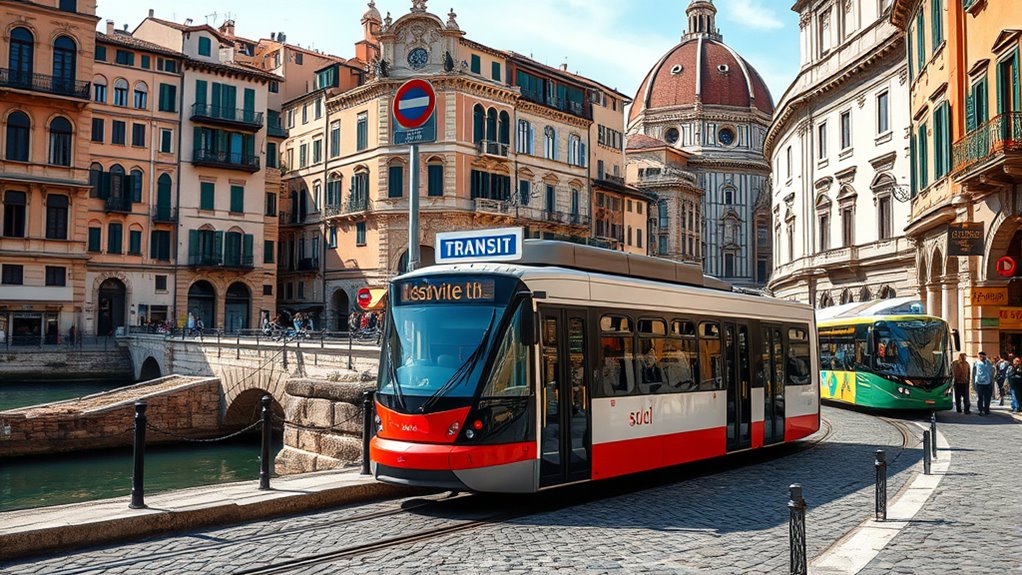
Traveling public transportation in Rome, Florence, and Venice offers distinct experiences rooted in their unique urban layouts. In Rome, you’ll find an extensive network of buses, trams, and the metro, making it easier to navigate its sprawling ancient sites. Florence relies mainly on buses, which connect its compact historic center efficiently, but walking remains practical for many attractions. Venice is entirely different—its canals replace roads, so you’ll depend on water buses (vaporetti), ferries, and walking. Accessibility varies: Rome’s metro has limited accessibility, but buses are mostly equipped. Florence’s buses are accessible, though some older vehicles lack full features. Venice’s water transport is accessible but can be crowded. Modern transportation options continue to improve accessibility features, ensuring a better experience for all travelers. Planning ahead can also help you find accessible routes and make your travels smoother and more enjoyable. Additionally, many cities are incorporating smart mobility solutions, such as real-time tracking and adaptive services, to enhance convenience for diverse travelers. As urban areas innovate with transportation technology, travelers benefit from easier navigation and improved accessibility options. Moreover, ongoing investments in inclusive infrastructure aim to reduce barriers and promote equitable mobility across these historic cities.
Finding Your Perfect Match: Which City Suits Your Personal Style?
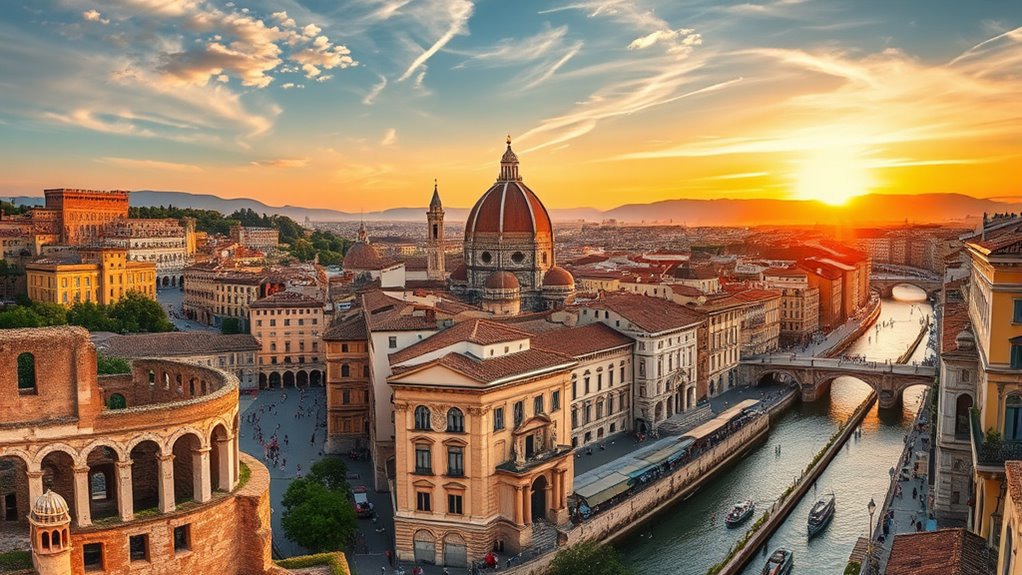
Choosing the city that best fits your personal style depends on what kind of experience you’re seeking. If you crave history and grandeur, Rome’s majestic ruins and vibrant street life might be perfect. For art lovers and a romantic, Renaissance atmosphere, Florence offers a refined, cultural vibe. If you prefer a unique maritime charm with narrow canals and a slower pace, Venice provides an enchanting, laid-back setting. Consider these aspects:
Discover your ideal Italian city: history and vibrancy in Rome, art and romance in Florence, or canals and tranquility in Venice.
- Want ancient landmarks and bustling city life? Rome’s your match.
- Crave art, history, and a sophisticated atmosphere? Choose Florence.
- Love waterways, quiet corners, and a distinctive, floating city? Venice fits.
- Prefer a city with a lively, modern rhythm? Rome’s size and energy suit you.
- Looking for a romantic, timeless escape? Venice’s charm may be ideal.
Frequently Asked Questions
Which City Offers the Best Nightlife and Entertainment Options?
You’ll find Rome offers the best nightlife and entertainment options. You can dance in lively clubs, enjoy world-class restaurants, and experience vibrant piazzas filled with street performers and open-air bars. The city’s diverse scene guarantees something for everyone, from trendy nightclubs to historic wine bars. With endless events and a lively atmosphere, Rome keeps the energy high into the early hours, making it perfect if you love dynamic nightlife.
How Do Costs of Living Compare Among Rome, Florence, and Venice?
If you move to Florence, you’ll find the costs of living are more affordable than Rome and Venice. For example, rent in Florence is about 30% lower than in Rome, making it easier to enjoy a comfortable lifestyle on a moderate budget. You’ll spend less on accommodation and dining out, which means your money stretches further, especially if you’re looking for a city rich in culture without the high price tag of Rome or Venice.
Which City Provides the Most Outdoor and Green Spaces?
You’ll find Venice offers the most outdoor and green spaces, with its unique lagoon setting and numerous parks along the waterfront. Rome also provides plenty of parks, gardens, and historic outdoor sites like Villa Borghese and the Appian Way. Florence has smaller green areas, but you can enjoy Boboli Gardens and nearby Tuscan countryside. If outdoor space matters most, Venice’s blend of water, parks, and open areas might suit you best.
What Are the Safest Neighborhoods for Tourists and Residents?
Think of Rome’s safest neighborhoods as the sturdy shields protecting your adventures. Trastevere, Prati, and Monti are top choices, offering lively streets with low crime, friendly locals, and easy access to attractions. You’ll feel at ease wandering their charming alleys day or night. These areas combine safety with vibrant life, making them perfect spots for both residents and tourists to enjoy Rome’s timeless beauty without worry.
How Do Seasonal Weather Patterns Differ Across the Three Cities?
You’ll notice that Rome experiences hot, dry summers with temperatures often above 30°C and mild, rainy winters averaging around 8-12°C. Florence has similar summer heat but tends to be slightly more humid, with winter temperatures around 3-8°C. Venice’s weather is more humid, with hot summers reaching 30°C and high water levels during autumn and winter. Overall, each city’s climate varies seasonally, affecting your travel plans and outdoor activities.
Conclusion
No matter if you’re drawn to Rome’s legendary history, Florence’s artistic soul, or Venice’s dreamy canals, each city offers a unique vibe that can make you feel like you’ve stepped into your own epic saga. Think of it as choosing your own adventure—whether you’re seeking timeless charm, Renaissance brilliance, or maritime magic. Like a true explorer of old, trust your instincts and find the city that makes your heart race—your perfect match awaits.