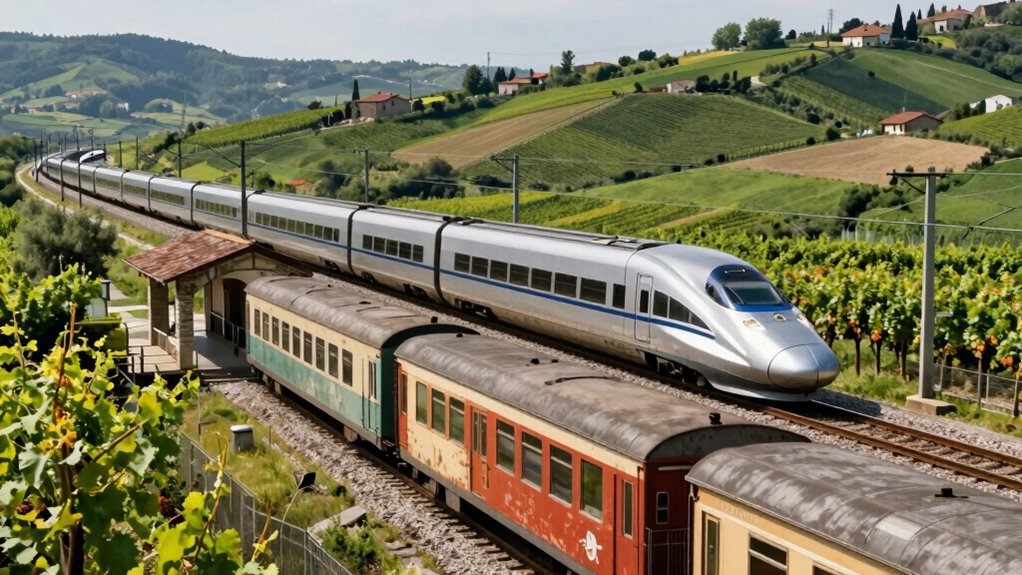

High-speed trains in Italy connect major cities like Milan, Rome, and Florence quickly, often taking just a few hours, with fewer stops for efficiency. Regional trains, on the other hand, travel at slower speeds, stopping frequently in small towns, offering scenic views and local charm. They also differ in ticket prices, flexibility, and amenities, making your travel experience more tailored. Keep exploring to discover how these options can best suit your journey.
Key Takeaways
- High-speed trains travel up to 300 km/h, offering quick city-to-city connections, while regional trains operate below 200 km/h with scenic, local stops.
- High-speed routes connect major cities efficiently with few stops; regional trains serve small towns with numerous stops for local accessibility.
- Ticket prices are higher for high-speed trains, with limited flexibility, whereas regional tickets are cheaper, more flexible, and available on the day of travel.
- High-speed trains are more punctual and reliable, with fewer delays, compared to regional trains which experience more frequent delays and schedule variability.
- High-speed trains emphasize speed, comfort, and modern amenities; regional trains focus on scenic views, local charm, and accessibility at a slower pace.
Speed and Travel Duration

Ever wondered how quickly you can travel between Italy’s major cities? High-speed trains make it possible to cover long distances in just a few hours. They can reach speeds up to 300 km/h, allowing you to go from Milan to Rome in around 3 hours or Florence to Naples in about 2.5 hours. In contrast, regional trains are much slower, often operating under 200 km/h, and make frequent stops. A regional trip, like Siena to Naples, can take 9 hours or more, compared to roughly 4 hours on high-speed routes. These speeds drastically cut travel times, making high-speed trains ideal for efficient, quick journeys across Italy’s key cities. Regional trains, on the other hand, are suited for shorter, local trips with more stops. Understanding time zones can help travelers better plan their trips across different regions. Additionally, the cost differences between these train types reflect their travel speeds and comfort levels, influencing your choice depending on budget and schedule.
Route Networks and Coverage
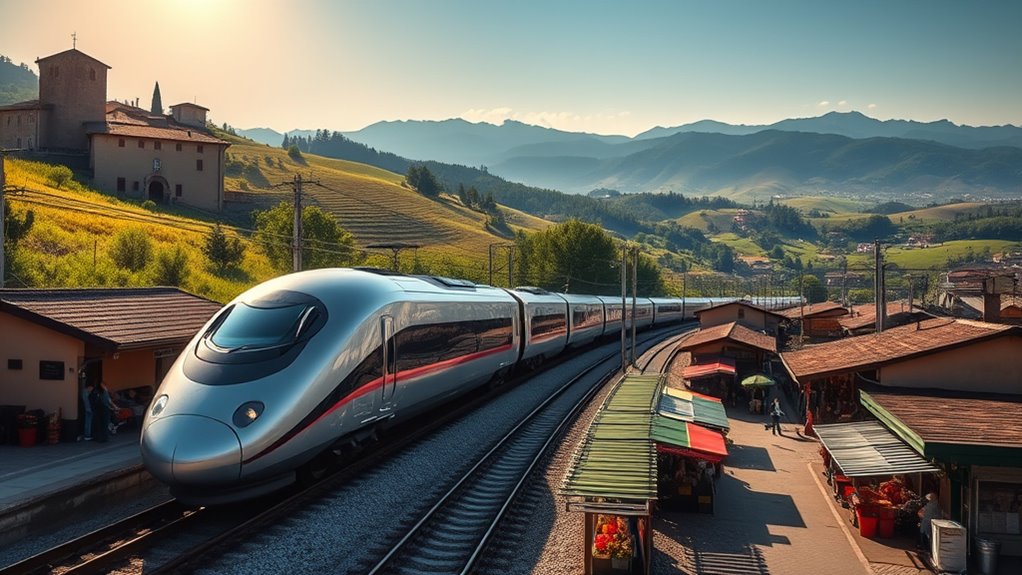
Have you wondered how Italy’s train networks connect its diverse regions? High-speed trains serve major cities like Milan, Rome, Florence, and Naples, covering vast distances quickly. Regional trains focus on small towns and local areas, providing access where high-speed lines don’t reach. Intercity trains link cities with multiple stops, offering more flexibility. The coverage varies, with some networks emphasizing regional connectivity to serve less-populated areas, ensuring comprehensive transportation access across the country:
| Network | Main Focus | Typical Routes |
|---|---|---|
| High-speed | Major cities, quick travel | Milan-Rome, Florence-Naples |
| Italo | Big cities, select towns | Milan-Bologna, Rome-Fiumicino |
| Regional | Small towns, local areas | Siena-Florence, Naples-Salerno |
| Frecciargento | Mix of high-speed, traditional | Rome-Venice, Milan-Rimini |
| Intercity | City-to-city, multiple stops | Rome-Florence, Venice-Bologna |
Your journey’s coverage depends on your destination and train type. Additionally, train network coverage varies depending on the region and train service. Moreover, railway infrastructure plays a crucial role in enabling these diverse services across Italy.
Stops and Accessibility

The number and type of stops along Italy’s train routes considerably influence your travel experience and journey duration. High-speed trains make few or no intermediate stops, focusing on quick connections between major cities like Rome, Milan, and Florence. This streamlined approach allows passengers to enjoy a seamless travel experience with minimal delays. This means you spend less time getting on and off, making your trip faster and more direct. In contrast, regional trains stop at every small town and local station, which extends travel times but provides access to more communities. Accessibility is also different: high-speed stations are often centrally located with easy connections and modern facilities, while regional stops are scattered across towns and villages, sometimes with limited amenities. Your choice depends on whether you prioritize speed and convenience or local access and scenery. Additionally, understanding the different train types can help you select the best option for your travel needs. For example, High-Speed Rail services tend to operate on dedicated tracks, ensuring consistent and faster journeys compared to regional options. The station locations and their facilities also play a crucial role in how accessible and comfortable your travel will be. Furthermore, the availability of ticket options and pricing can influence your overall travel experience and planning.
Comfort and Onboard Amenities
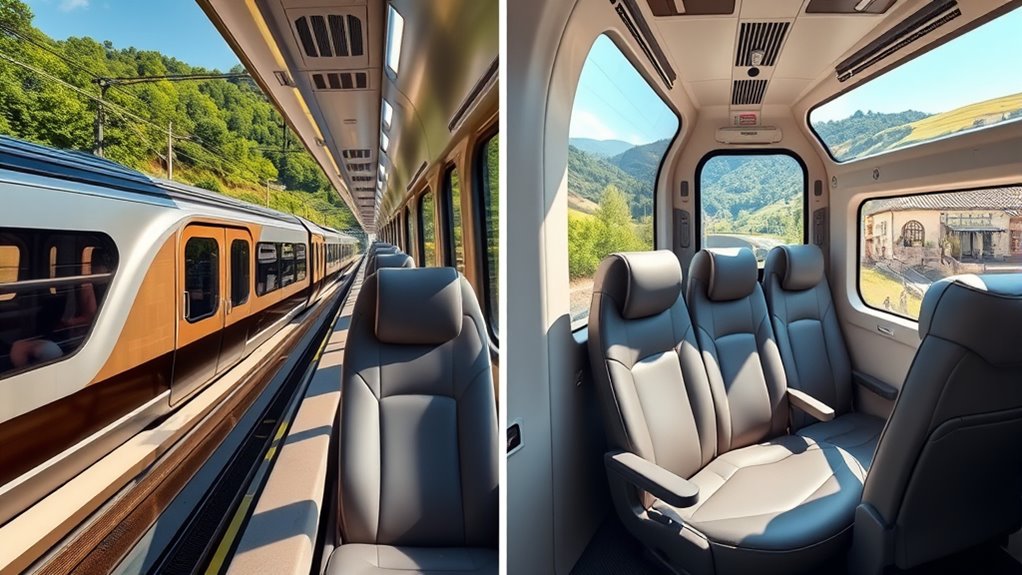
High-speed trains prioritize passenger comfort by offering modern amenities designed for a smooth and enjoyable journey. You’ll find features that make your trip more convenient and relaxing.
- Climate control guarantees a comfortable environment regardless of outside weather.
- Onboard bistros serve snacks and drinks, so you can stay refreshed without leaving your seat.
- Electrical outlets allow you to charge devices, staying connected and productive.
- Spacious, clean seating with overhead storage keeps your space organized and comfortable.
- These amenities contribute to a comfortable travel experience, ensuring passengers arrive at their destination rested and satisfied.
- The availability of modern onboard amenities enhances the overall quality of your high-speed rail journey. Both FrecciaRossa and Italo match high standards, providing a premium experience. These amenities help you travel efficiently while enjoying a pleasant atmosphere, making high-speed rail a top choice for comfort on Italy’s major routes.
- Moreover, safety features such as secure seating and reliable onboard systems ensure peace of mind during your trip.
- Additionally, the passenger-focused design emphasizes ease of access and ergonomic seating to maximize comfort throughout the journey.
- Incorporating landscaping and natural elements in train interiors can further enhance passenger well-being by creating a calming environment.
Ticket Pricing and Booking Flexibility

You’ll notice that high-speed train tickets tend to be more expensive than regional options, but booking early can save you a good deal. Flexibility varies: regional tickets are often open and can be purchased last minute, while high-speed tickets usually require advance reservations. By understanding these pricing differences and booking options, you can choose the best deal for your travel plans. Additionally, booking guidelines can help you navigate the different policies associated with each type of train. Being aware of ticket pricing variations allows travelers to plan more efficiently and avoid unnecessary costs. Recognizing sustainable travel practices can also contribute to environmentally responsible transportation choices. Knowing about different booking policies can further assist in making flexible travel arrangements that suit your schedule.
Ticket Cost Differences
Are ticket prices for Italy’s high-speed trains considerably higher than those for regional services? Generally, yes. High-speed tickets cost more, reflecting speed, comfort, and convenience. Here are four key points:
- Cost difference: High-speed fares often double or triple regional prices, making them a premium option.
- Advance booking savings: Booking 120 days ahead can reduce high-speed fares substantially, unlike regional tickets which are often sold at fixed prices.
- Flexibility: Regional tickets are usually open, with no advance purchase needed, and offer unlimited travel within a zone.
- Price stability: Regional fares remain consistent, while high-speed prices fluctuate depending on demand and booking time.
Understanding these differences helps you choose the best option based on your budget and travel plans.
Booking Flexibility Options
Booking flexibility varies markedly between Italy’s train options, affecting how you can purchase and modify your tickets. High-speed tickets often come with tiered pricing, offering discounts if you book well in advance—sometimes up to 120 days ahead—allowing you to save money. These tickets are typically non-refundable or have limited changes, so plans need to be firm. Regional tickets are usually cheaper and purchased on the day of travel, with open seating and no advance booking required. They offer maximum flexibility, letting you hop on any train without restrictions. Intercity tickets fall somewhere in between, providing moderate flexibility and often cheaper options than high-speed trains. Overall, your choices depend on whether you prioritize savings or flexibility. Additionally, the booking procedures for each type of ticket can influence your overall travel experience in Italy.
Reliability and Punctuality
You’ll notice that high-speed trains in Italy tend to run on time more often than regional ones. When delays happen, they’re usually minor and reschedule quickly. Understanding these performance rates helps you plan your trips with confidence. Reliability and punctuality are key factors that distinguish high-speed rail services from regional trains, contributing to a smoother travel experience. Additionally, service consistency plays a significant role in maintaining traveler trust and satisfaction.
On-time Performance Rates
How reliable are Italy’s high-speed trains compared to regional services? Generally, they’re more punctual. High-speed trains like FrecciaRossa and Italo often arrive and depart within minutes of schedule, thanks to dedicated tracks and fewer stops. In contrast, regional trains face more delays due to frequent stops, track sharing, and local traffic. To understand the difference:
- High-speed trains maintain a 90-95% on-time rate.
- Regional trains often hover around 75-85% punctuality.
- Delays of 10-15 minutes are common on regional routes.
- Reliability improves with advanced planning and booking on high-speed services.
Your experience depends on the train type and route, but high-speed trains generally deliver a more dependable and timely journey.
Delays and Rescheduling
Are delays on Italy’s high-speed trains common enough to impact your travel plans? Generally, high-speed services like FrecciaRossa and Italo are more punctual than regional trains. They share tracks, but their advanced scheduling and dedicated infrastructure help keep delays minimal. However, delays can still happen due to technical issues, accidents, or heavy traffic on the network. When delays occur, rescheduling is usually prompt, and you’re often notified via app or station announcements. Longer delays are less common but can disrupt your plans, especially during peak times or maintenance periods. Unlike regional trains, which often face irregular schedules and frequent stops, high-speed trains tend to stick closer to their timetable, making them a reliable choice for time-sensitive trips.
Travel Experience and Scenic Views
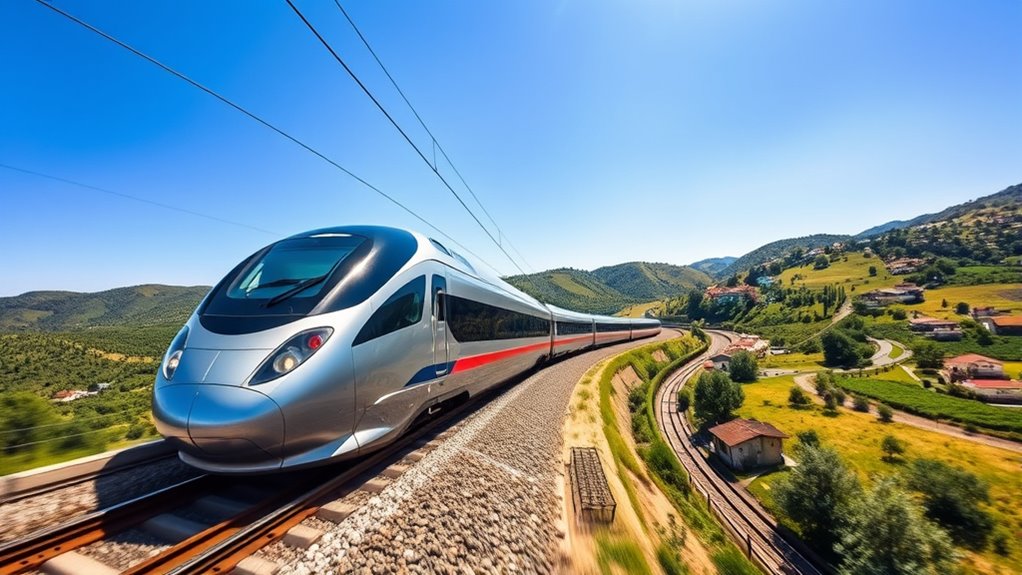
High-speed trains prioritize efficiency over scenic enjoyment, racing through the countryside at speeds up to 300 km/h, which makes it difficult to appreciate the landscape. As a result, your travel experience becomes more about arriving quickly than sightseeing. To understand the difference, consider:
- Views are fleeting—your window passes fast, leaving little time to take in the scenery.
- The focus is on comfort and speed, not the journey’s visual appeal.
- Regional trains slow down, offering closer looks at villages and countryside.
- Scenery on regional routes becomes an integral part of your trip, enriching your experience.
While high-speed trains are perfect for quick trips, regional trains give you the chance to enjoy Italy’s diverse landscapes and local charm.
Frequently Asked Questions
Are High-Speed Trains Available for Overnight Journeys in Italy?
No, high-speed trains in Italy aren’t available for overnight journeys. You’ll find them mainly used for quick, daytime trips between major cities like Milan and Rome. If you want to travel overnight, you’ll need to choose overnight trains or sleeper services, which are usually regional or intercity options, not high-speed. These provide sleeping compartments or couchettes for a more comfortable overnight experience.
How Do Ticket Cancellation and Refund Policies Differ Between Train Types?
You’ll find that high-speed train tickets often come with strict cancellation and refund policies—think of it as a “no refunds, no worries” deal if you change your mind. Regional trains, on the other hand, usually offer more flexibility, letting you cancel or get refunds with fewer hassles. So, if your plans are as stable as a house of cards, regional might save you some stress!
Can I Bring Large Luggage or Bicycles on High-Speed and Regional Trains?
You can bring large luggage and bicycles on both high-speed and regional trains, but policies differ. High-speed trains typically require you to notify in advance and may charge extra for bikes or oversized luggage. Regional trains usually have no reservation needed and allow bikes during off-peak hours, often for free or a small fee. Always check with your train operator beforehand to avoid surprises and guarantee smooth travel.
Are There Any Discounts for Students, Seniors, or Groups on These Trains?
You can find discounts for students, seniors, and groups on Italian trains. Students often get reduced fares with valid ID, seniors enjoy age-based discounts, and groups benefit from special rates when booking together. These discounts make traveling more affordable, helping you save money on both high-speed and regional trains. Always check the train company’s website or ticket counters for details and to verify you qualify for these savings before your trip.
What Safety Measures Are Implemented on High-Speed Versus Regional Trains?
You’ll find that high-speed and regional trains in Italy prioritize safety with strict measures. You’re protected by advanced signaling systems, automatic train control, and regular maintenance checks. High-speed trains include reinforced structures and safety features for high-speed travel, while regional trains also follow safety protocols but may have fewer technological upgrades. Both train types guarantee your safety through staff training, surveillance, and emergency procedures, giving you peace of mind during your journey.
Conclusion
So, next time you choose between high-speed and regional trains in Italy, remember there’s more at stake than just speed. The route, comfort, and scenery all shape your journey in unexpected ways. Will you opt for the swift, streamlined experience or the charming, scenic route? Your adventure awaits — but which train will turn your trip into a memorable story? The choice is yours. Are you ready to discover Italy’s hidden travel secrets?