
To avoid getting turned away at Italian churches, dress modestly by covering your shoulders, knees, and midriffs. Men should wear long pants and full-sleeved shirts, while women need long skirts or trousers and modest tops. Children should wear knee-length bottoms and sleeved tops. Bringing a scarf or shawl helps cover shoulders quickly. Many sites enforce strict dress codes, so paying attention to these tips guarantees respectful visits—learn more to dress appropriately for any historic Italian church.
Key Takeaways
- Wear modest clothing covering shoulders, knees, and midriffs, such as long skirts, dresses, or trousers with full-sleeved tops.
- Carry a lightweight scarf or shawl to quickly cover shoulders if needed.
- Avoid sleeveless tops, crop tops, shorts, or tight-fitting clothing inside churches.
- Remove hats indoors, especially for men, and check specific site dress codes beforehand.
- Respect religious customs to prevent being turned away or feeling uncomfortable during your visit.
Top picks for "dres church italy"
Open Amazon search results for this keyword.
As an affiliate, we earn on qualifying purchases.
Understanding the Dress Code Requirements for Men, Women, and Children
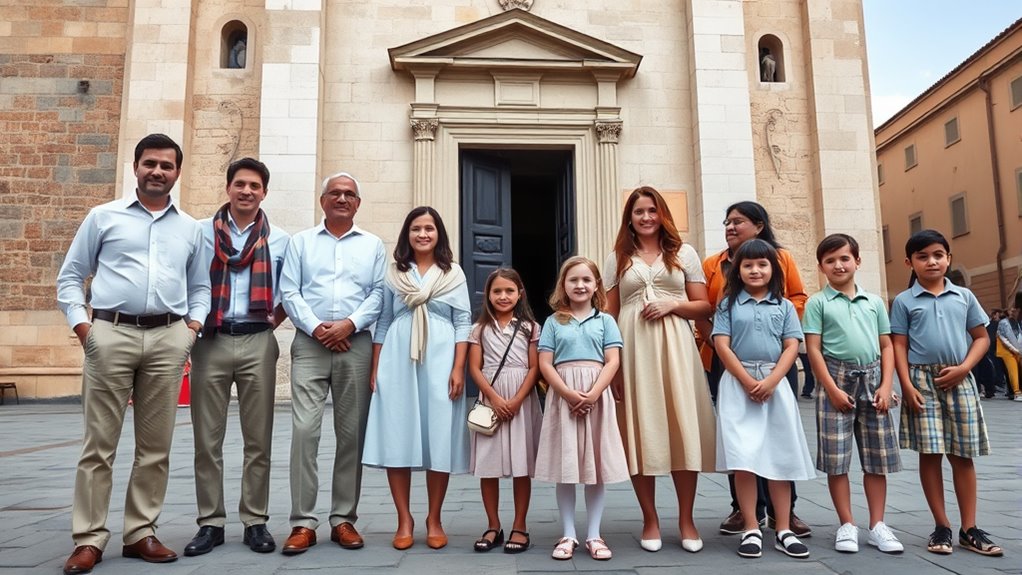
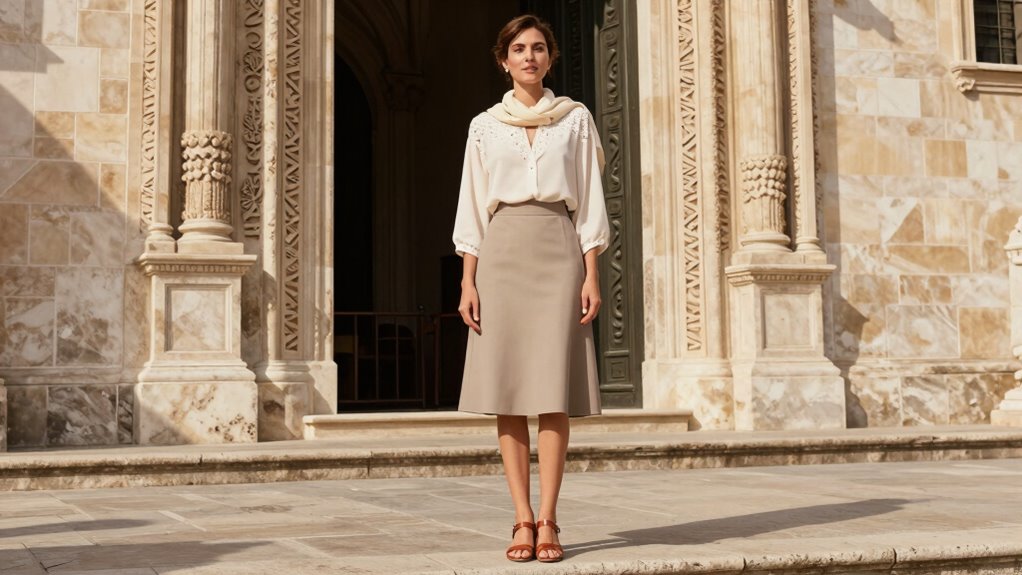
To properly dress for church visits in Italy, you need to understand the specific requirements for men, women, and children. Men should wear long pants or trousers with full-sleeved shirts, avoiding tank tops or sleeveless shirts. Women are expected to wear long skirts, dresses, or trousers that cover the knees, with tops that have modest necklines and sleeves. Scarves or shawls can be used to cover shoulders if needed. Children must also dress modestly, with knee-length bottoms and sleeved tops—shorts or sleeveless shirts are not permitted. Hats are usually removed inside churches, especially for men. Overall, modesty is key, ensuring shoulders, knees, and midriffs are covered to respect religious customs and avoid being turned away at entry. Additionally, dress codes in religious sites often emphasize respectful attire that aligns with cultural traditions.
Practical Tips for Covering Shoulders, Knees, and Midriffs

When visiting churches in Italy, covering your shoulders, knees, and midriffs can be straightforward with some practical strategies. Carry a lightweight shawl, scarf, or pashmina to quickly drape over your shoulders if needed. For knees, wear long skirts, dresses, or bring convertible pants that turn into long trousers. If you’re in shorts or a short skirt, use a shawl or wrap to cover your legs. For midriffs, choose tops that fully cover your stomach—avoid crop tops or high-waisted styles that expose skin. Layering is key: wear a cardigan or light jacket you can remove indoors. Shoes are usually acceptable, but be ready to remove them at the entrance. These simple tips help you meet modesty standards without fuss. Incorporating modest dressing practices can also enhance your cultural respect and appreciation during your visit. Remember, understanding religious dress codes can help you avoid unwanted attention and ensure a smooth experience. Additionally, being aware of appropriate attire for religious sites ensures you adhere to local customs and show respect for the sacred spaces. Being mindful of local customs can further enrich your cultural experience and demonstrate your respect for Italian traditions.
Accessories and Clothing Solutions to Meet Modesty Standards
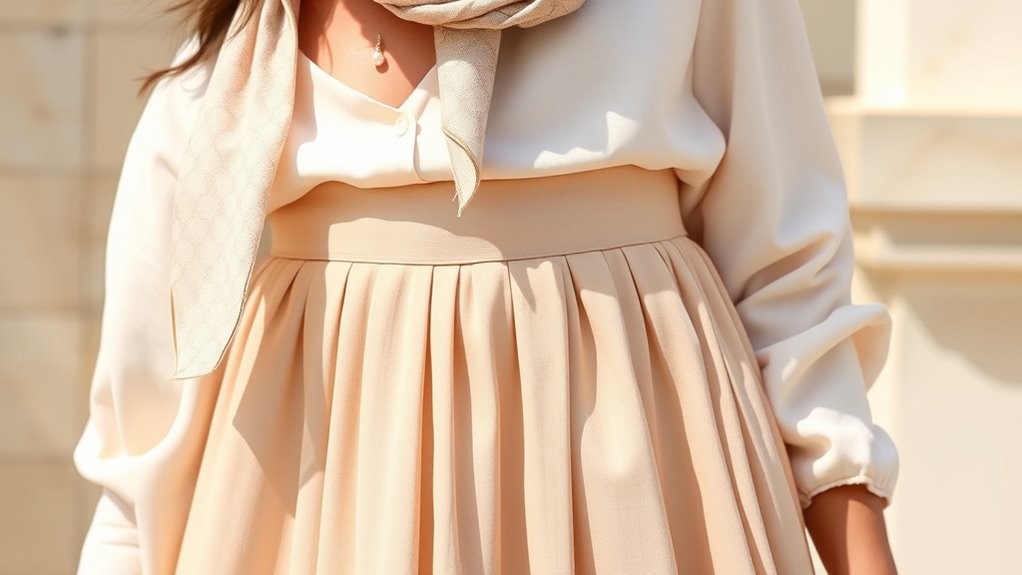
Carrying the right accessories can make it easy to meet Italy’s modesty standards at churches. A lightweight shawl, scarf, or wrap is your best bet for covering shoulders and cleavage quickly. These are easy to pack and can be draped over sleeveless tops or short skirts to meet requirements. For added convenience, consider convertible pants or leggings that can be pulled over shorts or skirts if you need extra coverage. A simple pareo or sarong can double as a skirt or wrap around your waist. Shoes are generally acceptable, but avoid sandals that reveal too much skin. Keep a small bag or pouch handy to store these accessories when not in use, ensuring you’re always ready for church visits without fuss. Incorporating Versatile clothing solutions can also help you quickly adapt your outfit to meet modesty standards while exploring Italy. Additionally, choosing clothing made from breathable fabrics can keep you comfortable during long visits.
What to Expect at Major Religious Sites in Italy
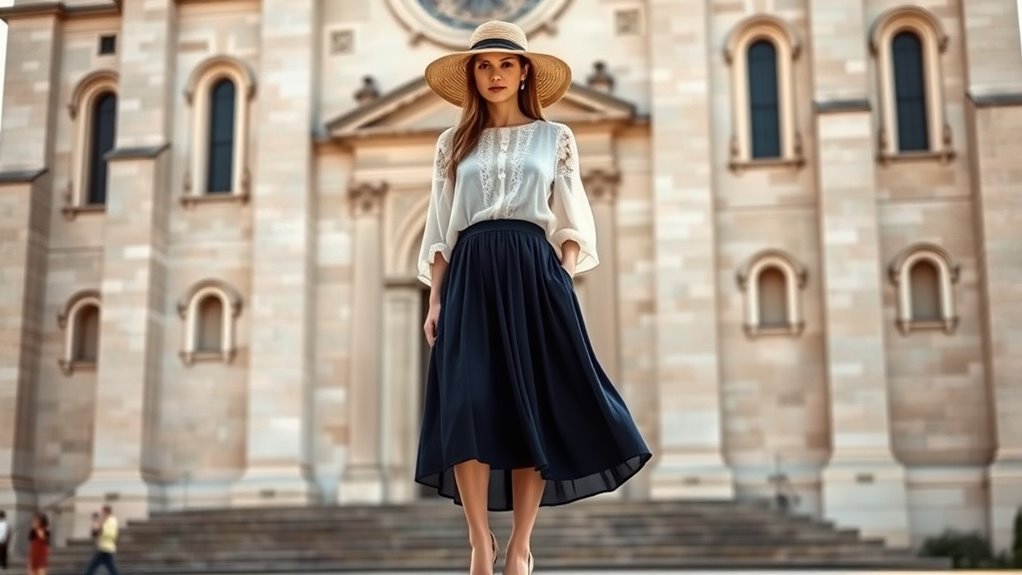
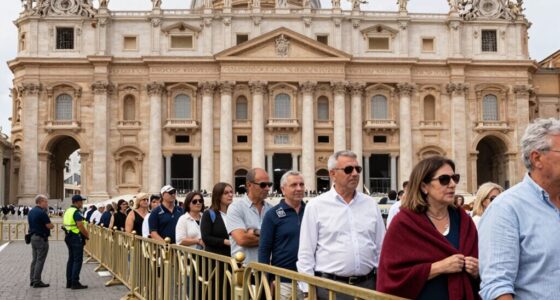
Major religious sites in Italy, such as St. Peter’s Basilica, draw thousands of visitors daily. When you arrive, expect strict dress codes to be enforced. You’ll likely notice staff checking attire before entry. Be prepared for signs reminding visitors of modesty rules. Security might ask you to cover shoulders or knees if your outfit doesn’t meet standards. Some sites, especially Vatican museums and major cathedrals, have strict policies and may turn you away for improper clothing. On the other hand, smaller churches may be more lenient but still require respectful dress. Expect to see many people wearing scarves or shawls to cover shoulders. Shoes are typically required, so plan accordingly. Overall, dress modestly, and you’ll smoothly enjoy the awe-inspiring architecture and spiritual atmosphere. Remember that dress codes are often rooted in religious traditions and customs, emphasizing respect and reverence during your visit. Being aware of these cultural expectations can help you avoid any inconvenience or disappointment.
Common Mistakes to Avoid When Dressing for Church Visits

Many visitors overlook specific clothing details that can lead to denied entry or uncomfortable experiences inside Italian churches. Avoid wearing sleeveless tops, crop tops, or shorts above the knee, as these violate modesty rules. Don’t forget to cover your shoulders; a shawl or scarf is often necessary, especially in major sites like St. Peter’s Basilica. Wearing transparent or tight-fitting clothing can also cause issues, so choose modest, opaque outfits. Men should steer clear of tank tops and ensure their shirts have sleeves, while women need to avoid plunging necklines or tight dresses. Additionally, don’t assume casual sandals are acceptable—closed-toe shoes are recommended. Always check the specific site’s dress code beforehand to prevent surprises and ensure respectful participation. Incorporating appropriate clothing choices that respect Italian church customs will help you enjoy your visit without concern. Remember that understanding cultural dress codes can enhance your experience and show respect for local traditions.
Frequently Asked Questions
Are There Specific Colors or Styles Considered More Appropriate?
You don’t need to worry about specific colors or styles, but aim for modest, respectful clothing. Stick to neutral or subdued tones, avoiding flashy patterns or bright colors that might draw attention. Choose classic, simple styles that cover shoulders and knees. Avoid tight or revealing outfits, and opt for comfortable, respectful attire that aligns with the church’s dress code. This shows reverence and helps you blend in respectfully.
Can I Wear Sneakers or Are Formal Shoes Required?
You can wear sneakers to Italian churches, but keep in mind that more formal shoes are often preferred, especially at major sites like the Vatican or St. Peter’s Basilica. Sneakers are acceptable if they’re clean and modest, but avoid overly sporty or casual styles. For a respectful look, consider switching to loafers or flats if you want to blend in seamlessly, especially when visiting more traditional or upscale churches.
Is It Acceptable to Wear Jewelry or Accessories to Church?
Jewelry and accessories are like the finishing touches on a well-painted masterpiece, and yes, you can wear them to church. Keep it simple and modest—avoid flashy or oversized pieces that draw too much attention. Opt for delicate necklaces, small earrings, or a subtle bracelet. Remember, the focus is on respectful reverence, so let your accessories complement your outfit without overpowering the sacred atmosphere.
How Strict Are the Dress Codes for Children Under 12?
For children under 12, dress codes are quite strict but flexible enough to accommodate their needs. You should verify they wear tops with full sleeves and bottoms that cover the knees, like long skirts or pants. Short shorts or sleeveless shirts are generally not allowed. Check church rules before visiting, but bringing a shawl or scarf for shoulders is helpful. Keep their shoulders covered, and they’ll be fine to enter without issues.
Are There Different Dress Code Rules for Outdoor vs. Indoor Church Visits?
You should follow the same dress code rules for outdoor and indoor church visits. Cover your shoulders and knees, avoid bare midriffs, and wear modest tops with full coverage. Regardless of location, dress respectfully by wearing long pants or skirts and bringing shawls or scarves to cover shoulders if needed. Remember, strict enforcement applies mainly inside, but dressing modestly throughout shows respect and helps you avoid getting turned away.
Conclusion
Think of dressing for Italian churches like fitting into a well-tailored suit—when you respect the dress code, you blend seamlessly into the sacred environment. I once saw a traveler happily convert a simple scarf into a respectful cover-up, proving that a little planning makes all the difference. By following these tips, you’ll avoid turning away at the door and instead, step in confidently, soaking up Italy’s rich spiritual and cultural treasures with reverence and style.