
In France, you need to validate your train ticket before boarding, especially for paper tickets bought at stations. You do this using validation machines near platforms by inserting your ticket correctly and waiting for the stamp or validation mark. E-tickets and mobile tickets usually don’t need validation—you just show the QR code when asked. To avoid fines and travel smoothly, it’s essential to understand when and how to validate, which you’ll find out if you keep exploring.
Key Takeaways
- Use validation machines near station entrances or on platforms to stamp paper tickets before boarding regional or local trains.
- For e-tickets or mobile tickets, validation is usually automatic; just show the QR code when asked by staff or conductors.
- Insert tickets correctly into validation machines with the printed side up and barcode visible, and wait for the stamp or validation mark.
- Verify whether your ticket requires validation based on type and purchase method; some tickets are pre-validated or reusable without stamping.
- Notify the conductor immediately if a ticket isn’t validated or recognized to avoid fines and ensure compliance.
Top picks for "validate train ticket"
Open Amazon search results for this keyword.
As an affiliate, we earn on qualifying purchases.
When Do You Need to Validate Your Ticket?
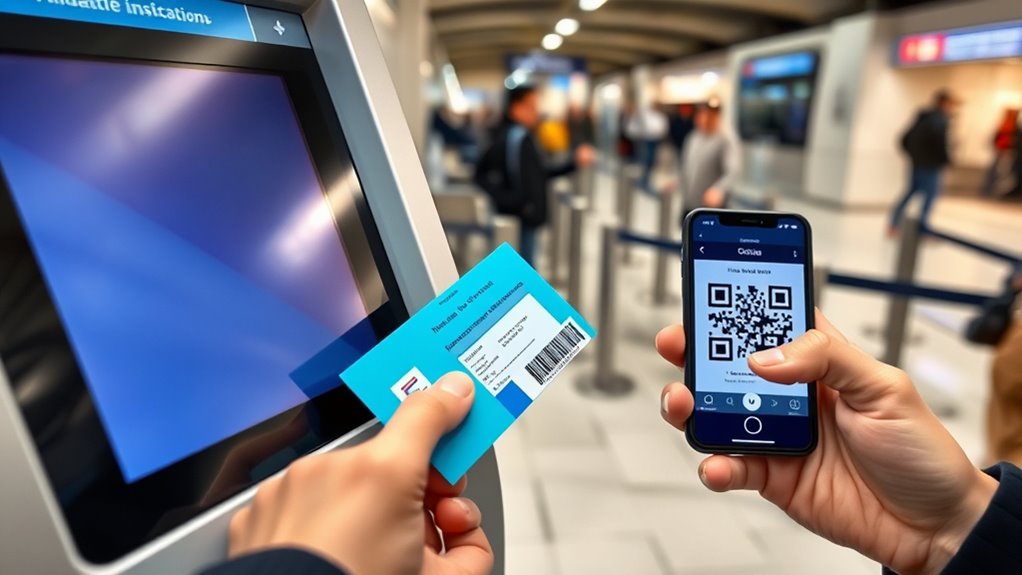
Do you know when you need to authenticate your train ticket? If you have an unreserved paper ticket, you must authenticate it before boarding to avoid fines. Typically, tickets bought at the station or on special paper require validation in platform boxes or nearby machines. If your ticket is printed at home or downloaded to your mobile, you don’t need to validate it, as these are auto-validated. For regional and local TER trains, validation is essential and must be done in advance. Remember, failure to validate your ticket can result in a fine up to €50. If you forget, inform the conductor immediately upon boarding to avoid penalties. Always check your ticket type and follow the specific validation rules to ensure smooth travel. Properly understanding validation procedures is key to avoiding delays and fines during your journey, especially when considering the European cloud innovation that emphasizes reliable and secure systems for ticket verification. Additionally, being aware of the proper validation methods can help you navigate different train services more effectively. Knowing the validation locations and their availability can save you time and prevent last-minute issues.
How to Use Validation Machines at French Stations
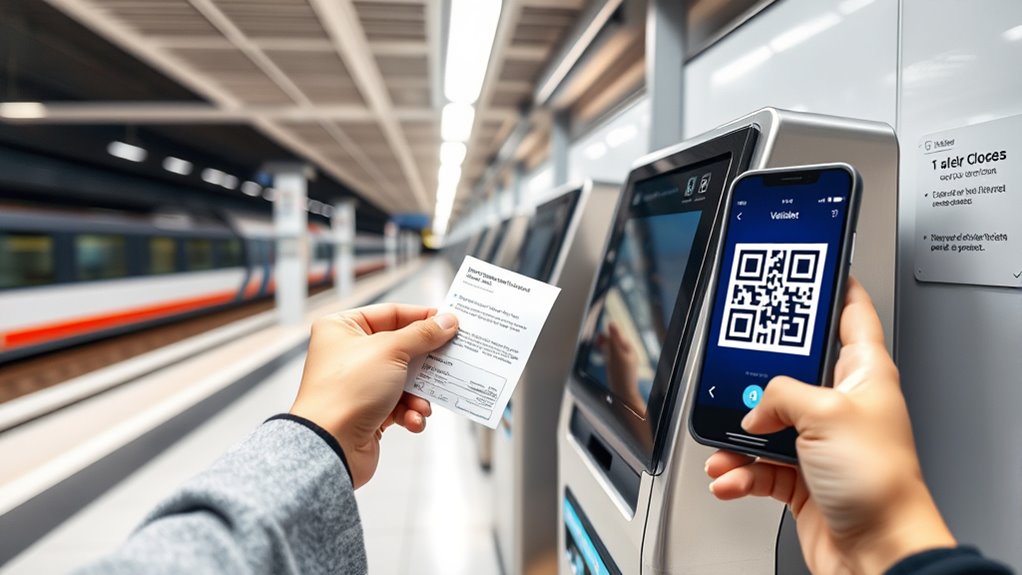
First, find the validation machines near platform entrances or on the platforms themselves. Then, insert your ticket into the machine as instructed. Make sure the ticket is properly inserted to ensure correct validation. It is also helpful to keep your ticket visible while waiting to board, in case an inspector needs to see it. Additionally, be aware of crypto market trends that might influence your travel plans or timing. Proper validation ensures adherence to deep-sky imaging procedures and rules. Finally, verify the date and validation stamp appear on the ticket before boarding. Remember to check for any signs indicating the location of these machines to ensure proper validation.
Locate Validation Machines
Wondering where to find validation machines at French stations? You’ll usually spot them near platform entrances or along the tracks. Look for bright yellow or white machines, often labeled “compostage de billets” or “validation.” Locals tend to gather around these spots, especially on regional trains. To help you locate them quickly, here’s a guide:
| Location | Description |
|---|---|
| Near platform entry | Machines are placed at station entrances |
| Along the tracks | Positioned close to boarding areas |
| Station corridors | Found on main walkways between platforms |
| Ticket counters | Adjacent to ticket sales points |
| Outside stations | At station exits or nearby waiting areas |
These spots guarantee you validate before boarding, avoiding fines. Additionally, validation procedures may vary depending on the station, so always check for specific instructions or signage. For example, some stations might have electronic validation systems that streamline the process.
Proper Ticket Insertion
To properly insert your ticket into a validation machine at a French station, start by making sure the ticket is positioned correctly. Typically, tickets should be inserted with the printed side facing up and the date or barcode visible. Pay attention to the machine’s instructions—most have a designated slot or area for insertion. Gently insert the ticket straight into the slot, avoiding force or bending. Some machines require you to hold the ticket steady until the validation process completes. Once inserted, wait for the machine to print the validation stamp or mark the ticket. This usually takes a few seconds. If your ticket is on special paper or a mobile device, validation isn’t necessary or is automatic. Proper insertion guarantees your ticket is valid and avoids fines or travel disruptions.
Validating E-Tickets and Mobile App Tickets
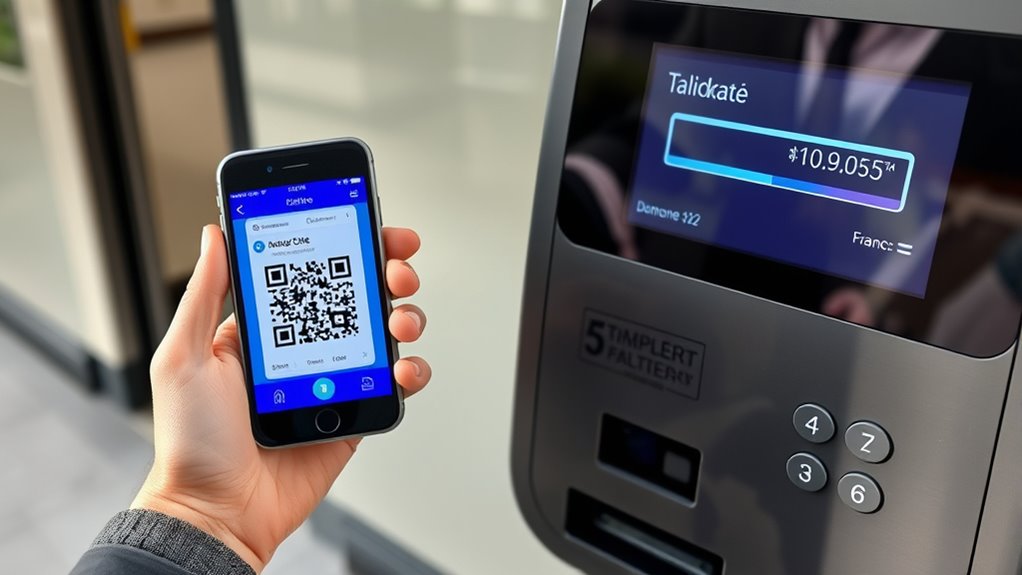
When traveling with e-tickets or mobile app tickets, validation is generally not required, making your journey more convenient. You simply need to show the QR code or digital ticket to the inspector when asked. For SNCF Connect, OUI.sncf, or Omio app tickets, display your QR code clearly on your phone’s screen so the conductor can scan it easily. There’s no need to print or validate the ticket beforehand. Keep your phone charged to avoid issues. If you forget to show your ticket, inform the conductor immediately to prevent fines. Some tickets, like TGV with date and seat info, don’t need validation at all. This system simplifies travel, letting you focus on your journey without worrying about validation stamps or machines. Be aware that ticket validation rules can vary depending on the type of train or route. Additionally, understanding the ticket validation policies helps ensure compliance and smooth travel experiences. Since modern ticketing systems are designed for efficiency, familiarizing yourself with these procedures can help prevent delays during your trip. Knowing the specific train validation procedures for your journey can further enhance your travel experience.
Collecting and Validating Printed Tickets From Machines
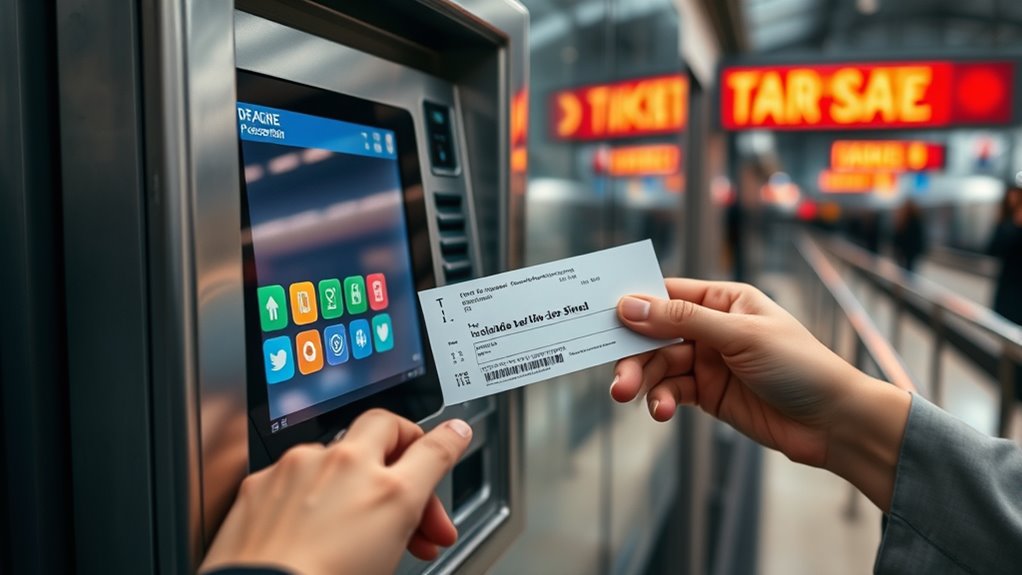
Collecting printed tickets from machines is a straightforward process, but it’s important to act promptly. First, locate a SNCF validation machine near the platform entrance or along the platform. Enter your booking reference (PNR) and, if required, your name. Some machines may also ask for your six-character code. Once entered, the machine will print your ticket within a few minutes. Make sure to retrieve all tickets before leaving the machine area, as they’re only available for a limited time. If you’re using a station with multiple machines, choose one nearby to avoid unnecessary delays. Always double-check that your ticket has printed correctly and contains all necessary details, like date, train ID, and seat number, to ensure smooth boarding.
Exceptions to Validation and When to Seek Assistance

Some ticket types don’t require validation, such as e-tickets or those with specific reservations, so always check your ticket details. If you forget to validate or encounter issues, you should immediately contact station staff or the conductor to avoid fines. Recognizing these exceptions helps you travel smoothly and stay compliant with regulations. Well-sourced coverage of names ensures travelers can rely on accurate information about ticket validation procedures. Being aware of electrical concepts related to ticket machines can also help troubleshoot common problems effectively. Additionally, understanding adhesive strips and mounting options can be useful for maintaining signage or displays related to ticketing at stations.
Ticket Types Exempt From Validation
Are all train tickets subject to validation requirements? Not quite. Certain tickets, like TGV and OUIGO, often skip validation because they contain all necessary travel details, such as date, train ID, and seat number. These tickets are pre-validated and serve as both your ticket and contract of carriage. E-tickets purchased via SNCF Connect, Omio, or OUI.sncf apps also don’t require validation; simply show the QR code or digital proof when asked. Additionally, tickets bought or exchanged at station machines within one hour of travel are automatically validated. Remember, printed tickets with specific reservations or those with explicit travel details can be reused without validation. If you’re unsure, check your ticket’s instructions or ask station staff for guidance.
When to Contact Staff
While most tickets can be validated independently, there are specific situations when you need to seek assistance from station staff.
- If your ticket isn’t automatically validated—like certain paper tickets or those bought at the station—you should ask staff to validate it for you.
- When you forget to validate a ticket on regional trains or local TER services, approaching staff quickly can help avoid fines.
- If your e-ticket or app ticket isn’t scanning properly or the QR code is unreadable, don’t hesitate to request help to prevent delays or penalties.
- Being familiar with train ticket validation procedures ensures you can act promptly in case of technical issues or uncertainties.
- Understanding ticket validation requirements can help you troubleshoot minor issues before seeking professional assistance, saving you time and money.
- Recognizing common validation errors can help you quickly identify and correct problems, ensuring seamless travel.
Tips to Avoid Fines and Ensure Smooth Travel

To avoid fines and guarantee a smooth journey, always check whether your ticket requires validation before boarding. If it does, validate it at the station’s machine or platform box before departure. Failing to do so risks a fine up to €50, and even honest mistakes can lead to delays. Remember, e-tickets and apps like SNCF Connect don’t need validation, but printed tickets often do—especially regional and local tickets. Keep an eye on the validation machines near platform entrances, and act quickly. If you forget, inform the conductor immediately to minimize penalties. Use this table to understand your ticket type and validation needs:
| Ticket Type | Validation Required |
|---|---|
| Paper tickets bought at station | Yes |
| E-tickets via apps | No |
| Regional train tickets (printed) | Yes |
| Digital tickets (QR code) | No |
| TGV with seat reservation | No |
Frequently Asked Questions
Can I Validate My Ticket After Boarding the Train?
No, you can’t verify your ticket after boarding the train. Validation must happen before you get on, especially for regional and local tickets that require stamping. If you forget, inform the conductor immediately to avoid a fine. For e-tickets or tickets bought online, validation isn’t needed. Always double-check your ticket type and rules to ensure you’re compliant and avoid penalties.
Are Validation Machines Accessible for Disabled Passengers?
Yes, validation machines are accessible for disabled passengers. You’ll find them near platform entrances and at stations, often with features like lower height or tactile guides to assist you. If you need help, station staff are available to support you. To avoid fines, make sure you validate your ticket if required, or show your e-ticket or QR code to inspectors. Accessibility is a priority across most stations and validation points.
Do I Need to Validate Tickets for International Trains?
You don’t need to validate tickets for international trains like TGV or Eurostar. Imagine boarding smoothly, with your ticket already ready—no stamping or validation required. These tickets often have a printed date, train ID, and seat info, acting as your pass. Just show your e-ticket QR code or printed ticket to the conductor when asked. This seamless process lets you relax and enjoy your journey without extra steps.
What Should I Do if My Ticket Gets Damaged During Validation?
If your ticket gets damaged during validation, you should immediately inform a conductor or station staff. Show them the damaged ticket and explain what happened. They might ask you to verify your booking details or provide additional proof of purchase. If the ticket is too damaged to read, you may need to buy a new one or get a replacement. Always act quickly to avoid fines or travel disruptions.
Is There a Time Limit for Validating Tickets Before Departure?
You should validate your ticket shortly before departure, ideally within 15 minutes of boarding. For regional and local trains, validation must happen before you get on, especially at platform boxes. If you’re using digital tickets, no validation is needed. Failing to validate in time can lead to a fine of up to €50, so it’s best to validate promptly or inform the conductor if you forget.
Conclusion
Remember, over 60% of travelers in France have faced fines for not validating their tickets correctly. By understanding when and how to validate your ticket—whether at machines, apps, or counters—you’ll avoid unexpected costs and enjoy smooth journeys. Always validate before boarding or starting your trip, and don’t hesitate to ask station staff if you’re unsure. Proper validation guarantees your travel is hassle-free, letting you focus on exploring France’s beautiful sights instead of worrying about fines.