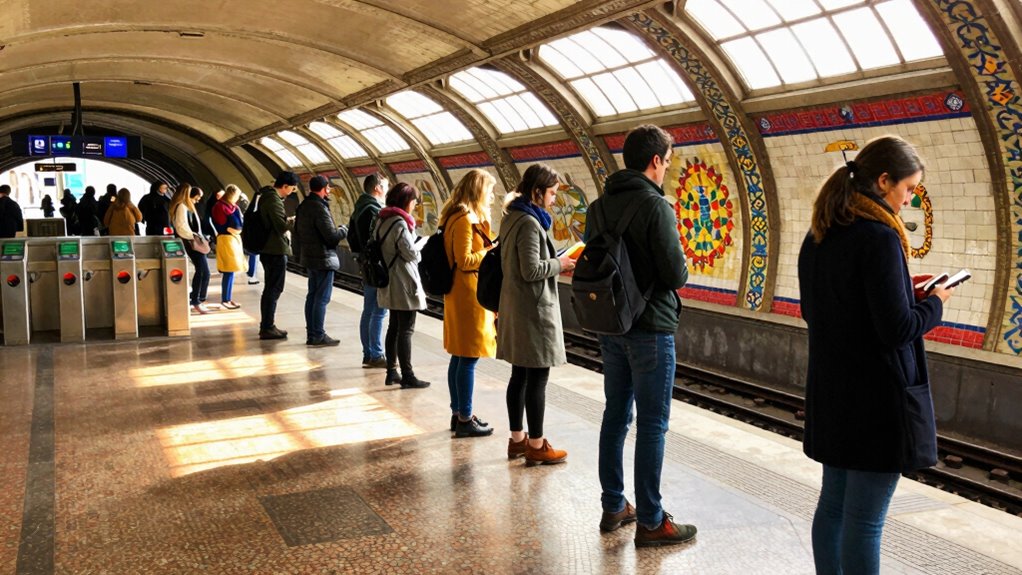

To navigate the Paris Metro confidently, buy a valid ticket or contactless payment method and check signs for your direction. Use colorful signs or apps to identify your line and terminal stations. Plan your route with maps or apps, and stay aware of real-time updates at stations. Watch for signage and platform cues during transfers, and pick exits that lead directly to your destination. Mastering these tips helps you stay on track—keep going to uncover more secrets for smooth travel.
Key Takeaways
- Familiarize yourself with system maps, line colors, and terminal stations to confidently identify routes and directions.
- Use real-time signs, electronic displays, and apps for updates on arrivals, delays, and platform information.
- Confirm your destination and line before boarding, paying attention to signs indicating terminal stations and transfer points.
- Keep valuables secure, follow signage for exits and landmarks, and plan routes to minimize surface walking.
- During transfers, locate escalators and transfer corridors early, and use station maps and apps for smooth navigation.
Top picks for "pari metro without"
Open Amazon search results for this keyword.
As an affiliate, we earn on qualifying purchases.
Understanding Your Ticket Options and Entry Procedures
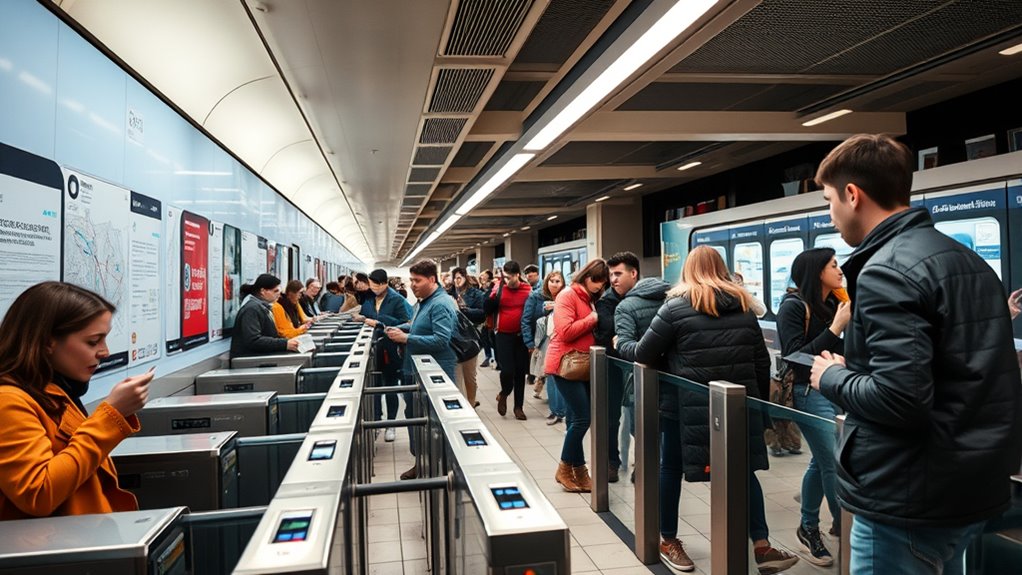
To access the Paris Metro, you need a valid ticket or travel pass. You can use paper tickets, Navigo Easy cards, or contactless mobile payments. Contactless options are now accepted at most turnstiles, replacing paper tickets in many stations. For single trips, a ticket usually covers central Paris (zones 1–3), but check zone rules if traveling beyond. Ticket machines with English options and contactless readers are available at all major stations, allowing quick on-the-spot purchases. To enter, just tap your card or phone on the purple reader or insert your reusable card where needed. Keep your proof of fare until you exit. If your card gets lost or breaks, station agents and kiosks can help with replacements or reloads. Understanding fare zones helps ensure you buy the correct ticket for your journey. Additionally, wave and wind technology is increasingly being used to streamline access and reduce congestion at station entry points, improving overall ticket validation procedures and minimizing delays. Modern ticketing systems also contribute to faster entry and a smoother passenger flow.
Reading Signs and Determining Your Direction of Travel
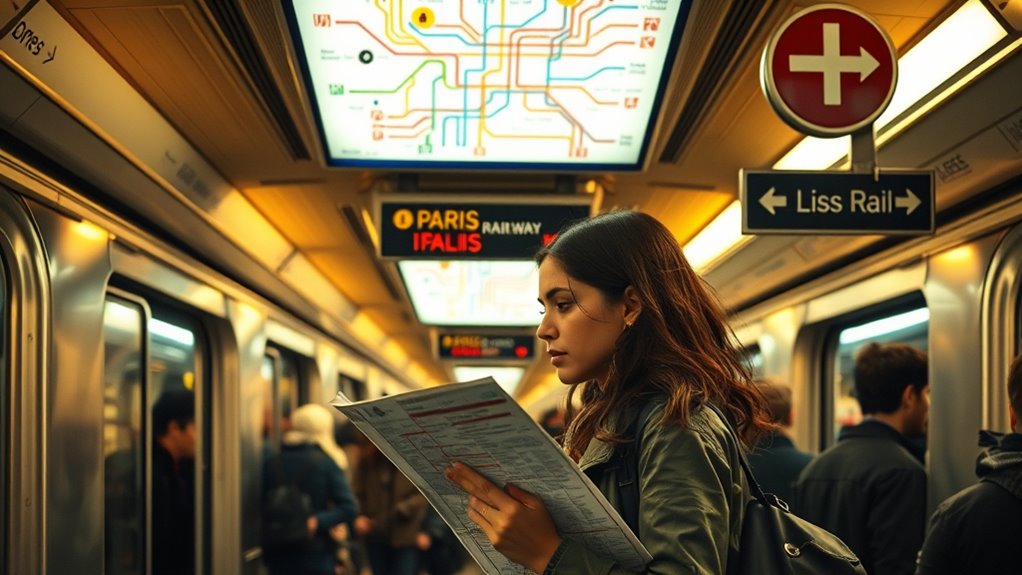
When you arrive at a station, look at the line signs to identify the color and number that match your route. Follow the signs indicating the terminal station to confirm you’re heading in the right direction. These clear markers help you choose the correct platform and stay on track during your journey. Additionally, paying attention to energy-efficient technology used in the system can enhance your understanding of the infrastructure supporting the metro. Recognizing signage standards can also aid in quickly interpreting the information displayed throughout the station. Being familiar with world clock tools can help you better understand the timing of train schedules and connections across different time zones.
Subheading 1: Interpreting Line Signs
Line signs in the Paris Metro are designed to help you quickly identify your current location and direction of travel. Each line is numbered and color-coded, making it easy to distinguish them at a glance. When you arrive at a platform, look for the line number and color displayed on signs overhead and on the platform edges. These signs also indicate the direction of travel by listing the terminal station at each end of the line. To determine which way to go, find the terminal station you need to reach, then stand on the side of the platform that faces that end. Pay close attention to these signs—they’re your primary guide for ensuring you’re headed in the right direction without confusion. Understanding line signs and colors can significantly reduce the chances of taking a wrong train.
Subheading 2: Following Terminal Indicators
Reading station signs carefully is essential for confirming your direction of travel. Look for the terminal station names displayed on platform signs and electronic displays. These names indicate the line’s final destination, helping you choose the correct platform. Always note the end-of-line station listed, as it shows whether you’re heading toward the city center or the suburbs. When transferring, check signs for the next train’s terminal to ensure you’re on the right track. Signs also show which side the doors will open, so position yourself accordingly. Pay attention to real-time updates and disruption alerts. Using terminal indicators prevents wrong turns and delays, making your journey smoother and more efficient. Always verify the destination before boarding to avoid going the wrong way.
Planning Your Route With Helpful Apps and Maps
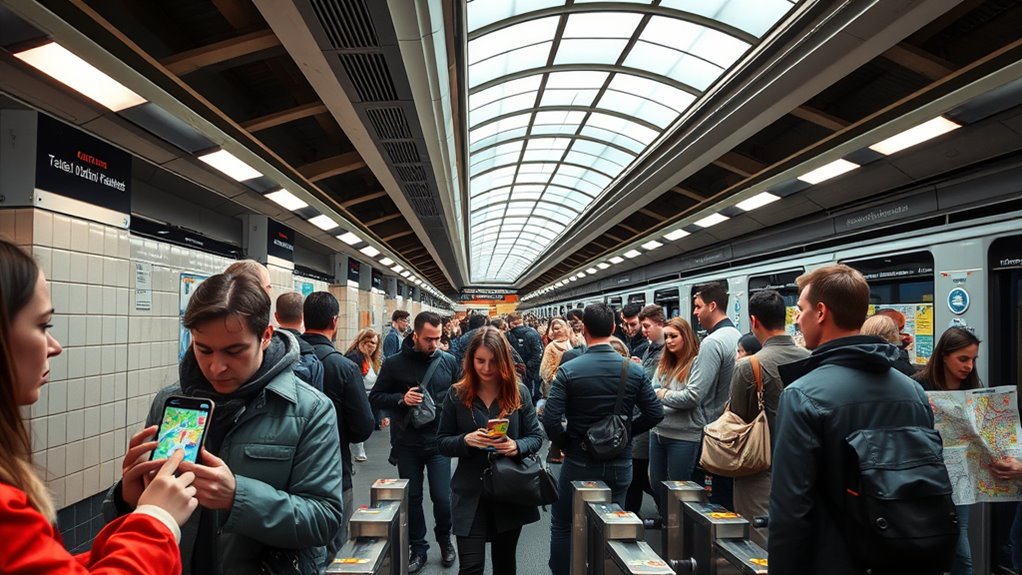
To navigate the Paris Metro efficiently, you should make good use of navigation apps like Citymapper and Bonjour RATP, which offer real-time updates and step-by-step directions. Reading RATP maps confidently helps you understand station layouts and plan transfers, especially in complex hubs. Pre-planning your route guarantees you avoid delays during peak hours and makes your journey smoother from start to finish. Familiarizing yourself with Free Floating options can also provide alternative transportation methods if needed.
Utilizing Navigation Apps Effectively
Using navigation apps can greatly simplify your Paris Metro experience by providing real-time updates, step-by-step directions, and useful tips for efficient travel. Download apps like Citymapper, Bonjour RATP, or Google Maps before your trip. These apps show you the fastest routes, suggest alternate lines if there’s a disruption, and guide you through transfers. Enable location services for accurate, live data, and check alerts for strikes or delays. Use the app to identify which carriage to board for quicker exits or transfers, and follow exact exit instructions to minimize surface walking. Keep your phone charged, and consider saving offline maps in case of signal loss. By actively using these tools, you’ll navigate confidently, avoid confusion, and make your journey smoother.
Reading RATP Maps Confidently
Navigating the Paris Metro becomes much easier when you confidently interpret RATP maps and combine them with helpful apps. You’ll quickly identify your current station, the line color, and the direction of travel by reading the system map. Pay attention to the terminus station names to confirm your route and note transfer points marked with white dots and signage. Use apps like Citymapper or Bonjour RATP for real-time updates, recommended carriages, and exit info to streamline your journey. Understanding the system map and how to read its symbols helps you stay oriented and avoid confusion during transfers. Additionally, familiarizing yourself with the wave and wind patterns can assist in understanding how environmental factors may influence transit schedules and passenger comfort during your travel. Recognizing train schedules and peak hours can further help you plan your trips during less crowded times for a more comfortable experience. Being aware of service disruptions can help you adjust your route proactively. A good grasp of scheduling patterns also enables you to anticipate delays and plan alternative routes effectively. Key tips include: – Recognize line colors and terminal stations to guarantee correct direction. – Check transfer points and follow signs for seamless connections. – Use apps to get real-time alerts and detailed navigation assistance. Mastering these maps boosts your confidence and keeps your trip smooth.
Pre-Planning Your Transit Route
Pre-planning your transit route with helpful apps and maps can save you time and reduce stress during your trip. Use Citymapper or Bonjour RATP for step-by-step directions, real-time updates, and recommended carriage positions for quick exits. Google Maps and SNCF Connect help with metro routing and walking estimates between transfers. Download offline maps or carry a paper map to stay connected in tunnels. Check live service alerts on RATP or third-party apps to avoid delays or disruptions. Planning ahead during peak hours helps you avoid crowded transfers and choose alternative lines if needed. Knowing your route in advance also allows you to select the best exits at stations, minimizing surface walking and ensuring a smoother journey overall.
Making Smooth Transfers and Managing Timing on the Platform
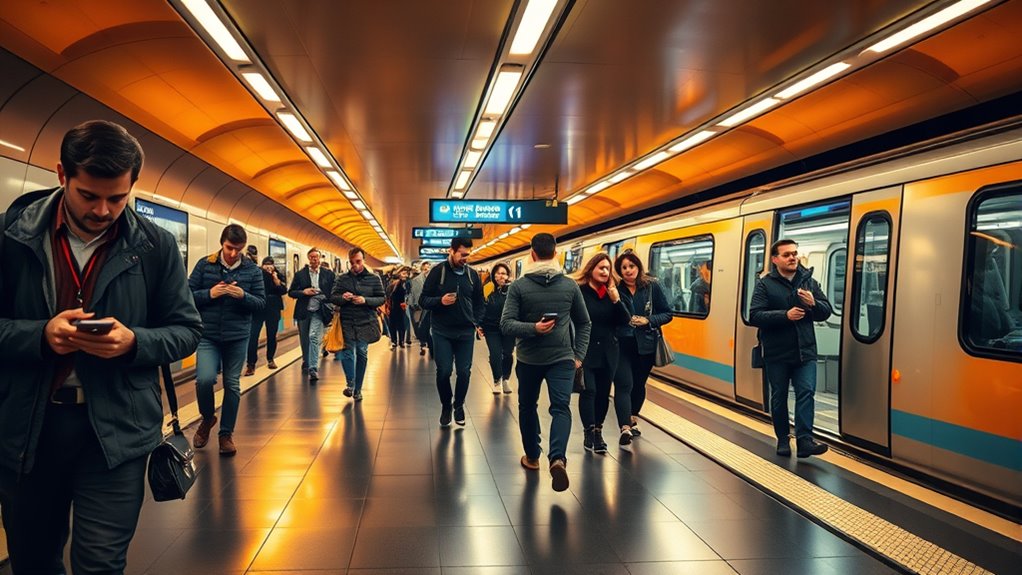
To make smooth transfers and manage your timing on the platform, pay close attention to real-time signs and announcements that indicate train arrivals and door closing alerts. These updates help you stay ahead of schedule and avoid missed connections. Watch the electronic displays for train times, and listen for audible signals warning of closing doors. When approaching a transfer, position yourself near the carriage doors aligned with your intended exit to minimize walking time. During rush hours, board toward the center of the train to avoid congestion and speed up your transfer. Keep these tips in mind:
- Check platform signs for next-train arrival times.
- Stand clear of closing doors, and don’t rush onto closing trains.
- Position yourself near the correct carriage exit for your destination.
- Real-time updates are essential for timely transfers and managing your schedule effectively. Staying aware of train schedule information can greatly improve your overall experience on the metro. Additionally, utilizing smartphone apps that provide live transportation data can further enhance your ability to coordinate transfers efficiently. Incorporating connected technology into your commute can also help you receive instant alerts and updates directly to your device, making your transfer process even smoother. For a seamless experience, familiarize yourself with the deep-sky imaging concepts that help you understand complex systems, much like navigating a busy metro station.
Navigating the System Safely and Respecting Local Etiquette

Staying safe and respectful on the Paris Metro requires your attention and courtesy. Keep valuables secure, especially in crowded cars and station stairs, to prevent pickpocketing. Maintain quiet during your ride—limit phone conversations and noise to respect others’ comfort. Always give up priority seats to elderly, pregnant, or disabled passengers. Refrain from eating or drinking on trains to keep the system clean. Be mindful of closing doors; avoid rushing or attempting to board after warnings. Use station staff or help points if you encounter issues or lose items. When steering, choose exits based on neighborhood maps or app directions to minimize surface walking. Respect local norms, and remain courteous to fellow travelers, ensuring a smooth and pleasant experience for everyone. Being aware of local etiquette helps maintain a positive environment for all commuters. Additionally, familiarizing yourself with environmental considerations encourages sustainable and responsible use of the metro system. Remember that public transportation is an eco-friendly alternative that reduces pollution and traffic congestion. Being conscious of sustainable travel practices can further enhance your journey’s positive impact. Recognizing the importance of system cleanliness contributes to a healthier environment for both passengers and staff.
Finding and Using Exits to Reach Landmarks Efficiently
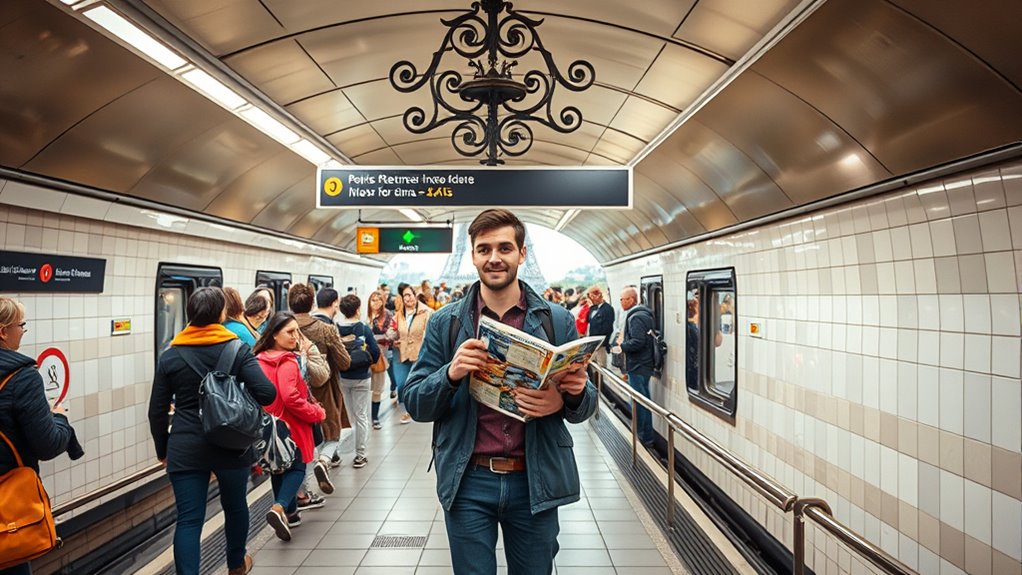
Finding the right exit at a Paris Metro station is key to reaching your landmark efficiently. First, check the station’s “plan du quartier” or app instructions to identify the closest exit. Look for exit numbers that correspond to your destination or street. Use station signs and neighborhood maps to confirm which exit best aligns with your landmark. If multiple options exist, choose the one that leads directly to your target area, saving you walking time. Be aware that passive voice can sometimes make directions less clear, so aim to use active instructions whenever possible.
Remember these tips:
- Match the exit number with the station map or app directions.
- Pick the exit that best aligns with your landmark’s street or neighborhood.
- Use station signs and neighborhood plans to avoid unnecessary detours.
This approach ensures you reach your destination smoothly and quickly.
Recognizing Key Station Features and Transfer Hubs
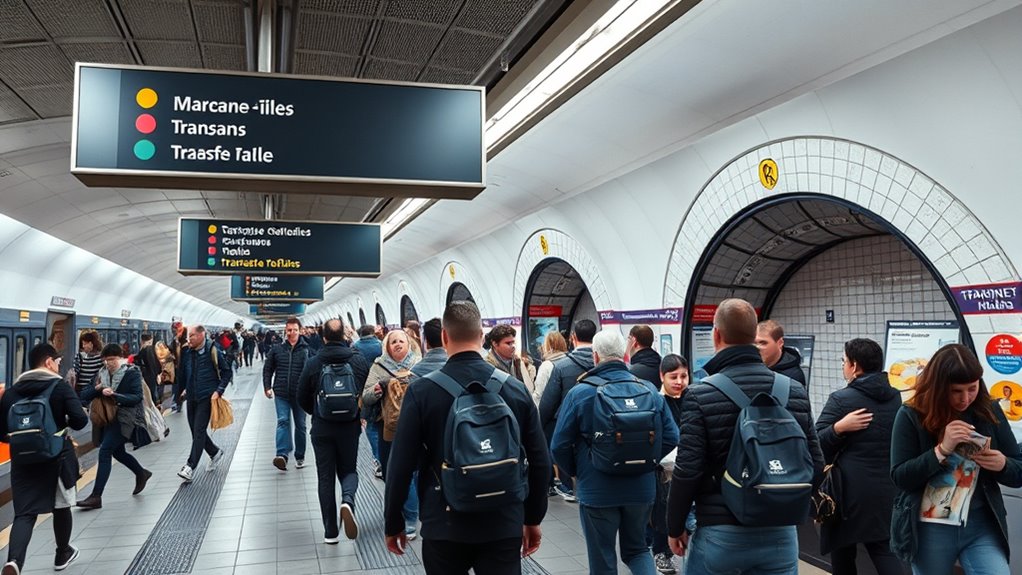
Recognizing key station features and transfer hubs can substantially streamline your journey through the Paris Metro. Look for large, architecturally distinct stations like Châtelet or Gare Saint-Lazare, which serve as major transfer points. These hubs often have multiple underground levels, extensive signage, and clear “correspondance” signs indicating transfer options. Pay attention to system maps and platform signs showing terminal stations and line colors, helping you confirm your route. Electronic displays provide real-time train arrivals and disruption alerts. Transfer points are marked with white dots on maps and signage. When orienting yourself, identify the busiest stations for transfers, and use station maps or apps to locate escalators, stairs, and corridors leading to your desired line or exit. Recognizing these features helps you move efficiently and confidently. System maps and signage are designed to help passengers navigate complex station layouts more easily. Being familiar with security zone info can also help you quickly identify areas with additional safety measures, easing your transit experience.
Tips for Avoiding Crowds and Boardings During Peak Hours

To avoid crowds and streamline your boarding during peak hours, plan your travel times carefully. Traveling outside rush periods, like early mornings or late evenings, helps you avoid packed trains. Use real-time updates on apps like RATP or Citymapper to identify less crowded lines or carriages.
Travel outside peak hours and check real-time updates to avoid crowded trains in Paris.
Consider these tips:
- Target less busy carriages: Board toward the middle of the train, where passengers tend to cluster less.
- Choose alternative routes: If your main line is crowded, switch to nearby lines with lighter traffic.
- Adjust your schedule: Avoid peak times (8-10 am and 5-7 pm) by shifting your travel slightly before or after these hours.
Being flexible and informed allows you to navigate Paris’s metro system more comfortably during busy hours.
Handling Unexpected Disruptions and Staying Informed
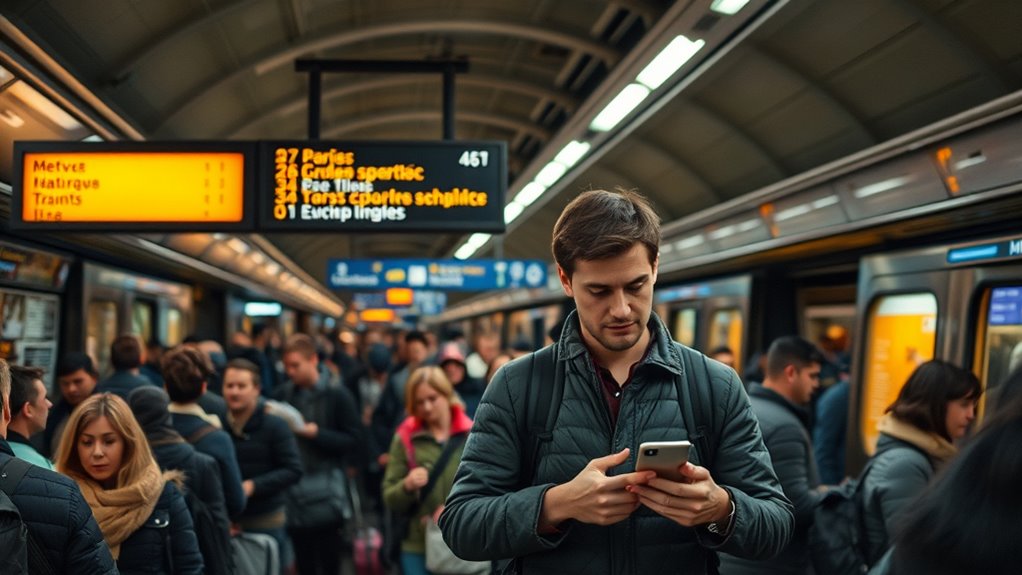
Unexpected disruptions like strikes, technical failures, or service alerts can quickly impact your travel plans, but staying informed allows you to adapt smoothly. Check real-time updates via the RATP app, Bonjour RATP, or third-party apps before and during your journey. Listen for station announcements and watch electronic displays for alerts on delays or closures. If a line is disrupted, consider alternative routes or transfer points highlighted on system maps. Keep your phone charged and carry a paper map as a backup. When an incident occurs, follow staff instructions and posted signage. Be patient and flexible—sometimes rerouting takes a few extra minutes. By proactively monitoring updates and staying alert, you’ll navigate disruptions with confidence and keep your Paris Metro experience stress-free.
Frequently Asked Questions
How Do I Identify the Correct Platform for My Train’s Direction?
You identify the correct platform by checking the station signs, which display the line number and color. Look for the terminal station name listed on the signs; this indicates the train’s direction. Follow the signs pointing toward that end-of-line station. Electronic displays and platform signs also show upcoming train info and directions. If unsure, ask station staff or use navigation apps for real-time guidance to avoid boarding the wrong train.
Can I Transfer Between Lines Without Exiting the Ticketed Area?
Did you know the Paris Metro handles over 4 million trips daily? Yes, that’s a lot of people moving through bustling stations! You can transfer between lines without exiting the ticketed area, which saves time and effort. Simply follow the signs for “correspondance,” stay within the transfer zone, and tap your card or phone if required. This seamless system guarantees you reach your destination smoothly without re-entering the ticket gates.
What Should I Do if My Navigo Card Is Lost or Broken?
If your Navigo card is lost or broken, head to the station’s service booth or automated kiosk. Show your ID if needed, and ask for a replacement or reloadable card. You can also use contactless mobile payment methods if accepted at your station. Keep proof of fare until you exit, and consider getting a new card or reloading your plan to continue traveling smoothly without interruptions.
How Can I Tell if a Train Is Crowded or Available for Quick Boarding?
If you want to dodge sardine-can trains, check the real-time signs on the platform—they’re like your personal fortune-teller for crowd levels. Listen for the beeps and look for the flashing lights that tell you which side the doors will open. Citymapper and Bonjour RATP apps also give live updates, guiding you to the least crowded car or the best time to hop on, so you can board with ease and avoid the crush.
Are There Specific Etiquette Rules to Follow on the Paris Metro?
You should follow some simple etiquette rules on the Paris Metro. Keep noise levels low, especially with phone conversations, and be respectful of others’ space. Offer priority seats to the elderly, pregnant women, or disabled passengers. Avoid eating or drinking, and dispose of trash properly. Be mindful of closing doors—don’t try to board after the warning sounds. Ultimately, keep valuables secure and stay alert for pickpockets in crowded cars.
Conclusion
Mastering the Paris Metro means balancing confidence with caution, speed with patience. As you navigate its intricate maze, you’ll find that familiarity brings ease, but respect for the system’s rhythm keeps you safe. The metro’s bustling energy contrasts with moments of quiet anticipation, reminding you that adventure often lies between chaos and calm. Embrace both, and you’ll move through Paris not just as a traveler, but as a mindful explorer.