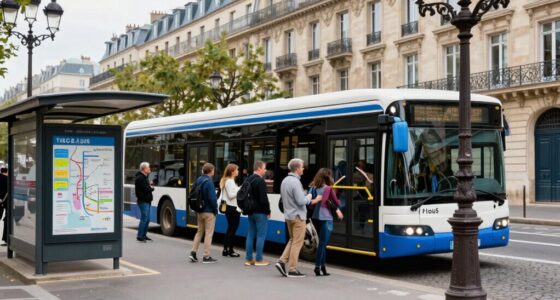
High-speed rail in France, known as TGV, connects major cities like Paris, Marseille, and Bordeaux at speeds up to 320 km/h, allowing quick and comfortable travel. You can also reach neighboring countries such as Belgium, Spain, and Germany. TGV trains offer modern amenities like Wi-Fi, spacious seats, and scenic views. They’re safe, reliable, and environmentally friendly. If you want to discover how the TGV transformed travel in France and beyond, there’s more to explore.
Key Takeaways
- TGV stands for “Train à Grande Vitesse,” France’s high-speed train network operated by SNCF, revolutionizing travel since 1981.
- TGV trains reach speeds up to 320 km/h, with record tests exceeding 570 km/h, ensuring rapid journeys across France and Europe.
- The network connects major cities like Paris, Marseille, Bordeaux, Brussels, and London, offering fast, comfortable international travel.
- TGV trains feature modern interiors, onboard services like Wi-Fi and snack bars, providing a smooth and enjoyable travel experience.
- Future developments include faster trains, expanded routes, and eco-friendly innovations to enhance connectivity and sustainability.
TGV high-speed train travel accessories
As an affiliate, we earn on qualifying purchases.
As an affiliate, we earn on qualifying purchases.
What Is the TGV and How Did It Start?
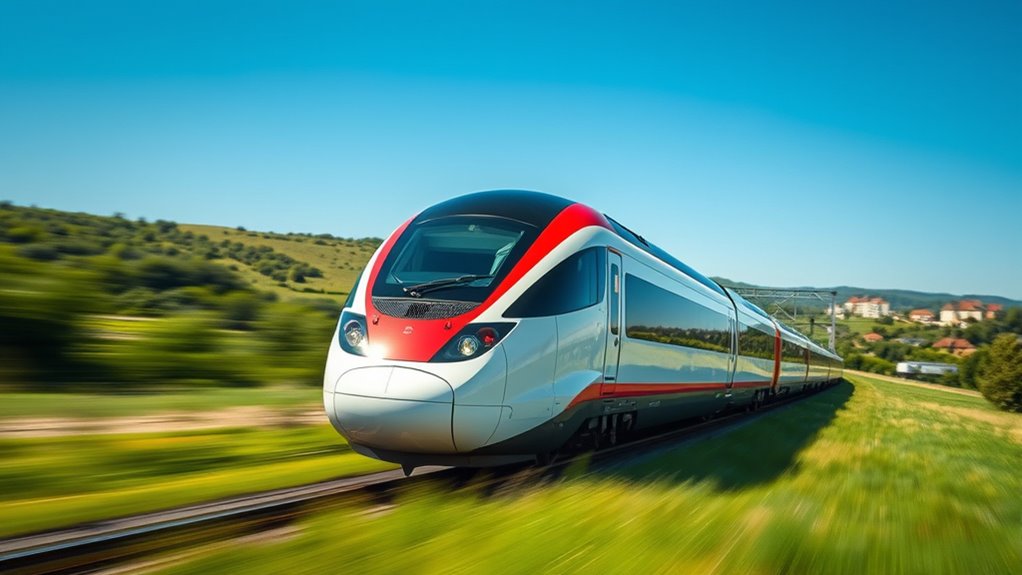
Have you ever wondered what makes France’s high-speed rail system so remarkable? It’s the TGV, or “Train à Grande Vitesse,” which means “High-Speed Train.” The TGV is operated by SNCF and combines advanced trains, tracks, and signaling technology to run at incredible speeds. The journey began in 1981 with the launch of the Paris-Lyon line, revolutionizing travel in France. Originally, the plan was to develop a fast train system after the 1973 oil crisis, shifting from gas turbines to electric power. The first trains were ordered in 1975, completed trials by 1978, and quickly gained popularity. By 1990, TGV traffic increased sharply, establishing France as a leader in high-speed rail travel. It’s a system built on innovation, efficiency, and a vision for faster, more convenient transportation. Additionally, the technological advancements behind the TGV have influenced high-speed rail development worldwide, showcasing France’s commitment to sustainable transportation. Moreover, the development of the TGV was made possible by dedicated high-speed rail tracks, allowing for the exceptional speeds and safety standards it maintains today.

GL.iNet GL-SFT1200 (Opal) Portable WiFi Travel Router, Mini VPN Wireless Router for Fiber Optic Modem, Mobile Internet WiFi Repeater, Dual Band Openwrt Computer Routers, Home/Business/RV/Cruise
【AC1200 Dual-band Wireless Router】Simultaneous dual-band with wireless speed up to 300 Mbps (2.4GHz) + 867 Mbps (5GHz). 2.4GHz…
As an affiliate, we earn on qualifying purchases.
As an affiliate, we earn on qualifying purchases.
How Fast Can TGV Trains Go?
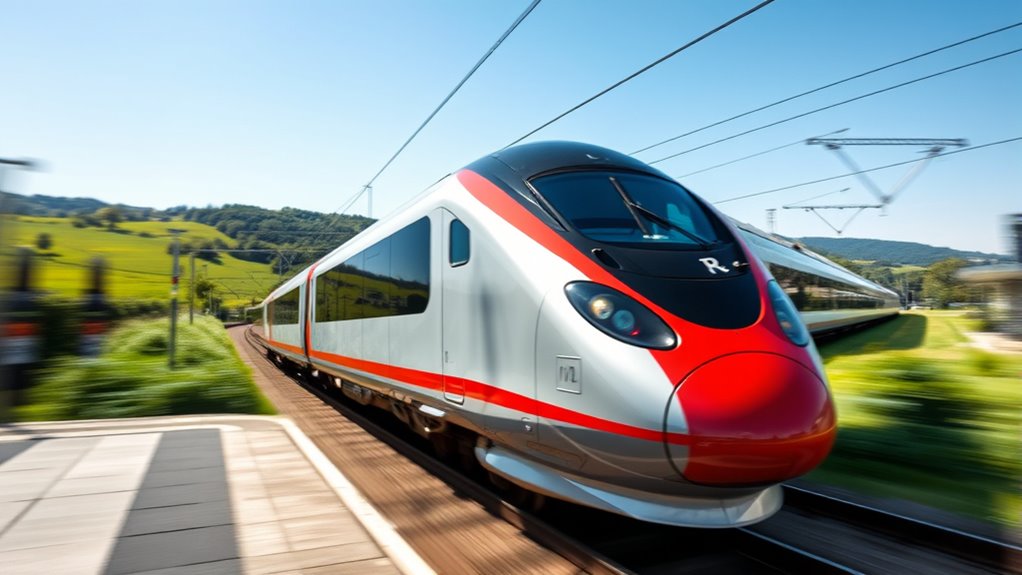
TGV trains can reach commercial speeds of up to 320 km/h, making them some of the fastest in the world. In 2007, a modified TGV set a world record by hitting nearly 575 km/h. Understanding the line speed limits and technological limits helps explain just how fast these trains can go. Proper maintenance and advanced train technology are crucial in achieving and sustaining such high speeds. Additionally, Free Floating design principles play a role in optimizing the stability and efficiency of high-speed rail systems. Innovations in energy savings & comfort contribute to the overall performance and passenger experience of high-speed trains. Moreover, lessons from South – These Fifty States demonstrate how integrating cultural elements and regional features can enhance infrastructural projects.
Top Operating Speeds
How fast can these high-speed trains actually go? TGV trains typically operate at speeds up to 320 km/h (199 mph) on dedicated lines, making your journeys incredibly quick. While most trips happen around 300 km/h (186 mph), the trains are designed to perform at higher speeds. In fact, a modified TGV set holds the world speed record of 574.8 km/h (357.2 mph). Here’s a quick look at their top speeds: high-speed operation. The trains use advanced railway technology to maintain such impressive speeds safely and efficiently. Their engineering and precise scheduling allow for optimal performance at these high velocities. The development of high-speed rail networks in France has transformed long-distance travel, making it faster and more environmentally friendly. Additionally, the trains are equipped with aerodynamic designs that reduce air resistance and enhance stability at high speeds.
| Speed Type | Max Operating Speed | Record Speed |
|---|---|---|
| Commercial Service | 320 km/h (199 mph) | 574.8 km/h (357 mph) |
| Typical Operating | ~300 km/h (186 mph) | — |
| Record Set | — | 574.8 km/h (357 mph) |
These speeds shorten your travel times dramatically, connecting you swiftly across France and beyond.
World Speed Record
Did you know that the TGV holds a world speed record that surpasses its usual operating limits? In 2007, a specially modified TGV set a staggering speed of 574.8 km/h (357.2 mph). This record wasn’t achieved during regular service but during a controlled test on a dedicated high-speed track. Engineers made significant modifications, including specialized aerodynamics and upgraded power systems, to push the train beyond its typical limits. The goal was to demonstrate the capabilities of high-speed rail technology and explore potential future advancements. While your everyday TGV trains operate comfortably at speeds up to 320 km/h, this record shows just how fast high-speed trains can go under ideal conditions. It’s a tribute to France’s leadership in rail innovation and engineering excellence. Advanced engineering techniques continue to evolve, promising even faster and more efficient trains in the future.
Line Speed Limits
Ever wonder what limits the speed of high-speed trains like the TGV? Several factors set the maximum speed. Track design and quality are critical; tracks must be precisely aligned and reinforced to handle high speeds safely. Signalling systems also play a role, ensuring trains maintain safe distances and operate smoothly. Infrastructure constraints, such as curves and gradients, limit how fast trains can go without risking derailment or discomfort. Safety regulations and maintenance standards further restrict maximum speeds to prevent accidents. While TGV trains can reach speeds of 320 km/h (199 mph), actual operating limits typically stay around 300 km/h (186 mph). These limits balance speed with safety, passenger comfort, and infrastructure capabilities, ensuring high-speed travel remains efficient and secure. Additionally, track conditions and ongoing maintenance are vital in maintaining safe high-speed operations.

BENEUNDER Travel Neck Pillow for Airplane, Inflatable Compact 360°Head Support Pillow, Comfortable Breathable Cover for Travel, Train,Car with Storage Bag, Black
[Provide Adjustable Precise Comfort]Beneunder Inflatable Neck Pillow can be adjusted to your preferred firmness through controling the air…
As an affiliate, we earn on qualifying purchases.
As an affiliate, we earn on qualifying purchases.
The TGV Network: Where Can You Travel?
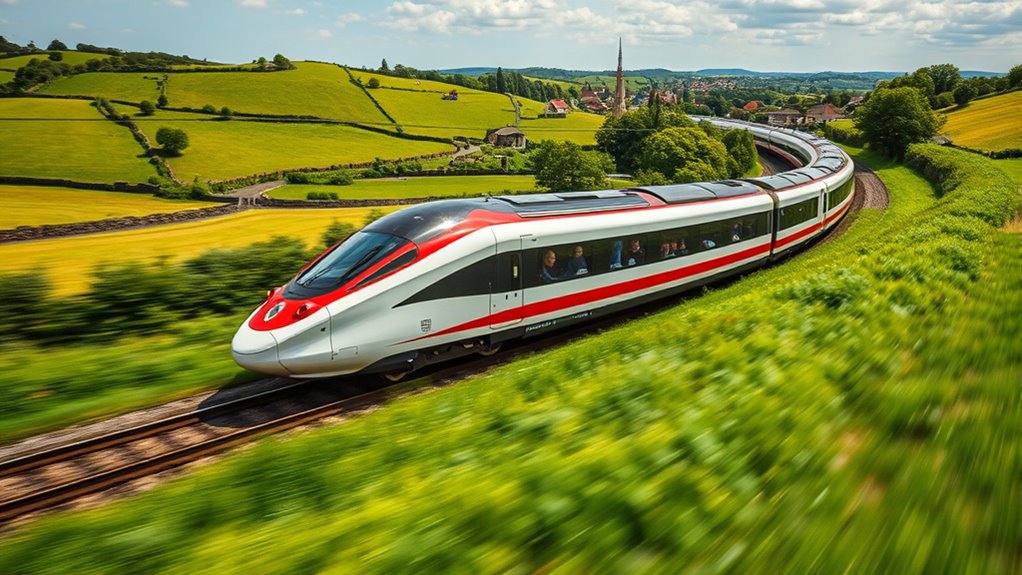
With the TGV network, you can easily reach major French cities like Paris, Marseille, and Bordeaux in just a few hours. It also connects you internationally to destinations such as London, Brussels, and Barcelona. Additionally, regional and suburban lines make it simple to explore nearby towns and suburbs across France. Discovering halal travel options is an important aspect of exploring France comfortably and respectfully. The network’s extensive coverage ensures seamless travel for all passengers, including those seeking trusted transportation options. For travelers interested in deep-sky imaging, the TGV’s reliable and fast connections make it convenient to access various astronomical observation sites across France. Furthermore, the TGV’s high-speed rail capabilities contribute to reducing travel time and increasing overall efficiency for passengers. This extensive network also promotes sustainable travel, helping to lower carbon emissions compared to other modes of transportation.
Major French Cities Served
The TGV network connects major French cities with fast, efficient train services, making travel across the country quick and convenient. You can easily reach key destinations like Paris, Marseille, Lille, Bordeaux, Strasbourg, Rennes, and Montpellier. The network also extends internationally, linking France to nearby countries. This extensive coverage allows you to:
- Travel between Paris and cities like Lyon, Nice, and Toulouse in just a few hours
- Explore regional hubs such as Nantes, Dijon, and Reims effectively
- Access international destinations like Brussels, London, Barcelona, and German cities
- Regular maintenance and high-speed operation enhance safety and reliability, ensuring a smooth journey for all passengers
With frequent departures and high speeds, the TGV guarantees you spend less time in transit and more time enjoying your destination. Whether for business or leisure, the network’s reach makes traveling across France and beyond seamless. Understanding high-speed rail benefits
International Destinations Connected
You can easily reach several neighboring countries using the TGV network, making international travel quick and hassle‑free. From Paris, you can hop on a TGV and arrive in Brussels in just about two hours, or reach London via Eurostar in roughly 2 hours 20 minutes. Traveling south, TGVs connect you to Barcelona in around six hours, crossing into Spain seamlessly. German cities like Frankfurt and Munich are accessible in about 3.5 to 4 hours, offering convenient options for business or leisure trips. The TGV’s international routes are well‑integrated, providing comfortable, fast journeys without the need for flights or long drives. This extensive network makes it easier than ever to explore Europe’s key destinations directly from France, opening up a world of possibilities for your travel plans. Understanding informal language can help you better navigate and enjoy diverse travel experiences across regions. Additionally, the TGV network employs advanced navigation and mapping technology to ensure smooth and efficient routes, similar to how smart home technology uses AI for optimized performance.
Regional and Suburban Lines
Ever wondered how the TGV serves beyond major cities? It extends its reach into regional and suburban areas, making high-speed travel accessible for more people. These lines connect smaller towns and suburbs to major hubs, reducing travel times and easing daily commutes. The network includes:
- Regional lines that link cities like Rennes, Strasbourg, and Bordeaux to larger urban centers.
- Suburban routes serving commuter belts around Paris, Lyon, and Marseille.
- Intercity connections that facilitate quick trips between nearby cities and towns, often with frequent departures.
This integration of high-speed services into everyday travel helps boost local economies and offers a convenient alternative to driving or flying. Whether you’re heading to a nearby city or exploring regional destinations, the TGV makes travel faster, smoother, and more connected.

EUROPE TRAIN TRAVEL GUIDE: Comprehensive Guide to European Rail Passes, Routes, High-speed Trains, Booking Tips, and Scenic Journeys
As an affiliate, we earn on qualifying purchases.
As an affiliate, we earn on qualifying purchases.
Key Features and Technical Details of TGV Trains

TGV trains feature a streamlined design optimized for high-speed travel, with two powerful electric locomotives—called power cars—at each end that generate up to 8,800 kW of power. They consist of eight passenger carriages, with a typical capacity of 377 seats, and weigh around 380 tonnes. Their aluminum construction keeps them lightweight yet durable. The trains reach speeds up to 320 km/h on dedicated lines, drastically reducing travel times. Their track and catenary systems are precisely aligned for stability at high speeds. To deepen your understanding, here’s a quick comparison:
| Feature | Details |
|---|---|
| Power Output | 8,800 kW |
| Max Speed | 320 km/h |
| Length | 200 meters |
| Capacity | 377 seats |
These features ensure a smooth, fast, and efficient journey.
What to Expect During Your TGV Journey
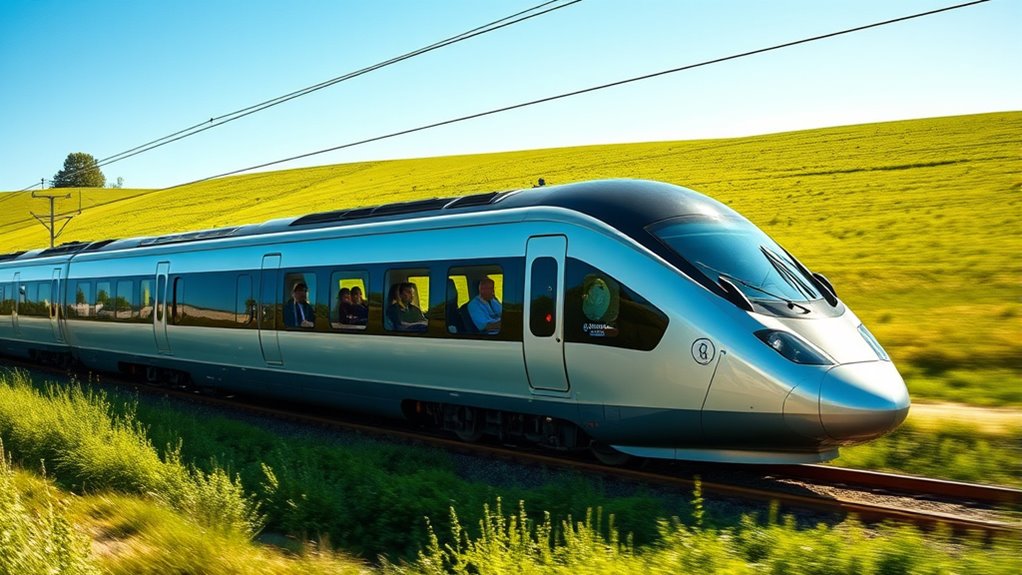
As you board the train, you’ll notice the sleek, modern design of the TGV interior, which is crafted to provide a comfortable and quiet ride even at high speeds. Expect spacious seats with ample legroom, climate control for your comfort, and large windows offering scenic views. During your journey, you’ll experience a smooth, almost silent ride thanks to advanced engineering and soundproofing. Be prepared for:
Experience a sleek, quiet ride with spacious seats, scenic windows, and modern comfort aboard the TGV train.
- Efficient onboard services, including clean restrooms and snack bars
- Clear, multilingual announcements keeping you informed
- Fast, reliable Wi-Fi for staying connected
The environment is designed for relaxation, so you can read, work, or enjoy the scenery without interruption. Overall, your TGV journey promises comfort, convenience, and a swift connection between destinations.
Connecting Cities and Countries by TGV
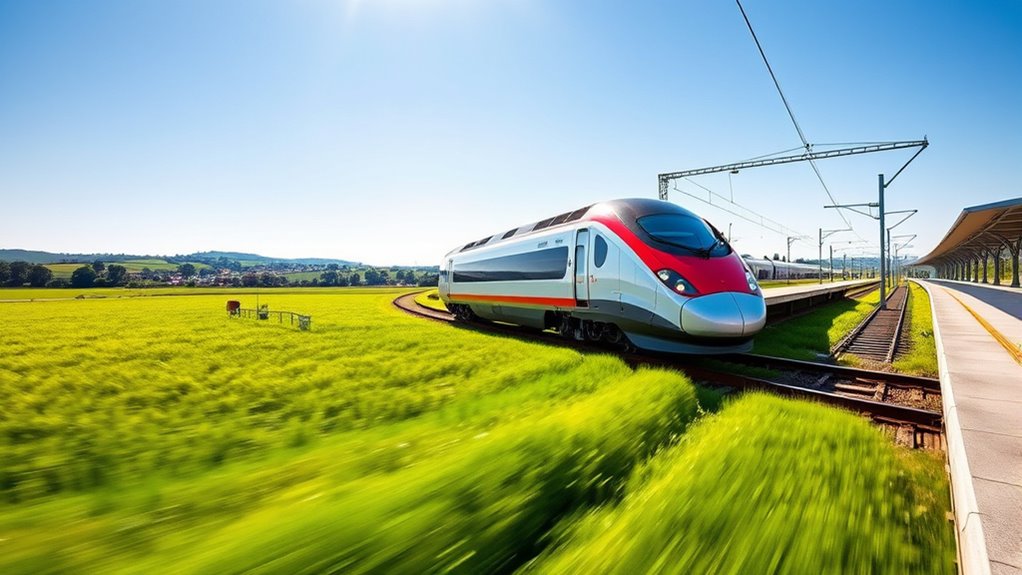
The TGV network seamlessly links major cities across France and extends into neighboring countries, making travel faster and more convenient than ever. You can easily reach Paris from cities like Marseille, Bordeaux, or Lille in just a few hours, saving time compared to driving or conventional trains. International routes connect France to Belgium, Luxembourg, Germany, and Spain, broadening your travel options. For example, a TGV takes you from Paris to Brussels in about 1 hour and 30 minutes or from Paris to Barcelona in under 6 hours. The Eurostar service connects London directly to Paris and Brussels via high-speed lines, streamlining cross-border travel. With this extensive network, you can plan seamless journeys across France and beyond, experiencing the ease and speed of modern high-speed rail travel.
The Future of High-Speed Rail in France
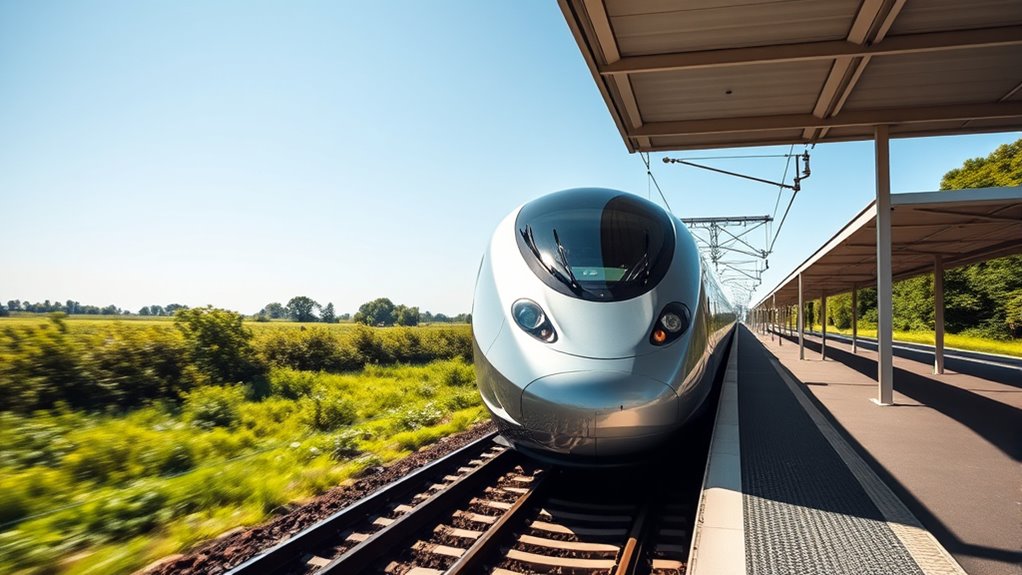
What does the future hold for high-speed rail in France? It’s poised for innovation and expansion. SNCF plans to extend the network with new lines connecting more cities and neighboring countries. Expect faster trains, possibly reaching 360 km/h or higher, thanks to advancements in track and train technology. Sustainable practices will play a bigger role, with green energy powering operations and efforts to reduce carbon footprints. Additionally, modernization will focus on passenger comfort and digital integration, making journeys more seamless and enjoyable.
- Introducing next-generation trains with enhanced speeds and energy efficiency
- Expanding international routes to strengthen Europe’s high-speed corridor
- Incorporating eco-friendly technologies to promote sustainability
These developments will guarantee that high-speed rail remains a crucial, innovative transport option for France and beyond.
Frequently Asked Questions
How Do I Buy Tickets for TGV Trains?
You can buy TGV tickets online through the official SNCF website or app, which is quick and convenient. Alternatively, visit ticket counters at train stations or use third-party travel sites. It’s best to book in advance to secure the best prices and seat options. When purchasing, select your departure and arrival cities, travel dates, and preferred times. After payment, you’ll receive your e-ticket or a printable ticket to show during your journey.
Are TGV Trains Accessible for Passengers With Disabilities?
Imagine gliding smoothly through France’s scenic landscapes, your journey comfortable and effortless—TGV trains are accessible for passengers with disabilities. You’ll find designated spaces, ramps, and accessible restrooms on most trains, making travel easier. Staff are trained to assist you, ensuring your experience is seamless. Just inform the staff when booking or boarding, and they’ll support you every step of the way, so you can relax and enjoy your high-speed adventure.
What Amenities Are Available Onboard TGV Trains?
Onboard TGV trains, you’ll find a range of amenities designed for comfort and convenience. You can enjoy spacious seats, power outlets, free Wi-Fi, and accessible facilities like designated spaces for wheelchairs. There’s also a café car offering snacks and drinks, clean restrooms, and luggage storage. The trains are quiet and smooth, making your journey relaxing. Whether you’re traveling for business or leisure, these amenities help guarantee a pleasant experience.
Can I Bring Luggage on the TGV?
Absolutely, you can bring luggage on the TGV—it’s practically a travel rite of passage. Just remember, there’s no need to bring your entire closet; reasonable baggage is welcomed, and space is ample. You’ll find dedicated areas for your bags, so you won’t trip over your suitcase or your dignity. Keep your luggage manageable, and enjoy your speedy, stress-free journey without turning the train into a moving storage unit.
Are There Discounts for Frequent Travelers or Seniors?
Yes, you can get discounts as a frequent traveler or senior. SNCF offers various fare options, including loyalty cards like the Carte Avantage, which provides savings for regular passengers and seniors over 60. These cards give you discounts on tickets, making travel more affordable. You just need to apply for the appropriate card online or at stations, and then show it when booking or boarding your TGV.
Conclusion
Starting on a TGV journey is like riding a lightning bolt through France’s vibrant landscape. With its blend of speed, comfort, and innovation, you’ll discover that high-speed rail isn’t just travel—it’s a gateway to endless adventures. As the tracks stretch forward, so does the promise of a connected, sustainable future. So, buckle up and enjoy the ride—your French adventure awaits, faster than you ever imagined.