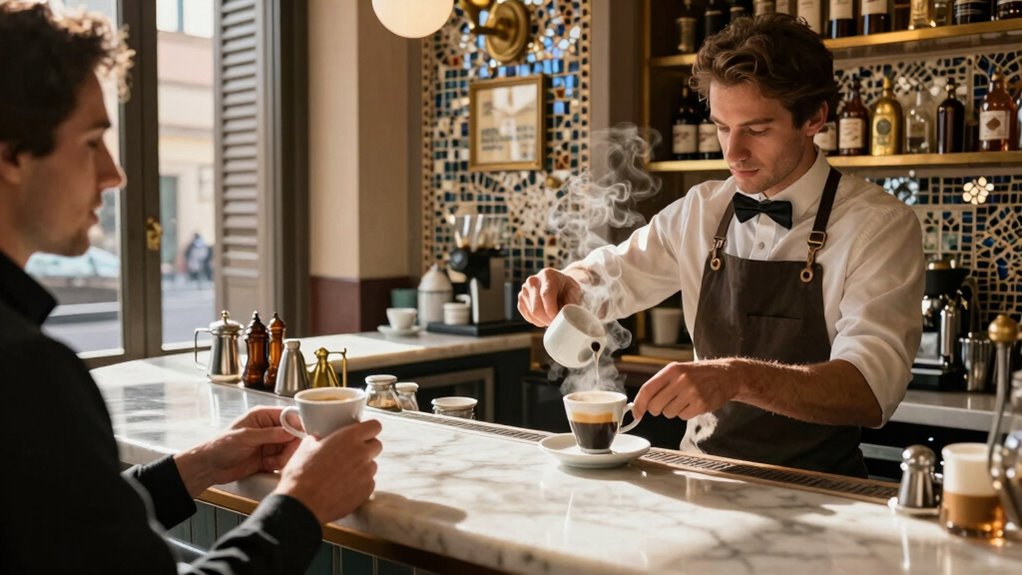

When ordering coffee in Italy, greet with “Buongiorno” and keep your order simple with “Vorrei un…” plus the coffee type, ending with “per favore.” Whether you stand at the counter for a quick shot or sit at a table for a relaxed experience, remember to pay first and avoid tipping. Timing matters—avoid milk-based drinks after breakfast, and always respect local customs. If you want to master polite, authentic coffee orders, there’s more to learn.
Key Takeaways
- Greet with “Buongiorno” and order briefly, such as “Vorrei un caffè, per favore.”
- Stand at the counter for quick espresso, or sit at a table for a relaxed experience with waiter service.
- Avoid requesting large sizes; espresso is served in a small cup, emphasizing tradition.
- Consume milk-based coffees like cappuccino mainly in the morning, and prefer espresso after meals.
- Tipping is not customary; politeness and efficiency are more valued than gratuities.

ionEgg Porcelain Espresso Cup with Saucer And Stainless Steel mini Spoons, Espresso shot Cup, 80ml/2.7Oz, Pack of 2, Yellow
Perfect capacity for a cup of espresso. Each espresso shot cup holds 2.7 Oz (80ml) . Works great…
As an affiliate, we earn on qualifying purchases.
As an affiliate, we earn on qualifying purchases.
The Proper Way to Place Your Order
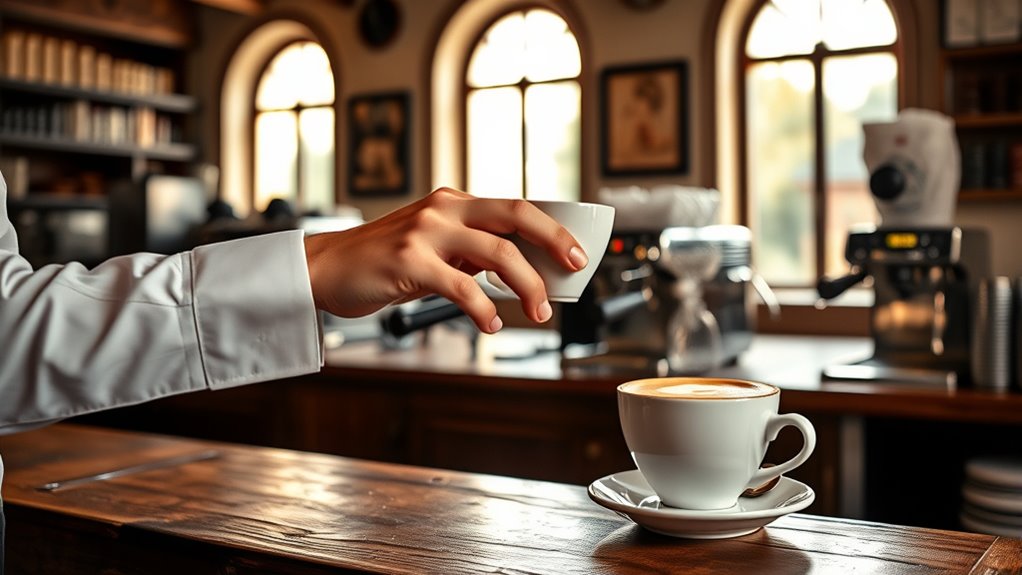
When ordering coffee in Italy, it’s important to follow a clear and polite process. First, greet the barista with a friendly “Buongiorno,” and use “Vorrei un…” followed by the coffee type and “per favore.” Keep your order short and to the point since service is fast. Usually, you pay at the cashier first, get a receipt, then present it at the counter for your drink. Alternatively, some bars serve the coffee first with a slip, and you pay afterward at the till. Remember, no tipping is expected in traditional bars. Be respectful of the quick pace, and don’t linger too long, especially if standing at the counter. Your politeness and efficiency help ensure a smooth ordering experience. Understanding the importance of personal finance management can help you navigate transactions smoothly and avoid any misunderstandings.

Hlukana Porcelain Espresso Cups Set of 4, 3.5 oz Small Coffee Mugs, White Demitasse Cups Perfect for Espresso Machine and Coffee Maker, Microwave Dishwasher Safe Espresso Cups
【Lovely Capacity for Espresso Lovers】 – Set of four 3.5-ounce white espresso cups set, working great with all…
As an affiliate, we earn on qualifying purchases.
As an affiliate, we earn on qualifying purchases.
Understanding the Serving Styles and Seating Norms
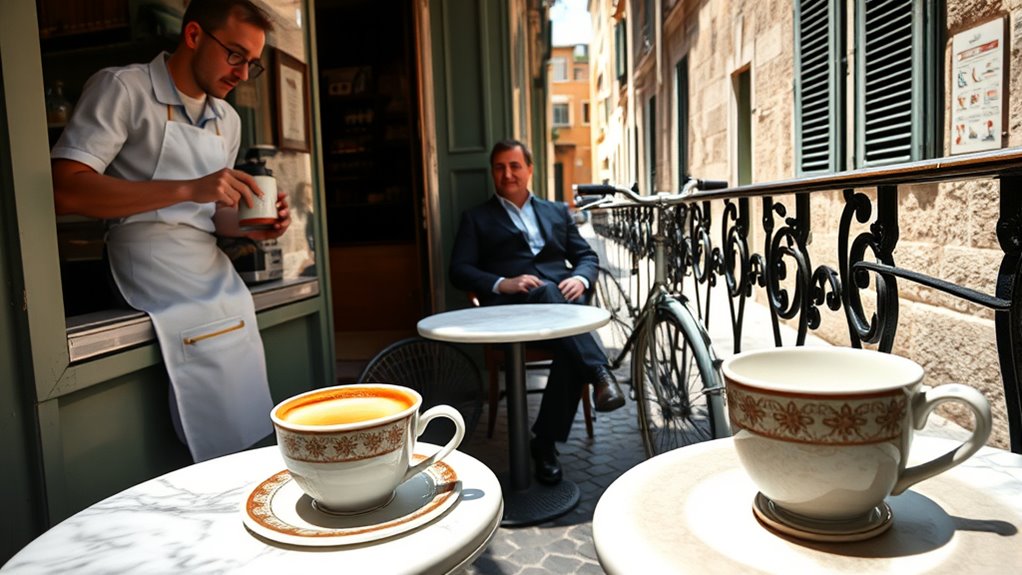
In Italy, the way you enjoy your coffee depends on the serving style and seating option you choose. If you’re in a hurry or want a quick caffeine fix, stand at the counter (“al banco”) and sip your espresso in under five minutes. This is common among locals and cheaper. If you prefer to relax, sit at a table (“al tavolo”) with waiter service. Be prepared for higher prices, often double the counter cost. Tourists tend to linger longer at tables, while locals stick to quick stops at the counter. Remember, laptops aren’t welcome at the counter, respecting Italy’s fast-paced culture. Whether standing or sitting, keep your visit brief unless you plan to relax at a table. This balance reflects Italy’s coffee customs and social rhythm. Additionally, many cafes utilize energy-efficient appliances to maintain sustainability while serving customers efficiently, aligning with Italy’s growing eco-conscious efforts.

Agatige Chef Figurines Toothpick Holder, Resin Toothpick Dispenser with Italian Chef Statue Italian Restaurant Decorations for Kitchen Counter Restaurant Coffee Shop Decor
TOOTHPICK HOLDER RESTAURANT DECORATION — Resin chef statue toothpick holder can be used as kitchen decoration, table decoration…
As an affiliate, we earn on qualifying purchases.
As an affiliate, we earn on qualifying purchases.
The Coffee Sizes and Cup Expectations

Italian coffee sizes are standardized, so you won’t find large or customizable options like in other countries. When you order an espresso, expect a small, demitasse cup filled with a concentrated shot. Cappuccinos come in rounded, bowl-like cups, also modest in size. There’s no “extra-large” or “venti” option; the focus is on quality and tradition, not quantity. You simply order your preferred type—“un caffè,” “un cappuccino,” or “un macchiato”—without specifying size. Cups are traditional and straightforward: small for espresso, larger but still modest for cappuccino. Expect no oversized mugs or customizable sizes. The emphasis is on enjoying the coffee in its authentic form, respecting the simple, functional cup shapes that have shaped Italy’s coffee culture for generations. This approach aligns with the Italian appreciation for cultural authenticity, emphasizing quality over quantity. Additionally, many establishments prioritize standardized serving sizes to maintain consistency and uphold tradition. Understanding these cultural norms can greatly enhance your experience and appreciation of Italian coffee. Recognizing the importance of tradition helps visitors embrace the authentic coffee experience that Italians cherish. Moreover, respecting these norms demonstrates an understanding of Italy’s culinary heritage, enriching your overall cultural experience.

DOFQQG Travel Electric Kettle Small, Collpasible Electric Kettle, Portable Tea Kettle + Paperless Collapsible Pour Over Coffee Dripper, Travel Pour Over Coffee Maker Camping Single Cup (Black)
[Ultra-thin Folding and Ultra-light]The collapsible kettle folded size:5.9"X5.5"x1.9",N.W.:0.95lb and the collapsible coffee dripper folded size:4.13"X4.13"x0.63",N.W.:0.14lb. With the ultra-thin…
As an affiliate, we earn on qualifying purchases.
As an affiliate, we earn on qualifying purchases.
When and What to Drink: Timing and Beverage Choices
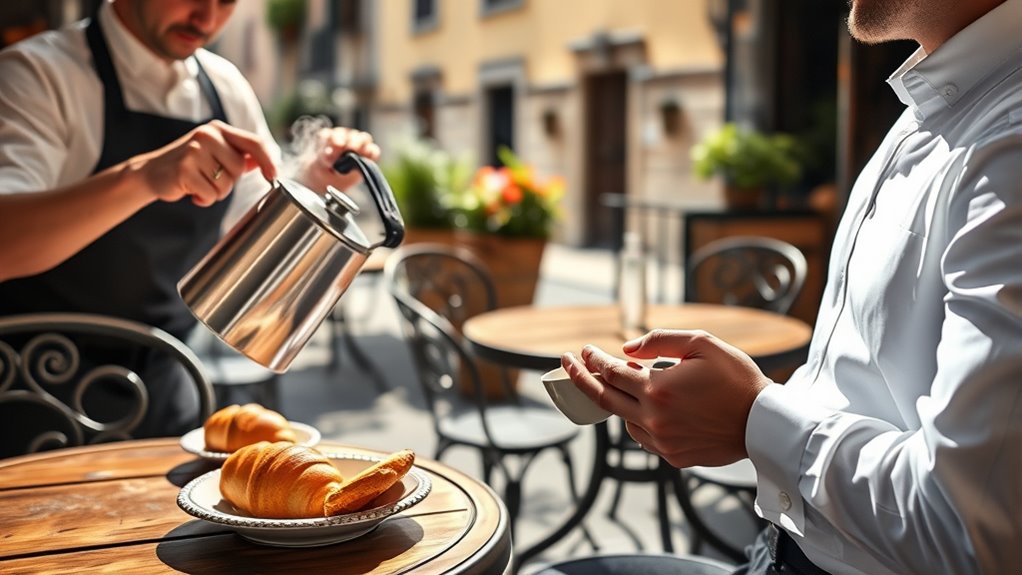
Timing plays a essential role in choosing your coffee in Italy, as locals follow specific customs that reflect daily routines. In the morning, you can enjoy a cappuccino or latte at breakfast, but after 11 a.m., Italians usually avoid milk-based coffees, considering them breakfast items. Instead, opt for an espresso or macchiato after meals, especially lunch or dinner. Drinking a cappuccino later in the day might draw curious glances. For quick, everyday moments, stand at the counter and order a simple “un caffè,” which is an espresso. In tourist areas or for lingering conversations, sit at a table, but expect to pay more. Remember, Italians value timing and simplicity—enjoy your coffee at the right moment to embrace the authentic experience. Additionally, some establishments may have specialized coffee offerings that cater to local preferences and customs. Being aware of local coffee customs can help you navigate social cues and enhance your overall experience. For example, many venues also follow precise serving times, reflecting the importance of timing in Italian coffee culture. It’s also common for locals to appreciate a quiet, relaxed atmosphere when enjoying their coffee, which influences how establishments are set up.
Cultural Etiquette and Tips for a Respectful Coffee Experience

Respecting local customs enhances your coffee experience in Italy. Italians value efficiency, tradition, and modesty during coffee breaks. To show regard:
- Greet with “Buongiorno” before ordering, and use “Vorrei un…” plus the coffee type with “per favore.”
- Keep your order simple and quick; linger too long or ask for complicated customizations.
- Avoid tipping in traditional bars; it’s not customary here.
- Be mindful of the Free Floating approach to social interactions, which emphasizes respecting personal space and the unspoken flow of service.
When standing at the counter (“al banco”), enjoy your espresso quickly and move on. Sitting at a table (“al tavolo”) means slower, more relaxed service. Remember, milk-based drinks are only before 11 a.m. and avoid post-lunch cappuccinos. Respect the pace and tradition—your mindful approach ensures an authentic, respectful Italian coffee experience.
Frequently Asked Questions
Can I Customize My Coffee Order Beyond Traditional Options?
You can’t really customize your coffee beyond the traditional options in Italy. Keep your order simple and clear, like “Un cappuccino, per favore,” without requesting extra flavors or large sizes. Italians value authenticity and tradition, so complex modifications aren’t common. If you want something specific, ask politely, but be prepared for a straightforward, traditional serve. Stick to classic choices to avoid confusion and show respect for local customs.
Is It Acceptable to Sit at a Table Without Ordering Food?
Yes, you can sit at a table without ordering food, but it’s not always expected, especially in busy or tourist areas. Italians often sit for a coffee and leave quickly, so lingering without ordering more might seem odd. If you plan to stay longer or order more drinks, politely ask if it’s okay. Just remember, in many places, coffee is meant to be quick, so respect the local rhythm.
How Do I Pay if I Order at the Counter?
When you order at the counter, you pay first, then receive a receipt. Imagine the quick exchange—your coffee ready in moments, a slip exchanged. You pay at the cashier, often right after ordering, and then present your receipt at the counter for service. This swift process keeps things moving, letting you enjoy your espresso without fuss. Just remember, no tipping is expected in traditional bars.
Are There Any Specific Tips for Ordering in Non-Tourist Areas?
In non-tourist areas, keep your order simple and polite. Greet with “Buongiorno” and use “Vorrei un…” to specify your coffee. Pay at the cashier first, then present your receipt at the counter. locals stand quickly for their espresso, so keep your order concise. Remember, avoid large sizes or complex customizations, and don’t expect to linger too long—locals value fast, efficient service.
Can I Take My Coffee To-Go in Italy?
Yes, you can take your coffee to-go in Italy, but it’s not common or traditional. Italians prefer to enjoy their coffee at the bar or at a table, savoring the moment. If you want a takeaway, ask politely by saying, “Caffè da portar via,” but be aware that many bars don’t offer paper cups. Most locals finish their coffee quickly on-site, embracing the café culture.
Conclusion
Now that you know the unspoken rules, imagine stepping into a lively Italian café. The aroma of fresh espresso fills the air as locals share knowing smiles. You place your order, feeling confident, but will you notice the subtle glances when you sit down? With these secrets in mind, you’re about to experience coffee like never before—where every sip, every gesture, tells a story. Are you ready to join the tradition?