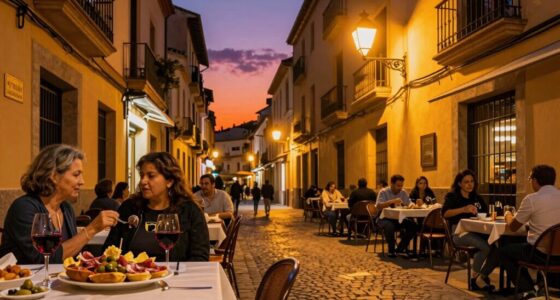

In Italy, meal times are well-structured to keep you energized and social. Breakfast is quick and light, usually before 9 a.m., while lunch is the main, relaxed meal between 12:30 and 2 p.m. You’ll find a late afternoon snack, called merenda, around 4-5 p.m., to bridge to dinner. Dinner tends to start later, around 7:30 to 9:30 p.m., especially in the south. Keep exploring to learn how regional customs may shape your experience.
Key Takeaways
- Italy’s main meal is lunch, between 12:30 p.m. and 2 p.m., so plan accordingly to avoid hunger.
- Dinner typically starts around 7:30 p.m. and can be later in the south, ensuring you eat before 5 p.m. is unnecessary.
- The mid-afternoon snack (merenda) around 4-5 p.m. helps bridge the gap before dinner, so you’re not starving at 5 p.m.
- Breakfast is light and early, often skipped or quick, with no large meals before midday.
- Understanding regional variations helps you anticipate meal times and avoid hunger during the late afternoon.
Understanding Breakfast in Italy
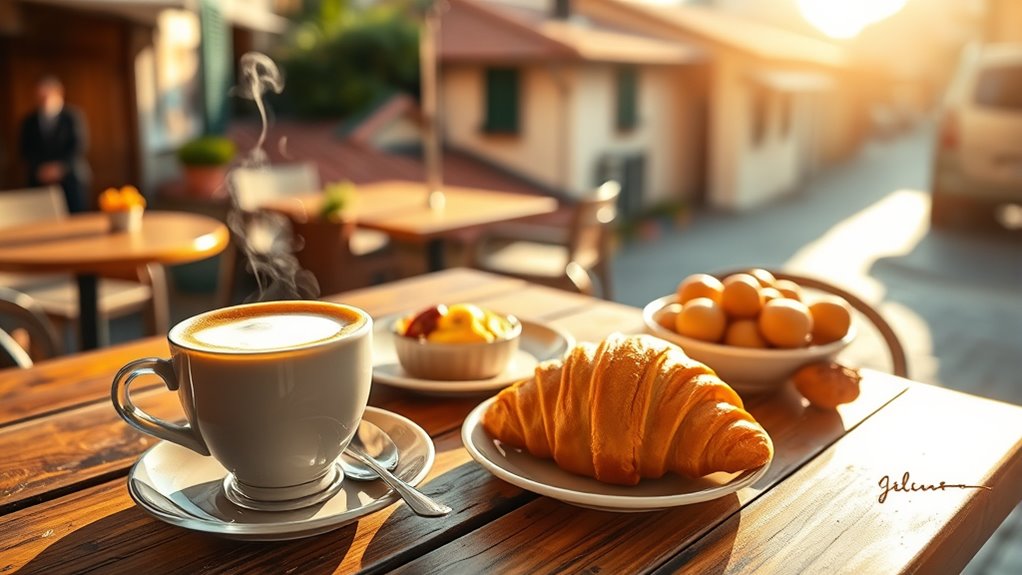
In Italy, breakfast is typically a quick and simple meal, often enjoyed before heading to work or school. You’ll usually have it between 7 a.m. and 9:30 a.m., and it’s often light or even skipped, especially in the Mediterranean style. Most Italians start their day with a cappuccino or coffee paired with a small pastry like a croissant or biscuit. You’ll find bars serving breakfast throughout the morning hours, making it easy to grab a quick bite on the go. Breakfast isn’t a big, leisurely event; rather, it’s a quick ritual that energizes you for the busy day ahead. Many consider it an essential part of the morning routine, but it’s kept simple and straightforward.
When Italians Lunch and What It Entails
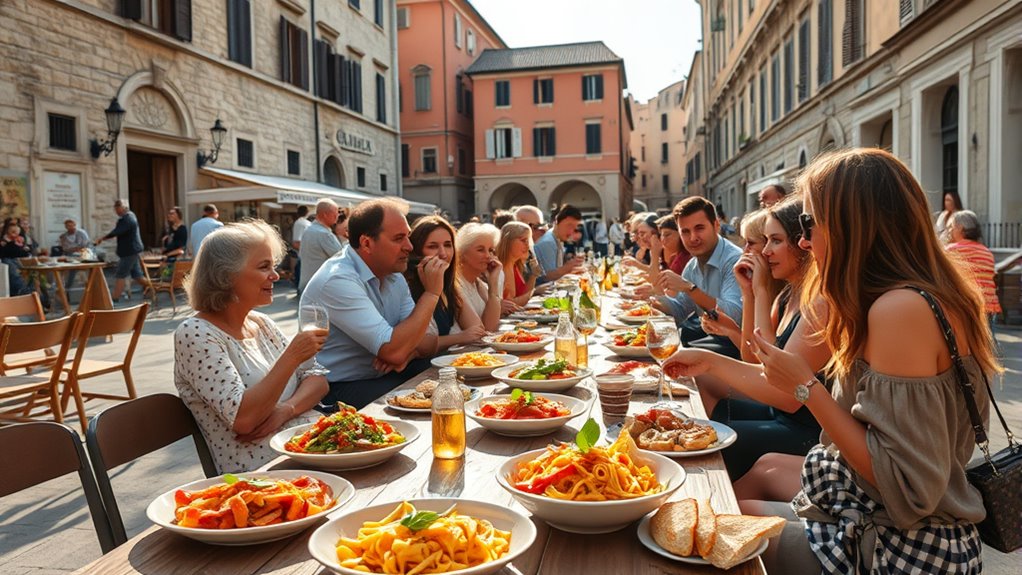
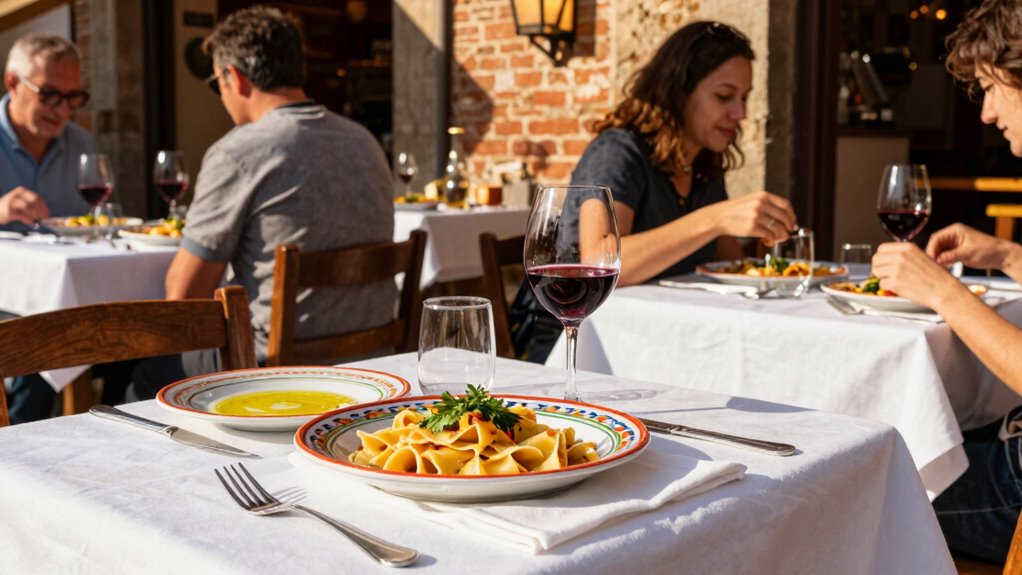
Lunch in Italy typically happens between 12:30 p.m. and 2 p.m., and it’s considered the most important meal of the day. During this time, you’ll find restaurants open from noon to 2:30 p.m., often closing afterward. The meal usually lasts at least an hour, giving you a chance to relax and enjoy family or friends. It includes dishes like primo (pasta or rice), secondo (meat or fish), contorno (vegetables), and fresh fruit. Italians value quality and tradition, so lunch is a nourishing, social event. To understand it better, check this table:
| Course | Typical Dishes |
|---|---|
| Primo | Pasta, risotto, soups |
| Secondo | Meat, fish, poultry |
| Contorno | Salads, roasted vegetables |
| Fruit | Seasonal fresh fruit |
Additionally, meal structure reflects Italy’s emphasis on balanced, multi-course dining that nurtures both body and social bonds. It’s also common for family members to take a longer break during lunch to enjoy the meal and conversation, which is a cultural tradition deeply rooted in Italian life.
The Popular Afternoon Snack: Merenda
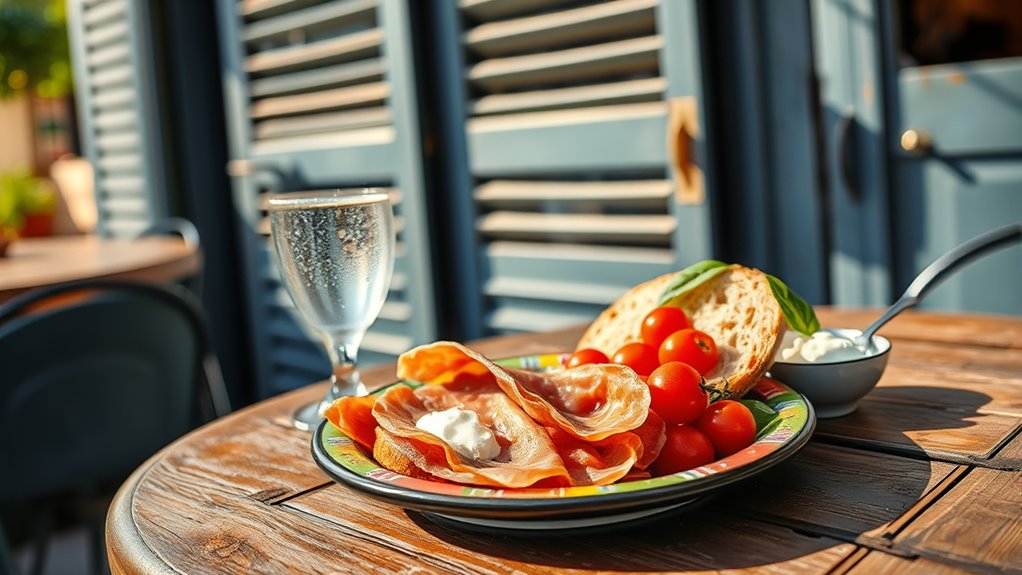
In Italy, merenda is a cherished afternoon snack that keeps you energized until dinner. You’ll often enjoy treats like bread with Nutella, cake, or fresh fruit around 4 or 5 p.m. This quick pause not only satisfies hunger but also holds cultural significance, marking a relaxed moment in the day. Many traditional varieties of snacks, such as fresh fruit or baked goods, are chosen to complement the well-drained soil and full sun conditions ideal for growing the ingredients used in these treats. Incorporating Glycolic acid into skincare routines can help refine skin texture, much like how choosing the right ingredients enhances the quality of traditional snacks. It’s also important to ensure that any packaged snacks or ingredients are halal certified, which reflects the importance of respecting cultural dietary practices. Additionally, selecting snacks that are screened for health safety helps maintain the quality and safety of your merenda.
Typical Merenda Treats
During the mid-afternoon, Italians enjoy a merenda as a tasty and satisfying snack to bridge the gap between lunch and dinner. You’ll often find simple, comforting treats like a slice of bread with Nutella or jam, fresh fruit such as apples or grapes, or a small pastry like a cornetto. Coffee or tea are common beverages, providing a quick energy boost. In warmer months, gelato becomes a popular choice, especially near beaches or town squares. Children love their little sweets or sandwiches, while adults might savor a biscotto or a piece of cake. Recognizing traditional meal times can help you better understand Italian daily routines. Additionally, the cultural significance of merenda highlights its role as a cherished social occasion in many communities. For optimal enjoyment, some families choose snacks with colorful presentation, making the merenda both delightful and appealing. Incorporating attention to detail in presentation can elevate the snack experience and make it more enjoyable. In some regions, the energy content of snacks is carefully considered to maintain a balanced diet.
Timing and Cultural Significance
The timing of merenda typically falls between 4 and 5 p.m., serving as an essential pause in Italians’ daily schedule. This snack balances the afternoon, preventing hunger from disrupting dinner plans. Culturally, merenda offers a moment to relax, socialize, or grab a quick energy boost before evening activities. It’s flexible across regions—some prefer a simple piece of fruit or bread, while others enjoy a sweet treat like Nutella or cake. In coastal areas, gelato becomes popular during warm weather. Merenda also reflects Italy’s appreciation for savoring small pleasures and maintaining social bonds. It’s more than just a snack; it’s a cherished part of daily life, reinforcing the importance of taking a break and enjoying something sweet or comforting before the evening meal. Additionally, the timing of merenda demonstrates Italy’s emphasis on balancing work, leisure, and social interaction, which is an integral part of Italian lifestyle and cultural traditions. Maintaining daily routines like merenda helps uphold Italy’s rich cultural heritage and social fabric. Furthermore, incorporating local ingredients into merenda showcases regional culinary traditions and enhances the cultural experience.
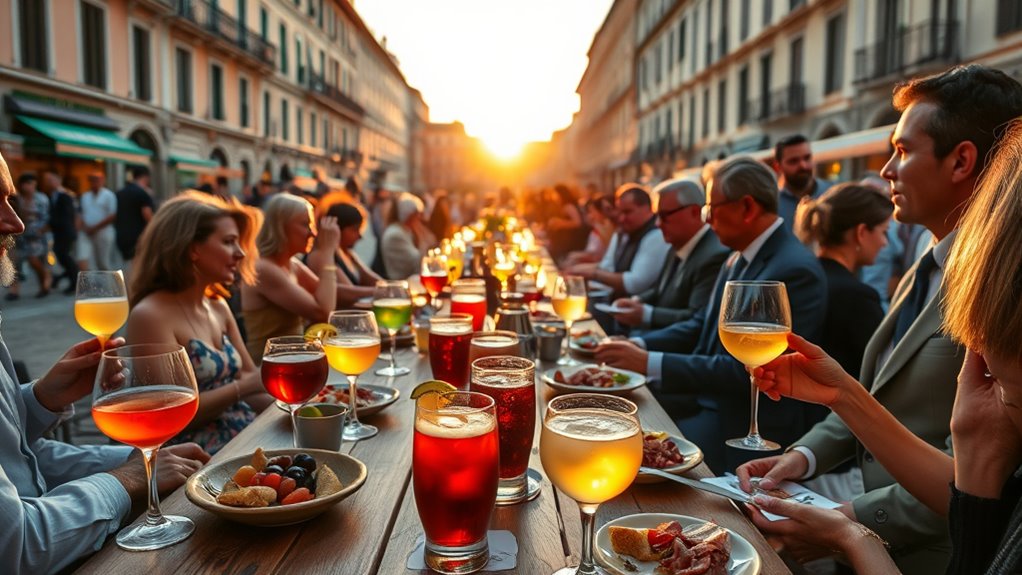
Aperitivo hour serves as a lively social ritual that signals the change from work to evening relaxation. During this time, you gather at bars or cafes to unwind with friends or colleagues. You’ll typically enjoy a drink—sometimes an Aperol spritz, wine, or soft drink—paired with small bites like nuts, olives, or bruschetta. It’s less about drinking heavily and more about socializing, catching up, and easing into the evening. This tradition helps you shift smoothly from your busy day, creating a relaxed atmosphere before dinner. While not a daily habit for everyone, aperitivo is a cherished part of Italian culture, especially on Fridays or special occasions, fostering connection and setting the tone for a pleasant night ahead. Affiliate disclosure An understanding of meal timing customs can enhance your appreciation of this convivial tradition, which often aligns with specific cultural dining practices.
Dinner Time: How Italians Dine After Sunset
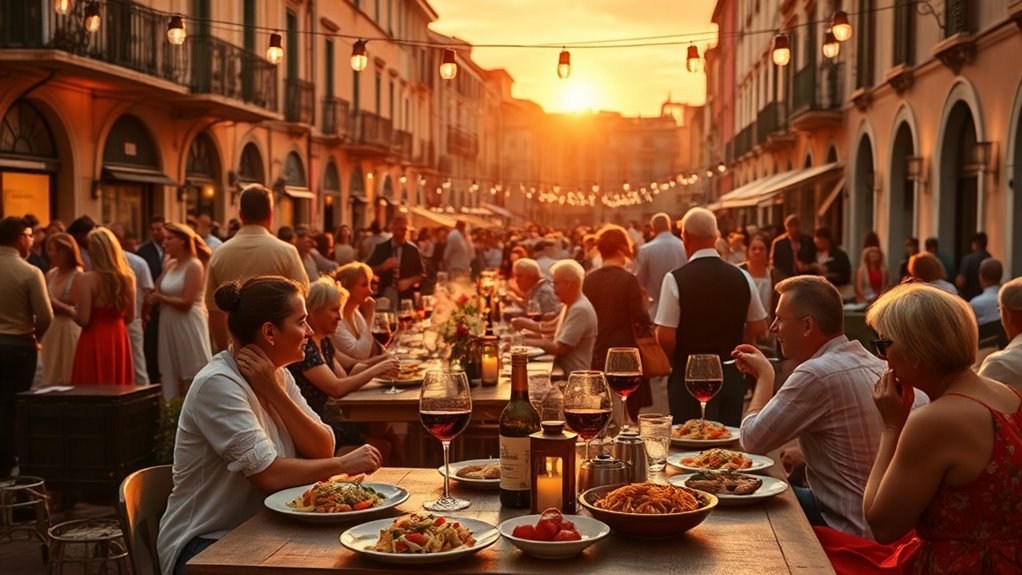
As the evening settles in, Italians shift from socializing over drinks to settling into their main meal of the day. Dinner usually begins around 7:30 p.m. to 9:30 p.m., depending on the region. In the north, you might eat closer to 7 or 8 p.m., while in the south, dinner often starts later, around 8:30 or 9 p.m. or even later. The meal tends to be lighter than lunch, focusing on a primo (pasta or rice), a secondo (meat or fish), and a contorno (vegetables). Italians savor the long, relaxed atmosphere, often enjoying multiple courses. Restaurants reopen around 7 p.m., but many locals prefer eating later, especially in cities like Rome. Dinner is a cherished time for family and friends to connect after sunset. Additionally, the timing of dinner reflects Italy’s emphasis on unhurried, convivial dining experiences.
Regional Variations in Meal Times Across Italy
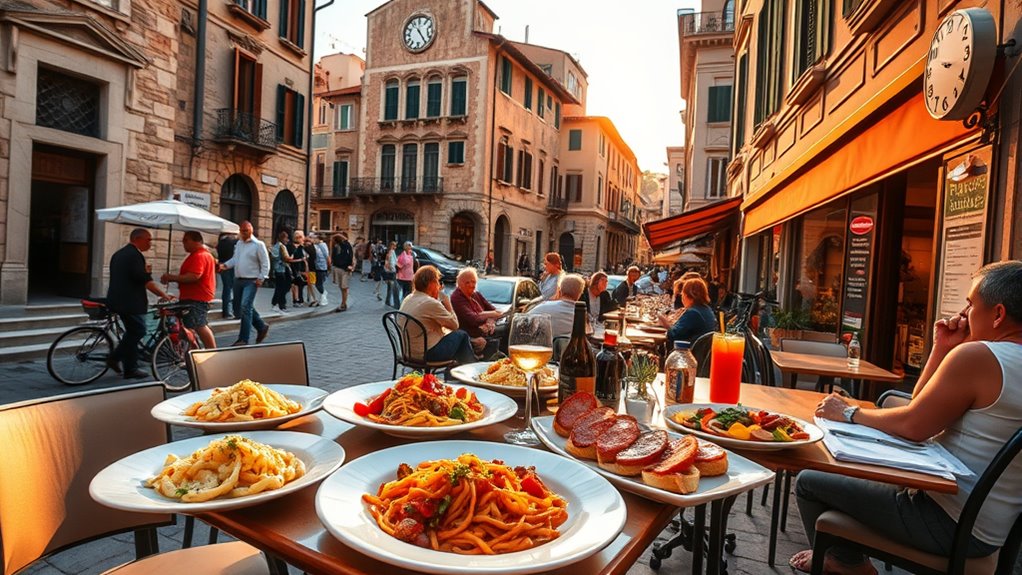
You’ll notice that dinner times vary across Italy, with northern regions like Milan preferring earlier evenings around 7-8 p.m., while the south often eats as late as 8:30-10 p.m. In rural areas, meal schedules tend to be more traditional, aligning closely with natural daylight hours. These regional differences reflect local customs, lifestyles, and even the pace of daily life.
Northern Early Dinners
In northern Italy, dinner times tend to be earlier than in other regions, with many restaurants serving their first courses around 7 or 7:30 p.m. You’ll find locals dining sooner, often starting with a primo like pasta or risotto, followed by a secondo. This earlier schedule suits the busy urban lifestyle, especially in cities like Milan. To illustrate regional differences, here’s a comparison:
| Region | Typical Dinner Time | Common Dishes |
|---|---|---|
| Milan | 7-8 p.m. | Risotto, Polenta |
| Veneto | 7:30-8 p.m. | Seafood, Cicchetti |
| Piedmont | 7-8 p.m. | Bagna Cauda, Vitello Tonnato |
| Lombardy | 7-8 p.m. | Osso Buco, Polenta |
| Trentino-Alto Adige | 6:30-7:30 p.m. | Sausages, Knödel |
This schedule keeps dinner earlier, especially in the north’s bustling cities. Additionally, understanding regional meal times helps travelers better plan their dining and avoid missing traditional local dishes. Recognizing the importance of cultural variations in mealtime habits can also deepen your appreciation of regional customs. Furthermore, regional eating habits reflect historical and social influences that shape daily life in Italy.
Southern Late Evenings
Southern Italy embraces a especially later dining schedule, with many locals savoring dinner well into the night. You’ll often find restaurants filling up around 8:30 or 9 p.m., sometimes even later. Dinner tends to be a relaxed, social affair, lasting for hours, especially during festivities or weekends. Unlike the north, where dinner starts earlier, in the south, you might find people arriving at restaurants after 9 p.m. and staying until late. This late-night rhythm reflects the warm climate and vibrant social culture. If you’re visiting, expect dinner to be a leisurely experience, often including multiple courses. Embrace the laid-back pace, and don’t worry about eating late—it’s just part of Southern Italy’s lively, welcoming atmosphere. Additionally, the region’s regional variations in meal times highlight how local customs influence daily routines and social interactions. Interestingly, these late dining habits also align with the region’s emphasis on biodiversity hotspots, where natural environments support a rich cultural and social life. Moreover, many locals enjoy a pre-dinner aperitivo, which further extends the evening socialization and enhances the regional dining experience. Furthermore, the local culinary traditions often revolve around fresh, seasonal ingredients enjoyed during these extended meals.
Rural Meal Schedules
Rural areas across Italy often follow more traditional and variable meal schedules compared to urban centers. In the countryside, meal times tend to be influenced by agricultural routines and local customs, making them less rigid. Breakfast is usually simple and early, around 7 to 8 a.m., with locals preferring coffee and bread. Lunch, the main meal of the day, generally occurs between 1 and 2 p.m., often lasting longer as families gather. Dinner is typically later, around 8 to 9 p.m., especially in southern regions. In Tuscany or other countryside areas, dinner might start even earlier or later based on tradition. These schedules reflect a slower pace of life, emphasizing family, local produce, and community rhythms over strict clock times.
Tips for Dining Like a Local
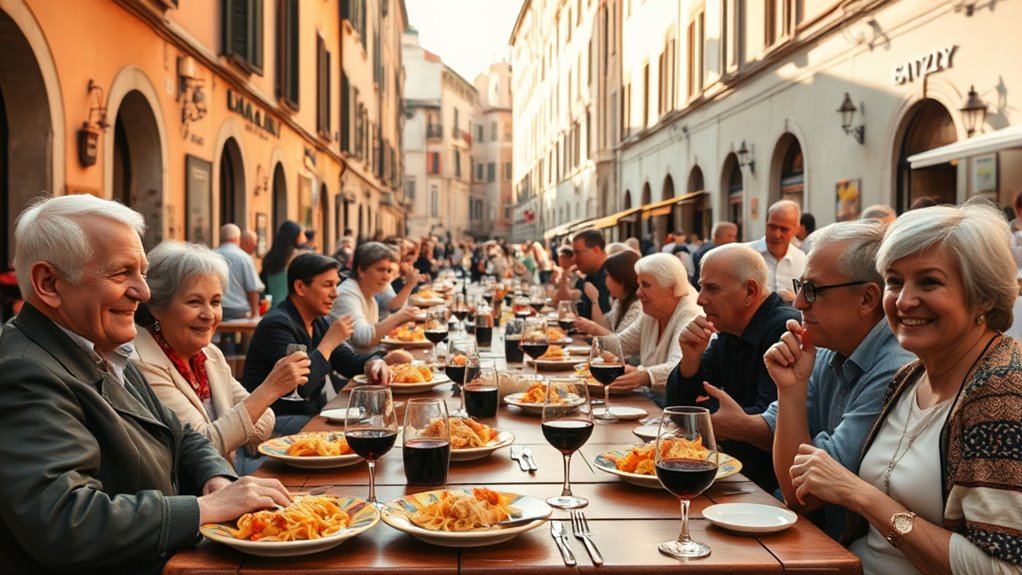
To truly dine like a local in Italy, it’s essential to embrace the country’s relaxed yet structured meal times and social customs. Respect the timing of each meal—don’t rush lunch or dinner, and arrive during the typical hours to experience authentic dining. When dining out, choose small trattorias or family-run places rather than tourist spots, as they offer genuine local flavors. Engage in conversation with your server or fellow diners; Italians value social connection during meals. Remember, dinner often starts late, around 8:30 or 9 p.m., so plan accordingly. Savor each course slowly, appreciating fresh ingredients and regional specialties. By respecting these customs, you’ll enjoy a more immersive and authentic Italian dining experience.
Why Meal Times Are Important in Italian Culture
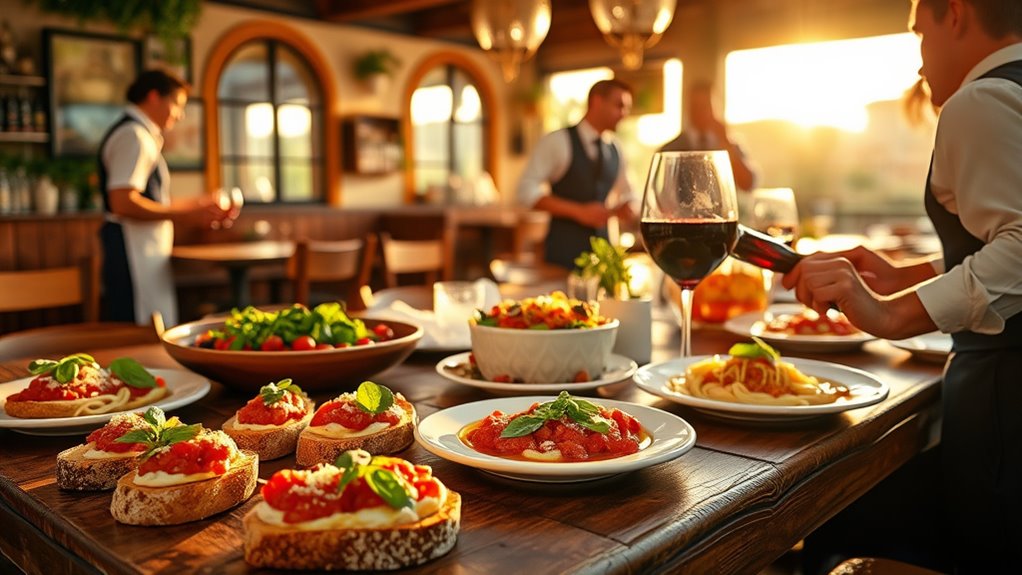
Meal times in Italy are more than just a schedule—they are a reflection of the country’s social fabric and cultural values. These moments emphasize connection, family, and tradition. Sharing a meal isn’t just about eating; it’s about bonding and honoring relationships. Italians view meal times as a chance to slow down and enjoy life’s simple pleasures. Punctuality shows respect for others’ time, especially during lunch and dinner, which are seen as important gatherings. Meals also mark the rhythm of daily life, balancing work, family, and leisure. By observing these times, you gain insight into Italian priorities: quality time, community, and savoring good food. This cultural approach fosters a sense of belonging and reinforces their love for tradition and togetherness.
Navigating Meal Times as a Tourist

Understanding Italy’s meal times is essential for making the most of your visit, as they shape the daily rhythm and dining customs. To avoid missing out or feeling out of place, plan your meals accordingly. Restaurants often open for lunch around noon and close in the early afternoon, then reopen for dinner around 7:30 p.m. or later, especially in the south or during peak hours. If you’re hungry between meals, enjoy an aperitivo around 6 p.m. or grab a quick snack like gelato or bread with Nutella. Be flexible and respectful of local customs—don’t expect restaurants to serve dinner early, and try to dine during traditional hours to experience authentic Italian cuisine. Knowing these timings helps you blend in and enjoy your culinary adventures seamlessly.
Frequently Asked Questions
Do Italians Eat Breakfast at Home or Outside?
You’ll find that Italians often enjoy breakfast outside their homes, especially in bars where they grab a quick cappuccino or coffee with a small pastry. Many start their day with this ritual before heading to work or school. However, some prefer having breakfast at home, especially on weekends or in rural areas. Overall, grabbing breakfast at a bar is a common, social way to start the day.
Are Dinner Times Flexible for Tourists?
Dinner times in Italy are quite flexible for tourists, especially in popular cities. While locals often dine later, around 8:30 to 10 p.m., many restaurants catering to tourists open earlier, starting around 7 p.m. You can comfortably enjoy dinner at a time that suits your schedule. Just remember, some smaller or traditional spots might close between the typical Italian dinner hours, so it’s best to check ahead.
What Are Typical Italian Dinner Dishes?
Italian dinner dishes are a culinary masterpiece, showcasing flavors that will blow your mind. You’ll typically indulge in pasta like silky gnocchi or rich risotto, followed by flavorful second courses such as tender veal or fresh seafood. Don’t forget the contorno of seasonal vegetables and a splash of fine olive oil. Finish with a luscious gelato or traditional tiramisu. These dishes turn dinner into an unforgettable, sophisticated experience.
How Do Regional Meal Times Affect Dining Options?
Regional meal times in Italy influence your dining options markedly. In the North, you’ll find earlier dinner service around 7-8 p.m., ideal if you prefer an earlier evening. In the South and countryside, dinners often start later, around 8:30-10 p.m., perfect for a relaxed, lively atmosphere. Rome’s restaurants tend to open even later. Tailor your plans based on the region’s typical schedule to enjoy authentic meals without rushing.
Is It Okay to Eat Dinner Earlier or Later?
Imagine your dinner as a flexible dance, flowing to your rhythm. It’s perfectly okay to eat earlier or later; Italians adapt to their schedules and regional customs. If you prefer an early meal, enjoy a light evening snack or an antipasto. For a later dinner, savor the moment around 8:30 or 9 p.m., embracing the local vibe. The key is to follow what feels right for you without stress.
Conclusion
Understanding Italy’s meal times helps you immerse in their rich culture and avoid hunger pitfalls. While some say Italians only eat late, it’s more about enjoying each meal at the right time. Embrace their rhythm, from breakfast to dinner, and you’ll experience authentic flavors and social bonds. So, trust the local schedule—it’s the secret to truly savoring Italy’s culinary traditions and feeling like a local yourself.