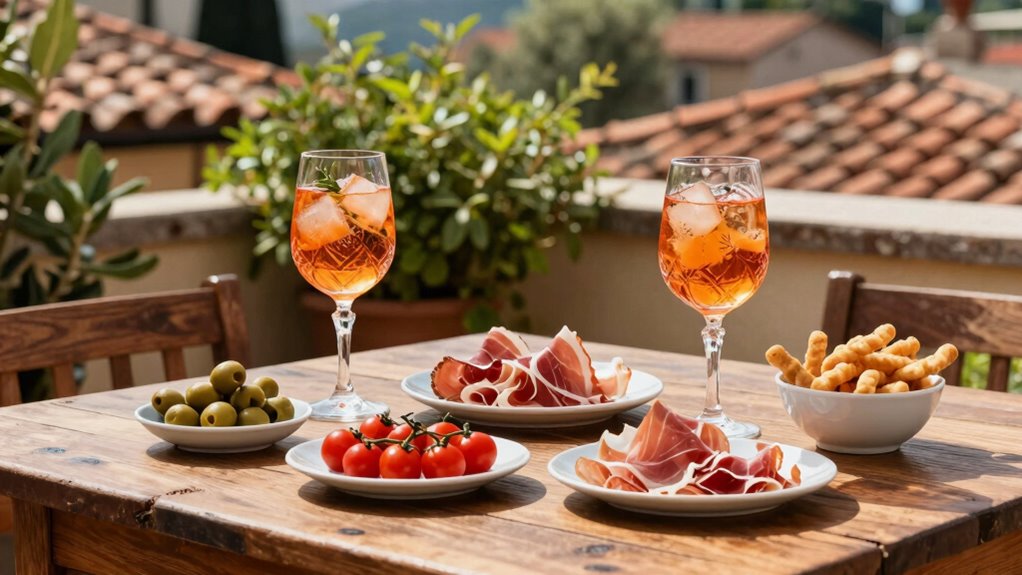

An Italian aperitivo is a lively pre-dinner tradition where you enjoy regional drinks like Aperol Spritz, Negroni, or vermouth, paired with small bites such as olives, cured meats, or cheeses. It’s all about relaxing, socializing, and savoring authentic ingredients that reflect Italy’s culinary heritage. To do it right, focus on quality drinks, tasty snacks, and a cozy atmosphere. Keep exploring to discover how to bring this charming ritual into your own space.
Key Takeaways
- The Italian aperitivo is a social ritual involving drinks and small bites, promoting relaxation, community, and appreciation of culinary traditions.
- Key beverages include vermouth, Spritz, Negroni, and Aperol, often paired with regional snacks and flavors.
- Use authentic, locally sourced ingredients, ensuring at least 50% of items are Italian to preserve tradition and quality.
- Pair drinks with complementary snacks like olives, cured meats, or cheeses to enhance flavors and foster lively conversations.
- Creating a cozy atmosphere with rustic decor and traditional tableware enhances the authentic aperitivo experience.

GLASSIQUE CADEAU Crystal Aperol Spritz Cocktail Glasses | Set of 2 | 15 oz Long Stemmed Goblets for Drinking Limoncello, Campari and Hugo Spritz | Elegant Glassware for Spritzer Drinks
SIP IN STYLE – dive into the exceptional World of cocktail elegance with these slender long stemmed Spritz…
As an affiliate, we earn on qualifying purchases.
As an affiliate, we earn on qualifying purchases.
The Roots and Evolution of Aperitivo in Italy

The roots of the aperitivo tradition in Italy trace back to ancient times, where Romans enjoyed light appetizers like “gustatio” alongside honey-sweetened wine before formal banquets. These early practices aimed to stimulate appetite and prepare guests for the main meal. Over centuries, the tradition evolved, especially in the late 18th century in Turin, where vermouth was created and served with small bites in cafes. This period marked the shift from medicinal and aristocratic origins to a social custom embraced by all social classes. The practice grew as Italian cities developed their own interpretations, incorporating regional ingredients and flavors. Today, aperitivo remains an essential part of Italian culture, blending drinks and food into a social ritual that celebrates leisure, community, and culinary tradition. The modern evolution of aperitivo also emphasizes Free Floating, encouraging a relaxed atmosphere that fosters connections among people. Additionally, the development of regional variations highlights Italy’s rich culinary diversity, further enriching the aperitivo experience. The market for aperitivo beverages has expanded significantly, reflecting its importance in contemporary Italian social life. This growth has led to innovative cocktail trends that continue to shape the modern aperitivo scene.

BLUTUL BIANCO NON-ALCOHOLIC ITALIAN SWEET VERMOUTH/Award-Winning Botanical Aperitif 1 Bottle (1x 750ml)/Made in Italy/Great as Mixer for Non-Alcoholic and Low-Alcoholic Cocktails
Authentic Italian Origin Premium Non-Alcoholic Vermouth Versatile & Creative – enjoy neat over ice, or as the perfect…
As an affiliate, we earn on qualifying purchases.
As an affiliate, we earn on qualifying purchases.
Key Beverages That Define the Aperitivo Tradition

Italian aperitivo culture is defined by a variety of iconic beverages that have evolved over centuries. You’ll find that vermouth is central to many traditions, thanks to its origins in Turin, where Antonio Benedetto Carpano created it in 1786. This aromatic, fortified wine blends herbs and spices, setting the tone for modern aperitivo drinks. Another key beverage is the Negroni, born in Florence in 1919, combining gin, Campari, and sweet vermouth for a balanced, bitter-sweet flavor. The Spritz, originating from Venice in the 1920s, mixes prosecco, Aperol or Select, and soda water, offering a bubbly, invigorating option. Aperol, with its bright orange hue and bittersweet taste, has become globally popular. These drinks define the tradition, each offering a unique taste of Italy’s rich aperitivo heritage. Additionally, modern innovations in European cloud servers are supporting the digital infrastructure that helps promote and preserve these cultural traditions worldwide.

Barfly Cocktail Kit, Negroni, Stainless
BARWARE ESSENTIALS: A staple of every barman, this set contains all the basics necessary to create a perfectly…
As an affiliate, we earn on qualifying purchases.
As an affiliate, we earn on qualifying purchases.
Regional Variations and Unique Italian Flavors

Across Italy, each city puts its own stamp on the aperitivo tradition, creating a rich tapestry of regional flavors and customs. In Milan, you’ll find lavish buffets accompanying drinks, a modern twist that emphasizes food as part of the experience. Venice offers the iconic Select Spritz, made with a bitter-sweet red aperitif unique to the city’s style. In Rome, you might enjoy a simple yet flavorful Aperol Spritz or a classic negroni, highlighting local preferences. Florence adds a touch of sophistication with small plates of crostini and local wines. Meanwhile, in Turin, vermouth remains central, often served with regional snacks. These variations reflect Italy’s diverse culinary landscape, allowing you to savor distinct ingredients, flavors, and traditions with every city you visit. Additionally, understanding regional Aperitivo customs can greatly enhance your experience by highlighting local ingredients and presentation styles. Exploring regional culinary traditions can also deepen your appreciation for Italy’s diverse approach to aperitivo, especially as many regions incorporate local ingredients into their drinks and snacks. Incorporating regional food pairings into your aperitivo experience can further elevate your enjoyment by showcasing local specialties and flavors. Recognizing these regional variations can help you appreciate how local history and culture influence each city’s unique style.

HOMKULA Small Solid Acacia Wood Serving Trays and Platters – Wooden Mini Charcuterie Boards, Rectangle Cheese Board for Food, Bathroom, Home Decor, Kitchen Counter, (14" x 5.5", 1 Pack)
❤【High-quality Acacia Tray】: You will get a tray made of 100% acacia wood. L x W: 14 inches…
As an affiliate, we earn on qualifying purchases.
As an affiliate, we earn on qualifying purchases.
The Ritual of Combining Drinks With Food

Participating in the aperitivo ritual means embracing the seamless pairing of drinks and food that heightens social experience. You’ll find that selecting the right combination enhances flavors and sparks conversation. To do it right:
Embrace the art of aperitivo pairing to elevate flavors and spark lively conversations.
- Match intensity: Pair stronger drinks like Negroni with bold, savory snacks, and lighter beverages like prosecco with delicate bites.
- Balance flavors: Combine bitter or herbal drinks with equally complex appetizers to create harmony.
- Consider textures: Crisp chips or crunchy bruschetta work well with bubbly drinks, while soft cheeses complement richer cocktails.
- Follow regional customs: Venice’s Spritz pairs beautifully with salty snacks, while Milan’s buffets include hearty, substantial bites.
How Aperitivo Became a Social and Cultural Staple

The tradition of pairing drinks with food during aperitivo didn’t just stay in bars; it grew into an essential social ritual that shaped Italian culture. Over time, it became a way for people to connect, relax, and enjoy the company of others before dinner. This practice reinforced Italy’s emphasis on community and leisure, transforming a simple drink into a shared experience. Regional variations, like Venice’s Spritz or Milan’s buffet-style aperitivo, added local flavors and traditions, making it uniquely Italian. Bars and cafes became gathering spots where conversations flowed as freely as the drinks. The ritual’s popularity spread beyond social circles, becoming a national pastime that highlights Italy’s valuing of conviviality, slow living, and savoring life’s moments together. Additionally, the cultural significance of aperitivo continues to be celebrated in modern Italy, reflecting its enduring role in fostering social bonds and a relaxed lifestyle. This tradition also underscores Italy’s rich culinary heritage, which emphasizes fresh ingredients and convivial dining experiences. Furthermore, the emphasis on local ingredients enhances the authenticity and regional identity of the aperitivo experience. Recognizing the importance of regional diversity helps preserve these traditions and adapt them to contemporary lifestyles. Embracing these regional differences fosters a deeper appreciation for Italy’s diverse culinary traditions, ensuring that the essence of aperitivo remains vibrant and meaningful.
Modern Standards and the Authentic Italian Aperitivo Experience

To truly experience the authentic Italian aperitivo today, you need to appreciate its modern standards that emphasize quality, tradition, and regional authenticity. These guidelines guarantee the experience remains genuine and memorable: 1. Use ingredients with guaranteed Italian origin, with at least 50% of components sourced locally. 2. Focus on bitter, herbal beverages like vermouth, Aperol, or Campari to stimulate the palate. 3. Incorporate regional specialties, reflecting Italy’s diverse culinary heritage. 4. Prioritize social rituals over quantity, fostering a communal atmosphere before meals. Additionally, selecting authentic ingredients such as locally sourced herbs and oils can enhance the overall experience and uphold the tradition. Paying attention to cookie management ensures a seamless experience as you explore Italy’s rich aperitivo culture.
The Role of Local Ingredients and Origin in Aperitivo Practices

You can see how essential Italian ingredients are to the authenticity of aperitivo, with many recipes relying on locally sourced herbs, wines, and spirits. Regional variations highlight how different areas use unique ingredients, shaping their distinct aperitivo styles. Maintaining strict production standards guarantees these ingredients truly reflect their origin, preserving Italy’s culinary heritage. Additionally, understanding how ear wax odor can vary and signal health issues underscores the importance of quality control in ingredient sourcing. Ensuring consistent product quality standards is vital for authentic and safe aperitivo experiences, especially as some ingredients may carry health considerations that require careful monitoring. Recognizing the nutritional value of traditional ingredients ensures that aperitivo not only celebrates regional flavors but also supports overall health and well-being. This emphasis on ingredient authenticity helps sustain Italy’s rich gastronomic traditions and promotes responsible sourcing practices.
Importance of Italian Ingredients
Italian aperitivo places great importance on using local ingredients, as they embody the country’s rich culinary heritage and guarantee authenticity. By choosing ingredients rooted in Italy, you preserve centuries of craftsmanship and regional flavors. Here’s why this matters:
- Quality Assurance: Locally sourced ingredients ensure freshness and superior taste.
- Cultural Preservation: They reflect Italy’s diverse farming traditions and regional specialties.
- Supporting Local Economies: Buying Italian ingredients boosts local producers and artisans.
- Authentic Experience: Using genuine ingredients guarantees an authentic aperitivo experience that respects tradition. Additionally, incorporating traditional Italian herbs, wines, bitters, and spirits enhances the depth and authenticity of your aperitivo, connecting you more closely with Italy’s culinary roots.
Regional Ingredient Variations
Regional ingredient variations play a crucial role in shaping the unique character of aperitivo across Italy. You’ll notice that each region uses local ingredients to craft distinctive drinks and accompaniments. In Piedmont, for example, vermouth is made with herbs native to the area, giving it a bold, aromatic profile. Venice’s Spritz features Select, a bitter aperitif crafted with local botanicals, creating a slightly different taste experience. In Sicily, you might enjoy an Aperol spritz with citrus fruits like blood oranges, reflecting the island’s abundant produce. Tuscany favors herbal-infused spirits and simple, fresh snacks like crostini topped with regional olive oil and local cheeses. These ingredient variations highlight how local terroirs and traditions influence aperitivo, making each region’s practice uniquely tied to its land and history.
Authenticity and Production Standards
Maintaining authenticity in aperitivo means ensuring that at least 50% of its ingredients are sourced from Italy with guaranteed origins, preserving the tradition’s cultural integrity. You should prioritize local ingredients to honor Italy’s culinary heritage. Here are key points to contemplate:
- Verify the origin of spirits like vermouth, bitters, and liqueurs, ensuring they’re produced within Italy.
- Choose ingredients such as herbs, citrus, and botanicals that are grown locally to support regional producers.
- Check labels for certifications or guarantees of Italian origin, especially for key components.
- Support producers who follow traditional methods, avoiding mass-produced or imported ingredients that dilute authenticity.
Tips for Hosting an Authentic Italian Aperitivo at Home

To host an authentic Italian aperitivo, start by selecting beverages that are truly Italian, like vermouth, Aperol, or a classic Spritz. Next, prepare traditional snacks such as olives, cured meats, and cheese to complement the drinks. Finally, create a cozy atmosphere with warm lighting and inviting seating to encourage relaxed socializing.
Select Authentic Beverages
Creating an authentic Italian aperitivo at home starts with selecting the right beverages that capture Italy’s rich tradition. Focus on drinks that balance bitterness, herbal notes, and regional authenticity. Here are four key options:
- Vermouth – Choose a quality Italian vermouth like Carpano or Martini & Rossi to evoke Turin’s origins.
- Aperol or Campari – Classic bittersweet aperitifs that add color and depth to your drinks.
- Select Spritz – Mix Select, prosecco, and soda water for a bubbly Venetian classic.
- Negroni – Combine gin, Campari, and sweet vermouth for a bold, traditional cocktail.
These beverages set the foundation for an authentic experience, emphasizing Italy’s historic and regional aperitivo culture.
Prepare Traditional Snacks
Ever wondered how to replicate the authentic Italian aperitivo experience at home? Start by preparing a variety of traditional snacks that complement your drinks. Think crusty bread, focaccia, or grissini—thin breadsticks that are perfect for dipping or snacking. Include cured meats like prosciutto, salami, and bresaola, which add rich flavors. Add cheeses such as Parmigiano-Reggiano, mozzarella, or pecorino for variety. Incorporate marinated vegetables like artichokes, olives, and sundried tomatoes to add a tangy, savory touch. Fresh fruit, like figs or grapes, offers a sweet balance. In conclusion, consider serving small bowls of nuts and taralli, crunchy bread rings seasoned with herbs. These simple, authentic snacks create a true Italian vibe, encouraging conversation and making your aperitivo memorable.
Set a Cozy Atmosphere
Setting the right mood is key to hosting an authentic Italian aperitivo at home, and it all starts with curating a cozy, inviting atmosphere. To do this, focus on creating a warm, relaxed environment where conversation flows easily. Consider these tips:
- Use soft lighting, like dimmed lamps or candles, to set a mellow tone.
- Play gentle background music, perhaps Italian jazz or classical tunes, to enhance the ambiance.
- Arrange your space with comfortable seating, encouraging guests to linger and chat.
- Decorate with simple, rustic touches like fresh herbs, floral arrangements, or Italian-inspired tableware to evoke the Italian charm.
These elements will help your guests feel at ease, making your aperitivo experience truly authentic and memorable.
Embracing the Spirit of Aperitivo in Today’s Lifestyle
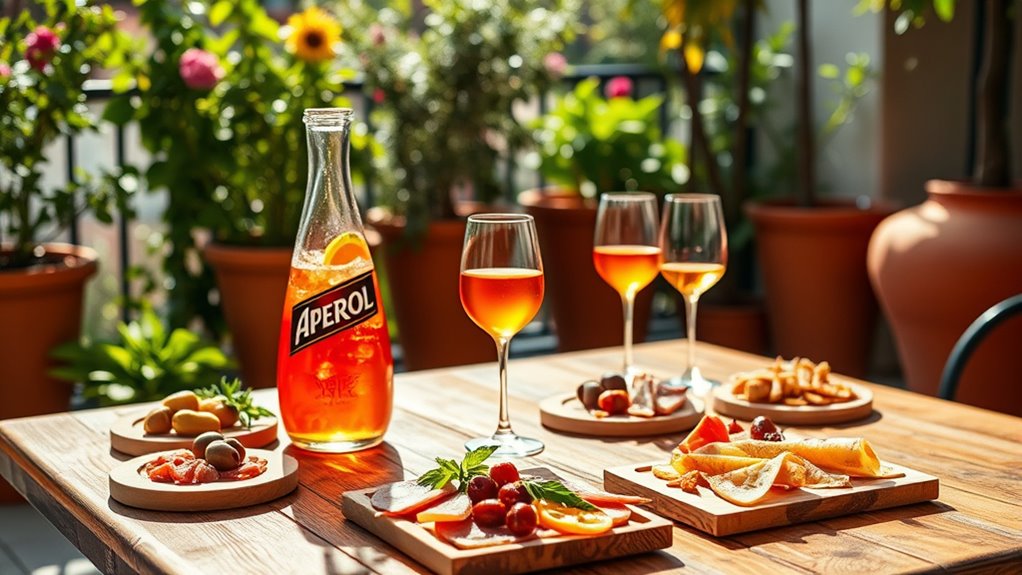
Today, embracing the spirit of aperitivo means integrating a time-honored Italian tradition into your modern lifestyle by prioritizing social connection and mindful enjoyment. You can do this by carving out a regular moment to unwind with friends or family, whether at a cozy bar or your own home. Focus on quality beverages like vermouth, Aperol, or a spritz, paired with light snacks that encourage conversation. Keep the atmosphere relaxed, emphasizing the social aspect over heavy drinking or eating. Use this time to slow down, connect, and appreciate the present moment. Incorporating aperitivo into your routine isn’t about perfection; it’s about honoring a cultural ritual that celebrates togetherness, enjoyment, and the simple pleasure of shared experiences.
Frequently Asked Questions
What Are the Health Benefits of Traditional Aperitivo Ingredients?
You’ll benefit from traditional aperitivo ingredients like herbs, bitter botanicals, and spices, which aid digestion and stimulate your appetite. These ingredients often contain antioxidants and anti-inflammatory compounds that support your immune system. Herbal infusions can help soothe your stomach and improve gut health. Plus, moderate alcohol consumption, especially bitter drinks like vermouth and Aperol, may boost your mood and promote relaxation, contributing to overall well-being.
How Does Aperitivo Differ From Other Pre-Meal Traditions Worldwide?
You’ll notice aperitivo differs from other pre-meal traditions because it emphasizes socializing and enjoying beverages with small bites, not just quick eating or drinking. Unlike Japanese izakaya or Spanish tapas, aperitivo combines drinks like vermouth or spritz with a variety of complimentary foods, creating a relaxed, communal atmosphere. It’s less about filling up and more about stimulating your appetite and engaging with others before a meal.
Can Non-Alcoholic Beverages Be Part of an Authentic Aperitivo?
Yes, non-alcoholic beverages can be part of an authentic aperitivo. You can enjoy herbal teas, sparkling water with a splash of citrus, or traditional Italian sodas like San Pellegrino. These drinks stimulate your appetite and set the mood for socializing, just like alcoholic options. Pair them with small bites or snacks, and you’ll experience the true spirit of aperitivo—centering on community, relaxation, and opening your palate.
What Are Some Common Food Pairings With Aperitivo in Italy?
You might think a small snack won’t satisfy, but in Italy, aperitivo food pairings are delightful and varied. You’ll find simple items like olives, nuts, and chips, alongside more refined choices such as bruschetta, cured meats, and cheese platters. These foods are designed to stimulate your appetite and complement your drink, making your aperitivo experience both social and flavorful. So, indulge in these classic bites to truly enjoy the tradition.
How Has Modern Cuisine Influenced Traditional Aperitivo Practices?
Modern cuisine has expanded your options during aperitivo, blending traditional and contemporary flavors. You might find innovative small plates that fuse Italian classics with international ingredients, creating exciting pairings. Chefs now emphasize fresh, local produce and creative presentation, making the experience more personalized. While the core social and appetite-stimulating aspects remain, you can enjoy a broader variety of foods that enhance the traditional bitter drinks and lively atmosphere.
Conclusion
Now that you know the history, key drinks, and tips for hosting your own Italian aperitivo, why not bring this lively tradition into your life? With its focus on good company and flavorful bites, it’s more than just a drink—it’s a celebration of Italian culture. So, are you ready to embrace the spirit of aperitivo and turn any moment into a joyful gathering? Cheers to your own authentic Italian experience!