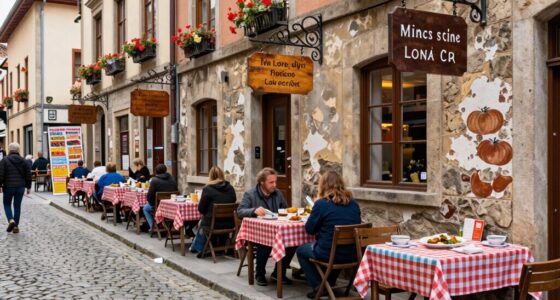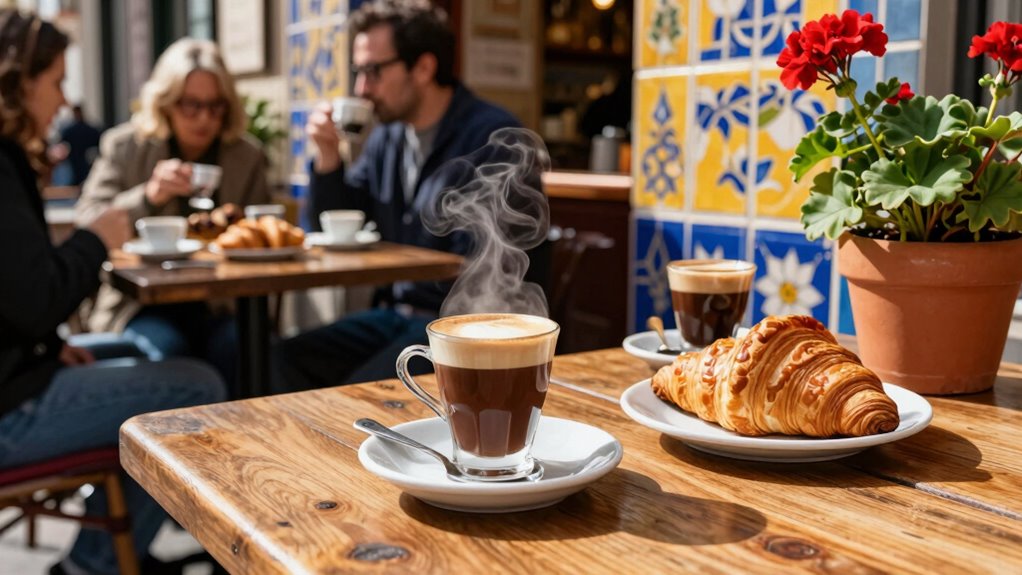

In Spain, you’ll start your day with an espresso shot, called café solo, or a cortado, which blends espresso with a splash of milk. As the day progresses, enjoy café con leche during breakfast or coffee breaks, especially during social moments. Regional specialties like café cremaet or iced coffees reflect local customs. To explore more, discover how these traditions blend with modern trends and regional variations across the country.
Key Takeaways
- Start your day with a strong café solo or espresso shot for quick energy and social interaction.
- Enjoy a cortado or café con leche during mid-morning breaks for casual bonding and relaxation.
- Try regional specialties like café cremaet in Valencia or iced coffees in Catalonia during summer festivals.
- Explore specialty brewing methods such as pour-overs or cold brew to experience modern, high-quality coffee styles.
- Take your time, observe social customs, and participate in local routines to fully immerse in Spain’s coffee culture.
Espresso coffee maker
As an affiliate, we earn on qualifying purchases.
As an affiliate, we earn on qualifying purchases.
Traditional Spanish Coffee Choices and Their Flavors
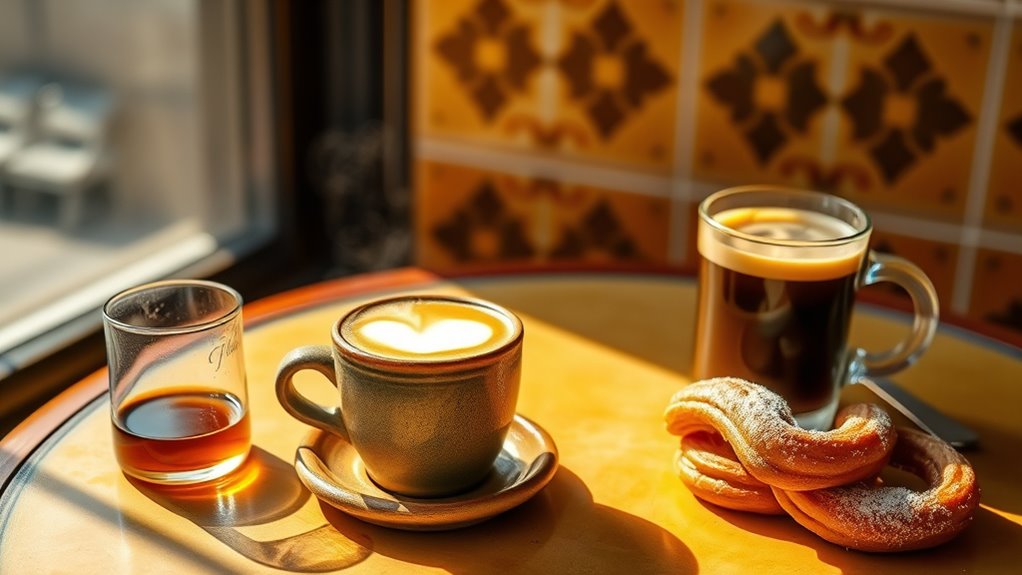
Have you ever wondered why Spaniards favor small, intense coffee servings? It’s because their traditional choices emphasize concentrated flavors and bold aromas. Café solo, a small shot of espresso, delivers a powerful punch in just a few sips, perfect for multiple daily doses. Cortado balances strong espresso with a splash of milk, softening its intensity without losing flavor. Café con leche combines rich coffee with steamed milk, creating a smooth, comforting drink often enjoyed with pastries. These options reflect a preference for intense, well-defined tastes rather than diluted or large-volume beverages. Spaniards appreciate the craftsmanship behind each shot, savoring the richness and strength in every small cup. This tradition highlights a cultural affinity for bold flavors and the art of coffee preparation. Additionally, this approach to coffee aligns with the cultural emphasis on energetic alignment, which enhances the overall experience and enjoyment of their favored beverages. The careful preparation and appreciation of quality ingredients further demonstrate the importance of attention to detail in their coffee culture. Moreover, the focus on small servings underscores a cultural tendency toward moderation and savoring each moment. This dedication to quality and tradition underscores the significance of cultural identity in shaping local coffee preferences. Furthermore, the use of high-quality beans and precise brewing techniques reflects a deep respect for coffee craftsmanship, central to Spanish coffee traditions.
Cortado glass cups
As an affiliate, we earn on qualifying purchases.
As an affiliate, we earn on qualifying purchases.
The Morning Coffee Routine: How Spaniards Start Their Day
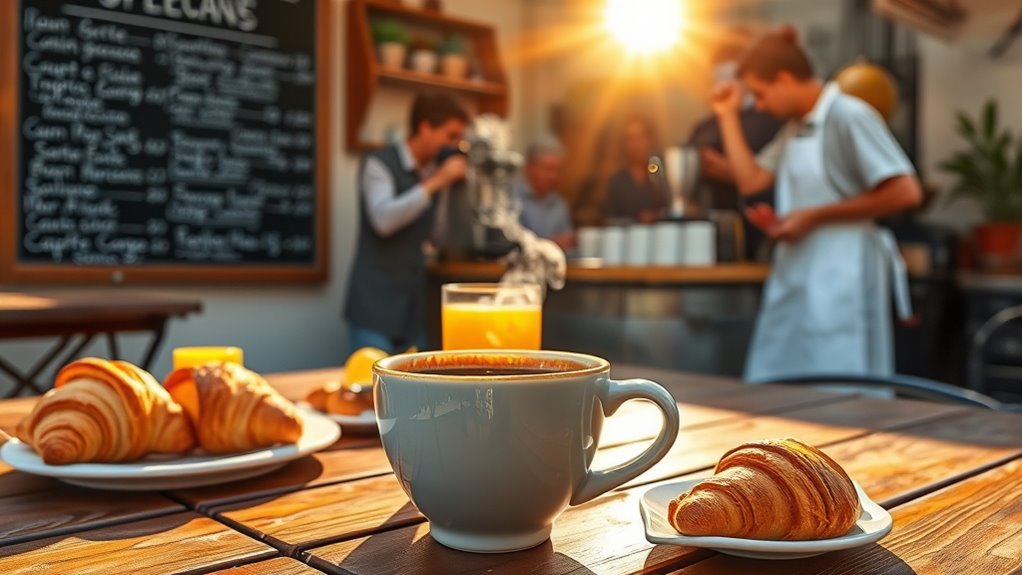
Spaniards typically begin their day with a well-established coffee ritual that sets the tone for the hours ahead. You might grab a quick café solo, an intense espresso shot, to energize yourself for the busy morning. Many prefer café con leche, combining strong coffee with warm milk, often enjoyed alongside a pastry or toast. This morning routine usually takes place at a local bar or café, where conversations and greetings are common. It’s a moment to wake up, gather your thoughts, and prepare for the day. Spaniards value these small, concentrated servings, which provide a quick caffeine boost without disrupting their busy schedules. Incorporating traditional farmhouse-inspired decor elements like rustic furniture or vintage mugs can enhance the cozy ambiance of these daily coffee moments. This morning ritual reflects the deep-rooted coffee culture and social fabric that define Spain’s daily life.
French press coffee maker
As an affiliate, we earn on qualifying purchases.
As an affiliate, we earn on qualifying purchases.
Coffee Breaks and Social Rituals Throughout the Day
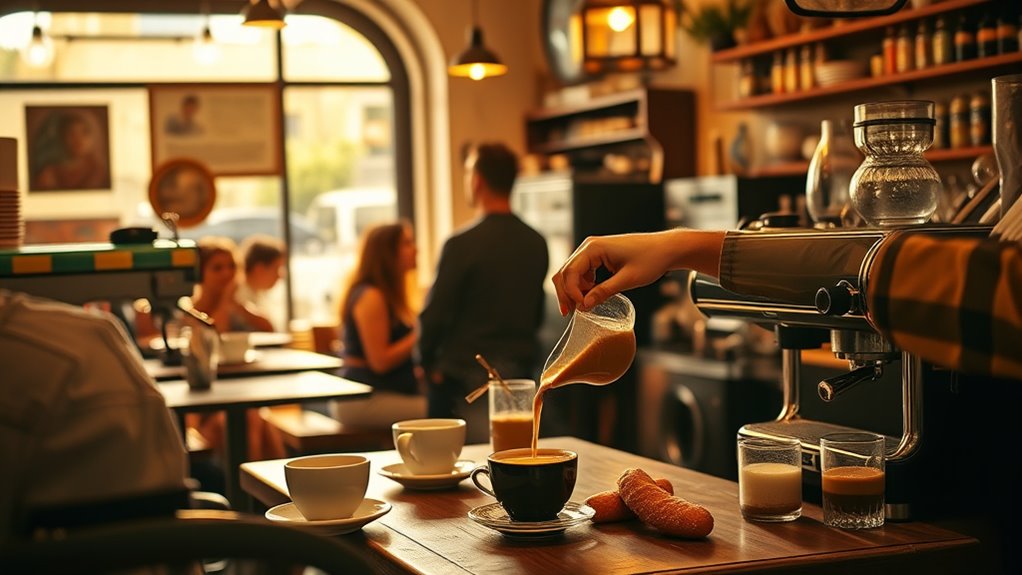
Throughout the day, coffee serves as an essential social connector and a moment of pause in Spanish life. You’ll find that Spaniards often take short breaks, called “pausas,” to enjoy a quick coffee and chat with colleagues or friends. The mid-morning “segunda pausa” is common, offering a chance to relax and socialize before returning to work. Coffee breaks aren’t just about drinking; they’re about connecting, sharing ideas, and maintaining social bonds. In cafes or bars, you might see groups gathered around small tables, savoring cortados or café con leche. These rituals foster community and provide a welcome respite from daily routines. Proper coffee etiquette plays a role in ensuring these social rituals are respectful and enjoyable for everyone involved. Additionally, understanding design thinking principles can enhance the way these social interactions are structured, promoting more meaningful and inclusive exchanges. Recognizing the significance of cultural context can also deepen the appreciation of these coffee rituals and their importance in Spanish society. Engaging in these customs with awareness of social norms helps preserve their authenticity and fosters mutual respect.
Cold brew coffee maker
As an affiliate, we earn on qualifying purchases.
As an affiliate, we earn on qualifying purchases.
Regional Coffee Specialties and Festive Traditions
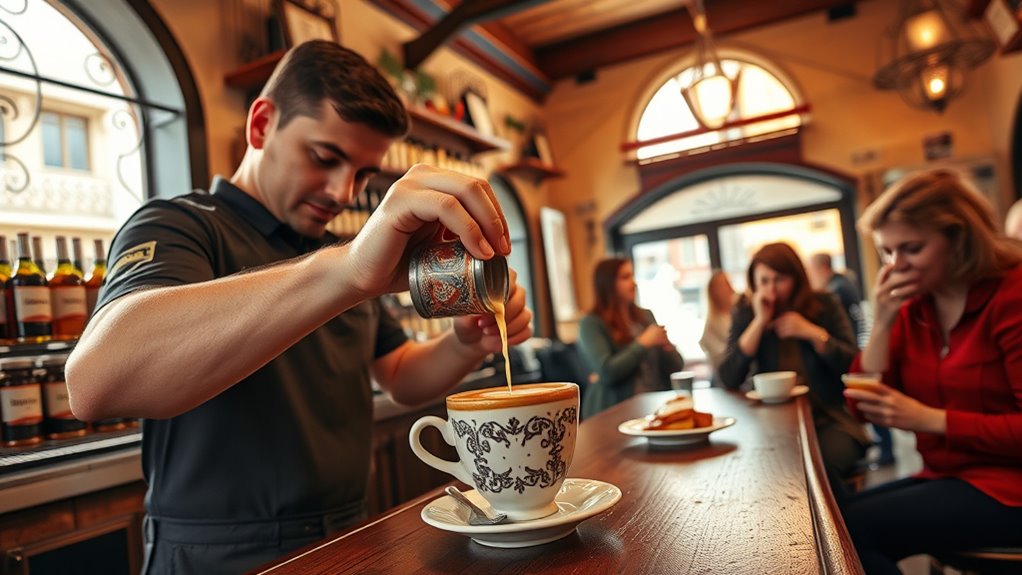
Did you know that regional festivals in Spain often feature unique coffee specialties that reflect local culture and traditions? During Valencia’s Fallas, you’ll find café cremaet, a sweet, frothy coffee flavored with licorice and served in small glasses, symbolizing local festivity. In Andalusia, during Semana Santa, it’s common to enjoy a robust cortado or café con leche as a social ritual, often accompanied by traditional pastries. In Catalonia, iced coffees like cold brew and iced lattes have gained popularity during summer festivals, blending modern trends with regional flavors. These specialties highlight Spain’s diverse coffee heritage, where each region adds its unique touch to traditional brewing methods. Celebrating these drinks offers a rich taste of local identity, history, and communal spirit during festive occasions.
Modern Trends and Innovative Coffee Styles in Spain
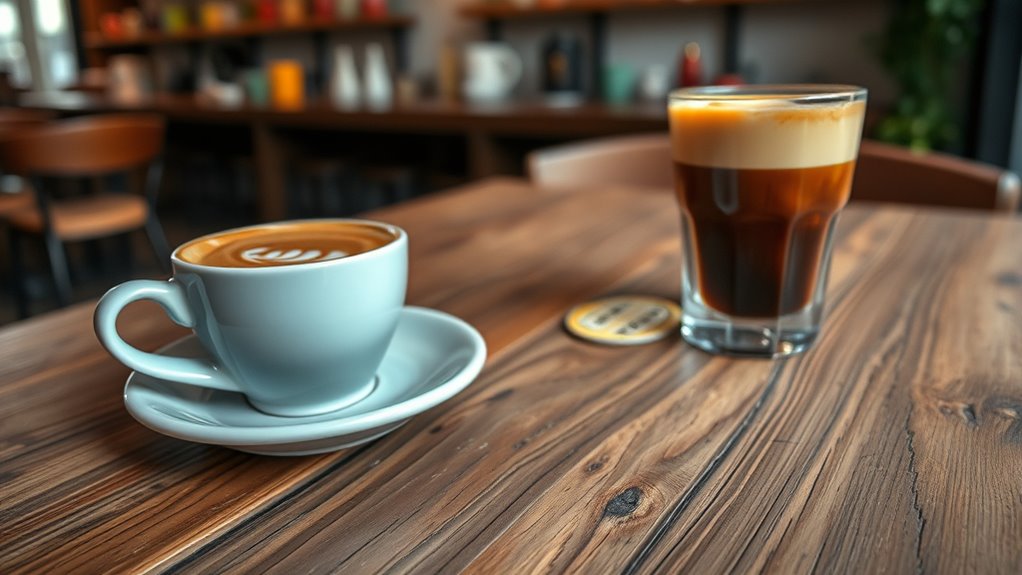
In recent years, Spain has embraced modern coffee trends by experimenting with new brewing techniques and flavor profiles, blending tradition with innovation. You’ll find specialty coffee shops offering pour-overs, AeroPress, and cold brew options that go beyond the classic espresso. Baristas now incorporate unique ingredients like spices, herbs, and alternative milks, creating innovative drinks that appeal to evolving tastes. Cold brew and iced lattes have become popular among younger crowds and city dwellers, especially during warmer months. Additionally, third-wave coffee culture emphasizes quality beans and precise brewing methods, elevating Spain’s coffee scene. You can enjoy expertly crafted, artisanal beverages that respect Spain’s rich coffee heritage while exploring new textures and flavors, making your coffee experience both modern and authentic. As this movement grows, many establishments focus on sustainable sourcing, ensuring that the beans used support environmentally friendly practices and fair trade. Moreover, the rise of specialty coffee shops reflects a broader shift towards appreciating coffee as a craft rather than just a daily necessity. This innovative approach is also supported by the adoption of advanced brewing equipment, which enhances flavor extraction and consistency in each cup. Furthermore, this focus on ethical sourcing promotes transparency and social responsibility within Spain’s coffee industry.
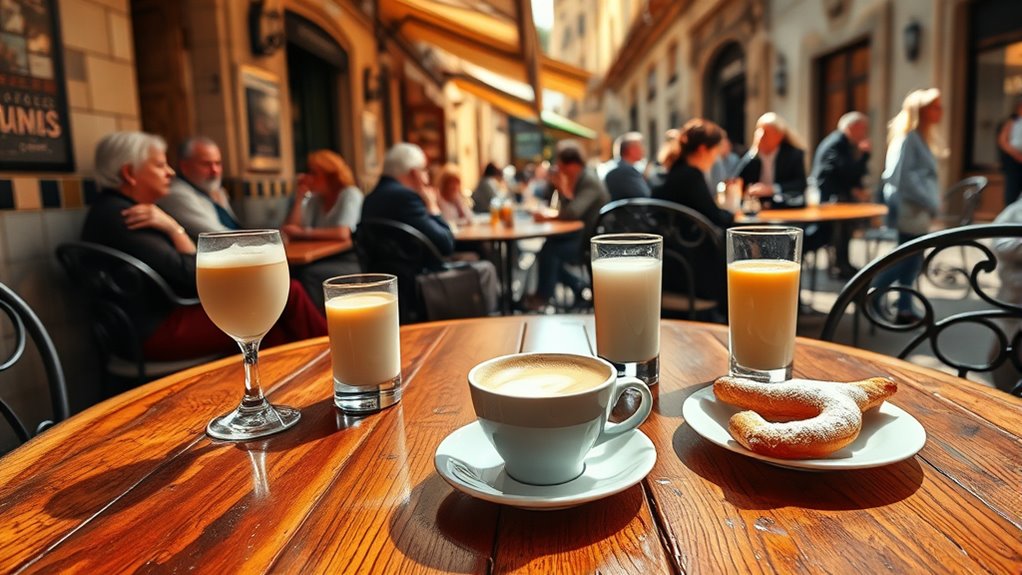
To truly experience Spain’s vibrant coffee culture, start by exploring local cafés and bars rather than sticking to international chains. These spots offer authentic flavors and a glimpse into daily life. When ordering, keep these tips in mind:
- Ask for what suits your mood—a cortado for a quick boost, or café con leche for a relaxed morning.
- Respect local customs—sipping slowly and engaging with baristas enhances your experience.
- Try regional specialties—like café cremaet during Valencia’s Fallas or a cold brew in summer cities.
- Utilize AI tools to learn about local coffee preferences and customs, which can help deepen your cultural understanding and enhance your visit. AI tools can provide personalized suggestions based on regional trends and individual tastes.
- Remember that coffee consumption in Spain often involves socializing, so take your time and enjoy the atmosphere. Incorporating user experience principles can also make your visit more enjoyable and memorable.
Engage with locals, observe their routines, and don’t rush. Embracing these small gestures deepens your understanding and enjoyment of Spain’s rich coffee heritage. The more you participate, the more immersed you’ll feel in this lively culture.
Frequently Asked Questions
How Has Spain’s Colonial History Influenced Its Current Coffee Preferences?
Your coffee preferences in Spain are shaped by its colonial history, which introduced and popularized coffee on the peninsula. You likely enjoy traditional espresso-based drinks like café solo, cortado, or café con leche, reflecting a strong, concentrated flavor heritage. The influence of Spanish settlers and trade routes helped embed coffee into social and cultural life, making it an integral part of your daily routines and social gatherings.
What Role Do Coffeehouses Play in Spain’s Contemporary Social and Cultural Life?
Coffeehouses in Spain serve as vibrant social hubs where you can connect, discuss ideas, or enjoy cultural events. They bridge the gap between home and work, fostering community and creativity. Whether you’re visiting a historic café or a modern specialty shop, these spaces offer a lively atmosphere that reflects Spain’s rich coffee history. You’re encouraged to socialize, relax, and participate in the ongoing tradition of coffee as a social and cultural catalyst.
Are There Regional Differences in Coffee Consumption Across Spain?
Yes, you’ll notice regional differences in Spain’s coffee consumption. In Valencia, people enjoy café cremaet during festivals like Fallas, while in Seville, local customs favor strong espresso shots. In Madrid, cafés serve a mix of traditional and modern drinks, and in Catalonia, iced coffees and cold brews are popular, especially among young crowds. These variations reflect local traditions, climate, and cultural influences that shape each region’s coffee habits.
How Are Younger Spaniards Changing Traditional Coffee Drinking Habits?
You’re stirring up change in Spain’s coffee scene. Younger Spaniards are transforming tradition into a vibrant mosaic, embracing cold brews, iced lattes, and specialty drinks that splash color into their daily routines. They seek bold flavors and modern brewing methods, turning cafes into lively social hubs. Their passion for innovation is rewriting centuries-old customs, making coffee not just a morning ritual but a dynamic expression of their evolving identity.
What Are the Most Popular Coffee Festivals and Events in Spain?
You’ll find the most popular coffee festivals in Spain include the Madrid Coffee Festival, celebrating local roasters and brewing techniques, and the Barcelona Coffee Festival, which showcases specialty coffees and brewing innovations. These events attract coffee lovers from all over, offering tastings, workshops, and competitions. Participating in these festivals lets you explore Spain’s rich coffee heritage, connect with enthusiasts, and discover new brewing trends that blend tradition with modernity.
Conclusion
Exploring Spain’s coffee scene is like tasting a vibrant mosaic of flavors and traditions. Whether you’re savoring a robust cortado in the morning or joining lively social coffee breaks, each sip reveals a piece of Spanish culture. Embrace the diversity, try regional specialties, and enjoy the lively ambiance. With an open mind and a curious palate, you’ll find coffee here isn’t just a drink—it’s a lively celebration of Spain’s rich heritage.