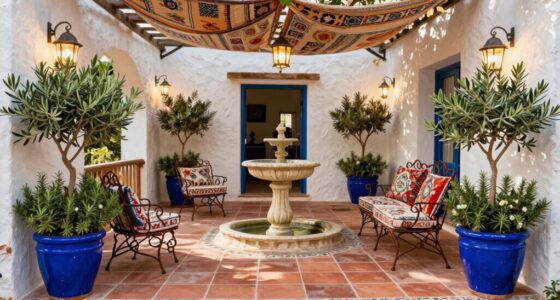
A Tuscan kitchen combines warm, earthy colors like terracotta, muted greens, and neutrals, creating a cozy and inviting atmosphere. You’ll see natural materials such as stone, terracotta, and weathered wood, adding rustic charm and authenticity. Wrought iron details and handcrafted cabinetry enhance the sense of craftsmanship. The layout promotes socializing with open spaces and central islands. To discover how these elements come together perfectly, explore more about this timeless style.
Key Takeaways
- Tuscan kitchens feature warm, earthy color palettes like terracotta, muted greens, and neutrals to evoke the Italian countryside.
- Natural materials such as stone, terracotta, and weathered wood create rustic authenticity and timeless charm.
- Wrought iron details and handcrafted woodwork add warmth, texture, and artisanal craftsmanship.
- Open layouts with central islands and arched openings promote social interaction and functional space.
- Decorative ceramics, vintage hardware, and distressed finishes enhance the traditional, cozy Tuscan aesthetic.

Traveler's Choice Pagosa Hardshell Expandable Luggage with Spinner Wheels, Black, 22-Inch Carry-on
Impact Resistant: Durable polypropylene hardshell that’s abrasion-, scratch-, and water-resistant. Expansion gusset provide up to 2" to make...
As an affiliate, we earn on qualifying purchases.
Embracing the Color Palette of the Italian Countryside
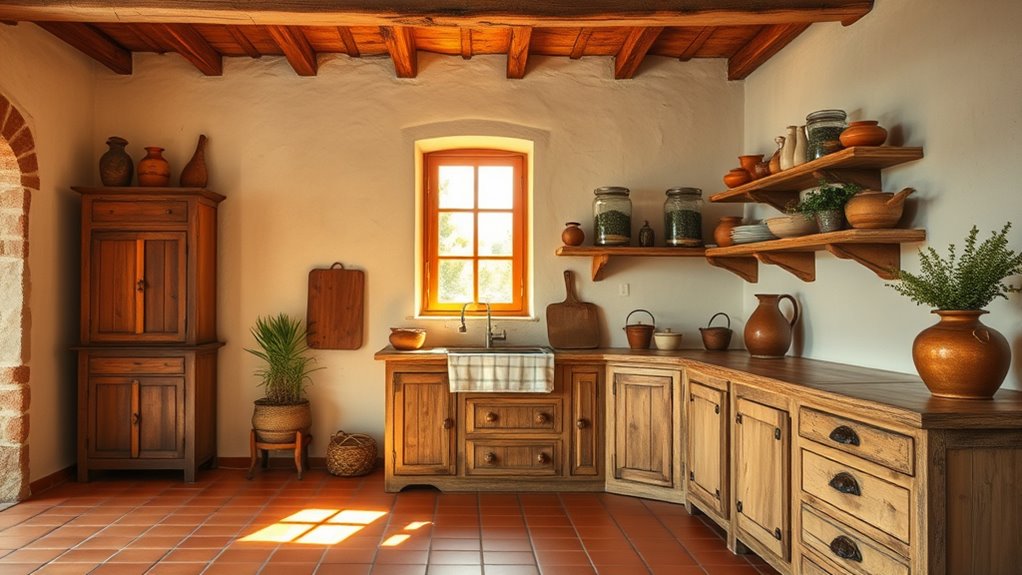
To truly embrace the color palette of the Italian countryside in your Tuscan kitchen, start by incorporating warm, earthy tones that reflect the sun-soaked landscape. Think terracotta, muted greens, and cozy neutrals that create an inviting atmosphere. Use these shades on walls, cabinetry, or accents to evoke a rustic charm. Deep reds and natural creams mirror the vibrant and calming aspects of Tuscany’s scenery. Modern touches like rich yellows or olive greens can add depth and interest without losing the authentic feel. These colors work together to craft a space that feels warm, welcoming, and connected to nature. Incorporating color accuracy elements such as open shelving or airy layouts enhances the rustic authenticity and makes the space feel more inviting. Maintaining a balanced color palette is essential to highlight the rustic textures and materials typical of Tuscan design, creating a truly harmonious kitchen environment.

Samsonite Freeform Hardside Carry-On Luggage with Spinner Wheels - Hardshell Suitcase - TSA, Airline-Approved - Expandable Hard Shell, Smooth Rolling Wheels for Lightweight Travel – Black
The Perfect Size: The textured, scratch-resistant exterior of this hardshell carry-on luggage is 15 x 10 x 23...
As an affiliate, we earn on qualifying purchases.
Natural Materials That Define Tuscan Charm
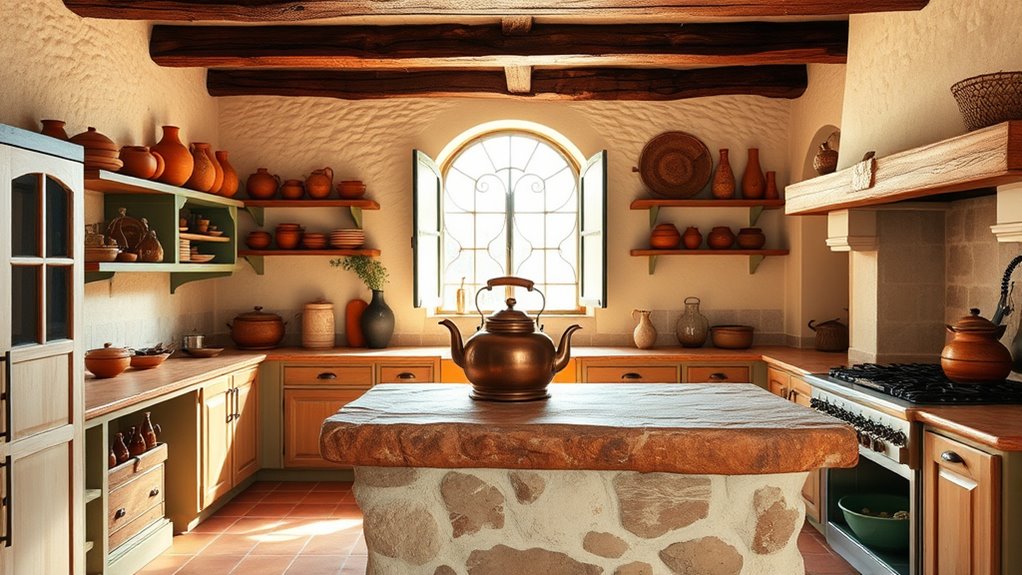
Natural materials like authentic stone and tile bring a rustic, timeless quality to your Tuscan kitchen. Rich wood accents and wrought iron details add warmth and texture, grounding the space in craftsmanship. Together, these elements create a charming, authentic atmosphere that captures the essence of Tuscany. Incorporating natural materials and smart technology can further enhance the functionality and ambiance of your kitchen, making it both stylish and efficient. Paying attention to design details ensures a cohesive and inviting aesthetic that truly reflects Tuscan charm. Additionally, selecting sustainable and eco-friendly materials can contribute to a more environmentally conscious design, promoting sustainable living while maintaining the rustic appeal.
Authentic Stone and Tile
Authentic stone and tile are the cornerstone of Tuscan kitchen charm, infusing the space with texture and a sense of history. These natural materials create an earthy, timeless look that reflects the rustic landscape of Tuscany. You might incorporate:
- Travertine tiles for flooring or backsplashes, offering a warm, weathered appearance.
- Limestone countertops that add subtle texture and durability.
- Terracotta tiles on floors or walls, bringing rich, earthy tones to the space.
- Decorative ceramic or encaustic tiles for accents, showcasing traditional patterns and craftsmanship.
Adding natural materials enhances authenticity and brings a genuine rustic feel to your kitchen. Choosing these materials emphasizes authenticity, enhances rustic appeal, and connects your kitchen to the region’s storied history. Their natural variations and weathered finishes make every surface uniquely inviting, creating a warm and inviting atmosphere.
Rich Wood and Wrought Iron
Rich wood and wrought iron are the defining materials that bring warmth and authenticity to a Tuscan kitchen. You’ll notice how natural, rough-hewn wood cabinets add a handcrafted feel, with weathered finishes that highlight their rustic charm. Wrought iron accents, like light fixtures, cabinet hardware, and decorative details, create striking contrast and a sense of timeless craftsmanship. These materials are not just decorative—they’re functional and durable, reflecting the region’s artisanal roots. The rich tones of wood complement earthy color palettes, while wrought iron’s dark, matte finish enhances the rustic aesthetic. Incorporating material durability ensures your kitchen remains beautiful and functional for years to come. The use of natural and artisanal materials further emphasizes the region’s emphasis on craftsmanship and tradition. Utilizing natural materials also contributes to the authentic Tuscan ambiance, making your kitchen feel inviting, warm, and authentically Italian. Choosing sustainable sourcing for these materials can support environmentally responsible practices while maintaining the traditional look. Additionally, selecting environmentally friendly options can help reduce your carbon footprint without compromising on style or quality.
Samsonite Freeform Large Checked Luggage with Dual 360° Spinner Wheels - TSA Lock, Airline-Approved - Lightweight Durable Polypropylene Expandable Hardshell - Black
Durable & Stylish: This large checked spinner luggage features a scratch-resistant Polypropylene hardshell, measuring 31.1" x 20.9" x...
As an affiliate, we earn on qualifying purchases.
The Role of Cabinetry and Woodwork in Creating Authenticity
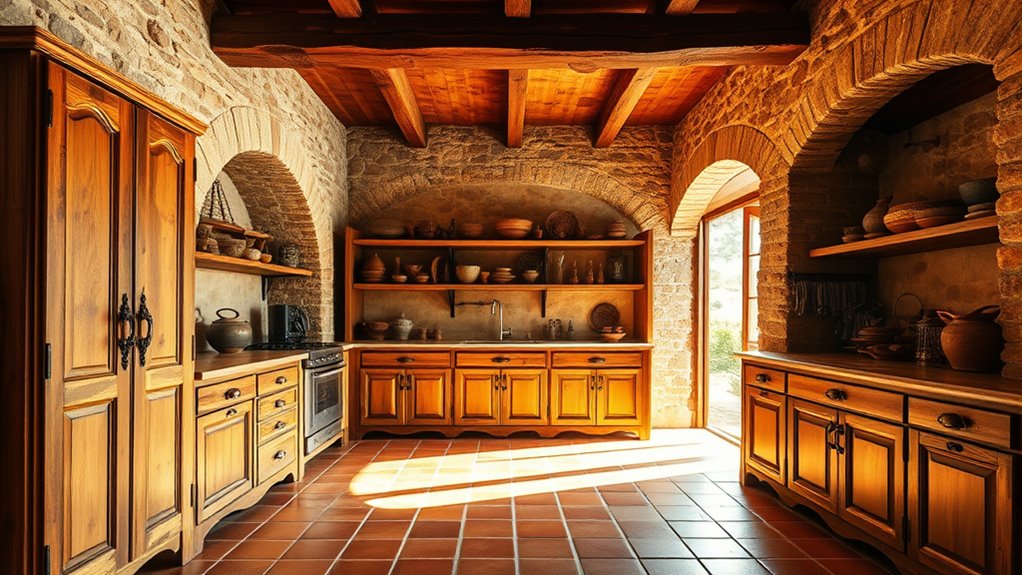
Rustic wood finishes and handcrafted cabinet details are essential for capturing authentic Tuscan charm. These elements add warmth and character, making your kitchen feel both timeless and inviting. By choosing weathered textures and artisanal craftsmanship, you reinforce the handcrafted authenticity of your space.
Rustic Wood Finishes
To evoke the true spirit of Tuscany, choosing rustic wood finishes for cabinetry and woodwork is essential. These finishes add warmth, character, and authenticity to your kitchen. The goal is to highlight natural imperfections, weathered textures, and aged patinas that reflect traditional craftsmanship.
Consider these ideas:
- Distressed finishes to create a weathered, timeworn look.
- Lime-washed or glazed surfaces for depth and subtle color variation.
- Natural knot and grain highlights to emphasize organic beauty.
- Reclaimed or weathered wood to enhance rustic authenticity and sustainability.
These finishes bring a tactile, visual richness that connects your space to the rustic Tuscan countryside, making it cozy and inviting.
Handcrafted Cabinet Details
Handcrafted cabinet details play a pivotal role in capturing the authentic Tuscan kitchen style, as they showcase the skill and artistry behind traditional woodworking. You’ll notice raised panels, carved accents, and distressed finishes that highlight craftsmanship and age. These details add warmth, character, and authenticity to your space. Choosing weathered or reclaimed wood enhances the rustic charm, while glaze finishes emphasize hand-applied textures. The cabinet design often features simple, sturdy construction with unique touches that reflect local traditions.
| Feature | Description |
|---|---|
| Raised Panels | Adds depth and handcrafted appeal |
| Carved Details | Unique, artisanal touches |
| Distressed Finish | Weathered look for authenticity |
LEVEL8 Grace Carry on Luggage Airline Approved, 20 Inch Expandable Hard Sided Luggages with Spinner Wheels, Harshell Small Rolling Suitcase for Women Men with Tsa Lock, Blue
Expandable Design: The Grace Expandable (6576 Series) suitcase is thoughtfully engineered to provide extra packing space whenever you...
As an affiliate, we earn on qualifying purchases.
Textural Details That Bring Rustic Elegance

In Tuscan kitchen design, textural details play an essential role in creating an authentic sense of rustic elegance. You can achieve this by incorporating elements that add depth and character to your space. Incorporating authentic materials like terracotta tiles or aged wood enhances the genuine rustic feel. Here are some ideas: 1. Exposed wooden beams that showcase natural grain and weathered finishes. 2. Limestone or travertine tiles that bring earthy textures to floors and backsplashes. 3. Aged metals like copper or bronze in hardware, sinks, and fixtures for patina-rich accents. 4. Rough-hewn or reclaimed wood cabinets that emphasize handcrafted appeal. These details emphasize tactile richness, balancing rustic charm with sophistication. They create a layered, inviting atmosphere that captures the timeless essence of Tuscan countryside living. Incorporating textural variety through different materials and finishes is key to achieving a truly rustic yet elegant look. Focus on authentic materials and finishes for a truly rustic yet elegant look.
Design Layouts Promoting Functionality and Socializing
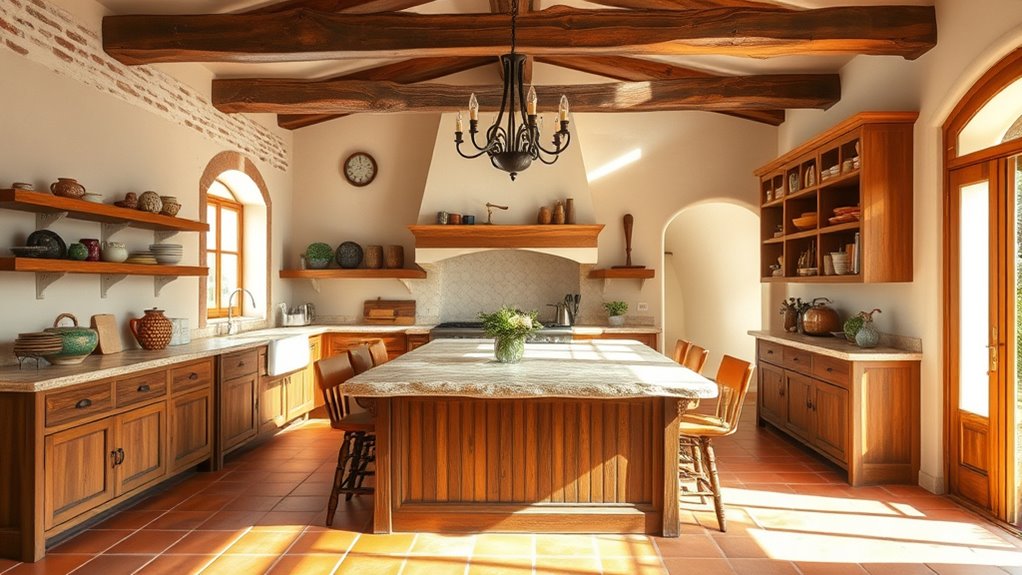
Open, airy layouts are essential in Tuscan kitchen design because they foster both functionality and social interaction. You want a space that feels spacious enough for cooking, chatting, and gatherings without feeling cramped. Central kitchen islands work perfectly, providing ample prep space while serving as a natural hub for conversation. Keep open shelves accessible for everyday items and display charming pottery or cookbooks. Large, comfortable work areas let multiple people cook together effortlessly. Vaulted ceilings and arched openings add visual interest and help create a sense of openness. Incorporate cozy seating areas or breakfast nooks to encourage lingering moments. Overall, your layout should balance practicality with inviting touches, making the kitchen a welcoming space for family and friends to connect and enjoy.
Achieving the Cozy ‘Warm’ Atmosphere
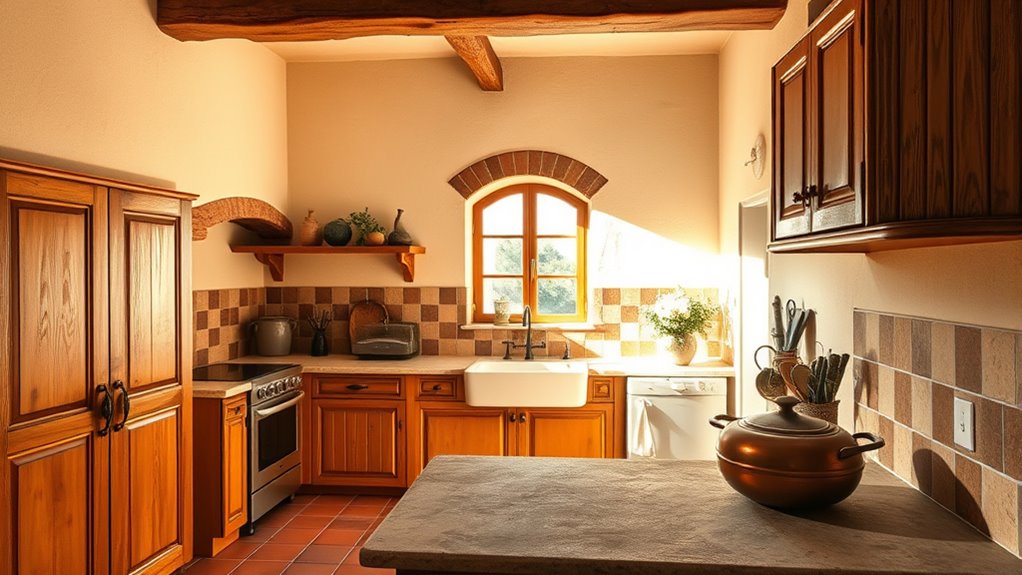
To create a truly cozy ‘warm’ atmosphere in your Tuscan kitchen, focus on embracing earthy tones and natural materials that invite comfort and relaxation. Use warm neutrals like beiges and creams as your foundation, then add depth with deep reds and muted greens. Incorporate textured materials such as rough-hewn wood, weathered stone, and wrought iron to evoke rustic charm. Layering these elements creates a sense of authenticity and warmth.
Consider these ideas:
- Use distressed wood cabinets with natural patinas for a handcrafted feel.
- Incorporate limestone or travertine flooring to add texture.
- Add warm-colored textiles, like linen curtains and woven rugs.
- Include vintage or antique decor pieces to enhance the cozy, lived-in vibe.
Balancing Rustic Elements With Modern Comforts
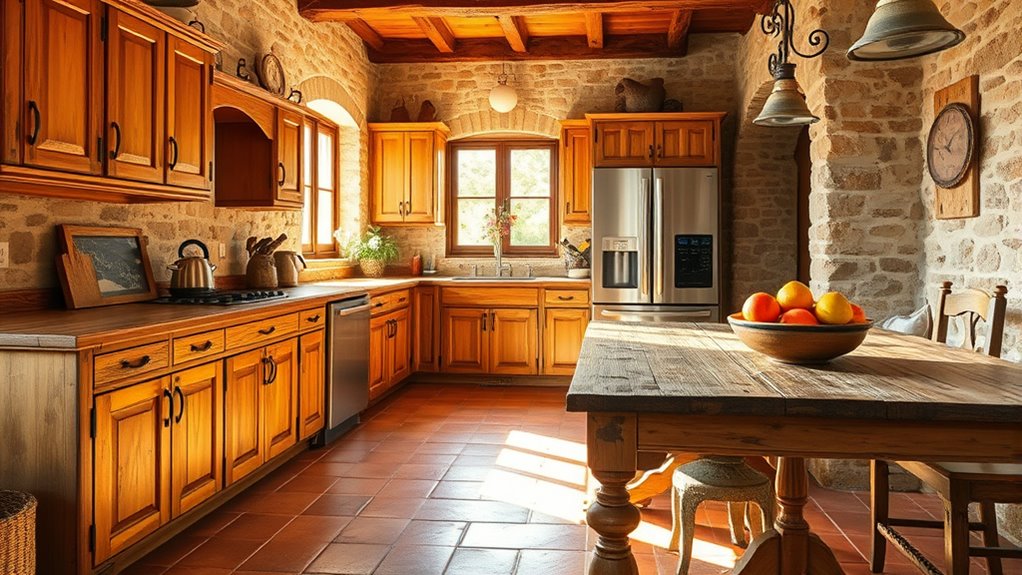
Balancing rustic elements with modern comforts requires thoughtful integration to achieve a harmonious Tuscan kitchen. You want to preserve the authentic charm of rough-hewn wood, stone accents, and aged finishes, but also incorporate contemporary features for convenience. Use sleek, streamlined appliances that blend seamlessly into rustic cabinetry, avoiding cluttered or overly modern designs. Select warm, earthy colors for walls and surfaces to maintain the inviting atmosphere. Incorporate subtle modern touches, like minimalist lighting or hidden storage, that don’t compete with rustic textures. Keep the layout open and functional, emphasizing natural materials while adding touches of modern craftsmanship. This balance ensures your kitchen feels both timeless and comfortable—a space where rustic authenticity meets everyday practicality.
Incorporating Traditional and Artistic Details

Incorporating traditional and artistic details into a Tuscan kitchen elevates its authentic charm and personal character. You can achieve this by adding handcrafted elements that showcase craftsmanship and history. Consider these ideas:
- Use decorative ceramic tiles with intricate patterns as backsplashes or accents.
- Incorporate vintage-inspired hardware, such as wrought iron handles or distressed bronze knobs.
- Display artisan pottery or handcrafted ceramics on open shelves for visual interest.
- Add antique or reclaimed accents, like aged wooden beams or vintage lighting fixtures, to enhance the rustic vibe.
- Utilizing vintage hardware further enhances the authentic, aged look that characterizes Tuscan kitchens.
- Incorporating handcrafted details can also reflect the region’s rich artistic heritage, creating a more personalized and timeless space.
These details create a layered, lived-in feel that celebrates Tuscan artistry while making your space uniquely yours. The key is to blend tradition with personal touches for a warm, inviting atmosphere.
Frequently Asked Questions
How Can I Incorporate Tuscan Colors Into a Small Kitchen?
You can incorporate Tuscan colors into your small kitchen by choosing warm neutrals like beiges and creams for walls and cabinets. Add earthy accents such as deep reds or muted greens through accessories or small details. Use natural materials like stone or distressed wood for countertops and shelving to enhance authenticity. Incorporate warm-colored tiles or backsplashes to bring in color without overwhelming the space, creating a cozy, inviting atmosphere.
What Are the Best Durable Materials for a Rustic Tuscan Look?
You should choose durable materials like natural stone for countertops, such as travertine or limestone, which withstand daily wear and add rustic charm. Reclaimed or distressed wood works well for cabinets and flooring, offering longevity and authentic character. Wrought iron fixtures are sturdy and enhance the rustic look, while weathered metals like aged copper or bronze add texture. These materials guarantee your kitchen stays beautiful and resilient over time, embodying a genuine Tuscan vibe.
Which Cabinet Styles Best Evoke Authentic Tuscan Craftsmanship?
You’ll want to choose distressed or rough-hewn wooden cabinets to truly evoke Tuscan craftsmanship; these styles embody the soul of rustic authenticity. Flat-front, dark wood cabinets with raised paneling or glazed finishes highlight handcrafted details, making your kitchen feel like a timeless Italian villa. Incorporate natural textures and weathered finishes to deepen the rustic charm, creating a warm, inviting space that celebrates age-old artisanship and timeless beauty.
How Do I Add Rustic Textures Without Cluttering the Space?
You can add rustic textures by incorporating weathered wood, reclaimed or distressed cabinetry, and natural stone accents. Keep these elements limited to key areas like countertops, beams, or backsplashes to prevent clutter. Use open shelving to display handcrafted pottery or woven baskets, adding visual interest without overwhelming the space. Balance rough textures with smooth finishes, ensuring your kitchen feels warm and inviting without appearing busy or cluttered.
What Modern Amenities Complement a Traditional Tuscan Kitchen Design?
You can add modern amenities that blend seamlessly with your traditional Tuscan kitchen by choosing sleek, built-in appliances in warm tones like bronze or matte black. Incorporate smart technology subtly, such as touch-activated faucets or concealed outlets, to keep the rustic charm intact. Opt for modern lighting with vintage-inspired fixtures, and select streamlined, functional cabinetry to enhance convenience without sacrificing the authentic, cozy atmosphere.
Conclusion
As you blend warm colors, natural materials, and rustic details, you’ll find that your kitchen naturally becomes a cozy retreat—just like a hidden Tuscan villa. It’s no coincidence that these elements come together to create a space that feels both authentic and inviting. With a little effort, your kitchen will evoke the timeless charm of Tuscany, making every meal and conversation feel special. Sometimes, the magic of design is simply in the details you choose.