To host an authentic tapas night, embrace Spain’s relaxed mealtime flow by starting socializing around 8:30-9 p.m., serving small plates gradually over about 90 minutes. Focus on casual seating, shareable dishes like cured meats and fried bites, and pair them with wine, vermut, or beer. Keep the atmosphere lively with Spanish music and natural decor. Stick to this rhythm, and you’ll create a fun, genuine experience—more tips await as you explore further.
Key Takeaways
- Start serving small plates around 8:30–9:00 p.m. to mirror the Spanish aperitivo period.
- Serve dishes gradually over 60 to 90 minutes, promoting grazing and lively social interaction.
- Begin with cold cured meats and cheeses, then introduce warm fried items and regional skewers.
- End with lighter salads or egg-based tapas, finishing around 10–11 p.m. to emulate authentic Spanish mealtime flow.
- Create a casual, bar-like setting with mixed seating, small plates, and casual drinks to foster a relaxed, social atmosphere.
Understanding the Classic Spanish Mealtime Rhythm

To truly understand the classic Spanish mealtime rhythm, you need to recognize that meals are spaced out throughout the afternoon and evening, with a strong emphasis on socializing and grazing. Lunch, called la comida, typically happens between 2:00 and 3:30 p.m., making it the main daily event. Then, the late-evening tapas window runs from around 8:00 to 10:00 p.m., acting as a pre-dinner ritual rather than a full meal. Dinner, la cena, usually starts between 9:00 and 11:00 p.m., often after guests have enjoyed their tapas. Many restaurants close between lunch and dinner, so bars stay lively, offering small bites and drinks. This rhythm, rooted in history and climate, encourages relaxed socializing and a leisurely pace that emphasizes grazing and connection. Kitchen science & materials also plays a role in how these dishes are prepared and shared, supporting the authentic experience. Additionally, the timing and pacing of these meals foster a sense of community and make the mealtime experience more engaging and unhurried. Incorporating smart kitchen appliances can enhance this tradition by making food preparation more efficient and authentic. Understanding the support breakfast concept can also inspire you to include small, social morning bites that complement the relaxed dining style. Recognizing the importance of meal spacing helps recreate an authentic Spanish dining atmosphere at home.
Setting the Scene for an Authentic Tapas Experience
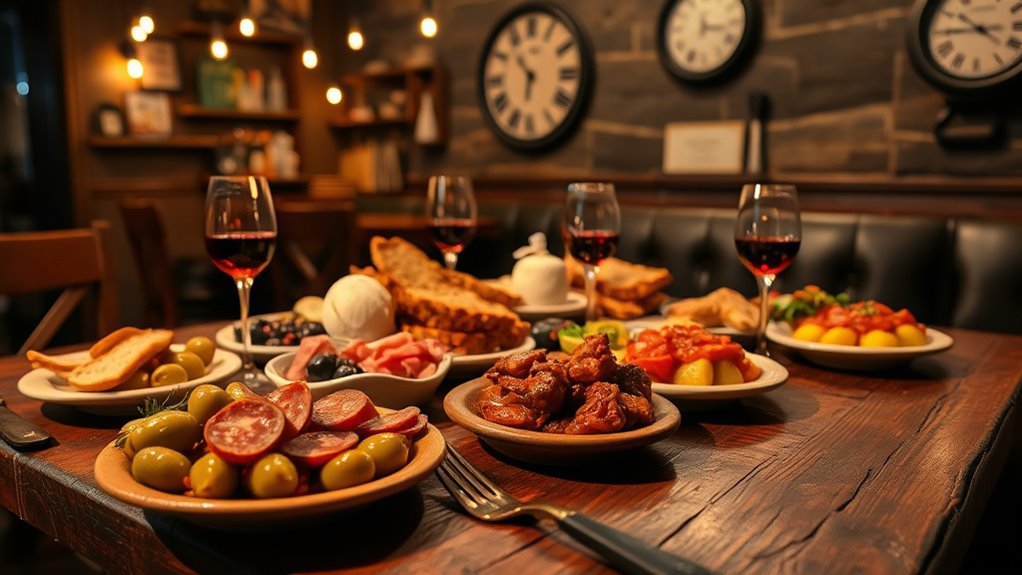
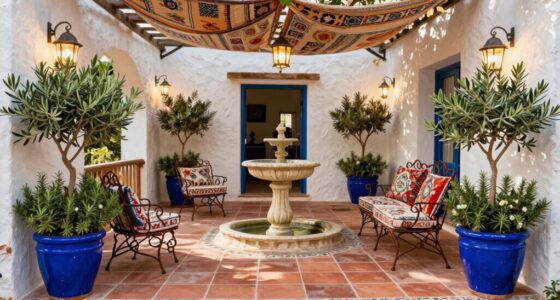
Creating an authentic tapas atmosphere at home involves carefully designing your space to encourage social interaction and a relaxed vibe. You’ll want a casual layout with plenty of standing or mixed seating areas, mimicking bar culture. Use small plates, boards, and skewers to facilitate sharing and easy pilfering. Keep multiple dishes coming in waves rather than all at once, maintaining momentum and variety. Offer casual drink stations with vermut, wine, or beer served in small glasses, echoing the frequent-drink pattern. Play ambient Spanish music and dim the lighting to recreate late-night plaza or bar atmospheres. Consider incorporating energy-efficient technology to enhance sustainability during your gathering. Adding sustainable practices can help reduce your environmental impact while hosting an enjoyable event. Incorporating lighting control can further enhance the ambiance and authenticity of your setting. Encourage guests to circulate, chat, and sample different plates freely. This setup fosters the lively, communal spirit that defines an authentic tapas night.
Timing Your Food and Drink Service for the Correct Flow
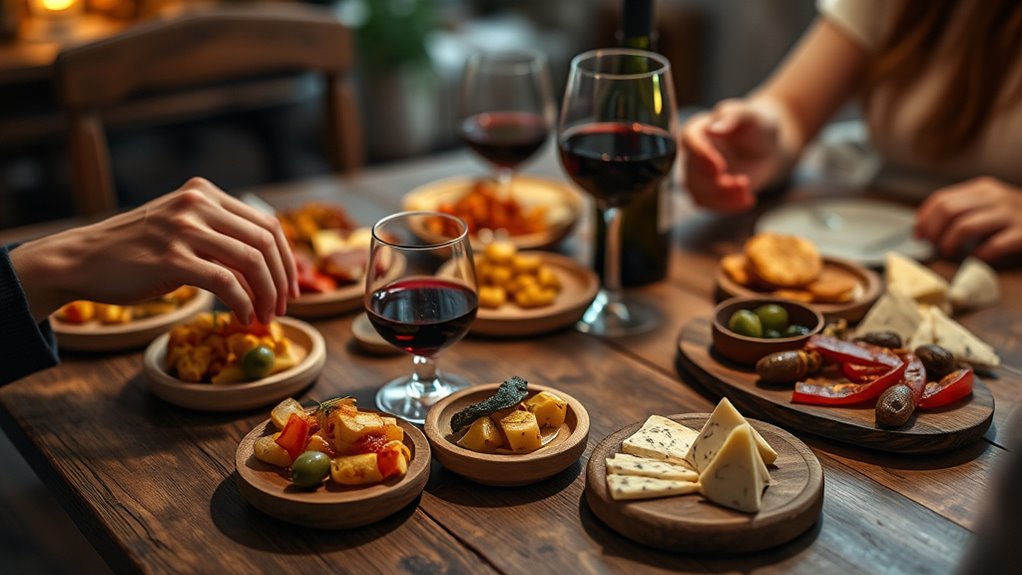
Timing your food and drink service properly guarantees the lively, flowing atmosphere that makes an authentic tapas night memorable. Begin around 8:30 or 9:00 p.m., mimicking the Spanish aperitivo period, and serve small plates gradually over 60 to 90 minutes. This encourages guests to graze, share, and move between dishes, replicating bar culture. Pair drinks like vermut, wine, or beer with the initial bites, then introduce warmer or denser dishes midway. Lighter salads and egg-based tapas can follow to balance richness, leading to a relaxed, late-evening dining rhythm. Consider ending the session around 10 or 11 p.m., or skip a formal main, emphasizing tapas as the main event. Keep the pacing relaxed but intentional, fostering conversation and a sense of authentic Spanish spontaneity.
Curating a Menu That Mimics Bar-Grazing Dynamics

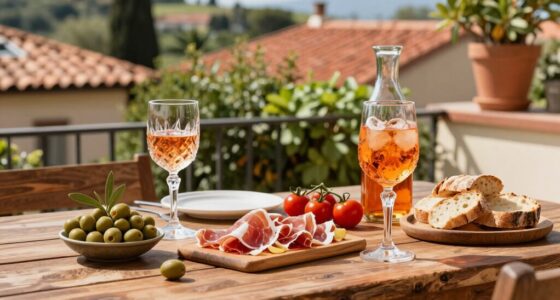
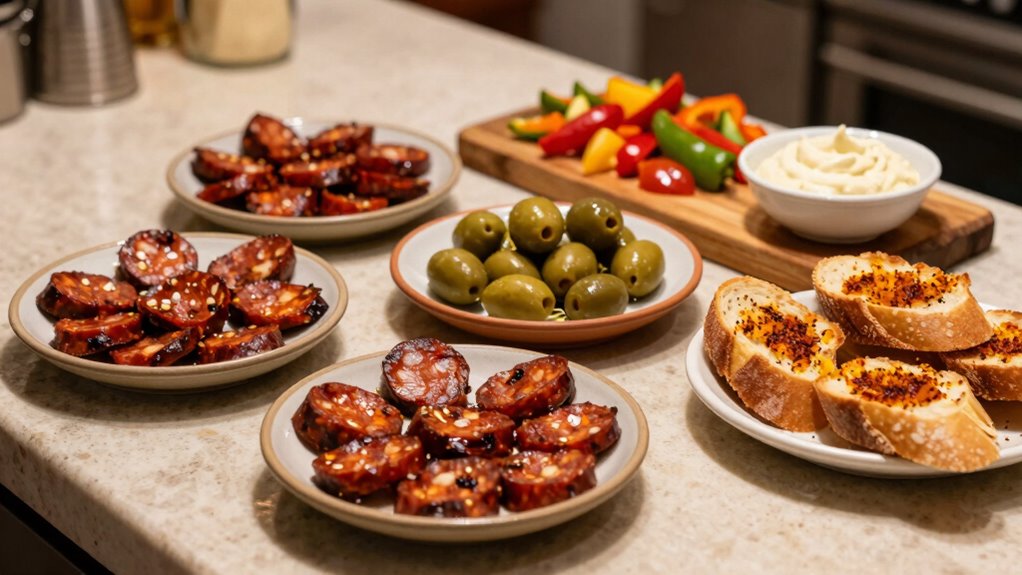
A well-curated tapas menu mimics the spontaneous, flowing nature of bar-grazing by offering a variety of small, easily shareable dishes that keep guests moving from plate to plate. Start with cold cured meats and cheeses like jamón ibérico, chorizo, and manchego to serve as simple, ready-to-eat starters. Introduce warm, fried items such as calamares, croquetas, and patatas bravas in the middle of the evening to add texture and comfort. Include regional specialties or pinchos on skewers to encourage sampling and movement. Later, serve lighter vegetable dishes, salads, or egg-based tapas like tortilla española or pipirrana to balance richness. Incorporating meal timing strategies can enhance the authentic experience and ensure a seamless flow of dishes throughout the evening. Additionally, understanding cultural dining customs can help recreate the relaxed, social atmosphere characteristic of Spanish tapas nights. Finish with a sweet bite or coffee, mirroring the Spanish rhythm of ending with a small, satisfying dessert. Keep dishes coming in waves to sustain momentum and social flow.
Tips for Hosting a Relaxed, Social Tapas Night
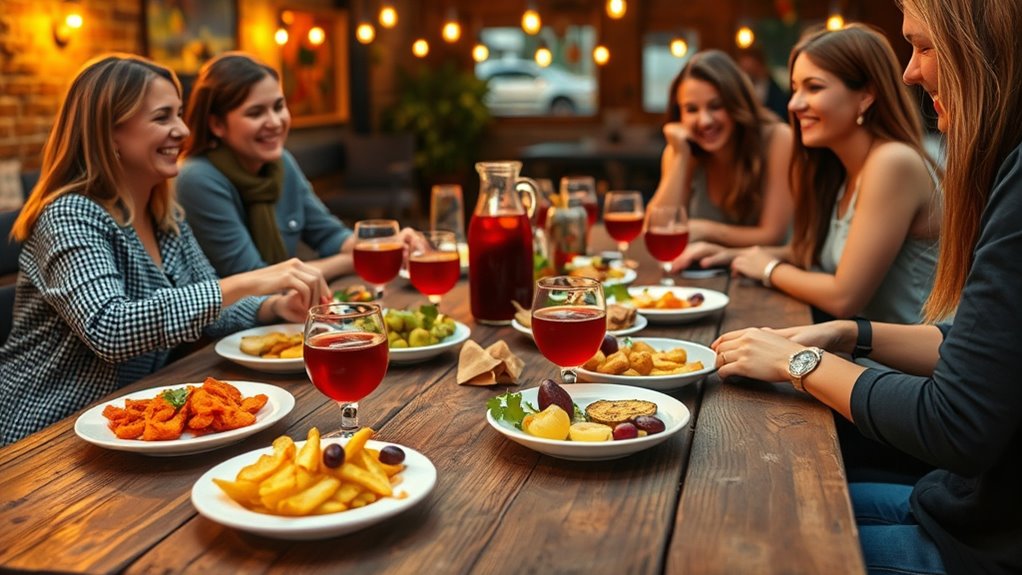
To host a relaxed, social tapas night, focus on fostering a casual and interactive atmosphere that encourages mingling and shared experiences. Create a bar-like setting where guests can move freely, share plates, and chat comfortably. Keep the flow lively by serving small dishes in waves, mimicking Spanish bar service. Offer casual drink stations with wine, vermut, and beer to promote mingling. Use small plates and skewers for easy sharing, and arrange seating that allows guests to stand or sit informally. Play ambient Spanish music and dim lighting to evoke a late-night plaza vibe. To enhance the authentic feeling, consider these elements:
Create a lively, casual tapas night with shared plates, standing tables, and ambient Spanish music for a fun, authentic vibe.
- Multiple small dishes arriving gradually
- Standing or mixed seating for easy movement
- Casual drink stations encouraging conversation
- Incorporating emerging trends in tapas presentation and drink pairings can further elevate the experience. Incorporating natural elements or backyard transformation essentials can also create a more inviting and relaxed environment.
Frequently Asked Questions
How Can I Adapt the Tapas Timing for Guests Unfamiliar With Late-Night Dining?
To adapt tapas timing for guests unfamiliar with late-night dining, start serving around 8:30 or 9:00 p.m., explaining the cultural context. Offer a light snack earlier, like at 6 or 7 p.m., to prevent hunger. Use small, wave-like plate deliveries and casual drinks to mimic authentic pacing. Encourage conversation and movement, and emphasize that the real social highlight is the relaxed, late-night atmosphere, making everyone comfortable with the timing.
What Are Some Regional Spanish Dishes I Should Include for Authenticity?
You definitely want to include regional dishes like Basque bacalao a la vizcaína, Catalan esqueixada, and Andalusian gazpacho or salmorejo. Don’t forget Madrid’s cocido madrileño or Valencia’s paella to show off Spain’s culinary diversity. It’s almost humorous how these authentic dishes, though from different regions, all fit into the tapas concept—small, shareable, and perfect for a late-evening grazing experience that’ll impress your guests.
How Do I Handle Dietary Restrictions While Maintaining the Tapas Experience?
To handle dietary restrictions while keeping the tapas vibe, you can offer a variety of plates that cater to common needs, like vegetarian options with pimientos de padrón or croquetas with veggie fillings. Include gluten-free options like cured meats and cheeses, and clearly label dishes. Keep the sharing style intact by offering small, diverse bites, and encourage guests to customize their plates, ensuring everyone enjoys the social, grazing experience authentically.
What Drinks Best Complement a Traditional Spanish Tapas Night?
You should serve a variety of drinks that enhance the tapas experience. Offer local wines like a crisp Spanish white or a medium-bodied red for versatility. Include vermut or sherry for a traditional touch, and craft beers or cava to add sparkle. Keep drinks casual and small, allowing guests to mingle and sip throughout the evening. This approach recreates Spain’s relaxed, social drinking atmosphere perfectly.
How Can I Create an Authentic Ambiance Without a Large Budget?
Imagine you’re channeling a vintage 1920s speakeasy—it’s all about atmosphere. Use string lights or candles for warm lighting, play lively Spanish music, and set up small, mismatched plates and skewers for sharing. Encourage casual conversation and movement, just like in a bar. Keep decor simple—think colorful tablecloths or fresh herbs—and focus on creating an inviting, lively vibe that transports guests to a lively Spanish plaza without breaking the bank.
Conclusion
Hosting a tapas night at home isn’t just about the food—it’s about embracing the relaxed Spanish rhythm. Did you know that over 70% of Spaniards prefer enjoying multiple small plates over a long evening? By timing your courses and creating a social, bar-grazing vibe, you’ll bring authentic Spain right to your table. So, loosen up, savor each moment, and let the lively spirit of tapas turn your evening into a memorable celebration.